
Reviewed · TEMPLES & SHRINES
Crowd-Free Kyoto: Fushimi Inari, Nijo Castle & Kinkaku-ji
Fushimi Inari’s long corridors of red torii gates are one of Japan’s great sights, but they lose some of their magic when the path fills with people. This private tour tackles Fushimi Inari early, then takes you to Nijo Castle and Kinkaku-ji, two very different chapters of Kyoto’s past.
I like the private format because your guide can set a pace that suits your group, and I like the local stories that turn famous buildings into places with meaning. Guides named Tom, Ryu, Kazuya, and Maki have all been praised for being friendly, entertaining, and well informed. The main consideration is cost: at $91.96 per person, you still pay separately for two admission tickets and any food or drinks.
Key points to know
- Early access to Fushimi Inari: The timing is planned to help you see the torii gates before the heaviest crowds.
- Three major sights in five hours: You cover Fushimi Inari, Nijo Castle, and Kinkaku-ji in one focused outing.
- Private attention: Only your group takes part, so you avoid the fixed pace of a large shared tour.
- Guides add personality: Tom, Ryu, Kazuya, and Maki are specifically praised for history, local knowledge, kindness, and humor.
- Admission costs extra: Fushimi Inari is free, but Nijo Castle and Kinkaku-ji tickets are not included.
- The tour ends at Kinkaku-ji: That is useful if the Golden Pavilion is your priority, but you arrange your own plans afterward.
Why this Kyoto route works
Kyoto has no shortage of famous sights. The problem is fitting them together without wasting half the day finding your way around, choosing the right entrance, or trying to understand what you are seeing. This tour gives you a simple route through three of the city’s best-known cultural sites.
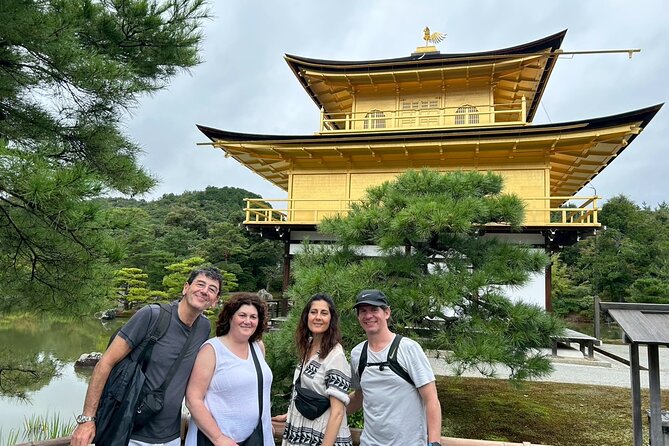
The order makes sense. Fushimi Inari is the most sensitive to crowds, so an early start matters there. Nijo Castle offers a change of mood, with samurai-era architecture and the Ninomaru Palace. Kinkaku-ji finishes the visit with Kyoto’s most recognizable view, the gold-covered pavilion reflected beside its pond.
You receive a private guide rather than a shared group. That distinction matters most if you want to ask questions, pause for photographs, or keep moving when a site has given you enough. It also means the experience can feel less rushed than a large tour, though the five-hour schedule is still fairly tight for three major stops.
The tour has a 5 rating from 16 reviews and a 100 percent recommendation rate. That is a small sample, so I would not treat it as proof that every departure will be perfect. Still, the praise is unusually consistent: the guides are repeatedly singled out, and the strongest comments focus on the cultural explanations and the calm feel created by the timing.
More Castle Tours in Kyoto
- Kyoto: Nijo-jo Castle and Ninomaru Palace Guided Tour
★ 4.7 · 1,020 reviews - Kyoto: Nijo Castle, Kiyomizu & Fushimi Inari Guided Tour
★ 4.7 · 700 reviews - Kyoto: Imperial Palace & Nijo Castle Guided Walking Tour
★ 4.7 · 453 reviews
Fushimi Inari and the first torii gates
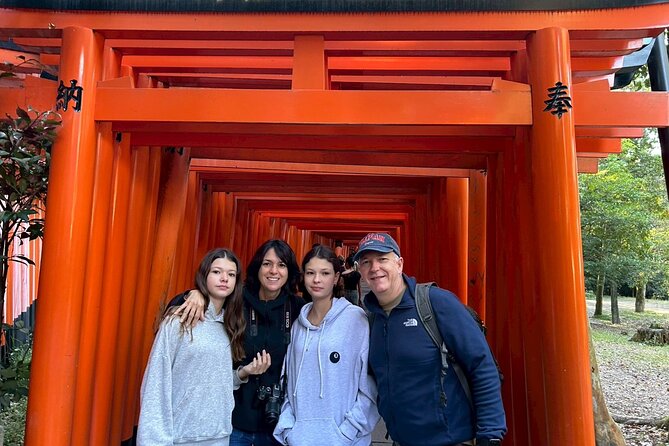
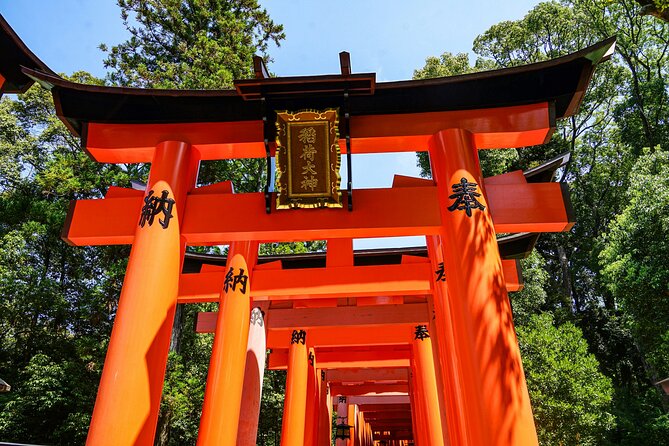
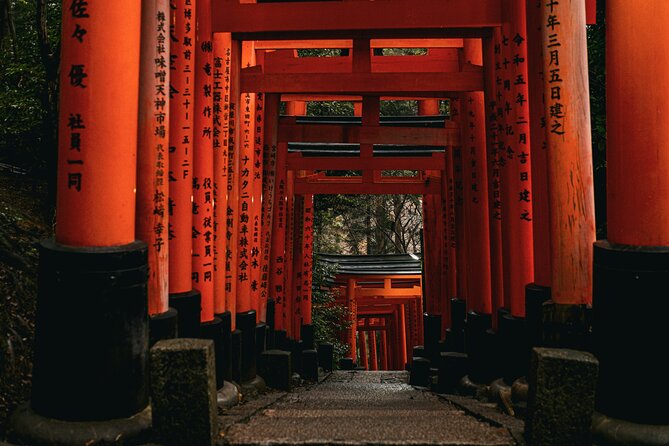
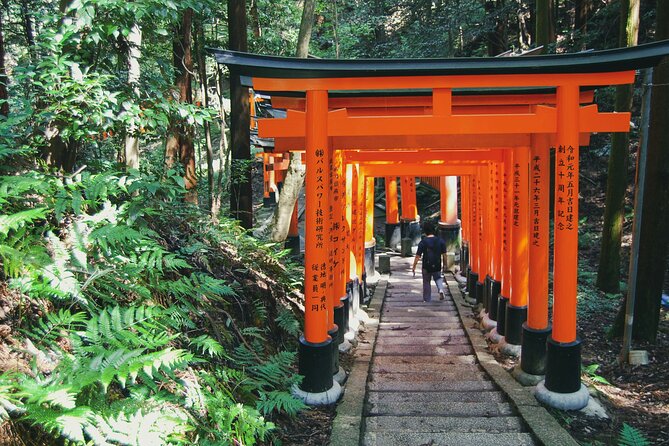
Fushimi Inari-taisha is the tour’s strongest opening. Its defining sight is the Senbon Torii, a long route lined with thousands of red-orange gates. They climb and curve through the wooded slopes of Mount Inari, creating a scene that feels far removed from ordinary city streets.
You begin with the shrine’s spiritual setting before following the torii path. The gates were donated by individuals and businesses, and each one carries a name and date on its back. That detail gives the endless rows a human and commercial side, rather than making them seem like a purely decorative installation.
An hour is enough to experience the main approach and walk through a meaningful section of the gates. It is not enough to explore every trail on the mountain. This is important if you arrive expecting a full hike to the upper shrine. The tour is designed as a sightseeing visit, not a mountain trek.
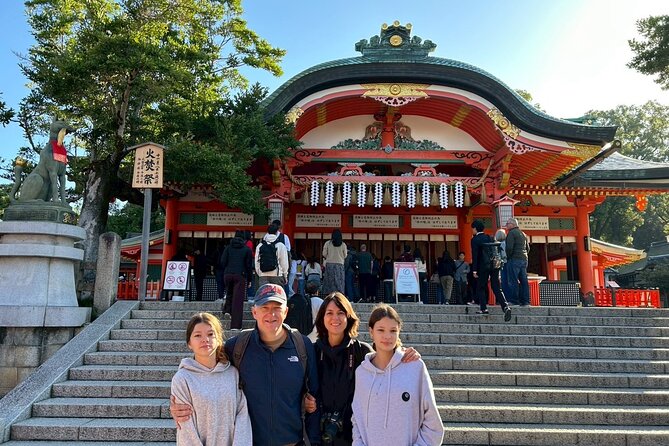
The early timing is one of the best reasons to book. Fushimi Inari is free, open to the public, and easy to reach, so it can become crowded quickly. The tour specifically aims to visit before the busiest period. You should still expect other people, especially near the lower shrine and first torii, but an early start gives you a better chance of seeing the gates with breathing room.
This is also where a guide earns the fee. Without context, you can admire the color and symmetry, take photographs, and move on. With someone explaining the shrine’s role and the meaning behind the gates, the visit has more substance. The strongest praise for Tom, Ryu, Kazuya, and Maki centers on exactly this sort of explanation.
Nijo Castle and the world of the shoguns
Nijo Castle changes the tone completely. Fushimi Inari is an active Shinto shrine set against a mountain. Nijo Castle is a formal residence and power center associated with the Tokugawa shoguns.
The main visit includes Ninomaru Palace, the former residence of the shogun. You can expect elaborate interiors and a strong sense of ceremony. This is not simply a fortified wall with attractive grounds. The palace was built to display authority, receive important people, and protect the ruler within a carefully controlled setting.
The castle is also valuable because it helps explain how political power worked in Japan before the modern era. A guide can point out the difference between public rooms and more private spaces, as well as the design choices that made movement through the palace meaningful. The famous nightingale floors are part of Nijo Castle’s appeal, though the supplied tour details do not promise a particular route or amount of time inside each room.
Admission to Nijo Castle is not included, so allow for an extra ticket cost. The tour gives you one hour here, which is enough for a focused visit but may feel short if you want to inspect every garden, room, and display. If Nijo Castle is your personal top choice, tell your guide early so you can use the available time well.
One useful feature of a private visit is that your guide can match the explanation to your interests. Maki has been praised for making Nijo Castle the best part of the day, while other guides have received praise for making the history entertaining rather than dry. That flexibility is more useful here than at a quick photo stop because the castle rewards attention to detail.
Kinkaku-ji and Kyoto’s famous golden view
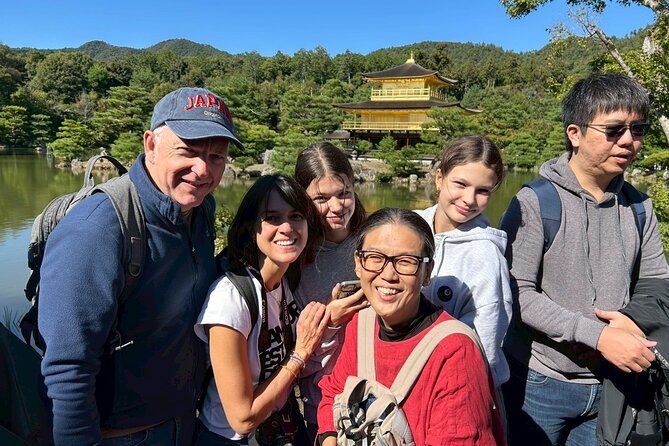
Kinkaku-ji, also called the Golden Pavilion, is the final stop. The Zen Buddhist temple is covered in gold leaf and set beside a pond, producing the classic Kyoto scene found on countless postcards.
The building you see today is a reconstruction, but the sight remains powerful. The gold changes with the light, and the pond gives you the best chance of seeing the pavilion reflected in the water. The experience is visual first, with the guide adding the religious and historical context that a photograph cannot provide.
The tour allows about one hour here. That is generally enough to follow the established viewing route and spend time at the main pond. It is less suitable if you want a long, quiet stay or plan to examine every part of the temple grounds. Kinkaku-ji can also be busy, so the early strategy at Fushimi Inari does not guarantee the same level of calm at the final stop.
Admission is extra. Weather matters, too. The tour requires good weather, and poor conditions can lead to a different date or a full refund. That policy is worth noting because Kinkaku-ji is especially dependent on light. Gray skies will not make the temple uninteresting, but they can reduce the effect of the gold and reflection.
If Kinkaku-ji is the reason you are considering this experience, the ending is convenient. You finish at the temple rather than returning to Kyoto Station. That saves you from retracing the route, but it also means you need to plan your next move from Kinkaku-ji. The tour does not include food or drinks, so you may want to arrange a meal afterward.
More Temple & Shrine Tours in Kyoto
- Kyoto: Fushimi Inari, Kinkakuji, Bamboo Grove 1 Day Bus Tour
★ 4.8 · 4,316 reviews - Kyoto: Tea Ceremony in a Traditional Tea House in Kiyomizu
★ 4.9 · 3,519 reviews - Kyoto: Tea Ceremony Ju-An at Jotokuji Temple
★ 4.9 · 3,207 reviews - Fushimi Inari Hidden Hiking Tour (Private Option Available)
★ 5.0 · 1,750 reviews
What a private guide adds
The biggest difference between this experience and a self-guided morning is not access. You can visit all three places independently. The difference is the ease of moving between them and the explanation you receive along the way.
A good guide helps you notice what you might otherwise pass by. At Fushimi Inari, that may mean the donated gates and the shrine’s religious role. At Nijo Castle, it may mean reading the building as a statement of shogunal power. At Kinkaku-ji, it may mean understanding why the pavilion is more than a striking gold building.
The personal side also matters. Kazuya has been praised for being so kind and easy to talk with that the outing felt like time spent with an old friend. That kind of connection cannot be guaranteed, but it shows what the private format can allow. You have more space for questions and conversation than you would in a large group.
Tom receives repeated praise for his cultural explanations and for knowing Kyoto thoroughly. Ryu is described as friendly and entertaining. Maki is remembered for making Nijo Castle especially enjoyable. Since the guide assigned to your departure is not specified, you should see these names as examples of the provider’s guide team, not a promise that one particular person will lead your tour.
Is $91.96 a fair price?
At $91.96 per person, this is not the cheapest way to see Kyoto’s major sights. You can reach the locations independently using public transportation and pay only the individual entrance fees. If you are comfortable navigating Kyoto and reading up before you go, a self-guided visit will cost less.
The price becomes easier to justify if you place a high value on time and interpretation. In roughly five hours, you visit three major locations with one private guide and avoid the uncertainty of planning the route yourself. You are also paying for a private experience, not a seat in a large group.
There are two limits to the value. First, admission to Nijo Castle and Kinkaku-ji is not included. Second, food and drinks are also separate. The advertised price is therefore not your total cost for the morning.
I would see this as a good value for first-time visitors with limited time, couples who want a private pace, and families who prefer not to manage Kyoto’s transport and sightseeing plan alone. It is less compelling for repeat visitors, independent walkers, or anyone who already knows these sites well.
Group discounts may improve the per-person price for a larger private party. Since the activity is limited to your group, the value can also make more sense when several people share the guide rather than one or two people paying alone.
Timing, meeting point, and practical details
The meeting point is South Square in the Kyoto Station Building. That is a useful starting location because Kyoto Station is a major transport hub, but you should confirm the precise meeting instructions when booking so you do not lose time in the station complex.
The tour lasts about five hours and ends at Kinkaku-ji, at 1 Kinkakujicho in Kita Ward. The one-way finish is helpful if you want to continue sightseeing in northern Kyoto. It is less convenient if your hotel or next reservation is near Kyoto Station, so leave time for your return journey.
A mobile ticket is offered, and confirmation arrives when you book. The experience is near public transportation, and most people can take part. No special accessibility limits are stated, but Fushimi Inari includes an uphill route through the torii gates. If you have mobility concerns, ask the provider what portion of the shrine path is practical for you before booking.
Cancellation is free up to 24 hours before the start time. Changes or cancellations inside that window are not accepted for a refund. Since poor weather can cancel the experience, keep your schedule flexible if possible.
Who should book this experience?
I would recommend it to you if this is your first Kyoto visit and you want the city’s most recognizable sights without spending a day sorting out the details. It is also a good fit if you care about the story behind the buildings, not just the photographs.
Families may appreciate the private format because the pace is easier to manage. Couples and small groups can ask more questions and avoid being tied to strangers. The early visit to Fushimi Inari is particularly useful if seeing the torii gates with fewer people is high on your list.
You may want to skip it if you prefer long, unstructured visits. One hour at each site keeps the route moving, but it does not allow endless wandering. You should also compare the price with independent sightseeing if you are comfortable using Kyoto’s public transportation and researching the sites yourself.
Should you book it?
Book this tour if you want an efficient introduction to Kyoto with a private guide, a smart early visit to Fushimi Inari, and clear cultural context at three major sights. The guide quality is the main reason to choose it, and names such as Tom, Ryu, Kazuya, and Maki have been linked with friendly, personal explanations.
Think twice if admission extras, a five-hour limit, or the $91.96 price make you uneasy. You can visit the same places independently for less. But if your Kyoto time is short and you want someone else to handle the flow while helping you understand what you see, this is a practical and well-focused choice.
FAQ
How long does the Kyoto tour last?
The tour lasts approximately five hours.
Which attractions are included?
The tour visits Fushimi Inari-taisha Shrine, Nijo Castle, and Kinkaku-ji Temple, also known as the Golden Pavilion.
Is this a private tour?
Yes. Only your group participates in the activity.
Are admission tickets included?
Admission to Fushimi Inari is free. Tickets for Nijo Castle and Kinkaku-ji are not included in the tour price.
Where does the tour start and finish?
It starts at South Square in the Kyoto Station Building and ends at Kinkaku-ji, 1 Kinkakujicho, Kita Ward, Kyoto.
Can I cancel for a full refund?
You can cancel up to 24 hours before the experience starts for a full refund. Cancellations or changes made less than 24 hours before the start time are not accepted for a refund.
Just added around Kyoto
- Sekka Cotton Furoshiki Class★ 5.0 · 19 reviews
- Secret Eastern Kyoto Biking Adventure★ 5.0 · 44 reviews
- Kyoto Sword Experience – includes Museum Ticket/Ninja Experience★ 4.5 · 149 reviews
- Scenic Green Tea Fields of Hidden Kyoto & Local Tea Exp (Private)★ 5.0 · 32 reviews
- Private Sake Tasting in Central Kyoto with Sake Sommelier★ 5.0 · 32 reviews
- Samurai School in Kyoto: Samurai for a Day★ 5.0 · 202 reviews
- SHIRAKAWA Japanese Culture Experiences with private English staff★ 5.0 · 16 reviews
- A Privately Guided Photoshoot in Beautiful Kyoto by a Pro★ 5.0 · 18 reviews
Temples & Shrines, compared.

Tea Ceremony in a Traditional Tea House in Kiyomizu
Our verdict →
Meiji Shrine, Asakusa, Skytree Bus Tour and Cruise
Our verdict →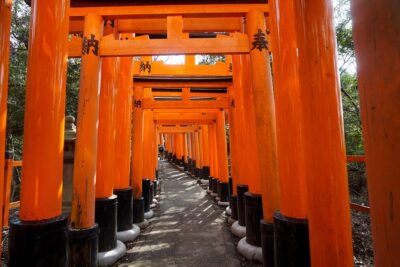
Fushimi Inari Hidden Hiking Tour (Private Option Available)
Our verdict →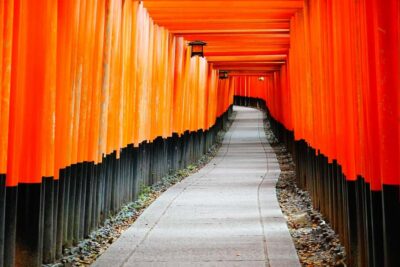
Osaka/Kyoto:Kinkakuji,Arashiyama,FushimiInariShrine,NaraPark
Our verdict →
Nikko: Kegon Falls, Lake Chuzenji & Toshogu Temple
Our verdict →
Kamakura & Enoshima Day Trip including Temple Tickets
Our verdict →Browse the lists this tour appears in