
Reviewed · CALLIGRAPHY CLASSES
Calligraphy Workshop at Traditional Folk Craft Shop in Hiroshima
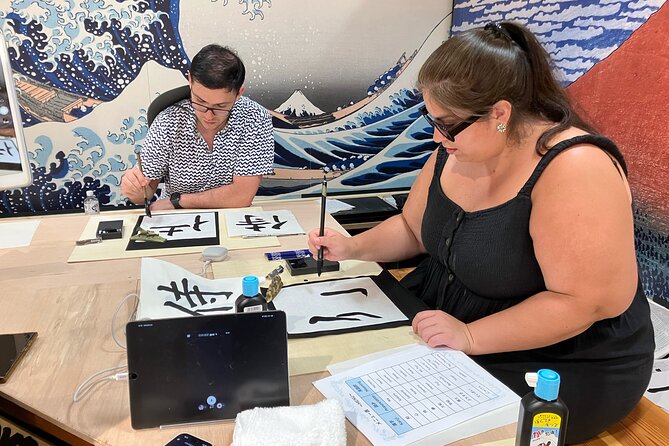
Japanese calligraphy here is more than a souvenir project. With a brush in hand, you slow down, follow each stroke, and give your attention to one character at a time. Sensei Ryosei guides the session in a calm, patient way, making this a quiet break from Hiroshima’s busy sightseeing circuit.
I like the setting at Takumi, a 50-year-old folk craft shop with a wall of ukiyo-e prints. I also like the use of handmade brushes from Kumano, the Hiroshima town known across Japan for brush-making. The main consideration is time: at about 45 minutes, this is a focused introduction, not a full calligraphy course.
Key points to know before you book
- Kumano brushes: Use traditional handmade brushes from Hiroshima’s famous brush-making town.
- Sensei Ryosei’s guidance: Learn basic strokes, hiragana, and kanji with patient, step-by-step instruction.
- Takumi craft shop: Practice on the fifth floor of a long-running folk craft store with an ukiyo-e display.
- Personal souvenir: Create calligraphy on a Japanese fan or shikishi board, depending on the session arrangement.
- Easy central location: Walk five minutes from the Atomic Bomb Dome or three minutes from Hiroden Hondori Station.
- Private 45-minute session: Only your group participates, and every calligraphy tool is provided.
Why this Hiroshima calligraphy workshop works so well
Japanese calligraphy, or shodo, asks you to pay attention to pressure, speed, spacing, and balance. A brush stroke is not something you can rub out and redo. That small risk is part of the appeal. You make a mark, accept it, and try again with a steadier hand.
This workshop gives you a simple way into that tradition. You do not need to know Japanese, understand kanji, or have any art training. The point is not to produce a museum piece. It is to experience the tools and movements, then make something personal enough to take home.
I especially like the link to Hiroshima. The workshop uses brushes made in Kumano, a town in Hiroshima Prefecture known as Japan’s leading brush-making center. That detail gives the activity a local connection rather than making it feel like a generic cultural lesson that could take place anywhere in Japan.
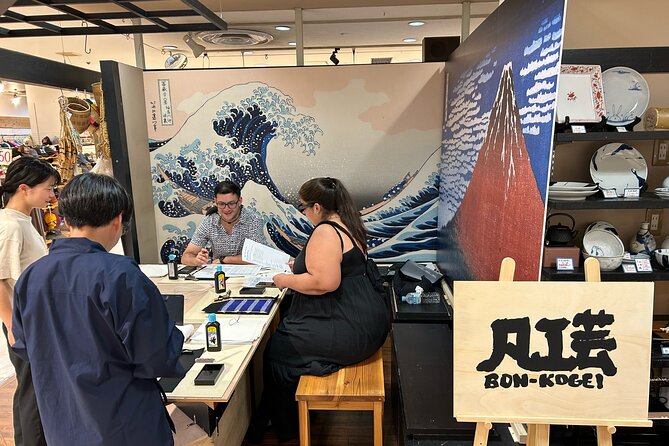
The workshop takes place at Takumi, also called Bonkogei Takumi, a traditional folk craft shop that has been operating for about 50 years. Its shelves and displays feature traditional items from around Japan, while one wall is decorated with ukiyo-e prints. You get a craft lesson in a craft setting, not in a bare classroom.
More Calligraphy Classes in Hiroshima:
- An Amazing set of Cultural experience: Kimono, Tea Ceremony and Calligraphy
★ 5.0 · 69 reviews - Cultural Activities :Kimono, tea ceremony, Calligraphy and Amulet
★ 5.0 · 44 reviews - Kimono and Calligraphy Experience in Miyajima
★ 5.0 · 16 reviews
Finding Takumi near the Atomic Bomb Dome
The shop is at 2-chome-2-18 Kamiyacho, on the fifth floor of Sanmall Mall. The venue is easy to fit into a day of Hiroshima sightseeing. It is about a five-minute walk from the Atomic Bomb Dome and three minutes from Hiroden Hondori Station.
That location matters. You can visit the Peace Memorial Park, see the Atomic Bomb Dome, and then move into a small creative activity without spending much time on transport. Look for UNIQLO on the second floor of the mall, then continue upward to the workshop venue.
The meeting point and ending point are the same. You do not need private transport, and the activity is near public transportation. Parking is not included, so using Hiroshima’s tram system or walking is the simpler choice.
The central location also makes this a sensible rainy-day plan. The workshop takes place indoors, and the mall gives you an easy place to find before or after the session. Allow enough time to locate the fifth-floor shop, especially if you are planning the activity around a timed visit to the Peace Memorial Museum.
A calm setting with ukiyo-e on the wall
The atmosphere is one of the strongest parts of this experience. Takumi is not a new themed attraction built only for short cultural demonstrations. It is a long-running folk craft shop, and the ukiyo-e display gives the room an artistic backdrop.
That setting helps the workshop feel connected to Japanese visual culture. Ukiyo-e prints are known for their bold line work, controlled composition, and carefully placed detail. Calligraphy uses different tools and movements, but both arts depend on the character of the line.
The space is also practical. You are not being asked to practice in the middle of a public street or in a crowded outdoor setting. Since the activity is private, only your group takes part. That should appeal to solo visitors, couples, families, and small groups who prefer not to perform in front of strangers.
The calm tone is important. One strong feature of the session is its meditative quality. You may arrive after a morning of museums, memorials, and city walking. Forty-five minutes of quiet brushwork gives your mind a different task.
What happens during the 45-minute session
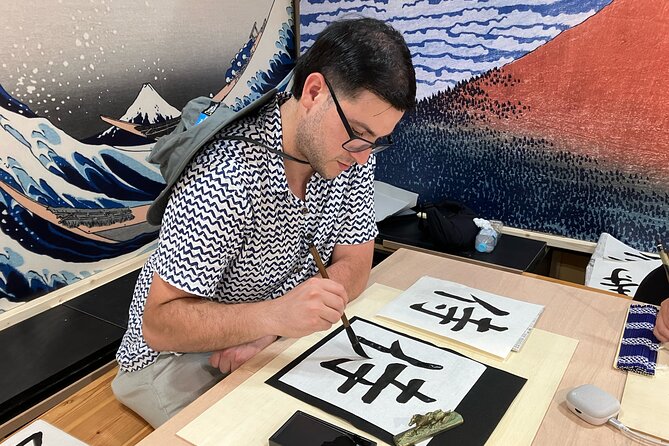
The class begins with an introduction to the calligraphy tools. You will work with a brush, ink, and paper, and you will learn what each tool does before trying to make a finished design.
Next comes practice with basic strokes. Expect to work on dots, lines, and sweeping movements. These exercises may look simple, but they teach you how much pressure and speed affect the brush. The goal is to help you feel the brush before asking it to form a character.
You then try hiragana and kanji. Hiragana is one of the Japanese writing systems, while kanji characters carry meanings and can have complex forms. A beginner does not need to memorize a long list of characters. The instruction is designed to guide you through the process step by step.
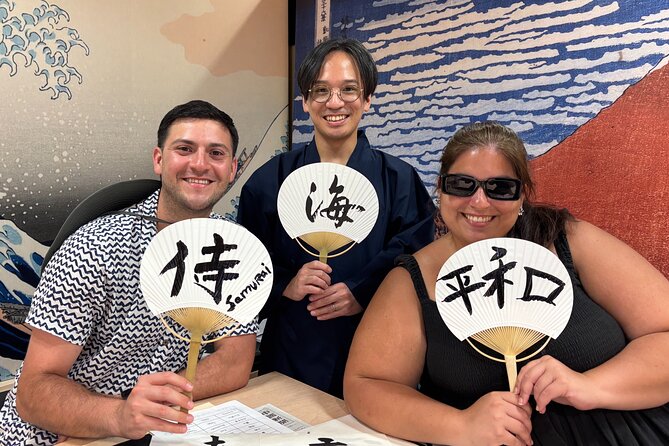
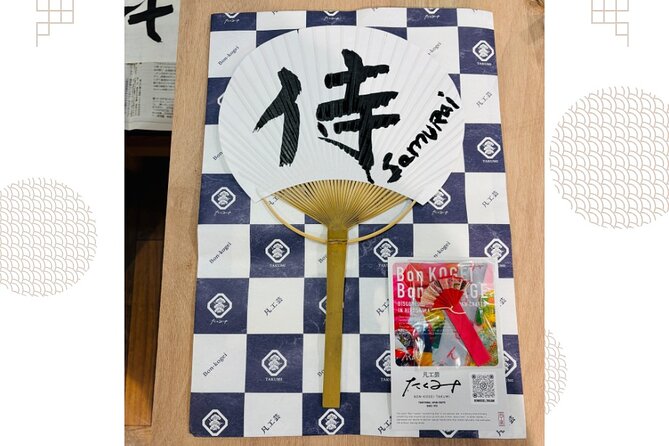
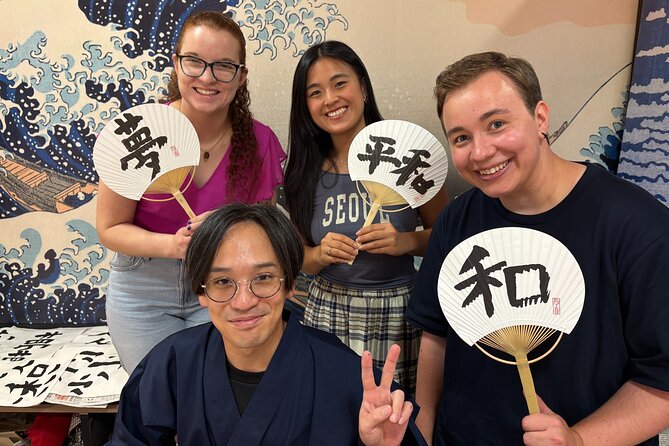
The final stage is the artwork you take home. You choose a word or character and write it on a traditional Japanese hand fan, known as an uchiwa, or on a shikishi calligraphy board. The activity description presents both options, while the included items specifically list an original calligraphy fan. If receiving a shikishi board matters to you, confirm the available choice when booking.
You finish with a handmade piece rather than a mass-produced trinket. It may have small imperfections. That is part of its value. The brush marks show that you made it during your time in Hiroshima.
More Craft Workshops in Hiroshima:
- Hiroshima:Private lacquer workshop experience tour(gift included)
★ 5.0 · 13 reviews - Tokyo Sumo Experience: Chanko & Mochi with a Former Pro
★ 4.8 · 567 reviews - Kintsugi Experience: Art of Golden Joinery in Tokyo
★ 5.0 · 467 reviews - Tokyo Chopstick Making Workshop with Artisan
★ 5.0 · 466 reviews
Sensei Ryosei’s teaching style
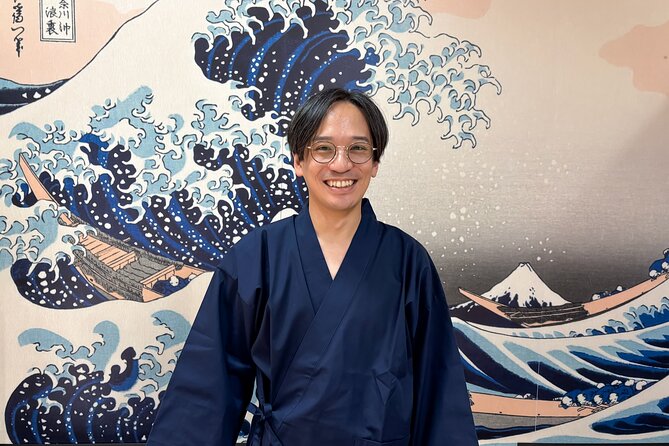
The session is led by Sensei Ryosei, an award-winning calligrapher described as calm and patient. The teaching approach is hands-on, which is useful when you are learning a physical skill. Written instructions alone would not tell you how hard to press or how quickly to pull the brush.
You can expect guidance through the basic movements rather than a lecture on calligraphy history. That suits the short format. The workshop focuses on doing, correcting, and trying again.
This is particularly helpful if you feel unsure about making the first mark. Beginners often worry that their writing will look clumsy. Here, you are given practice strokes before you create the final piece, and the instructor’s role is to help you use the tools with more confidence.
The session is also private. Only your group participates, which can make it easier to ask questions or take your time. It also means the experience may feel more personal than a large group demonstration.
The Kumano brush connection
The brushes are handmade in Kumano, Hiroshima’s best-known brush-making town. This is more than a technical detail. A brush determines how ink meets paper, and the tool is central to the calligraphy experience.
Using a brush from the same wider region adds a local thread to the activity. You are in Hiroshima, working with a traditional product made in Hiroshima Prefecture, inside a shop devoted to folk crafts from Japan.
You will also see why calligraphy requires control. A brush can create a thin point, a broad stroke, or a soft change in thickness depending on how you hold and move it. The practice exercises let you notice those changes without the pressure of producing a finished character immediately.
If you are interested in Japanese crafts, this is one of the strongest reasons to choose this workshop over a simple souvenir-making session. You are learning about an object, a material, and a technique at the same time.
Is $32.81 a fair price?
At $32.81 per person, the workshop is priced as a short guided cultural activity rather than a full art course. The fee covers the calligraphy tools, venue use, and the original calligraphy fan souvenir. It also includes instruction from a professional calligrapher.
I consider that reasonable if you value a hands-on experience and want a souvenir you create yourself. The fan gives the price practical weight because you are not paying only for a demonstration. You receive materials, instruction, and a finished object.
The value is less obvious if you want a long lesson or advanced technical training. Forty-five minutes leaves enough time for an introduction and final artwork, but not for detailed study of many characters or several styles of calligraphy.
The private format helps justify the cost. You are not sharing the activity with a large public group, and your group can receive direct guidance. For a couple or family, that personal setup may be worth more than a cheaper, crowded class.
Photos and the finished souvenir
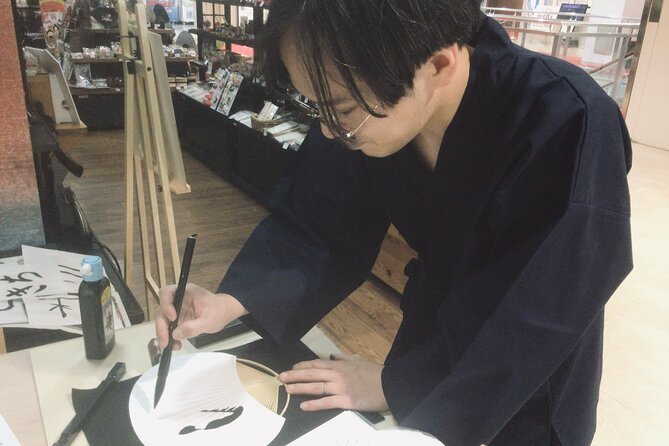
You may take photos during the session, and the provider offers an optional photo service. The staff can take pictures of you working and send them digitally afterward at no extra charge.
That is a useful touch. Calligraphy can look quiet from the outside, so a photo of your hand on the brush or your finished fan helps preserve the experience. If you want photos, ask about the service during the session rather than waiting until the final minute.
Your finished artwork is the main souvenir. A fan is light, easy to pack, and useful after your trip. A shikishi board is more like a small display piece. Since the information describes both formats but specifically includes the fan, check which surface you will receive if that choice affects your plans.
Do not expect every stroke to be perfect. The point is to show your progress from the first practice lines to your final character. The personal meaning of the word you choose matters more than professional polish.
Who should book this activity?
I would recommend this workshop to first-time calligraphy students, people interested in Japanese culture, and anyone looking for a quiet activity between Hiroshima’s major sights. It also suits visitors who want a small, personal souvenir instead of another purchased item.
Families can take part because no preparation or previous skill is required. Couples may like the private format and the chance to make separate pieces. Solo visitors should find the guided structure comfortable, especially if they want an activity that does not depend on having a larger group.
The class is also a good fit for art-minded visitors who want to understand Japanese brushwork through their own hands. You will not become an expert in one session, but you will learn why control, rhythm, and space matter.
I would be more cautious about booking it if you want a long historical talk, advanced instruction, or a broad tour of Hiroshima’s folk crafts. Takumi is a craft shop, but the activity centers on calligraphy. The session is short and focused.
Timing this with a Hiroshima sightseeing day
The workshop is especially easy to pair with the Atomic Bomb Dome and Peace Memorial Park because of the short walk between them. You can schedule it before or after your visit to the memorial area, then continue through central Hiroshima on foot or by tram.
Give yourself a little extra time to reach the fifth floor of Sanmall Mall. The shop is centrally located, but a shopping center can take a moment to navigate if you are watching the clock.
The activity lasts about 45 minutes and ends where it begins. That makes it easier to plan around lunch, a museum booking, or an afternoon train. Confirmation is sent within 48 hours of booking, subject to availability, so do not assume the time is final until your booking is confirmed.
Free cancellation is available if you cancel at least 24 hours before the start time. Changes or cancellations inside that window are not accepted for a refund, so keep the local cut-off time in mind when setting your Hiroshima schedule.
Should you book the Takumi calligraphy workshop?
Book it if you want a calm, beginner-friendly activity with a real local craft connection. The Kumano brushes, the old folk craft shop, the ukiyo-e setting, and the personal fan souvenir give the 45-minute session more substance than a quick writing demonstration.
I would place it high on your list if you are spending time near the Atomic Bomb Dome and want to add a creative pause to a serious sightseeing day. The price is fair for private instruction, materials, venue use, and a handmade souvenir.
Skip it if you want advanced calligraphy study or a longer class. For most first-timers, though, Sensei Ryosei’s patient guidance and the quiet pace make this a practical and memorable way to meet Japanese calligraphy in Hiroshima.
FAQ
Where does the calligraphy workshop take place?
It takes place at Bonkogei Takumi, located at 2-chome-2-18 Kamiyacho, Naka Ward, Hiroshima, on the fifth floor of Sanmall Mall.
How far is Takumi from the Atomic Bomb Dome?
The shop is about a five-minute walk from the Atomic Bomb Dome.
How close is the workshop to public transportation?
Takumi is about a three-minute walk from Hiroden Hondori Station.
How long does the calligraphy experience last?
The activity lasts approximately 45 minutes.
Is the workshop suitable for beginners?
Yes. The session includes step-by-step guidance, practice with basic strokes, and instruction in hiragana and kanji. No previous preparation is needed.
Who teaches the calligraphy session?
The session is led by Sensei Ryosei, an award-winning calligrapher who provides calm, hands-on instruction.
Are calligraphy materials provided?
Yes. Brushes, ink, paper, and other calligraphy tools are provided.
What souvenir will I take home?
The activity includes an original calligraphy fan. The session description also gives the option of creating artwork on a traditional fan or shikishi board, so confirm the available format if you have a preference.
Is the activity private?
Yes. Only your group participates in the private activity.
Can I cancel for a full refund?
Yes, if you cancel at least 24 hours before the experience starts. Cancellations or changes made less than 24 hours before the start time are not accepted for a refund.
Just added around Hiroshima
- Full Day Hiroshima and Miyajima Tour by Bullet Train from Kyoto★ 4.5 · 120 reviews
- The Peace Memorial to Miyajima : Icons of Peace and Beauty★ 4.5 · 31 reviews
- Hiroshima Saijo Sake Tasting Tour with visit to 7 Breweries★ 5.0 · 104 reviews
- Shore Excursion from Hiroshima Port : Private Tour in Hiroshima★ 5.0 · 17 reviews
- Okunoshima Rabbit Island Cycling Tour with Local Guide★ 4.5 · 17 reviews
- Hiroshima & Miyajima All-Inclusive Tour w/Licensed guide Pancho★ 5.0 · 54 reviews
- Private Full Day Hiroshima Tour★ 4.5 · 29 reviews
- Hiroshima Private Tour with a Local – Highlights & Hidden Gems★ 4.5 · 24 reviews
Calligraphy Classes, compared.
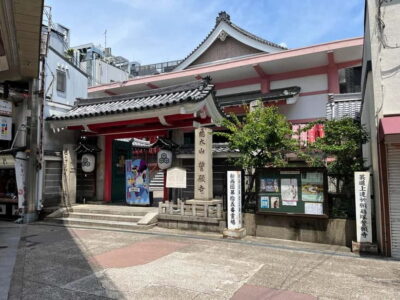
Calligraphy class at Buddhist temple in city center
Our verdict →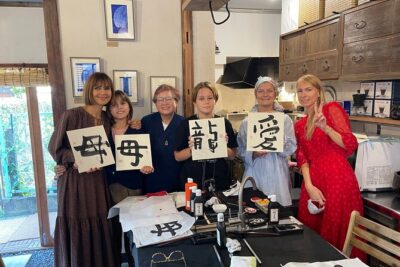
Let’s experience calligraphy in YANAKA, Taito-ku, TOKYO !!
Our verdict →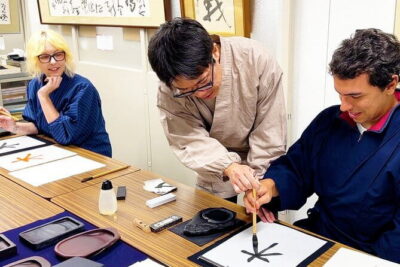
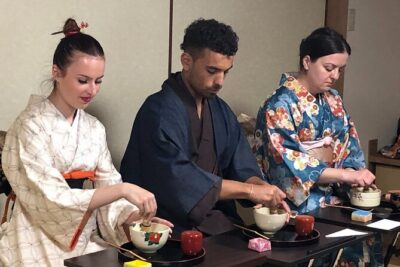
An Amazing set of Cultural experience: Kimono, Tea Ceremony and Calligraphy
Our verdict →
Private Japanese Calligraphy in Kyoto – Learn Shodō with a Master
Our verdict →
Browse the lists this tour appears in