
Reviewed · TEA CEREMONY EXPERIENCES
Cultural Activities :Kimono, tea ceremony, Calligraphy and Amulet
Miyajima has its famous torii gate and Itsukushima Shrine, but this experience takes you into a quieter part of the island’s religious life. At Tokuju-ji Temple, a Soto Zen temple founded about 300 years ago, you put on a kimono, write your name in Japanese, prepare matcha, and make an amulet.
I like two things right away: three activities fit into about two hours, and the staff keep the mood friendly and hands-on. The kimono makes every lesson feel special, while the garden provides a fine setting for photos. The main consideration is the price, $171.73 per person, which is fair for a small, photo-filled cultural session but high if you want only a quick tea demonstration.
Key points at a glance
- Three customs in one visit: Practice calligraphy, take part in a tea ceremony, and make an amulet.
- A 300-year-old temple setting: Tokuju-ji gives the experience a genuine religious and local setting.
- Kimono included: You wear a provided kimono and traditional apron during the activities.
- Photos are part of the experience: Teachers take pictures during the lessons and send them by email.
- Small groups: The maximum is 10 people, and some sessions may feel nearly private.
- Good for families: Children age 6 and older can participate when accompanied by an adult.
Three Japanese customs in one compact visit
The clever part of this experience is its structure. You do not spend a whole morning on one slow demonstration. Instead, you get roughly half an hour each for calligraphy, tea, and amulet-making, with time around those lessons for dressing and photos.
That format works well if you have only one day on Miyajima or are fitting the activity around the island’s shrine, shopping streets, and ropeway. You get a taste of several traditions without needing specialist knowledge or Japanese language skills.
It also gives each person a different favorite. You might enjoy the calm focus of calligraphy, find the tea ceremony most meaningful, or prefer the craft element of making an amulet. The activities are short enough to keep children interested, though the minimum age is 6.
More Kimono Experiences in Hiroshima:
- Kimono and Tea Ceremony in Miyajima
★ 5.0 · 73 reviews - An Amazing set of Cultural experience: Kimono, Tea Ceremony and Calligraphy
★ 5.0 · 69 reviews - Kimono and Calligraphy Experience in Miyajima
★ 5.0 · 16 reviews
Tokuju-ji Temple and its protective Jizo
The setting is more than a rented room with Japanese decorations. Tokuju-ji Temple was founded about 300 years ago and belongs to the Soto school of Buddhism. Its principal Buddha is Kinseki Jizo, a figure associated with protection for children and pregnancy.
The temple’s story centers on an older couple who prayed to Jizo for a child. Their wish was answered with a healthy boy, and they built the temple in gratitude. That story gives the amulet activity some context. You are not simply making a souvenir. You are learning about a protective object tied to a continuing religious tradition.
Miyajima has an unusual mix of Buddhist and Shinto sites. Many of the island’s temples are closely connected with Itsukushima Shrine, and you may notice features that seem more familiar from Shinto practice. The experience offers a useful reminder that Japanese religion has often developed through overlap rather than strict separation.
The temple visit itself is listed as about 20 minutes with admission included, but the full cultural session lasts about two hours. Treat the temple as the setting and cultural anchor for the activities, not as a long guided temple tour.
Wearing a kimono changes the mood
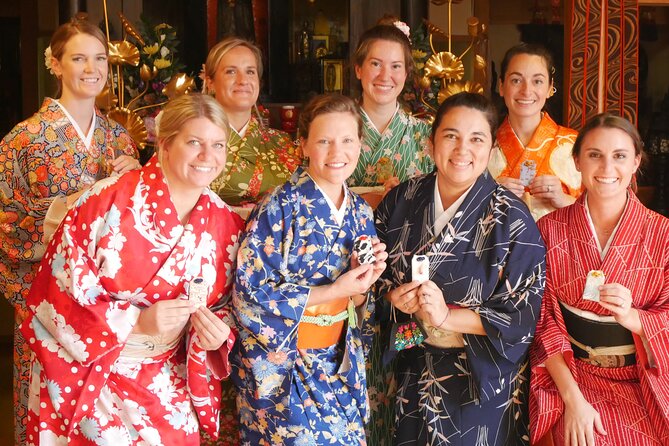
The kimono is not just a costume for a quick photo. You wear the provided kimono and traditional apron while taking part in the lessons, so the clothing becomes part of the experience.
That matters because each activity feels more connected to the setting. Sitting for tea or practicing brush strokes in everyday clothes can feel like a classroom exercise. Wearing traditional clothing makes you pay closer attention to posture, gestures, and the pace of the lesson.
You should also expect the kimono to take some getting used to. The clothing may feel formal compared with ordinary sightseeing wear, and you will be moving through several activities while dressed in it. The supplied information does not specify changing-room arrangements or shoe policies, so wear practical clothing underneath and avoid planning a rushed activity immediately afterward.
The kimono is especially useful for families, couples, and anyone who wants photographs that record more than a standard sightseeing stop. The staff take pictures during the lessons and email them to you, so you do not have to rely only on quick snapshots from your own phone.
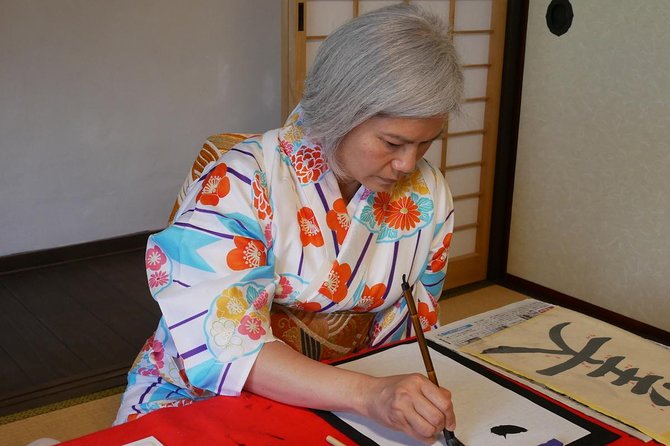
Calligraphy: writing your name with care
The calligraphy lesson teaches you how to write your name in Japanese. This is a good starting point because it gives you something personal to practice, rather than asking you to copy an unfamiliar phrase with no connection to you.
Expect the lesson to focus on basic brush handling, form, and the order or shape of the characters selected for your name. Japanese writing is not simply a matter of translating letters one by one, so the finished result may be an approximation using Japanese characters. The value is in learning how the characters are formed and understanding that brush writing depends on control and rhythm.
I like this part for the simple reason that you leave with a skill you can repeat. A tea demonstration can be beautiful to watch, but calligraphy asks you to take part directly. Your first attempt may look uneven. That is normal, and it is part of the fun.
The pace is short, roughly half an hour, so do not expect a full course in Japanese writing. You will get an introduction and a personal piece of practice rather than advanced instruction.
More Calligraphy Classes in Hiroshima:
- Calligraphy Workshop at Traditional Folk Craft Shop in Hiroshima
★ 5.0 · 26 reviews - Private Hiroshima Calligraphy: Create Your Own Kanji Art Souvenir
★ 5.0 · 12 reviews - Tokyo: Calligraphy on Kanji Fan & Scroll with Drink
★ 5.0 · 210 reviews - Kyoto: Calligraphy class at Buddhist temple in city center
★ 5.0 · 167 reviews
Tea ceremony without the long formal wait
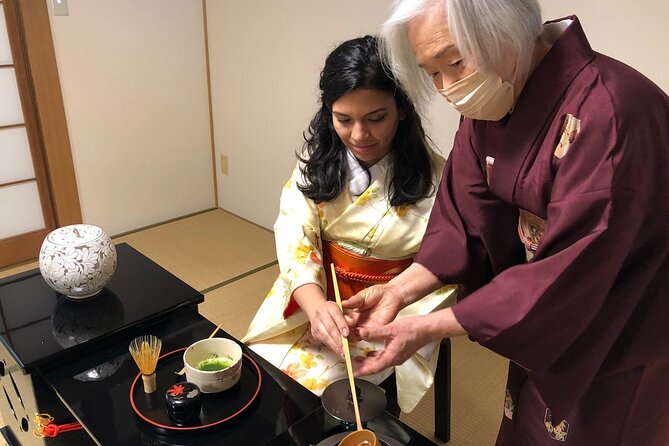
The tea portion introduces you to preparing matcha and performing a tea ceremony. This is not just a lesson in making a powdered drink. The movements, order, and attention given to the preparation are central to the custom.
You will likely notice that the process feels deliberate. The point is not speed. Small actions matter, and the ceremony gives you a chance to see how hospitality can be expressed through preparation and presentation.
The session is compact, which makes it approachable for first-time participants. A full formal tea gathering can require more time and concentration than many sightseeing schedules allow. Here, you get a practical introduction without giving up half a day.
The tradeoff is depth. If you already have extensive experience with Japanese tea ceremony, this may feel basic. For most first-time visitors, that is probably the right level. You can follow the instructor, perform the key steps, and then move on to the next activity.
Making an amulet, a rare hands-on activity
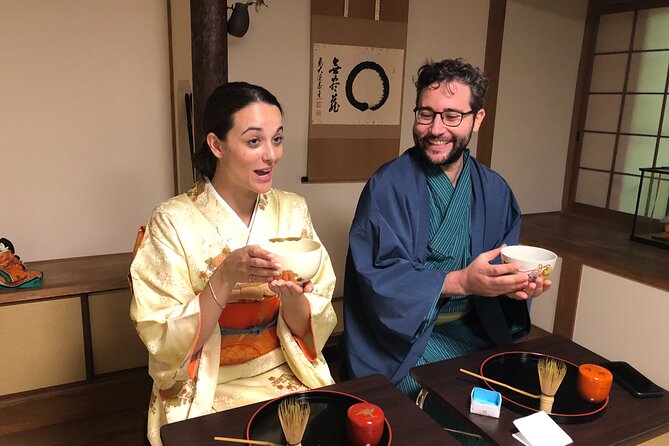
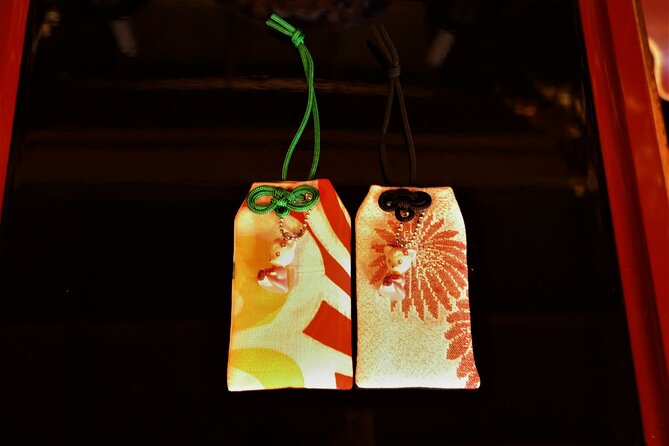
The amulet-making class is the most unusual part of the program. Many Japanese cultural experiences offer tea, calligraphy, or kimono dressing. Fewer let you make an amulet and explain what goes into it.
This activity connects directly with Tokuju-ji’s religious setting and the story of Kinseki Jizo. You get a physical object to take home, but the important part is understanding why amulets exist and how they relate to protection, prayer, and gratitude.
It also gives the session a useful balance. Calligraphy is about writing. Tea is about movement and hospitality. Amulet-making adds a craft element and gives you something tangible from the temple visit.
The available details do not specify the exact materials, design choices, or whether you can personalize every part. You should think of it as a guided introduction rather than an open-ended craft workshop. Still, this is likely the activity that makes the experience feel different from a standard kimono photo session.
Photos, gardens, and the value of a small group
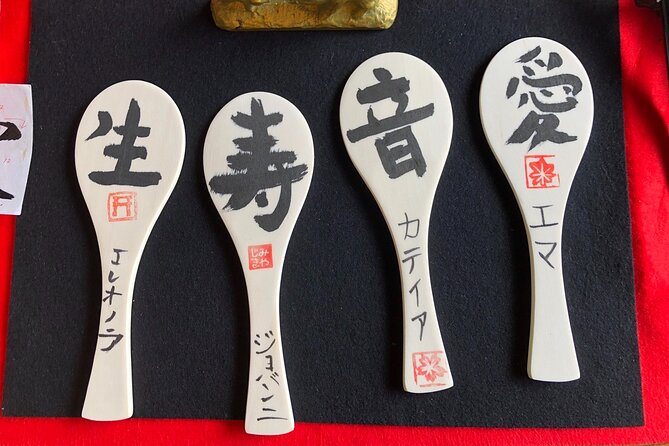
The staff take photos during the lessons and send them to you by email. That is a practical touch, especially if you are managing children, handling a brush, or trying to take part in the tea ceremony without stopping to use your phone.
The garden adds another reason to appreciate the photography. The setting gives you more than indoor portraits, and the photos can record the kimono, the temple grounds, and the activities together.
The maximum group size is 10. That is small enough for the teachers to watch each person and help with the hands-on steps. One booking even became a private session when the group size was low, though you should not book expecting a private tour.
A small group also makes questions easier. You can ask about the calligraphy characters, the tea steps, or the meaning of the amulet without trying to speak over a large class. The experience is presented by several staff members, and the available comments describe them as personable and attentive.
Is $171.73 a fair price?
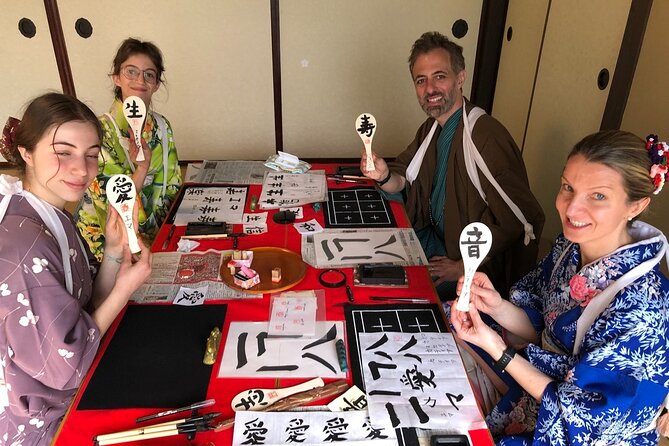
At $171.73 per person, this is not a budget activity. You are paying for three lessons, kimono use, a temple setting, an amulet, staff instruction, and photos sent afterward.
The value depends on what you want from Miyajima. If your aim is to see the major sights as cheaply as possible, the price may feel steep for two hours. If you want a structured cultural activity with several elements and a keepsake, it becomes easier to justify.
A single tea ceremony or a brief kimono rental might cost less, but those options would not give you calligraphy and amulet-making in the same appointment. Combining the activities also saves planning time. You do not need to find three separate places or arrange different bookings.
I see the strongest value for couples, families, cruise passengers, and visitors with limited time. It can also work well on a rainy day, since the focus is on indoor instruction with the temple and garden providing the setting. The photos add value, but remember that email delivery depends on the contact details you provide.
Timing, meeting point, and who should book
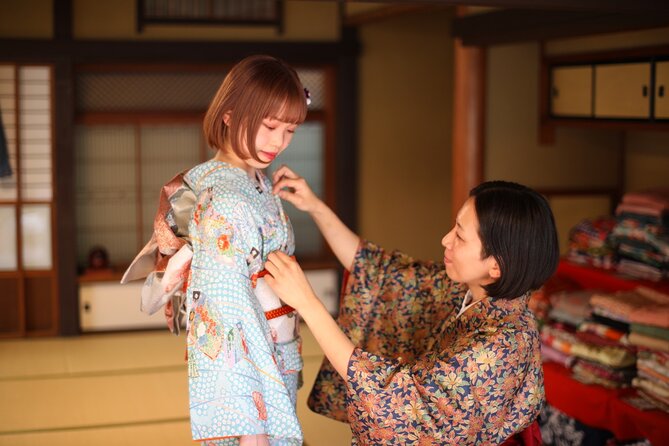
You meet at Okeiko Japan, 741-1 Miyajimachō, Hatsukaichi, Hiroshima 739-0588. The activity ends back at the same meeting point, so you do not need to arrange a separate return transfer.
The experience lasts about two hours and is near public transportation. It is wise to allow extra time to find the address, especially if you are arriving on Miyajima for the first time or fitting this around ferry and sightseeing plans. One participant arrived early and found time to put on a kimono and take garden photos before the lessons began, but early arrival should not be treated as guaranteed extra time.
This suits you best if you want:
- A first introduction to Japanese customs
- A cultural activity that works for adults and older children
- A personal keepsake rather than only photographs
- A small group with direct instruction
- Several activities packed into one appointment
It may not suit you if you want an in-depth study of Zen Buddhism, a long formal tea ceremony, or an advanced calligraphy class. The program is broad and practical, not academic.
Children must be accompanied by an adult, and the minimum age is 6. Most people can participate, but the available information does not provide detailed mobility guidance. If you have specific access needs, contact the provider before booking.
Booking details that matter
Confirmation is provided when you book, and the ticket is available on your mobile device. The activity can be canceled for a full refund up to 24 hours before the start time. Cancellations or changes made less than 24 hours before the start are not accepted for a refund.
The experience is often booked well ahead, with an average booking time of about 52 days. That does not mean you must reserve exactly that early, but it is a useful warning for fixed cruise schedules, school holidays, and popular travel dates.
My final call: book it if you want participation, not just sightseeing
I would book this experience if you want a personal introduction to Japanese culture and like the idea of doing several things with your own hands. The amulet-making class, in particular, gives the program a point of difference, while the kimono, photos, and temple setting make it easy to remember.
I would skip it if your Miyajima schedule is already packed or if $171.73 feels too high for a short activity. You can see temples and shrines independently for less. But if you have two hours to spare and want more than a quick photograph at Itsukushima Shrine, this is a well-organized way to connect with the island’s Buddhist traditions.
FAQ
Where does the experience take place?
It takes place at Okeiko Japan, at Tokuju-ji Temple, 741-1 Miyajimachō, Hatsukaichi, Hiroshima 739-0588, Japan.
How long does the activity last?
The full experience lasts approximately two hours.
What activities are included?
You take part in Japanese calligraphy, a tea ceremony, and an amulet-making class.
Is a kimono provided?
Yes. You wear a provided kimono and traditional apron during the lessons.
Are photographs included?
Yes. The teachers take photos during the lessons and send them to you by email.
How many people can join?
The maximum group size is 10 people.
What is the minimum age?
The minimum age is 6. Children must be accompanied by an adult.
Is the experience near public transportation?
Yes. The meeting point is near public transportation.
Can I cancel for a full refund?
Yes. You can cancel at least 24 hours before the start time for a full refund. Changes or cancellations made less than 24 hours before the start are not accepted for a refund.
More Tea Ceremony Experiences in Hiroshima
- Hiroshima Local guided Hiking Tour&Open-air Tea Ceremony
★ 5.0 · 213 reviews - Hiroshima: Morning Hiking Tour with Open-air Tea Ceremony
★ 4.8 · 58 reviews - Kyoto: Tea Ceremony in a Traditional Tea House in Kiyomizu
★ 4.9 · 3,519 reviews - Kyoto: Tea Ceremony Ju-An at Jotokuji Temple
★ 4.9 · 3,207 reviews
Just added around Hiroshima
- Full Day Hiroshima and Miyajima Tour by Bullet Train from Kyoto★ 4.5 · 120 reviews
- Hiroshima Saijo Sake Tasting Tour with visit to 7 Breweries★ 5.0 · 104 reviews
- The Peace Memorial to Miyajima : Icons of Peace and Beauty★ 4.5 · 31 reviews
- Shore Excursion from Hiroshima Port : Private Tour in Hiroshima★ 5.0 · 17 reviews
- Okunoshima Rabbit Island Cycling Tour with Local Guide★ 4.5 · 17 reviews
- Hiroshima & Miyajima All-Inclusive Tour w/Licensed guide Pancho★ 5.0 · 54 reviews
- Private Full Day Hiroshima Tour★ 4.5 · 29 reviews
- Hiroshima Private Tour with a Local – Highlights & Hidden Gems★ 4.5 · 24 reviews
Tea Ceremony Experiences, compared.

Tea Ceremony in a Traditional Tea House in Kiyomizu
Our verdict →


World Heritage Kyoto & Nara Uji Authentic Matcha Experience
Our verdict →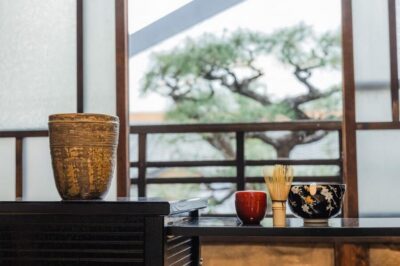


Arashiyama Bamboo Forest, Monkeys, Matcha & Temple Tour
Our verdict →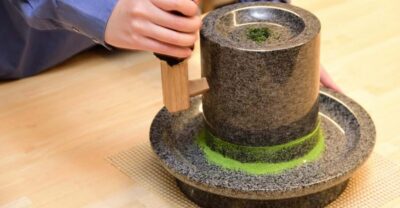
Browse the lists this tour appears in