Reviewed · GUIDED
Aizu 4hr Private Tour with Government-Licensed Guide
Aizuwakamatsu’s story comes into sharp focus when you visit Tsuruga Castle, Iimoriyama, and the Aizu samurai residences with a guide who can explain how the old shogunate order fell in 1868. The best part is that you choose two or three stops rather than race through every sight in town.
I like the private format, which lets your guide adjust the pace for children, older family members, or anyone who wants time for questions. I also like the local range: you can pair samurai history with sake at Suehiro Brewery or a quiet stroll at Oyakuen Garden. The catch is that four hours goes quickly, and admission fees, transport, and lunch are not included.
Key points to know before booking
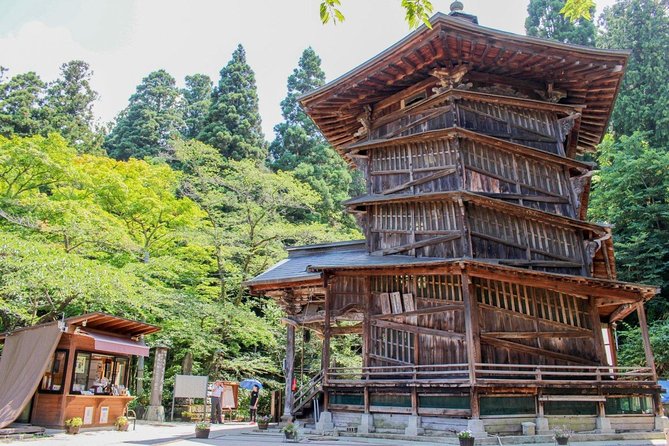
- Choose two or three sights: The tour is built around your priorities, not a fixed route through all seven places.
- Meet on foot in Aizuwakamatsu: This is a walking experience, with no private vehicle included.
- Expect strong historical context: Guides such as Mitsuko, Nobuko, and Masa focus on Aizu’s samurai era, religion, culture, and daily life.
- Add local flavor: Suehiro Sake Brewery and Oyakuen Garden give the tour more range than a castle visit alone.
- Plan for extra costs: Entry tickets, public transport, meals, and personal purchases are separate.
- Best for curious small groups: Only your party takes part, and the guide can pause or change the pace.
Why Aizuwakamatsu works so well in four hours
Aizuwakamatsu, the former feudal capital of Aizu, gives you a compact way to connect major chapters of Japanese history. The city is closely tied to the final years of the shogunate, the Boshin War, and the transition to the Meiji government.
That makes a private guide especially useful. A castle, a hilltop monument, a samurai compound, and a sake brewery can otherwise feel like separate stops. A good guide connects them. You learn not just what happened at each place, but why Aizu remembers the events so strongly.
The format is simple: tell the agency which sights matter most, then meet your licensed English-speaking guide on foot within the designated area of Aizuwakamatsu. You select two or three places from the available choices. The sample stops suggest a useful mix, but your final route depends on your choices and the time needed to move between them.
A four-hour tour is enough for a focused introduction. It is not enough to linger at every site, take a long hot spring bath, browse every shop, and visit each museum. I would treat it as a way to get the city’s main ideas in place, then return to one favorite area on your own.
More Private-Only Departures in Japan:
- Tokyo 6hr Private Tour with Government-Licensed Guide
★ 5.0 · 3,902 reviews - Private Tour to Mt. Fuji and Hakone (Fully Licenced Operator)
★ 5.0 · 1,910 reviews - Fushimi Inari Hidden Hiking Tour (Private Option Available)
★ 5.0 · 1,750 reviews
Tsuruga Castle and the end of the samurai order
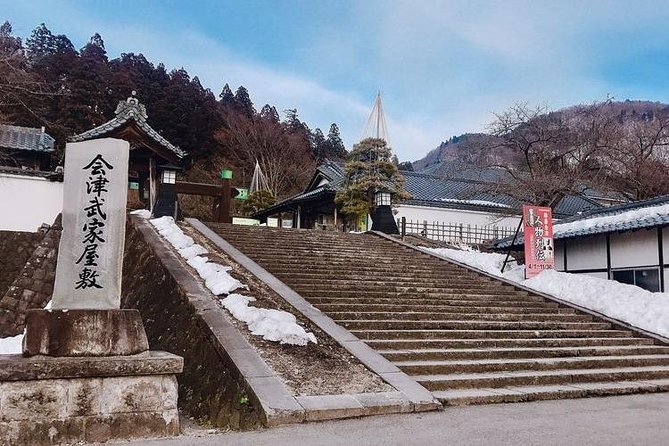
Tsuruga Castle is the natural choice if you want Aizu’s central story in one stop. The castle was first built in 1384 and changed hands many times as control of the region shifted between feudal rulers.
The present story is tied to its destruction after the Boshin War of 1868, when forces loyal to the shogun fought the new government. A guide can help you understand why the conflict mattered locally and how the fall of the castle marked the end of an old political order.
The suggested visit lasts about 30 minutes, and admission is extra. That short time can work well if you want an overview, but it may feel rushed if you want to study exhibits or spend time around the grounds. Ask your guide how much of the visit should go inside the castle and how much should be spent outside.
Tsuruga Castle is particularly useful as the first stop because it gives later visits a clear frame. After hearing the story of the final battles, Iimoriyama and the samurai residences make more sense.
The Aizu samurai residences and daily life
The Aizu samurai residences offer a different view of the past. A castle shows power and conflict. A residence shows how that system operated at home, with quarters for a high-ranking samurai, family members, employees, and servants.
The original compound was destroyed, but it has been reconstructed. That means you are seeing a careful recreation rather than a completely untouched building. Even so, the layout helps you picture the strict layers of a samurai household and the amount of work needed to support one prominent family.
The visit is listed at roughly 30 minutes, with no admission charge for this tour arrangement. That makes it an appealing companion to Tsuruga Castle if you want a history-focused morning without adding another ticket.
I would choose this stop if you enjoy architecture, household customs, and social structure. It may be less satisfying if your main interest is dramatic battle history, but it adds the ordinary details that a castle cannot provide.
Iimoriyama and the young defenders of Aizu
Iimoriyama is one of the most emotional places in the Aizu story. After the shogunate fell in 1867, forces still loyal to it gathered in northern Tohoku and resisted the new government. A decisive defeat followed at Tsuruga Castle.
Iimoriyama is associated with the young members of the Byakkotai, a group of teenage samurai defenders. Their story has become a lasting symbol of loyalty and sacrifice in Aizu. This is a place where a guide’s explanation matters. Without context, you see a hill and memorials. With context, you understand why the site carries such weight.
The planned time is about 30 minutes, and admission is not included. I would pair Iimoriyama with Tsuruga Castle if you want the clearest account of the Boshin War. The two stops approach the same conflict from different angles: one from the seat of power, the other from the memory of those who fought for it.
The site may not suit every family in the same way. The subject is serious, and children may need a gentle explanation. A private guide can adjust the level of detail to your group.
More Guided Tours in Japan:
- Tokyo: Shinjuku Local Bar and Izakaya Guided Walking Tour
★ 4.9 · 1,794 reviews - Tokyo: Private City Highlights Tour with Local Guide
★ 4.8 · 1,433 reviews - Kyoto Early Morning Tour with English-Speaking Guide
★ 5.0 · 1,427 reviews - Tokyo: Tsukiji Fish Market Guided Walking Tour
★ 4.9 · 1,397 reviews
Suehiro Sake Brewery for a taste of local industry
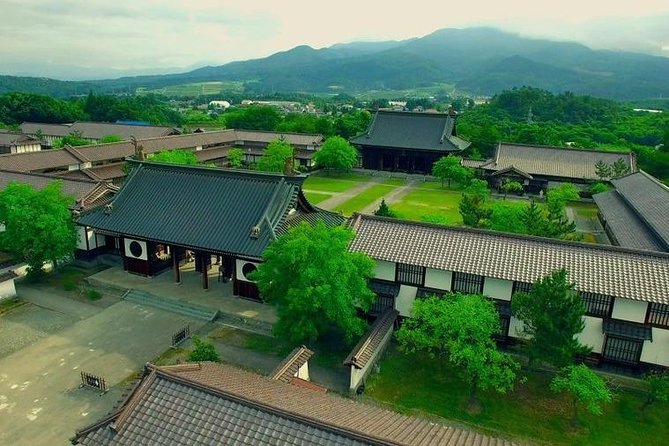
Suehiro Sake Brewery gives the tour a welcome change of pace. Founded in 1850, it remains family-owned after eight generations and is one of the major sake makers in the Tohoku region.
A brewery visit lets you connect Aizu’s past with a living local business. You are not only looking at old buildings or memorials. You are seeing a craft that remains part of the region’s identity.
The suggested stop lasts about 30 minutes, and any admission cost is separate. Since sake tasting or shopping may be part of what interests you, ask in advance how your chosen visit will work and how much time you want to reserve.
I would select Suehiro after one or two history stops. It gives you a break from military and political subjects and lets you ask your guide about Japanese food culture, local customs, or sake itself. It is also a sensible choice for adults who want a more relaxed stop.
Oyakuen Garden and a quieter side of Aizu
Oyakuen means medicinal herb garden. The name comes from the garden’s 18th-century role, and the site now offers a calm Japanese garden with a pond and walking paths.
This is the stop I would choose if you need breathing room in the middle of a busy trip. Aizu’s story includes war, political change, and painful memories. Oyakuen gives you a quieter setting in which to slow down and notice garden design, water, plants, and the older use of medicinal herbs.
The suggested visit lasts about 30 minutes, and admission is not included. That is enough for a pleasant walk, though not a long, unhurried garden visit. If gardens are your main interest, you may want to spend more time here after the guided portion ends.
Oyakuen works well with the castle or samurai residence. It also gives families and mixed-interest groups a softer stop between more serious historical sites.
Higashiyama Onsen, a one-hour change of mood
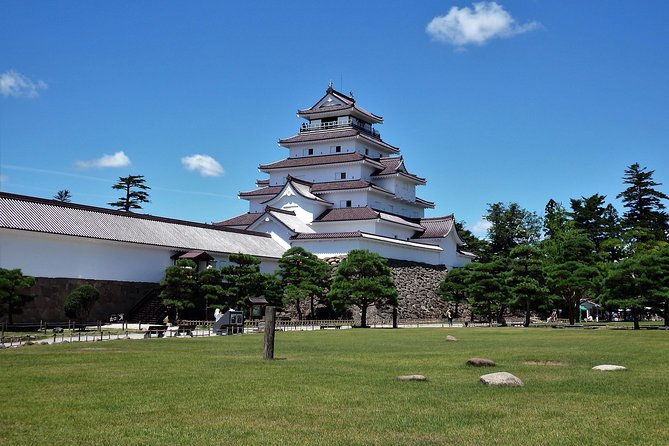
Higashiyama Onsen is a hot spring resort in a valley east of central Aizuwakamatsu. The area includes hotels and shops, with hot baths forming the center of its appeal.
The planned visit is about one hour, longer than most of the other stops. That makes sense because the area is less about checking off one monument and more about seeing a traditional resort district at a slower pace.
Do not assume that the guided visit includes a bath. The tour information describes the resort area, but transportation, entrance fees, and personal expenses are separate. Ask what is practical during your chosen time and what you should arrange on your own.
I would pick Higashiyama Onsen if you have already seen major samurai sites or want a gentler look at local life. If this is your first and only visit to Aizuwakamatsu, I would usually place the castle or Iimoriyama first.
Fukushima Prefectural Museum for a wider timeline
The Fukushima Prefectural Museum offers a broad permanent exhibition covering Japanese history from archaeological discoveries onward. Its value is scale. Instead of focusing only on Aizu’s late samurai period, you can place the region within the longer story of Japan.
The suggested visit lasts about 30 minutes, with admission extra. That is enough for selected exhibits and a guided overview, but not enough for a careful museum visit from prehistoric material through modern history.
Choose the museum if you like objects, timelines, and wider cultural context. It is less suitable if you want to stay outdoors or keep the tour centered on Aizu’s final samurai years.
What the private guide adds
The government license matters because it signals formal training in Japanese culture and history. It does not guarantee that every guide will have the same personality, but it gives you a useful baseline for interpretation.
Several guide names connected with Aizuwakamatsu are Mitsuko, Nobuko, and Masa. Mitsuko has guided groups through Tsuruga Castle, Sazaedo Temple, and folk craft activities, and has been praised for clear English and enthusiasm. Nobuko has helped visitors with local transport after the tour and added folk craft experiences. Masa is known for shaping the route around group interests and checking when people need a break.
You may be assigned someone else, so do not book solely for one particular guide unless the agency confirms availability. The key benefit is the private setup. Your guide can explain samurai history in greater or lesser detail, help a family keep moving, and answer questions that would be difficult in a large group.
One useful example from the guide service is help with IC cards and train information. That support can matter in Aizuwakamatsu, where your tour may be only one part of a wider trip through Fukushima.
Price, timing, and what you really pay for
The listed price is $107.78 per person. The value depends heavily on group size. For one or two people, it is a sizable spend for four hours, especially once you add entrance fees and local transport. For a family or small group, the private guide can make more sense because you are buying personal attention rather than a seat on a fixed bus route.
The price includes a licensed local English-speaking guide and a customized tour built around two or three selected places. It does not include transportation fees, private transportation, admission tickets, lunch, or personal purchases.
This is a walking tour, and the meeting or pickup arrangement is on foot within a designated area of Aizuwakamatsu. The phrase pickup offered should not lead you to expect a private car. Confirm the meeting point and allow time to reach it.
The tour is listed at about four hours. In practice, your chosen sites will shape the pace. Two nearby stops may leave more room for questions. A route with longer transfers or a one-hour visit to Higashiyama Onsen may give you less time at each additional site.
Free cancellation is available up to 24 hours before the start time. Cancellations or changes inside that window are not refunded or accepted.
Who should book this Aizu tour?
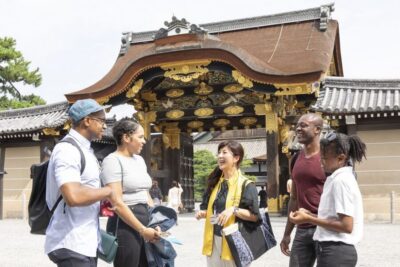
I would recommend it most strongly to first-time visitors who want the city’s main story explained in plain English. It also suits families, since the private guide can adjust the pace and help with practical needs. Most people can participate, and service animals are allowed.
It is a good match for you if you:
- Want to connect Tsuruga Castle and Iimoriyama into one clear story
- Prefer a private walking tour to a fixed group schedule
- Need help choosing between history, gardens, sake, and hot springs
- Enjoy asking questions about religion, culture, and daily life
- Have only half a day in Aizuwakamatsu
It may not be the best choice if you want private transport, a full-day countryside trip, a long museum visit, or a leisurely bath at Higashiyama Onsen. You will also need to budget beyond the tour price for tickets and transport.
My booking advice
I would book this experience if you want an informed introduction to Aizuwakamatsu and are willing to choose your priorities before arrival. For the strongest first visit, I would select Tsuruga Castle plus Iimoriyama, then add the samurai residences if timing and walking distances allow.
For a less serious and more varied outing, pair one major historical site with Suehiro Sake Brewery or Oyakuen Garden. Families may prefer Tsuruga Castle and Oyakuen, while adults interested in local food culture may choose the castle and brewery.
The tour’s real strength is not the number of stops. It is the chance to make Aizu’s complicated past understandable in four hours, at your own group’s pace. Book it if that kind of context matters to you. Skip it if you mainly want independent sightseeing and do not need a guide to connect the pieces.
FAQ
How long is the Aizu private tour?
The tour lasts approximately four hours.
How many places can I visit?
The tour includes a customized visit to two or three sites chosen from the available attractions.
Is the tour private?
Yes. Only your group participates, and multiple tour groups cannot be combined.
Is transportation included?
No. Transportation fees and private transportation are not included. The tour is conducted on foot, and you meet the guide on foot within the designated Aizuwakamatsu area.
Is hotel pickup included?
Pickup is offered on foot within the designated area. The experience does not include a private vehicle.
Are entrance tickets included?
Entrance fees are generally not included. Guide entry fees are covered only for sights specifically listed under the tour’s included attractions.
Does the tour include lunch?
No. Lunch and other personal expenses are separate.
What language does the guide speak?
The tour includes a licensed local English-speaking guide. The guides are government-certified interpreters with training in Japanese culture and history.
Can I cancel for a full refund?
Yes, if you cancel at least 24 hours before the experience start time. Cancellations or changes made less than 24 hours before the start are not refunded or accepted.
Just added around Japan
- Sekka Cotton Furoshiki Class★ 5.0 · 19 reviews
- Kyoto Sword Experience – includes Museum Ticket/Ninja Experience★ 4.5 · 149 reviews
- Scenic Green Tea Fields of Hidden Kyoto & Local Tea Exp (Private)★ 5.0 · 32 reviews
- Secret Eastern Kyoto Biking Adventure★ 5.0 · 44 reviews
- Private Sake Tasting in Central Kyoto with Sake Sommelier★ 5.0 · 32 reviews
- Samurai School in Kyoto: Samurai for a Day★ 5.0 · 202 reviews
- SHIRAKAWA Japanese Culture Experiences with private English staff★ 5.0 · 16 reviews
- A Privately Guided Photoshoot in Beautiful Kyoto by a Pro★ 5.0 · 18 reviews
Guided, compared.
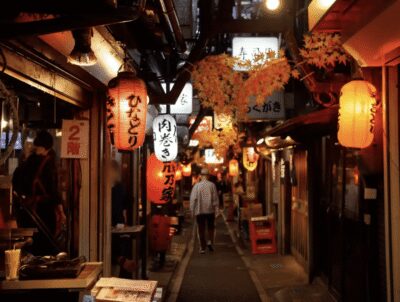
Shinjuku Local Bar and Izakaya Guided Walking Tour
Our verdict →
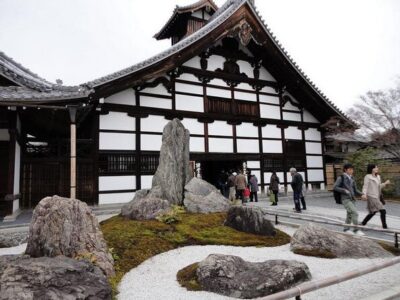
Kyoto Early Morning Tour with English-Speaking Guide
Our verdict →
Tokyo 4hr Private Tour with Government-Licensed Guide
Our verdict →