
Reviewed · SUSHI EXPERIENCES
Tokyo: Wagyu and Sushi Gastronomic Journey
Shinjuku is at its best when food and street life are taken together. This tour pairs carefully prepared Wagyu and sushi with Kabukicho’s neon streets, Omoide Yokocho’s tiny eateries, and Golden Gai’s maze of small bars. One guide, Emma, is singled out for her warm, personable style, while other guides are praised for making the food and neighborhood easier to understand.
I like the mix of serious food and old-school Tokyo atmosphere, especially the move from sushi and beef to narrow lanes shaped by the city’s postwar nightlife. I also like the small group limit of 10, which should make it easier to ask questions and follow your guide through crowded streets. The main drawback is that the tour costs $154 per person and does not include local transport, so it is a better match for food-focused visitors than for anyone seeking a low-cost meal.
Key points at a glance
- Wagyu with context: Learn about the beef’s flavor, production, regional differences, and place in Japanese food culture.
- Two food venues: Dinner includes stops for Wagyu and sushi, rather than one long meal in a single restaurant.
- Shinjuku after dark: Walk through Kabukicho, Omoide Yokocho, and Golden Gai in one compact evening.
- A quieter pause: Hanazono Shrine offers a calm contrast to the bright entertainment streets.
- Small English-speaking group: The group is limited to 10 people, with a live guide leading the walk.
- Plan for extra transport money: Local transportation, if needed, costs about 200 to 800 yen and is not included.
Why this Shinjuku food tour works
Many food tours give you a restaurant and little else. This one uses dinner as the thread connecting several sides of Shinjuku. You get sushi and Wagyu, but you also see the streets where office workers, nightlife crowds, shrine visitors, and late-night diners share the same few blocks.
That combination matters. Wagyu can be delicious on its own, yet a guide can explain why the beef is prized, how flavor and texture differ by region, and what makes it distinct from ordinary beef. Sushi also becomes more interesting when you understand the chef’s timing, knife work, seasonal ingredients, and attention to presentation.
The evening is not built around a long lecture. It is a walking tour with food stops, so you should expect to keep moving between bites. That makes the experience a good choice if you want a first look at Shinjuku and prefer a meal with some local context.
The food is the strongest part of the experience. Nearly every supplied rating gives top marks to the Wagyu, sushi, and the guides’ ability to explain what you are eating. The comments repeatedly point to tender beef, fresh sushi, and guides who add warmth rather than simply leading the group from place to place.
More Sushi Experiences in Tokyo
- Sushi Making Tokyo Roll and Authentic Japanese Sushi Class
★ 5.0 · 3,971 reviews - Tokyo: Roll and Authentic Sushi Making Class in Asakusa
★ 4.9 · 1,957 reviews - Make Sushi and Create Unforgettable Memories in Tokyo
★ 5.0 · 1,413 reviews
Meeting near the 3rd Burger
The meeting point is just in front of the 3rd Burger at 7-chōme-10-5 Nishishinjuku. Give yourself enough time to locate it before the start, since Shinjuku has a habit of turning a simple address into a short navigation puzzle.
The tour finishes in Shinjuku Golden Gai. That is useful because you can keep exploring after the official walk ends, although your evening does not finish at the same place where it begins. You should wear comfortable shoes. The route passes through narrow lanes and busy entertainment areas, and the experience lasts about three to three and a half hours.
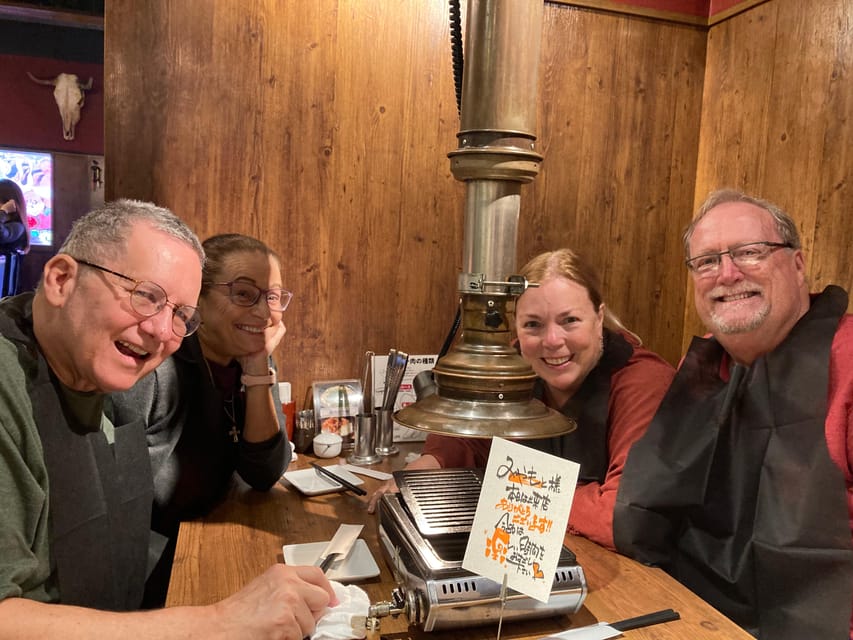
A live English-speaking guide leads the tour. The group limit is 10, which is small enough for questions and conversation without making the outing feel like a private tour. One named guide, Emma, is described as personable and good at sharing practical food knowledge along with stories from her time in the United States. Other guides are praised for their expertise and hospitality.
Kabukicho: Tokyo nightlife without losing your bearings
The first major part of the route takes you through Kabukicho, Shinjuku’s famous entertainment district. Bright signs, restaurants, bars, and nightlife venues fill the area. The district can feel loud and crowded, especially after dark, but that is part of the point. You are seeing one of Tokyo’s most recognizable evening zones rather than a quiet neighborhood designed for sightseeing.
The guided portion through Kabukicho lasts about an hour and a half as part of the overall route. Your guide provides the setting for the food stops and explains how the district fits into Shinjuku’s identity. You may also see the Godzilla Head above the Shinjuku Toho Building, an oversized pop-culture landmark that gives the area an unmistakable Tokyo flavor.
I like this section because it keeps the meal from feeling sealed inside a restaurant. The neon, narrow streets, and signs help explain why Shinjuku is such a popular place for an evening out. At the same time, Kabukicho is not presented as a polished theme park. It is an active entertainment district, and you should be comfortable with crowds, noise, and a strong nightlife presence.
The route’s food focus also gives you a reason to look beyond the biggest signs. Instead of trying to make sense of the district alone, you have a guide helping you move through it while pointing out places and customs you could easily miss.
Wagyu: the main event for meat lovers
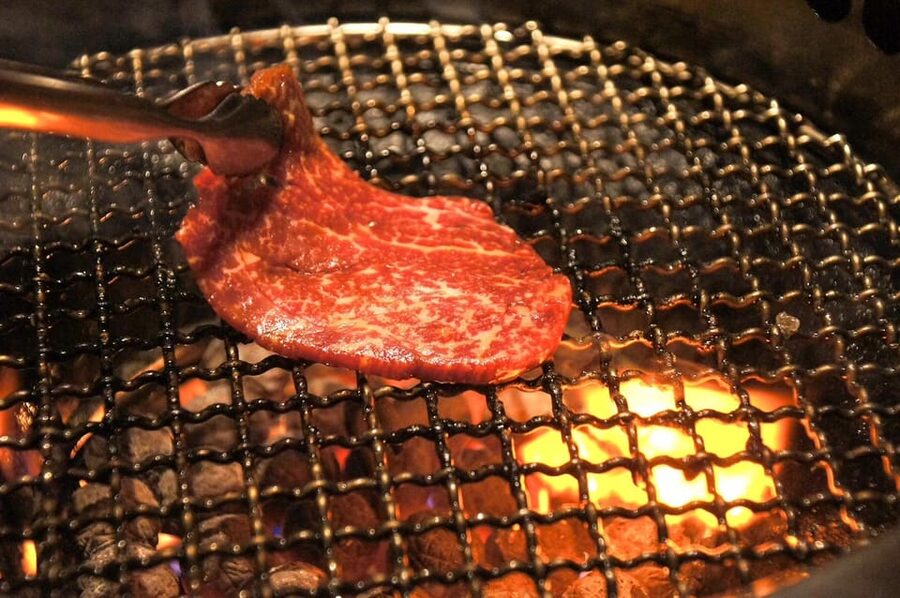
The Wagyu portion is likely to be the highlight if you plan your trip around food. The experience introduces the beef’s origins, flavor, and regional variations before or during the meal. You learn why the meat is valued, rather than simply receiving a plate and a quick explanation.
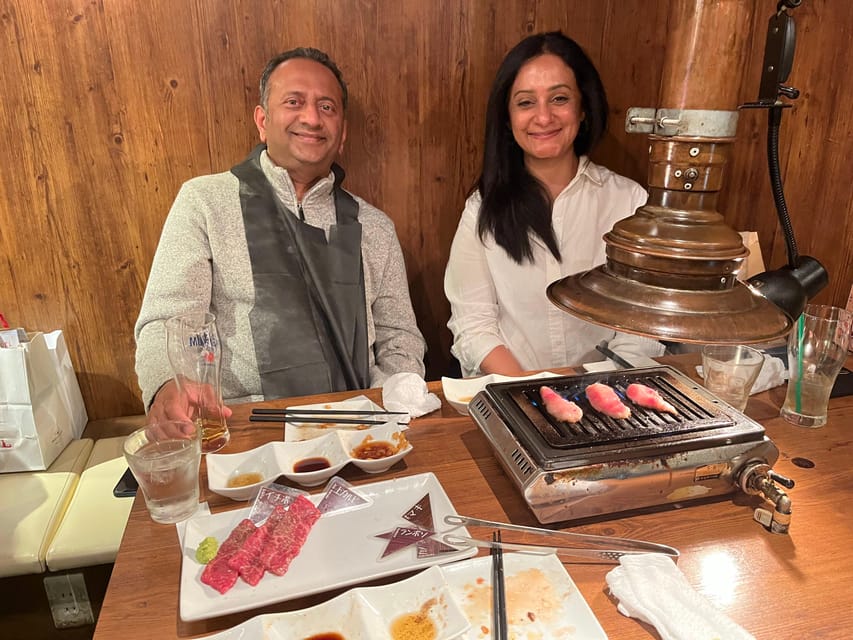
The supplied details describe Japanese barbecue as part of the Wagyu experience. That is useful context because it suggests a more active meal than a single plated course. You should expect the beef to be the focus, with its tenderness and flavor given room to speak for themselves.
One practical point: Wagyu can be rich. If you are used to leaner beef, the texture and fat may feel especially pronounced. That is part of the appeal, but it also means the food may be more satisfying in smaller portions than in a giant serving. The tour pairs it with sushi and other tastes, giving you variety instead of asking you to spend the entire evening on one style of meal.
The strong praise for the Wagyu is consistent across the supplied comments. People describe it as tender, mouthwatering, and a major highlight of the evening. One person called a first Japanese barbecue experience the ultimate treat. That gives you a fair idea of where the tour puts its culinary weight.
Still, you should not book this as a bargain dinner. At $154 per person, you are paying for the food, a guide, two food venues, the neighborhood walk, and the convenience of having someone explain the choices. If you only want to eat Wagyu, a restaurant reservation may cost less. If you want food plus a guided introduction to Shinjuku, the package makes more sense.
More Wagyu Experiences in Tokyo
- Tokyo Night Foodie Tour in Shinjuku – Seasonal Sushi, Wagyu Beef
★ 5.0 · 1,161 reviews - Tokyo: Wagyu and 7 Japanese Dishes Cooking Class
★ 4.9 · 273 reviews - Small-Group Wagyu Beef and 7 Japanese Dishes Tokyo Cooking Class
★ 5.0 · 190 reviews - Wagyu & Sake Pairing in Shinjuku – Steak, Shabu-Shabu & More
★ 5.0 · 112 reviews
Sushi made with precision
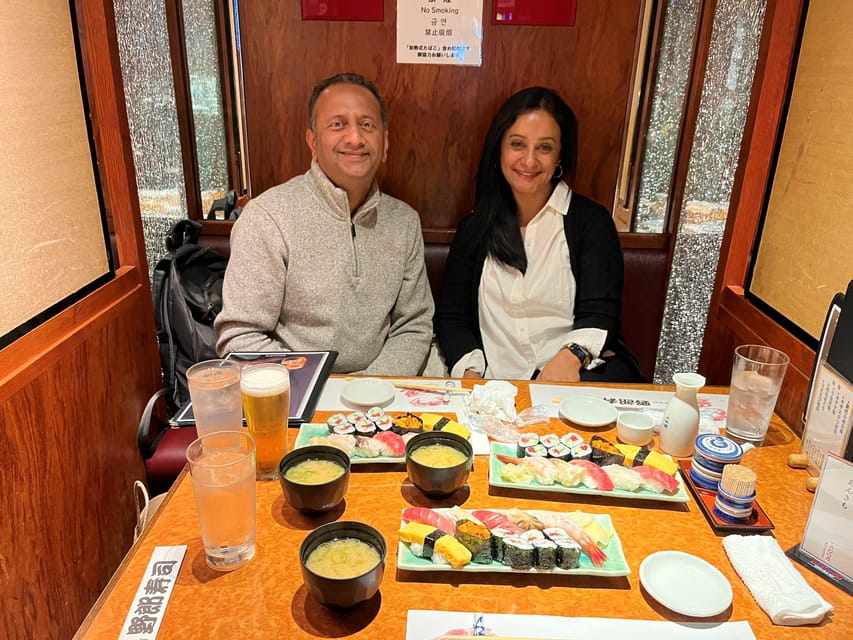
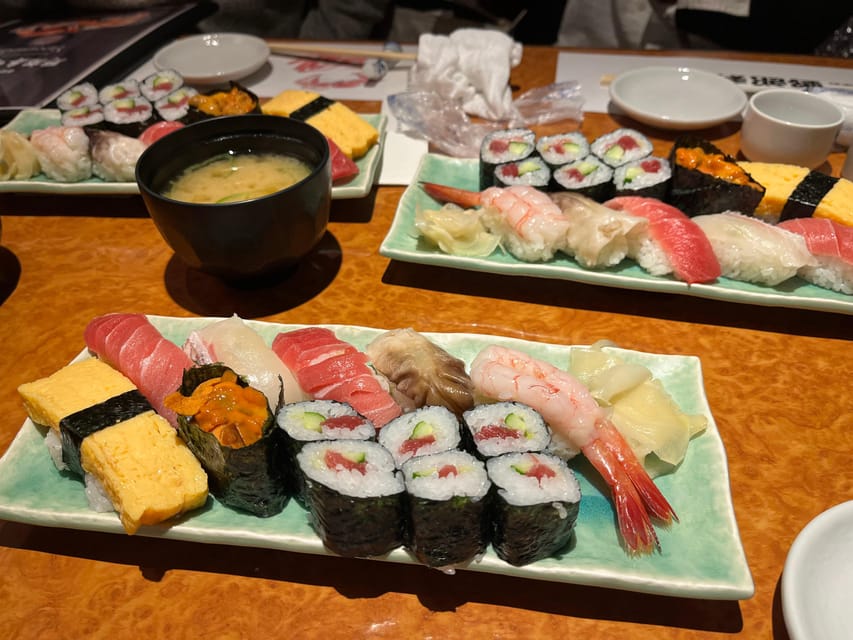
The sushi stop gives the evening a different rhythm. Instead of the richer, heavier character of Wagyu, you get seafood, rice, seasonal ingredients, and the careful work of the sushi chef. The guide explains traditional methods and the precision involved in shaping each piece.
This is especially useful if you do not have much experience ordering sushi in Japan. You can ask about the ingredients and preparation as you go, rather than guessing from a menu or relying on familiar choices. The focus is on freshness, technique, and the connection between the ingredient and the season.
The sushi and Wagyu are meant to complement one another. One offers richness and grilled beef flavor. The other is lighter and more focused on texture, temperature, seasoning, and balance. Having both in one evening helps you understand why Japanese cuisine is not just about buying the most expensive ingredient.
The food praise is very strong here as well. Sushi is repeatedly described as fresh, flavorful, and perfectly prepared. The guide’s explanations are just as important as the meal. You are not only eating sushi, you are being shown how to pay attention to it.
The tour includes dinner and visits to two distinct food venues. The exact dishes and restaurant names are not provided, so you should not book expecting a fixed tasting menu or a guaranteed list of cuts. The experience is better understood as a guided evening whose food selection can reflect the venues and the day.
Omoide Yokocho and the small-bar side of Tokyo
Omoide Yokocho is one of the most memorable stops for atmosphere. The narrow alley is known for tiny bars and eateries serving yakitori and other Japanese comfort foods. It feels far removed from the large signs and broad station areas nearby.
The passageways are tight, and the restaurants are compact. That is part of the charm, but it also means you should not expect a spacious dining room or a quiet, leisurely meal. The appeal comes from being close to the action, with smoke, conversation, and food preparation packed into a small space.
A guide helps here because tiny food lanes can be confusing. You may find it difficult to know which places welcome newcomers or how the ordering works. The tour gives you a way to see the area without having to make every decision alone.
This stop also adds comfort food to the Wagyu and sushi. Yakitori and similar dishes show another side of Japanese dining, one built around casual eating, quick drinks, and familiar flavors. Even if the formal meal is the centerpiece, Omoide Yokocho helps keep the evening grounded in ordinary local eating habits.
Hanazono Shrine: a quiet change of pace
Hanazono Shrine brings a needed pause. Set among Shinjuku’s busy streets, the shrine offers a calmer place to notice traditional Japanese religious practice. The contrast is the attraction: one moment you are in a nightlife district, and the next you are in a quieter space with a different pace.
The visit is not described as a long religious tour, so keep your expectations measured. You will get a glimpse of the shrine and its role in the neighborhood rather than an extensive study of Shinto. Even so, this short stop adds balance to the evening.
I value this kind of pause on a city tour. Without it, the route could become a string of neon signs and restaurant interiors. Hanazono Shrine reminds you that Shinjuku is not only entertainment and consumption. It also contains places used for reflection, tradition, and everyday ritual.
Your guide can also help you approach the site respectfully. This is one reason a walking tour can be more useful than exploring the area from a food map alone.
Golden Gai and the final stretch
The tour ends in Shinjuku Golden Gai, a maze of narrow alleys with more than 200 small bars. Each bar has its own character and theme, and the district offers an intimate look at Tokyo’s postwar drinking culture.
Golden Gai is not for everyone. The bars are tiny, and some may feel more suited to regular customers than to a large tourist party. The group tour gives you an introduction without requiring you to choose a bar immediately. Afterward, you can decide if you want to stay in the area or head elsewhere.
Alcoholic beverages are included for participants aged 20 and older. Japan’s legal drinking age is 20, so younger participants should not expect alcohol as part of the experience. The supplied information does not specify exactly which drinks are served, so it is sensible to view the inclusion as a chance to sample drinks during the food stops rather than as an open bar.
Golden Gai is a strong finishing point because the route ends with possibility. You can continue exploring, return to your hotel, or simply take in the small alleys after learning how the district works. The area is atmospheric, but it is also tight and active, so keep your group together until the tour officially finishes.
The $154 price and what you receive
At $154 per person, this is a premium evening. The value depends on how much you want from the guide and neighborhood access, not just how much food you can eat.
The price includes a local guide, dinner, alcoholic beverages for participants at least 20 years old, and visits to two different food venues. It also covers the time spent walking through Kabukicho and Golden Gai, with stops connected to Omoide Yokocho, Hanazono Shrine, and the Godzilla landmark.
That package can be worthwhile if you are visiting Tokyo for the first time, want help ordering and understanding Japanese food, or prefer a planned evening in a complicated district. The small group also gives it more value than a large bus-style outing.
The price is harder to justify if you already know Shinjuku well, speak Japanese comfortably, or mainly want an inexpensive dinner. Local transport is not included and may cost 200 to 800 yen, so budget for that on top of the tour price if your route requires it. Hotel pickup and drop-off are also not provided.
Free cancellation is available up to 24 hours before the start, and you can reserve now while paying later. Those terms help if your Tokyo schedule is still changing. You should also contact the operator if plans change on the day. If there is no contact from you, the tour may be canceled, with a full refund issued in that situation.
Who should book this evening
I would recommend this tour to a first-time Tokyo visitor who wants food and a sense of place in the same night. It is also a good fit for couples, solo visitors who want company, and small groups that would rather have a guide manage the route and restaurant stops.
Food lovers will get the most from it, especially if Wagyu and sushi are high on your Japan list. The tour also suits anyone curious about the difference between formal food technique and casual street-side dining.
You may want a different plan if you dislike nightlife districts, narrow spaces, alcohol-centered areas, or walking after dark. The route is not only a tasting menu. Kabukicho and Golden Gai are central to the experience, and their energy may be more than you want after a long day.
The tour lasts three to three and a half hours. That is enough time for a substantial evening without taking over your whole night, but you should not schedule a distant reservation immediately afterward.
Should you book it?
Book this tour if you want high-quality Wagyu and sushi paired with a guided introduction to Shinjuku’s nighttime streets. The food receives the strongest praise, and the mix of Kabukicho, Omoide Yokocho, Hanazono Shrine, and Golden Gai gives the evening more range than a restaurant-only outing.
Skip it if your main goal is the lowest possible meal price or if you want a quiet dining experience. At $154, the cost is justified by the two food venues, guide, drinks for adults, small group, and neighborhood access. For a first Shinjuku evening, that is a fair exchange. For a repeat visitor who already knows the area, it may be less compelling.
FAQ
How long does the Tokyo Wagyu and sushi tour last?
The activity lasts about three hours, with the full duration sometimes reaching three and a half hours.
Where does the tour begin?
The meeting point is just in front of the 3rd Burger at 7-chōme-10-5 Nishishinjuku.
Where does the tour finish?
The tour finishes in Shinjuku Golden Gai.
What food is included?
Dinner includes Wagyu, sushi, and food at two distinct venues. The tour also includes Japanese comfort food experiences connected with areas such as Omoide Yokocho.
Are alcoholic beverages included?
Yes. Alcoholic beverages are included for participants aged 20 and older.
Is transportation included?
No. Transportation costs are not included. The stated local transport range is about 200 to 800 yen.
Is hotel pickup and drop-off provided?
No. Hotel pickup and drop-off are not included.
Is the tour available in English?
Yes. A live English-speaking guide leads the tour.
How many people are in the group?
The tour is a small-group experience limited to 10 participants.
Just added around Tokyo
- Kawagoe Japanese Food Tour : Unagi Kaiseki and Sake near Tokyo★ 5.0 · 30 reviews
- Kawagoe 4hr Private Tour with Licensed Guide (Kawagoe Dep)★ 5.0 · 13 reviews
- Little EDO Sushi Making workshop in Kawagoe★ 5.0 · 18 reviews
- 【R34】Tokyo:Private Daikoku tour in Modified R34★ 4.9 · 92 reviews
- :Tokyo,Shibuya/ Pro Photography in Kimono / English-Friendly★ 5.0 · 26 reviews
- Tokyo:Celebrate Unique Japanese New Year Tradition Festivity★ 3.9 · 20 reviews
- Tokyo: Allstar Food Tour★ 4.7 · 29 reviews
- Tokyo: West-Side Cycling and Food Tour with Guide★ 5.0 · 37 reviews
Sushi Experiences, compared.
Sushi Making Tokyo Roll and Authentic Japanese Sushi Class
Our verdict →
Sake Omakase in Tokyo: Guided Tasting by Certified Sommeliers
Our verdict →Browse the lists this tour appears in