
Reviewed · COOKING CLASSES
Small-Group Wagyu Beef and 7 Japanese Dishes Tokyo Cooking Class
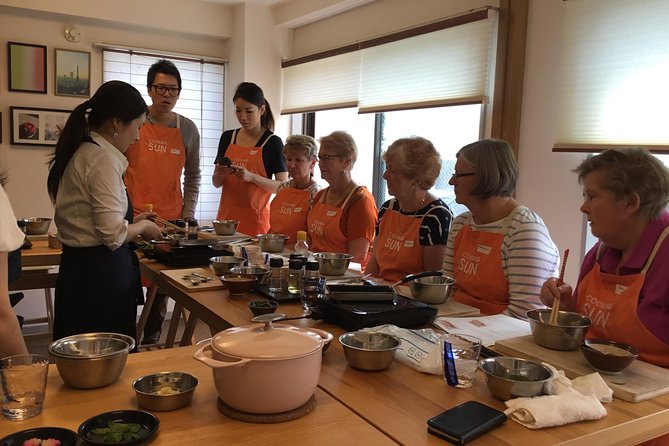
Japanese cooking is built on small details, and this class lets you work with them instead of simply watching a chef. You begin with dashi, the basic stock behind much of the meal, then use Japanese seasonings, vegetables, careful cuts, and Wagyu beef to prepare a full lunch.
I like the maximum of eight people, since you should get real time at the counter rather than stand at the back of a large demonstration. I also like the practical focus: you leave with recipes and techniques you can use at home, not just a plate of food. The main drawback is finding the studio at 18-39 Shinanomachi, which several participants found tricky despite its quiet, pleasant setting.
Key points to know before booking
- Start with dashi: You learn how Japanese cooks build flavor from the basic stock used throughout the meal.
- Wagyu is the main event: The class includes tender Japanese beef, prepared as part of a multi-dish lunch.
- Small and active: The group is limited to eight, and the instructors provide hands-on guidance.
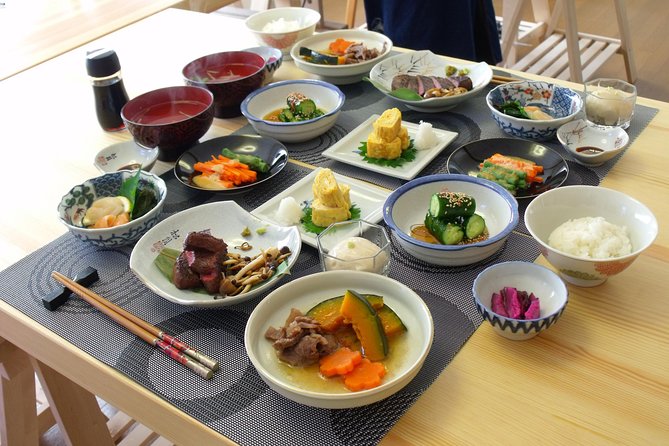
- Up to eight dishes: Expect appetizers, vegetables, soup, rice or other traditional elements, a main dish, and dessert, though the exact menu can vary.
- English instruction: Local instructors explain ingredients, methods, food culture, and recipes in English.
- Good value at $72.96: Three hours of instruction, ingredients, recipes, equipment, and a substantial meal are included.
Why this three-hour class works so well
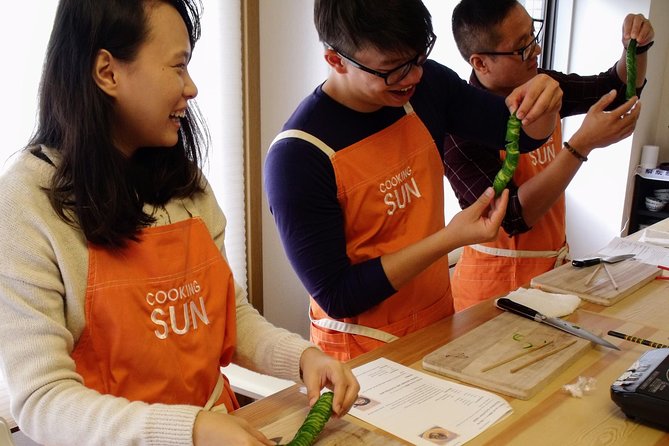
Tokyo has no shortage of excellent restaurants, but restaurant meals rarely show you how the food comes together. This class takes you behind the finished dish. You handle ingredients, learn why dashi matters, and see how a few standard seasonings can shape several different recipes.
The format is especially useful for anyone who wants to cook Japanese food after returning home. The instructors explain staple ingredients and share tips for preparing the recipes in a normal kitchen. That home-cooking angle gives the class more value than a quick food demonstration.
The pace is brisk. In about three hours, you work through a meal of up to eight dishes, from the opening preparations to the final sit-down lunch. One participant described making eight dishes and using the dashi in nearly every other dish, which gives you a clear idea of how much ground the class covers.
That amount of food also means the class is not built around one elaborate recipe. You will learn several smaller preparations, sauces, cuts, and cooking methods. This is good if you want a broad introduction. It may feel less focused if you hoped to spend the entire morning mastering one dish.
More Cooking Classes in Tokyo
- Ramen & Gyoza Cooking Class in Tokyo with Local Supermarket Visit
★ 5.0 · 823 reviews - Tokyo: Easy Ramen Cooking Experience in Kabukicho, Shinjuku
★ 4.6 · 321 reviews - Ramen and Sushi Cooking Class with Sake Pairing Set in Tokyo
★ 5.0 · 291 reviews
Arriving at Cooking Sun Tokyo in Shinanomachi
The meeting point is Cooking Sun Tokyo at 18-39 Shinanomachi, Shinjuku City, Tokyo 160-0016. The class starts at 9:30 a.m. and ends back at the same location.
The studio is near public transportation, in a quieter residential area with trees and a large park nearby. That setting can be a pleasant change from central Tokyo’s crowded streets. Several participants found the area easy to reach once they followed a map, while others had trouble identifying the building. I would allow extra time for arrival and avoid cutting it close.
The location itself is part of the practical planning. You are not being picked up at your hotel, and hotel transfer is not included. You need to make your own way to the studio, so check the address before leaving your accommodation and have the map open as you approach.
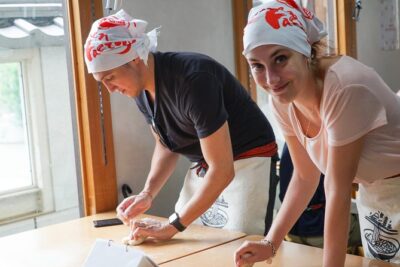
Once inside, the class has a homey, clean feel. Aprons and towels are supplied, and all ingredients and cooking equipment are provided. You do not need to bring special tools or shopping bags for the ingredients.
Making dashi, the foundation of the meal
The first major lesson is dashi. This stock is a basic building block in Japanese cooking, and starting with it gives the rest of the class a clear structure.
Rather than treating dashi as a mysterious restaurant ingredient, the instructor explains how it is made and where it is used. You then apply it to other dishes during the meal. This is one of the most useful parts of the class because it connects separate recipes into a single style of cooking.
The instructors also introduce common Japanese seasonings. You learn how these ingredients work in soups, sauces, vegetables, and other preparations. The explanations are short enough to keep the kitchen moving, but detailed enough to give you context about the flavors on your plate.
This balance suits a morning class. You get useful background without sitting through a long lecture. The emphasis stays on cooking, tasting, and understanding what you are doing.
Seven dishes, Wagyu beef, and a full Japanese lunch
After dashi, you move through the rest of the meal. The class prepares seven dishes, or up to eight depending on the menu and class format. The food includes Japanese vegetables, traditional seasonings, appetizers, a main course, and dessert.
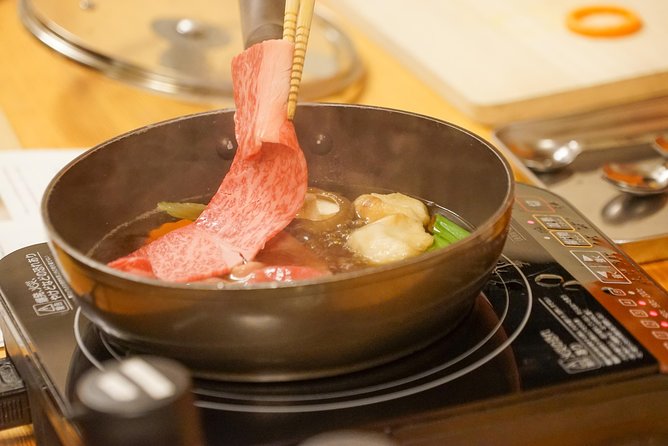
The Wagyu beef is the clear centerpiece. Wagyu simply means Japanese beef, with wa meaning Japanese and gyu meaning beef. Here, you use it in a finished dish rather than only tasting a small sample. Sukiyaki is a particular favorite in the menu described by participants, and the tender beef gives the lunch a special touch without turning the class into a luxury-only experience.
The meal also includes the less visible parts of Japanese cooking: vegetable preparation, soup, rice or starches, dressings, and presentation. These are the dishes you may not notice when eating in a restaurant, but they are often the most useful to reproduce at home.
The instructors demonstrate elaborate cuts and show you how to arrange food attractively. Japanese presentation is not only about decoration. The shape of a vegetable, the size of a portion, and the balance of colors all affect how the finished meal feels.
Expect a mix of hands-on work and instructor preparation. The class description promises active participation, and you should not be a bystander in a group of eight. Still, one detailed account noted that some items, such as miso soup, rice, potatoes, and certain prepared components, were handled by the staff while participants focused on chopping, mixing, cooking an egg, and searing a prepared lotus root stuffed with minced chicken.
That is worth knowing. This is interactive, but it is not eight people independently cooking every component from start to finish. The advantage is that you can cover many dishes in a short time. The tradeoff is that you may not perform every step yourself.
More Wagyu Experiences in Tokyo
- Tokyo Night Foodie Tour in Shinjuku – Seasonal Sushi, Wagyu Beef
★ 5.0 · 1,161 reviews - Tokyo: Wagyu and 7 Japanese Dishes Cooking Class
★ 4.9 · 273 reviews - Wagyu & Sake Pairing in Shinjuku – Steak, Shabu-Shabu & More
★ 5.0 · 112 reviews - Tokyo: Wagyu and Sushi Gastronomic Journey
★ 4.3 · 24 reviews
Friendly English-speaking instructors
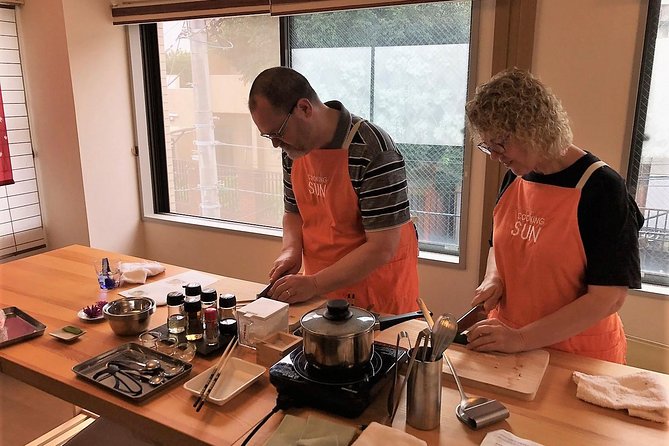
The instructors are local, English-speaking cooks who explain each step and help with technique. Names associated with the class include Aya, Hidemi, Kaori, Megumi, and Yoko. The exact teaching team may vary, but the format generally includes one or two instructors working with the small group.
The strongest part of the teaching style is its approachability. You do not need professional cooking experience, and the instructions are designed to be followed by beginners. Participants with little cooking confidence found the recipes manageable, while more experienced cooks could pick up new cutting methods, seasoning ideas, and presentation tips.
The instructors also share stories about recipes and ingredients. That adds cultural context without taking over the cooking. You learn not only what to do, but why a dish belongs on the table and how it fits into Japanese food culture.
If you have allergies or dietary needs, tell the provider when booking. A vegetarian option is available, but it must be requested in advance. The supplied information does not promise that every dietary restriction can be handled, so be specific before you arrive.
Eating what you prepared with sake and green tea
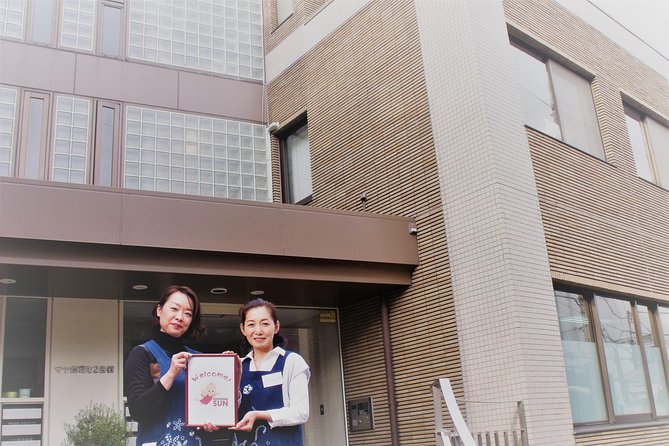
Once the cooking is finished, you sit down and eat the meal together. This is the satisfying payoff: you can see how the many small preparations fit into a complete Japanese lunch.
The meal is described as being accompanied by sake and green tea. Because one participant hoped for a small cup of sake, the exact serving arrangement may depend on the class or day, so do not book this solely as a sake tasting. The food is the main focus.
The shared meal also gives you time to talk with the instructors and other cooks. The setting is casual rather than formal, despite the reference to kaiseki ryouri, or Japanese haute cuisine. You get a taste of the care behind kaiseki presentation, but this is a practical cooking lesson, not a full restaurant-style kaiseki service.
The class closes with itadakimasu, the familiar Japanese expression said before eating. It is a small detail, but it helps connect the cooking lesson with the culture surrounding the meal.
What you will actually learn
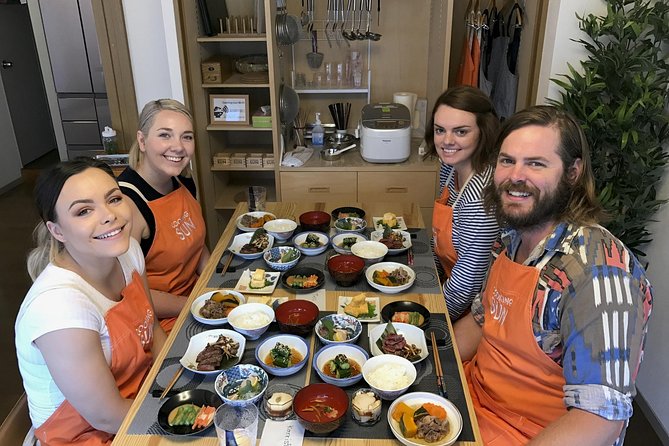
The most useful lessons are the ones you can repeat at home. During the class, you work with:
- Dashi and its role in Japanese cooking
- Traditional Japanese seasonings
- Japanese vegetables and seasonal ingredients
- Knife work and decorative cutting
- Sauces, dressings, soup, and other small preparations
- Wagyu beef as a main dish
- Food arrangement and presentation
- Recipes for preparing the dishes again at home
The class is not simply about collecting recipes. It shows how one stock or seasoning can support several dishes. That helps you understand Japanese cooking as a system rather than a list of unrelated meals.
A participant who cooks professionally in the United States found the class useful for building a new set of techniques. You do not need that level of experience to benefit. Even a beginner can leave with a better sense of how Japanese flavors are layered and how a home meal is assembled.
Is $72.96 a fair price?
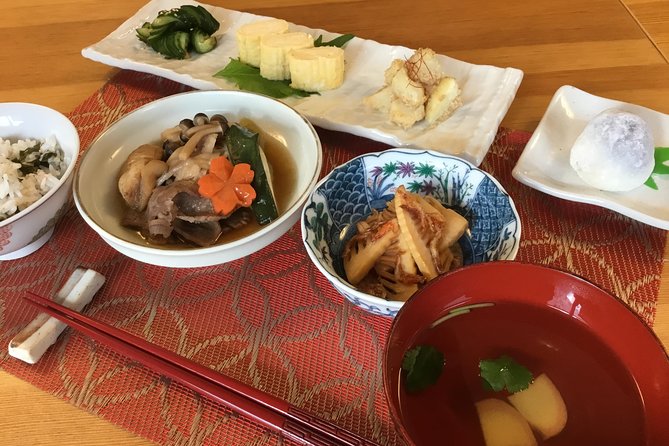
At $72.96 per person, this is a strong value if you want food, instruction, and a full activity in one package. The price includes the local instructor, recipes, ingredients, apron, towel, and cooking supplies. You also eat the meal you help prepare.
The value is not only in the Wagyu. The class covers up to eight dishes in roughly three hours, which makes the cost reasonable compared with paying separately for a restaurant meal and a shorter demonstration. You also receive recipes and practical instruction that can continue to pay off after your trip.
The price looks less attractive if you want a highly specialized Wagyu lesson. The beef is part of a broader Japanese menu, not the sole subject. Likewise, if you prefer to watch a chef prepare food without doing much yourself, some of the active chopping and mixing may feel like work rather than entertainment.
For most visitors, though, the combination of a small group, a substantial lunch, and English instruction makes the fee sensible. Two instructors for a small group can also mean more help when you are learning unfamiliar techniques.
Who should book this class?
I would recommend it to first-time visitors who want a direct connection to Japanese food culture. It suits couples, families, solo cooks, and anyone who likes to bring practical skills home from a trip.
It is also a good choice for mixed-skill groups. You do not need to be confident in the kitchen, and the instructors can guide beginners through each step. More experienced cooks should still find value in the dashi lesson, Japanese cutting styles, ingredient explanations, and menu structure.
Families should note that the class involves several hours of cooking and food preparation. The small group makes it easier to stay involved, but the experience is not a quick food stop.
You may want to choose another activity if your priority is a dedicated ramen lesson, a formal kaiseki meal, or an advanced culinary workshop focused on one technique. Ramen appears in one account of the experience, but the stated format centers on a changing multi-dish Japanese meal, so confirm the menu if one specific dish matters to you.
Booking details worth keeping in mind
Confirmation is provided at booking, and the class accepts mobile tickets. The maximum is eight people, which helps keep the instruction personal.
You can cancel for a full refund up to 24 hours before the 9:30 a.m. start time. Cancellations or changes made within 24 hours are not refundable or accepted, and the cut-off follows Tokyo local time.
Plan your route before class day. The building can be hard to identify, even though the surrounding area is quiet and pleasant. Arrive early enough to find the studio without rushing into your apron.
Should you book the Cooking Sun Tokyo class?
Book it if you want to cook rather than simply eat, and if learning several Japanese dishes matters more to you than spending a morning on one recipe. The small class, English-speaking instruction, Wagyu main dish, recipes, and substantial lunch give you a lot for three hours.
Go in with realistic expectations. Some components may be prepared by the instructors, the menu can include several smaller tasks, and the location takes a little care to find. With those points in mind, this is a practical, friendly introduction to Japanese home cooking and one of the better food activities for bringing a piece of Tokyo back to your own kitchen.
FAQ
Where does the cooking class meet?
The class meets at Cooking Sun Tokyo, 18-39 Shinanomachi, Shinjuku City, Tokyo 160-0016, Japan.
What time does the class begin?
The class starts at 9:30 a.m. and lasts approximately three hours.
How many people are in each class?
The class has a maximum of eight participants.
Is the class taught in English?
Yes. The instructors are English-speaking local cooks, and instructions are provided in English.
Is a vegetarian option available?
Yes. A vegetarian option is available, but you should request it when booking. You should also provide details about any other dietary requirements in advance.
What is included in the price?
The price includes a local cooking instructor, recipes, ingredients, cooking supplies, an apron, and a towel. Hotel pickup and drop-off are not included.
Just added around Tokyo
- Kawagoe Japanese Food Tour : Unagi Kaiseki and Sake near Tokyo★ 5.0 · 30 reviews
- Kawagoe 4hr Private Tour with Licensed Guide (Kawagoe Dep)★ 5.0 · 13 reviews
- Little EDO Sushi Making workshop in Kawagoe★ 5.0 · 18 reviews
- 【R34】Tokyo:Private Daikoku tour in Modified R34★ 4.9 · 92 reviews
- :Tokyo,Shibuya/ Pro Photography in Kimono / English-Friendly★ 5.0 · 26 reviews
- Tokyo:Celebrate Unique Japanese New Year Tradition Festivity★ 3.9 · 20 reviews
- Tokyo: Allstar Food Tour★ 4.7 · 29 reviews
- Tokyo: West-Side Cycling and Food Tour with Guide★ 5.0 · 37 reviews
Cooking Classes, compared.

Browse the lists this tour appears in