
Reviewed · TEMPLES & SHRINES
Tokyo: Meiji Shrine, Asakusa, Skytree Bus Tour and Cruise
Tokyo is too large to understand in a day, but this tour gives you a useful first map. In ten hours, you move from the forested Meiji Shrine to the old streets of Asakusa, then up Tokyo Skytree for a broad view of the city. Guides such as Aya, Yui, Sora, and Tsubasa have been especially praised for clear explanations, humor, and practical help.
I like the air-conditioned coach, which saves you from piecing together several train journeys, and the mix of cultural stops with easy pleasures such as matcha, fried chicken, and a short bay cruise. The tradeoff is pace: expect a full day, plenty of walking, and only limited time at some places.
Key points to know before booking
- See traditional and modern Tokyo in one sweep: Meiji Shrine, the Imperial Palace, Asakusa, Tokyo Skytree, Odaiba, and central districts all fit into one day.
- The guide makes a real difference: English-speaking leaders including Aya, Yui, Sora, Hiro, Levin, Lovely, and Tsubasa have been praised for energy, cultural detail, and good group management.
- Matcha is part of the Asakusa stop: Choose a Uji matcha drink or, where offered, matcha gelato or matcha beer.
- The 350-meter Skytree deck is included: Skip-the-line admission saves time at one of Tokyo’s most popular paid sights.
- The cruise is not guaranteed: It is usually included except on Tuesday, and high tide or maintenance can replace it with Hamarikyu Garden or the Fukagawa Edo Museum without a refund.
- Prepare to walk: Some participants recorded more than 11,000 steps, so comfortable shoes are not optional.
What this Tokyo day tour is really designed to do
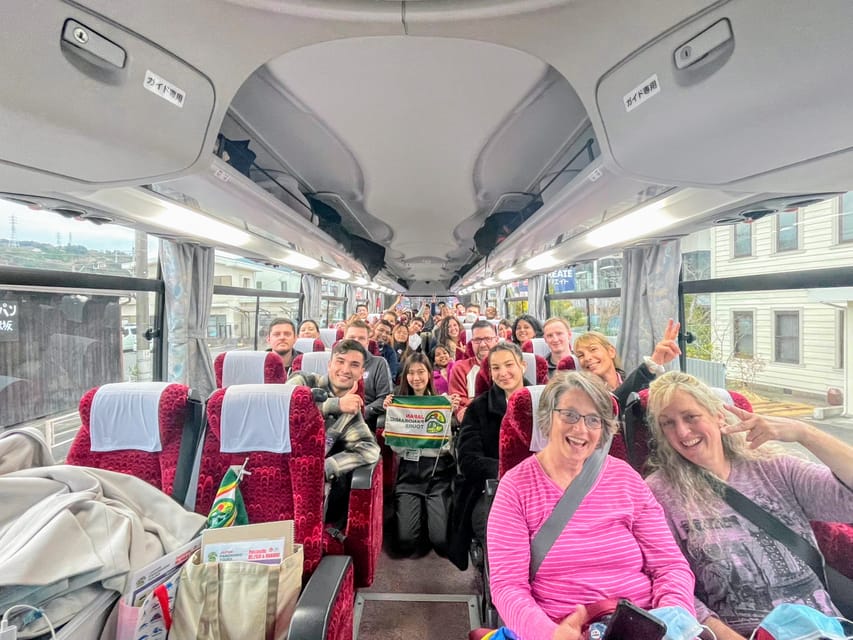
This is a get your bearings fast tour, not a slow study of one neighborhood. The coach lets you cover a wide section of Tokyo without repeatedly finding stations, buying tickets, or guessing which exit to use.
You begin from a central meeting point, usually the Love statue in Shinjuku or Matsuya Ginza, depending on the option you book. The supplied details also refer to the Ginza Love Object and a finish at Tokyo Mode Gakuen, so check the exact meeting instructions before leaving your hotel.
The tour costs $122 per person. That is not a bargain-basement day out, but the price includes transport, a professional English-speaking guide, Wi-Fi on the bus, matcha, Tokyo Skytree’s 350-meter Tembo Deck, and the bay cruise when operating. Add the optional set lunch and the value improves if you want a ready-made day with little planning.
You are paying for convenience as much as admission tickets. If you already know Tokyo well, use the trains comfortably, and prefer long independent visits, this may feel expensive. If you have only one or two days, the coach can save a great deal of time and mental energy.
More Boat Tours in Tokyo
- Sumida River: Japanese Traditional Yakatabune Dinner Cruise
★ 4.6 · 779 reviews - Dynamic Tokyo: Tokyo Tower, Tea Experience, Bay Cruise Day Tour
★ 4.5 · 521 reviews - Tokyo Bay Yakatabune Dinner/Day Cruise with Japan Show and Drinks
★ 4.5 · 473 reviews
Meiji Shrine begins the day among tall trees
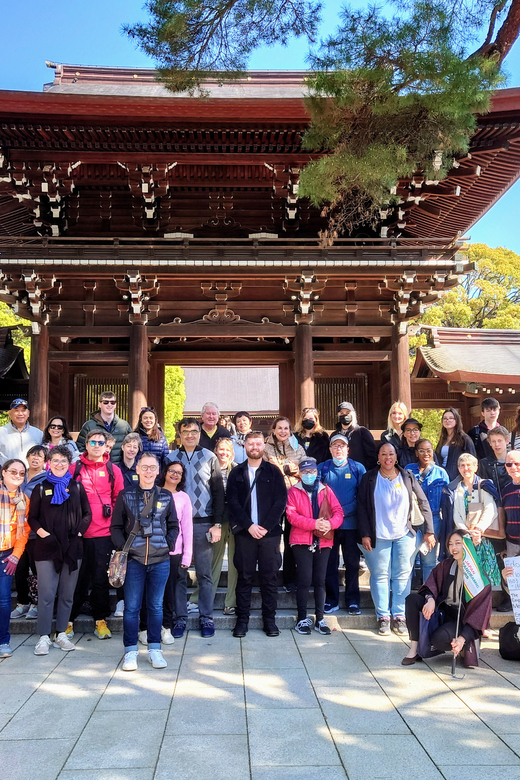
The first major stop is Meiji Jingu, built for Emperor Meiji and surrounded by a large forested area. The setting gives you an immediate contrast with the surrounding city. You can be near Harajuku’s shops and crowded streets, then step into a quieter shrine approach.
Allow about an hour here. Your guide can explain basic Shinto customs and how to behave at the shrine, which matters if this is your first visit to Japan. Some guides have also shown participants how to pray and explained the role of religion, nature, and Japanese culture.
You should expect walking on the shrine grounds, possibly over uneven surfaces. The hour is enough for an introduction and photographs, but it may feel short if you want to linger beneath the trees or study every building.
The coach then passes Harajuku and Omotesando, two areas known for shopping and design, before continuing past the National Diet Building. You will see the Japanese parliament’s symmetrical 1936 structure from the bus rather than making a long stop there. This part works best as a moving introduction to Tokyo’s different districts.
The Imperial Palace offers a short historical pause
At the Imperial Palace, the current home of the Imperial family and former site of Edo Castle, you visit either the East Garden or Niju-bashi Bridge in the Outer Garden. The exact choice can depend on operating conditions and the day’s timing.
This is a compact stop of roughly thirty minutes. The garden option gives you traditional scenery and a sense of the old castle grounds. Niju-bashi provides a familiar palace view and a chance for photographs.
Do not expect to tour the palace interiors. The value here is context: you are seeing the center of modern government and the former heart of Edo, the city that grew into Tokyo. The stop is brief, so listen closely to the guide’s explanation before you move on.
The coach route adds Akihabara, Ueno, and Kappabashi
Between the palace and Asakusa, the bus passes Akihabara, Ueno, and Kappabashi market street. These are not full walking visits, but they add useful color to the day.
Akihabara is associated with electronics, anime, and Japanese pop culture. Ueno is another major central district, while Kappabashi is famous for kitchen goods, Japanese dishes, knives, and remarkably lifelike plastic food samples.
This moving tour format has a clear benefit. You see how different Tokyo districts connect without spending your limited sightseeing time changing trains. The drawback is equally clear: if one of these areas interests you deeply, you will need to return on your own.
More Bus Tours in Tokyo
- 1-Day Tokyo Bus Tour
★ 5.0 · 14,250 reviews - Tokyo: Hop-On Hop-Off Sightseeing Bus Ticket
★ 3.9 · 4,207 reviews - Tokyo: Open Top Panoramic Sightseeing Bus with Audio Guide
★ 3.8 · 254 reviews - Tokyo: A Half-Day Trip Bus Tour in the Morning
★ 4.6 · 236 reviews
Asakusa combines food, shopping, and old Tokyo atmosphere
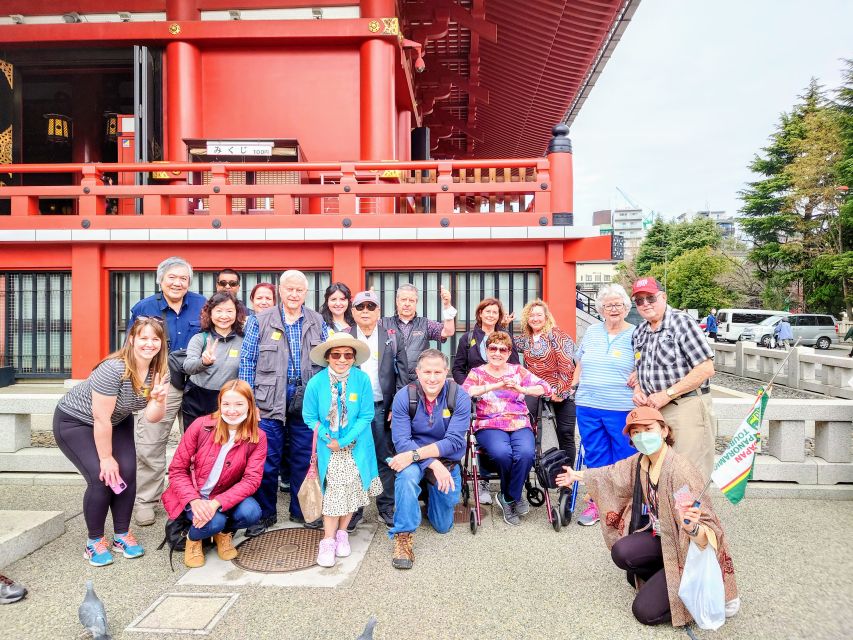
Asakusa is the heart of the day for many people. You have about thirty minutes for the food experience, fifty minutes for lunch if selected, and roughly one hour of free time.
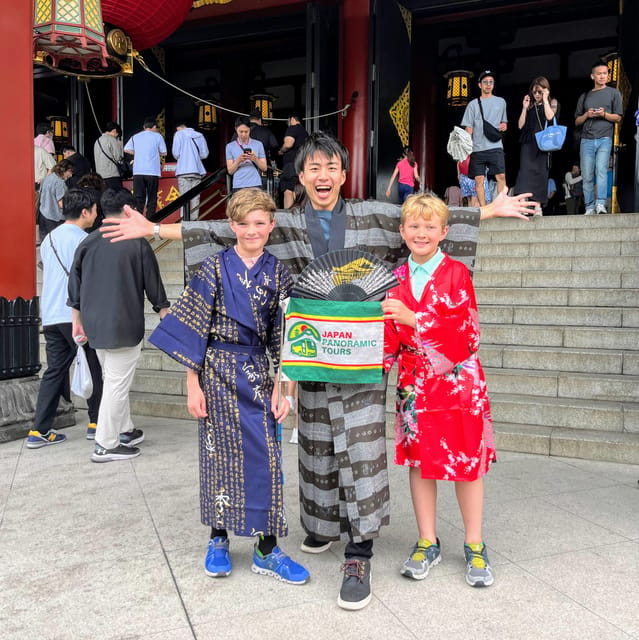
Start at Kaminarimon Gate, where the huge red lantern gives you the classic Asakusa photograph. From there, Nakamise Avenue leads toward Senso-ji, with shops selling souvenirs, snacks, crafts, and other Japanese goods. The free hour is useful, but it disappears quickly if you want to browse every shop.
The matcha stop uses first-flush tea from Uji in Kyoto and is described as a premium, less bitter matcha. Depending on the option or availability, you may receive matcha to drink, matcha gelato, or matcha beer. This is a simple tasting rather than a full tea ceremony, but it gives you a chance to try a flavor central to Japanese food culture.
The optional lunch is an izakaya-style set meal with Japanese fried chicken, known as karaage, tofu, and a soft drink. The tofu is made at the shop each day with locally produced soybeans. Several people found the lunch very good, while one found the food disappointing, so keep your expectations practical: this is a convenient set meal, not a special restaurant reservation.
The meal contains no pork, seafood, nuts, or crustaceans, but the dashi stock contains fish broth. A gluten-free option includes grilled chicken, rice, and tofu. Vegetarian and gluten-free requests must be made when booking. Muslim-friendly, lactose-free, and allergy-specific meals are not available, and anyone with a serious allergy should book without lunch.
Tokyo Skytree gives you the big picture
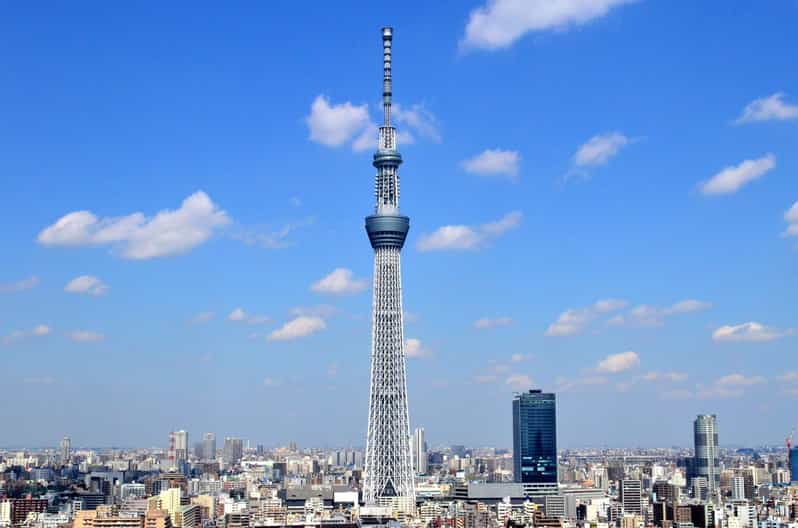
After Asakusa, the coach takes you to Tokyo Skytree and the Sora-machi shopping mall. Admission to the 350-meter Tembo Deck is included, with skip-the-line access.
This is one of the strongest parts of the tour if you want a broad view of Tokyo. From the observation deck, you can see the city spread in every direction, which helps make sense of the districts you have crossed by bus. The height also gives this stop a different feel from the street-level shrines, markets, and palace grounds.
You have about ninety minutes here. That sounds generous, but some participants would have preferred more time at Meiji Shrine and less at Skytree. If you enjoy city views and photographs, you will appreciate the longer stop. If you prefer temples, gardens, or local streets, Skytree may feel overlong.
The shopping mall gives you somewhere to browse or pause, though the central attraction is the observation deck. The visit is also a useful rest point after the walking at Meiji Shrine and Asakusa.
Odaiba and the bay cruise close the day
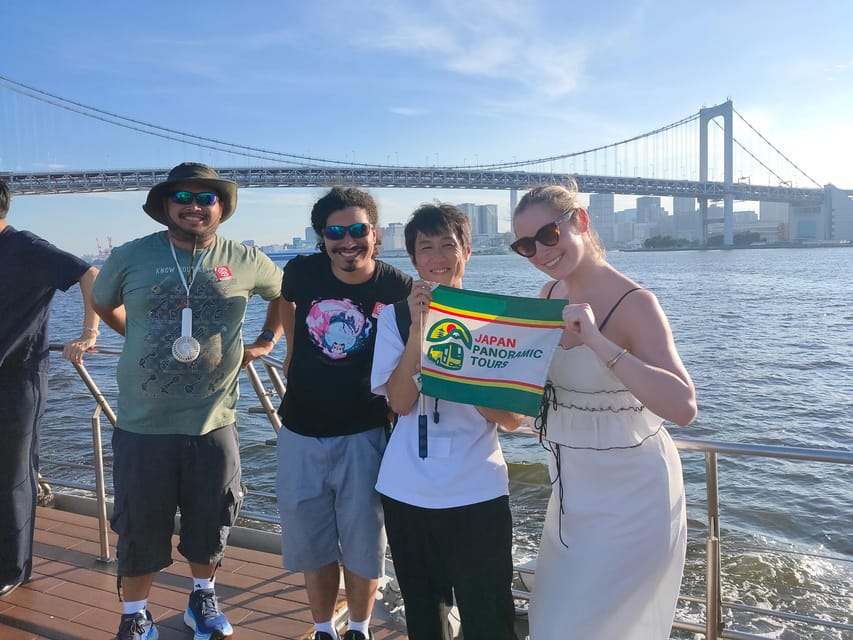
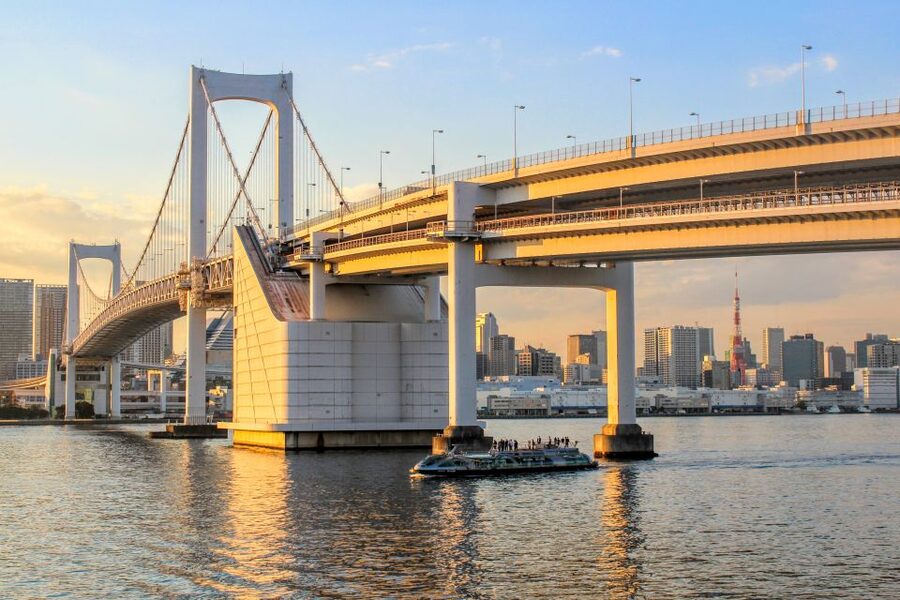
The final planned activity is a short Tokyo Bay cruise from the Odaiba area. The ride lasts about fifteen to twenty minutes and passes beneath Rainbow Bridge, with views toward Tokyo’s high-rise districts.
The cruise is a pleasant change of speed after a day of streets, shrines, shops, and observation decks. It is also a good time to sit down and watch the city from the water. A sunset departure can make it especially appealing, but timing depends on traffic and the day’s schedule.
The cruise is not guaranteed. It is normally included except on Tuesday, and it can be canceled because of high tide or technical maintenance. In that case, the group visits Hamarikyu Garden or the Fukagawa Edo Museum instead, with no refund. If the boat is the main reason you are booking, read this condition carefully.
Hamarikyu offers a garden alternative, while Fukagawa Edo Museum focuses on an earlier period of Tokyo’s development. Both fit the tour’s cultural theme, but they are not the same experience as moving beneath Rainbow Bridge.
Why the guides matter so much
A ten-hour group tour can become tiring if the leader simply counts heads and repeats facts. Here, the guide is central to the experience.
Aya has been praised for keeping the day organized and answering questions. Yui is noted for local tips, historical explanations, and language skills. Sora and Hiro have been described as clear and friendly, while Levin and Lovely brought humor to a long schedule. Tsubasa received particular praise for teaching Japanese words and writing, explaining customs, and keeping the group involved.
The best guides also help with practical details. They may explain how to pray at a shrine, suggest places to eat and shop later, give directions for navigating Tokyo, and take photographs for you. That help is valuable when you are new to Japan and still learning how the city works.
The tour includes multilingual audio headsets in Spanish, French, Italian, German, Portuguese, and Ukrainian. The live guide speaks English. The audio system is useful for visitors who need extra language support, though the quality of your day will still depend on staying close enough to hear instructions and meeting times.
Walking, weather, and the pace you should expect
Do not mistake a coach tour for a low-walking tour. You walk around Meiji Shrine, the Imperial Palace area, Asakusa, Skytree, and possibly the cruise or replacement site. More than 11,000 steps is possible.
Wear comfortable shoes and prepare for a long day. In hot or humid weather, the air-conditioned bus is a major help. In rain, the schedule can still operate, but outdoor stops will require a coat or umbrella and a bit of patience.
The itinerary may change because of traffic, weather, closures, or other operating reasons. Tokyo traffic can be slow, so the coach offers comfort but cannot remove the city’s delays. Keep your attention on the guide’s return instructions, especially at Asakusa and Skytree.
This tour is not suitable for people with mobility impairments. You must also handle loading and unloading your own luggage, including wheelchairs and strollers. Hotel pickup and drop-off are not included.
Who should book this $122 Tokyo tour?
I would choose this tour if you have limited time, want the major sights explained in English, or feel uneasy tackling Tokyo’s size on your first day. It is particularly useful for first-time visitors who want traditional Japan, modern city views, food, and transport in one package.
Families and older visitors may like the coach breaks between walking sections, but the walking total still deserves attention. Food-focused visitors should treat lunch as a convenient introduction rather than the main attraction. The matcha tasting is more distinctive than the set meal.
Independent repeat visitors may prefer separate days for Meiji Shrine, Asakusa, and Skytree. You will have more freedom that way, and you can spend longer in the districts that interest you most.
Book it if your priority is coverage and guidance. Skip it if you want a slow day, dislike group schedules, or need a guaranteed cruise. The tour’s strongest qualities are its wide route, excellent guides, air-conditioned transport, and included Skytree entry. Its main weakness is the packed schedule.
Free cancellation is available up to 24 hours before departure, and you can reserve now and pay later. Select lunch and other add-ons in advance, since same-day additions cost more.
FAQ
Where does the Tokyo tour start?
The meeting point depends on the option booked. Pickup is listed from Matsuya Ginza or the Love statue in Shinjuku, with the Ginza Love Object also shown in the meeting details. Confirm your exact location before the tour.
What languages are available?
The live tour guide speaks English. Audio headsets are available in Spanish, French, Italian, German, Portuguese, and Ukrainian.
Is lunch included?
Lunch is included only if you select the lunch option. The set meal includes Japanese fried chicken, tofu, and a soft drink.
Can I request a vegetarian or gluten-free meal?
You must state the number of vegetarian or gluten-free meals when booking. The gluten-free meal includes grilled chicken, rice, and tofu. Muslim-friendly, lactose-free, and serious allergy-friendly meals are not available.
Is the Tokyo Bay cruise guaranteed?
No. The cruise may be replaced by Hamarikyu Garden or the Fukagawa Edo Museum because of high tide or technical maintenance. This replacement does not come with a refund, and the cruise is not scheduled on Tuesday.
How much walking is involved?
The tour involves substantial walking at Meiji Shrine, the Imperial Palace, Asakusa, and Tokyo Skytree. Some people recorded more than 11,000 steps, so wear comfortable shoes. The experience is not suitable for people with mobility impairments.
More Temple & Shrine Tours in Tokyo
- Tokyo: Asakusa Walking Tour with Sensoji Temple Visit
★ 4.8 · 1,583 reviews - Tokyo Panoramic 1 Day: Meiji Shrine, Asakusa, Odaiba and SKYTREE®
★ 4.5 · 1,222 reviews - Tokyo: Zen Meditation at a Private Temple with a Monk
★ 5.0 · 510 reviews - Tokyo: Samurai Entertainment Night Show in Kanda Shrine
★ 4.6 · 417 reviews
Just added around Tokyo
- Kawagoe Japanese Food Tour : Unagi Kaiseki and Sake near Tokyo★ 5.0 · 30 reviews
- Kawagoe 4hr Private Tour with Licensed Guide (Kawagoe Dep)★ 5.0 · 13 reviews
- Little EDO Sushi Making workshop in Kawagoe★ 5.0 · 18 reviews
- 【R34】Tokyo:Private Daikoku tour in Modified R34★ 4.9 · 92 reviews
- :Tokyo,Shibuya/ Pro Photography in Kimono / English-Friendly★ 5.0 · 26 reviews
- Tokyo:Celebrate Unique Japanese New Year Tradition Festivity★ 3.9 · 20 reviews
- Tokyo: Allstar Food Tour★ 4.7 · 29 reviews
- Tokyo: West-Side Cycling and Food Tour with Guide★ 5.0 · 37 reviews
Temples & Shrines, compared.

Tea Ceremony in a Traditional Tea House in Kiyomizu
Our verdict →

Fushimi Inari Hidden Hiking Tour (Private Option Available)
Our verdict →
Osaka/Kyoto:Kinkakuji,Arashiyama,FushimiInariShrine,NaraPark
Our verdict →
Nikko: Kegon Falls, Lake Chuzenji & Toshogu Temple
Our verdict →
Kamakura & Enoshima Day Trip including Temple Tickets
Our verdict →
Tokyo Panoramic 1 Day: Meiji Shrine, Asakusa, Odaiba and SKYTREE®
Our verdict →Browse the lists this tour appears in