
Reviewed · SUSHI EXPERIENCES
Shibuya Tokyo: Sushi Making Class (Vegan/Vegetarian/Halal)
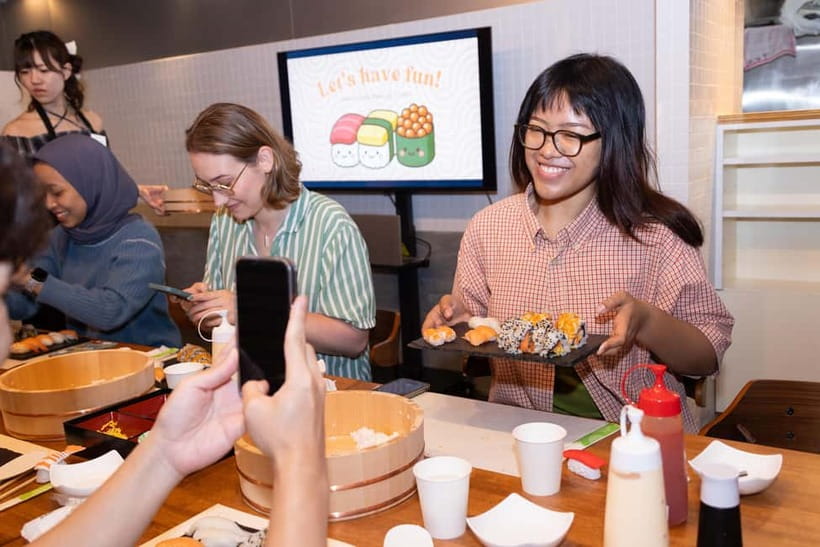
In this 90-minute Shibuya class, you make sushi you can actually eat, even if your kitchen skills stop at boiling rice. The lesson covers California rolls and nigiri, with vegetables such as eggplant, mushrooms, tomato, and avocado for vegan and vegetarian menus. English-speaking instructors, including Momoyo and Kaito, keep the mood easy and practical.
I like the short sushi quiz because it gives the food some context before the cooking starts. I also like the clear attention to dietary needs, especially for vegan, halal, and gluten-free diners. The main drawback is simple: the studio can take extra time to find, so allow more than the basic seven-minute walk from Shibuya Station.
Key points to know before booking
- A quiz starts the class: Learn useful sushi facts before touching the rice or rolling mat.
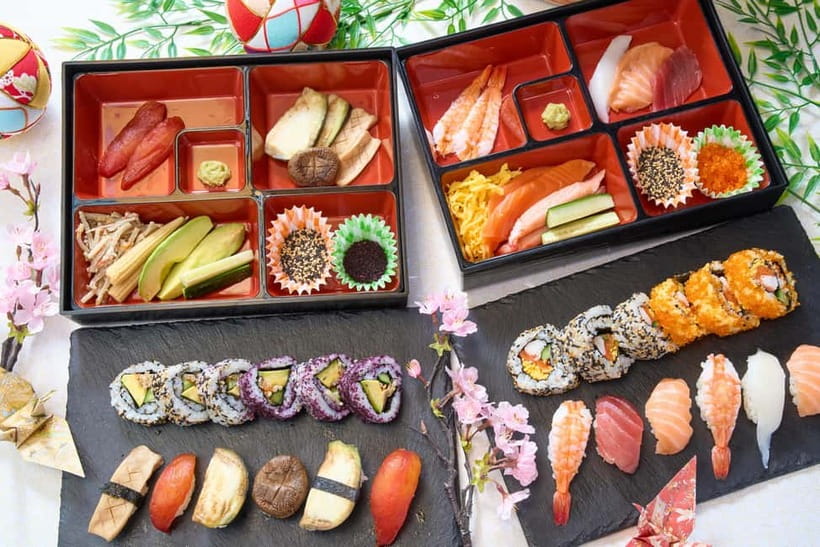
- You make California rolls and nigiri: The class covers both rolled sushi and Japan’s most recognizable hand-shaped style.
- Dietary needs are planned in advance: Vegan, vegetarian, halal-friendly, and gluten-free options are available.
- Momoyo and Kaito are among the instructors: The teaching style is friendly, patient, and suited to beginners.
- You eat what you make: Your finished sushi becomes a proper meal, not just a demonstration.
- The Shibuya studio is central: It is about a seven-minute walk from Shibuya Station, though finding the exact venue may take extra time.
Why this Shibuya sushi class works for plant-based diners
Tokyo is easy for sushi lovers, but less simple for people who do not eat fish, eggs, or certain sauces. This class solves that problem in a direct way. You are not merely watching a chef prepare a special plate for you. You learn how to build vegan or vegetarian sushi yourself, with the ingredients and menu arranged around your needs.
That matters because sushi is partly about technique. The rice must hold together, the filling must be placed sensibly, and the roll needs enough pressure to keep its shape without becoming a tight cylinder of mush. Nigiri brings a different challenge. You shape the rice by hand and learn how the topping or vegetable element sits on it.
The class is also useful for halal and gluten-free diners, but you need to state your requirements during booking. Menu changes cannot be made on the day. That is an important point, not fine print to ignore. Give the staff clear information before you arrive so the correct ingredients can be prepared.
The food is plant-based for the vegan and vegetarian choices, with examples including eggplant, mushroom, tomato, and avocado. The exact selection may vary, so think of the class as a lesson in sushi structure rather than a promise of one fixed menu.
More Sushi Experiences in Tokyo
- Sushi Making Tokyo Roll and Authentic Japanese Sushi Class
★ 5.0 · 3,971 reviews - Tokyo: Roll and Authentic Sushi Making Class in Asakusa
★ 4.9 · 1,957 reviews - Make Sushi and Create Unforgettable Memories in Tokyo
★ 5.0 · 1,413 reviews
Start with sushi facts, not a lecture
The class begins with a short quiz about sushi history. This is a smart opening because it gives you a little cultural context without turning the activity into a classroom seminar.
You can expect a light, social warm-up, with surprising facts and simple questions. It helps solo visitors and mixed groups settle in before the hands-on work begins. The history portion is brief, so the main focus remains on making and eating the sushi.
I especially like this format for families and couples. A quiz gives everyone something to do immediately, even if one person knows Japanese food well and another has never made sushi. It also gives the instructor a natural way to explain why sushi is prepared in different forms.
The class is taught in English, and the instruction is designed for beginners. You do not need prior cooking experience. The staff explain the ingredients, show the techniques, and guide you through the process rather than expecting you to copy a demonstration from across the room.
Rolling California rolls with fresh vegetables
The first major cooking task is making sushi rolls. The ingredients for the vegan and vegetarian options can include eggplant, mushrooms, tomato, and avocado. These give you a mix of textures and flavors, rather than a plate built around one substitute ingredient.
You learn how to place the fillings, manage the rice, and roll everything into a neat shape. This sounds easy until the rice sticks to your fingers and the filling tries to escape. That is exactly why an instructor is useful. Small corrections in pressure and placement make a large difference.
Momoyo has been praised for making the process easy and fun, while Kaito and Momoyo are both known for keeping the session warm and encouraging. The tone is patient rather than formal. You can ask questions, watch the technique again, and take your time before cutting the roll.
The finished roll is also part of the lesson. A sushi-making class is more satisfying when you get to see the result on your plate and then eat it. The staff can take photos of your creations before the meal, which gives you a record of the activity without interrupting the cooking.
Do not expect restaurant-level uniformity on your first try. Your rolls might be a little loose or uneven. That is part of the fun, and the instruction helps you understand how to improve when you try it at home.
Shaping nigiri, the iconic sushi form
Nigiri is the other central skill. It looks simple: rice, a topping, and a compact hand-shaped form. In practice, the rice needs to hold together while staying light enough to eat comfortably.
The class lets you make nigiri as part of the lesson, giving you a second style of sushi after the rolls. For vegan and vegetarian participants, the toppings are adapted to the selected menu. The attraction here is not only the final taste. It is learning the hand movements and proportions behind one of Japan’s most familiar foods.
This section may be especially useful if you want skills you can repeat at home. Rolls can hide a few mistakes under the seaweed. Nigiri is more exposed, so the process teaches you to work carefully with the rice and topping.
The instructor’s role is important. Friendly guidance makes the difference between feeling clumsy and feeling capable. The class has received strong praise for clear explanations, patient teaching, and helpful tips. That is the right mix for a short activity, since you want enough instruction to learn something without spending the whole session watching someone else cook.
Same trip, a completely different kind of day:
- 1-Day Tokyo Bus Tour
★ 5.0 · 14,250 reviews - Tokyo: TOKYO SKYTREE® Admission ticket
★ 4.5 · 11,192 reviews - Tokyo: teamLab Planets TOKYO Digital Art Museum Entry Ticket
★ 4.6 · 9,779 reviews - Tokyo: Sumo Show Experience with Chicken Hot Pot and a Photo
★ 4.8 · 6,678 reviews
Eating your own sushi in central Tokyo
After the preparation, you sit down and eat what you made. This turns the class into a complete meal as well as a cultural activity.
The portion is described as a substantial and tasty meal, which makes the $58 price easier to assess. You are paying for ingredients, equipment, an English-language lesson, local instruction, and the meal at the end. Compared with a simple food tasting, this gives you more to take away than a few bites.
The value is strongest for people who want an activity rather than another restaurant stop. You spend 90 minutes making something, learning a few facts about sushi, and sharing the process with other participants. For a first visit to Tokyo, that can make the meal more memorable than ordering a plate from a menu.
Still, price-sensitive visitors should be realistic. If you only want to eat sushi, a class is not the cheapest route. The value comes from the instruction and the chance to make your own food. It also makes good sense for anyone with dietary restrictions who wants a more controlled and welcoming food experience.
A clean, friendly studio near Shibuya Station
The studio is in the heart of Shibuya, about a seven-minute walk from the station. That puts the class in a convenient spot for a day built around shopping, cafés, city views, and the famous Shibuya crossing.
The location is central, but do not cut your arrival time too closely. One participant specifically advised allowing extra time to find the venue. The meeting point can vary depending on the option booked, so check your booking details carefully before setting off.
The space has been described as clean and comfortable, with a welcoming feel. That matters for a hands-on food class. You want enough order around the ingredients and tools to focus on the techniques instead of wondering where to stand or what to pick up next.
The experience is social without requiring you to arrive with a group. It suits solo visitors because the quiz and shared cooking give you an easy way to talk with others. It also works for couples, families, and groups of friends. The instructors keep the tone relaxed, so you do not need to be an outgoing cook to enjoy it.
Audio recording is not allowed. You can take photos of the sushi with help from the staff, but plan around the stated restriction.
What the 90 minutes feel like
The time is short enough to fit into a busy Tokyo schedule, but long enough to include more than a quick demonstration.
A typical flow is:
- You arrive at the Shibuya studio and meet the English-speaking instructor.
- You take part in the short sushi history quiz.
- The instructor introduces the ingredients, tools, and basic methods.
- You prepare California rolls with the assigned dietary menu.
- You shape nigiri with guidance.
- The staff photograph the finished sushi if you wish.
- You sit down and eat your work.
The class moves from explanation to practice, so you are not left waiting for a chef to finish. The 90-minute length also keeps the experience manageable for families and people with packed itineraries.
You should expect a practical introduction, not professional culinary training. You will learn useful home techniques, but the class is built for enjoyment and cultural connection. That balance is part of its appeal.
Vegan, vegetarian, halal, and gluten-free planning
The dietary flexibility is one of the strongest reasons to choose this activity. Vegan and vegetarian sushi is included, and halal-friendly and gluten-free options are available.
You must provide your food preferences or restrictions when booking. The staff cannot promise changes on the day, so do not rely on a last-minute request. If you have allergies, state them clearly in advance.
The word halal-friendly also deserves sensible attention. The activity provides a halal option, but the supplied details do not describe certification or separate kitchen arrangements. If you need strict halal handling, ask the provider for the details before booking.
The same practical rule applies to gluten-free diners. Select the appropriate option in advance and confirm any serious allergy requirements. The class is designed to accommodate different diets, but good communication is part of making that work.
Who will enjoy this class most
I would recommend the experience to:
- Vegan and vegetarian visitors who want a food activity built around their diet.
- Solo visitors looking for an easy, social activity in Shibuya.
- Couples who want a shared meal with something to do.
- Families seeking a short, hands-on cultural lesson.
- First-time sushi makers who want patient English instruction.
- Anyone who wants practical Japanese cooking skills to take home.
It may be less suitable if you want a quiet, private meal, a long professional cooking course, or a wide selection of raw fish. This is a friendly beginner class focused on plant-based and dietary-conscious sushi.
The 4.7 rating from 29 reviews reflects strong satisfaction, with repeated praise for the instructors, clear directions, clean space, tasty food, and relaxed atmosphere. The most consistent strength is the teaching. Names such as Momoyo and Kaito come up for good reason: the class depends on patient people who make beginners comfortable.
Booking details that matter
The cost is $58 per person, and the activity lasts 90 minutes. English is the teaching language.
You can reserve now and pay later, which helps if your Tokyo schedule is still changing. Free cancellation is available up to 24 hours before the activity for a full refund. Starting times depend on availability.
Check the meeting point for your chosen option, and allow extra time to locate the studio. The venue is close to Shibuya Station, but close does not always mean instantly obvious in a dense Tokyo neighborhood.
Should you book the Shibuya sushi class?
Book it if you want to make and eat sushi rather than simply order it, especially if you are vegan, vegetarian, halal, or gluten-free. The friendly English instruction, short sushi quiz, central location, and chance to learn both rolls and nigiri give the $58 price solid value.
Skip it if your main goal is a traditional fish-sushi tasting or advanced chef training. For everyone else, this is a practical, cheerful way to spend 90 minutes in Shibuya, with a meal and a useful new skill at the end.
FAQ
How long does the sushi-making class last?
The class lasts 90 minutes.
Where is the sushi-making class located?
The studio is in central Shibuya, about a seven-minute walk from Shibuya Station. The exact meeting point may vary by booking option.
Is the class taught in English?
Yes. The instructor language is English.
Are vegan and vegetarian options available?
Yes. The class offers vegan and vegetarian options using ingredients such as eggplant, mushrooms, tomato, and avocado.
Can I request halal or gluten-free food?
Yes. Halal-friendly and gluten-free options are available. You need to state your food preferences or restrictions when booking.
What types of sushi will I make?
The lesson includes California rolls and nigiri.
Can I cancel for a refund?
You can cancel up to 24 hours in advance for a full refund. Reserve-now, pay-later booking is also available.
More Vegan & Vegetarian Food in Tokyo
- Tokyo: 2-Hour Vegan and Vegetarian Ramen Guided Walking Tour
★ 4.8 · 33 reviews
Just added around Tokyo
- Kawagoe Japanese Food Tour : Unagi Kaiseki and Sake near Tokyo★ 5.0 · 30 reviews
- Kawagoe 4hr Private Tour with Licensed Guide (Kawagoe Dep)★ 5.0 · 13 reviews
- Little EDO Sushi Making workshop in Kawagoe★ 5.0 · 18 reviews
- 【R34】Tokyo:Private Daikoku tour in Modified R34★ 4.9 · 92 reviews
- :Tokyo,Shibuya/ Pro Photography in Kimono / English-Friendly★ 5.0 · 26 reviews
- Tokyo:Celebrate Unique Japanese New Year Tradition Festivity★ 3.9 · 20 reviews
- Tokyo: Allstar Food Tour★ 4.7 · 29 reviews
- Tokyo: West-Side Cycling and Food Tour with Guide★ 5.0 · 37 reviews
Sushi Experiences, compared.
Sushi Making Tokyo Roll and Authentic Japanese Sushi Class
Our verdict →
Sake Omakase in Tokyo: Guided Tasting by Certified Sommeliers
Our verdict →
Browse the lists this tour appears in