
Reviewed · SAMURAI EXPERIENCES
Seki: Samurai Knife Making Experience at the Knife Museum
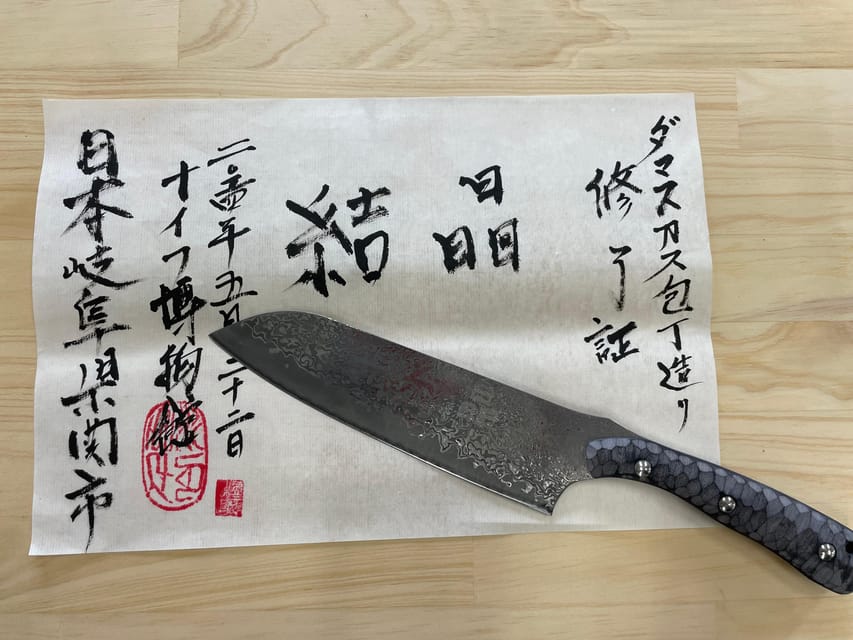
Seki’s best souvenir is not something you pick from a shop shelf. It is a knife you polish, sharpen, assemble, and mark with your own name under the guidance of a craftsman with more than 50 years of experience. You also test the finished blade on fresh vegetables, which turns a craft lesson into a useful kitchen skill.
I like the small group, capped at five, and the way Hiro handles transport and translation while Sumi and Yoshi teach the hands-on work. I also like the mix of craft, Japanese food, and sword culture in one day. The main caution is timing: knife making can take much longer than the advertised 2.5 hours, so this is not a quick stop between trains.
What makes this Seki day special
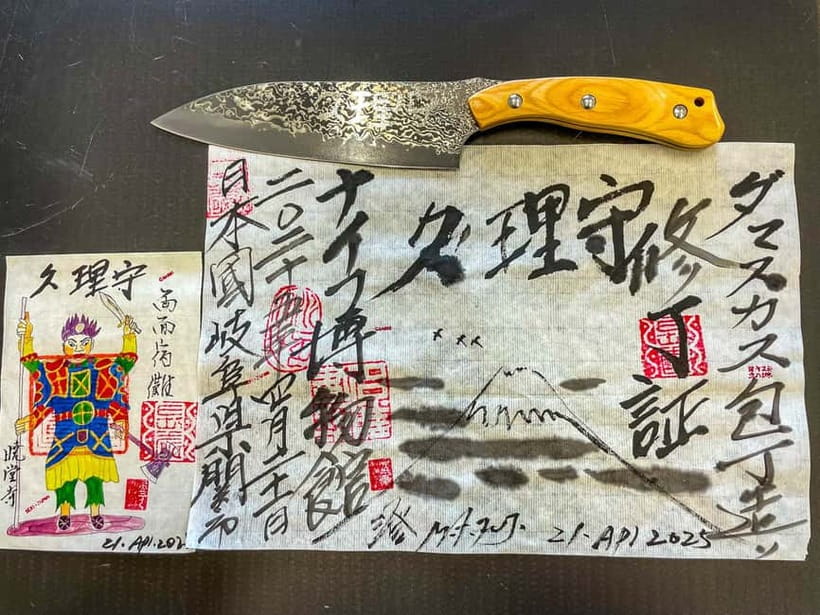
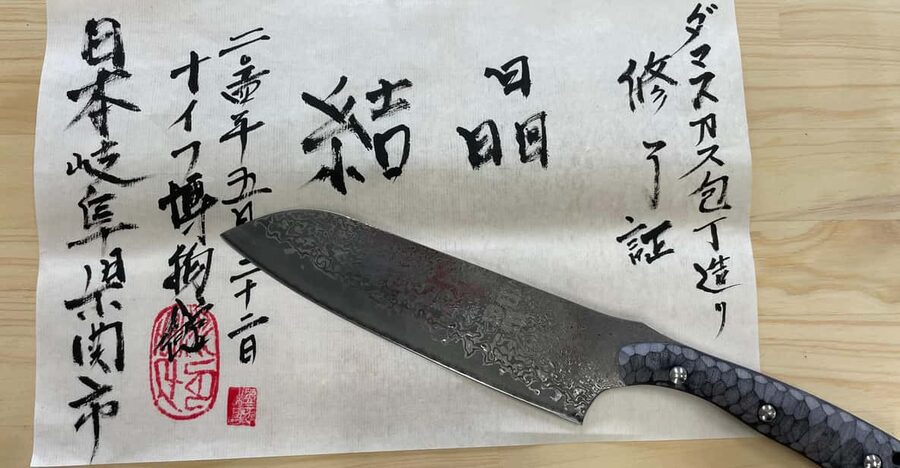
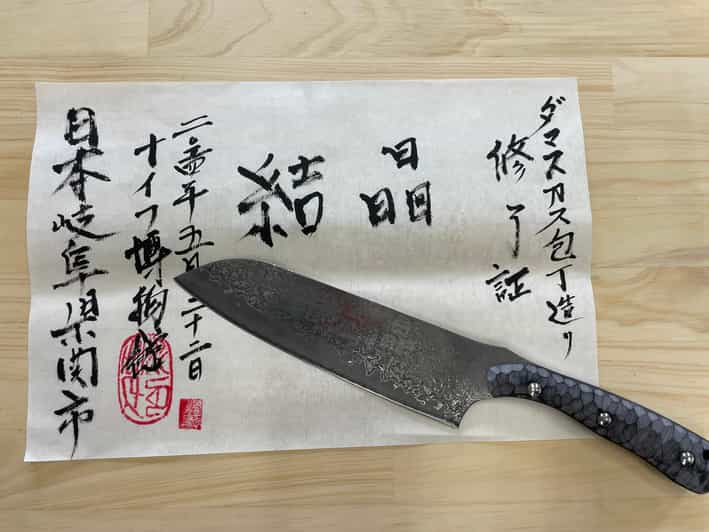
- You personalize a real Damascus kitchen knife: Polish, sharpen, assemble, and etch your name into the blade.
- The finished knife is useful: Test its cutting feel on fresh vegetables before taking it home.
- Hiro makes the day easier: He meets you at Sekitomioka Station, provides English support, and handles local transport.
- The lunch is part of the culture lesson: Choose an authentic Japanese meal, with sushi and eel among the options reported during the experience.
- You see more than a display case: Visit the G. Sakai knife collection and a sword-focused museum or workshop.
- The group stays intimate: With no more than five participants, you get close help during delicate sharpening and engraving work.
Why Seki is the right place for a knife lesson
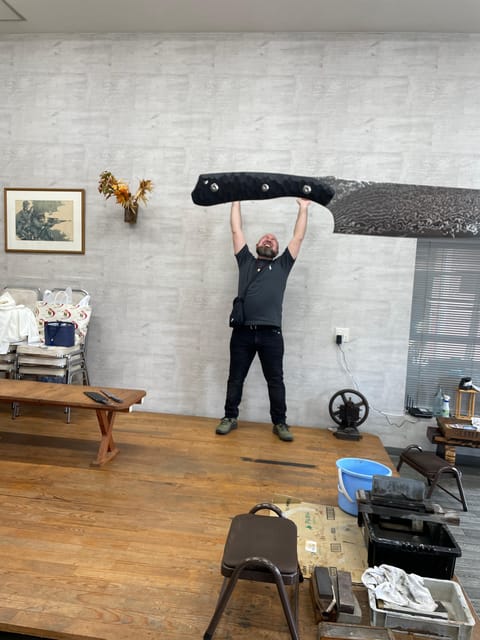
Seki, in Gifu Prefecture, has made blades since the Kamakura period, from 1185 to 1333. The area had the basic ingredients traditional smiths needed: iron sand, charcoal, and clean water. That practical combination helped Seki grow into one of Japan’s best-known cutlery centers.
Today, the city is known for kitchen knives as much as swords. Professional cooks and home cooks value Seki blades for sharpness, durability, and careful finishing. The annual events, museums, factories, and specialist shops keep that trade visible rather than reducing it to a historic display.
That setting matters. You are not making a souvenir in a generic craft studio. You are working beside a functioning knife operation connected with G. Sakai, one of Japan’s major knife makers. The workshop is part of the factory complex near the Knife Museum, so the setting gives the activity a working connection to Seki’s cutlery trade.
The tour begins at Sekitomioka Station when the Nagara River Train arrives at 10:06 AM. Hiro meets you there and drives you between the station, workshop, restaurant, and sword-related stops. That pickup is a big help because the sites are spread out, and Seki is not as simple to manage by public transport as Kyoto, Osaka, or Tokyo.
More Samurai Experiences in Nagoya:
- Knife Making Experience in Samurai Sword Town
★ 5.0 · 29 reviews - Gifu Samurai Sword Town;Japanese Damascus Knife Making Experience
★ 5.0 · 27 reviews - Tokyo: Samurai Restaurant Show Ticket with 2 Drinks
★ 4.5 · 1,307 reviews
The knife workshop takes patience and care
The hands-on session is the heart of the day. You begin by choosing from the available knife styles and handle options. The exact selection can be limited, so you should not expect a giant catalog of every blade shape and color. The upside is that the choices keep the process manageable and let you focus on making the knife well.
The knife begins as a prepared blank rather than raw metal that you forge from a glowing bar. That distinction is worth knowing. This is a finishing and assembly workshop, not a full blacksmithing class. You shape the character of the knife through polishing, engraving, sharpening, and fitting the parts together.
Sumi and Yoshi guide the work, with Hiro helping in English and translating when needed. Their teaching style is patient and practical. You are shown how to hold the tools, how to work along the blade, and how to sharpen without damaging the edge. The pace is calm, but the work is not rushed.
You also learn how to write your name in Japanese kana or kanji, then place it on the blade using a special technique. That gives the knife a personal link to your time in Japan. It is not just a logo or factory mark. It is your chosen name, rendered in a Japanese writing system and applied as part of the activity.
Expect the workshop to take longer than the formal 2.5-hour estimate. One family reached the shop around 11 AM and did not leave until about 4 PM, while another participant specifically warned that the process may run over the stated schedule. The exact pace will depend on the group, the number of knives being made, and how much help each person needs.
That extra time is not necessarily a flaw. Sharpening and polishing are tasks where careful instruction matters more than speed. Still, plan this as a full day, not a neatly timed morning activity followed by free time.
Testing the blade makes the craft feel real
After the knife is assembled and sharpened, you get to use it. Fresh vegetables are provided for a cutting test, and the experience may also include a more dramatic demonstration such as slicing a water bottle. The vegetable test is the more useful part because it lets you feel how the blade moves through food.
This is where the work becomes practical. You can compare the knife’s balance, edge, and grip in your own hand. A blade can look beautiful in a case, but the cut tells you much more. The test also shows why sharpening technique matters and gives you a basic skill you can use later on your own knife or a friend’s kitchen knife.
The completed knife is a meaningful souvenir, but it is also a working tool. Several styles have been described, including chef and camping knives, with Damascus steel and, in one case, V10 steel noted. Since the available designs can vary, consider asking what choices are offered when you book or arrive.
The included knife set is part of the price, and some participants also received a chopping board, key rings, a certificate, a small knife gift, or a small sumi-e artwork. These extras may vary, so treat them as possible additions rather than guaranteed parts of the published package.
Lunch adds a welcome change of pace
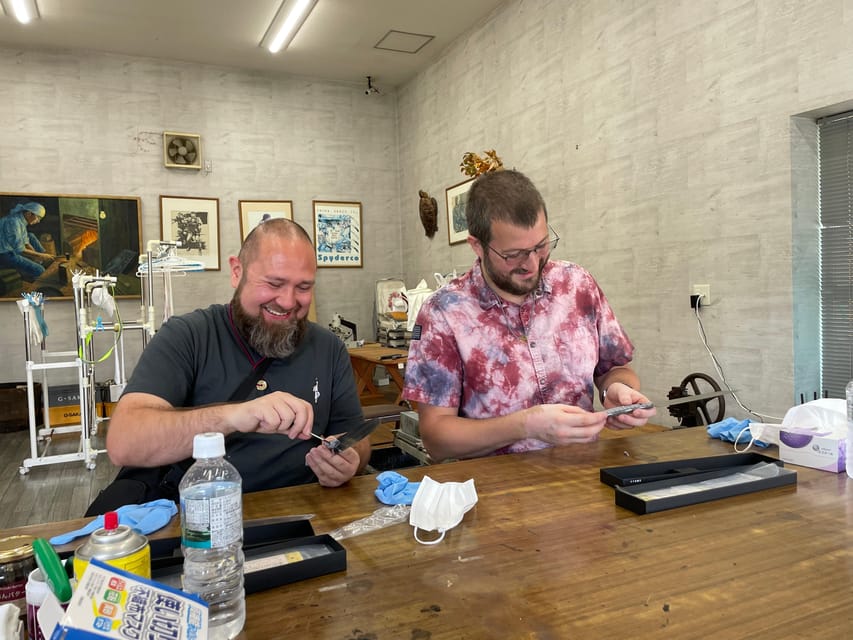
After the workshop, Hiro takes you to a local restaurant for about an hour. The meal is included, and the food options can include sushi, eel, and other Japanese set meals. Some sessions have featured sushi prepared by a chef with decades of experience.
Lunch is not filler between attractions. It gives your hands a rest after the workshop and lets you experience Seki as a local city rather than only as a factory stop. The sushi option is especially appealing if you want a meal tied to Japanese food culture, while eel provides a different regional dining experience.
The exact restaurant and menu may vary. If you have strong food preferences, ask about the available choices on the day. The published information confirms an authentic Japanese lunch, but it does not promise one fixed menu for every departure.
More Craft Workshops in Nagoya:
- Tokyo Sumo Experience: Chanko & Mochi with a Former Pro
★ 4.8 · 567 reviews - Kintsugi Experience: Art of Golden Joinery in Tokyo
★ 5.0 · 467 reviews - Tokyo Chopstick Making Workshop with Artisan
★ 5.0 · 466 reviews - Tokyo: Matcha Making Experience with Mochi Sweets in Asakusa
★ 4.9 · 388 reviews
The G. Sakai Knife Museum is part collection, part factory setting
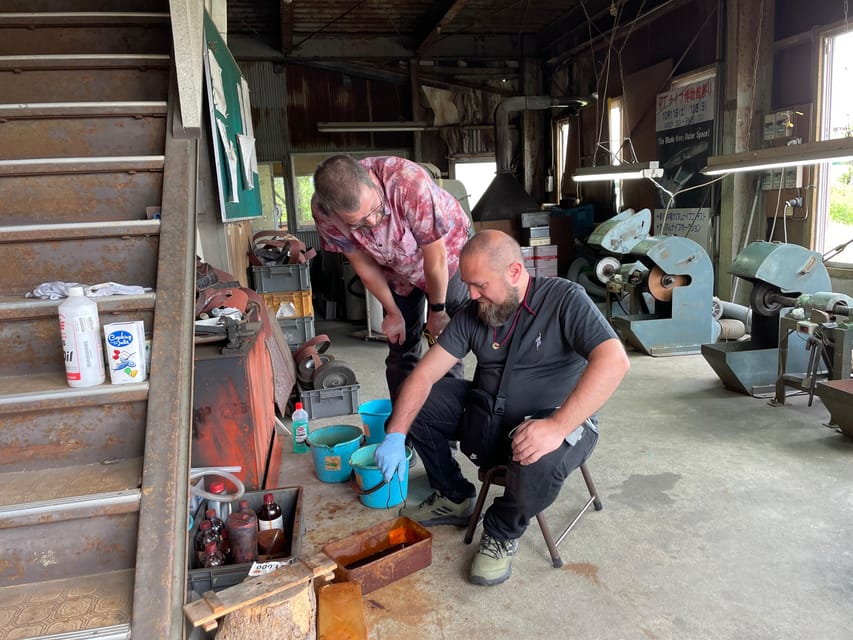
The Knife Museum sits within part of the G. Sakai factory complex. You can see unusual and rare knives, learn how blades developed, and browse a shop with a wide range of cutlery. The selection can include small pocket knives, kitchen knives, hunting knives, and other practical blades.
The title Knife Museum may set your expectations too high if you picture a large, formal institution with extensive historical galleries. The experience is better understood as a compact knife collection connected to a working manufacturer. One participant felt it was not quite a conventional museum, but still found the shop and collection impressive.
That distinction helps you decide how to value the stop. If your main interest is knife design, steel, and Japanese craftsmanship, it adds a lot. If you want a major chronological museum with long written displays, this is not that kind of place. The real focus is the making and handling of knives, with the collection supporting the workshop.
The shop is useful at the end because you can compare your finished knife with other Seki products. You may find a different size or style for a friend or family member, but remember that the tour already includes a knife set. Budget extra only if you want another purchase.
The sword stop connects kitchen knives with samurai craft
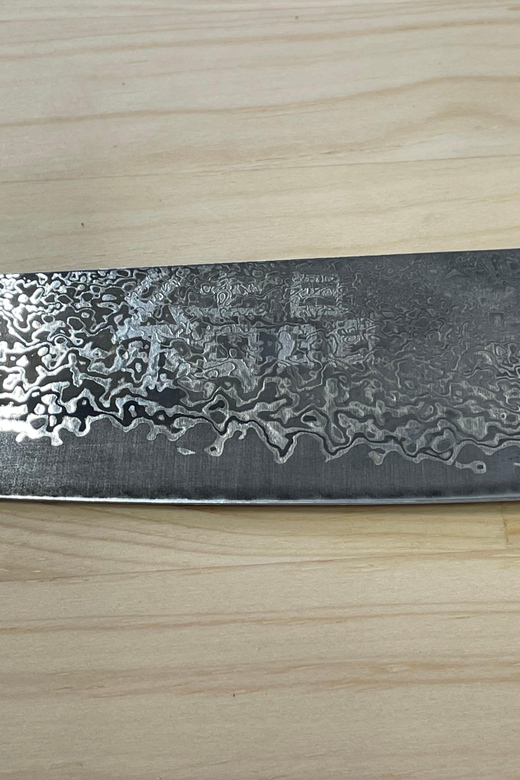
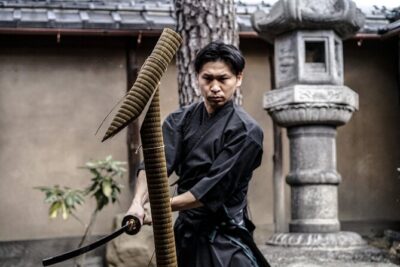
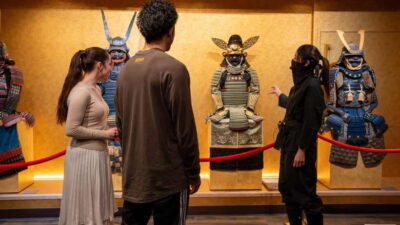
The final major visit is the Seki Swordsmith Museum, also described as a swordmaking factory or artisan katana showroom. Here you learn about Japanese samurai swords and Seki’s role in their production and repair.
The stop gives the day a wider frame. Japanese kitchen knives are not simply unrelated modern products. They belong to a broader culture of heat treatment, sharpening, edge control, and precise metalwork. You get to ask questions about katana production, and the visit may include seeing swords brought in from around the world for repair or adjustment.
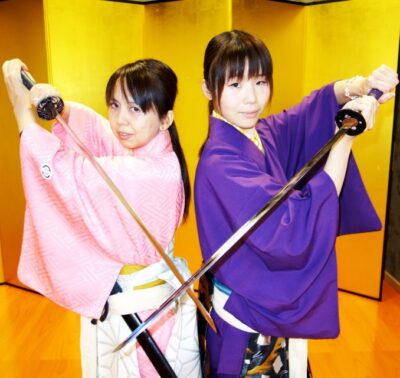
Some sessions have offered the chance to hold an actual sword, though this should not be treated as a guaranteed feature. The main promise is a visit and an explanation of Japanese sword history and Seki’s connection to it.
This is also a good point to ask questions. Hiro can translate, and the sword specialists can explain details that may be difficult to grasp from a display alone. The museum is likely to appeal most to people who already enjoy samurai history, traditional tools, or Japanese manufacturing.
The price makes sense for the right kind of visitor
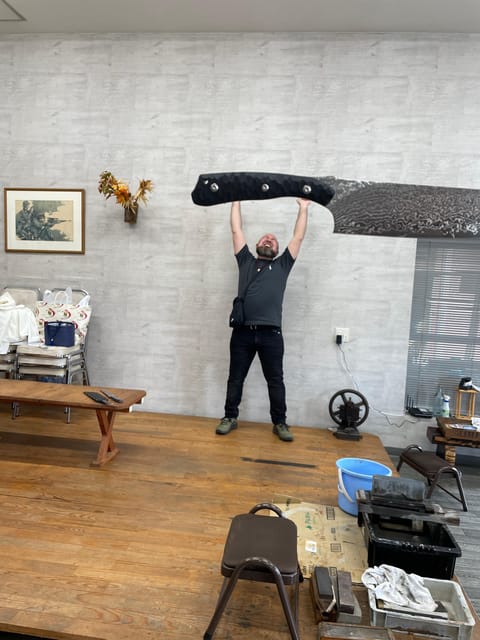
At $322 per person, this is not a bargain activity. You are paying for a full day, a personalized Damascus knife set, instruction from an experienced craftsman, lunch, museum admissions, an English guide, and transport between several places.
The value improves if you would otherwise struggle to reach Seki and arrange the visits yourself. The pickup at Sekitomioka Station, car transport, translation, and small group remove a lot of local planning. Hiro has also dropped participants at Gifu Station instead of the original return point in some cases, but do not assume that extra transfer will always be available.
The cost is harder to justify if you only want a factory tour or a cheap souvenir knife. You can buy Japanese knives elsewhere for less. This experience earns its price through the personal work, the instruction, the food, and the access to Seki’s blade-making world.
Think of the knife as part of the admission, not the whole reason to go. If you want to learn how to sharpen, understand the feel of a blade, and take home something marked with your name, the package has solid value. If you are mainly shopping, spend the money on a knife store instead.
Who should book this experience
This day suits adults who enjoy making things with their hands, cooking, Japanese culture, or traditional crafts. It is especially good for couples, parents with adult children, and small groups of friends who want a shared souvenir rather than separate gifts.
It also works well for people who have already seen the major city sights. Seki offers a slower and more specialized view of Japan, with fewer crowds and more direct contact with craftspeople.
You should be comfortable with a long day and focused handwork. The tour is not suitable for children under 18. If you have limited time in Japan, remember that Seki is roughly 1.5 to 2 hours by train from Kyoto, depending on the route and connections. The distance is worthwhile only if knives, food, or Japanese sword culture genuinely interest you.
The small group limit of five is a major advantage. You can ask questions, receive close instruction, and get help when sharpening or engraving. English and Japanese are offered, with Hiro providing English guidance during the day.
Free cancellation is available up to 24 hours before the activity, and you can reserve now and pay later. Check the departure details carefully, especially the 10:06 AM meeting time at Sekitomioka Station.
Should you book the Seki knife-making day?
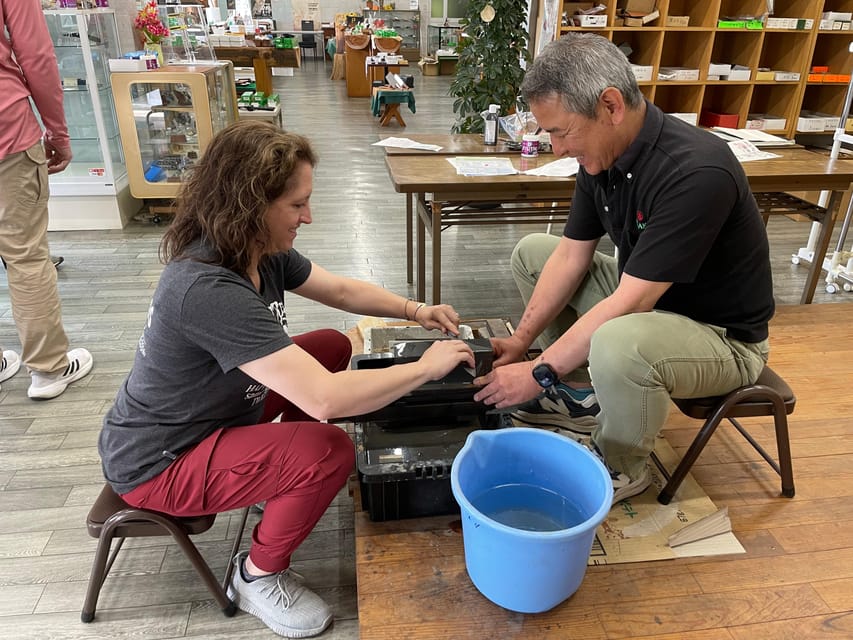
Book it if you want a personal, useful souvenir and an unusual look at Japanese craftsmanship beyond the standard Kyoto and Tokyo route. The best parts are the patient instruction from Sumi and Yoshi, Hiro’s careful transport and translation, the name engraved in Japanese, and the chance to test the finished blade yourself.
Skip it if you want a quick museum visit, a full raw-forging class, or the cheapest possible Japanese knife. The workshop can run long, the blade choices may be limited, and the museum is more closely tied to a factory collection than a grand standalone institution.
For the right person, this is a memorable full day in Seki: part craft lesson, part food outing, part sword encounter, and part practical shopping trip. You leave with a knife that carries your own mark, not just a receipt from a souvenir shop.
FAQ
Where does the experience begin?
You meet at Sekitomioka Station on the Nagara River Train at 10:06 AM, when the train arrives. A driver picks you up by car.
How long does the activity last?
It is listed as a one-day experience. The knife workshop is scheduled for about 2.5 hours, lunch for one hour, and the sword museum visit for about one hour. The workshop can run longer, so allow a full day.
What is included in the price?
The $322 price includes a samurai-style kitchen knife set, lunch, museum entry tickets, local transportation, an English guide, and a knife-making instructor.
Can I make my own knife?
Yes. You work on a prepared knife blank and learn to polish, engrave, assemble, and sharpen the blade under instruction.
Can I put my name on the knife?
Yes. You can write your name in Japanese kana or kanji and apply it to the blade using a special technique.
Do I get to use the knife before taking it home?
Yes. You test the finished knife by cutting fresh vegetables. Some sessions have also included a water bottle cutting demonstration.
What type of knife will I make?
The activity centers on a personalized Damascus kitchen knife. Available shapes and handle choices can vary, and some sessions have included chef and camping knife styles.
Is lunch included?
Yes. An authentic Japanese lunch is included. Available meals can include sushi and eel, but the exact menu may vary.
What museums or workshops will I visit?
You visit the G. Sakai Knife Museum and a Seki sword-focused museum or workshop. The stops cover knife collections, Japanese swordmaking, samurai history, and Seki’s blade tradition.
Is the activity suitable for children?
No. The activity is not suitable for children under 18.
What languages are available?
The activity is offered in English and Japanese. Hiro provides English guidance and translation during the day.
Can I cancel the booking?
You can cancel up to 24 hours in advance for a full refund. A reserve-now, pay-later option is also available.
More Museum Tours in Nagoya
- Nagoya: Toyota Commemorative Museum Guided Tour
★ 4.7 · 22 reviews - Tokyo: teamLab Planets TOKYO Digital Art Museum Entry Ticket
★ 4.6 · 9,779 reviews - Osaka Castle: Museum and Tower Entry Ticket
★ 4.5 · 2,380 reviews - Tokyo: Samurai Ninja Museum Guided tour and Experience
★ 4.6 · 1,010 reviews
Just added around Nagoya
- Kimono Rental and Tea Ceremony Experience in Inuyama★ 5.0 · 15 reviews
- Gifu Samurai Sword Town;Japanese Damascus Knife Making Experience★ 5.0 · 27 reviews
- Magome & Tsumago Nakasendo Full-Day Private Trip with Government-Licensed Guide★ 5.0 · 20 reviews
- Knife Making Experience in Samurai Sword Town★ 5.0 · 29 reviews
- Nagoya: Toyota Commemorative Museum Guided Tour★ 4.7 · 22 reviews
- Nagoya Private Custom Tour with Local Guide★ 5.0 · 15 reviews
- Nagoya: Traditional Japanese Sweets-Making Workshop★ 4.6 · 14 reviews
- Nagoya: Customized Private Tour★ 4.6 · 15 reviews
Samurai Experiences, compared.

Browse the lists this tour appears in