
Reviewed · TEMPLES & SHRINES
From Asakusa: Old Tokyo, Temples, Gardens and Pop Culture
East Tokyo makes a fine introduction to Tokyo because it puts the city’s many faces within one half-day outing. You move from incense and temple gates in Asakusa to market stalls, anime shops, and an Edo-era garden, with the city’s long story linking the stops. Senso-ji and Nakamise-dori provide the strongest opening, while Akihabara gives the tour its modern jolt.
I like the way the tour connects places that are often visited separately. I also like that standard admissions and local train rides are included, so the $68 price covers more than a guide walking beside you. The main consideration is pace: four hours is enough for an overview, not a slow, in-depth visit to every museum, shop, or temple building.
- Senso-ji in Asakusa: Learn how one of Tokyo’s earliest Buddhist temples shaped the district around it.
- Ueno and Okachimachi: See a working market area with street vendors, food stalls, and independent shops.
- Akihabara’s two identities: Trace its past as an electronics center and its present-day anime and gaming culture.
- Koishikawa Korakuen: Trade city noise for a traditional garden with seasonal scenery.
- Small-group format: The group is limited to eight people, which allows more room for questions than a large bus tour.
- Useful inclusions: Guide costs, admissions during the tour, and local train rides are covered. Food and drinks are not.
Why East Tokyo tells Tokyo’s story so well
Tokyo can feel hard to read at first. One street has a Buddhist temple, the next has a convenience store, and a few minutes later you are under glowing signs for games and anime. This tour gives those changes a clear order.
You start in Asakusa, the old entertainment and temple district. From there, you move through Ueno and Okachimachi, areas shaped by trade, food, and rail travel. Akihabara then shows how Tokyo’s appetite for technology and popular culture changed with the times. Koishikawa Korakuen closes the route with a quieter view of the city.
That contrast is the real point. You are not simply checking off famous sights. You are seeing how older neighborhoods adapted instead of disappearing.
The tour lasts four hours and is limited to eight participants. That is a useful middle ground. You get a guide who can explain the setting and answer questions, but you are not locked into the slow movement of a large group. You should still expect a fairly active outing, since it includes several walking sections and local train travel.
Starting at Asakusa and Kamiya Bar
The meeting point is Kamiya Bar in Asakusa, at 1-chome-1-1 Asakusa. This puts you near the heart of the district and close to the first major sights.
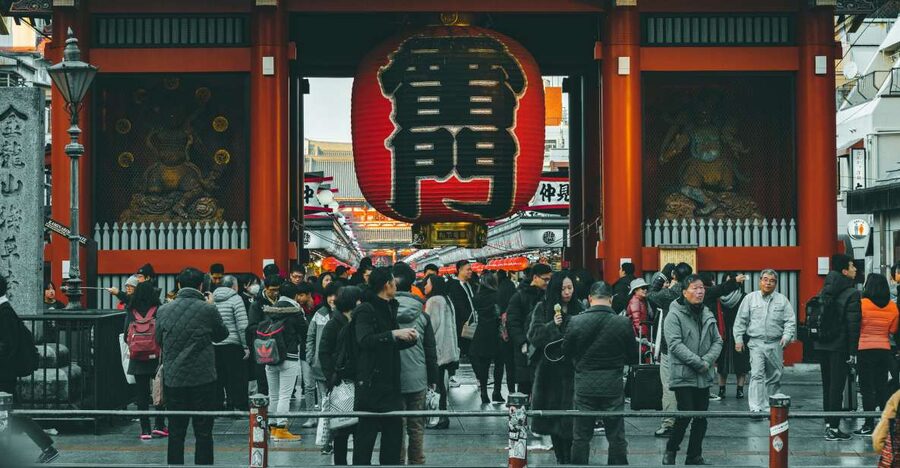
Asakusa is the right place to begin because it gives you an immediate sense of old Tokyo. The neighborhood is centered on Senso-ji, but it is not only a temple precinct. The surrounding streets, shops, food sellers, and visitors give the district a strong public character.
Your guide uses the opening section to explain how Asakusa became important and how its role changed over time. One especially useful detail is the connection to the subway line between Asakusa and Ueno. It was Asia’s first subway, and its operation helped tie these two districts together long before Tokyo became the vast rail city you see today.
I would pay attention here to the street pattern and the way commercial life gathers around the temple. The value is not just the photo of the gate. It is understanding why this particular part of Tokyo remained a place where people came to shop, pray, eat, and be entertained.
More Garden Tours in Tokyo
- Imperial Palace East Garden and Edo Castle Walking Tour in Tokyo
★ 5.0 · 510 reviews - Tokyo: Imperial Palace East Gardens Walking Tour
★ 4.8 · 353 reviews - Tokyo Castle, Imperial Palace, Shogun & Garden Walking Tour
★ 5.0 · 211 reviews
Senso-ji and Nakamise-dori in 15 minutes
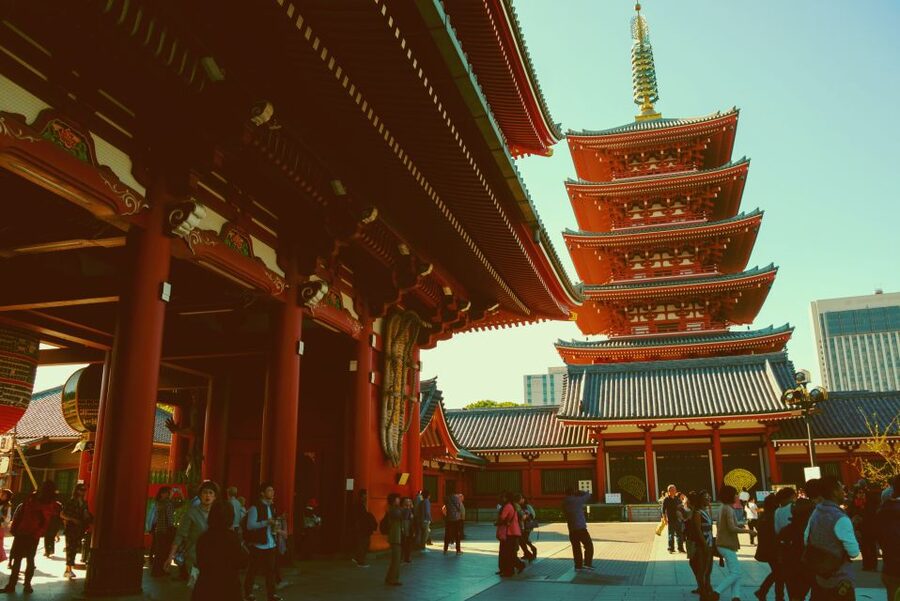
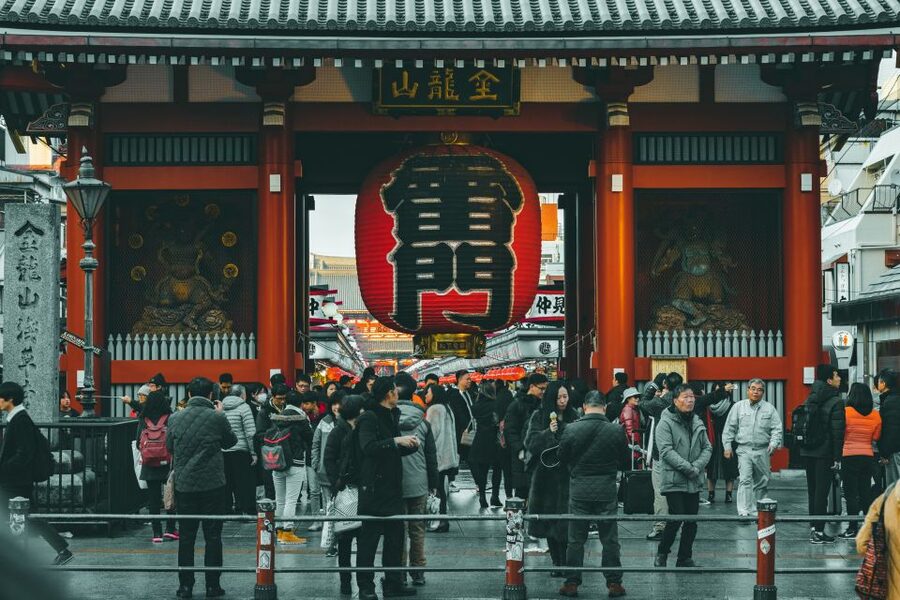
Senso-ji receives a short, focused visit of about 15 minutes within the longer Asakusa stop. Your guide explains the temple’s background and its place among Japan’s early Buddhist sites.
That time is enough for orientation and basic context, but it is not enough for a detailed architectural tour. If you want to study every gate, hall, statue, and ritual practice, you will need to return on your own. The advantage of seeing it with a guide first is that you can come back later with a better sense of what you are looking at.
Nakamise-dori, the shopping street leading toward the temple, adds a different layer. It is a place to observe how religious visits and retail have long existed side by side. You might see traditional souvenirs, snacks, and everyday crowds sharing the same approach to the temple.
The street can be busy, so comfortable shoes matter. You should also avoid treating this as a quick shopping stop if your main goal is history. The guide’s explanation of the district is more valuable than trying to rush through every storefront.
Past guides have included Taka, also spelled Takee in one account, Toru, and Michelle. The strongest praise has focused on guides who were attentive, friendly, and good at explaining the setting. One family particularly liked Taka’s ability to keep children interested, including an informal origami activity and a stop at a pub. Those details suggest that the experience can adjust to the group rather than staying rigidly scripted, though they are not guaranteed features.
Ueno and Okachimachi: Tokyo without a polished facade
From Asakusa, the route continues toward Ueno and Okachimachi. The two areas receive about 25 minutes each, giving you a quick but useful look at a different side of the city.
Ueno is known for museums, cherry blossoms, and public spaces. The tour does not include admission to the Tokyo National Museum, so you should not expect a museum visit to be part of the standard price. If you choose to enter, that cost is yours, and the available time would make only a brief visit practical.
The more distinctive part of this section is Okachimachi and its marketplace atmosphere. Ameya-Yokocho is a busy shopping and food area with street vendors and shops selling a wide range of goods. It feels less formal than Tokyo’s major department-store districts. That is precisely why it is useful.
Here, you see commerce at street level. The area has served vendors and shoppers for generations, and the guide explains how that older trading role continues today. You might find food stalls, small shops, and displays that feel practical rather than carefully designed for sightseeing.
I like this stop because it keeps the tour from becoming a procession of famous buildings. You get a look at a district where people buy things, eat, work, and pass through. The drawback is that 25 minutes is a short window. You will get the character of the market, but you will not have much time for serious browsing or eating.
Food and drinks are not included, so do not count on a meal during the tour. If you see something appealing at Ameya-Yokocho, ask your guide how much time is available before buying it.
Akihabara and the shift from electronics to otaku culture
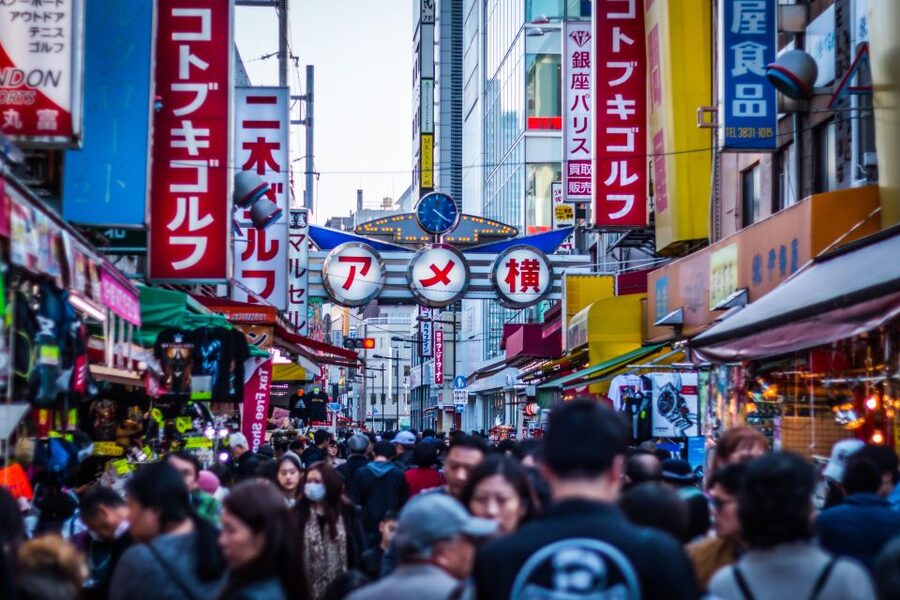
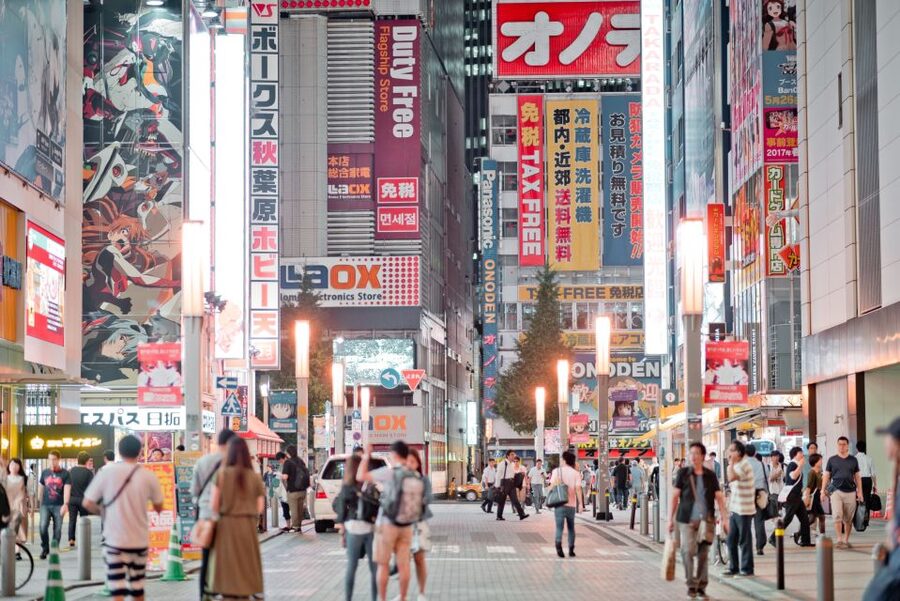
Akihabara gives the route its sharpest change of mood. Known as Electric Town, it has long been associated with electronics, but its identity now also centers on anime, manga, games, and other parts of Japanese pop culture.
Your guide places that change in context. The district began as a center for cutting-edge electronics and gradually developed into a major home for otaku culture. That history matters because Akihabara is not simply a collection of colorful signs and themed shops. It reflects Tokyo’s fascination with new technology and the way hobbies can shape an entire neighborhood.
The streets can feel like a real-world comic or game setting, with bright storefronts and characters represented by cosplayers. The tour gives you a way to understand what you are seeing instead of treating the district as visual noise.
The planned sightseeing time is about 45 minutes. That is enough to learn the basics and take in the atmosphere, but it is not enough to explore the many specialist stores in detail. If you already have a long Akihabara shopping list, consider treating this visit as an introduction and returning later.
This stop should appeal to families, first-time visitors, and anyone curious about the connection between technology and popular entertainment. It may be less satisfying if you want a dedicated shopping tour, because the group must keep moving to complete the full route.
More Temple & Shrine Tours in Tokyo
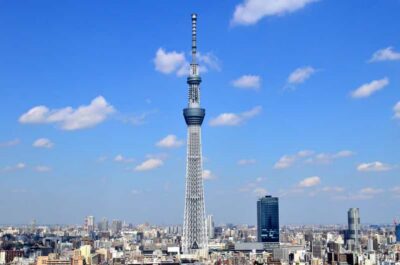
- Tokyo: Meiji Shrine, Asakusa, Skytree Bus Tour and Cruise
★ 4.7 · 1,986 reviews - Tokyo: Asakusa Walking Tour with Sensoji Temple Visit
★ 4.8 · 1,583 reviews - Tokyo Panoramic 1 Day: Meiji Shrine, Asakusa, Odaiba and SKYTREE®
★ 4.5 · 1,222 reviews - Tokyo: Zen Meditation at a Private Temple with a Monk
★ 5.0 · 510 reviews
Koishikawa Korakuen, a quiet finish
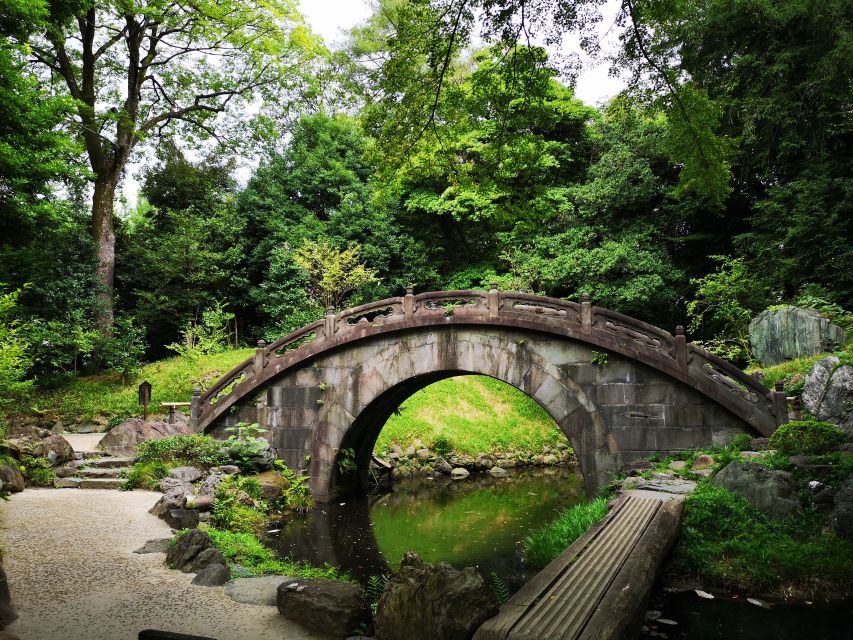
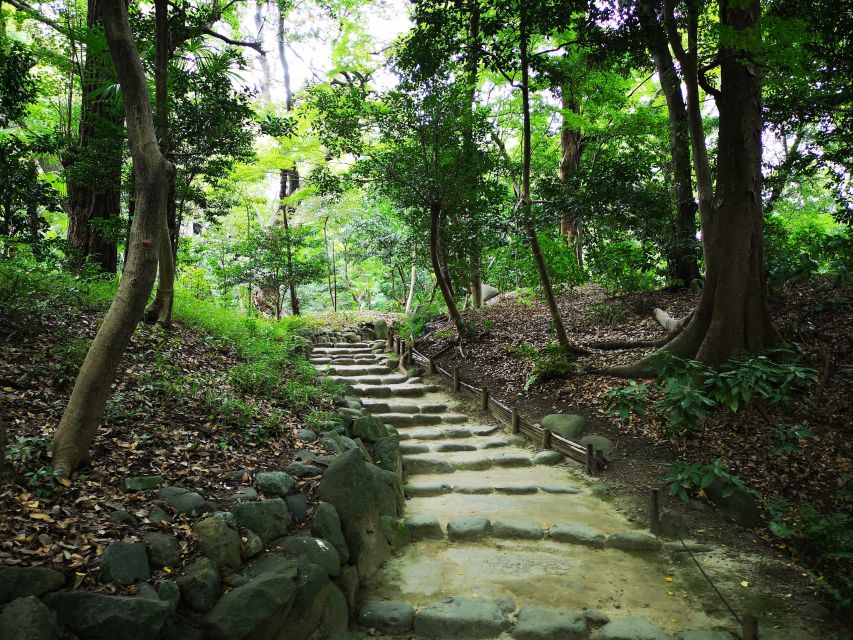
Koishikawa Korakuen provides the tour’s biggest change in pace. After the streets of Akihabara and the market activity around Ueno, you enter a traditional Japanese garden with paths, water features, and carefully arranged views.
The garden dates to the Edo period, and the tour presents it as a place where history and seasonal scenery meet. In spring, cherry blossoms shape the experience. In autumn, the leaves bring stronger reds and golds. Other seasons offer a calmer garden visit, but the supplied information does not promise a particular display on a given date.
The planned stop lasts about 45 minutes, including scenic views along the way. That is long enough to appreciate the garden’s design without turning the visit into a full botanical or architectural study.
I like having this garden near the end because it gives the route a natural pause. Tokyo’s energy is part of its appeal, but four hours of busy streets can wear you down. Koishikawa Korakuen lets you finish by looking at water, paths, and seasonal plantings rather than another wall of signs.
There is also a practical point here. The garden is not just a pretty break from the city. It helps you understand the contrast between planned Edo-era spaces and the dense modern city around them. You see that Tokyo’s older ideas about beauty and order still have a place among rail lines, commercial streets, and tall buildings.
What the $68 price covers
At $68 per person, this tour offers solid value if you want a guided overview of several districts rather than a single attraction. The price includes the guide, standard admission costs during the tour, and local train rides. That matters in Tokyo, where moving between neighborhoods can add small transport costs and mental effort.
You still pay for food, drinks, and any customized additions. Admission to the Tokyo National Museum is also excluded if you decide to go inside. Those limits are reasonable, but you should understand that this is primarily a walking and orientation tour, not an all-inclusive day out.
The price is easiest to justify for a first visit or a short stay. You get historical context in Asakusa, a market visit in Okachimachi, a pop-culture introduction in Akihabara, and garden scenery at Koishikawa Korakuen. Recreating that route alone is possible, but you would need to plan the order, manage train transfers, and research the story behind each area.
It is less useful if you already know East Tokyo well or want extended time at one museum, temple, or shopping district. In that case, a self-guided day may give you more freedom.
Who will get the most from this tour
I would recommend this outing to first-time visitors who want a clear introduction to Tokyo’s eastern districts. It also suits families, since the route offers several kinds of interest and past guides have done well at keeping children involved.
It is a good match for anyone who likes context. You are not just shown a temple or a market. You learn how transportation, commerce, religion, technology, and entertainment helped shape the neighborhoods.
The small-group limit of eight is another advantage for people who like to ask questions. Past guides were praised for being attentive and easy to talk with. Michelle was specifically described as fluent in Italian as well as professional and friendly, while Taka and Toru were also singled out for their warmth and care. The scheduled tour language is English, so you should book on that basis.
You should think twice if you dislike walking, want long shopping stops, or prefer a slow visit inside major museums. The tour covers a lot of ground in four hours, and the short timings at several places favor breadth over detail.
Comfortable shoes are essential. The tour is wheelchair accessible, but because it combines walking and local train rides, you may want to confirm the practical route details before booking if you have specific mobility needs.
Final call: book it for the connections
Book this tour if you want East Tokyo explained as one connected story. The route shows how Asakusa’s temple district, Ueno’s rail and museum area, Okachimachi’s market streets, Akihabara’s pop culture, and Koishikawa Korakuen’s garden fit into the same city.
Skip it if your plans already include long visits to each of those places or if you want a free-form shopping day. The tour is strongest as a first look, especially when you value a friendly guide and a well-planned route.
For $68, the combination of transport, standard admissions, and a group capped at eight makes the price fair. You will not see everything, but you will leave with a useful map of Tokyo in your head and several places worth returning to on your own.
FAQ
How long does the East Tokyo tour last?
The tour lasts four hours.
Where does the tour meet?
The meeting point is Kamiya Bar in Asakusa, at 1-chome-1-1 Asakusa.
What language is the tour conducted in?
The tour is conducted in English with a live guide.
Which places are included?
The route includes Asakusa, Senso-ji Temple, Ueno, Okachimachi, Koishikawa Korakuen, and Akihabara.
Are local train rides included?
Yes. Standard local train rides used during the tour are included.
Is food included in the price?
No. Food and drinks are not included.
Is admission to the Tokyo National Museum included?
No. Admission to the Tokyo National Museum is not included if you choose to visit.
How large is the group?
The tour is limited to eight participants.
Just added around Tokyo
- Kawagoe Japanese Food Tour : Unagi Kaiseki and Sake near Tokyo★ 5.0 · 30 reviews
- Kawagoe 4hr Private Tour with Licensed Guide (Kawagoe Dep)★ 5.0 · 13 reviews
- Little EDO Sushi Making workshop in Kawagoe★ 5.0 · 18 reviews
- 【R34】Tokyo:Private Daikoku tour in Modified R34★ 4.9 · 92 reviews
- :Tokyo,Shibuya/ Pro Photography in Kimono / English-Friendly★ 5.0 · 26 reviews
- Tokyo:Celebrate Unique Japanese New Year Tradition Festivity★ 3.9 · 20 reviews
- Tokyo: Allstar Food Tour★ 4.7 · 29 reviews
- Tokyo: West-Side Cycling and Food Tour with Guide★ 5.0 · 37 reviews
Temples & Shrines, compared.

Tea Ceremony in a Traditional Tea House in Kiyomizu
Our verdict →
Meiji Shrine, Asakusa, Skytree Bus Tour and Cruise
Our verdict →
Fushimi Inari Hidden Hiking Tour (Private Option Available)
Our verdict →
Osaka/Kyoto:Kinkakuji,Arashiyama,FushimiInariShrine,NaraPark
Our verdict →
Nikko: Kegon Falls, Lake Chuzenji & Toshogu Temple
Our verdict →
Kamakura & Enoshima Day Trip including Temple Tickets
Our verdict →Browse the lists this tour appears in