
Reviewed · SAMURAI EXPERIENCES
Experience Samurai and traditional Culture to the fullest
The sharpest part of this Osaka experience is not the armor photo. It is the chance to handle a real samurai sword under instruction, then connect that physical skill with calligraphy, tea, and the discipline behind both. You begin in kimono, learn brushwork, write a final samurai character, and finish as an armored soldier in the story of the Osaka Summer Battle.
I like the small private-group format, since you can ask questions without being hurried. I also like the mix of quiet and active moments: calligraphy and tea ceremony slow you down, while sword cutting demands focus and control. The main consideration is the price, $168 per person, and the serious tone of the optional seppuku segment, which may not suit every visitor.
Key points
- Three hours of varied practice: Calligraphy, tea ceremony, sword handling, trial cutting, armor dressing, and photography all fit into one session.
- A real sword-cutting lesson: You learn how to carry and use a katana before trying controlled cutting under a certified instructor.
- Kimono and armor are included: You change before the cultural lessons, then dress as a samurai for the final scenes.
- Private instruction near Osaka Castle: The setting connects the activity to the 1615 Osaka Summer Battle and Toyotomi’s side.
- Photographs are part of the package: Images from the experience are sent to your designated email address.
- English is the default: Spanish, Italian, French, Chinese, Thai, and Indonesian support may be available, but you must ask about staff schedules before booking.
A samurai day that begins with a brush
This is not simply a costume photo session. The experience uses several traditional arts to show how samurai ideals were expressed through posture, courtesy, focus, and responsibility.
You arrive 30 minutes before your reserved time at Excellence Takayama, 1F, 2-3-19 Shiginonishi, Joto-ku, Osaka-shi. Look for the wooden sign marked Honor of the Samurai. A rack of activity pamphlets sits outside, and hanging kimono and hakama may help you spot the entrance.
Bring a T-shirt for changing. Pets, baby strollers, alcohol, and drugs are not allowed, and the activity is not suitable for children under 10, babies under 1, or people over 95.
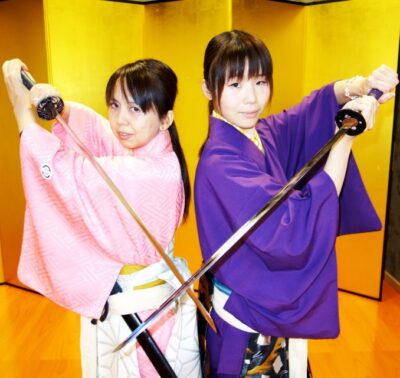
The first step is changing into a kimono. This matters because the clothing changes the pace of the session. You are not rushing straight into a sword lesson. You first learn how traditional dress, gestures, and manners shape the way you move.
The staff presents kimono as a symbol of Japanese culture, then introduces the connection between traditional arts and Zen ideas. You will not become a tea master or calligraphy expert in three hours, but you do get a clear taste of the care given to movement, tools, and personal conduct.
More Samurai Experiences in Osaka
- Samurai Training Experience KENDO in Osaka
★ 5.0 · 515 reviews - OSAKA NIGHT FUSION Japanese Taiko Kabuki Samurai Dance Show
★ 4.8 · 155 reviews - Osaka: Samurai Training Experience KENDO in Osaka
★ 5.0 · 111 reviews
Calligraphy, from brush strokes to final words
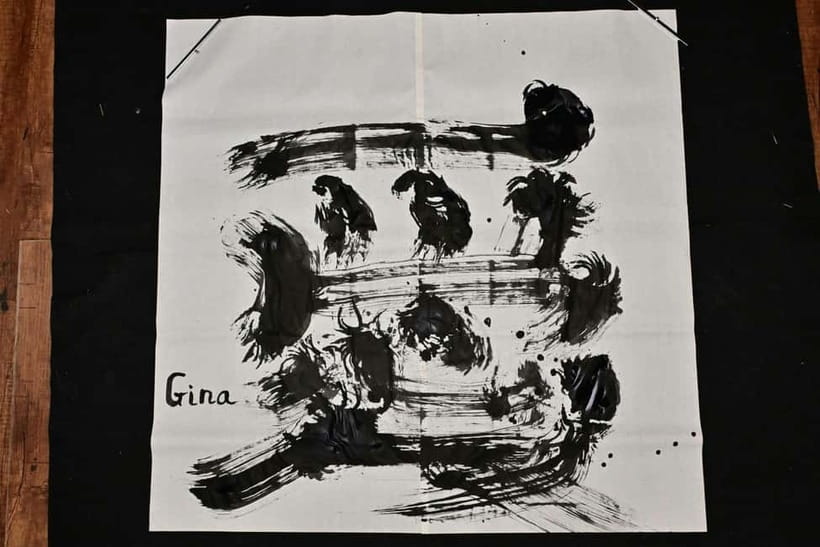
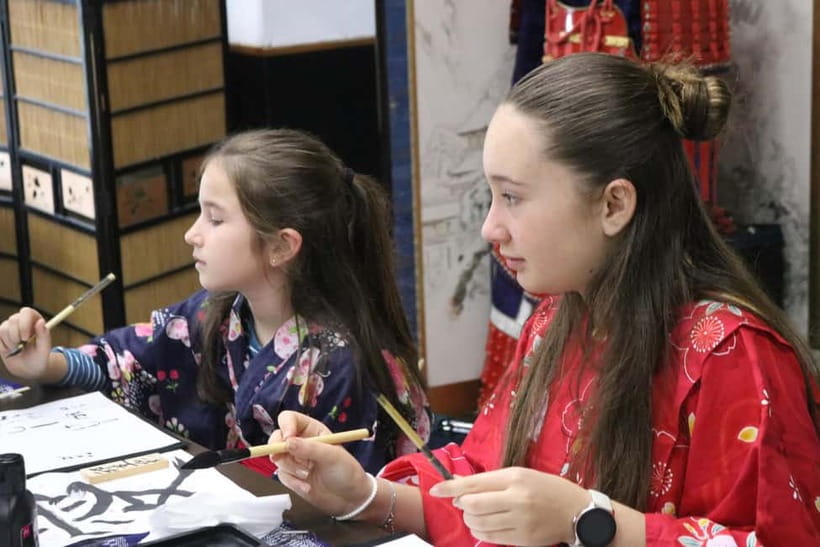
The calligraphy lesson lasts about 20 minutes. You learn how to prepare the brush, handle the tools, and make basic strokes. The three terms introduced are tome, the stopping stroke, hane, the hooked stroke, and harai, the sweeping stroke.
You then choose a Kanji character and follow its proper stroke order. This is a useful detail for beginners. Japanese calligraphy is not just about making a character look attractive. The order and direction of each stroke are part of the form, and the brush responds differently when you stop, lift, or sweep.
I like this part because it gives the experience a calm center. You have to pay attention to your hand rather than pose for a camera. The lesson is short, so you should expect an introduction rather than a full art course, but it gives you a better sense of why calligraphy can demand patience.
The next 10 minutes are devoted to samurai calligraphy. You write the Kanji character again as a form of resignation, meaning final words written before death. This is a serious historical theme, and the activity treats it as part of the samurai ideal of accepting mortality and acting with resolve.
That subject will appeal to visitors interested in Bushido and the more solemn side of samurai culture. If you are looking only for a light costume activity, the tone may feel heavier than expected. You can still treat it as a focused cultural exercise, but it is worth knowing that the session does not present samurai life as pure entertainment.
Tea ceremony and the discipline of courtesy
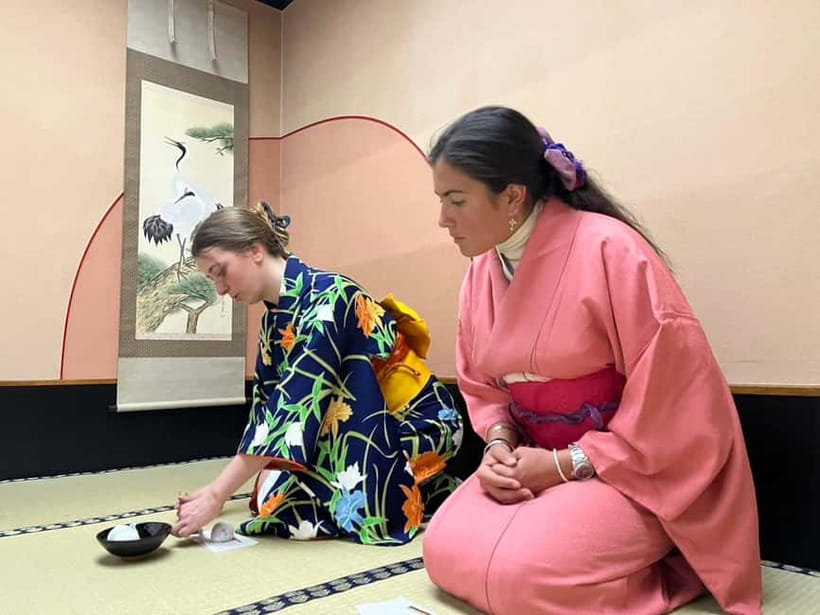
The tea ceremony lasts around 30 minutes. A tea master prepares powdered green tea and serves it to you while explaining etiquette, manners, gestures, and hospitality.
This is a good counterpoint to the sword segment. Tea ceremony requires stillness and attention to small actions. The point is not only the drink. It is the way the host prepares the space, handles the equipment, and shows respect to the person receiving the tea.
The activity connects this conduct with honor in Bushido. That link helps explain why the schedule places tea before sword cutting. You first practice control through quiet movements, then apply a different kind of control to a weapon.
Do not expect an elaborate formal tea school lesson in half an hour. The value is in trying the basic actions and understanding the idea of hospitality. If you enjoy cultural activities that ask you to watch and copy rather than simply listen, this should be one of the stronger parts of the session.
Learning to carry a katana responsibly
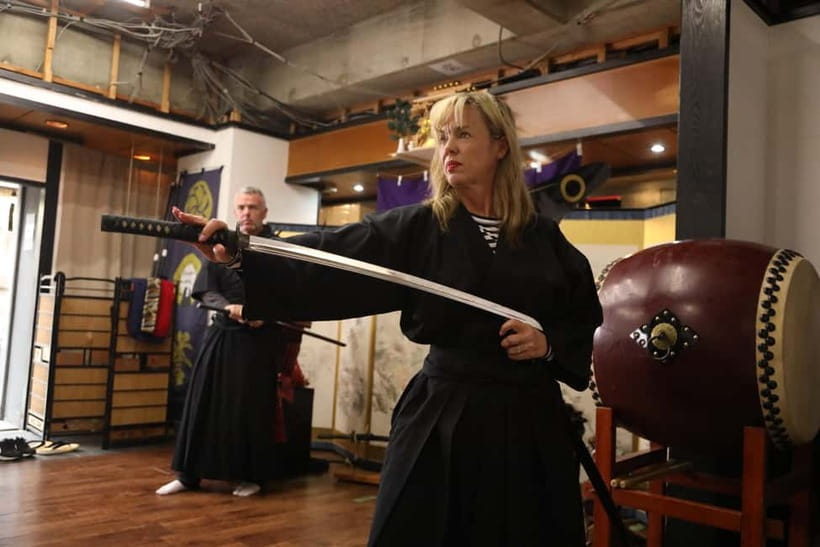
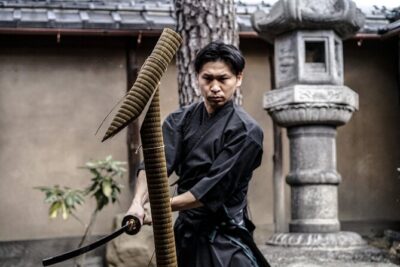
The sword lesson takes about 30 minutes and begins with instruction in how to use a samurai sword. The activity stresses self-respect and responsibility because a katana is a deadly weapon, not a harmless prop.
That distinction matters. You are allowed to wear a serious sword during the lesson, and you will receive guidance before attempting trial cutting. The focus is on training, control, and awareness. The lesson is not presented as a theatrical sword fight.
You then try cutting with a samurai sword. The description calls attention to the cutting edge, but you should read that as a supervised technique session rather than a promise of dramatic action. Your instructor determines how the activity proceeds, and your task is to follow directions carefully.
This is likely the most memorable section for anyone curious about samurai training. It gives weight to the costume and the history. Wearing armor for a photograph can be fun, but learning how to hold and control a weapon gives the experience a physical challenge.
The sword section also explains the repeated idea that there is no end to training. You are not expected to master the katana in 30 minutes. You are getting a short, guided introduction to the concentration and responsibility involved.
Same trip, a completely different kind of day:
- Osaka Go Karting Tour with Funny Costume
★ 5.0 · 2,658 reviews - Osaka Castle: Museum and Tower Entry Ticket
★ 4.5 · 2,380 reviews - Osaka: Shinsekai Food Tour with 13-15 Dishes at 5 Eateries
★ 4.8 · 2,204 reviews - Osaka Food Tour: 13 Dishes at 5 Local Eateries
★ 5.0 · 2,149 reviews
Armor, Osaka Castle, and the 1615 battle
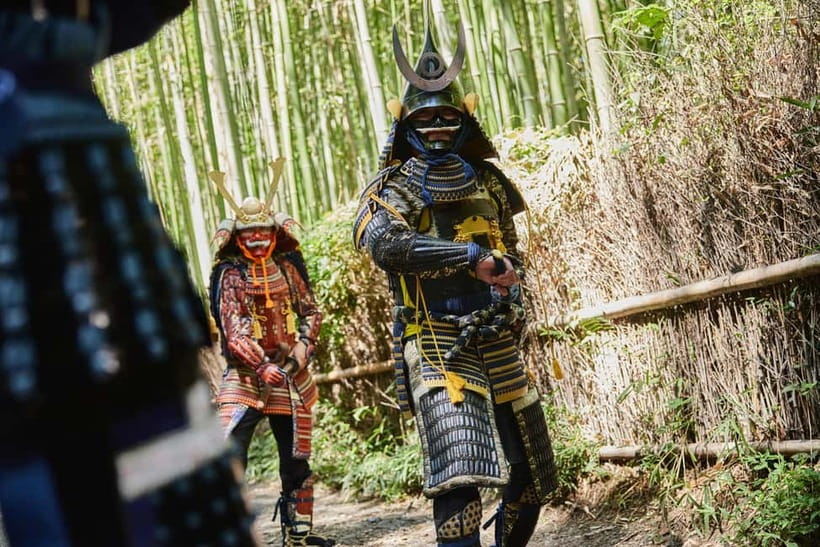
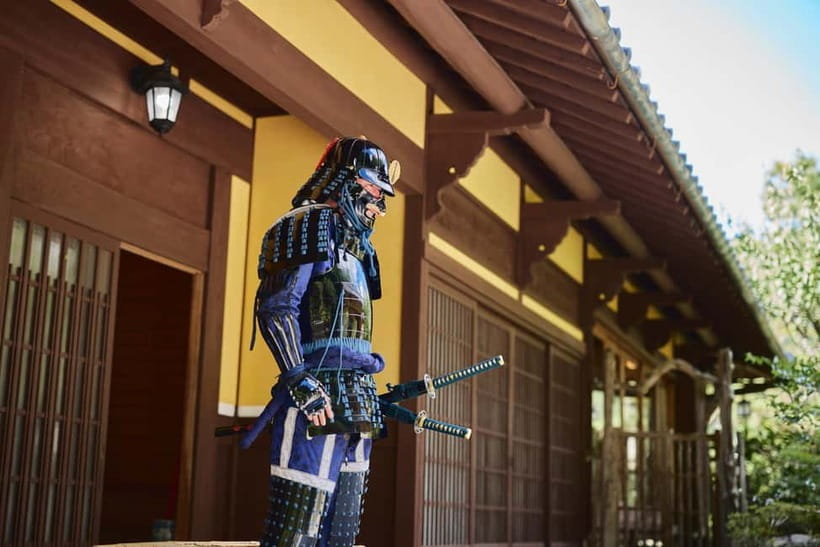
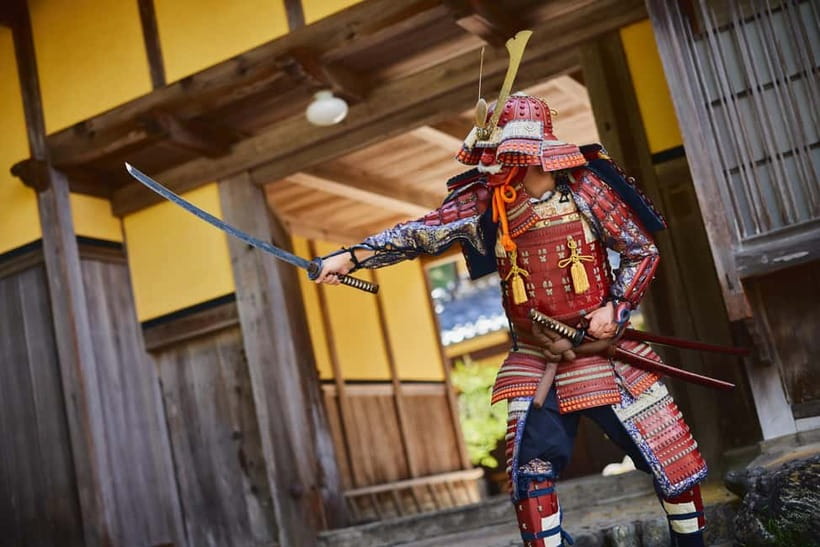
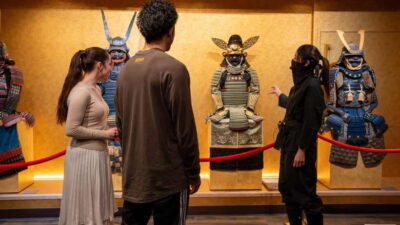
After the tea and sword work, you put on samurai armor. Armor is included, and the changing takes place indoors. The session then shifts into a historical role-play based on the Osaka Summer Battle of April 1615.
You are placed on Toyotomi’s side and photographed as a soldier heading into battle. The activity connects the armor with the history of Osaka Castle and the final struggle of the Toyotomi forces.
The photographs are not an afterthought. A photographer covers the activity, and the finished data is sent to your designated email address. You should have images from more than just the final armor pose, including the cultural lessons and sword practice.
The supplied details describe the photo session as taking place on the grounds of Osaka Castle. At the same time, the meeting address is in Joto-ku, not at the castle itself, so allow time for your own transportation between locations if the photo portion requires movement. Hotel or train-station pickup is not included, and transportation costs are your responsibility.
The armor is the visual payoff, but it works better because you have already learned the meaning attached to conduct, writing, tea, and weapons. You are not just putting on a helmet and smiling. You are given a small role in a specific historical setting.
What the private format changes
The private-group setup is important at this price. The experience includes several hands-on sections, and each one benefits from direct correction. A crowded group would make brush practice, tea gestures, sword handling, and armor dressing less personal.
You also have room to ask questions. The staff is described as patient when explaining both calligraphy technique and katana handling, and the English-speaking team is prepared to work through the different stages without rushing.
There are no named guides provided, so you should not book expecting a particular instructor. The activity does include a certified professional instructor, which is especially important for the sword segment.
English is the default interpretation language. Staff may be available for Spanish, Italian, French, Chinese, Thai, or Indonesian, but availability is limited. Ask about the schedule before reserving if language support is important to you. A language request is not guaranteed simply because the language appears among the possible options.
Is $168 a fair price?
At $168 per person, this is not a cheap photo opportunity. It is a full three-hour private session with clothing, instruction, calligraphy materials, tea ceremony, sword trial cutting, armor, a photographer, and tax and tips included.
The value depends on what you want from Osaka. If your goal is one quick samurai portrait, the cost is high. You would be paying for several lessons you may not care about.
If you want a structured cultural activity with real participation, the price makes more sense. You receive a sequence of connected experiences rather than a single costume change. The private format also reduces the waiting and crowding that can weaken hands-on activities.
The included photographs add practical value. You do not have to rely only on your own phone while wearing armor or handling a sword. Since the data is sent to your designated email address, check that the address is correct when you book or arrive.
The price also covers tax, tips, and the certified instructor. Transportation is not included, so add that cost when planning your day. The meeting place is not a train station or hotel, and pickup is not offered.
The optional seppuku segment
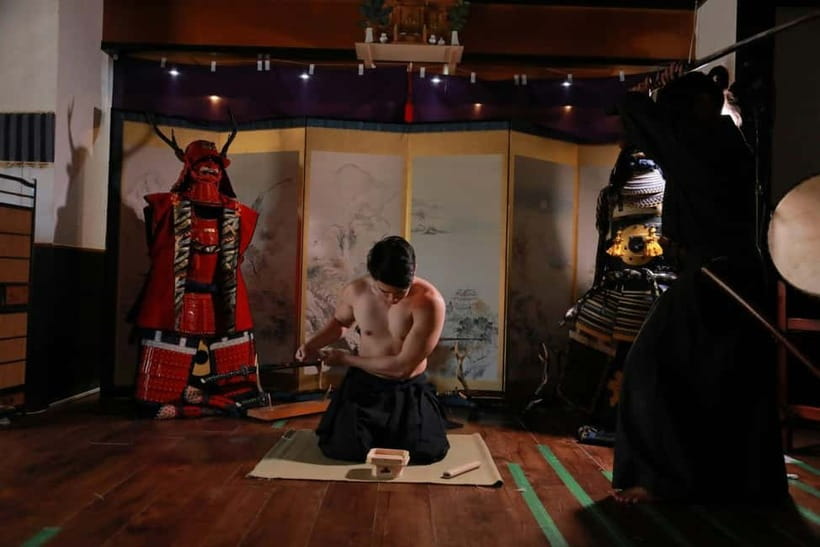
A 30-minute seppuku, or harakiri, segment is offered as an option. It explores the samurai idea of being prepared to die for a lord and the link between righteousness, honor, and a beautiful death.
This is a historical and symbolic activity, not something you should treat casually. The subject is death, pain, and reputation, and the tone is much darker than the tea ceremony or the armor photographs.
You should ask what the optional segment involves before adding it. The supplied details identify it as a paid or optional activity, but do not state its exact price or format. If you are uncomfortable with graphic historical themes, skip it and use the time for the main program.
Who will enjoy this experience most?
I would recommend this to adults and older children who want more than sightseeing photographs. It suits you if you enjoy Japanese history, hands-on cultural lessons, role-play, and patient instruction.
It is also a good choice for a private celebration or a small family group with children aged 10 or older. The three-hour length gives the day a clear structure, while the mix of quiet and active sections keeps it from feeling like one long lecture.
You should think twice if you dislike dressing up, have limited mobility, or want a simple, fast activity. The session includes changing clothes, wearing armor, holding a sword, and following formal instructions. The provided age guidance excludes children under 10 and people over 95, but no further accessibility details are given, so ask the provider about your own needs.
The subject matter may also shape your decision. Calligraphy and tea are gentle and reflective. Sword cutting and the optional seppuku discussion carry more serious themes. The experience treats samurai culture through honor, discipline, and death as well as through costumes and photos.
Practical planning for your Osaka day
Plan to arrive 30 minutes early. You need time for instructions and changing, and arriving at the reserved start time could cut into the first lesson.
Wear or bring a T-shirt for the change into kimono. Since the activity includes traditional clothing and armor, simple clothing underneath should be easier than bulky layers.
The meeting address is Excellence Takayama, 1F, 2-3-19 Shiginonishi, Joto-ku, Osaka-shi, Osaka 536-0014. Use the map link supplied with your booking, and look for the wooden Honor of the Samurai sign, the pamphlet rack, or the kimono and hakama hanging outside.
The experience lasts three hours, but the listed sections add up to about two and a half hours before allowing for changing, movement, explanations, and photography. Treat the full three hours as committed time, especially if you have a castle visit, meal, or train reservation afterward.
Free cancellation is available up to 24 hours before the activity for a full refund, and you can reserve now and pay later. Those terms help if your Osaka schedule is still shifting, but they do not remove the need to plan transportation yourself.
Should you book the samurai experience?
Book it if you want a private, hands-on introduction to several parts of traditional Japanese culture in one sitting. The combination of brushwork, tea, sword cutting, armor, and photography gives you a much fuller experience than a costume rental alone.
The strongest reasons to choose it are the patient instruction, the private format, the certified teacher, and the chance to work with a sword rather than only pose with one. The photos near Osaka Castle also give the day a clear visual finish.
Skip it if $168 feels too high for a three-hour activity, if you want an informal photo stop, or if the themes of death and Bushido sound uncomfortable. Also confirm language support and the exact photo arrangements before booking if those details matter to you.
For the right visitor, this is a lively but serious look at samurai culture, with enough quiet practice to keep the armor and sword from feeling like empty props.
FAQ
How long does the samurai experience last?
The experience lasts three hours. You should arrive 30 minutes before your reserved start time for instructions and changing clothes.
What is included in the $168 price?
The price includes samurai clothing, indoor samurai armor, English-speaking staff, a certified professional instructor, calligraphy practice, samurai calligraphy, tea ceremony, samurai sword trial cutting, armor wearing, photography, tax, and tips.
Is the experience held at Osaka Castle?
The meeting address is Excellence Takayama, 1F, 2-3-19 Shiginonishi, Joto-ku, Osaka-shi. The photo portion is described as taking place on the grounds of Osaka Castle, but transportation and pickup are not included.
What language is used during the activity?
English is the default interpretation language. Spanish, Italian, French, Chinese, Thai, and Indonesian may be available, but you must ask about staff schedules before booking.
What should I bring?
Bring a T-shirt for changing into the provided traditional clothing.
Is the seppuku segment included?
No. Seppuku, also called harakiri, is an optional 30-minute activity and is separate from the main experience.
Can I cancel for a full refund?
Yes. You can cancel up to 24 hours in advance for a full refund. You can also reserve now and pay later.
Just added around Osaka
- Exclusive Sushi Making Experience with a Master Chef – Osaka Area★ 5.0 · 25 reviews
- Private Home-Style Cooking Class in Osaka with Local Mom Yoshiko★ 5.0 · 46 reviews
- Hidden Osaka – Yukaku Red Light Tour & Culinary Adventure★ 4.8 · 96 reviews
- Osaka: Walking Tour and Top Highlights★ 4.8 · 104 reviews
- Osaka: Private Ceramic Painting Workshop★ 5.0 · 13 reviews
- Pickleball in Osaka, Kobe & Kyoto with Locals!★ 4.7 · 80 reviews
- Eat Like a Local in Osaka – Private Custom Street Food Tour★ 4.3 · 33 reviews
- Osaka:SUMO BEATS SHOWCASE: Taiko Drum and Wagyu burger!★ 4.2 · 37 reviews
Samurai Experiences, compared.
Browse the lists this tour appears in