
Reviewed · TEA CEREMONY EXPERIENCES
Osaka: Matcha Making Experience with Japanese Sweets
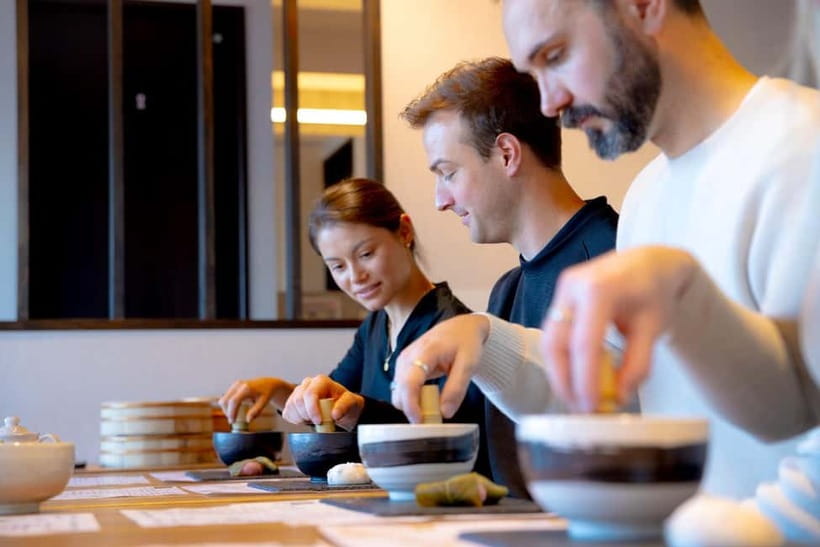
Osaka’s food scene is loud, fast, and wonderfully excessive. This one-hour matcha class gives you a calmer counterpoint, with a short lesson, traditional whisking, and Japanese sweets in a room limited to six people. You learn by doing, not by watching a long demonstration.
I like the friendly English-speaking instruction and the useful location, five minutes from Shinsaibashi Station and close to Dotonbori. I also like the format: a light quiz, a hands-on tea session, and time to taste what you make. The main consideration is quantity. You receive a cup of matcha and sweets, not a full meal, and an hour passes quickly.
Key points at a glance
- A six-seat class: The small group keeps it easy to ask questions and get help with your whisking.
- A quiz before the tea: Matcha history is taught in a light, interactive way rather than as a dry lecture.
- Traditional tools: You prepare your own tea with a bamboo whisk and other tea-making equipment.
- Central Osaka setting: The class is near Shinsaibashi and Dotonbori, so it fits neatly between shopping, sightseeing, and dinner.
- A welcoming teaching team: Instructors including Fujiko, Reika, Serin, Yui, Matty, and Takara are praised for clear English and warm teaching.
- A compact cultural stop: At $22 per person, it is a reasonable one-hour activity, but it should not be mistaken for a full tea ceremony or cooking meal.
Why this matcha class works well in Osaka
The best part of this experience is its scale. Osaka can wear you out with bright signs, packed streets, and endless food choices. Here, you sit down for an hour and focus on one small Japanese tradition.
That contrast matters. You are not simply handed a cup of green tea. You learn what matcha is, hear how it fits into Japanese tea culture, and then prepare it yourself. The process is simple enough for a first-timer, but tactile enough to feel like a real activity.
The location adds practical value. You can reach the class in about five minutes from Shinsaibashi Station, and Dotonbori is nearby. Plan it as a break from shopping or sightseeing, or schedule it before an evening meal. Since no hotel pickup or drop-off is included, you are responsible for getting to the building.
The meeting point is on the third floor of the Galleria Acca Building. One useful detail from the class experience is that the entrance can be easy to miss, so check the building name and go upstairs rather than waiting at street level.
More Tea Ceremony Experiences in Osaka
- Osaka: Tea Ceremony Experience
★ 4.9 · 1,426 reviews - Tea Ceremony Experience in Osaka Doutonbori
★ 5.0 · 754 reviews - Matcha Making Class in Osaka with Authentic Japanese Sweets Set
★ 5.0 · 509 reviews
The first few minutes: matcha history with a light quiz
The session begins with an introduction to matcha and its place in Japanese culture. Instead of asking you to sit through a long formal talk, the instructor uses questions and a light quiz to get everyone involved.
This is a good choice for an international group. You do not need prior knowledge of tea, Japanese customs, or special vocabulary. The quiz gives you simple context before you handle the tools, and it leaves room for questions.
The teaching style is one of the strongest parts of the activity. Fujiko is praised for her clear English and humor, while Serin, Reika, Yui, Matty, and Takara are also noted for being patient, lively, and easy to understand. The exact instructor depends on the session, but the format stays friendly and interactive.
Families can take part, too. One family enjoyed the class with an eight-year-old child, and another parent was able to bring a nine-month-old baby. The class is not presented as a dedicated children’s program, but the informal teaching style can work well for families who want a short cultural activity.
Whisking your own tea with traditional tools
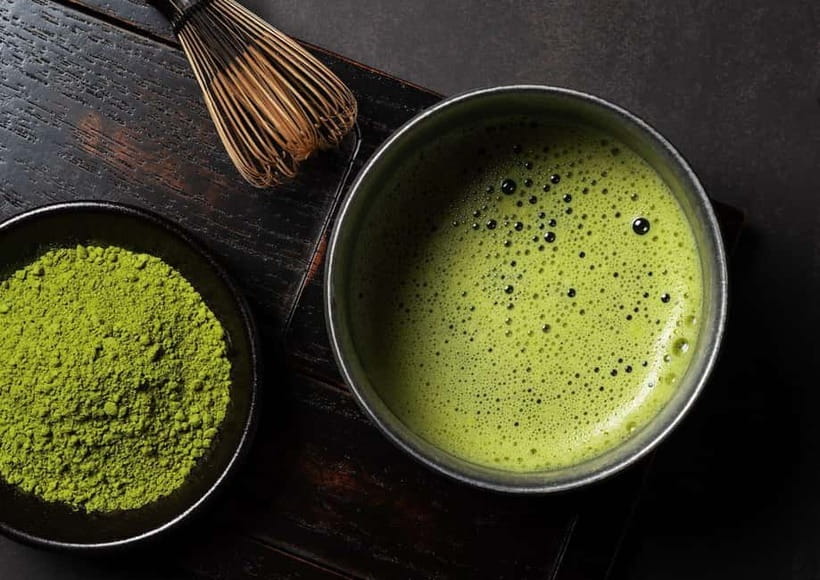
After the introduction, you prepare matcha yourself. You work with the traditional equipment and learn how to turn powdered tea into a smooth drink with a bamboo whisk.
The instructor demonstrates the basic steps, then helps you copy the technique. You will learn how to combine the powder and water, whisk properly, and prepare the tea in the customary way. This hands-on section is what makes the class more useful than simply ordering a matcha drink at a café.
Do not expect instant perfection. Your first cup may be foamy and smooth, or it may need a little more whisking. That is part of the fun. The small class size, capped at six people, gives the instructor time to look at each cup and offer help.
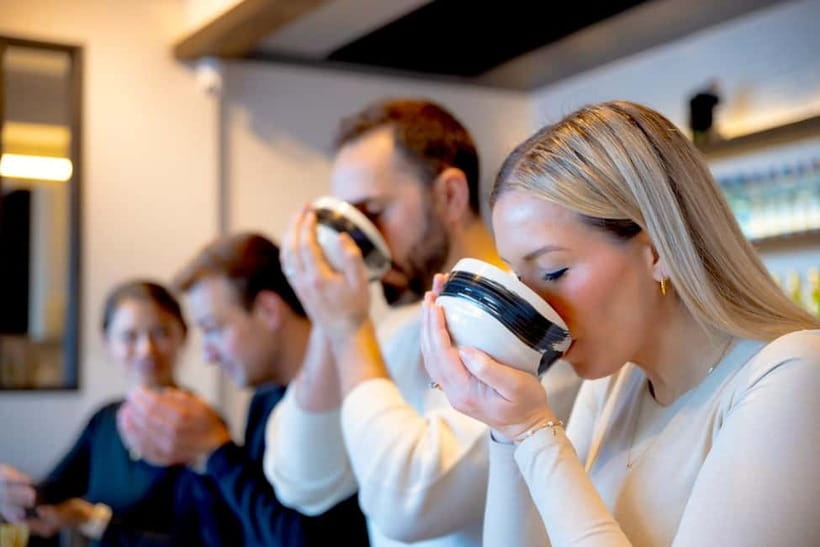
You also get to taste the result. The experience is not a professional tea-school lesson, and it does not claim to cover every detail of tea ceremony etiquette. It is a practical introduction that lets you understand the process through your hands, eyes, and taste buds.
One useful benefit is that you can repeat the method at home. Several instructors share preparation tips, and the class gives you enough basic knowledge to try again with matcha powder and a whisk. One person even bought a chawan bowl after the lesson, so the activity can lead to a small, personal souvenir.
Japanese sweets make the tea easier to appreciate
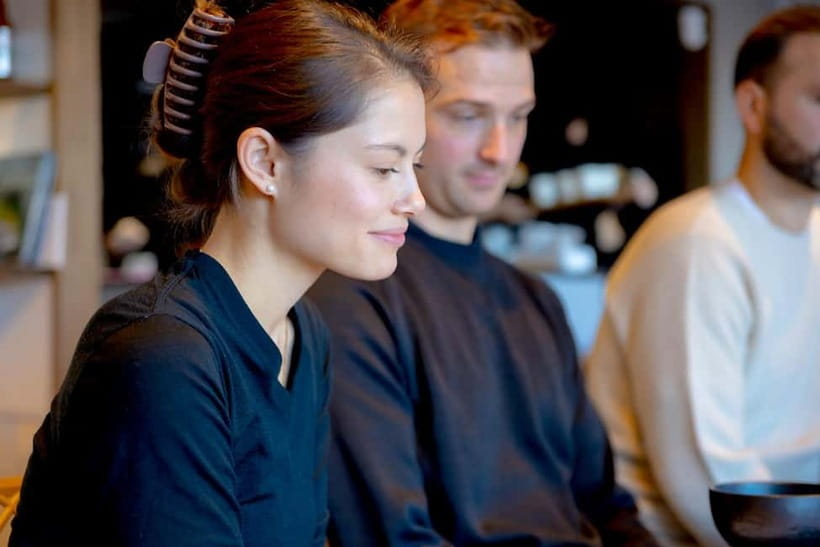
Your matcha is served with Japanese sweets. This pairing is more than a decorative extra. The sweet taste helps balance matcha’s earthy, slightly bitter character, especially if you are trying it for the first time.
The sweets are consistently described as delicious, but keep your expectations sensible. This is a tasting accompaniment, not a dessert buffet or a snack large enough to replace lunch. The class gives you a cup of tea and a few sweets as part of the cultural lesson.
I like this part because it teaches you how the flavors work together. Matcha can be an acquired taste when served alone. With a sweet bite alongside it, the drink feels more approachable and the tasting becomes a proper pause rather than a technical exercise.
The relaxed table setup also helps. You get some of the visual feel of a traditional tea setting without needing to kneel on the floor. One particularly practical feature is the table design, which allows you to sit normally while still enjoying a traditional atmosphere.
Same trip, a completely different kind of day:
- Osaka Go Karting Tour with Funny Costume
★ 5.0 · 2,658 reviews - Osaka Castle: Museum and Tower Entry Ticket
★ 4.5 · 2,380 reviews - Osaka: Shinsekai Food Tour with 13-15 Dishes at 5 Eateries
★ 4.8 · 2,204 reviews - Osaka Food Tour: 13 Dishes at 5 Local Eateries
★ 5.0 · 2,149 reviews
A calm hour near Dotonbori and Shinsaibashi
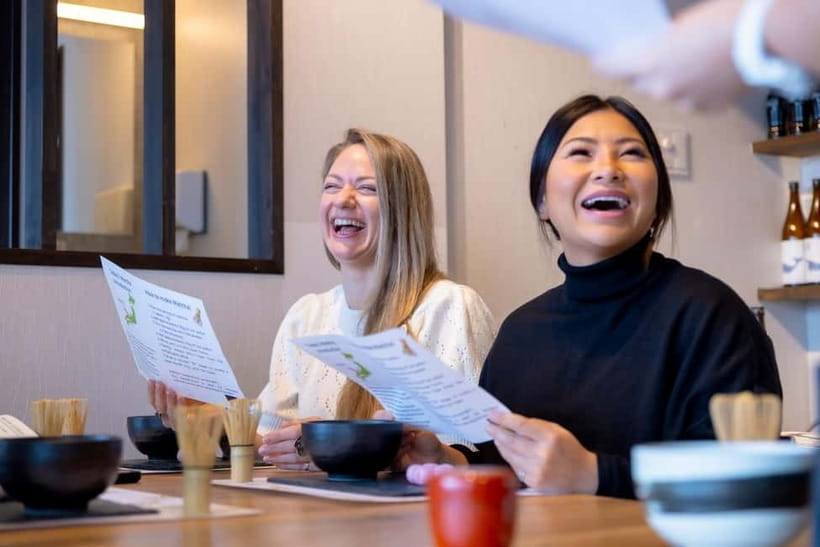
The class is well placed for a busy Osaka day. Shinsaibashi is one of the city’s main shopping areas, while Dotonbori is close by with its famous signs, restaurants, and nightlife. You can fit this activity into a larger afternoon without losing much time to transportation.
It is especially useful during hot weather. One person booked it as a break from the heat, and that makes sense. The class gives you a clean, quiet place to sit for an hour before returning to Osaka’s streets.
It can also work well when rain interrupts your plans. The activity is short, indoors, and structured, so you do not need to commit half a day. If you are trying to fill a gap between meals or shopping, the timing is convenient.
The tradeoff is that the central setting may make the building harder to spot than a large tourist attraction. Use the address details carefully, allow a little extra time, and remember that the class is on the third floor.
What $22 buys you
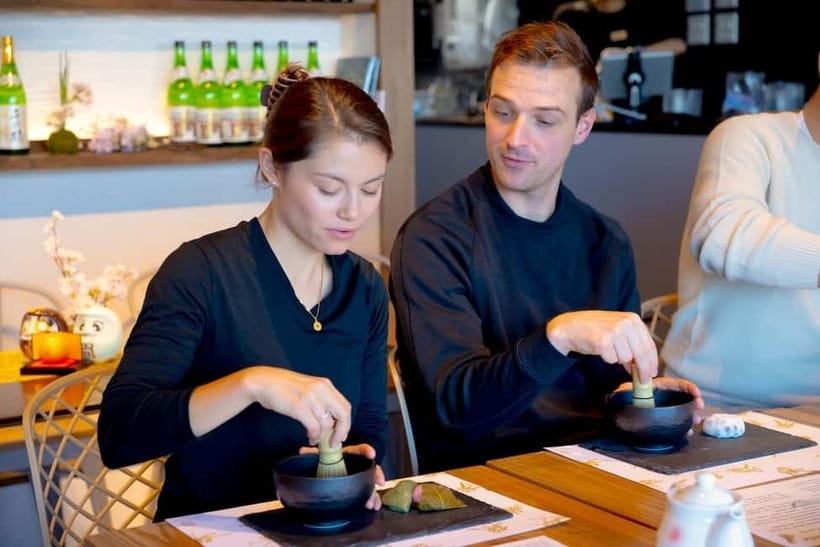
At $22 per person, the price is fair for a one-hour small-group activity in central Osaka. The fee covers the class, ingredients, instructor, matcha preparation, and Japanese sweets. You are paying for instruction and participation, not just tea.
The small group is important to the value. With no more than six people, you have a better chance of receiving individual guidance than you would in a large demonstration. That matters when you are learning to whisk, since small changes in motion affect the texture.
The price is less appealing if you are only looking for a drink. A café matcha will cost less in some situations, and you will spend less time. This class earns its price through the lesson, tools, cultural background, and chance to make the drink yourself.
It is also good value for first-time visitors who want a manageable introduction to Japanese food culture. You do not need to know anything ahead of time, and the English instruction removes much of the guesswork.
Who will enjoy it most
I would recommend this experience to first-time matcha drinkers, families with older children, couples, solo visitors, and anyone who enjoys hands-on cultural activities. It is friendly enough for a solo booking, and the small group gives you an easy setting for conversation.
It also suits people who already like matcha but have never prepared it traditionally. You can ask questions, watch the technique closely, and compare your own cup with the instructor’s example.
The class is a good choice if you want a cultural activity without a formal or solemn mood. The instructors use humor and conversation, and several sessions include local food suggestions for the rest of your time in Osaka. That informal advice can be useful when you are deciding where to eat near Shinsaibashi.
You may want something else if you are seeking a full tea ceremony, a long meditation session, or a substantial meal. The class is relaxed and educational, but it is also compact. Some people would prefer more time sitting with the finished tea, and the one-hour schedule leaves little room for lingering.
Guide quality and the small-group atmosphere
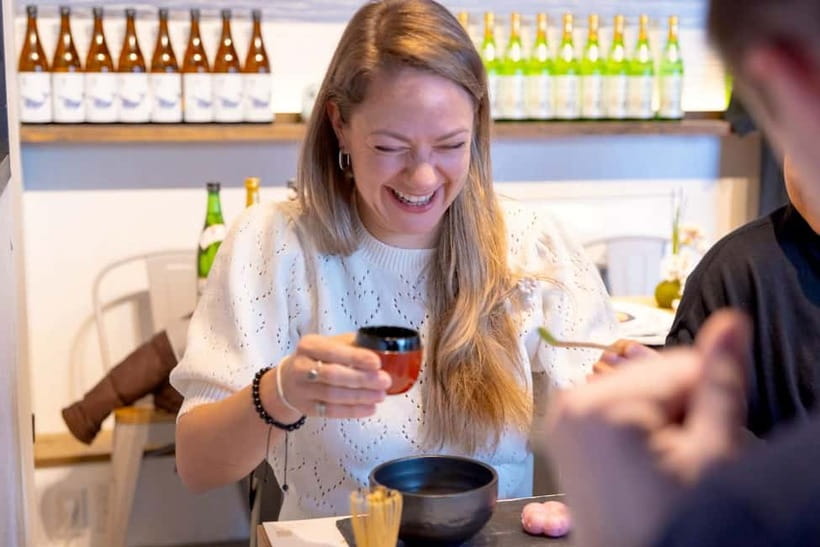
The teaching team is a major reason this activity works. Names that come up across the sessions include Fujiko, Reika, Serin, Yui, Matty, Takara, Shota, Moe, Harita, Hinata, Lala, Mayuho, and others. The important point is not any one personality, but the consistent pattern of clear English, patience, and cheerful instruction.
Fujiko is especially noted for humor and strong English. Matty is praised for making the history accessible to children and adults. Yui receives credit for explaining tea in general as well as matcha, while Takara is described as calm and careful with first-time drinkers.
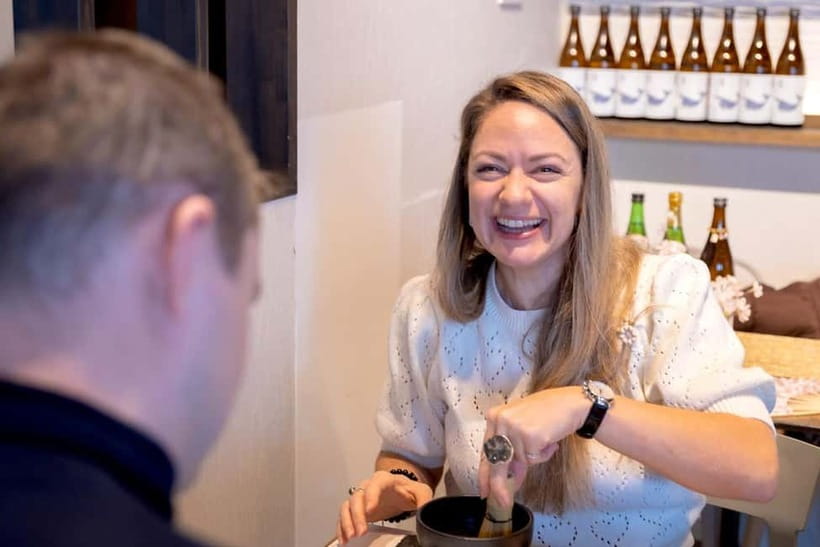
Because the class is limited to six, the atmosphere feels more like a friendly workshop than a tour with a crowd. You can ask basic questions without feeling self-conscious, and the instructor can correct your technique.
The setting is described as clean and pleasant, with a traditional feel but comfortable seating. That balance is important. You get some of the atmosphere associated with Japanese tea culture without needing formal clothing, advanced etiquette, or floor seating.
A realistic one-hour schedule
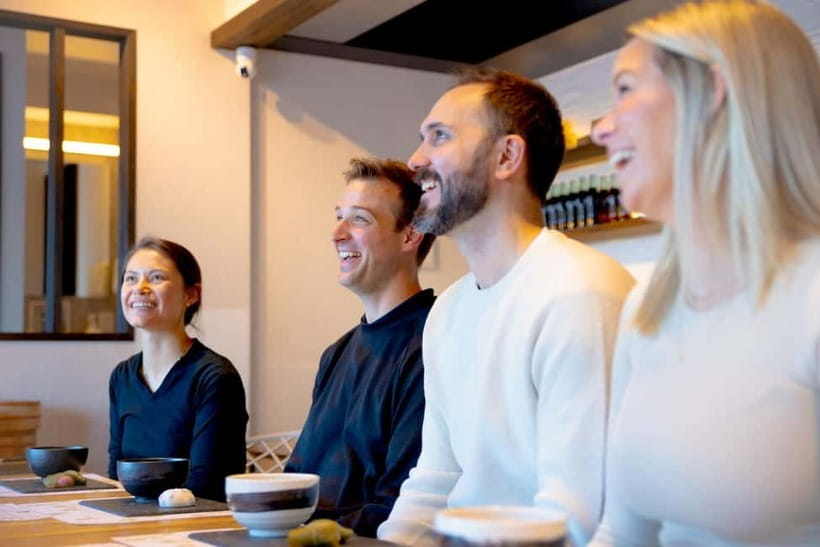
Your hour will likely follow this general pattern:
- Arrival at the third-floor classroom and introduction to the instructor
- Interactive explanation and quiz about matcha and tea culture
- Demonstration of the tools and preparation method
- Hands-on whisking, with help as needed
- Tasting your matcha with Japanese sweets
- Questions and brief conversation with the instructor
The exact order and amount of time in each section can vary. Since the duration is only one hour, arrive ready to begin. The activity does not include hotel transportation, so build in time to reach the building from your Osaka plans.
The class is available at set starting times, depending on availability. You can reserve ahead and pay later, and cancellation is free up to 24 hours before the activity for a full refund. Those policies are useful if your Osaka schedule is still shifting.
Should you book the matcha experience?
Book it if you want a short, affordable cultural activity in central Osaka and like the idea of making your own tea. The combination of small-group teaching, traditional tools, English guidance, and Japanese sweets gives you more than a simple tasting.
I would especially choose it for a hot afternoon, a rainy day, a first visit to Osaka, or a family schedule that cannot handle a long formal ceremony. It is also a smart choice for matcha fans who want to learn the basic technique and take the idea home.
Skip it if you want a large serving of food, a full-length tea ceremony, or a slow, highly formal ritual. For everyone else, $22 is a reasonable price for one focused hour near Shinsaibashi, with enough cultural context to make the cup in front of you feel meaningful.
FAQ
Where is the matcha-making class held?
It is held on the third floor of the Galleria Acca Building in central Osaka, about a five-minute walk from Shinsaibashi Station. Dotonbori is also nearby.
How long does the experience last?
The activity lasts one hour.
How much does it cost?
The listed price is $22 per person.
Is the class taught in English?
Yes. The instructor language is English, and the local staff guide you through the class in English.
How many people are in each group?
The class is a small group limited to six participants.
What is included in the price?
The price includes the cooking class, ingredients, and instructor. You also prepare and drink matcha with Japanese sweets during the experience.
Is hotel pickup and drop-off included?
No. Hotel pickup and drop-off are not included, so you must make your own way to the meeting point.
Can I cancel the booking?
Yes. You can cancel up to 24 hours in advance for a full refund. You can also reserve now and pay later, which helps keep your plans flexible.
More Sweets & Dessert Tours in Osaka
- Osaka: Japanese Traditional Sweets Making and Tea Ceremony
★ 4.7 · 118 reviews - Matcha Making Class in Tokyo with Authentic Japanese Sweets Set
★ 5.0 · 744 reviews - Tokyo: Matcha Making Experience with Mochi Sweets in Asakusa
★ 4.9 · 388 reviews - Kyoto: Japanese Traditional Sweets Making and Tea Ceremony
★ 4.4 · 314 reviews
Just added around Osaka
- Exclusive Sushi Making Experience with a Master Chef – Osaka Area★ 5.0 · 25 reviews
- Private Home-Style Cooking Class in Osaka with Local Mom Yoshiko★ 5.0 · 46 reviews
- Hidden Osaka – Yukaku Red Light Tour & Culinary Adventure★ 4.8 · 96 reviews
- Osaka: Walking Tour and Top Highlights★ 4.8 · 104 reviews
- Osaka: Private Ceramic Painting Workshop★ 5.0 · 13 reviews
- Pickleball in Osaka, Kobe & Kyoto with Locals!★ 4.7 · 80 reviews
- Eat Like a Local in Osaka – Private Custom Street Food Tour★ 4.3 · 33 reviews
- Osaka:SUMO BEATS SHOWCASE: Taiko Drum and Wagyu burger!★ 4.2 · 37 reviews
Tea Ceremony Experiences, compared.

Tea Ceremony in a Traditional Tea House in Kiyomizu
Our verdict →


World Heritage Kyoto & Nara Uji Authentic Matcha Experience
Our verdict →


Arashiyama Bamboo Forest, Monkeys, Matcha & Temple Tour
Our verdict →
Browse the lists this tour appears in