
Reviewed · TEA CEREMONY EXPERIENCES
Kyoto: Japanese Traditional Sweets Making and Tea Ceremony
Kyoto’s best food souvenirs are not always wrapped in paper. Here, you color white bean paste, shape it into two seasonal nerikiri sweets, and eat your handiwork with matcha you whisk yourself. The class uses bean paste from long-established Kyoto shops, which gives this low-cost activity a real connection to local confectionery.
I like the easy combination of creative sweet-making and a short lesson in tea etiquette. I also like the price: at $18, you get 95 minutes of guided activity, two sweets, and your own Uji matcha. The main consideration is that this is an introduction to tea culture, not a formal, hushed tea ceremony in a traditional tearoom.
Key points to know
- Shape two seasonal nerikiri sweets: You color and mold white bean paste into designs based on the time of year.
- Use Kyoto-made ingredients: The white and red bean pastes come from long-established Kyoto shops.
- Prepare Uji matcha yourself: The tea is single-origin matcha, and you learn basic preparation and etiquette.
- Expect a Japanese-led class: English help is provided as much as possible, but the amount of English can vary.
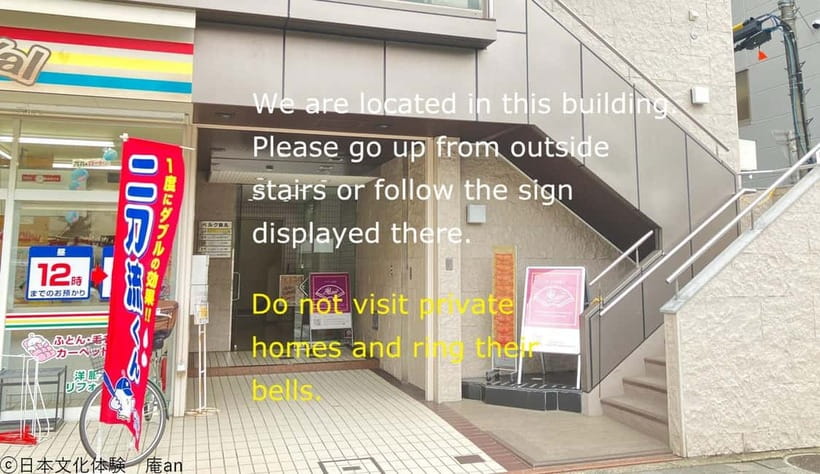
- Plan for stairs: The building has no elevator, and stairs are required to reach the venue.
- Allow extra time to arrive: The class will not wait for late arrivals, even for transport delays.
Making seasonal sweets near Gojo Station
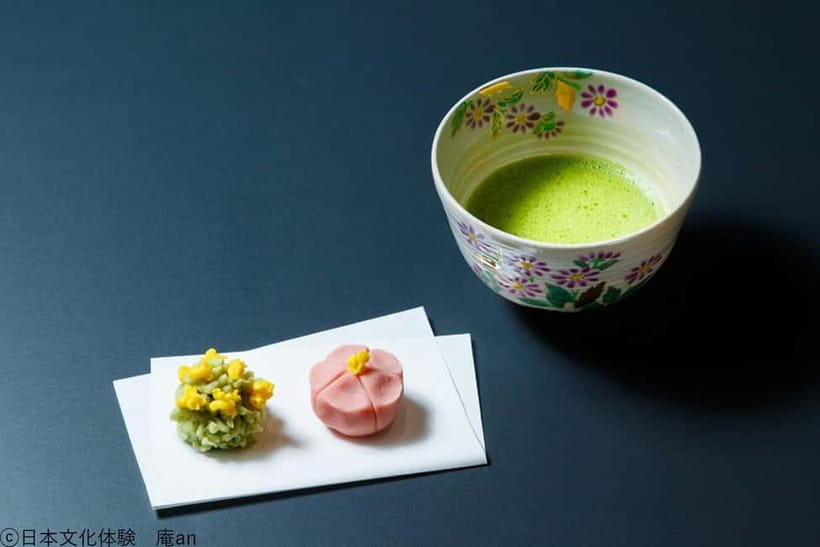
The first part of the class is the main attraction. You begin with white bean paste, then add color and shape it into nerikiri, a refined Japanese sweet often formed to resemble flowers, leaves, fruit, or other seasonal images.
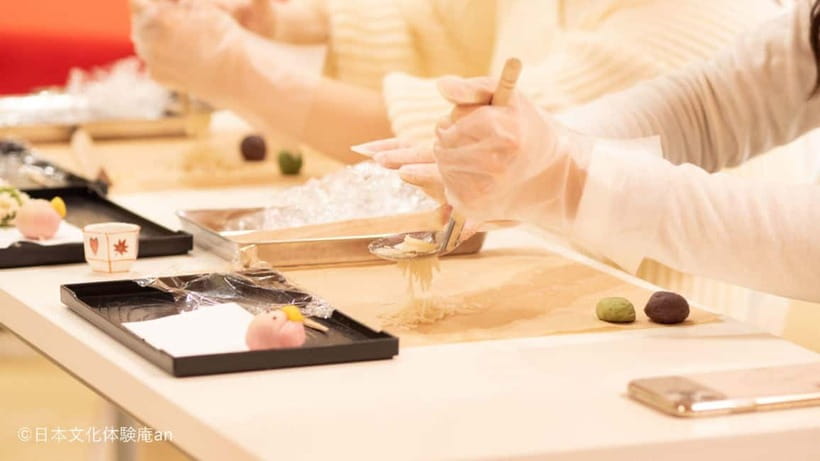
This is not a pastry class in the Western sense. You are not mixing dough, baking, or starting with raw beans. The paste is prepared in advance, and your work is focused on coloring, filling, molding, and fine shaping. That makes the activity approachable, even if you have little experience in a kitchen.
The process still takes care. Small changes in pressure can alter the shape of a petal or the look of a fruit. I like this format because you get enough hands-on work to feel involved without spending the whole afternoon on technical confectionery skills.
You make two sweets that match the season. The exact designs can change, so an autumn visit may feature autumnal forms, while another time of year brings different colors and shapes. The seasonal link is part of the point: Japanese sweets often reflect flowers, plants, and annual celebrations rather than simply looking decorative.
The paste is sweet and smooth, with the flavor of white or red beans. If you already know you dislike sweet bean paste, this may not be your ideal food activity. If you enjoy wagashi, or Japanese traditional sweets, this gives you a clear look at how their careful appearance is created.
More Sweets & Dessert Tours in Kyoto
- Kyoto Wagashi(Japanese sweets) Cooking Class near Fushimiinari
★ 5.0 · 60 reviews - Kyoto: Wagashi (Japanese sweets) Cooking near Fushimiinari
★ 5.0 · 40 reviews - Kyoto: Traditional Tea Ceremony with Matcha & Sweets in Gion
★ 4.9 · 27 reviews
Why nerikiri is worth understanding
Nerikiri is often served with matcha because its sweetness balances the tea’s grassy, slightly bitter taste. The pairing makes more sense once you try both together. Eaten alone, the paste can seem very sweet. A sip of matcha resets your palate.
The sweets also show a Japanese preference for seasonal detail. A small confection can suggest a flower or fruit through color and shape alone. You do not need specialist knowledge to appreciate the result, but the instructor’s comments can help you see why the designs matter.
This is also a pleasant activity for children old enough to follow step-by-step instructions. One family found the level of challenge suitable for children aged 10 and 14, and another enjoyed making the treats with children. Very young children under two can sit on a parent’s lap without paying, but non-participants cannot enter.
You should expect a guided craft with edible results, not a free-form art workshop. The instructor demonstrates each stage, and you copy the technique. Some people find the instructions easy to follow; others have found them less clear, especially when English explanations are brief. Watching the demonstration closely matters.
Preparing Uji matcha after the sweets
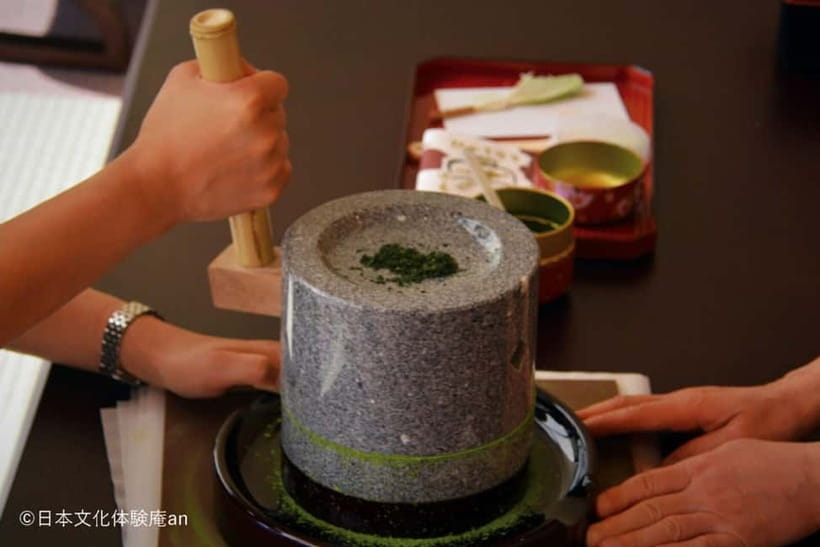
Once the sweets are ready, the class turns to matcha. You prepare the tea yourself using single-origin Uji matcha, then enjoy it with the nerikiri you made.
The matcha portion covers basic preparation and drinking etiquette. You learn how to handle the bowl, turn it appropriately, and drink in the expected manner. This gives you useful context for tea culture, especially if you plan to visit a more formal tea setting elsewhere in Kyoto.
It is important to set your expectations correctly. The activity is generally described as a tea ceremony, but the format is closer to a short tea lesson with a practical demonstration. You prepare and drink your own matcha rather than watching a long, formal performance carried out by a tea master.
That distinction matters. Some people want a quick, friendly introduction and appreciate the chance to make the tea themselves. If you are looking for a highly ritualized ceremony in a historic tea room, choose a different experience.
Timing can also affect this part. The tea lesson may share space with another group, and some sessions have included noise as people leave a sweet-making class. In a crowded session, the instructor can be harder to hear. The ceremony portion is also short enough that tea may cool while etiquette is being explained.
Still, the basic sequence is valuable. You learn why the sweet comes first, how the bitterness of matcha works with the sugar, and how small gestures shape the experience. You leave with more than a cup of green tea.
The English question: helpful, but not guaranteed
The official language is Japanese, with English translation provided as much as possible. In practice, the amount of English depends on the instructor and the group.
Several sessions have had instructors switch between Japanese and English when they noticed non-Japanese speakers. Some English-speaking visitors found the instructions clear and the staff especially accommodating. Others felt the English explanation was shorter than the Japanese one or difficult for children to understand.
You can still follow much of the class by watching the demonstrations. The sweet-making uses visible hand movements, and the steps are broken into manageable parts. But if detailed historical or cultural explanation is important to you, contact the provider in advance to request English support.
This is not a reason to reject the activity. It is simply part of the bargain at $18. You are getting a reasonably priced Japanese-led class, not a private bilingual lesson.
The instructor’s manner seems to matter more than polished English. Friendly teachers have helped groups keep pace, answered questions about matcha, and moved between languages as needed. One practical improvement would be a microphone or overhead video screen in larger sessions, since seeing the instructor’s hands can be difficult from the back.
More Tea Ceremony Experiences in Kyoto
- Kyoto: Tea Ceremony in a Traditional Tea House in Kiyomizu
★ 4.9 · 3,519 reviews - Kyoto: Tea Ceremony Ju-An at Jotokuji Temple
★ 4.9 · 3,207 reviews - Kyoto: 45-Minute Tea Ceremony Lesson Experience
★ 4.3 · 2,378 reviews - Kyoto: Table-Style Tea Ceremony at a Kyo-Machiya
★ 4.9 · 1,211 reviews
A small class, with occasional larger groups
Group size is not fixed in the information provided. Some sessions feel small, which suits the hands-on nature of the activity. A smaller group gives you more room to see the demonstration and ask for help with shaping the sweets.
Other sessions may include Japanese students or a separate group joining for the matcha portion. This can add noise and make the class feel less private. It can also create an interesting local setting, since you may find yourself sharing the activity with Japanese schoolchildren rather than only international tourists.
That mix can make the experience feel less staged. It also means the room may not have the calm atmosphere you expect from a formal tea ceremony. If quiet surroundings are a top priority, book with realistic expectations and avoid treating this as a private cultural appointment.
The pace is usually gentle and manageable. The full activity lasts 95 minutes, enough time to prepare two sweets and matcha without turning the class into a major time commitment. A few sessions have felt rushed when people arrived late or when the venue was not ready at the scheduled time, so punctuality is essential.
The $18 price and what you receive
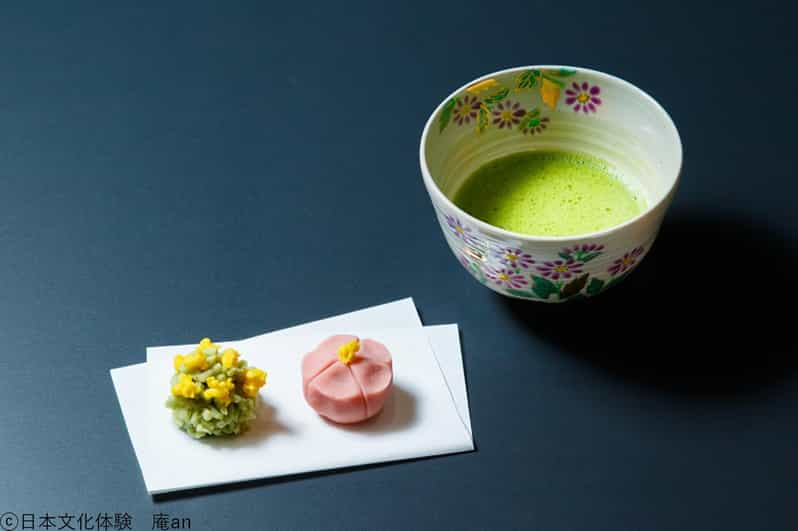
At $18 per person, this is one of the easier Kyoto activities to fit into a busy sightseeing day. You receive the sweet-making and tea experience, two seasonal nerikiri sweets, and matcha prepared during the class.
The value comes from the combination. A simple confectionery demonstration might cost less, but it would not give you the same hands-on work. A formal tea ceremony may offer more ritual and atmosphere, but usually costs more and may involve less participation.
You should budget another 100 yen if you want a box to take the sweets away. A completion certificate costs 300 yen and is optional. The class is best enjoyed on the spot, with the sweets balancing the freshly prepared tea, but the box is useful if you need to carry them back to your hotel.
The price also explains some of the limitations. This is a working classroom near a subway station, not an elaborate garden tea house. The instruction can be shared between Japanese and English, and the room may hold more than one group. For a short, practical cultural activity, that is a fair trade.
Finding the classroom at Gojo
The meeting point is about a one-minute walk from Exit 1 of Gojo Station on the Subway Karasuma Line. The entrance faces Gojo-dori, the main street, which makes the location fairly easy to reach once you come out of the station.
Give yourself enough time to find the entrance and settle in. The staff will not hold the class for late arrivals, and a missed session can still incur a cancellation fee. Travel costs to the venue are not reimbursed if you cancel.
The building has no elevator, and stairs are required to reach the venue. The activity is described as wheelchair accessible, but that stair detail deserves direct confirmation if you use a wheelchair or have difficulty climbing. The access information is not fully consistent, so contact the provider before booking rather than relying on the general accessibility label.
The operation hours are 10:00 to 17:00. Reservations received after 17:00 are processed the next day, so late-evening requests may not receive an immediate response.
Who will enjoy this Kyoto activity
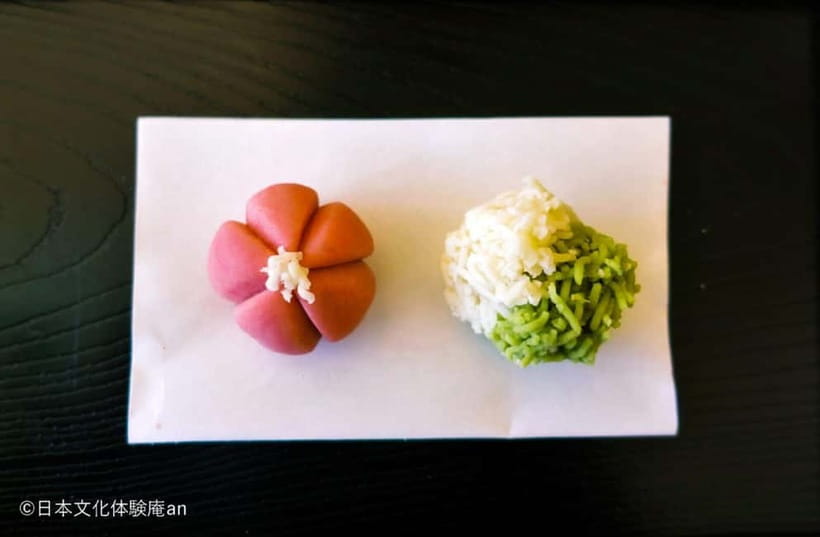
I would choose this for you if you want a short cultural activity with something to do with your hands. It works especially well on a rainy afternoon, during a hot spell, or between major temple visits when you need an air-conditioned place to sit.
Families with school-age children should find the format manageable. You shape food, learn a few tea customs, and eat the result. The activity does not require a high level of fitness, though the stairs may matter.
It also suits first-time visitors who want an introduction to wagashi and matcha without committing to a long formal ceremony. You get enough explanation to understand the pairing and enough practice to repeat some of the steps at home.
I would be more cautious if you want fluent English throughout, a very quiet room, or a full ceremonial performance. The class can meet those needs in some sessions, but they are not guaranteed. Ask for English support and clarify the format before booking if those details are central to your plans.
Booking advice for a smoother session
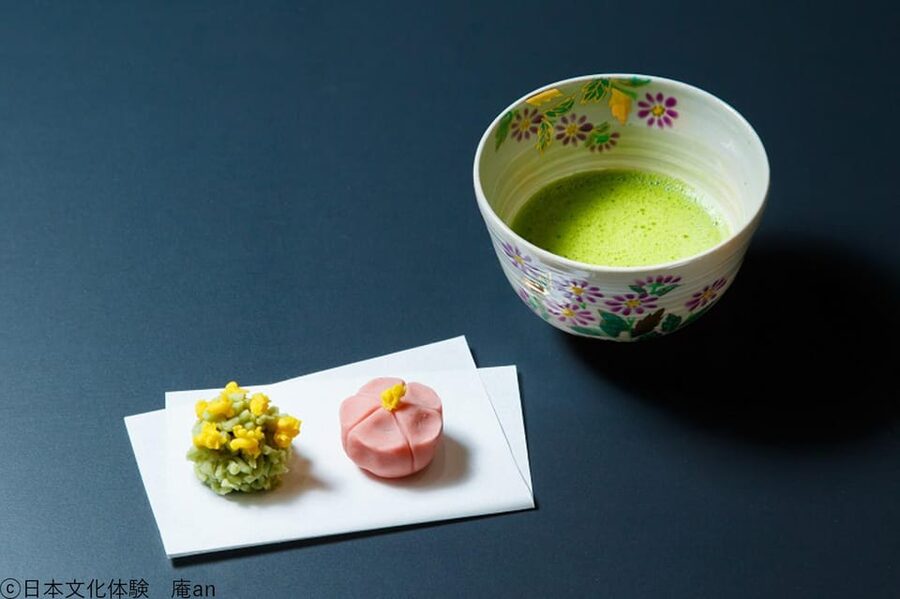
Book early enough to choose a time that fits your day, then arrive several minutes before the start. Do not schedule a tight connection immediately afterward. The class itself lasts 95 minutes, but station navigation and the no-wait policy mean you should leave a cushion.
If you want a take-home option, add the 100-yen sweets box. If you are traveling with a child, check the booking details carefully, since children under two sitting on a parent’s lap are free but non-participants cannot enter.
The cancellation policy allows a full refund when you cancel at least 24 hours ahead. After that point, fees apply, and changing the date or time after a fee has been triggered can cost extra. The cutoff after 17:00 is treated as the next day, so do not leave changes until late at night.
The provider also offers reserve-now, pay-later booking. That is useful when you are still arranging a Kyoto schedule, but it does not remove the late-arrival and cancellation rules.
Should you book the sweets and matcha class?
Book it if you want good value, hands-on activity, and a taste of ordinary Japanese food culture rather than a polished stage show. The seasonal nerikiri, Kyoto bean paste, and Uji matcha make a satisfying set, and the 95-minute length fits neatly into a day in central Kyoto.
Go in expecting an introductory tea lesson, not a formal ceremony. English help is often kind and practical, but it can be limited, and the class may become noisy when groups share the room.
For $18, I think this is a sensible choice for families, first-time visitors, food lovers, and anyone who wants a calm break from sightseeing. It is less suitable for visitors seeking a private, highly traditional tea setting. Arrive on time, confirm your language and access needs, and you will know exactly what kind of experience you are buying.
FAQ
How long does the Kyoto sweets and tea activity last?
The experience lasts 95 minutes.
How much does the activity cost?
The listed price is $18 per person.
Where is the meeting point?
The venue is about a one-minute walk from Exit 1 of Gojo Station on Kyoto’s Subway Karasuma Line. The entrance faces Gojo-dori.
What sweets will I make?
You will make two seasonal Japanese sweets called nerikiri by coloring and shaping white bean paste.
Are the sweets made with Kyoto ingredients?
The white and red bean pastes come from long-established shops in Kyoto.
What kind of matcha is used?
The class uses single-origin Uji matcha.
Is English instruction available?
The instructor’s language is Japanese, and English translation is provided as much as possible. You can contact the provider in advance to request English support.
Is this a formal tea ceremony?
The activity teaches basic matcha preparation and tea-drinking etiquette. It is best understood as an introductory tea lesson rather than a long, formal tea ceremony.
Can I take the sweets away?
A sweets take-out box is available for 100 JPY.
Is the venue wheelchair accessible?
The activity is described as wheelchair accessible, but the building has no elevator and stairs are required to reach the venue. Contact the provider directly to confirm that the current access arrangement meets your needs.
Just added around Kyoto
- Sekka Cotton Furoshiki Class★ 5.0 · 19 reviews
- Kyoto Sword Experience – includes Museum Ticket/Ninja Experience★ 4.5 · 149 reviews
- Scenic Green Tea Fields of Hidden Kyoto & Local Tea Exp (Private)★ 5.0 · 32 reviews
- Secret Eastern Kyoto Biking Adventure★ 5.0 · 44 reviews
- Private Sake Tasting in Central Kyoto with Sake Sommelier★ 5.0 · 32 reviews
- Samurai School in Kyoto: Samurai for a Day★ 5.0 · 202 reviews
- SHIRAKAWA Japanese Culture Experiences with private English staff★ 5.0 · 16 reviews
- A Privately Guided Photoshoot in Beautiful Kyoto by a Pro★ 5.0 · 18 reviews
Tea Ceremony Experiences, compared.

Tea Ceremony in a Traditional Tea House in Kiyomizu
Our verdict →


World Heritage Kyoto & Nara Uji Authentic Matcha Experience
Our verdict →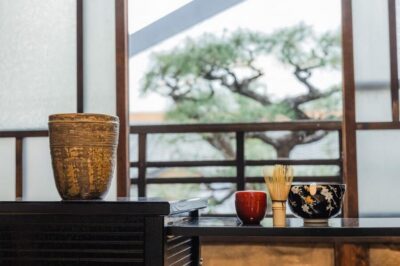
Arashiyama Bamboo Forest, Monkeys, Matcha & Temple Tour
Our verdict →
Browse the lists this tour appears in