
Reviewed · TEA CEREMONY EXPERIENCES
Osaka: Japanese Traditional Sweets Making and Tea Ceremony
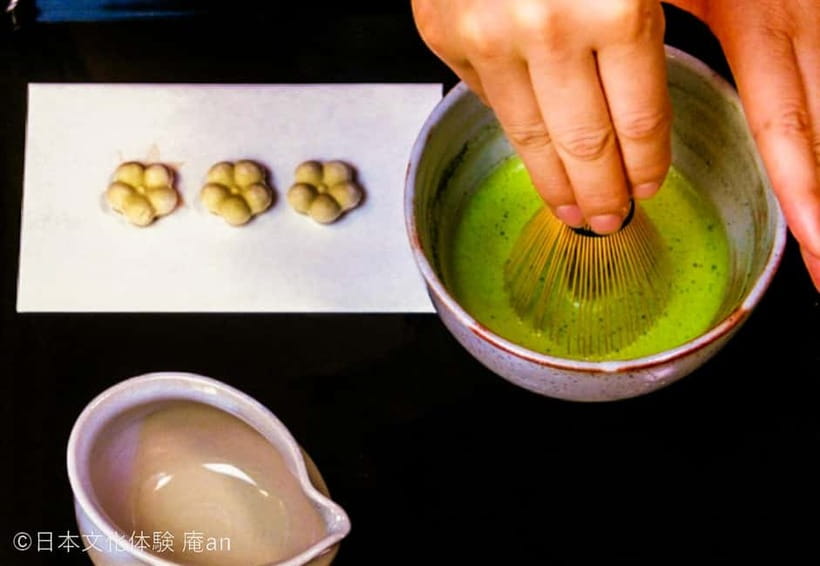
The most appealing part of this Osaka activity is that you do not simply watch a tea ceremony. You make two seasonal nerikiri sweets, starting with plain white bean paste and turning it into flowers or other seasonal shapes. Then you prepare matcha and eat your creations with the tea.
I like the use of bean paste from long-established Kyoto shops, and I like the compact 95-minute format. The price is also hard to argue with at $18 per person. The main consideration is language: the instructors teach in Japanese, with English translation provided as much as possible, so contact the provider ahead of time if you need clear English guidance.
Key points to know
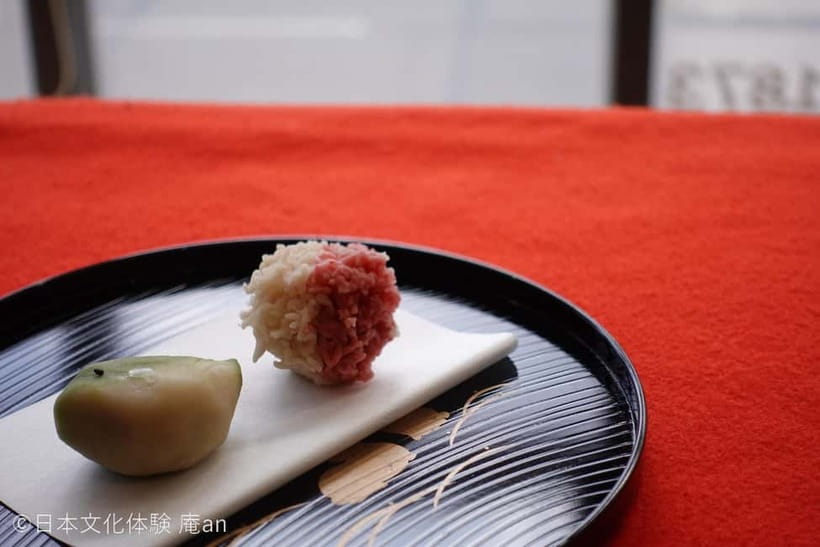
- Two sweets, not one: You make a flower-shaped nerikiri and a kinton nerikiri, with designs linked to the season.
- Quality ingredients: The class uses white and red bean paste from established Kyoto producers and single-origin Uji matcha.
- A hands-on tea session: You grind matcha, prepare your own tea, and learn basic tea customs.
- Friendly instruction: Instructors including Maiko, Jun, and Mihiko have guided sessions with patient explanations in Japanese and English.
- Central Osaka location: Higobashi Station is only a one-minute walk away from the meeting point.
- Plan for stairs: The building has no elevator, and you must use stairs to reach the venue.
Making nerikiri from Kyoto bean paste
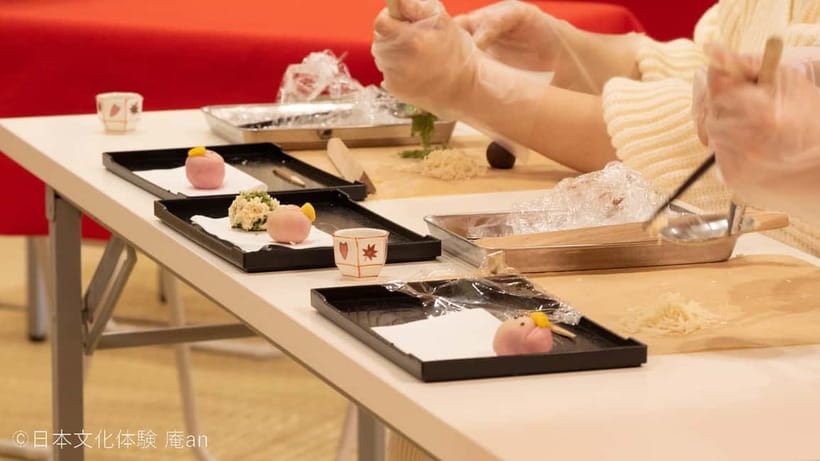
Nerikiri is a refined Japanese sweet made from colored white bean paste. It is shaped into seasonal flowers, fruits, and other carefully formed designs. At this class, you begin with the paste itself rather than receiving a finished confection and a quick explanation.
That first step matters. You get a feel for how color changes the mood of the sweet, then use your hands and the supplied tools to form the pieces. This is not a pastry class in the Western sense. You are not baking, frying, or working through a long recipe. The focus is on shape, proportion, and the quiet precision of Japanese confectionery.
The session includes two varieties. The first is a flower-shaped nerikiri. The second is a kinton nerikiri, which has a more textured appearance. The exact seasonal design can change, so the class has a sense of the time of year rather than using the same fixed decoration every month.
I like this format because it gives you enough work to feel involved without turning the activity into a long craft lesson. You make two sweets, but you still have time to learn about the ingredients and take part in the tea portion.
The bean paste is the key ingredient. High-grade nerikiri depends on a smooth, balanced paste, and the class uses white and red bean paste made by long-established shops in Kyoto. That gives you a better sense of what professional Japanese sweets are meant to taste like. The paste is sweet, but it is designed to be eaten with bitter matcha rather than on its own.
Do not expect every sweet to look perfect. The point is to learn the method and create something with your own hands. Small differences in color and shape are part of the fun, especially if you are doing this with children or friends.
More Tea Ceremony Experiences in Osaka
- Osaka: Tea Ceremony Experience
★ 4.9 · 1,426 reviews - Tea Ceremony Experience in Osaka Doutonbori
★ 5.0 · 754 reviews - Matcha Making Class in Osaka with Authentic Japanese Sweets Set
★ 5.0 · 509 reviews
A tea ceremony with your own matcha
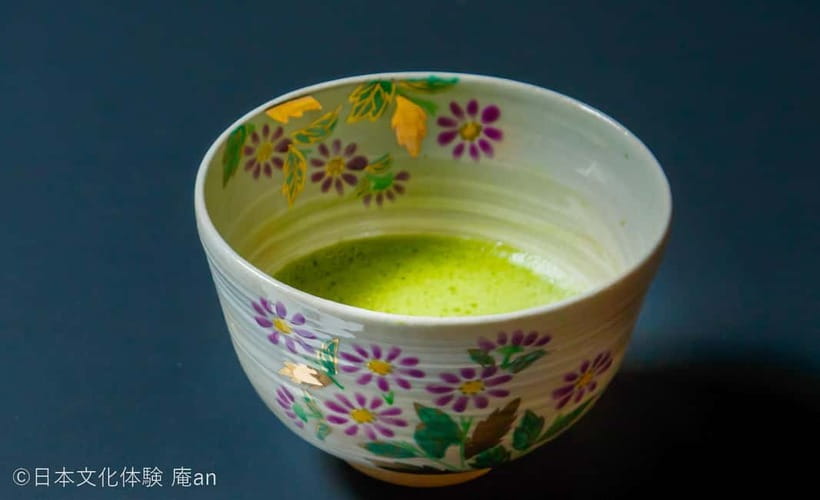
After the sweets are made, the class shifts to tea. You receive an explanation of the ceremony and see a demonstration of matcha being ground into powder. The tea is made from single-origin Uji matcha, a useful detail for anyone curious about why matcha can taste grassy, bitter, sweet, or creamy depending on its source and preparation.
You then prepare your own matcha. This makes the experience more practical than a formal ceremony where you sit quietly and watch an expert perform every step. You learn how the tea is prepared and how it is traditionally received and enjoyed.
The ceremony portion is described as an experience rather than a strict full-length tea-school lesson. In one small private session, the instructor explained the customs and answered questions, but the participants did not have to practice every formal movement themselves. That is worth knowing if you expect a highly structured, ceremonial performance.
For me, the relaxed approach is a strength. You can ask questions and focus on the meaning behind the actions without worrying about making one incorrect movement. You also get to drink tea that you helped prepare, alongside sweets that you shaped yourself.
The contrast in flavor is central to the experience. Nerikiri is sweet and smooth, while matcha has a pronounced bitter edge. Together, they make more sense than either would alone. The sweet softens the tea, and the tea prevents the bean paste from feeling too sugary.
What the 95-minute schedule feels like
The experience begins with an explanation of Japanese traditional sweets. This opening gives you the basic context for nerikiri before you start handling the paste.
The first practical section is the flower-shaped nerikiri. You color the white bean paste and form it into the seasonal design. The instructor demonstrates the technique, then gives you time to follow along.
Next comes the kinton nerikiri. Its appearance differs from the flower design, so you get two separate chances to work with the paste. The second sweet also helps you improve once you understand how firmly to handle the ingredients and tools.
At about the 55-minute mark, there is a break. The tea section begins around 65 minutes into the activity, followed by the matcha grinding demonstration and tea ceremony. Picture time comes near the end, and the final 10 minutes are set aside for eating and drinking before you leave at about 95 minutes.
This timing works well for a morning or afternoon in Osaka. You can fit it between sightseeing stops without giving up half a day. The pace is steady, though you should arrive early. The provider cannot hold the session for late arrivals, and the class will not compensate you for travel costs if you miss it.
How the instruction works in English
The official language is Japanese, and English translation is provided as much as possible. You should contact the provider in advance if English instruction is important to you, especially if you want detailed explanations of the tea customs or confectionery techniques.
The teaching quality can vary slightly by instructor, but the available sessions have included Maiko, Jun, and Mihiko. Maiko has been praised for cheerful guidance in both Japanese and English. Jun has been described as patient and clear, while Mihiko has handled the switch between languages well.
The class can still work if you book close to the date and do not arrange English support. Several instructors have explained the process in both languages when needed. Still, I would not leave this to chance. A short message before booking or immediately after booking is the sensible move.
One practical point: some instructions may be delivered in Japanese only. If you are comfortable watching a demonstration and copying the steps, that may not be a problem. If you want to understand every cultural detail, request translation in advance.
The tone appears friendly and informal rather than stiff. Instructors have been patient with questions, including questions asked in both Japanese and English. That makes this a good choice for people who want cultural context but do not want a silent, highly formal ceremony.
Same trip, a completely different kind of day:
- Osaka Go Karting Tour with Funny Costume
★ 5.0 · 2,658 reviews - Osaka Castle: Museum and Tower Entry Ticket
★ 4.5 · 2,380 reviews - Osaka: Shinsekai Food Tour with 13-15 Dishes at 5 Eateries
★ 4.8 · 2,204 reviews - Osaka Food Tour: 13 Dishes at 5 Local Eateries
★ 5.0 · 2,149 reviews
The location near Higobashi
The meeting point is especially convenient for central Osaka. It is one minute on foot from Exit 10 of Higobashi Station on the Osaka Metro Yotsubashi Line.
You can also walk there from several other stations:
- Five minutes from Exit 7 of Watanabebashi Station on the Keihan Nakanoshima Line
- Seven minutes from Exit 10 of Yodoyabashi Station
- Ten minutes from Exit 11-5 of Kitashinchi Station on the JR Tozai Line
- Fifteen minutes from the South Central Gate of Osaka Station
This gives you useful flexibility if your sightseeing route changes. Higobashi is the easiest choice, but the other stations help if you are coming from the Osaka Station area or Nakanoshima.
Use the supplied map carefully. One person had trouble finding the venue because it was in a gray building that was easy to miss. I would save the map before setting out, check the building entrance, and allow a few extra minutes. The activity will not wait for late arrivals.
If you drive, nearby coin parking is available, but public transport is the simpler choice. The building has no elevator, so you need to climb stairs to reach the venue. Anyone with mobility concerns should contact the provider before booking.
Is $18 good value?
At $18, this is one of the more affordable ways to add a hands-on Japanese cultural activity to an Osaka itinerary. The price includes the experience and the required tools. You make two sweets, learn about nerikiri, see matcha being ground, prepare your own tea, and eat the finished sweets during a session lasting about an hour and a half.
The value comes from the combination. A short tea demonstration alone might feel thin, and a sweet-making lesson without cultural context might feel like a craft class. Here, the two parts support each other. You learn why the sweets are shaped and colored, then taste them with matcha in the way they are intended to be enjoyed.
There are two small extra charges. A take-out box costs 100 yen, and a completion certificate costs 300 yen. The sweets are normally eaten during the final part of the session, so the box is useful only if you want to carry them away.
Children under two who sit on a parent’s lap are free. Other participants need to book and take part. People who are not participating cannot enter simply to watch, so make sure everyone in your party is included in the reservation.
The rating is 4.7 from 118 ratings, and the strongest praise centers on patient instruction, clear explanations, tasty sweets, and the matcha lesson. Those are exactly the areas that determine whether this inexpensive class feels worthwhile.
Who will enjoy this Osaka activity?
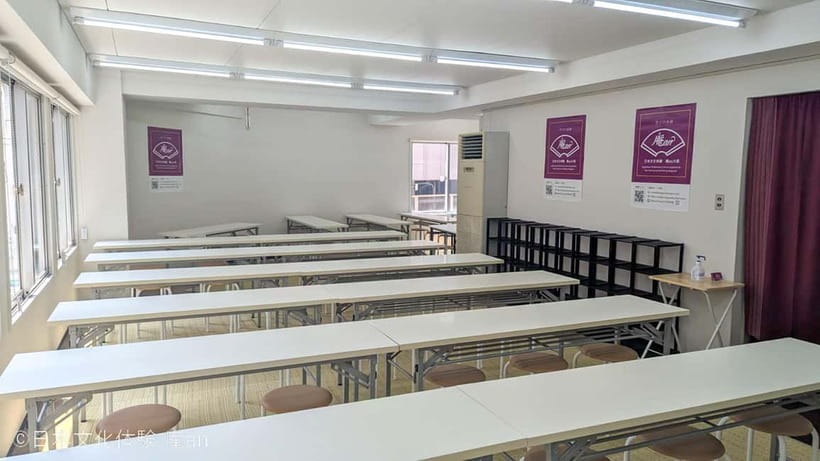
I would recommend it to first-time visitors who want a manageable introduction to Japanese sweets and tea. You do not need prior knowledge, and the class gives you enough background to understand what you are doing without requiring a full day of study.
Families can also make good use of it. Children aged 10 and 12 have enjoyed shaping the sweets, and the hands-on work gives younger participants something to do besides sit and watch. Very young children who sit on a parent’s lap are free if they are under two, but anyone else must participate.
Couples and small groups should consider it too. One session had only two participants and still worked well because the instructor kept the energy up and made the class feel personal. A smaller class may also give you more time for questions.
This is less suitable if you want a formal, silent tea ceremony with a long series of exact movements. The format is casual and instructional. That is ideal for learning, but it is not the same as attending a traditional tea gathering in a dedicated tea house.
It may also disappoint you if you expect fluent English without arranging it. The instructors have often managed English well, but Japanese is the stated language. Contact the provider if language support is important.
Practical details before you book
The activity operates from 10:00 to 17:00, with starting times depending on availability. It lasts 95 minutes, so allow extra time on both sides for finding the building and climbing the stairs.
Free cancellation is available up to 24 hours before the start time. You can also reserve and pay later, which helps if your Osaka schedule is still changing.
Wear clothing you can move comfortably in and do not rush the shaping process. The activity uses the required tools, so you do not need to bring equipment. You may want a small amount of space in your schedule afterward rather than booking a tightly timed attraction immediately after the class.
If you want a take-out box, budget 100 yen. If you want a completion certificate, budget 300 yen. Neither is included in the main price.
Bring your curiosity about flavor and custom, not just your camera. The picture time near the end is useful, but the best part is learning why a sweet shaped like a flower belongs beside a bowl of bitter tea.
Should you book it?
Book this experience if you want an affordable, central Osaka activity that gives you something to make, taste, and understand. The two seasonal nerikiri designs, Kyoto bean paste, Uji matcha, and friendly instruction add real substance to the low price.
I would especially choose it for families, couples, small groups, and anyone with only a free morning or afternoon. Request English support in advance, arrive early, and be ready to use stairs. Skip it only if you want a strictly formal tea ceremony or cannot manage instruction that may be partly in Japanese.
FAQ
How long does the Japanese sweets and tea experience last?
The experience lasts 95 minutes, including the sweets lesson, break, matcha instruction, tea ceremony, pictures, and time to eat and drink.
How many Japanese sweets will I make?
You will make two seasonal sweets: a flower-shaped nerikiri and a kinton nerikiri.
What ingredients are used?
The class uses white and red bean paste made by long-established shops in Kyoto. The tea is single-origin Uji matcha.
Is English instruction available?
Japanese is the listed language. English translation is provided as much as possible, and you should contact the provider in advance if you would like English support.
Where is the meeting point?
The venue is one minute on foot from Exit 10 of Higobashi Station on the Osaka Metro Yotsubashi Line. It is also within walking distance of Watanabebashi, Yodoyabashi, Kitashinchi, and Osaka stations.
Is there an elevator?
No. The building has no elevator, and you need to use stairs to reach the venue.
Are the sweets included to take home?
Eating and drinking the sweets you make is part of the experience. A take-out box is available for an additional 100 yen.
What happens if I arrive late?
The event cannot be held for delayed arrivals. The provider also does not compensate for travel expenses if you miss the activity because of a delay.
More Sweets & Dessert Tours in Osaka
- Osaka: Matcha Making Experience with Japanese Sweets
★ 5.0 · 146 reviews - Matcha Making Class in Tokyo with Authentic Japanese Sweets Set
★ 5.0 · 744 reviews - Tokyo: Matcha Making Experience with Mochi Sweets in Asakusa
★ 4.9 · 388 reviews - Kyoto: Japanese Traditional Sweets Making and Tea Ceremony
★ 4.4 · 314 reviews
Just added around Osaka
- Exclusive Sushi Making Experience with a Master Chef – Osaka Area★ 5.0 · 25 reviews
- Private Home-Style Cooking Class in Osaka with Local Mom Yoshiko★ 5.0 · 46 reviews
- Hidden Osaka – Yukaku Red Light Tour & Culinary Adventure★ 4.8 · 96 reviews
- Osaka: Walking Tour and Top Highlights★ 4.8 · 104 reviews
- Osaka: Private Ceramic Painting Workshop★ 5.0 · 13 reviews
- Pickleball in Osaka, Kobe & Kyoto with Locals!★ 4.7 · 80 reviews
- Eat Like a Local in Osaka – Private Custom Street Food Tour★ 4.3 · 33 reviews
- Osaka:SUMO BEATS SHOWCASE: Taiko Drum and Wagyu burger!★ 4.2 · 37 reviews
Tea Ceremony Experiences, compared.

Tea Ceremony in a Traditional Tea House in Kiyomizu
Our verdict →


World Heritage Kyoto & Nara Uji Authentic Matcha Experience
Our verdict →


Arashiyama Bamboo Forest, Monkeys, Matcha & Temple Tour
Our verdict →
Browse the lists this tour appears in