
Reviewed · CASTLE TOURS
Osaka Castle: Museum and Tower Entry Ticket
Osaka Castle is best understood as two experiences in one: a striking landmark in the middle of a huge park, and a modern museum telling the story of Toyotomi Hideyoshi, the castle’s builders, and the Tokugawa period that followed. The online ticket lets you skip the purchase queue, which can save 20 minutes or much longer on a busy day.
I like the broad Osaka views from the top floor and the chance to pair the tower with the Toyotomi Ishigaki Museum, where you can see original stone walls rather than only polished displays. The drawback is that the present tower is a reconstruction, so the interior feels more like a museum than an untouched feudal castle. Upper floors also become tight and crowded, and stairs are required above the fifth floor.
Key points to know before you go
- The QR code saves time: Go directly to the entrance instead of joining the ticket-buying line.
- The tower is a museum inside: Exhibits cover Toyotomi and Tokugawa history, with English subtitles and limited free audio guides.
- The eighth-floor view is the payoff: You can look across Osaka from the top, but the final floors require stairs.
- The stone-wall museum adds real texture: The Toyotomi Ishigaki Museum focuses on surviving Toyotomi-era stonework.
- Allow time for the park: The tower sits about 20 minutes on foot from nearby stations, and the grounds are part of the visit.
- Summer requires planning: Much of the approach is outdoors, and Osaka’s heat and humidity can make the walk tiring.
Osaka Castle is a landmark, not an untouched fortress
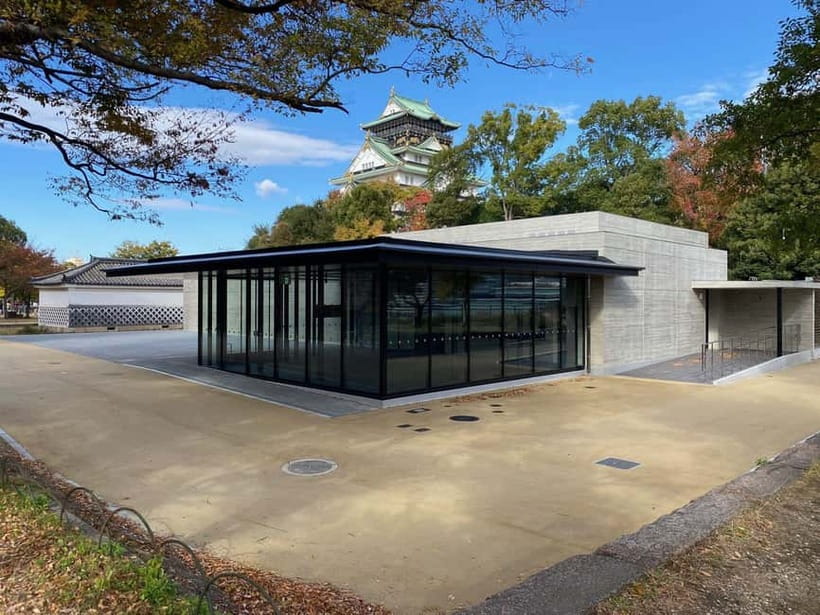
The first thing you notice is the setting. Osaka Castle Tower rises from the center of Osaka Castle Park, surrounded by moats, stone walls, open lawns, and long walking routes from the railway stations. The gold and green exterior makes a strong first impression, especially when viewed across the grounds.
Inside, the mood changes. The tower has been rebuilt several times and now functions as a clean, organized museum. If you expect dark wooden rooms, worn staircases, and original interiors, you may feel let down. If you want a clear introduction to the castle’s history, with elevators, displays, and city views, the building works well.
I suggest treating the outside and inside as separate parts of the visit. Take photographs of the tower, gates, moats, and stone walls first. Then enter for the historical exhibits and the view from the top.
More Castle Tours in Osaka
- Ultimate Osaka Walking Tour: Castle, Dotonbori & Hidden Gems
★ 5.0 · 862 reviews - Osaka Castle Walking Tour and Castle Tower Admission
★ 5.0 · 561 reviews - From Osaka: Himeji Castle, Arima Onsen & Mt. Rokko Day Tour
★ 4.6 · 339 reviews
Walking through Osaka Castle Park
The tower is not beside the station exit. Plan on roughly 20 minutes of walking from the nearby rail and subway stations, depending on your route and pace. The main transport choices include Tanimachi 4-chome, Morinomiya, Temmabashi, and Osaka Business Park stations on the Osaka Metro system.
You can also arrive from Morinomiya or Osakajokoen stations on the JR Loop Line, Osakajo-kitazume Station on the JR Tozai Line, or Temmabashi Station on the Keihan Railway. Osaka River Cruise stops include Osakajo Pier and Hachiken-yahama Pier.
That approach is part of the appeal, but it matters on a hot day. Several visitors found the walk tiring in Osaka summer, particularly when combined with long outdoor waits. Bring water, use sun protection, and avoid assuming that a short train ride means a short walk.
Give yourself time beyond the tower. The park offers room to slow down, take photographs, and see the castle from different angles. The view from the top is better after you have noticed the scale of the walls and moats below.
Using the QR code at the entrance
Have the Linktivity voucher and its QR code ready before you reach the entrance. The practical advantage is simple: you bypass the line to buy a ticket on site and go to the admission point for scanning.
This does not mean the building will always be empty. The QR code removes the purchase queue, but busy periods can still produce crowding inside. Admission may also be briefly limited when the museum reaches its comfortable capacity.
That distinction is important. On quieter mornings, the ticket can make entry almost immediate. On busy weekends and holidays, you may still move through the tower with many other people, but you have avoided one of the main delays.
The ticket has no fixed entry time and is valid for one month. You can visit during the published opening period rather than rushing to a narrow time slot. The attraction is open daily from 9:00 AM to 5:30 PM, with last entry at 5:30 PM and closing at 6:00 PM. It is closed from December 28 through January 1.
The booking is non-refundable, so check your plans before purchasing. Also bring a student card if you qualify for a student-related check.
What you see inside the Main Tower
The Main Tower presents Osaka Castle’s story through exhibits connected with Toyotomi Hideyoshi and the Tokugawa era. The displays help explain the power struggles surrounding the castle and the change from Toyotomi rule to Tokugawa control.
You do not need to be a specialist to follow the displays, but a little preparation helps. Reading about the unification of Japan before you arrive will make the names, battles, and political shifts easier to place. One useful feature is the availability of free audio guides in Japanese, English, Korean, and Chinese, though quantities are limited.
Pick up an audio guide early. The reception period runs from 9:00 AM to 5:00 PM, and rentals must be returned by 5:30 PM. The guide is not necessarily available on the upper floors, so do not wait until you have taken the elevator upstairs.
English subtitles are available on the exhibits, which makes the visit manageable without an audio guide. Still, the audio option can add context, especially if Japanese history is new to you.
Photography is not allowed on the third and fourth floors because of cultural assets. On other levels, follow the signs and staff directions. The Toyotomi Ishigaki Museum permits photographs of the stone walls only, and video recording is not allowed there.
Same trip, a completely different kind of day:
- Osaka Go Karting Tour with Funny Costume
★ 5.0 · 2,658 reviews - Osaka: Shinsekai Food Tour with 13-15 Dishes at 5 Eateries
★ 4.8 · 2,204 reviews - Osaka Food Tour: 13 Dishes at 5 Local Eateries
★ 5.0 · 2,149 reviews - Hungry Osaka Street Food Tour:15 Tastings & 3 Drinks with a Local
★ 5.0 · 1,727 reviews
The climb to the eighth floor and the Osaka view
The elevator takes all visitors up to the fifth floor. From there, you must use stairs to reach the eighth-floor observation level and then descend through the building.
This arrangement affects how you plan your visit. The elevator saves effort and time on the lower section, but it does not remove the final climb. If you choose the stairs from the entrance, you move through one floor at a time, stopping to see parts of the museum as you go. If you take the elevator, you can begin near the upper floors and work your way down.
The upper levels are narrow and can feel crowded. On busy days, the flow is orderly, but you may need patience around the stairs and viewing areas. The reward is a wide view over Osaka, and it is the main reason many people consider the admission worthwhile even if they find the interior too modern.
I would not rush through the lower displays just to reach the top. The viewing floor is memorable, but the museum gives the tower its purpose. Take the elevator if mobility or energy is a concern, then allow time for the stairs above the fifth floor.
The Toyotomi Ishigaki Museum adds something the tower cannot
The separate Toyotomi Ishigaki Museum is included in the ticket and is worth making time for. Its focus is the Toyotomi stone walls, giving you a closer look at the physical remains behind the polished tower experience.
This is a useful contrast. The Main Tower is a reconstructed building filled with modern exhibits. The stone-wall museum connects you with surviving material from the castle’s earlier period. It may not take as long as the tower, but it adds a more direct sense of age and construction.
Photography is limited there to the stone walls, and video is not permitted. The museum has full elevator access for people with mobility needs, so it is easier to use than the upper levels of the Main Tower.
Check the location and order of your visit when you arrive. The supplied information confirms that both admissions are included, but it does not specify a required sequence. You should not assume that the stone-wall museum can be entered at any time outside its operating arrangements.
Crowds, heat, and the best time to visit
Crowds are the main practical concern. Advance tickets have saved visitors 15 minutes, 20 minutes, 30 minutes, and, on especially busy days, close to an hour. The exact saving depends on the date, but the benefit is clear when the ticket line stretches outside in the heat.
Morning on a weekday is the safest choice for a calmer visit. Early arrival also gives you more time in the park before the afternoon crowds build. Weekends, summer afternoons, and popular holiday periods are more likely to feel packed.
Osaka’s summer weather deserves respect. The walk through the park, the queue areas, and the open viewing spaces can be hot and humid. Carry water, wear a hat, and consider a UV umbrella or small fan. The castle has air conditioning in parts of the building, but you still have to reach it.
Winter is easier for walking, though the grounds can feel less comfortable in cold weather. Spring and autumn can be pleasant, but no season guarantees an empty tower.
Accessibility and family practicalities
The Main Tower is wheelchair accessible, with seven wheelchairs available for use inside the building only. The Toyotomi Ishigaki Museum has two wheelchairs for in-building use and full elevator access.
The Main Tower is more complicated for anyone who cannot manage stairs. The elevator serves the fifth floor, but stairs are required from there to the eighth floor and for the descent to the first floor. Ask staff about the most suitable route before entering.
Strollers are not allowed inside the upper levels because the corridors are narrow and can become crowded. Free stroller check-in is available at the ticket gate. This makes the visit possible with young children, but it is worth preparing for a period without the stroller.
Pets are not allowed, with assistance dogs permitted. The ticket information does not promise special child pricing, so check the current availability and conditions before paying.
Is $7 good value?
At $7 per person, this is a low-cost way to see one of Osaka’s best-known landmarks and two connected historical attractions. The value is strongest when you want the tower view, the museum exhibits, and the convenience of skipping the ticket-buying line.
The price is less compelling if your main interest is an original castle interior. You are paying for a reconstructed tower, a museum visit, a viewing floor, and entry to the stone-wall museum, not for access to an untouched feudal residence.
I see the ticket as especially good value for a first Osaka visit. It combines the photograph outside, the historical displays inside, and the park walk without a large financial commitment. The advance QR code is also useful because the time saved can be spent in the grounds or at another nearby attraction.
Who should book Osaka Castle Tower?
I would recommend this experience if you enjoy Japanese history, city views, landmark architecture, or museum visits that do not require a full day. It suits first-time visitors who want a clear, organized introduction to Osaka Castle and the Toyotomi period.
It also works well for families and mixed-age groups because the elevator reduces the initial climb and the visit is self-paced. You can move quickly through the displays or spend more time with the audio guide and translated text.
I would be more cautious if you want an authentic castle interior, dislike crowds, or have difficulty with stairs above the fifth floor. In those cases, focus on the exterior grounds and confirm the accessible route before committing to the ticket.
A practical visit plan
Arrive at one of the nearby stations with enough time for the walk. Use the park approach to see the castle from outside, and do not spend the whole visit looking only at the tower entrance.
At the gate, show the QR code from your voucher. If you want the audio guide, arrange it before taking the elevator. Then choose your route: use the elevator to the fifth floor for less exertion, or take the stairs to see the museum gradually.
Visit the upper observation floor, allowing time for the city view. Descend through the remaining exhibits, observing the photography restrictions. Finish with the Toyotomi Ishigaki Museum and a walk around the grounds.
Keep an eye on the clock. The last entry is at 5:30 PM, but the building closes at 6:00 PM, and audio equipment must be returned by 5:30 PM.
Should you book it?
Book this ticket if you want an inexpensive, flexible visit to Osaka Castle and do not want to stand in the ticket-buying line. The best reasons are the fast QR-code entry, the strong view from the eighth floor, and the added stone-wall museum.
Skip it if your ideal castle visit means original rooms and a quiet atmosphere. Osaka Castle’s exterior and park are the most atmospheric parts, while the tower interior is a modern museum and can be crowded.
For most first visits, I would book it, arrive in the morning, collect the audio guide early, and leave plenty of time for the park. That plan gives you the castle’s best features without pretending the reconstructed tower is something it is not.
FAQ
How much does the Osaka Castle ticket cost?
The listed price is $7 per person. It includes one-time admission to the Osaka Castle Main Tower and one-time admission to the Toyotomi Ishigaki Museum.
How long is the ticket valid?
The ticket is valid for one month. There are no set viewing time limits or fixed reservation times, though the attraction may temporarily restrict admission when it is crowded.
What are the opening hours?
Osaka Castle is open every day from 9:00 AM to 5:30 PM. Last entry is at 5:30 PM, and closing time is 6:00 PM.
Can I skip the ticket line?
Yes. Show the voucher with Linktivity’s QR code directly at the entrance and skip the line to purchase a ticket. You may still encounter crowds inside the tower.
How do I reach Osaka Castle?
The nearby stations include Tanimachi 4-chome, Morinomiya, Temmabashi, and Osaka Business Park on the Osaka Metro, plus Morinomiya and Osakajokoen on the JR Loop Line. The walk from nearby stations takes about 20 minutes.
Is Osaka Castle wheelchair accessible?
Yes. The Main Tower has seven wheelchairs for in-building use, and the Toyotomi Ishigaki Museum has two. The museum has full elevator access, while the Main Tower requires stairs above the fifth floor.
Can I take photographs inside?
Photography is not allowed on the third and fourth floors of the Main Tower. At the Toyotomi Ishigaki Museum, photographs are allowed only of the stone walls, and video recording is not permitted.
More Museum Tours in Osaka
- Kamigata Ukiyoe Museum:Ukiyo-e Woodblock Printing Experience
★ 4.9 · 79 reviews - Osaka: Cup Noodles Museum Guided Tour (90 Minutes)
★ 4.8 · 38 reviews - Osaka: Kamigata Ukiyo-e Museum Admission Ticket
★ 4.7 · 30 reviews - Osaka: Osaka Castle & Historical Museum Guided Tour
★ 4.8 · 28 reviews
Just added around Osaka
- Exclusive Sushi Making Experience with a Master Chef – Osaka Area★ 5.0 · 25 reviews
- Private Home-Style Cooking Class in Osaka with Local Mom Yoshiko★ 5.0 · 46 reviews
- Hidden Osaka – Yukaku Red Light Tour & Culinary Adventure★ 4.8 · 96 reviews
- Osaka: Walking Tour and Top Highlights★ 4.8 · 104 reviews
- Osaka: Private Ceramic Painting Workshop★ 5.0 · 13 reviews
- Pickleball in Osaka, Kobe & Kyoto with Locals!★ 4.7 · 80 reviews
- Eat Like a Local in Osaka – Private Custom Street Food Tour★ 4.3 · 33 reviews
- Osaka:SUMO BEATS SHOWCASE: Taiko Drum and Wagyu burger!★ 4.2 · 37 reviews
Castle Tours, compared.
Tokyo Castle & Imperial PalaceーShogun Walking Tour
Our verdict →
Ultimate Osaka Walking Tour: Castle, Dotonbori & Hidden Gems
Our verdict →
Japanesel Archery Experience HIROSHIMA CASTLE SHARAKU
Our verdict →
Castle History Walking Tour / Castle Tower Admission
Our verdict →
Browse the lists this tour appears in