
Reviewed · WALKING TOURS
Tokyo: Shibuya Crossing & Hidden Streets Walking Tour
Shibuya is easy to reduce to one famous crossing. This tour gives you a better read of the district, starting with Taro Okamoto’s powerful Myth of Tomorrow, slipping into old Nonbei Yokocho, and finishing by the Hachiko Statue. The contrast between postwar alleyways, glossy redevelopment, youth culture, and nightlife is the real attraction.
I like the variety packed into two hours, and I like the practical help with Shibuya Crossing, photos, food, and shopping. Guides such as Loc, Rio, Ryo, Grey, and Daichi are praised for clear explanations and for adjusting the pace or discussion to families, teenagers, solo visitors, and curious first-timers.
The main drawback is the meeting point. SABON inside Mark City’s third floor can be tricky to locate, especially on your first day in Tokyo, and the tour covers busy streets on foot, so arriving early matters.
Key points at a glance
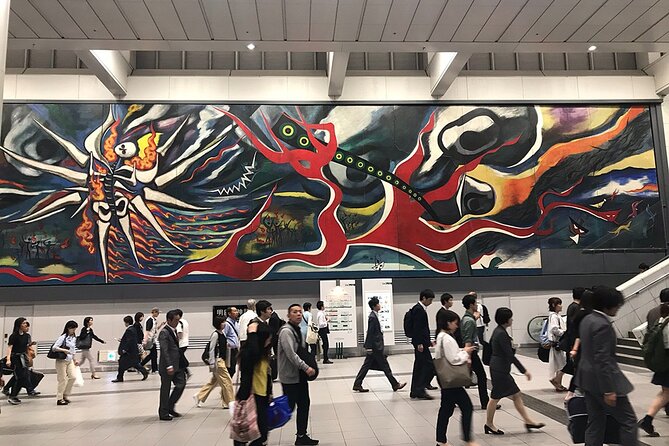
- A strong opening with Myth of Tomorrow: Taro Okamoto’s mural adds historical weight before the tour reaches the bright spectacle of Shibuya Crossing.
- Old and new Shibuya in one walk: Nonbei Yokocho offers narrow alleyways and local character, while Miyashita Park shows the district’s newer urban side.
- Useful for a first visit: Your guide helps you understand the layout and can suggest places to eat, shop, and spend more time later.
- A small-group feel is possible: Several bookings had only a few people, and some became private tours when no one else joined.
- Good support for solo visitors: Guides have helped with photos at the crossing and made the route easier to handle alone.
- A compact commitment: At $22 per person for two hours, this is an affordable introduction rather than an all-day obligation.
Why this short walk makes sense in Shibuya
Shibuya can feel like a wall of signs, crowds, railway entrances, department stores, and side streets. You can certainly walk around by yourself, but it takes time to understand how the pieces fit together. This route gives you a simple frame: art and history first, old streets next, then parks, youth culture, nightlife, and the district’s most famous dog.
That order works well. You do not spend two hours staring at neon. Instead, you get a quick lesson in how Shibuya changed from older local lanes into one of Tokyo’s best-known centers for fashion, food, entertainment, and nightlife.
The tour is conducted in English and lasts two hours. The price is $22 per person, which I consider fair for a live guide in central Tokyo, particularly if you are visiting for the first time. You are paying for orientation and context, not admission to a museum or a meal. The value rises if your guide answers questions, helps with photographs, and gives useful suggestions for the rest of your stay.
The current score is 4.8 from 128 ratings, and the strongest pattern is clear: people praise the guides’ warmth, clear English, local tips, and ability to explain what you are seeing. Loc receives especially frequent praise, while Rio, Ryo, Kumi, Grey, Daichi, Zach, and others are also singled out for friendly and flexible guiding.
More Walking Tours in Tokyo
- Tokyo Tsukiji Fish Market Food and Culture Walking Tour
★ 5.0 · 3,184 reviews - Tokyo: Imperial Palace and Shogun Historical Walking Tour
★ 5.0 · 2,251 reviews - Tokyo: Shinjuku Local Bar and Izakaya Guided Walking Tour
★ 4.9 · 1,794 reviews
Finding the start at Mark City
The meeting point is SABON Shibuya Mark City, inside Mark City on the third floor. This is not simply a matter of arriving at the broad station area and hoping to spot a guide. Mark City is part of the busy Shibuya Station complex, and its connected walkways and multiple levels can confuse you if you are carrying luggage or still learning Tokyo’s layout.
Give yourself extra time. The guide will hold a sign, but you need to reach the correct building and floor first. The published coordinates are 35.6586643, 139.6999525. Do not cut this close, since the instructions specifically warn against arriving late.
This is one place where the tour’s own subject becomes part of the challenge. Shibuya Station is large and busy, so a calm start depends on planning ahead. Once you meet the guide, the rest of the walk is easier to follow.
Nonbei Yokocho: a small lane with an older feel
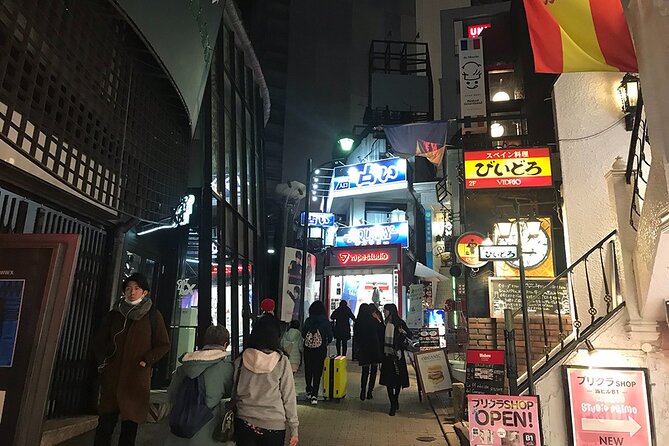
The first stop is Shibuya Nonbei Yokocho, also known as Drunkard’s Alley. The name alone hints at its character. Compared with the broad avenues and giant advertising screens nearby, this is a much tighter, older-feeling pocket of the district.
You spend about 10 minutes here with the guide. That is enough for an introduction and some context, but not enough for a long meal or a full evening of bar hopping. Think of it as a scene-setting stop. You see a side of Shibuya that is easy to miss when your attention is fixed on the crossing.
I particularly like this early contrast. The tour does not begin with a long explanation in a station or a generic introduction. It puts you in a compact lane where the scale changes at once. Ask about how this part of Shibuya fits with the newer buildings around it, and you should get more from the stop than a few quick photographs.
Myth of Tomorrow brings history into the route
The tour then reaches Myth of Tomorrow, a large mural by Taro Okamoto. It deals with the effects of nuclear destruction but also carries a message of hope. The artwork gives the walk a serious pause before the bright movement of the crossing.
This is scheduled as a 10-minute visit and photo stop. That is a sensible amount of time for looking, listening, and taking pictures without turning the tour into a full art lecture. The mural is also a useful reminder that Tokyo is not only a city of shopping, screens, and pop culture.
Your guide’s role matters here. A strong explanation can help you look beyond the striking forms and understand why this work belongs in a Shibuya introduction. Several guides are praised for providing historical context rather than merely pointing out locations, and this stop is where that approach pays off most clearly.
Same trip, a completely different kind of day:
- 1-Day Tokyo Bus Tour
★ 5.0 · 14,250 reviews - Tokyo: TOKYO SKYTREE® Admission ticket
★ 4.5 · 11,192 reviews - Tokyo: teamLab Planets TOKYO Digital Art Museum Entry Ticket
★ 4.6 · 9,779 reviews - Tokyo: Sumo Show Experience with Chicken Hot Pot and a Photo
★ 4.8 · 6,678 reviews
Shibuya Crossing: seeing the famous moment with some help
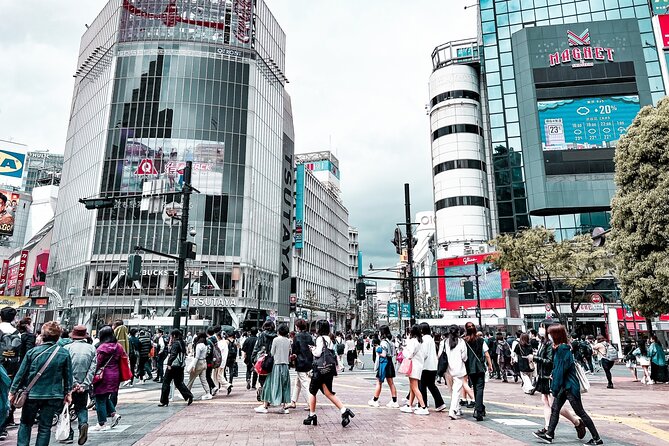
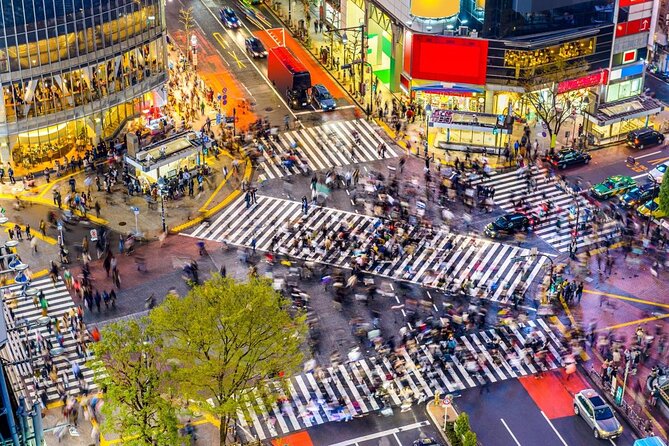
Next comes the scene most people associate with the district: Shibuya Crossing. You spend roughly 10 minutes here for a visit and photo stop. The crossing is famous because of the sheer volume of people moving in different directions when the signals change, but the experience can be oddly confusing if you do not know where to stand or how to photograph it.
This is where a guide is more useful than the schedule suggests. You get help understanding the flow and can ask for a good angle. Solo visitors have appreciated guides taking photos, and families have found the crossing easier with someone explaining how to handle the moment.
Still, keep expectations realistic. Ten minutes is enough for a taste, not a long observation session from several viewpoints. The intersection is also active and crowded, so stay close to the group and avoid stopping in the middle of pedestrian traffic.
The crossing is best understood as one part of the district, not the whole reason to visit. The tour wisely moves on instead of letting this one sight swallow the entire outing.
Miyashita Park shows Shibuya’s newer face
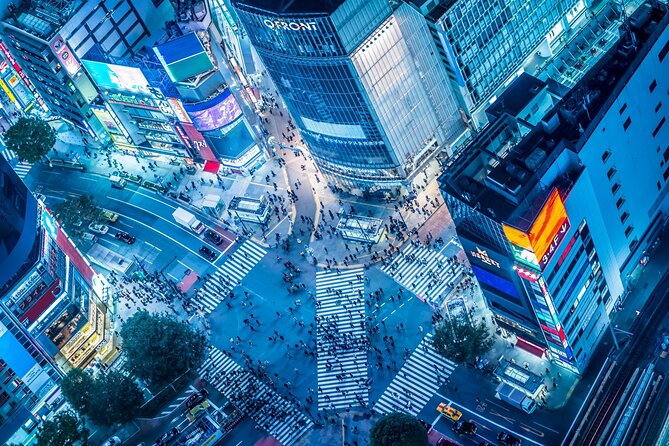
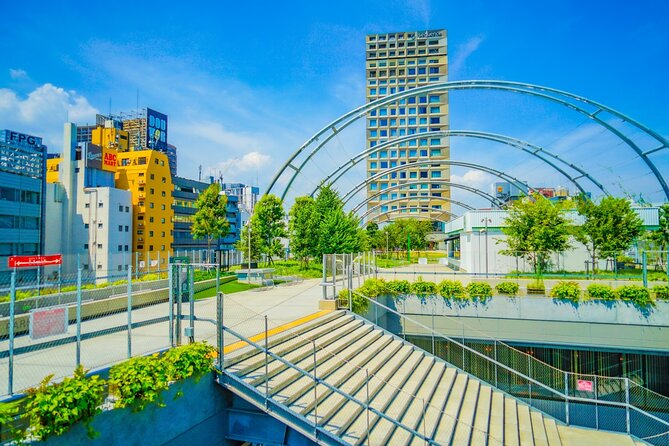
Miyashita Park gets about 20 minutes, the longest scheduled stop. That extra time makes sense. This multi-level urban park offers a change of pace after the station area and crossing, while showing how modern Shibuya has repurposed urban space.
You can expect the guide to explain the park’s role in the district rather than simply lead you through it. The stop gives you room to pause, look around, and ask questions. It also breaks up the constant movement of the first part of the walk.
I like Miyashita Park as the route’s middle point. Nonbei Yokocho provides a compact older setting, while this park represents newer planning and a more polished public space. Together, the two stops show why Shibuya cannot be understood through one visual style.
The tour does not promise a long free period here, so do not plan on shopping, eating, or exploring every level during the walk. Treat it as an introduction and note anything you want to revisit afterward.
Center Gai and the energy of youth culture
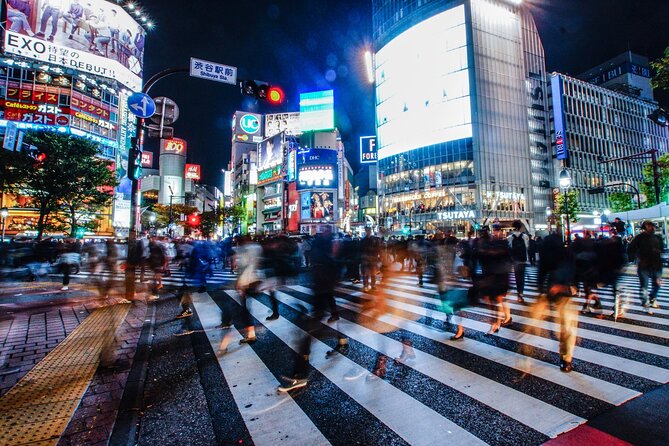
The walk continues to Center Gai for about 10 minutes. This is one of Shibuya’s main youth-oriented areas, with a strong concentration of shops, restaurants, and entertainment. It is a good place to see the district’s social energy at street level.
Your guide can help make sense of the area’s role in modern Tokyo. That is more useful than simply naming stores, since individual businesses change. The broader value is learning how Center Gai connects to Shibuya’s reputation for youth fashion, nightlife, and meeting places.
This is another busy stretch, so it is not ideal for lingering over every storefront. If the crowds bother you, stay focused on the guide’s explanation and save independent browsing for after the tour. You will finish near Hachiko, so returning to this area later is simple.
Maruyama-cho reveals a different nightlife mood
Maruyama-cho brings the route into older streets now associated with modern nightlife. The area adds another layer to the tour: it is not as polished as a major shopping complex, yet it is closely tied to the evening side of Shibuya.
You spend around 10 minutes here. The stop is less about one landmark and more about reading the street pattern and understanding how a historic neighborhood can take on a new role. It is one of the places that can feel more rewarding with a guide because the significance is not always obvious from a quick walk-through.
Do not expect a long nightlife visit or time to settle into a restaurant. This is a guided look at the district, not a bar crawl. Guides have been particularly useful here for food and drink suggestions, so ask for recommendations if you plan to return after dark.
Hachiko is the natural finish
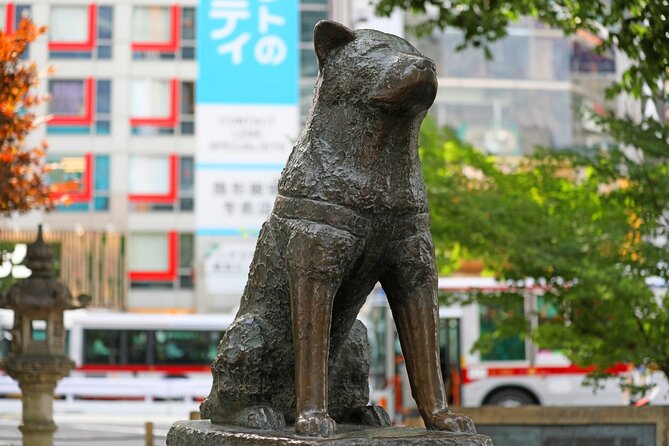
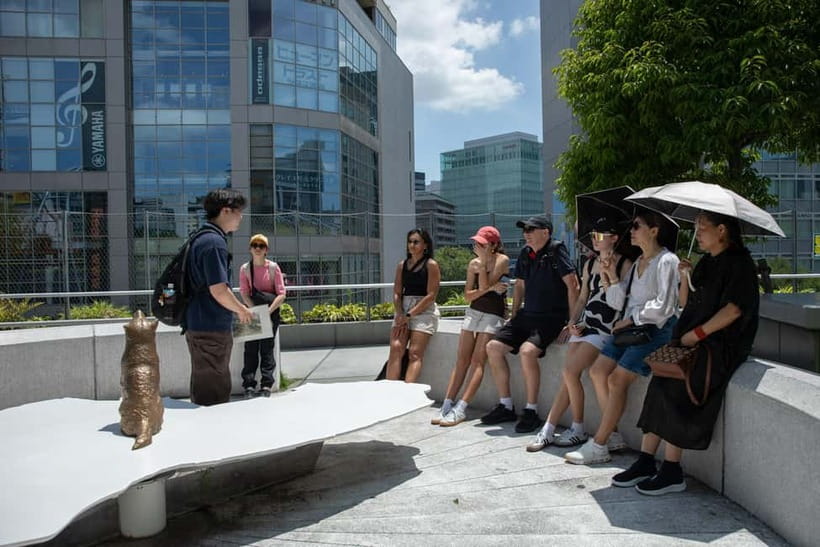
The tour ends at the Hachiko Memorial Statue, one of Shibuya’s best-known meeting points. Hachiko’s story of loyalty has made the statue a lasting symbol, and its location near the station makes it a practical end point as well as a sentimental one.
Finishing here gives the walk a clear final image. You have moved from a serious public artwork to a famous intersection, then through alleyways, parks, shopping streets, and nightlife lanes before arriving at a symbol recognized around the world.
The statue area can be crowded, and you may need patience for a clear photograph. Still, the end point is useful because you are left in the center of Shibuya, close to the places you may want to revisit for food, shopping, or evening entertainment.
What the guides add to the experience
The strongest part of this tour is not any single stop. It is the guide’s ability to connect them. Loc is repeatedly praised for cultural explanations, practical suggestions, good storytelling, and help with photos. Rio and Ryo are noted for clear English, friendly communication, and adapting the tour for families or teenagers.
Grey has helped visitors find vegan food and shopping ideas, while Daichi has been praised for adjusting the pace and answering questions. Kumi, Zach, and other guides are also described as friendly and well prepared. The guide you receive will shape the experience, but the pattern across the team is encouraging.
You can make the most of that personal element by arriving with a few questions. Ask where to eat afterward, which part of Shibuya is best for shopping, or what you should return to at night. The route is short, so those practical suggestions may be as useful as the formal commentary.
Some bookings have had only three people, and at times a person has ended up alone with the guide. That can create a more flexible experience, though group size is not guaranteed. The tour can also work for families, since one guide adjusted the content to keep teenagers interested.
Price, pace, and who should book
At $22, this is a low-cost way to get your bearings in one of Tokyo’s most confusing districts. I would not book it if you want a long food tour, a deep art lecture, extensive shopping time, or a night out at local bars. The route offers introductions and context, not extended visits.
I would book it for a first day in Tokyo, especially if you want to return to Shibuya later with a better sense of direction. It also suits solo visitors who would appreciate help with photographs, families wanting a manageable two-hour outing, and anyone who prefers to connect famous sights with less obvious streets.
The pace is active but not an all-day march. Wear comfortable shoes and keep your belongings easy to manage in crowded areas. Because the tour is outdoors and moves through busy public spaces, rain or heavy foot traffic may affect the feel of the walk. One family enjoyed the route in the early evening, while another booking continued despite light rain, so the timing can change the atmosphere.
You can cancel up to 24 hours ahead for a full refund, and you can reserve now while paying later. Those terms are helpful if your Tokyo schedule is still shifting, but they do not remove the need to reach Mark City on time.
Should you book the Shibuya walking tour?
Book it if you want a smart two-hour introduction to Shibuya, especially on your first visit. The route gives you the crossing and Hachiko, but it also adds Nonbei Yokocho, Myth of Tomorrow, Miyashita Park, Center Gai, and Maruyama-cho, so you get a broader picture than a quick photo stop.
Skip it if you already know Shibuya well or prefer to explore without a fixed pace. For most first-time visitors, though, $22 is a reasonable trade for local context, practical tips, and a clearer plan for what to see next.
FAQ
How long does the Shibuya walking tour last?
The tour lasts two hours.
How much does the tour cost?
The price is $22 per person.
What language is the tour conducted in?
The tour is conducted in English with a live guide.
Where does the tour start?
It starts at SABON Shibuya Mark City, inside Mark City on the third floor.
Where does the tour end?
The tour ends at the Hachiko Memorial Statue.
Which places are included on the route?
The route includes Nonbei Yokocho, Myth of Tomorrow, Shibuya Crossing, Miyashita Park, Center Gai, Maruyama-cho, and Hachiko.
Is a guide included?
Yes. The local guide fee is included.
Can I cancel the booking?
You can cancel up to 24 hours in advance for a full refund. You can also reserve now and pay later.
Just added around Tokyo
- Kawagoe Japanese Food Tour : Unagi Kaiseki and Sake near Tokyo★ 5.0 · 30 reviews
- Kawagoe 4hr Private Tour with Licensed Guide (Kawagoe Dep)★ 5.0 · 13 reviews
- Little EDO Sushi Making workshop in Kawagoe★ 5.0 · 18 reviews
- 【R34】Tokyo:Private Daikoku tour in Modified R34★ 4.9 · 92 reviews
- :Tokyo,Shibuya/ Pro Photography in Kimono / English-Friendly★ 5.0 · 26 reviews
- Tokyo:Celebrate Unique Japanese New Year Tradition Festivity★ 3.9 · 20 reviews
- Tokyo: Allstar Food Tour★ 4.7 · 29 reviews
- Tokyo: West-Side Cycling and Food Tour with Guide★ 5.0 · 37 reviews
Walking Tours, compared.

Kyoto Geisha Walking Tour: Gion District & Hidden Gems
Our verdict →
Imperial Palace and Shogun Historical Walking Tour
Our verdict →
Shinjuku Local Bar and Izakaya Guided Walking Tour
Our verdict →

Nishiki Market Brunch Walking Tour (7 Tastings + Brunch)
Our verdict →
Kyoto Arashiyama Walking Tour: Bamboo, Monkeys, Gardens & Secrets
Our verdict →
Tokyo Castle & Imperial PalaceーShogun Walking Tour
Our verdict →Browse the lists this tour appears in