
Reviewed · SAKE TASTING
Tokyo: 7 Kinds of Sake Tasting with Japanese Food Pairings
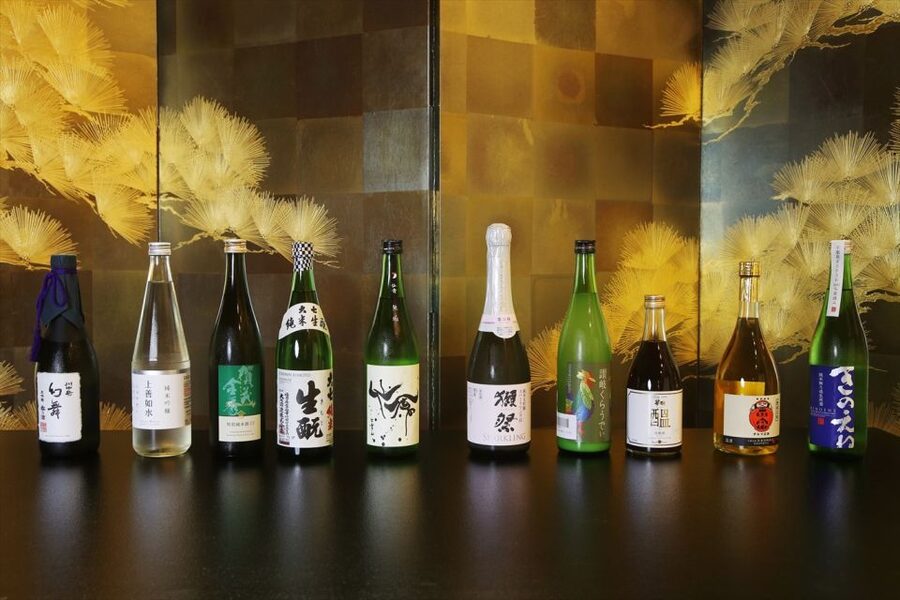
Tokyo’s sake culture comes into focus one small pour at a time in this 75-minute tasting near Tokyo Tower. You’ll try seven sake varieties, moving from sparkling and sweet styles to savory pours and a dessert sake, with a food pairing for each.
I like the clear teaching and the generous range of flavors. I also like the small group, capped at 10, which gives you a good chance to ask questions. The main drawback is the meeting point: the Kikai Shinko Kaikan building can be hard to spot, and the basement room is not an obvious first stop.
Key points to know before booking
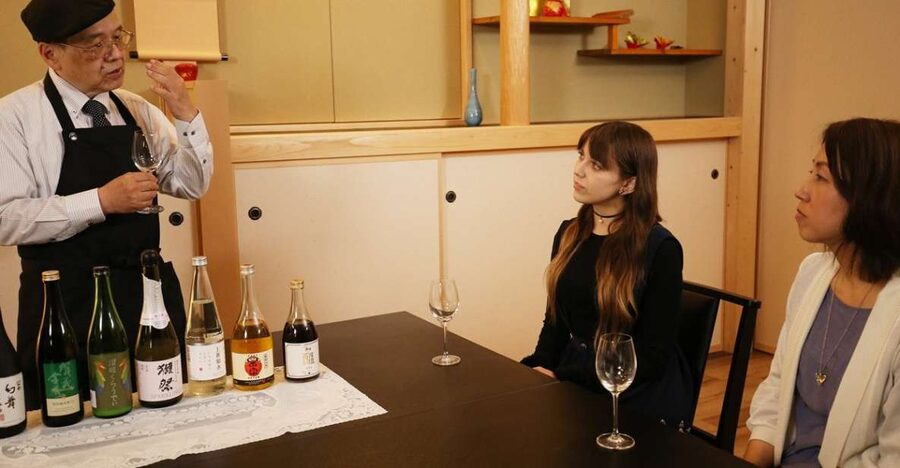
- Seven sakes, seven bites: Each sample comes with a Japanese or Western food pairing, including cheese, vegetables, duck, and freshly cooked bites.
- A lesson, not just a bar flight: Your accredited English-speaking instructor explains brewing, sake styles, serving, and the drink’s place in Japanese religion and tradition.
- A sweet finish: The tasting includes a dessert-style sake, a useful way to discover that sake is not limited to dry or savory flavors.
- Near Tokyo Tower: Meet at the main entrance of Kikai Shinko Kaikan, directly opposite the tower, then go to the B1 teaching room if needed.
- Small and personal: The group limit is 10, and some sessions may feel nearly private if few people book.
- Allow time to find the room: Some participants needed help locating the building or the correct room, so arrive early.
Seven sake styles in 75 minutes
This is a compact tasting, but it is not a quick succession of anonymous shots. The purpose is to show you how broad sake can be. The seven pours are selected to move across different tastes, including sparkling, sweet, savory, and dessert-style sake.
That range matters because many first-time drinkers arrive thinking sake is one fixed beverage. It is better understood as a family of styles shaped by rice, brewing methods, polishing, sweetness, aroma, and serving choices. You may discover that you prefer a light sparkling pour, a fuller savory style, or something sweet enough to pair with dessert.
The tasting moves at a useful pace. You have enough time to hear an explanation, taste the sake, try the food, and compare the two. At 75 minutes, it fits neatly into a Tokyo day without taking over an entire afternoon, though serious sake fans may wish the session were longer.
The final dessert sake helps complete the lesson. It is an especially useful inclusion for anyone who has only tried dry sake in restaurants. It also gives the tasting a natural ending instead of finishing with the strongest or most austere pour.
More Drinking Tours in Tokyo
- Tokyo Bar Hopping Tour in Shinjuku (All-You-Can-Drink + Dinner)
★ 5.0 · 3,587 reviews - Best of Shinjuku: Izakaya Food Tour (4 Stops, 14+ Tastings)
★ 5.0 · 1,863 reviews - Tokyo: Shinjuku Local Bar and Izakaya Guided Walking Tour
★ 4.9 · 1,794 reviews
What the sommelier explains about sake
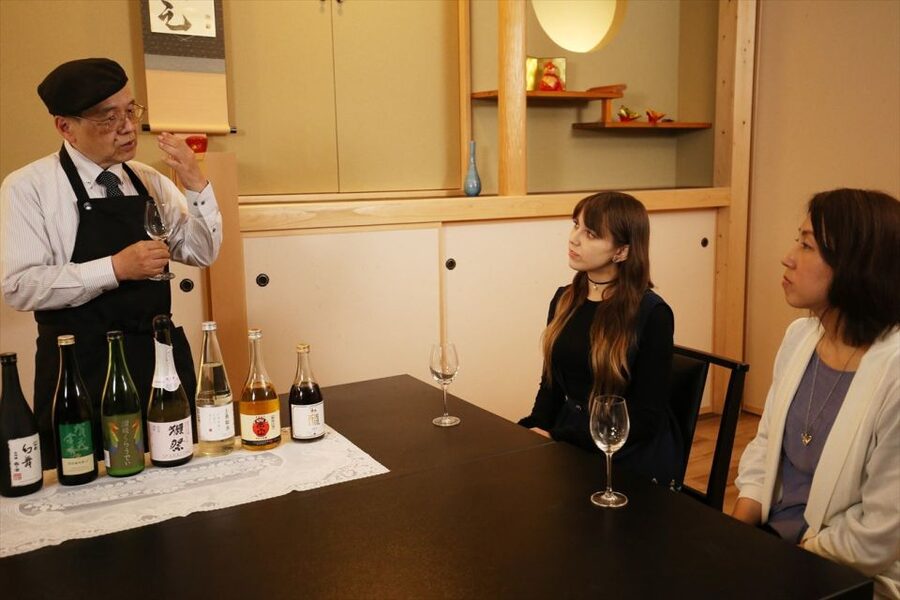
Your instructor covers the basic production process and the main types of sake available in Japan. You’ll hear how sake is made and how those choices affect what reaches your glass.
The cultural context is just as important. Sake has been part of Japanese life for more than a thousand years, and it appears in religious customs, celebrations, and traditional meals. The class connects the drink to that wider setting rather than treating it as simply another alcoholic beverage.
The instructors named in the feedback include Tanaka-san and Taka-san. Other sessions have been led by an accredited instructor who was still completing sake sommelier training, so the exact teacher can vary. The consistent feature is an English-language lesson with time for questions.
I like this approach because it gives you information you can use after the class. You’ll be better prepared to read a sake menu, notice differences between bottles, and choose a style that suits your meal. The lesson is not aimed only at experts. The format works for a first introduction, while people who already enjoy sake can ask more detailed questions.
Food pairings that make the lesson practical
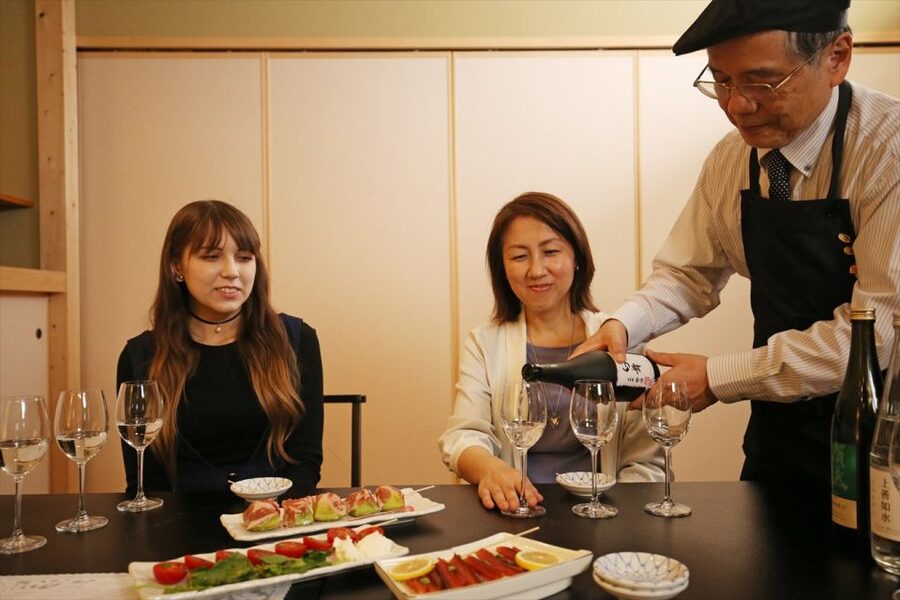
Seven food pairings give each pour a job to do. Instead of tasting sake in isolation, you can see how it changes beside food. That is the most useful part of the experience for anyone who expects to drink sake with meals in Japan.
The food includes Japanese and Western dishes. Past sessions have featured Japanese cheese, crudités, duck, and small bites cooked in front of the group and served hot. The exact menu can vary, but the structure remains seven sake samples matched with seven foods.
A pairing can show why a sweeter sake works with one bite while a dry or savory style works better with another. You do not need a trained palate to notice the contrast. Take a sip before eating, try the food, then taste the sake again. You may find that the drink feels softer, sharper, fruitier, or more balanced after the bite.
The portions are part of a tasting rather than a full restaurant dinner. Still, the food is substantial enough to keep the experience from feeling like seven drinks with nothing to eat. If you are planning this near lunchtime or dinner, treat it as a light meal, not a replacement for a full one.
The setting opposite Tokyo Tower
The meeting point is the Kikai Shinko Kaikan building, located directly opposite Tokyo Tower. You should meet your instructor at the main entrance on the first floor.
Once inside, the tasting takes place in a basement demonstration kitchen and lunch room used for cooking classes. That setting may surprise you. It is not a polished sake bar with a prominent streetfront sign, but it suits a hands-on food and drink lesson.
The location is the one part that needs extra care. Several people had trouble identifying the building or room, and one piece of practical information may be outdated because the room number has changed in the past. If you cannot find your instructor, go to True Japan Tour in Room B109 on the B1 floor.
I recommend arriving early and checking the building entrance before your start time. Tokyo Tower is the useful visual marker, but the building itself may not be instantly clear if you are hurrying or approaching from the wrong side. Keep the provider name, True Japan Tour, available on your phone.
This is not a hotel pickup experience. You make your own way to Minato City, so factor in the time needed to reach the building and find the room. The upside is that you can pair the tasting with other Tokyo Tower area plans.
More Sake Tastings in Tokyo
- Ramen and Sushi Cooking Class with Sake Pairing Set in Tokyo
★ 5.0 · 291 reviews - Sake Tasting Masterclass in Shinjuku (8+ Varieties with a Pro)
★ 5.0 · 271 reviews - Sake Omakase in Tokyo: Guided Tasting by Certified Sommeliers
★ 5.0 · 239 reviews - Tasting All Types of Sake with Sommelier
★ 5.0 · 151 reviews
Small groups and the feel of the class
The maximum group size is 10, which is a sensible limit for a tasting that involves teaching and food. You are not lost in a large tour crowd, and the instructor can answer questions without stopping the entire room every few minutes.
The class can feel especially personal when only two or a few people attend. Some sessions have effectively been private tastings, with the staff giving close attention to the participants. That possibility adds value, though it is not something you should assume when booking.
The instructors are described as friendly, welcoming, and attentive. That matters in a tasting because beginners often hesitate to admit they do not know the difference between sake styles. A relaxed teacher makes it easier to ask basic questions about sweetness, serving, production, or what to order later.
The experience is conducted in English. If you want a formal lecture with technical vocabulary from start to finish, this may feel more casual than expected. If you want a clear introduction with food and conversation, the format is a better match.
Is $106 a fair price?
At $106 per person, this is not a budget drink stop. You are paying for seven sake samples, seven food pairings, instruction from a nationally accredited sake instructor, and a small group setting.
The value depends on how you use the lesson. Seven separate pours in a Tokyo bar could cost a substantial amount, but a bar flight would not necessarily include a structured explanation, seven matched foods, or a lesson about sake production and culture. The food pairings make the price easier to justify, especially if you are interested in ordering sake with meals later in your trip.
The 75-minute length also keeps the commitment reasonable. You receive a focused introduction rather than a half-day brewery visit. If you mainly want to drink as much sake as possible, this is probably not the best use of $106. If you want to understand what you are tasting and leave with a clearer sense of your own preferences, the price is more defensible.
I would especially consider it early in a Japan trip. The information can help you make better choices at izakaya restaurants, department-store food halls, and formal meals afterward. It is less useful if you have no interest in sake or prefer a large meal over a tasting lesson.
Who should book this experience?
This tasting suits several kinds of visitors:
- First-time sake drinkers: The instructor explains the basics without requiring previous knowledge.
- Food-focused visitors: The seven pairings show how sake behaves with different ingredients.
- Curious drinkers: The range from sparkling to dessert sake gives you more than a standard dry-sake introduction.
- Couples and small groups: The 10-person limit keeps the class personal.
- Tokyo return visitors: If you have already covered the major sights, this offers a more focused look at an important part of Japanese culture.
- Visitors who want useful ordering advice: Understanding sweetness and style can make later restaurant choices less intimidating.
It is not suitable for anyone under 20. It may also disappoint you if you expect a large meal, a brewery tour, or a long evening of drinking. This is a guided tasting class in a teaching space.
The experience is wheelchair accessible, which makes the format practical for many visitors. You should still confirm any personal access needs when booking, since the provided information does not describe the exact route through the building.
Timing, cancellation, and practical planning
The duration is 75 minutes, with starting times depending on availability. Since you are meeting at a fixed building rather than being collected from your hotel, plan your route before leaving.
Free cancellation is available up to 24 hours in advance for a full refund. You can also reserve now and pay later, which helps if your Tokyo schedule is still shifting.
You should not arrive right at the start time if you have never seen the building. The main entrance is the first-floor meeting point, while the True Japan Tour office is on B1 in Room B109. The difference between those locations is small on paper but important when you are standing in an office building looking for a guide.
The experience is near Tokyo Tower, so it is easy to combine with sightseeing in the area. Just do not assume that the tower itself is the meeting point. Use it as a landmark, then look for Kikai Shinko Kaikan.
My call: book it if you want context with your tasting
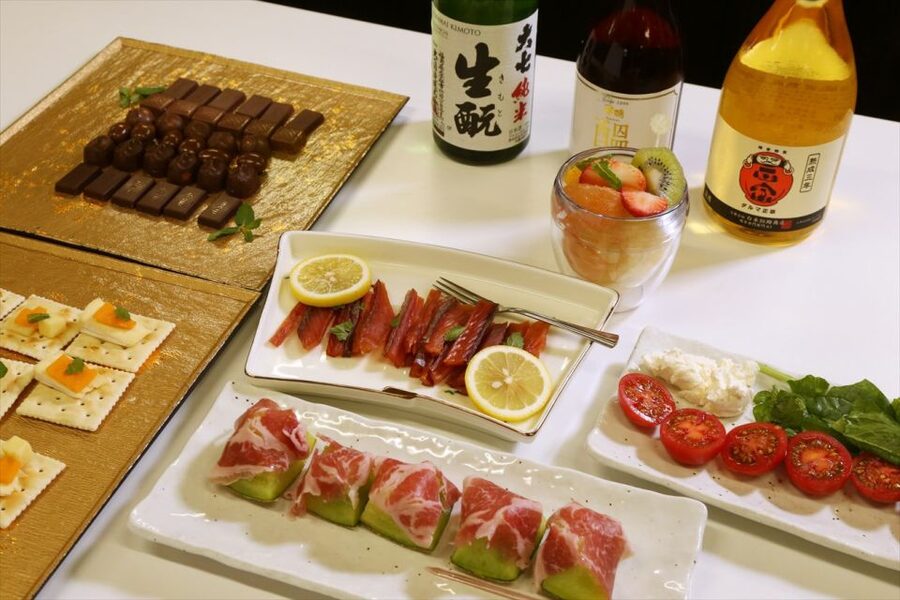
I would book this experience if you want more than a quick sake flight. The strongest features are the seven distinct styles, the matching foods, and the chance to ask an English-speaking instructor how production and culture shape the drink.
The main caution is practical rather than culinary. Find the building in advance, arrive early, and keep the B1 office information handy. Once you are in the room, the small scale and personal teaching make the $106 price easier to understand.
Choose it for education, food pairing, and a friendly introduction to sake. Skip it if you want a full dinner, a brewery visit, or an unstructured night at a bar.
FAQ
How many sake samples are included?
Seven sake samples are included, covering styles from sparkling and sweet to savory and dessert sake.
How many food pairings are included?
Seven food pairings are included, with Japanese and Western dishes served alongside the sake.
How long does the tasting last?
The experience lasts 75 minutes.
Is the tasting conducted in English?
Yes. The instructor language is English.
Where is the meeting point?
Meet at the main entrance of the Kikai Shinko Kaikan building on the first floor. The building is directly opposite Tokyo Tower. If you cannot find the instructor, visit True Japan Tour in Room B109 on the B1 floor.
How many people can join the group?
The group is limited to 10 participants.
Can people under 20 join?
No. The experience is not suitable for people under 20.
More Food & Drink in Tokyo
- Tokyo: Shinjuku Food Tour (13 Dishes at 4 Local Eateries)
★ 5.0 · 6,603 reviews - Tokyo Tsukiji Fish Market Food and Culture Walking Tour
★ 5.0 · 3,184 reviews - Tokyo: Shinjuku Food Tour (15 Dishes and 4 Eateries)
★ 4.9 · 2,033 reviews - Tokyo: Tsukiji Fish Market Food and Walking tour
★ 5.0 · 1,724 reviews
Just added around Tokyo
- Kawagoe Japanese Food Tour : Unagi Kaiseki and Sake near Tokyo★ 5.0 · 30 reviews
- Kawagoe 4hr Private Tour with Licensed Guide (Kawagoe Dep)★ 5.0 · 13 reviews
- Little EDO Sushi Making workshop in Kawagoe★ 5.0 · 18 reviews
- 【R34】Tokyo:Private Daikoku tour in Modified R34★ 4.9 · 92 reviews
- :Tokyo,Shibuya/ Pro Photography in Kimono / English-Friendly★ 5.0 · 26 reviews
- Tokyo:Celebrate Unique Japanese New Year Tradition Festivity★ 3.9 · 20 reviews
- Tokyo: Allstar Food Tour★ 4.7 · 29 reviews
- Tokyo: West-Side Cycling and Food Tour with Guide★ 5.0 · 37 reviews
Sake Tasting, compared.
Kyoto Night Foodie Tour in Gion (9+ dishes + 6 Sake tastings)
Our verdict →
1-Day Snow Monkeys, Zenko-ji Temple & Sake in Nagano
Our verdict →
Insider Sake Brewery Tour with Sake and Food Pairing
Our verdict →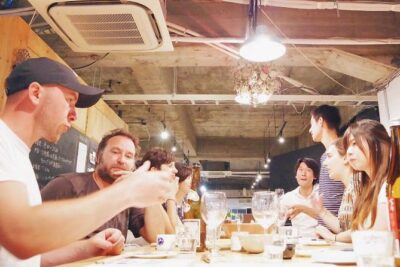
Sake Tasting Masterclass in Shinjuku (8+ Varieties with a Pro)
Our verdict →
Browse the lists this tour appears in