
Reviewed · TEMPLES & SHRINES
Osaka/Kyoto: Arashiyama, Nara Park, Fushimi Shrine Tour
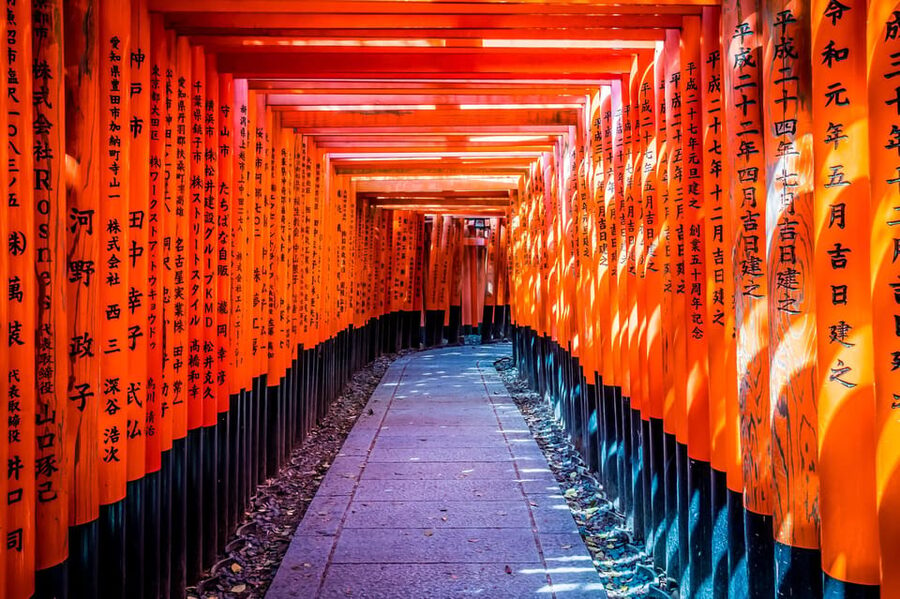
The sight of thousands of vermilion torii gates climbing through the forest at Fushimi Inari is the day’s big finish. Before that, you’ll walk Arashiyama’s bamboo paths and meet Nara’s freely roaming deer, making this a smart way to see three major sights without arranging several train rides yourself. I especially like the morning start in Arashiyama, when the schedule gives you a better chance at a calmer visit, and the simple route linking Osaka, Kyoto, and Nara in one long day.
I also like the amount of free time: two hours in Arashiyama, about 80 minutes at Nara Park, and roughly 90 minutes at Fushimi Inari. The tradeoff is clear, though. This is a sightseeing sweep, not a slow cultural tour, and the long shared-vehicle route can leave you watching the clock. Language support is also less certain than the booking page may suggest, since Chinese is the main tour language and English or Korean help depends on availability.
Key points at a glance
- Three famous stops in one day: Arashiyama, Nara Park, and Fushimi Inari Taisha are covered without separate transport planning.
- Arashiyama comes first: You have two hours for the bamboo forest, Togetsukyo Bridge, and nearby streets.
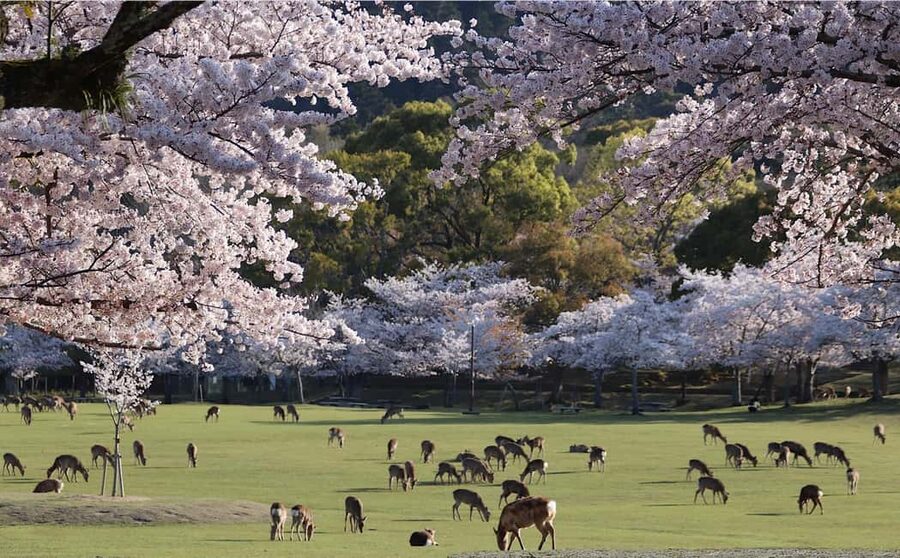
- Nara’s deer are part of the setting: More than 1,000 deer roam the park, which also sits beside Kasuga Taisha.
- Fushimi Inari gets a generous final visit: About 90 minutes lets you walk through the torii gates without attempting the full mountain route.
- Basic guidance, not a full guided tour: The driver may explain the essentials, but each site is mainly self-guided.
- The schedule favors convenience over flexibility: Traffic, group size, and weather can change arrival times and time on site.
Three major sights without three separate plans
At $51 per person, this tour sells convenience more than exclusivity. You pay for a shared vehicle, tolls, parking, fuel, and a host or guide who keeps the day moving. Meals, drinks, admission charges where applicable, and personal spending are not included.
You can certainly reach these places by public transport. That may be faster and cheaper for confident planners, especially because the route moves from Osaka to Kyoto, then Nara, back to Kyoto, and finally Osaka. But independent transport means checking train routes, finding each station, managing transfers, and keeping your group together across a packed day.
I would see the price as reasonable for a first visit when you value simplicity. It is less appealing if you already understand the Kansai rail network or want to linger at one place. The central question is not whether the tour visits enough sights. It does. The question is whether you prefer someone else to handle the roads while you accept a fixed timetable.
More Temple & Shrine Tours in Nara
- Kyoto/Osaka: Nara, Fushimi Inari Taisha, Arashiyama Bus Tour
★ 4.7 · 1,275 reviews - Osaka/Kyoto: Arashiyama, Nara & Fushimi Inari Shrine w/Lunch
★ 4.4 · 754 reviews - Kyoto/Osaka: Kinkakuji, Bamboo Forest, and Nara Deer Park
★ 4.4 · 265 reviews
Starting in Osaka or Kyoto
The tour offers two departure options: the Kyoto Station Hachijo-guchi sightseeing bus stop or a meeting point at 1-chome-1-3 Dotonbori in Osaka. Check the exact location attached to your booking, because the meeting point depends on the option you choose.
The published schedule begins around 8:00 in Osaka and 9:20 in Kyoto. The vehicle then reaches Arashiyama at about 10:00. Return timing is planned for 17:00 in Kyoto and 18:00 in Osaka.
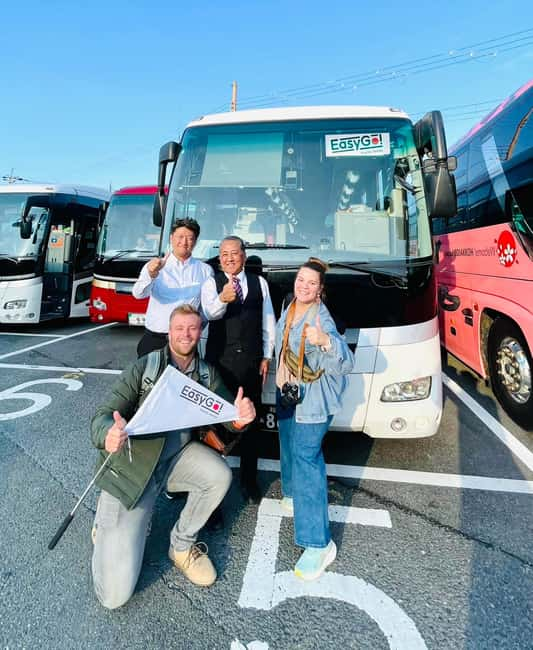
This timing matters. You should arrive early and identify staff wearing an EASY GO vest or holding an EASY GO flag. The guide does not promise to contact you ahead of time, and a missed departure can create a serious problem. One particularly poor experience involved a family arriving after the vehicle had left and receiving little help afterward. I would treat the departure time as firm, not approximate.
Food is not allowed inside the vehicle, so eat before boarding or wait until you reach a stop. The tour may also share transport with international visitors, which means the pace and language mix can vary.
Arashiyama: bamboo paths and Togetsukyo Bridge
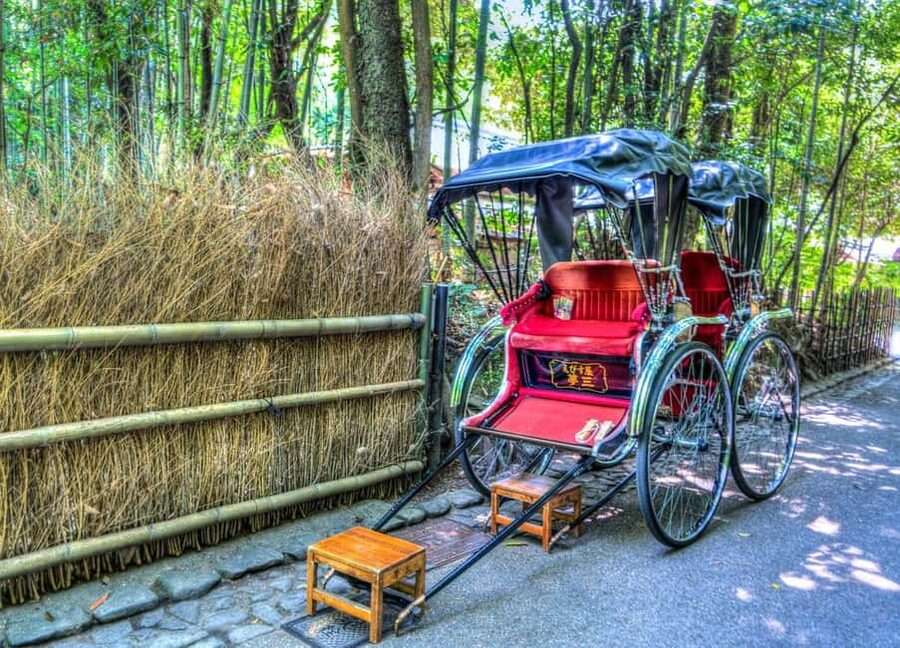
Arashiyama is your first major stop, with about two hours of free time. That is enough for a brisk visit to the famous bamboo forest and a walk across or near Togetsukyo Bridge, but not enough to explore every temple, garden, and side street in the district.
The bamboo trail is the part most people come to see. Tall green stalks line the path and give the area its distinctive feel, but the route is not a private woodland walk. You may find plenty of people around, especially later in the day, so the early arrival is useful.
Togetsukyo Bridge gives you a different view of Arashiyama. The surrounding scenery changes with the seasons, and the bridge is an easy place to pause before heading back toward the meeting point. You can make this stop work well by deciding in advance whether your priority is the bamboo grove, the bridge, or a quick look at nearby streets.
The weakness is the time limit. If you stop for a long meal or enter several paid attractions, you may have to rush. Since this is mainly a self-guided visit, you should keep an eye on your watch and return to the vehicle early. A missed departure here would affect the rest of your day.
Nara Park: deer, open space, and a short visit
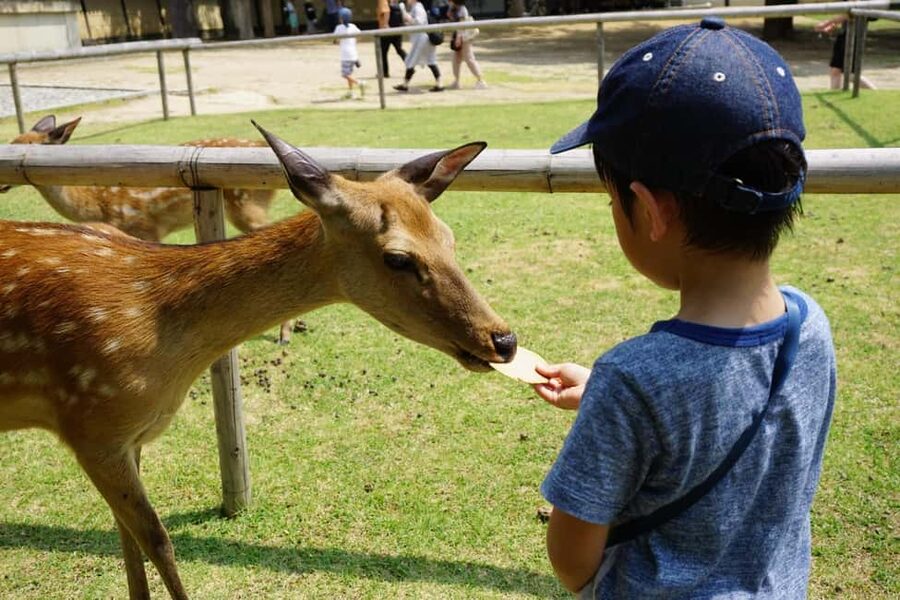
The coach is scheduled to reach Nara around 13:15, with about 80 minutes in Nara Park. The park is a wide green area beside Kasuga Taisha, and its deer are regarded as divine messengers. They have been part of the area’s religious tradition for more than 1,300 years and are protected as a national natural monument.
This is a memorable stop because the deer are not behind a fence. They move through the park and around the paths, giving you a close look at one of Nara’s most recognizable sights. You should remain calm and pay attention to the animals rather than treating them like tame pets.
Eighty minutes is enough to see deer, take photographs, and get a taste of the park. It is not enough for a careful visit to every shrine and temple in the area. If Kasuga Taisha is your main goal, check the walking distance and keep your route simple.
Nara also provides a useful change of mood. Arashiyama is known for bamboo and river scenery, while Nara gives you open green space and living cultural tradition. The short stop works best when you accept that this is an introduction rather than a full Nara day.
Same trip, a completely different kind of day:
- World Heritage Kyoto & Nara Uji Authentic Matcha Experience
★ 5.0 · 1,573 reviews - Nara Half Day Trip Walking Tour (Private Option Available)
★ 5.0 · 937 reviews - Nara Early Morning Tour (Kyoto or Osaka Departure Available)
★ 5.0 · 676 reviews - Kyoto and Nara Day Trip from Kyoto
★ 4.5 · 445 reviews
Fushimi Inari: the red-gate finale
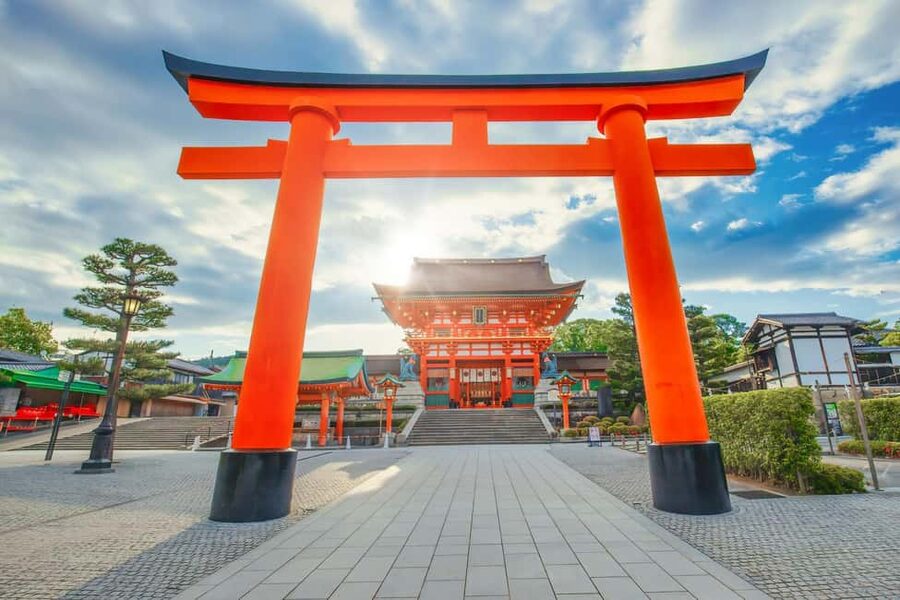
The final major stop is Fushimi Inari Taisha, reached at about 15:20. You have roughly 90 minutes here, which is enough to pass through the lower torii gates and explore part of the sacred mountain path.
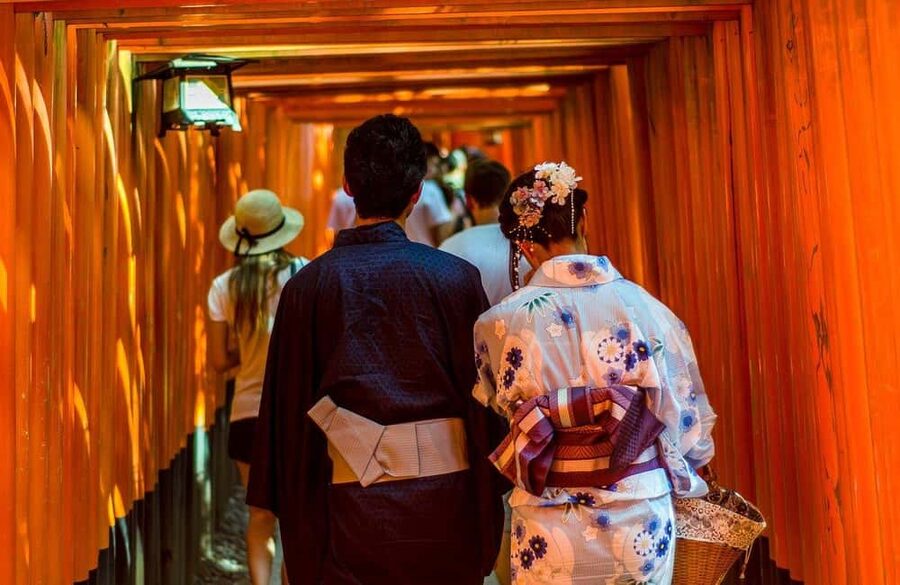
Fushimi Inari is the head shrine of roughly 30,000 Inari shrines across Japan. Its origins are traditionally dated to 711, and the entire Inariyama area is treated as sacred. The rows of red-orange torii create the visual highlight of the day, especially as the path begins to rise into the trees.
Do not assume you can walk the entire mountain in the time allowed. The route continues far beyond the first gates, and the tour’s schedule requires you to return to the vehicle. A good plan is to walk upward until you have enjoyed the quieter sections, then turn back with plenty of time.
Fushimi Inari is a strong final stop because it leaves you with a distinct sense of place rather than another quick city visit. It can also be crowded near the entrance. Walking farther up the path usually gives you a better chance to find breathing room, but you must balance that with the fixed departure.
What the guide actually provides
This is not a full day of continuous guiding at each attraction. The experience includes a Chinese, English, Japanese, or Korean-speaking guide or host, but the tour is mainly conducted in Chinese. English and Korean support may be available if requested at booking, though it is not guaranteed.
In a small group, the driver may also serve as the guide. Expect basic explanations and practical instructions rather than detailed historical talks beside every monument. At the three stops, you are mostly exploring on your own.
That setup can suit you if you prefer freedom and only need help with transport, timing, and a basic orientation. It may disappoint you if you want a specialist guide to explain shrine architecture, Buddhist traditions, local customs, or the symbolism of the torii gates.
The quality of the day can also depend on the individual host. Guides named Levi and CC were praised for being helpful, giving useful directions, and sharing enough information to make the stops easier to navigate. HuaHua was also singled out for keeping the day organized. Those examples suggest that a good guide can add real value, but the language and guide arrangement are not fixed in the same way as the route.
The real cost of a shared coach day
The itinerary looks neat on paper, but the road time deserves honest attention. You start in one city, collect passengers in another, visit Arashiyama, travel to Nara, return toward Kyoto for Fushimi Inari, and then continue back to Kyoto or Osaka.
Traffic can affect every segment. The operator also allows the schedule to change because of road conditions, weather, the number of participants, or site opening limits. You might arrive early at the next stop or finish earlier than planned.
This is why I would not book the tour for an important evening reservation immediately after the listed return time. The expected finish is 17:00 in Kyoto or 18:00 in Osaka, but congestion can interfere.
The vehicle saves you from changing trains with luggage or a family group. On the other hand, public transport may offer more control and sometimes a quicker trip between these places. You are paying to reduce planning work, not to eliminate travel time.
Who will get the most from this tour
I would recommend it to a first-time visitor who wants a broad look at Kansai in one day. It also fits families and small groups who would rather sit together in a coach than manage several rail connections.
It works well for people who want a taste of three famous places before deciding where to spend more time later. The free periods are long enough for photographs, a walk, and a basic feel for each site.
You should think twice if you want a relaxed pace, detailed guiding, or a full visit to any one attraction. Independent visitors who are comfortable with Japanese trains may find the coach less efficient. You also need to be comfortable with a shared vehicle, a firm meeting time, and potentially limited language support.
The tour is wheelchair accessible, which is useful, although the paths at shrines and through the bamboo area may still require you to confirm what level of access suits your needs.
Practical ways to make the day work
Keep your plan simple at every stop. In Arashiyama, choose the bamboo grove and Togetsukyo Bridge rather than trying to cover the whole district. In Nara, spend your time in the park and near the deer unless you already know exactly which shrine you want to reach.
At Fushimi Inari, walk through the first gate corridors, then continue only as far as you can comfortably return before departure. Build in a few minutes to find the vehicle, since large attractions can make meeting points confusing.
Carry water and plan meals around the stops, since food is not allowed in the coach and meals are not included. Wear shoes suitable for walking, particularly if you want to go beyond the easiest section of the Fushimi Inari path.
Most important, confirm the departure point and look for the EASY GO marker. Do not rely on a last-minute phone call from the guide. The tour’s greatest risk is not the attractions. It is being late for the vehicle.
Should you book it?
Book this tour if your priority is seeing Arashiyama, Nara Park, and Fushimi Inari in one day with transport arranged for you. At $51, it offers fair value when parking, tolls, fuel, and the difficulty of connecting three major sights are part of your calculation.
Skip it if you have several days in Kyoto and Nara, know how to use public transport, or want time for temples beyond the headline sights. The experience is best understood as an efficient sampler with basic guidance, not a slow, deeply explained cultural tour.
Choose it with realistic expectations, arrive early, watch the clock, and request your preferred language at booking. If those conditions suit you, this is a practical way to cover a lot of ground in one long day.
FAQ
How long does the tour last?
The scheduled duration is 10 hours. The listed return is around 17:00 in Kyoto and 18:00 in Osaka, though traffic, weather, and group conditions can change the timing.
Where can I start the tour?
The available starting points are the Kyoto Station Hachijo-guchi sightseeing bus stop and 1-chome-1-3 Dotonbori in Osaka. The exact meeting point depends on the option you book.
How much time is provided at Arashiyama?
The schedule allows about two hours at Arashiyama for a self-guided visit.
How long do I get at Nara Park?
The planned visit lasts about 80 minutes. You can use that time to see the deer and explore part of the park near Kasuga Taisha.
How long is the Fushimi Inari visit?
The schedule allows about 1.5 hours, or roughly 90 minutes, at Fushimi Inari Taisha.
What languages are available?
The tour is mainly conducted in Chinese. English, Japanese, and Korean support may be available, but English and Korean service is not guaranteed and should be requested when booking.
Are meals included?
No. Meals and drinks are not included, and food is not allowed inside the vehicle.
Can I cancel the booking?
You can cancel up to 24 hours in advance for a full refund. The reserve-now, pay-later option allows you to book without paying immediately.
Just added around Nara
- Private Kyoto Tour by Car with Optional Nara or Osaka Add-Ons★ 5.0 · 36 reviews
- Kyoto, Osaka, Nara Private Tour by Car English Driver Guide★ 4.0 · 63 reviews
- Nara Todaiji Kasuga Taisha Private Full Day Tour From Kyoto★ 5.0 · 13 reviews
- From Kyoto: Nara History Guided Half Day Bus Tour with lunch★ 5.0 · 23 reviews
- Nara 8hr Private Tour – Kyoto DEP. with Licensed Guide★ 5.0 · 115 reviews
- Arashiyama & Nara Highlights: One-Day Private Tour Adventure★ 5.0 · 16 reviews
- Kyoto Private Car Tour – Full Day with Local Guide & Nara Option★ 5.0 · 169 reviews
- Kyoto & Nara Private Tour from Osaka Kyoto Hotel Pick-up★ 4.5 · 32 reviews
Temples & Shrines, compared.

Tea Ceremony in a Traditional Tea House in Kiyomizu
Our verdict →

Meiji Shrine, Asakusa, Skytree Bus Tour and Cruise
Our verdict →
Fushimi Inari Hidden Hiking Tour (Private Option Available)
Our verdict →
Osaka/Kyoto:Kinkakuji,Arashiyama,FushimiInariShrine,NaraPark
Our verdict →
Nikko: Kegon Falls, Lake Chuzenji & Toshogu Temple
Our verdict →
Kamakura & Enoshima Day Trip including Temple Tickets
Our verdict →Browse the lists this tour appears in