
Reviewed · FOOD TOURS
Osaka: Food Tour Kuromon Market & Dotonbori with Guide
Osaka puts its best argument on a plate. This food walk takes you from Kuromon Market to Hozenji and Dotonbori, with takoyaki, dango, okonomiyaki, kushikatsu, and a custard tart along the way. You get food, street scenes, and a useful introduction to Osaka in one outing.
I like the clear progression from market stalls to old lanes to neon-lit Dotonbori. I also like that the guide handles the food stops, which helps if menus feel difficult or you are unsure what to order. The main consideration is that the route is not ideal for wheelchair users, and one serious service failure has been reported, with a guide failing to arrive for a group.
Key points to know
- Kuromon Market starts the meal: Try takoyaki at Wanaka and three-colour dango at Mitoya.
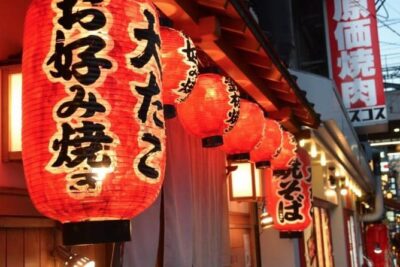
- The main savory stops are Osaka classics: Okonomiyaki and kushikatsu are served at Kushikatsu Yokozuna.
- Dotonbori supplies the city drama: Neon signs, crowded streets, and the famous Glico sign define this part of the walk.
- The tour begins and ends at one easy landmark: Meet outside Hotel Royal Classic Osaka, where the guide carries an Amigo Tours sign.
- English and Spanish are offered: Guides have included Paula and Angeles.
- The $84 price buys a tasting route, not a full day of meals: You may still want extra food or drinks afterward.
Why this route works for a first taste of Osaka
Osaka is often introduced through its food, and this route gives you the city’s greatest hits without making you plan every stop yourself. You begin outside Hotel Royal Classic Osaka, then head toward Kuromon Market before moving through Hozenji and Dotonbori.
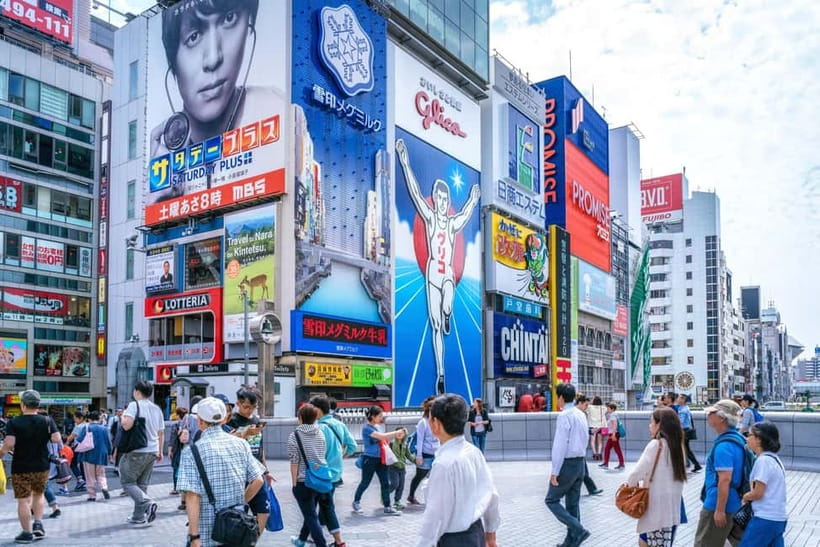
That order makes sense. Kuromon gives you a market setting and fresh food. Hozenji brings quieter, older-looking streets. Dotonbori finishes the walk with bright signs, entertainment, and the famous Glico runner at Ebisu Bridge.
I would treat this as a guided tasting walk rather than a formal cultural tour. The food is the main event. The neighborhood commentary adds value, especially when the guide points out local attractions as you walk, but the experience does not include entrance to specific attractions.
The route is also useful early in a stay. You can learn several Osaka foods at once, then return later to order the dishes you liked best. That kind of first-night orientation is one of the better uses of a food tour.
More Food Tours in Osaka
- Osaka: Shinsekai Food Tour with 13-15 Dishes at 5 Eateries
★ 4.8 · 2,204 reviews - Osaka Food Tour: 13 Dishes at 5 Local Eateries
★ 5.0 · 2,149 reviews - Hungry Osaka Street Food Tour:15 Tastings & 3 Drinks with a Local
★ 5.0 · 1,727 reviews
Kuromon Market: takoyaki and three-colour dango
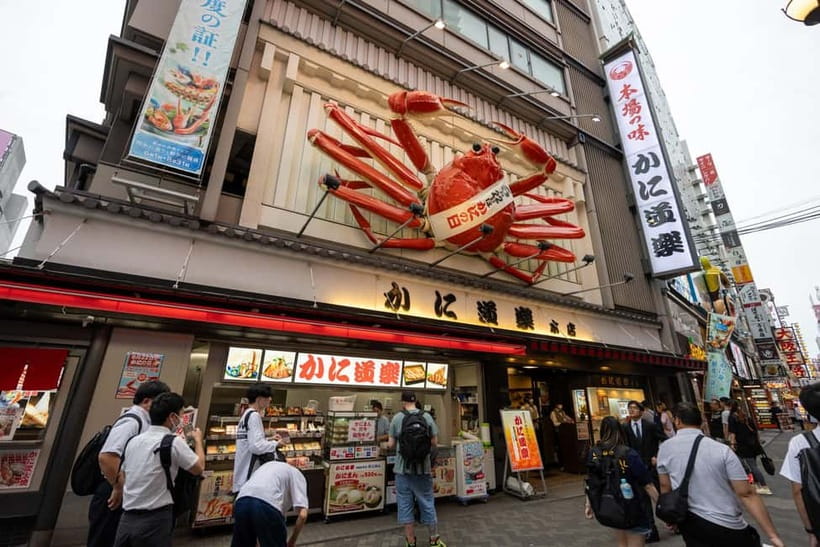
Kuromon Market is the most food-focused part of the outing. It is filled with fresh ingredients and ready-to-eat specialties, so you get a sense of both Osaka shopping and Osaka snacking.
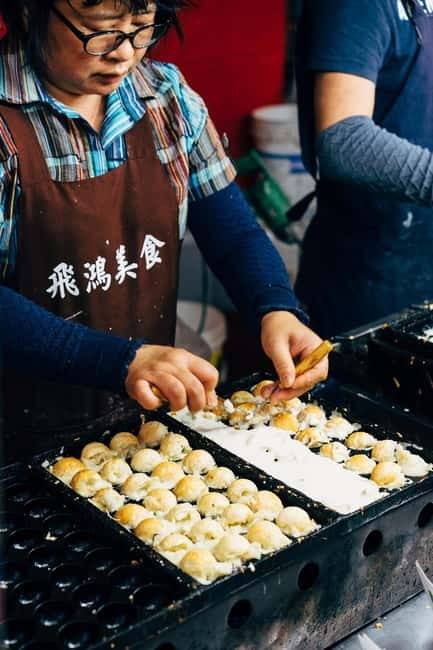
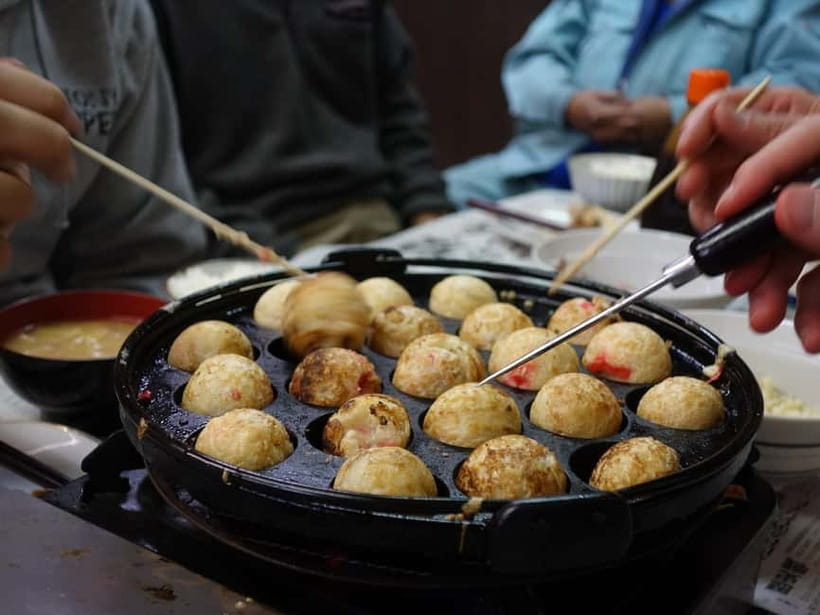
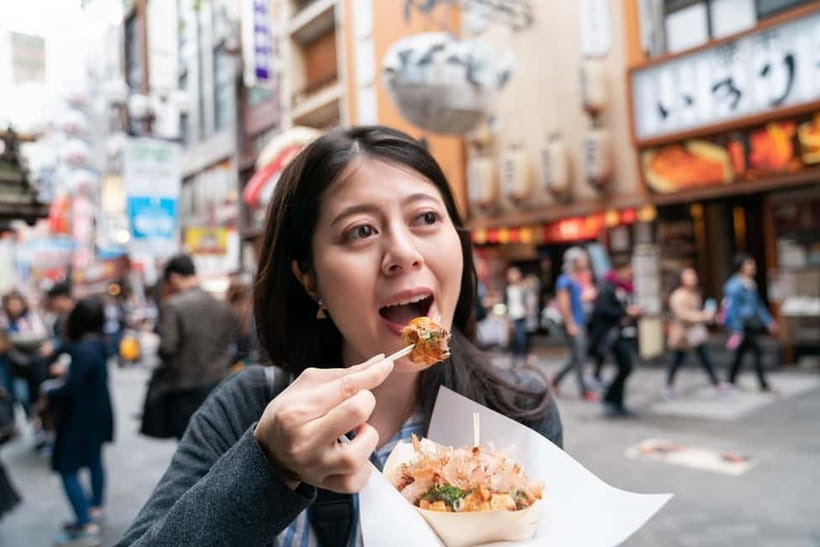
The first named stop is Wanaka, where you try takoyaki. These round batter snacks are crisp on the outside and soft inside, with octopus at the center. They are served hot, so take care with the first bite. The contrast between the browned outside and creamy interior is the point.
Takoyaki is simple food, but it also shows why a guide can help. You are not merely passing a stall and guessing what to order. You are being taken to a specific place for one of Osaka’s best-known foods, with the dish built into the route.
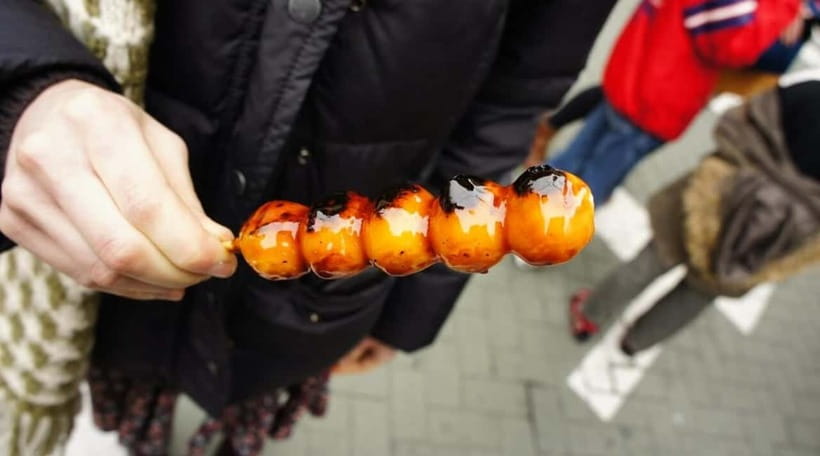
At Mitoya, you get a three-colour dango dumpling. The skewer holds chewy rice-flour dumplings in different colors. It is a sweeter, lighter stop after the savory takoyaki, and it gives the meal some variety rather than repeating fried food from beginning to end.
Do not expect Kuromon Market to function as a quiet museum. It is a working food area with plenty to look at, and you may want to pause for photos. Keep your hands free and wear shoes that can handle a fair amount of standing and walking.
Hozenji brings a change of pace
The route continues into the Hozenji area, where the setting shifts from market food to compact streets and neighborhood atmosphere. This is a useful pause between Kuromon and Dotonbori.
Hozenji is especially valuable because it keeps the tour from becoming a simple list of restaurant visits. You get time to notice the character of the area and hear the guide explain nearby sights. One of the strongest points from the guide feedback is this kind of commentary while walking, with Paula specifically praised for explaining local attractions and keeping the pace lively.
The tour is conducted in English or Spanish. That matters if you want more than directions to the next dish. A bilingual guide can explain what you are eating and help connect the food to the streets around you.
Still, you should set your expectations correctly. The guides are not necessarily Japanese, and one piece of feedback raised a fair concern about wanting a guide from Japan for deeper food and culture context. If local culinary background is your top priority, you may prefer a tour led by a Japanese food specialist. If clear communication and an outgoing guide matter more, the English or Spanish format may suit you well.
Okonomiyaki and kushikatsu at Kushikatsu Yokozuna
At Kushikatsu Yokozuna, located in front of Gigo, the route adds two substantial Osaka specialties: okonomiyaki and kushikatsu.
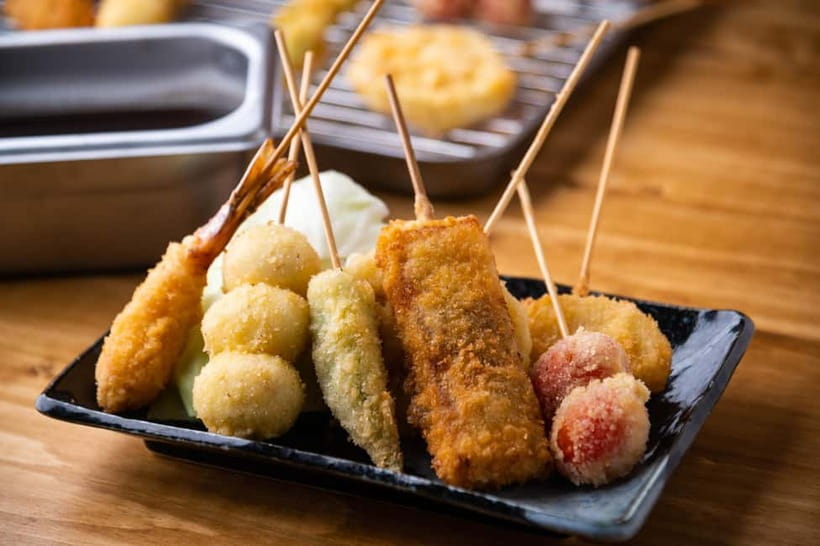
Okonomiyaki is a savory pancake with a filling mixture and toppings. It is hearty food, so this is where the tasting route begins to feel like a proper meal rather than a series of small bites. You can expect a filling, cooked dish with a texture and flavor quite different from the takoyaki earlier in the walk.
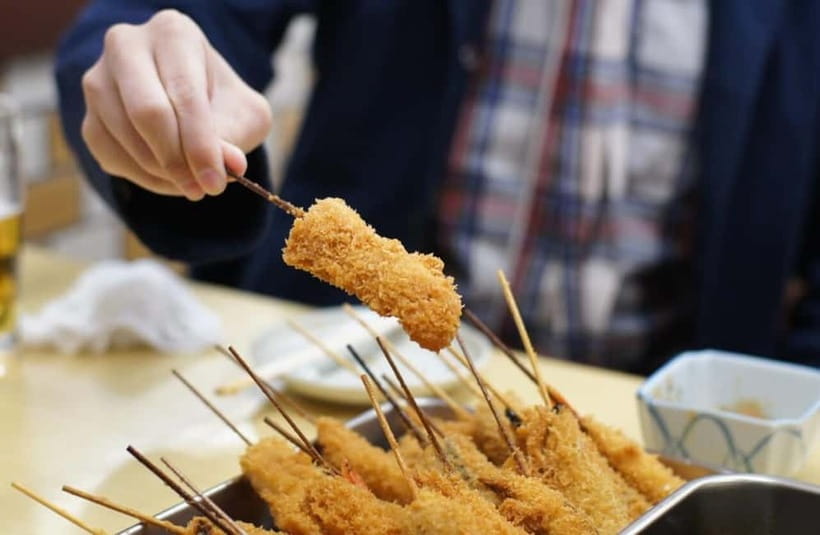
Kushikatsu consists of deep-fried skewers served with dipping sauce. The crisp coating gives the tour another change in texture, although the amount of fried food is worth considering. If you prefer lighter eating, the combination of takoyaki and kushikatsu may feel rich. If you came to Osaka specifically for street food, this is exactly the kind of stop you probably want.
The supplied details do not specify every skewer or portion size, so I would not book this expecting a fixed multi-course dinner. Think of it as a guided sampling of representative dishes. You may still want an additional meal or drink, particularly if you have a large appetite.
One practical point: food allergies and dietary restrictions are not addressed in the available information. If you have strict requirements, ask before booking rather than assuming substitutions are available.
More Market Tours in Osaka
- Kuromon Market Food Walking Tour in Osaka (6 stops, 6 tastes)
★ 5.0 · 550 reviews - Osaka: Kuromon Market Food Walking Tour (6 stops, 6 tastes)
★ 4.6 · 272 reviews - Kuromon Market Tour: All inclusive 6~8 Dishes & 3~4 samplings
★ 5.0 · 103 reviews - Osaka: Cooking Class & Sake Tasting with Local Market Visit
★ 4.8 · 31 reviews
The custard tart finish
The final food stop is Egg Tart, a dessert shop known for custard tarts with flaky pastry and a creamy filling. After the savory dishes, this gives the route a clean finish.
A custard tart is also a smart choice for a walking tour. It is easy to carry, not as heavy as another full dessert, and gives you a sweet contrast to the fried and savory foods earlier. The combination of delicate crust and rich filling is the attraction.
The tart is described as the final tasting, but drinks and extra food are not included unless specifically mentioned as part of the route. Bring money for anything beyond the listed tastings. At $84 per person, the price makes the most sense if you value the guide, the route design, and the chance to sample several signature foods without researching each stop yourself.
If you are only measuring the cost against the number of bites, the tour may seem expensive. If you are comparing it with the cost of finding Wanaka, Mitoya, Kushikatsu Yokozuna, and Egg Tart on your own, while also getting neighborhood guidance, the value becomes more reasonable.
Dotonbori after dark
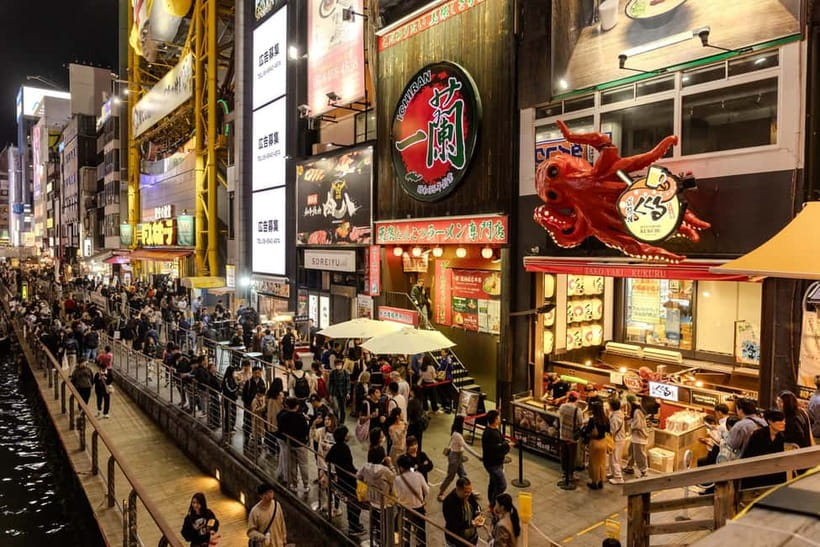
Dotonbori supplies the biggest visual change of the evening. The district is known for bright billboards, neon signs, entertainment venues, and streets filled with energy. After the quieter feel of Hozenji, this can seem almost theatrical.
This is the part of the walk that works best after sunset, when the signs glow and the district looks most like the Osaka shown in postcards. The route lets you walk through the area rather than simply stopping at one restaurant, so you get a broader sense of the streets.
You should also expect crowds and plenty of visual noise. Dotonbori is not a peaceful place for a slow meal. It is better for people-watching, photos, and seeing Osaka at full volume.
The walk ends at Ebisu Bridge, where you can photograph the Glico sign. The running figure is one of Osaka’s most recognizable city images, and the bridge is the natural place to take it. Your guide can help place this famous sign in the context of the surrounding district, while you get the souvenir photo most first-time visitors want.
Price, pace, and what the $84 covers
The cost is $84 per person. That includes the bilingual guide and tastings of emblematic Osaka foods, but not additional meals, drinks, entrance fees, or personal purchases.
I see the price as fair for someone who wants structure. You are paying for a planned sequence that covers several districts and food styles, plus help navigating the stops. The route also saves you from spending your first Osaka evening searching menus and deciding what each dish is.
The value is weaker if you already know Osaka well, speak Japanese comfortably, and would rather choose your own restaurants. In that case, you could explore Kuromon Market and Dotonbori independently and spend your money on larger portions or extra drinks.
The supplied details do not give a tour duration or group size, so you should not assume a particular length or an intimate small-group format. What is clear is that the activity starts and finishes outside Hotel Royal Classic Osaka. Arrive at least 10 minutes early for check-in, and look for the guide holding an Amigo Tours sign.
Wear comfortable shoes. Bring a camera, sunglasses, sunscreen, and clothing suited to the season. An umbrella or raincoat is sensible in wet weather. In the colder months, warm layers, spare socks, and an extra pair of shoes are recommended in case snow or rain leaves your feet wet.
Pets are not allowed, and the tour is not suitable for wheelchair users. Those are important limits, not minor footnotes, because the route passes through market and entertainment streets rather than a purpose-built accessible venue.
Guide quality and the one serious warning
The strongest guide comments focus on energy, food knowledge, and useful commentary along the route. Paula has been singled out for explaining local sights while walking and keeping the outing lively. Angeles has also been praised as an excellent guide.
That kind of guide can make a real difference. Food tours involve standing, moving between stops, eating on a schedule, and navigating busy streets. A friendly guide who explains what is happening can turn a confusing evening into an easy one.
There is also a serious reliability concern. One group reported waiting more than 30 minutes because the guide did not show up. That is not a small inconvenience, particularly when six people have arranged an evening around the tour.
The overall feedback is mostly positive, but this incident is worth acknowledging before you book. Confirm the meeting details carefully, arrive early, and keep the provider’s contact information available. The meeting point itself is clear, outside Hotel Royal Classic Osaka, but a clear meeting point cannot fully protect you from a no-show.
Who should book this Osaka food walk?
I would recommend it to first-time visitors who want a guided introduction to Osaka food and the central areas around Kuromon Market and Dotonbori. It is also a good fit if you enjoy tasting several specialties rather than sitting down for one long restaurant meal.
English and Spanish speakers will appreciate having the tour delivered in one of those languages. Families with older children may also like the variety of small tastings, colorful dango, bright signs, and photo stops, though the walking and crowds may not suit very young children.
You should think twice if you need wheelchair access, have strict dietary restrictions, or want a deep, Japan-centered account of regional cuisine. You should also consider going independently if you prefer to spend as much time as you like at each stall.
Cancellation is allowed up to 24 hours before the activity for a full refund, and you can reserve now and pay later. That gives you some flexibility, but it does not remove the need to check the meeting point and guide details before setting out.
Should you book it?
Book this tour if you want a well-planned first evening of Osaka food, with the city’s signature dishes and its most famous neon district in one route. The mix of Kuromon Market, Hozenji, kushikatsu, Dotonbori, and the Glico sign gives you a useful snapshot of the city.
Skip it if you are looking for a highly specialized Japanese culinary lesson, a guaranteed local guide, or a fully accessible route. For most first-time visitors who value convenience, clear language, and a broad tasting menu, the $84 cost is reasonable, provided you understand that it is a guided sampler rather than an all-you-can-eat dinner.
FAQ
Where does the Osaka food tour start?
The tour starts outside Hotel Royal Classic Osaka. Look for the guide holding an Amigo Tours sign.
Where does the activity end?
The activity ends back at the meeting point outside Hotel Royal Classic Osaka.
What languages are available?
The tour is offered in English and Spanish.
Which foods are included?
The listed tastings include takoyaki at Wanaka, three-colour dango at Mitoya, okonomiyaki and kushikatsu at Kushikatsu Yokozuna, and a custard tart at Egg Tart.
Is the Glico sign included in the route?
Yes. The route includes a visit to Ebisu Bridge, where you can take a photo with the famous Glico sign.
Is the tour suitable for wheelchair users?
No. The activity is listed as unsuitable for wheelchair users.
What should I bring?
Bring comfortable shoes and a camera. Seasonal advice also includes an umbrella or raincoat, suitable clothing, sunglasses, and sunscreen. In cold weather, bring warm clothing, spare socks, and extra shoes in case your feet get wet.
More Food & Drink in Osaka
- Hungry Osaka Street Food Tour: 15 Dishes & 3 Drinks
★ 4.9 · 694 reviews - Osaka: Guided Food Tour with 12 Dishes at 4 Local Eateries
★ 5.0 · 533 reviews - Absolute Osaka Food Tour
★ 5.0 · 309 reviews - Osaka: Traditional Mochi Pounding Experience with Tasting
★ 4.9 · 306 reviews
Just added around Osaka
- Exclusive Sushi Making Experience with a Master Chef – Osaka Area★ 5.0 · 25 reviews
- Private Home-Style Cooking Class in Osaka with Local Mom Yoshiko★ 5.0 · 46 reviews
- Hidden Osaka – Yukaku Red Light Tour & Culinary Adventure★ 4.8 · 96 reviews
- Osaka: Walking Tour and Top Highlights★ 4.8 · 104 reviews
- Osaka: Private Ceramic Painting Workshop★ 5.0 · 13 reviews
- Pickleball in Osaka, Kobe & Kyoto with Locals!★ 4.7 · 80 reviews
- Eat Like a Local in Osaka – Private Custom Street Food Tour★ 4.3 · 33 reviews
- Osaka:SUMO BEATS SHOWCASE: Taiko Drum and Wagyu burger!★ 4.2 · 37 reviews
Food Tours, compared.
Shinjuku Food Tour (13 Dishes at 4 Local Eateries)
Our verdict →
Kyoto Night Foodie Tour in Gion (9+ dishes + 6 Sake tastings)
Our verdict →
Osaka Local Foodie Walking Tour in Dotonbori and Shinsekai
Our verdict →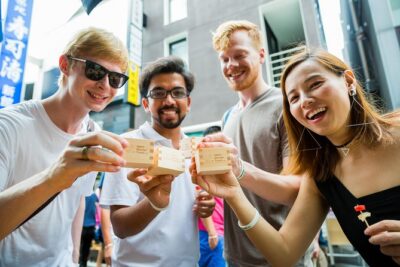
Food Tour in Ueno with 10+ Tastings of Japanese Classics
Our verdict →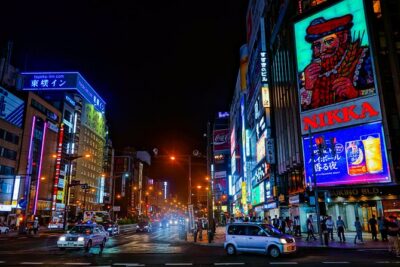
Browse the lists this tour appears in