
Reviewed · TEMPLES & SHRINES
Nara: Todai-ji y parque de Nara (Spanish Guide)
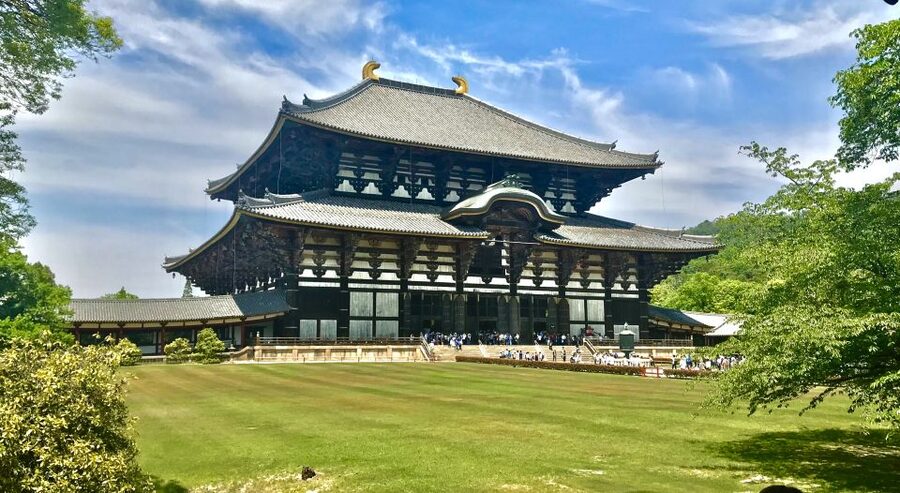
Todai-ji’s Great Buddha is the reason to come to Nara, but the full walk gives you much more than one famous statue. You move from a huge wooden temple to forest shrines, lantern-lined paths, a quiet pond, and Kofuku-ji’s five-story pagoda, with deer appearing along the way.
I especially like the Spanish-speaking guide, which makes the history easier to follow, and the sensible route that links Nara’s main sights without requiring you to plan several separate visits. Alex, Diego, and Federico are named guides associated with especially strong feedback, with Federico noted for making Japanese history engaging.
The main drawback is simple: this is a fully walking tour lasting five hours. Comfortable shoes are essential, and the route is not suitable for people with mobility impairments. Baby strollers are not allowed.
Key points at a glance
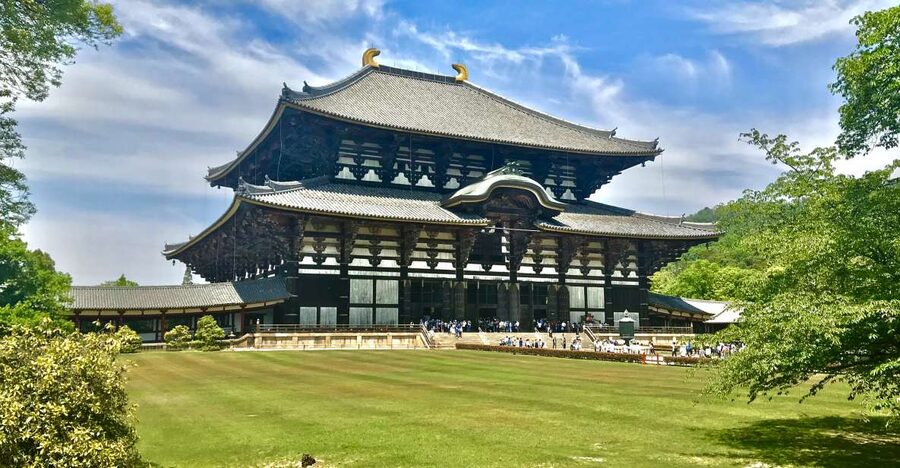
- The Great Buddha is the opening act: Todai-ji gives you the tour’s most powerful visual moment early in the day.
- Nigatsu-do adds a fine city view: The February Hall offers a different perspective on Nara and is especially appealing during cherry-blossom season.
- Kasuga Taisha feels remote despite its location: Stone lanterns and wooded paths create a quiet shrine setting.
- Deer are part of the whole route: You may see them around Nara Park, temple grounds, and paths between stops.
- Seven included stops make the price easier to justify: The admission ticket to Todai-ji is included, and a guide leads the entire route in Spanish.
- Plan for five hours on foot: The pace includes sightseeing, short breaks, photo stops, and walking between historic sites.
Why Todai-ji makes such a strong beginning
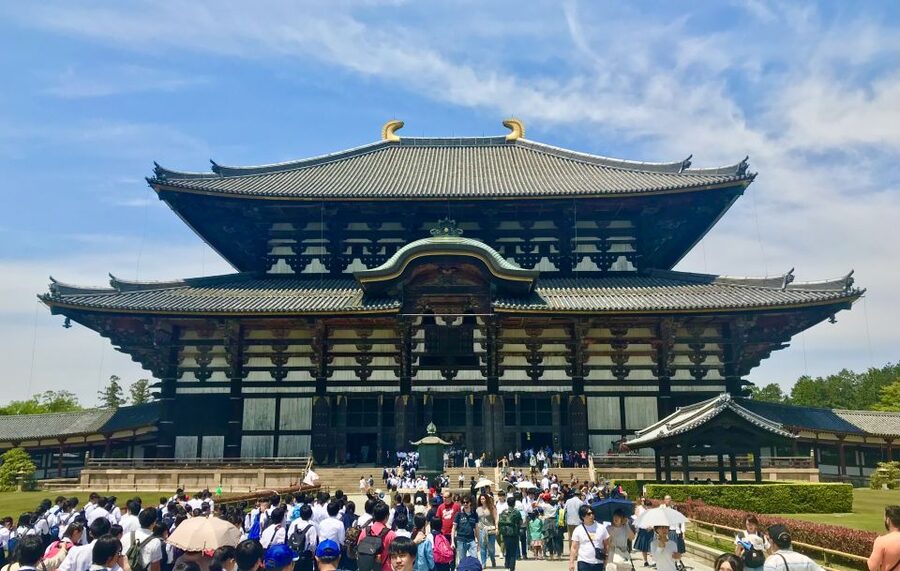
The tour starts at Kintetsu-Nara Station, exit 5, then heads toward Todai-ji. This is a useful meeting point because you begin close to the central sights instead of spending your first hour figuring out local transport.
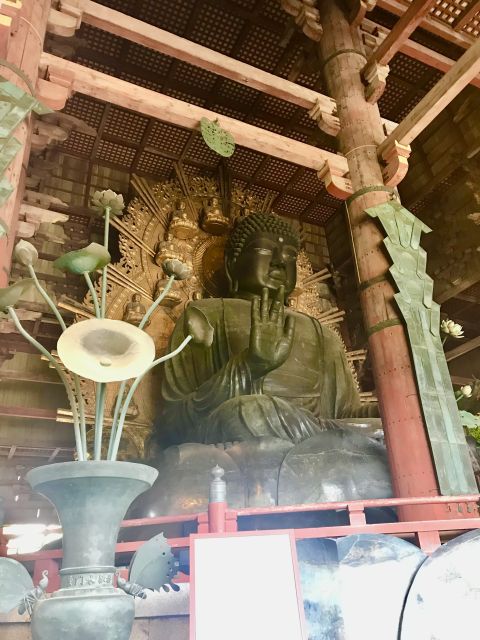
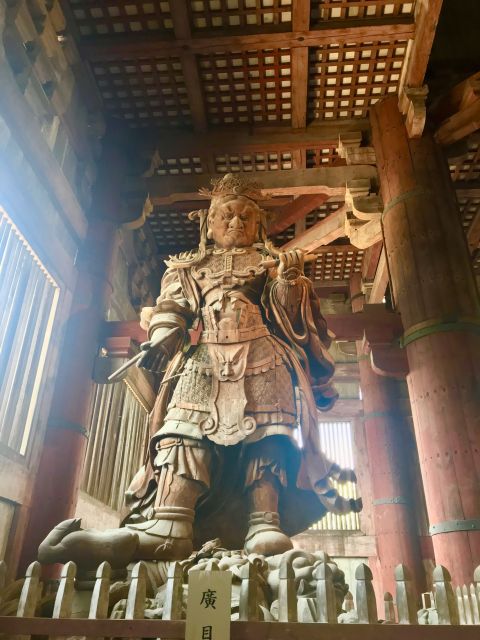
Todai-ji houses the Great Buddha, one of the largest religious statues in the world. The scale is the point. The statue is not a small object to inspect quickly. It fills the temple interior with a sense of size and ceremony, while the surrounding wooden architecture gives you another reminder of how ambitious this religious complex was.
Your guide leads the visit, explains what you are seeing, and allows time for photographs and a walk through the temple area. The listed visit lasts about one hour, which is enough to see the main building and take in the setting without turning the whole day into a single temple stop.
I like the order here. You see Nara’s most famous sight while your attention is fresh, then move into quieter places. If Todai-ji were saved for the end, the rest of the route might feel like an extended wait for the main event. Here, the tour gives you the big moment first and then shows you why Nara deserves more than a quick temple visit.
The temple area also introduces the deer. They are not confined to one enclosure. You might see them near the paths and open spaces around the major sights, which makes the connection between Nara’s religious sites and its famous animals feel natural.
More Temple & Shrine Tours in Nara
- Kyoto/Osaka: Nara, Fushimi Inari Taisha, Arashiyama Bus Tour
★ 4.7 · 1,275 reviews - Osaka/Kyoto: Arashiyama, Nara & Fushimi Inari Shrine w/Lunch
★ 4.4 · 754 reviews - Kyoto/Osaka: Kinkakuji, Bamboo Forest, and Nara Deer Park
★ 4.4 · 265 reviews
Nigatsu-do and the view over Nara
Next comes Todai-ji’s Nigatsu-do, also called the February Hall. The stop lasts about 30 minutes and includes a short break, guided sightseeing, walking, and views along the way.
Nigatsu-do is valuable because it changes your angle. Todai-ji is about scale and interior grandeur. Nigatsu-do gives you an outward-looking pause, with a view over Nara. In spring, cherry blossoms add another reason to linger, though the experience naturally depends on the season of your visit.
This is a good place to catch your breath. Five hours on foot can sound easy when you are reading the schedule, but temple approaches, paths, and stairs can add up. A planned break helps keep the rest of the afternoon enjoyable.
Do not expect the same monumental impact as the Great Buddha. Nigatsu-do is a smaller stop, and its appeal comes from the view, the setting, and the change of pace. I would treat it as a well-placed pause rather than a second Todai-ji.
Tamukeyama Hachimangu adds another layer
The route continues through Tamukeyama Hachimangu, with about 30 minutes for a guided visit, sightseeing, walking, and passing through areas where deer may appear.
This stop helps show that Nara’s religious identity is not limited to one famous Buddhist temple. The tour moves through different kinds of sacred places, and your Spanish-speaking guide can help connect them as you go. That context matters, especially if you do not already know much about Japanese religious traditions.
Tamukeyama Hachimangu is also part of the walking experience between the major highlights. You are not simply being driven from one ticketed attraction to another. The paths and transitions give you time to notice the trees, stone surfaces, temple structures, and animals that make Nara feel different from a standard city sightseeing route.
The schedule assigns 30 minutes here, so expect an introduction rather than a long independent exploration. If you prefer spending an hour at every shrine, this tour may feel brisk. If you want a guided overview of the main places in one day, the timing is more practical.
Kasuga Taisha’s lanterns and wooded paths
Kasuga Taisha is one of the most atmospheric stops. The shrine is known for its many stone lanterns and forest setting, and the tour allows around 30 minutes for guided sightseeing and walking.
This is where the route becomes quieter and more reflective. The lanterns line the approach and help create a strong visual identity. The wooded surroundings also make the shrine feel removed from the station and city, even though you are still following a compact Nara route.
I like Kasuga Taisha because it provides contrast. Todai-ji impresses through size. Kasuga Taisha works through repetition, shadow, stone, and the gradual feel of the approach. You get a better sense of how sacred spaces can be shaped by their surroundings, not only by a single building.
The half-hour schedule means you should stay with the group and listen for the guide’s explanations. You will have time to see the key parts and take photographs, but this is not the place for an unhurried, solo wander through every path. That is a fair trade if your priority is to cover several major sights with a Spanish-speaking guide.
Same trip, a completely different kind of day:
- World Heritage Kyoto & Nara Uji Authentic Matcha Experience
★ 5.0 · 1,573 reviews - Nara Half Day Trip Walking Tour (Private Option Available)
★ 5.0 · 937 reviews - Nara Early Morning Tour (Kyoto or Osaka Departure Available)
★ 5.0 · 676 reviews - Kyoto and Nara Day Trip from Kyoto
★ 4.5 · 445 reviews
Nara Park and the deer encounter
Nara Park is not just a box to tick between temples. It is the setting that ties the whole experience together. The route includes about 30 minutes of guided walking, passing through areas where you can view the deer.
The deer are regarded as divine messengers in Japanese culture, and that belief gives the animal encounters a meaning beyond simple photo opportunities. You may see them close to the paths, near historic buildings, or in open areas of the park. Their presence changes the feel of the walk, since you are sharing the route with animals that are part of Nara’s identity.
The tour description says you can observe and interact with the deer, but it does not promise a particular type of encounter. Keep that in mind. Animals are animals, and the number or closeness of deer can vary. The real value is having the park built into the route rather than treating it as an optional detour.
This is also one reason comfortable clothing matters. The walk moves through public park areas and temple grounds, so you should be ready for several hours outside. Bring shoes that remain comfortable over a long period, not footwear chosen only for photographs.
Ukimido offers the quietest pause
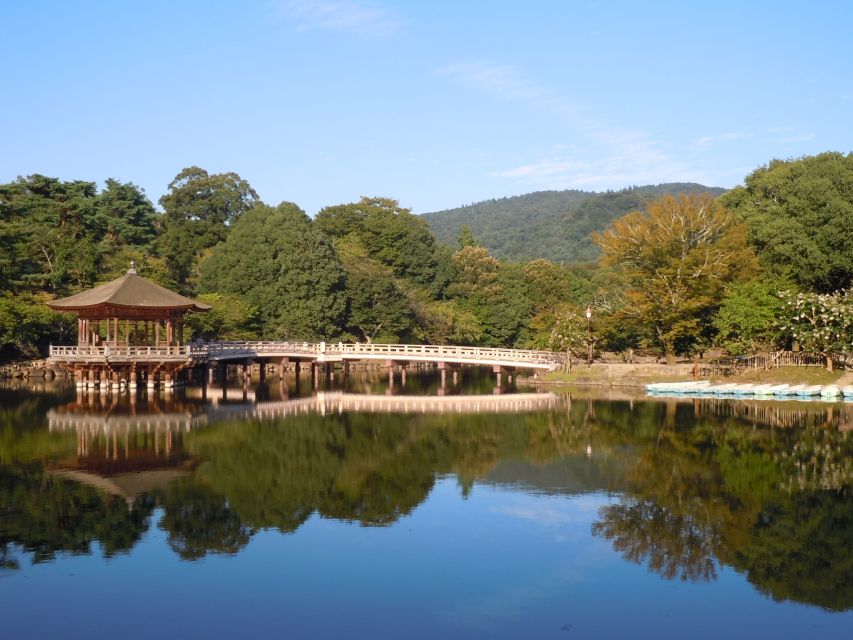
Ukimido is a small pavilion positioned in a pond in Nara Deer Park. The schedule allows about 30 minutes here, including a break, photographs, and scenic views.
After the large temple and forest shrine, Ukimido is a welcome change. The pavilion and water create a calmer setting, and the stop gives you room to slow down. It is less about a major interior monument and more about the view across the pond and the feeling of being briefly removed from the route.
This is a good photo stop, but it also serves a practical purpose. By this point, you have already walked through Todai-ji, Nigatsu-do, Tamukeyama Hachimangu, Kasuga Taisha, and parts of Nara Park. A quiet pause can make the final stop at Kofuku-ji feel manageable rather than rushed.
Do not book this tour expecting every stop to be a huge attraction. Ukimido is deliberately modest. Its value comes from variety. The tour includes grand architecture, religious sites, animals, wooded paths, city views, and water. That mixture gives the day a better rhythm than a series of similarly sized temples.
Kofuku-ji closes the loop
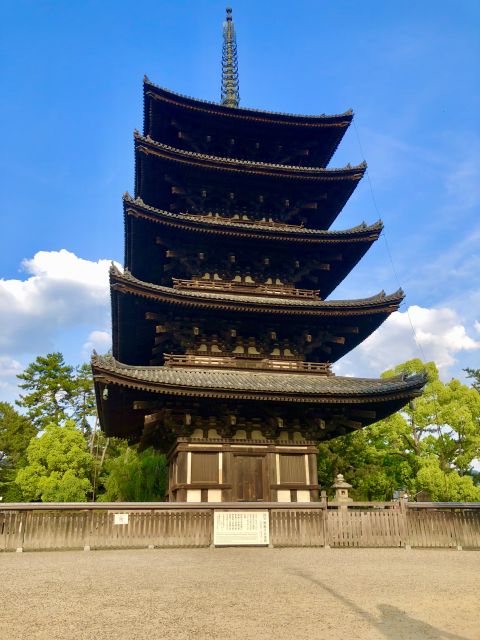
The final major stop is Kofuku-ji, followed by the return to Kintetsu-Nara Station. The visit lasts about 30 minutes and includes a guided look, walking, photographs, and time to see the historic structures.
The five-story pagoda is the visual focus here. It gives the end of the route a clear landmark and a different architectural silhouette from Todai-ji. After spending much of the day among trees and park paths, Kofuku-ji brings you back toward the more central part of Nara.
Ending here also makes practical sense. You finish close to the station where you began, rather than facing an unclear final transfer. The guide can wrap up the day’s story by placing Kofuku-ji alongside the other religious sites you have seen.
The final stop is not as large in time as Todai-ji, and some of the visit is a pass-by style introduction. If you want long, detailed time inside every building, this is not the right format. If you want a guided route through the main sights, the final half hour rounds out the day well.
What the Spanish guide adds
A Spanish-speaking live guide is the central advantage for anyone who wants more than visual sightseeing. Temples and shrines can look impressive even without explanation, but the details are easier to remember when someone puts them into context as you walk.
The available feedback gives special credit to guides named Alex, Diego, and Federico. Federico is noted for his interest in Japanese history, while Alex is praised for his work on a particularly complete day in Nara. You should not assume a particular guide will lead your departure unless confirmed at booking, but these names suggest the experience can vary in personality while keeping the same route.
The guide also helps with pacing. You do not need to decide how long to spend at each site or work out the best order. That is useful in Nara, where the main attractions are spread across a walkable but tiring area.
The tradeoff is independence. You will follow the group’s timing, with roughly 30 minutes at several stops. For a first visit, I think that is a sensible arrangement. For a return visit focused on one shrine or temple, a self-guided day may give you more freedom.
Is $85 a fair price?
At $85 per person, this is not the cheapest way to see Nara. The value depends on what you would otherwise arrange yourself.
You receive five hours with a Spanish-speaking guide, a route covering seven named sights, and admission to Todai-ji. The tour also handles the sequence between the station, temples, shrine, park, pond, and pagoda. If you would otherwise pay for separate guiding or spend time researching the route, the price becomes easier to defend.
The included Todai-ji ticket matters because it covers the day’s biggest paid highlight. The other value comes from interpretation and structure, not transport. The experience is conducted on foot, so you are not paying for a private vehicle or transfers.
I would see the price as reasonable for a visitor who wants a guided Nara overview in Spanish and has only one day. It is less attractive if you are comfortable reading signs, planning your own route, and spending as long as you like at each site.
There are also flexible booking terms: you can reserve and pay later, and cancellation is free up to 24 hours before the activity for a full refund. Those terms reduce some risk when your Japan schedule is still shifting.
Who should choose this walking route?
This experience suits you best if you:
- Want to see Nara’s main religious sites in one organized half-day
- Prefer Spanish explanations from a live guide
- Enjoy walking through parks, temple grounds, and wooded paths
- Want the Great Buddha, deer, lanterns, a pond pavilion, and a pagoda in one outing
- Have limited time and do not want to plan the route yourself
It is less suitable if you have mobility impairments or dislike sustained walking. The entire route is on foot, and baby strollers are not allowed. The schedule includes breaks, but it is still a five-hour outdoor activity.
I would also think carefully about your sightseeing style. The tour gives you breadth rather than long periods of private exploration. You see many important places, but several stops last about 30 minutes. That is a strength for first-time visitors and a limitation for photographers, temple specialists, or repeat visitors.
Should you book this Nara tour?
Book it if you want a well-shaped introduction to Nara with a Spanish-speaking guide, especially if Todai-ji is high on your list and you want the deer park, Kasuga Taisha, Ukimido, and Kofuku-ji included on the same day.
The strongest reasons are the variety of the route, the included Todai-ji admission, and the guides’ ability to make the history accessible in Spanish. Alex, Diego, and Federico are names associated with particularly positive experiences, though the guide assigned to your date may differ.
Skip it if you need a slow pace, extensive free time, or an accessible route. For everyone else who can handle five hours of walking, the $85 cost buys a practical overview of Nara’s essential sights without leaving you to connect the pieces yourself.
FAQ
Where does the tour meet?
The meeting point is Kintetsu-Nara Station, exit 5.
How long does the experience last?
The tour lasts five hours and returns to Kintetsu-Nara Station.
What language is the tour conducted in?
The live tour guide speaks Spanish.
Is the Todai-ji admission ticket included?
Yes. The Todai-ji entrance ticket is included.
Which main places are visited?
The route includes Todai-ji, Nigatsu-do, Tamukeyama Hachimangu, Kasuga Taisha, Nara Park, Ukimido, and Kofuku-ji.
Is the route done on foot?
Yes. The entire route is completed on foot and involves some physical effort.
What should I bring?
Bring comfortable shoes and comfortable clothing.
Can I cancel for a full refund?
Yes. You can cancel up to 24 hours in advance for a full refund.
Just added around Nara
- Private Kyoto Tour by Car with Optional Nara or Osaka Add-Ons★ 5.0 · 36 reviews
- Kyoto, Osaka, Nara Private Tour by Car English Driver Guide★ 4.0 · 63 reviews
- Nara Todaiji Kasuga Taisha Private Full Day Tour From Kyoto★ 5.0 · 13 reviews
- From Kyoto: Nara History Guided Half Day Bus Tour with lunch★ 5.0 · 23 reviews
- Nara 8hr Private Tour – Kyoto DEP. with Licensed Guide★ 5.0 · 115 reviews
- Arashiyama & Nara Highlights: One-Day Private Tour Adventure★ 5.0 · 16 reviews
- Kyoto Private Car Tour – Full Day with Local Guide & Nara Option★ 5.0 · 169 reviews
- Kyoto & Nara Private Tour from Osaka Kyoto Hotel Pick-up★ 4.5 · 32 reviews
Temples & Shrines, compared.

Tea Ceremony in a Traditional Tea House in Kiyomizu
Our verdict →

Meiji Shrine, Asakusa, Skytree Bus Tour and Cruise
Our verdict →
Fushimi Inari Hidden Hiking Tour (Private Option Available)
Our verdict →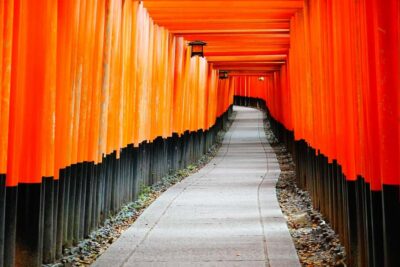
Osaka/Kyoto:Kinkakuji,Arashiyama,FushimiInariShrine,NaraPark
Our verdict →
Nikko: Kegon Falls, Lake Chuzenji & Toshogu Temple
Our verdict →
Kamakura & Enoshima Day Trip including Temple Tickets
Our verdict →Browse the lists this tour appears in