Reviewed · TEA CEREMONY EXPERIENCES
KYOTO Tea Ceremony with kimono near by Imamiya Jinjya Shrine
The best part of this Kyoto experience is that the kimono is not just a costume for a quick photograph. You are dressed in several layers, shown how the clothing works, and then seated for a tea ceremony led by a master with 30 years of study. The clothing and ceremony belong together, which gives the afternoon more purpose.
I like the careful help with hair, dressing, and photographs. I also like that you do more than watch: after seeing the tea master prepare matcha, you get to make a cup yourself and learn the manners behind each movement. The one drawback is that the dressing process can feel busy when several people arrive at once, so arrive early if you can.
Key points at a glance
- Three generations of tea-room tradition: The ceremony takes place in a tea room used by the same family for three generations, near Daitoku-ji.
- Nishijin kimono selection: Choose from traditional colors and patterns, then receive help with the layered dressing process.
- Hair styling and photos included: Staff arrange your hair and help create keepsake photographs before the ceremony.
- A 30-year tea master: Watch a formal preparation, taste matcha with a seasonal sweet, and learn the meaning of the gestures.
- Hands-on tea making: You have the chance to prepare tea for someone else, not simply sit and observe.
- Small-group setting: The activity allows a maximum of 12 people and lasts about 90 minutes.
Choosing a kimono in Kyoto’s Nishijin tradition
Your visit begins with the kimono selection. You choose a color and pattern from a collection associated with Nishijin, Kyoto’s well-known textile district. This is a simple choice, but it shapes the whole experience. The kimono patterns are not random decoration, and the guide explains some of their meaning before you settle into the outfit.
The staff then help you dress. Do not expect to slip into a single robe and tie a sash. Traditional kimono dressing involves several layers and careful adjustment, and the process helps you understand why the garment is worn with such precision. It also explains why doing this alone would be difficult.
This part is especially useful if you have never worn a kimono. You learn that the clothing changes the way you move. Sitting, walking, and keeping the sleeves arranged all require more care than you may expect. That practical lesson adds something a rental shop photo session usually lacks.
The experience is open to men and women, and the selection includes different styles and patterns. The exact choice depends on what is available at your session. If you already have a preferred color, decide before you arrive. The staff move efficiently, and having a general idea can make the selection easier.
Hair styling is included for women, according to the experience details. The staff set the hair before the kimono is fully arranged, helping the finished look feel complete rather than improvised. This is one reason the 90-minute schedule can feel full.
More Kimono Experiences in Kyoto
- Kimono Tea Ceremony at Kyoto Maikoya, NISHIKI
★ 5.0 · 911 reviews - Kyoto: Kimono Rental with Hairstyling and Accessories
★ 4.8 · 653 reviews - Kyoto: Kimono Tea Ceremony at Orizuruya Gion
★ 4.9 · 618 reviews
Why the dressing process matters
It is tempting to think of the kimono portion as a photo prop. Here, it works better than that because the dressing takes time and involves several people. You see the care required to create the proper shape, and you begin to appreciate the garment as clothing with rules, not just a colorful souvenir.
That said, this is also the least relaxed part of the visit. If a full group arrives at once, the room can become hectic while everyone chooses clothing, receives hair styling, and gets dressed. Arriving a little early is a sensible move. It gives the staff more room to work and gives you time to look at the kimono patterns without rushing.
Once dressed, you have a short photo session. Staff help with poses and take pictures, so you do not have to rely only on a phone held at arm’s length. The photography is a pleasant bonus, but I would treat it as a record of the ceremony rather than the main reason to book.
A tea room near Daitoku-ji
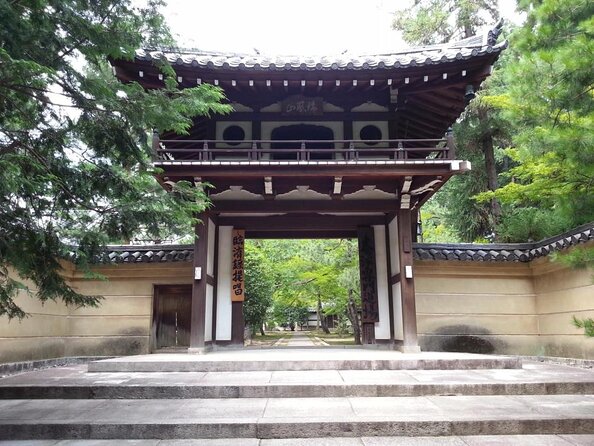
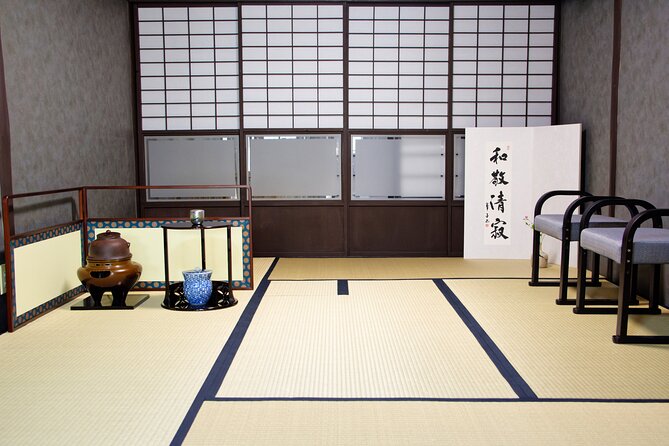
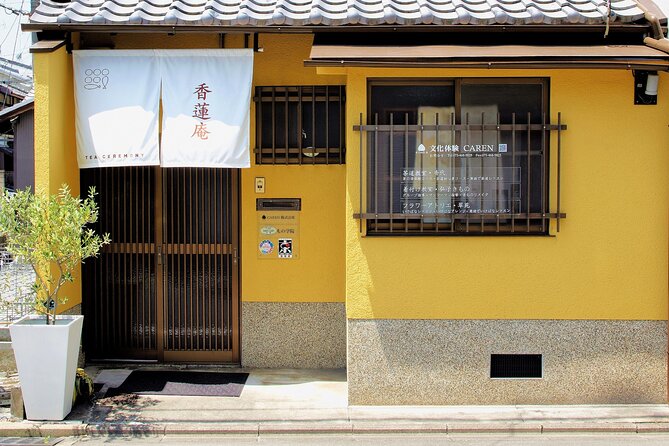
The tea room is near Daitoku-ji Temple and Imamiya Jinjya Shrine, in an area closely linked with Kyoto’s tea culture. The room has been used for three generations. It is described as somewhat old, which may be important to you: this is not a glossy modern studio designed only for quick tourist turnover.
The setting gives the ceremony a sense of place. You are in a neighborhood connected with temples and traditional arts, rather than an anonymous event room. The meeting point is Tea Ceremony Caren at 74-4 Murasakino Daitokujicho, Kita Ward, Kyoto, postal code 603-8231. The activity begins and ends there.
Private transportation is not included, so you need to make your own way to the meeting point. It is near public transportation, but the supplied details do not name a particular station or provide a pickup service. Allow enough time to find the address, especially if you are coming from another part of Kyoto.
Watching the tea master prepare matcha
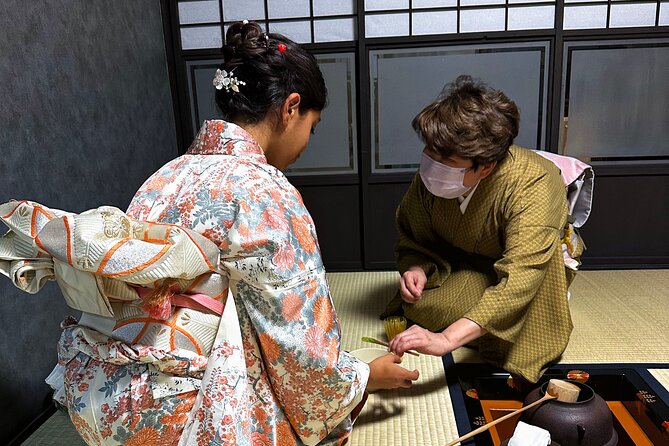
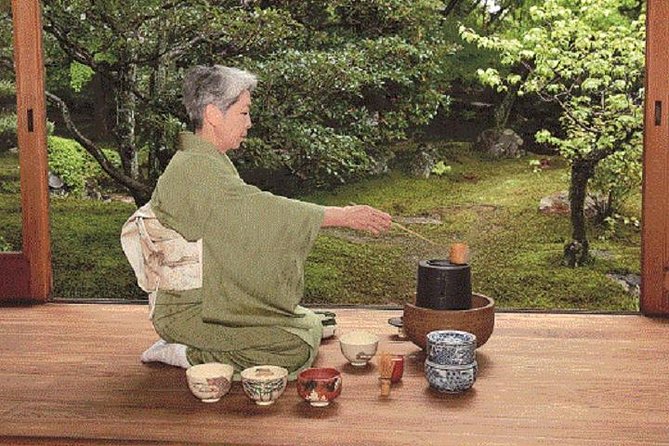
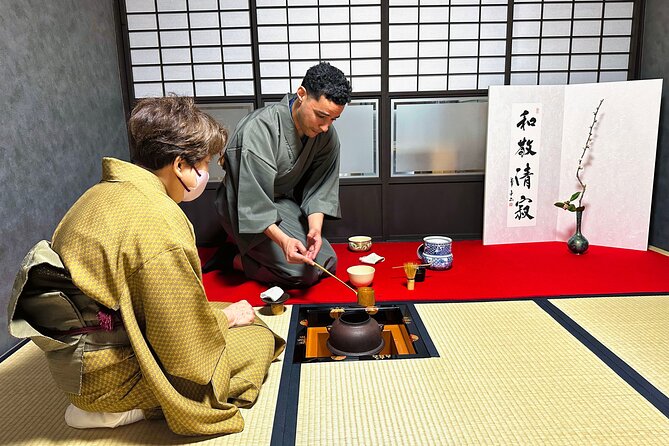
Once everyone is dressed, the group moves into the tea ceremony. A tea master with 30 years of study demonstrates the traditional preparation. You watch the arrangement of the utensils, the measured movements, and the way the tea is presented.
The guide explains the history and etiquette as the ceremony unfolds. This commentary matters because many small gestures can otherwise seem mysterious. You learn how to receive the tea, how to behave in the room, and why the sequence is performed with such care.
The atmosphere is quiet and focused. That can be a welcome change after a day of Kyoto sightseeing, especially if your schedule has been packed with temples, shops, and crowded streets. The ceremony asks you to slow down and pay attention to details that are easy to miss in a more casual tea tasting.
You receive matcha along with a seasonal sweet. The sweet is not just a snack. It balances the bitter taste of the tea and forms part of the traditional rhythm of the ceremony. The exact sweet is seasonal, so the item may differ from one visit to another.
The ceremony is formal, but it is not presented as a test. Explanations are provided, and the teaching is designed for people who may be seeing the custom for the first time. Interpreter Akira has helped explain the Japanese presentation and add context, including information about the tea ceremony fan. If Akira is leading your session, you can expect interpretation and assistance with photographs as part of the experience.
More Tea Ceremony Experiences in Kyoto
- Kyoto: Tea Ceremony in a Traditional Tea House in Kiyomizu
★ 4.9 · 3,519 reviews - Kyoto: Tea Ceremony Ju-An at Jotokuji Temple
★ 4.9 · 3,207 reviews - Kyoto: 45-Minute Tea Ceremony Lesson Experience
★ 4.3 · 2,378 reviews - Kyoto: Table-Style Tea Ceremony at a Kyo-Machiya
★ 4.9 · 1,211 reviews
Making your own cup of tea
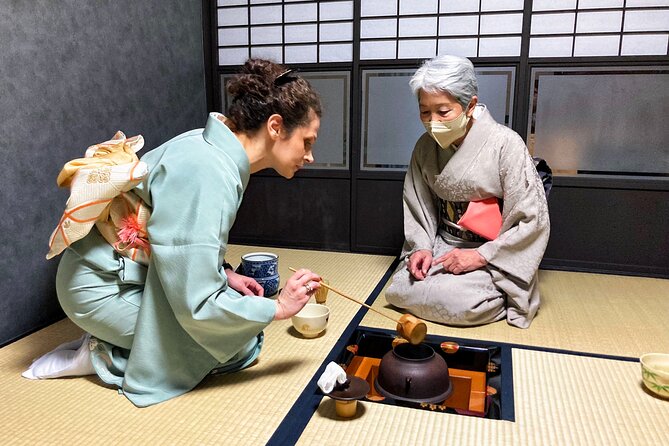
The most satisfying section comes after the demonstration. You have the opportunity to prepare tea yourself. This turns the session from a performance into a lesson.
Your first attempt will not look as polished as the tea master’s, and that is part of the fun. The point is not to copy 30 years of practice in a few minutes. It is to feel how much control and attention go into a simple bowl of matcha.
Making tea also gives you a better sense of the ceremony’s social side. You are not only learning how to whisk a drink. You are preparing something for another person and taking responsibility for the way it is offered. That small exchange helps explain why manners and intention matter so much in the tea room.
Solo visitors can take part as well. The format does not require you to arrive with a partner, and the small group gives people a chance to meet others during the session. Families can also fit comfortably into the experience, including older relatives and teenagers, provided everyone is willing to sit quietly and follow the instructions.
What the 90-minute schedule feels like
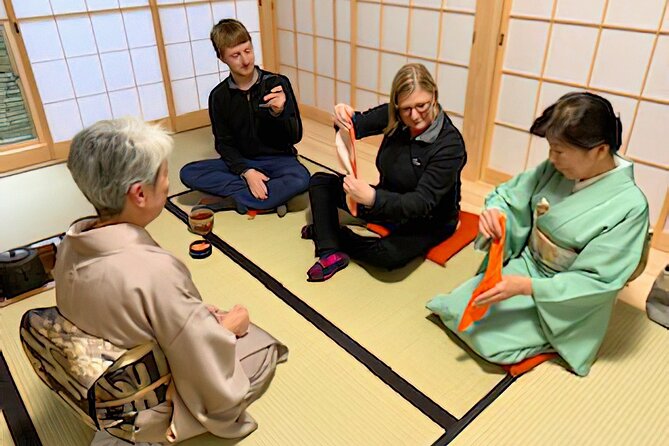
The experience lasts about an hour and a half, but that time includes several distinct stages:
- Selecting a kimono
- Having your hair arranged
- Being dressed in the layered garment
- Taking photographs
- Watching the tea master
- Learning about etiquette and history
- Drinking matcha with a seasonal sweet
- Preparing tea yourself
That is a lot to fit into 90 minutes. The staff appear to have a well-practiced system, which helps the visit keep moving. Still, do not expect a long, private meditation with the tea master. The maximum group size is 12, and the ceremony is shared with other participants.
The group format is part of the value. You can watch other people make their first attempt, share photographs, and learn together. The tradeoff is that the pace is not fully yours. If you want extensive one-to-one instruction or a long private ceremony, a private booking would be more suitable, but no private option is specified here.
Is $99.49 a fair price?
At $99.49 per person, this costs more than simply renting a kimono for an hour or buying a cup of matcha. The value comes from the combination of services: kimono selection, full dressing assistance, hair styling, photographs, instruction, a seasonal sweet, a formal demonstration, and hands-on tea preparation.
The tea master’s experience also matters. You are not paying only for a themed setting. You receive an explanation of the ceremony and a demonstration from someone who has studied the practice for three decades. The three-generation tea room adds another layer of continuity.
I would consider the price reasonable if you want one organized cultural activity that combines clothing and tea. It is less compelling if you mainly want a quick kimono photograph or if you have already taken a detailed tea ceremony course elsewhere.
Because the activity lasts about 90 minutes, it is easy to place into a full Kyoto day. You could pair it with sightseeing around Daitoku-ji or Imamiya Jinjya Shrine, but keep in mind that you will be wearing a formal garment during much of the session. Plan your nearby activities rather than crossing the city immediately afterward.
Who will enjoy this most?
This is a strong fit for first-time visitors who want a guided introduction to Japanese tea culture. You do not need prior knowledge of matcha, tea etiquette, or kimono dressing. The explanations are designed to make the rituals understandable.
Families can enjoy it, too. The format gives each person something to do, and teenagers have the added appeal of clothing and photographs. The experience has also worked well for multigenerational groups because the staff assist with the dressing rather than expecting everyone to manage alone.
Couples may like the photographs and the chance to prepare tea for each other. Solo visitors can take part without being left on the sidelines. If you are interested in traditional arts, this offers more substance than a simple dress-up session.
You should think twice if you dislike formal clothing, quiet observation, or sitting through a ceremony with prescribed manners. The experience is friendly, but it is still built around a traditional practice. It is not a loud entertainment show.
Practical details before you book
The meeting point is Tea Ceremony Caren, 74-4 Murasakino Daitokujicho, Kita Ward, Kyoto. The activity ends at the same location. Mobile tickets are available, and confirmation is provided when you book.
The group can include up to 12 people. That is small enough for instruction and photographs, but not private. The activity is near public transportation, and private transportation is not included.
Free cancellation is available if you cancel at least 24 hours before the local start time. Cancellations within 24 hours are not refunded, and late changes are not accepted. The experience may also be canceled if poor weather affects the activity or if the minimum number of participants is not reached. In either case, you are offered another date or experience, or a full refund.
Should you book this Kyoto tea ceremony?
Book it if you want a carefully organized introduction to two related parts of Kyoto culture: wearing a kimono and sharing tea. The strongest reason is the balance between watching and doing. You see a trained tea master work, then prepare your own tea while staff explain the manners and meaning behind it.
I especially recommend it for families, couples, solo visitors, and anyone who has never taken part in a formal tea ceremony. Arrive early, choose your kimono with some thought, and leave enough time to reach the meeting point without stress.
Skip it if your main goal is a private, highly traditional ceremony with no group element, or if you want only a short photo session. For most first-time visitors, though, the dressing assistance, hair styling, seasonal sweet, skilled demonstration, and hands-on practice make this a well-rounded use of 90 minutes in Kyoto.
FAQ
Where does the tea ceremony take place?
It takes place at Tea Ceremony Caren, 74-4 Murasakino Daitokujicho, Kita Ward, Kyoto, 603-8231, Japan. The tea room is near Daitoku-ji Temple and Imamiya Jinjya Shrine.
How long does the experience last?
The activity lasts approximately 1 hour and 30 minutes.
What is included in the price?
The experience includes use of a kimono, assistance putting it on, hair setting, the tea ceremony, tea, a seasonal sweet, and instruction from a professional instructor. The supplied details also describe photography assistance.
Do I get to choose my kimono?
Yes. You choose a kimono by color and pattern from a collection associated with Nishijin in Kyoto.
Is hair styling included?
Yes. The staff help set your hair before you put on the kimono. The supplied information specifically mentions hair styling for women.
Do I make tea myself?
Yes. After watching the tea master prepare tea and learning about etiquette, you have the chance to prepare your own cup.
How many people can join the activity?
The maximum group size is 12 people.
Is transportation provided?
No. Private transportation is not included. The meeting point is near public transportation, and the activity ends at the same location.
Can I cancel for a refund?
You can cancel at least 24 hours before the local start time for a full refund. Cancellations or changes made within 24 hours are not refunded or accepted. If the provider cancels because of poor weather or insufficient participants, you are offered another date or experience, or a full refund.
More Temple & Shrine Tours in Kyoto
- Kyoto: Fushimi Inari, Kinkakuji, Bamboo Grove 1 Day Bus Tour
★ 4.8 · 4,316 reviews - Fushimi Inari Hidden Hiking Tour (Private Option Available)
★ 5.0 · 1,750 reviews - Osaka/Kyoto:Kinkakuji,Arashiyama,FushimiInariShrine,NaraPark
★ 4.1 · 1,596 reviews - Arashiyama Bamboo, Temple, Monkeys, or Secret Sake Brewery
★ 4.8 · 886 reviews
Just added around Kyoto
- Sekka Cotton Furoshiki Class★ 5.0 · 19 reviews
- Kyoto Sword Experience – includes Museum Ticket/Ninja Experience★ 4.5 · 149 reviews
- Scenic Green Tea Fields of Hidden Kyoto & Local Tea Exp (Private)★ 5.0 · 32 reviews
- Secret Eastern Kyoto Biking Adventure★ 5.0 · 44 reviews
- Private Sake Tasting in Central Kyoto with Sake Sommelier★ 5.0 · 32 reviews
- Samurai School in Kyoto: Samurai for a Day★ 5.0 · 202 reviews
- Samurai Performance and Casual Experience: Kyoto Ticket★ 4.5 · 115 reviews
- SHIRAKAWA Japanese Culture Experiences with private English staff★ 5.0 · 16 reviews
Tea Ceremony Experiences, compared.

Tea Ceremony in a Traditional Tea House in Kiyomizu
Our verdict →


World Heritage Kyoto & Nara Uji Authentic Matcha Experience
Our verdict →

Arashiyama Bamboo Forest, Monkeys, Matcha & Temple Tour
Our verdict →