
Reviewed · RAMEN & NOODLE TOURS
Kyoto Ramen Noodle Making Class
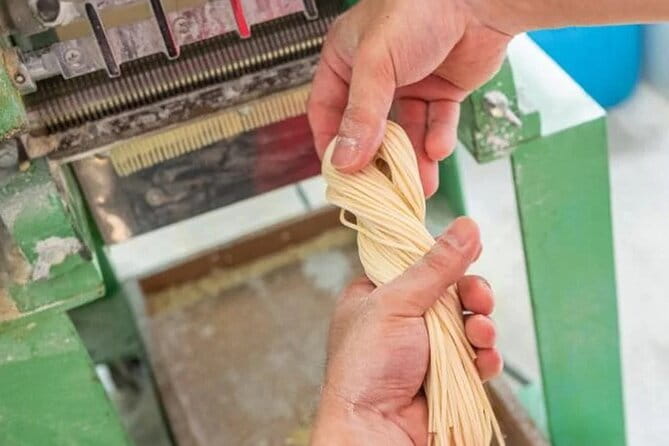
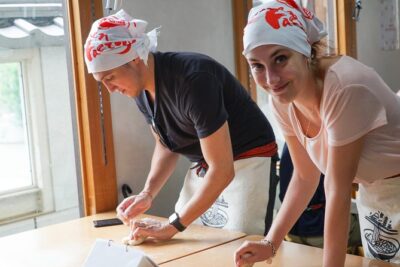
Making ramen by hand is the heart of this one-hour Kyoto workshop. You mix dough made from two types of wheat flour, knead it, then use a professional noodle machine to roll and cut it into chewy noodles. The chef handles the broth and final cooking, so you get to focus on the craft without turning the session into a full restaurant shift.
I like two things especially: the class is genuinely hands-on, and the group is capped at six people. Instructors including Kaz, Azu, and Amiru are praised for friendly English guidance, while the finished bowl comes with Kyotamba rice and local condiments. The main consideration is that this is a noodle-making class, not a complete ramen cooking class. The broth is prepared for you.
Key points at a glance
- Make noodles with a professional machine: You pour the water, knead the dough, roll it, and cut it into noodles.
- Finish with ramen prepared by the chef: Your workshop ends with a hot bowl, a soft drink, and time to eat.
- Small group of no more than six: The format gives you a better chance to follow the demonstrations and get help.
- Held at Musoshin Gion: The class takes place at the restaurant in central Kyoto, not at Musoshin Ramen Academy.
- Vegetarian and vegan tasting choices are available: Tell the provider your dietary needs in advance.
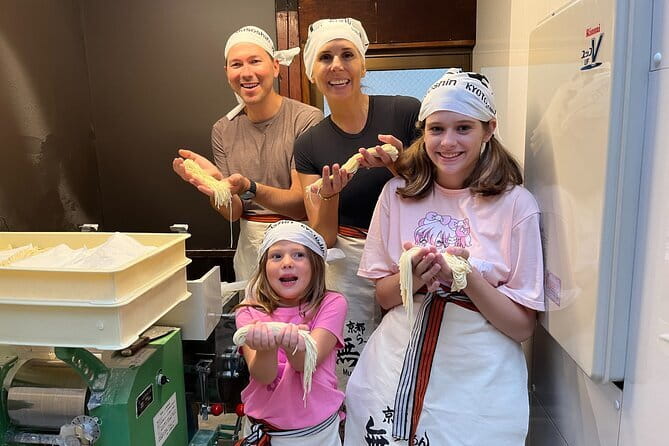
- A practical souvenir is included: You receive the bandana used during the workshop.
Turning flour and water into ramen in Gion
The class begins at Musoshin Gion, at 558-2 Komatsuchō in Kyoto’s Higashiyama Ward. This places the activity in the Gion area, a useful setting if you are already exploring central Kyoto and want to add a short food experience to your day.
The instructor introduces the basic process, then leads you through the dough from the first pour of water. You work with two kinds of wheat flour, which gives the exercise more substance than simply pressing a button on a machine. You knead the dough, work it through the noodle maker, and watch it change from a rough mixture into smooth, cut noodles.
I like this order because you can see the physical work behind a bowl of ramen. The machine helps with the rolling and cutting, but you still take part in the steps that affect texture. That makes the class a good choice if you want something more active than a tasting but less demanding than a long cooking course.
The experience is guided in English. The instructors named in the feedback include Kaz, Azu, and Amiru. Their role is important because noodle dough is easier to understand when someone can show you the pressure, timing, and sequence in person. You are not left to guess what the machine is doing.
The small group limit also matters. With no more than six people, you should have a reasonable chance to watch the demonstration clearly and ask for help while handling the dough. This is a better setup for a practical activity than a large class where you only see the instructor from the back.
More Ramen Tours in Kyoto
- Ramen Cooking Class at Ramen Factory in Kyoto
★ 5.0 · 1,937 reviews - Kyoto: Ramen Cooking Class at a Ramen Factory with Souvenir
★ 4.9 · 532 reviews - Kyoto: Ramen, Gyoza, and Onigiri Cooking Class
★ 5.0 · 445 reviews
What the noodle machine adds
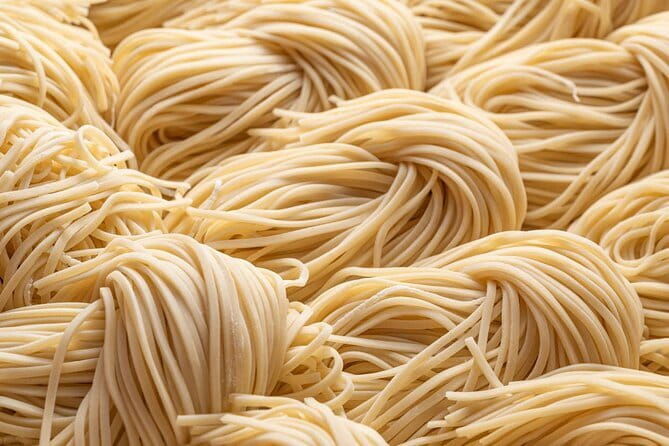
The professional noodle-making machine is the most distinctive part of the session. You are not simply mixing ingredients in a bowl and eating noodles someone else made. You help roll and cut the dough into the shape used for ramen.
The machine also gives the class a behind-the-scenes feel. Ramen restaurants need consistent noodles, and the equipment shows how flour and water become the springy strands you find in a finished bowl. You get a short lesson in technique without needing to buy or operate a full kitchen setup at home.
You should keep one point in mind: the noodles are made from wheat flour. Anyone avoiding wheat or gluten should not treat this as a suitable option. The activity does not list a gluten-free alternative.
The class is also focused on noodles rather than toppings, soup preparation, or full bowl assembly. That distinction is useful when choosing among food activities in Kyoto. If you want to make every part of ramen yourself, this may feel limited. If you want to understand the noodle itself and then sit down to a professionally prepared bowl, the division works well.
The final bowl at Musoshin Gion
After the dough work, the restaurant’s chef prepares your ramen. The broth is made from a blend of vegetables, and the Kyoto shop uses high-quality Kyotamba rice and condiments from local producers.
That final meal gives the workshop a strong finish. You do not leave carrying raw noodles or a small sample. You sit down with a bowl prepared by the restaurant team, along with one soft drink. The food turns the lesson into a complete short outing rather than a craft demonstration alone.
The chef-prepared broth is also why this should not be described as a full cooking class. You make the noodles, but the restaurant handles the broth and final preparation. I see that as a sensible choice for a one-hour activity. Making a proper soup base can take far longer, and adding that work would either make the class rushed or turn it into a much longer appointment.
The combination of handmade noodles and professional cooking lets you compare your part with the restaurant’s part. You get the satisfaction of working with the dough, then the comfort of a bowl made by someone who prepares ramen as a profession.
Local ingredients and dietary choices
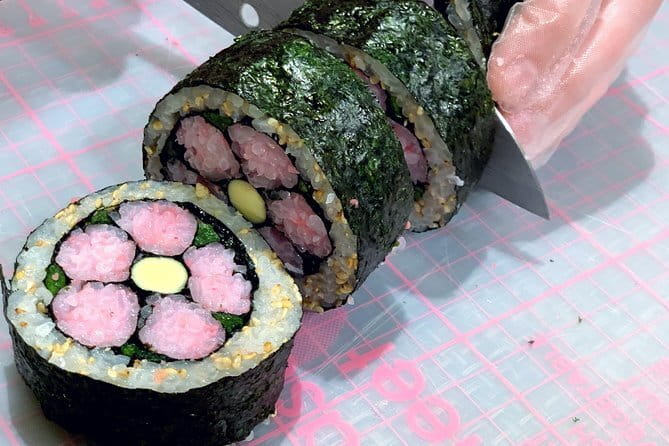
The use of Kyotamba rice and local condiments gives the tasting a Kyoto connection. Rice may not be the star of a noodle workshop, but the regional ingredient helps the meal feel tied to the area rather than like a generic cooking activity that could happen anywhere.
Vegetarian, vegan, and pescatarian tasting options are available. A no-meat and no-fish option is also listed. You need to tell the provider about your dietary restrictions in advance, since the chef needs to prepare the tasting appropriately.
The noodles still contain wheat flour, so dietary suitability has limits. The available options address meat, fish, and animal-product concerns for the tasting, but they do not remove wheat from the noodles.
If you are booking for a mixed group, this flexibility is helpful. One person can choose a vegan or vegetarian bowl while others eat the standard preparation. Just make the request before the activity rather than waiting until you arrive.
Same trip, a completely different kind of day:
- PERFECT KYOTO 1-Day Bus Tour
★ 5.0 · 13,518 reviews - Kyoto: Fushimi Inari, Kinkakuji, Bamboo Grove 1 Day Bus Tour
★ 4.8 · 4,316 reviews - Kyoto: Tea Ceremony in a Traditional Tea House in Kiyomizu
★ 4.9 · 3,519 reviews - Kyoto Geisha Walking Tour: Gion District & Hidden Gems
★ 4.7 · 3,273 reviews
Why the one-hour timing works
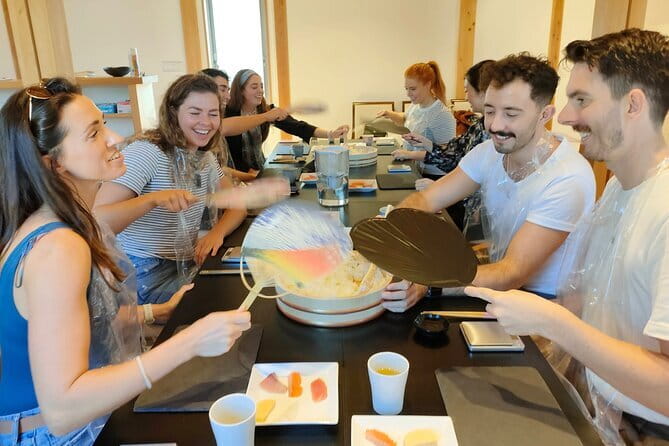
One hour is short, but that is part of the appeal. You can fit the workshop between sightseeing stops, use it as a midday break, or book it when you want a food activity without giving up half a day in Kyoto.
The compact schedule also keeps the class focused. You learn the noodle process, operate the machine with guidance, and eat the result. There is little room for the session to wander into a long lecture, which suits you if you prefer doing over listening.
The trade-off is that you should not expect a long lesson on ramen culture or a detailed study of broth chemistry. The supplied details point to a practical workshop with a meal, not a scholarly food seminar.
I would allow extra time around the one-hour duration if you have a tightly timed sightseeing plan. The activity itself lasts about an hour, but getting to the meeting point and moving on afterward will take additional time. The location is near public transportation, which makes it easier to fit into a Kyoto day, but you still need to plan your route.
The Gion location and meeting point
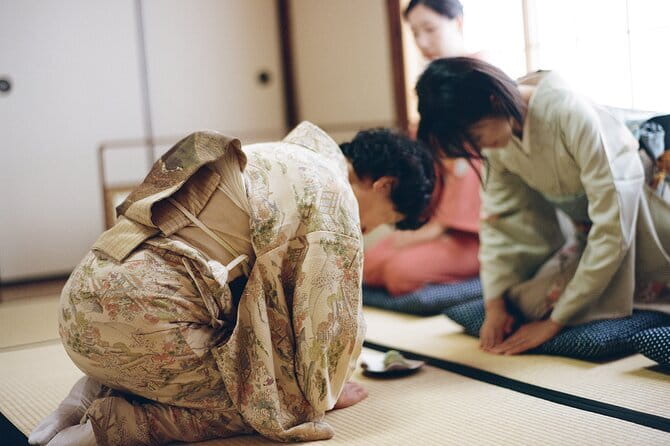
The meeting point is Musoshin Gion at 558-2 Komatsuchō, Higashiyama Ward, Kyoto, postal code 605-0811. The activity ends back at that same point, so there is no separate drop-off to arrange.
Pay close attention to the venue name. The class takes place at Musoshin Gion in central Kyoto, not at Musoshin Ramen Academy. That detail matters because going to the wrong Musoshin location could cost you the short one-hour window.
The location is near public transportation, which makes the class practical for a day based around central Kyoto. I would still confirm the address on your mobile ticket before setting out, especially if you are navigating among several Gion sights.
The restaurant setting is another advantage. You are not making noodles in an anonymous teaching room, then walking somewhere else to eat. The lesson and meal happen at the same place, with the restaurant chef preparing the bowl.
What the price includes at $48.27
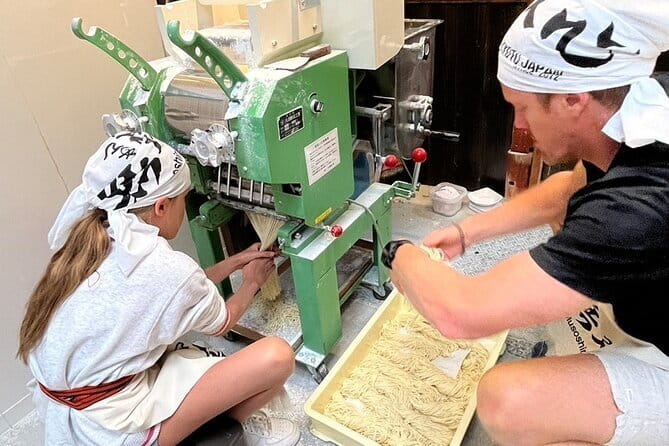
At $48.27 per person, the cost is more than a simple ramen meal. You are paying for an English-speaking instructor, ingredients, equipment, an apron, the noodle-making session, a bowl of ramen, a soft drink, and the workshop bandana to take home.
The value depends on what you want from a food experience. If you only want to eat ramen, a restaurant meal will likely cost less. If you want an activity that gives you something to do, teaches a useful process, and ends with a meal, the price is easier to justify.
The small group adds value. A maximum of six means you are paying for access to an instructor rather than being one face in a large crowd. The inclusion of the apron also keeps you from worrying about splashes or flour on your clothes.
The bandana is a modest but fitting souvenir. It is the actual item used during the workshop, so it has a stronger connection to the activity than a generic branded object. It will not transform the economics of the booking, but it is a nice extra.
The bowl at the end is the key value point. You are not paying for instruction and then buying lunch separately. The meal and soft drink are included, which makes the total cost easier to compare with other short Kyoto activities.
Who will enjoy this class most
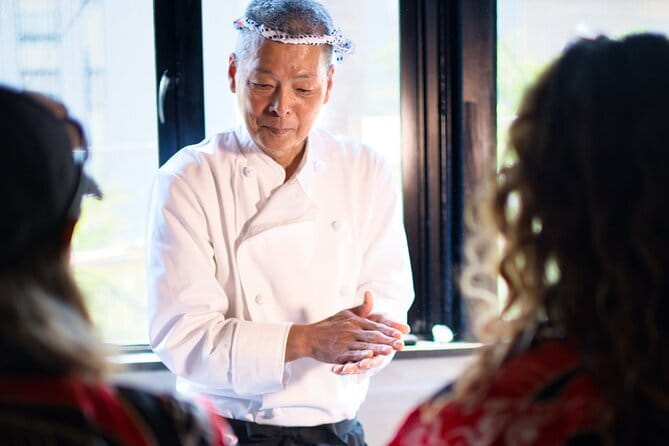
I would recommend this to families, couples, and small groups of friends who want a food activity with a clear result. The hands-on format gives children and adults something to do, although the supplied information does not specify a minimum age, so check before booking for young children.
It also suits first-time ramen makers who want guidance rather than a recipe sheet. The instructor demonstrates each stage, and the machine handles the most technical rolling and cutting work.
You will probably enjoy it if you like seeing how familiar foods are made. The class gets you closer to the production process without asking you to spend hours preparing a broth.
Vegetarians, vegans, and pescatarians can also consider it, provided they share their restrictions in advance. The wheat flour remains the main dietary limitation.
I would hesitate to recommend it if your top priority is a full Japanese cooking course. You will not be preparing the broth from scratch, and the focus is firmly on the noodles. It may also disappoint anyone who wants a long, slow meal or a broad lesson covering several Kyoto dishes.
Small details that make the experience easier
Your mobile ticket is accepted for the activity, and booking confirmation is sent within 48 hours, subject to availability. The class has had more than five bookings in the last month, so I would not assume every preferred time will remain open, especially if your Kyoto dates are fixed.
Free cancellation is available if you cancel at least 24 hours before the local start time. Changes or cancellations made inside that window are not accepted for a refund.
Wear something that can handle a little flour and kitchen work, even though an apron is provided. The bandana is also supplied and becomes your souvenir afterward.
Arrive at the exact Musoshin Gion address rather than searching generally for a ramen academy. The separate venue warning is one of the most useful practical details here.
My verdict: book it for noodles, not a full cooking course
I would book the Kyoto Ramen Noodle Making Class if you want a short, social activity that combines hands-on work with a proper meal. The small group, English instruction, professional noodle machine, and chef-prepared bowl give the $48.27 price a fair balance.
The strongest reason to choose it is the clear division of labor: you make the noodles, and the chef turns them into ramen. That keeps the class manageable while still giving you a real role in the meal.
Book it with realistic expectations. This is not a full ramen cooking course, and the wheat noodles rule it out for anyone avoiding gluten. For everyone else, especially families and food-minded visitors in Gion, it is a tidy one-hour introduction to one of Japan’s most satisfying dishes.
FAQ
Where does the ramen noodle-making class take place?
It takes place at Musoshin Gion, located at 558-2 Komatsuchō, Higashiyama Ward, Kyoto, 605-0811, Japan.
How long does the activity last?
The activity lasts approximately one hour.
What will I make during the class?
You will make ramen noodles from scratch using dough made with two types of wheat flour. You pour the water, knead the dough, and roll and cut it with a professional noodle-making machine.
Is the broth made during the workshop?
No. The broth is prepared by Musoshin’s ramen chef. The workshop focuses on making the noodles.
Is this a complete ramen cooking class?
No. It is a hands-on noodle-making experience. The chef prepares the broth and the final bowl of ramen.
Is the instruction available in English?
Yes. An English-speaking noodle-making instructor leads the activity.
Who are the instructors?
The instructors named in the supplied information include Kaz, Azu, and Amiru.
Are vegetarian and vegan options available?
Yes. Vegetarian, vegan, pescatarian, and no-meat or no-fish tasting options are available. You should provide your dietary requirements in advance.
Does the class use wheat flour?
Yes. The noodles are made from wheat flour.
What is included in the price?
The price includes the English-speaking instructor, noodle-making ingredients and tools, an apron, one bowl of ramen, one soft drink, and the workshop bandana as a souvenir.
How many people can join the class?
The activity has a maximum of six participants.
Does the activity end at a different location?
No. The activity ends back at the Musoshin Gion meeting point.
Is transportation nearby?
Yes. The venue is near public transportation.
What is the cancellation policy?
You can cancel for a full refund up to 24 hours before the experience start time. Cancellations or changes made less than 24 hours before the start time are not accepted for a refund.
Just added around Kyoto
- Sekka Cotton Furoshiki Class★ 5.0 · 19 reviews
- Kyoto Sword Experience – includes Museum Ticket/Ninja Experience★ 4.5 · 149 reviews
- Scenic Green Tea Fields of Hidden Kyoto & Local Tea Exp (Private)★ 5.0 · 32 reviews
- Secret Eastern Kyoto Biking Adventure★ 5.0 · 44 reviews
- Private Sake Tasting in Central Kyoto with Sake Sommelier★ 5.0 · 32 reviews
- Samurai School in Kyoto: Samurai for a Day★ 5.0 · 202 reviews
- Samurai Performance and Casual Experience: Kyoto Ticket★ 4.5 · 115 reviews
- SHIRAKAWA Japanese Culture Experiences with private English staff★ 5.0 · 16 reviews
Ramen & Noodle Tours, compared.
Eat and Drink Like a Local: Tokyo Ueno Food Tour-Taverns&Ramen
Our verdict →
Five Must-See Highlights Walking Tour & Ramen Lunch
Our verdict →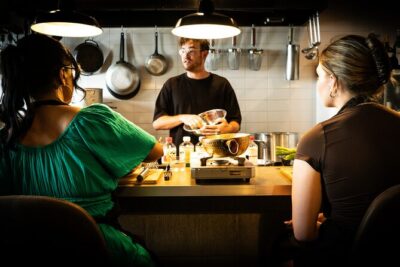
Professional Ramen & Gyoza with Ramen Chef in a restaurant!
Our verdict →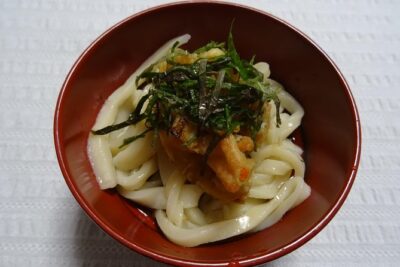
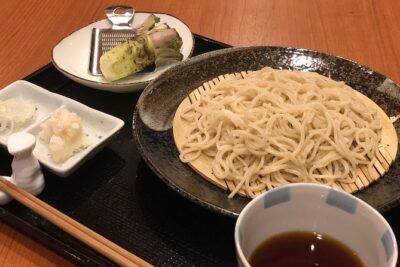
Popular in SapporoExperience authentic hand-made soba at a real soba shop!
Our verdict →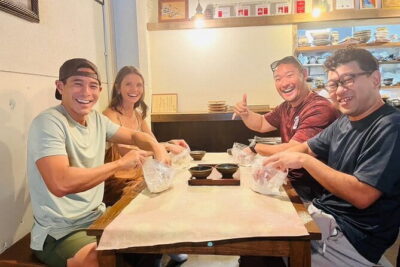
Browse the lists this tour appears in