
Reviewed · KIMONO & YUKATA EXPERIENCES
Kyoto: Traditional Kimono Fabric Handicrafts Workshop
Kyoto is full of grand temples and polished sightseeing stops, but this small Temari workshop gives you something different: a quiet seat, a tray of beautiful kimono fabrics, and time to make a souvenir with your own hands. Local artisan Mae, also called Mei by some visitors, guides you through the process in clear English or Japanese.
I like two things right away. First, choosing the fabric is part of the fun, with old kimono cloth in many colors and patterns. Second, the finished Temari carries more meaning than a shop-bought trinket, since you made it yourself. The one drawback is that the activity takes two hours, so it requires a firm break from temple-hopping.
Key points to know
- Pick from traditional kimono fabric: Choose colorful cloth pieces, including recycled kimono material, for a one-of-a-kind Temari.
- Beginner-friendly craft: No previous skill is needed, and the activity works well for children and adults.
- Learn from local artisan Mae: She explains each stage patiently in English or Japanese and helps you when needed.
- Enjoy a Kyoto-style pause: Your booking includes a drink and one traditional Japanese confectionery.
- Visit a small boutique setting: The workshop takes place in a renovated traditional Japanese antique shop with handmade bags and crafts for sale.
- Pair it with nearby sights: The area has temples, shrines, cafés, and access to the Philosopher’s Path.
Making a Temari in a Kyoto antique boutique
A Temari is a traditional Japanese decorative ball used as an interior ornament and for celebrations. This workshop presents it in a simple, hands-on way rather than as a formal museum lesson. You sit in a small group, choose fabric, follow the instructions, and leave with a finished object that fits easily into your luggage.
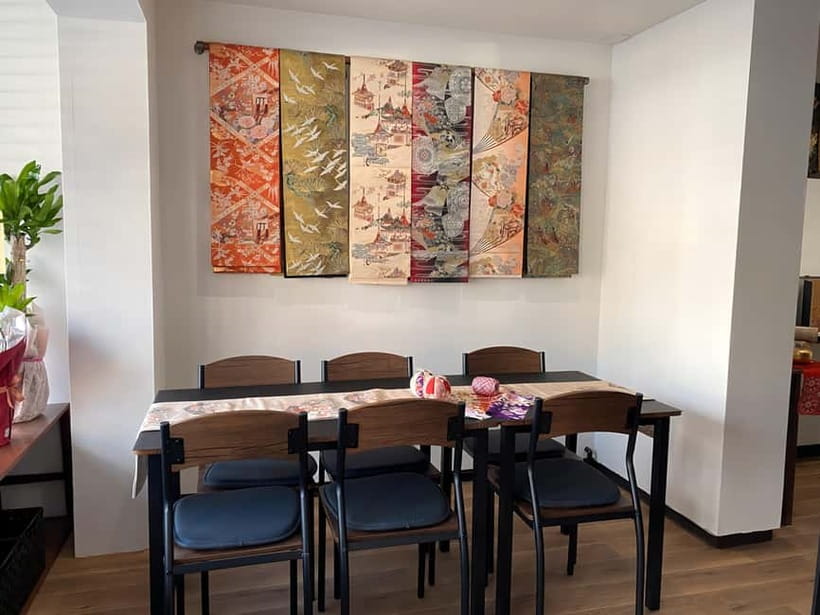
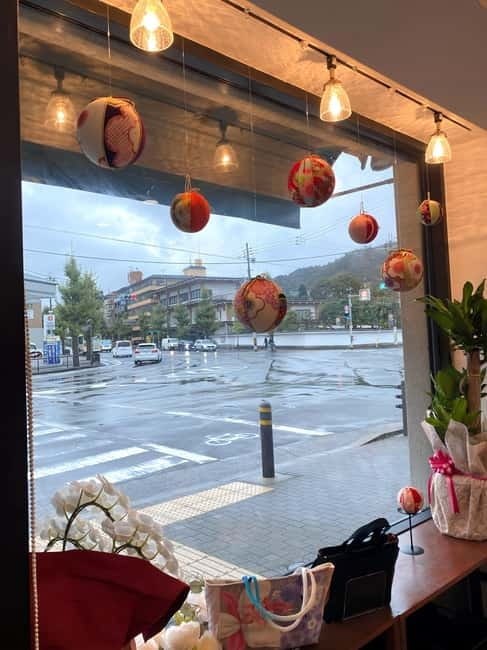
The setting matters. You are not working in a large commercial studio. The class takes place inside a newly renovated traditional Japanese antique boutique, where handmade bags and other crafts made from old kimono fabric are also sold. That gives you a useful look at how beautiful textiles can be reused instead of left in storage.
The group is limited to four people. That is a good size for this kind of craft. You get personal help without losing the calm feeling of working at your own pace. If you are the only participant at your time, Mae may have more room to show you another fabric craft, such as making flowers.
More Kimono Experiences in Kyoto
- Kimono Tea Ceremony at Kyoto Maikoya, NISHIKI
★ 5.0 · 911 reviews - Kyoto: Kimono Rental with Hairstyling and Accessories
★ 4.8 · 653 reviews - Kyoto: Kimono Tea Ceremony at Orizuruya Gion
★ 4.9 · 618 reviews
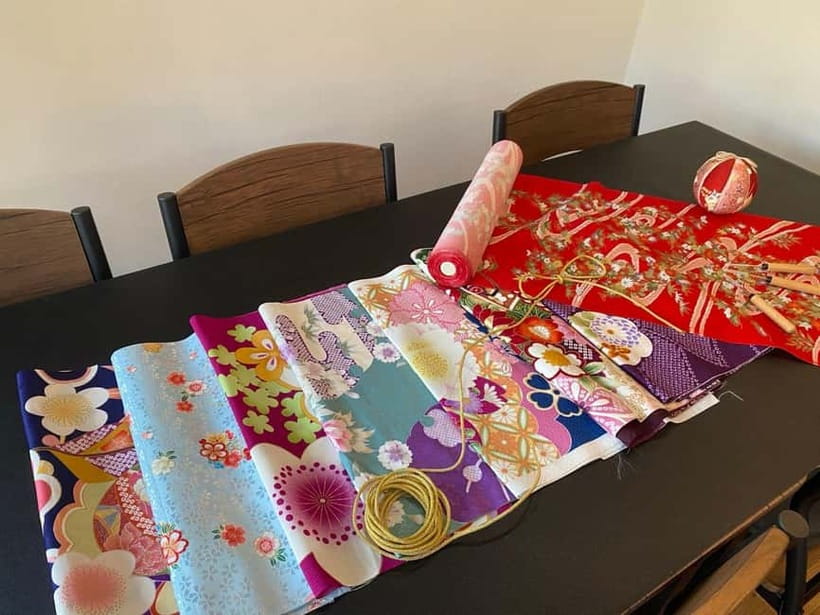
Choosing five kimono fabrics
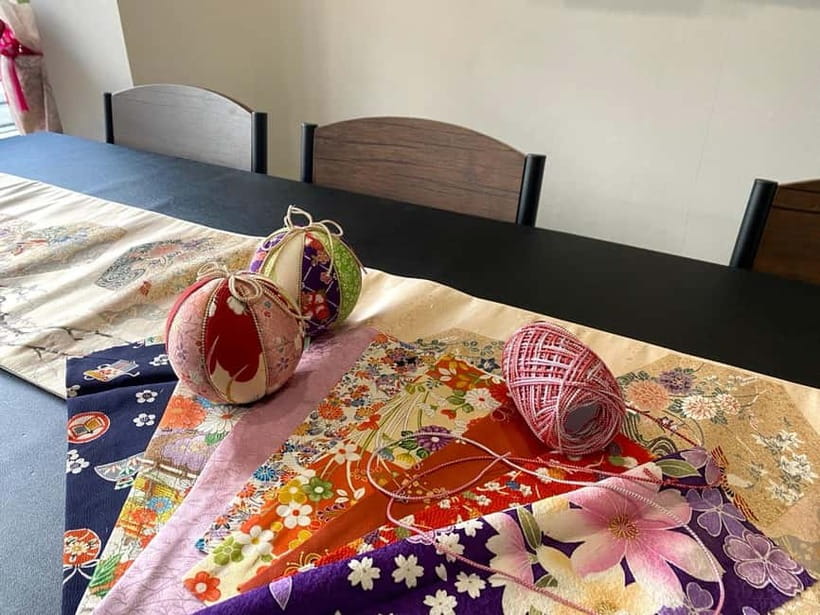
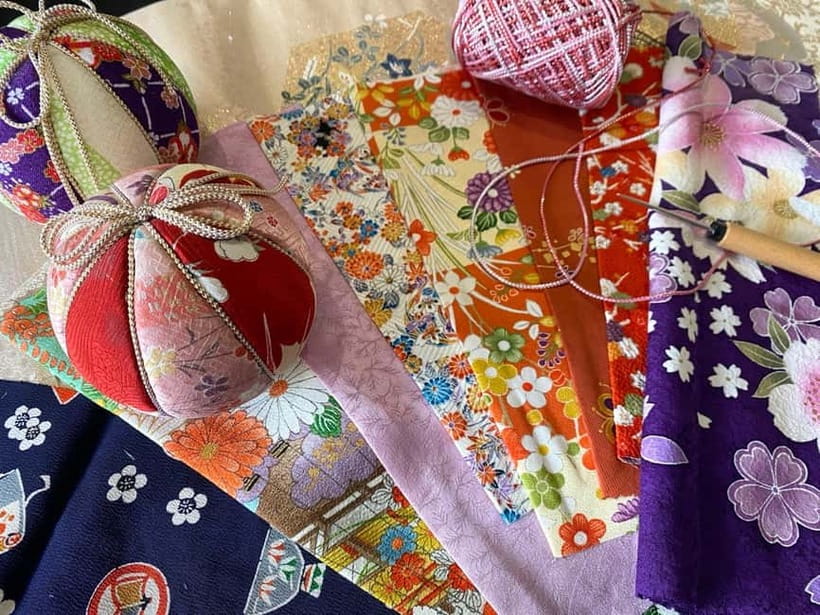
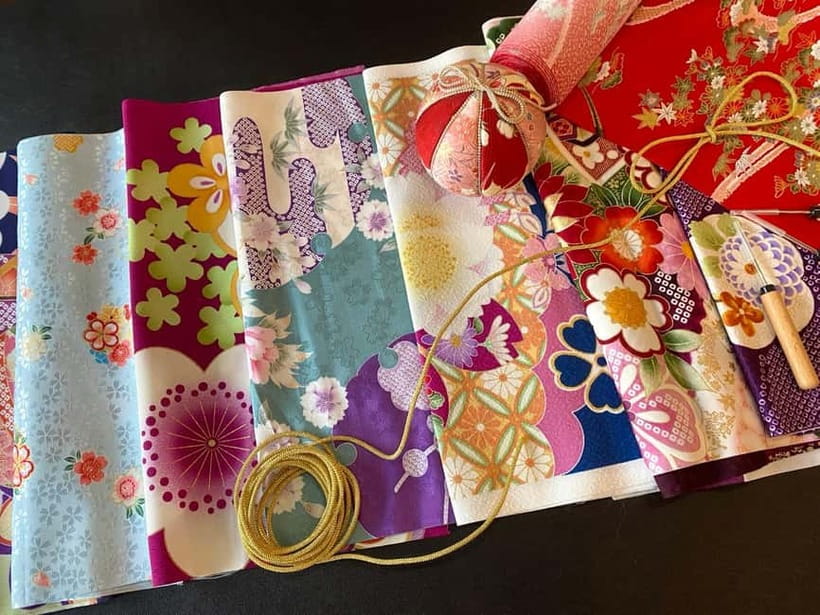
The fabric selection is likely to be the hardest part, and that is a good problem to have. The available pieces include varied colors, prints, and textures, so you can make your Temari subtle, bright, floral, or playful. One particularly useful detail is that the craft uses several fabric pieces, with five pieces selected in one reported session.
Take your time here. Think about how the colors will look together rather than choosing each piece alone. You may want a quiet group of similar shades, or you may prefer the lively contrast common in Japanese textile design. The result is personal because no two choices will be exactly alike.
This step also gives you a closer look at kimono cloth. The fabric is not just decoration. It connects your small craft to a major part of Japanese dress and design. If you enjoy textiles, this is likely to be the most rewarding part of the class.
The boutique also sells finished goods made from old kimonos, including bags and other small crafts. You can browse these pieces before or after the class, but shopping is optional. The workshop itself already includes the material needed to make your Temari.
A craft made for complete beginners
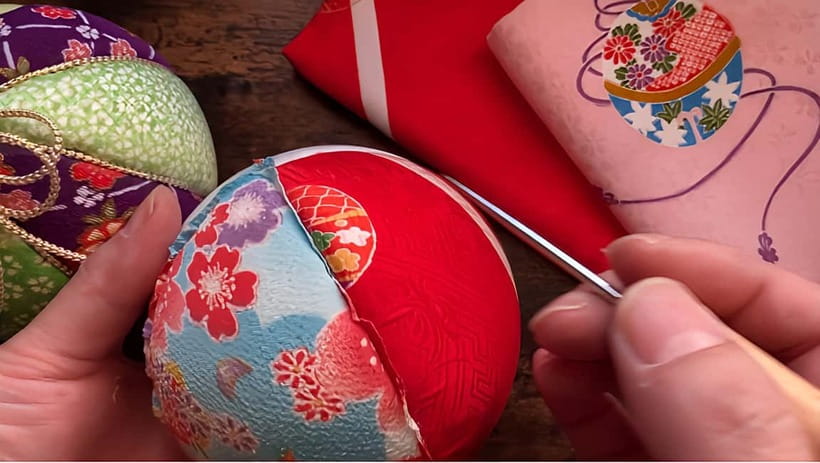
You do not need sewing experience, artistic talent, or a steady hand to take part. The class is designed as a simple activity, and the process involves little sewing, which makes it practical for children as well as adults. Families with children around 10 and 12 have used it as a shared activity, and even reluctant young participants have been able to join in.
Mae explains each step clearly and offers help without taking over. That balance is important. You get to make the object yourself, but you are not left guessing if a part of the process feels unfamiliar.
The craft is not presented as a difficult technical course. If you are hoping to master advanced Temari construction, this may feel too basic. If you want a relaxed introduction and a pleasant handmade keepsake, the level is about right.
I would also expect the final result to look better than your first attempt at many craft activities because the fabric does much of the visual work. Even a simple arrangement can produce a charming object once the colors and patterns come together.
Tea, Japanese sweets, and a slower Kyoto rhythm
Each participant receives a complimentary drink and a traditional Japanese confectionery of their choice. This is more than a small extra. It gives the class a gentle rhythm, with time to talk, choose fabric, and enjoy a local sweet while your hands are busy.
The exact drink selection is not specified, although one participant particularly enjoyed a matcha latte. Tea and Japanese confectionery are natural companions for a textile activity, and the refreshment helps the workshop feel like a cultural visit rather than a rushed tourist task.
Additional food and drinks are not included, so do not treat the class as a full meal. You can easily plan a café stop nearby afterward. The surrounding area has cafés, and the Philosopher’s Path is close enough to make this a useful stop during a day of sightseeing.
Same trip, a completely different kind of day:
- PERFECT KYOTO 1-Day Bus Tour
★ 5.0 · 13,518 reviews - Kyoto: Fushimi Inari, Kinkakuji, Bamboo Grove 1 Day Bus Tour
★ 4.8 · 4,316 reviews - Kyoto: Tea Ceremony in a Traditional Tea House in Kiyomizu
★ 4.9 · 3,519 reviews - Kyoto Geisha Walking Tour: Gion District & Hidden Gems
★ 4.7 · 3,273 reviews
What the two hours feel like
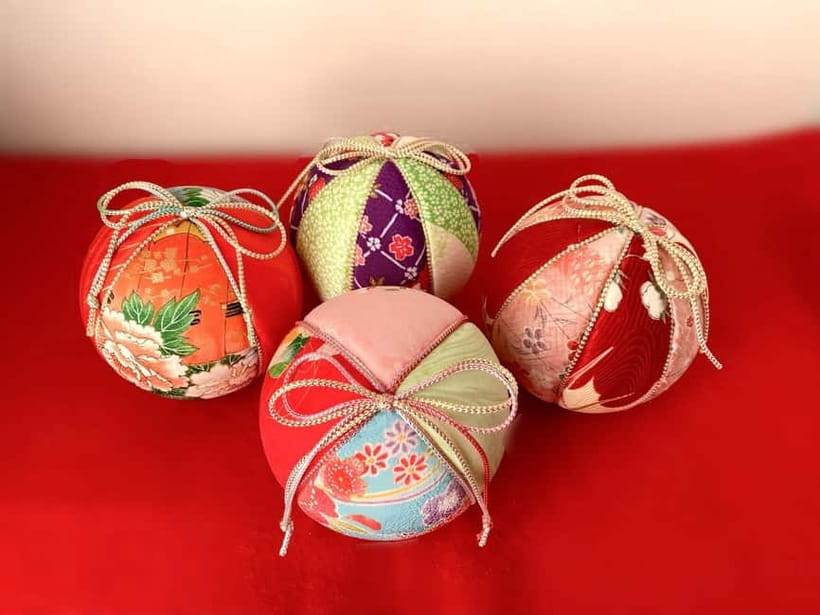
The workshop lasts two hours, though the supplied schedule does not break the time into fixed stages. In practical terms, you can expect the session to include an introduction to Temari, fabric selection, guided construction, and time to finish your piece.
The pace is one of the strengths. You are not being moved from one photo stop to the next. You can focus on the fabric, listen to the explanation, and ask questions as you work. The small group makes conversation with the instructor part of the experience, and Mae has been described as warm, patient, and easy to talk with.
Several details make this appealing during a busy Kyoto trip. You get to sit down after hours of walking. You have a clear activity in front of you, but it does not demand intense concentration. And you have enough time to make something that feels finished rather than hurried.
The relaxed pace may not suit you if you prefer fast sightseeing or want to cover as many major sights as possible. For most people, though, two hours is a sensible length. A shorter class might leave the craft feeling rushed, while a much longer one could test the patience of children and non-crafters.
The local instructor makes the difference
Mae, also referred to as Mei, leads the workshop in English and Japanese. Her English has been praised as excellent, and the teaching style is patient and easy to follow. That matters because craft instructions can become confusing when you are handling small fabric pieces and trying to remember several steps at once.
The instructor also adds a personal connection to the class. You can ask about the Temari tradition, the fabrics, and the work sold in the shop. The experience is not just a kit placed on a table. It is time with a local craftsperson who makes and sells textile goods herself.
Do not expect a long formal lecture. The available information points to a practical introduction with historical context woven into the activity. You learn what Temari are used for and get a sense of their place in Japanese celebrations and home decoration while making one.
That approach suits most visitors. You receive enough background to understand what you are creating, then spend most of the time doing rather than listening.
A handmade souvenir with real use
Kyoto has no shortage of souvenirs, from sweets to mass-produced charms. A handmade Temari offers a different kind of memory. It is small, light, and easy to take home, yet it also carries the decisions you made during the class.
You can display it as an interior ornament, which matches the traditional use of Temari. It may work on a shelf, in a small bowl, or beside other travel mementos. Since the fabric combinations vary, the finished item should feel more personal than a standard item bought from a souvenir shop.
This is especially appealing for couples. One couple made Temari as honeymoon keepsakes, and siblings have enjoyed choosing fabrics and learning together. Families can also use the class as a shared project, with children taking part instead of simply watching an adult craft.
Keep your expectations sensible. The souvenir is handmade and beginner-created, not a museum-quality object made by a professional artisan. That is exactly the point. Small irregularities are part of its story.
Pairing the class with temples and the Philosopher’s Path
The workshop is in a Kyoto sightseeing area near historically significant temples and shrines. One useful nearby pairing is the Philosopher’s Path, with cafés in the same general area. The exact walking time to any specific temple is not provided, so check your map and allow extra time between bookings.
I would place this activity between major sights rather than at the end of a tightly packed day. Start with a temple visit, stop for the workshop, then continue to a café or a path walk. The craft gives your day a change of pace and keeps the surrounding area from becoming a blur of gates, gardens, and photographs.
The location also makes the class a good choice on a day when weather or tired feet affect your plans. You still get a Kyoto cultural activity without spending the whole day outdoors. Since the shop is wheelchair accessible, it can also be a practical indoor stop for visitors who need an easier sightseeing rhythm.
Do not book it only because it is near temples, however. The main reason to come is the craft. The surrounding sights are a useful bonus, not a replacement for the two-hour activity.
Is $25 a fair price?
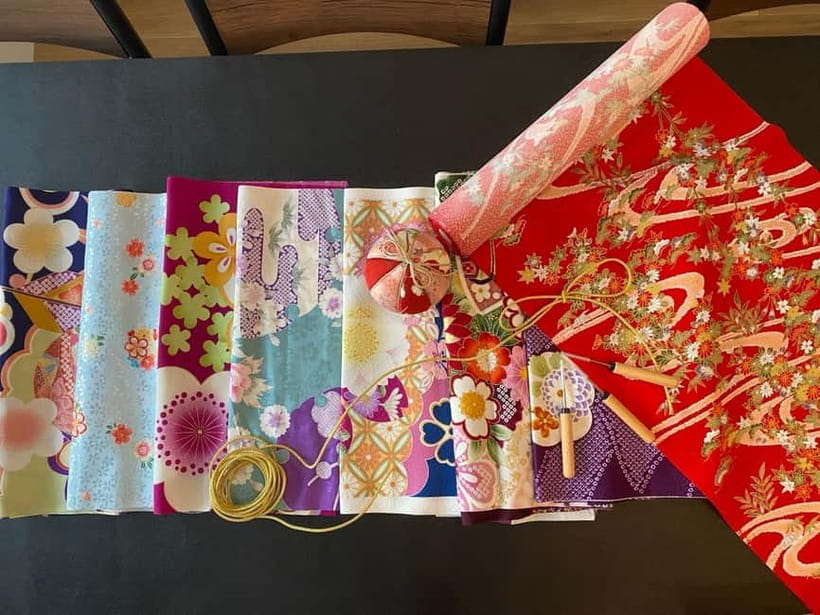
At $25 per person, the workshop offers good value if you want more than a standard souvenir. The price includes the Temari class, all necessary materials, instruction from a local craftsperson, a drink, and a traditional Japanese confectionery.
The strongest value comes from the combination of materials and personal instruction. You are not simply buying fabric or attending a demonstration. You choose the pieces, learn the process, and take home the result. A similar handmade item in the shop could cost more, while a cheap souvenir would not give you the same connection to the craft.
The price is less compelling if you are not interested in making things. You will spend two hours on a calm table activity, and the class is not designed as a broad tour of Kyoto culture. If you would rather visit another temple or shop, use that time there.
There are no extra food costs built into the class beyond the included refreshment. Additional drinks or food are available at your own expense.
Who should book this workshop?
I would recommend this for:
- Couples who want a shared keepsake
- Families with children
- Anyone who likes fabric, design, or simple crafts
- Visitors who want a break from walking
- First-time craft participants
- People looking for a small, personal souvenir
- Visitors who enjoy talking with a local artisan
It is less suitable for anyone seeking an advanced craft lesson, a large cultural performance, or a fast-paced activity. The appeal is quiet, friendly, and hands-on.
The class also works well for solo visitors. With a maximum of four participants, you are unlikely to feel lost in a crowd, and a solo booking may allow more individual help.
Booking details worth knowing
The workshop runs for two hours, with starting times based on availability. The instructor speaks English and Japanese, and the activity is wheelchair accessible.
You can reserve now and pay later, which helps if your Kyoto plans may change. Cancellation is free up to 24 hours before the activity for a full refund. Enter the workshop when you arrive, and the host will be waiting to greet you.
Because the group is limited to four participants, booking ahead is sensible if you have a fixed temple or train schedule. The small capacity is part of the appeal, but it also means there are fewer seats available at each starting time.
Should you book it?
Book this workshop if you want a calm two-hour break, a personal souvenir, and an easy way to work with traditional kimono fabric. Mae’s patient guidance, the small group, the drink and sweet, and the choice of colorful materials make it a strong value at $25.
I would be especially quick to recommend it to families, couples, and anyone who feels a full day of Kyoto sightseeing needs a quieter middle section. Skip it only if your schedule is too tight for two hours or if hands-on crafts do not interest you. For the right visitor, this is the kind of modest activity that may become the most memorable object brought home from Japan.
FAQ
How long does the Temari workshop last?
The workshop lasts two hours.
How much does the activity cost?
The price is $25 per person.
What do I make during the class?
You make a traditional Japanese Temari using pieces of kimono fabric.
Do I need previous craft experience?
No. Prior experience or special skills are not required.
Can children take part?
Yes. The activity is suitable for adults and children of all ages.
What is included in the booking?
The booking includes the Temari workshop, all necessary materials, instruction from a local craft master, one complimentary drink, and one traditional Japanese confectionery.
Are food and extra drinks included?
One drink and one traditional Japanese confectionery are included. Additional food and drinks are not included.
What languages does the instructor speak?
Instruction is available in English and Japanese.
How many people can join the workshop?
It is a small-group activity limited to four participants.
Is the workshop wheelchair accessible?
Yes. The activity is wheelchair accessible.
Just added around Kyoto
- Sekka Cotton Furoshiki Class★ 5.0 · 19 reviews
- Kyoto Sword Experience – includes Museum Ticket/Ninja Experience★ 4.5 · 149 reviews
- Scenic Green Tea Fields of Hidden Kyoto & Local Tea Exp (Private)★ 5.0 · 32 reviews
- Secret Eastern Kyoto Biking Adventure★ 5.0 · 44 reviews
- Private Sake Tasting in Central Kyoto with Sake Sommelier★ 5.0 · 32 reviews
- Samurai School in Kyoto: Samurai for a Day★ 5.0 · 202 reviews
- SHIRAKAWA Japanese Culture Experiences with private English staff★ 5.0 · 16 reviews
- A Privately Guided Photoshoot in Beautiful Kyoto by a Pro★ 5.0 · 18 reviews
Kimono & Yukata Experiences, compared.

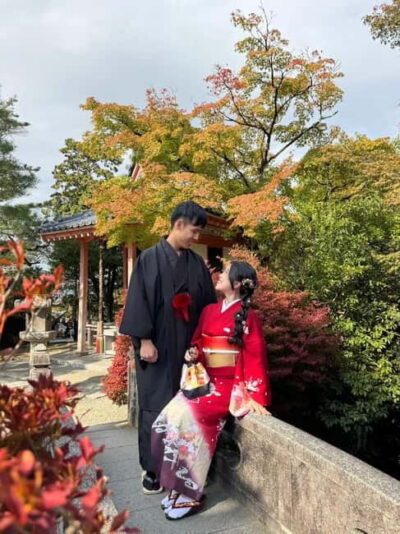

Sumo Show & Experience w/ Optional Kimono & Hot Pot
Our verdict →
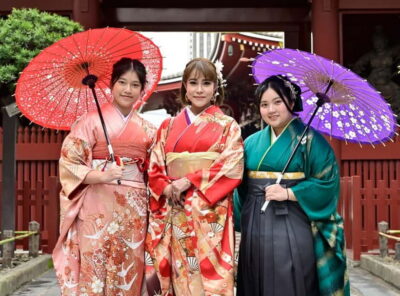
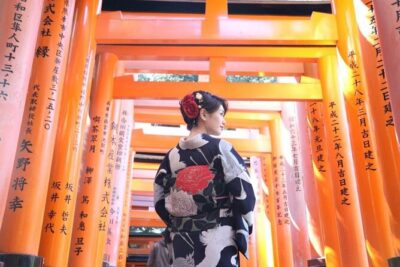
Family-Friendly Kimono & Yukata Experience at WARGO
Our verdict →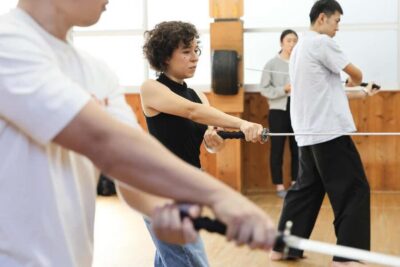
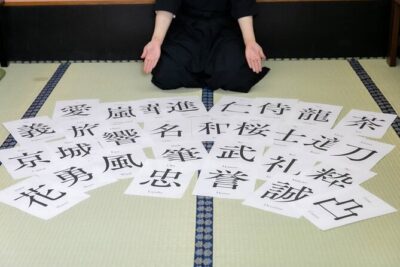
Learning Zen of Japanese Calligraphy in kimono near Osaka Castle
Our verdict →Browse the lists this tour appears in