
Reviewed · TEA CEREMONY EXPERIENCES
Kyoto: Tea Ceremony in a Traditional Tea House in Kiyomizu
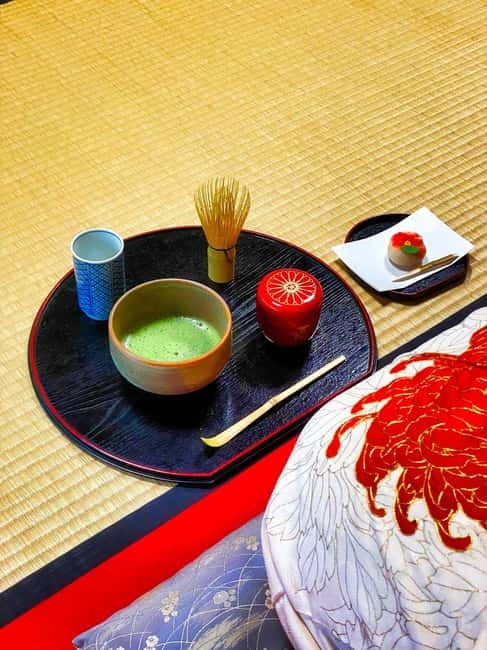
Kyoto’s tea ceremony can feel formal from the outside, but this 45-minute experience lets you watch the ritual closely and then try it yourself. You sit in a traditional tea house in Sannenzaka, look out onto a garden designed by Ogawa Jihei VII, and see a tea master handle each movement with care.
I especially like the quiet garden setting, which creates a welcome break from the busy lanes around Kiyomizu-Dera. I also like the hands-on finish: you do not only watch the tea master, you whisk your own matcha and taste a customary sweet.
The main consideration is time. This is an introduction rather than a full study of tea culture, and the ceremony takes place in a shared group setting. Kimono rental is not included, so you will come in your own clothes.
Key points at a glance
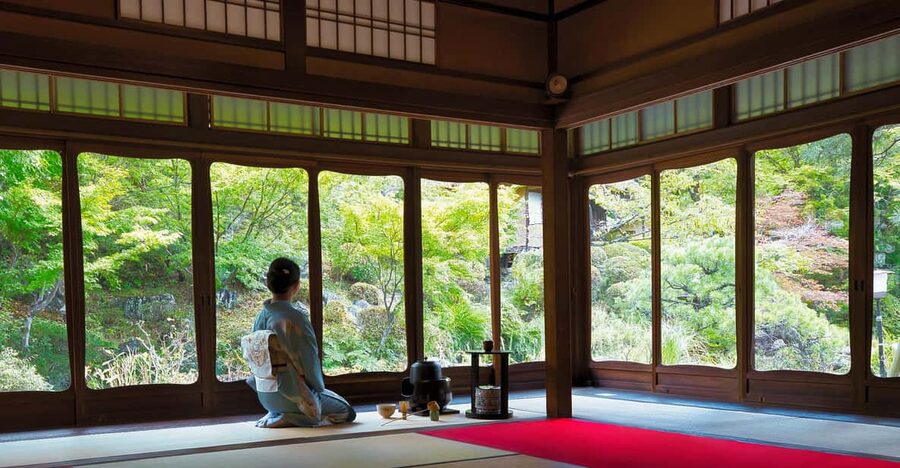
- Ogawa Jihei VII garden: Look into a carefully designed Japanese garden from the tea house.
- Two cups of matcha: Taste tea prepared by the master, then make your own.
- A live tea demonstration: Watch the graceful movements before trying the process yourself.
- English instruction: The host explains the ceremony, its meaning, and the steps for preparing matcha.
- Sannenzaka location: Pair the visit with Kiyomizu-Dera and the historic lanes around it.
- Small-group feel: Sessions are often described as intimate, with one group noted as about eight to ten people.
Entering the tea house near Kiyomizu-Dera
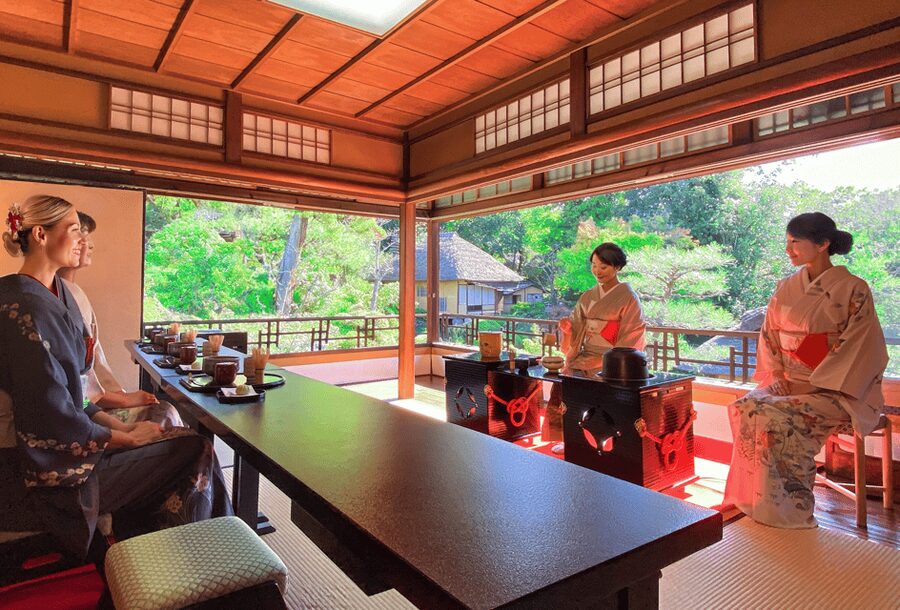
Sakaguchian sits just off Sanneizaka, one of Kyoto’s most popular approaches to Kiyomizu-Dera. The meeting point is easy to miss if you are watching only the shops and crowds. Go down Sanneizaka, walk about 50 meters, and look for a large gate on the right. A garden is visible from the entrance. After entering, continue about 10 meters and pass through the white gate on the left.
That tucked-away entrance is part of the experience. From a busy tourist street, you move into a traditional house with a garden beyond it. The contrast is quick and striking. You might still hear the activity outside, but inside, the mood is calm and focused.
If you come by taxi, tell the driver to head toward Kodaiji Temple and get out at the intersection of Sanneizaka and Ishin-no-michi. The Japanese address is Kyoto-shi Higashiyama-ku Kiyomizu 3-334. Build in extra time to find the gate, especially if you are walking from Kiyomizu-Dera or arriving during a crowded part of the day.
Large bags and luggage are not allowed. That matters in this part of Kyoto, where you may be carrying shopping bags or a daypack after visiting temples. Travel light, or arrange to leave larger items elsewhere before arriving.
More Tea Ceremony Experiences in Kyoto
- Kyoto: Tea Ceremony Ju-An at Jotokuji Temple
★ 4.9 · 3,207 reviews - Kyoto: 45-Minute Tea Ceremony Lesson Experience
★ 4.3 · 2,378 reviews - Kyoto: Table-Style Tea Ceremony at a Kyo-Machiya
★ 4.9 · 1,211 reviews
A garden designed for quiet attention
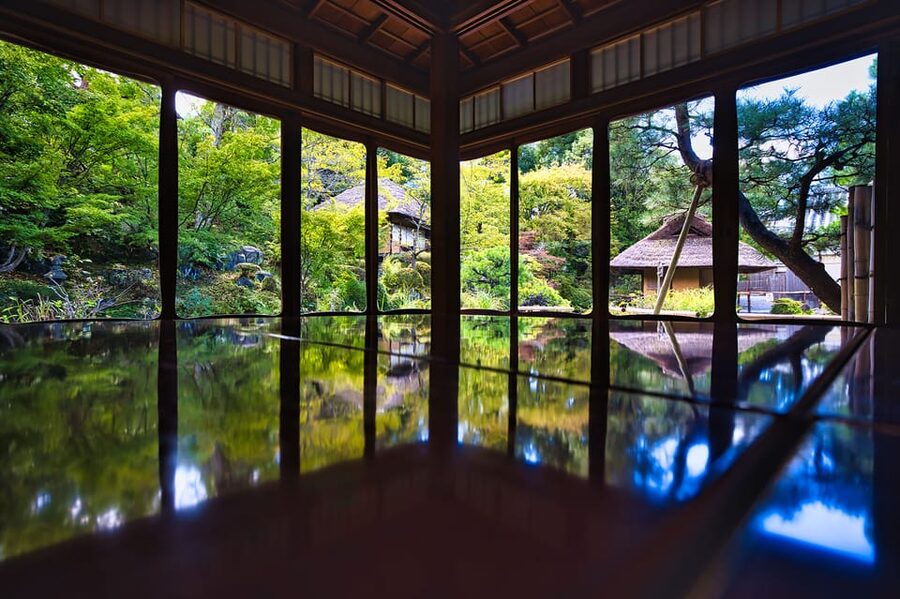
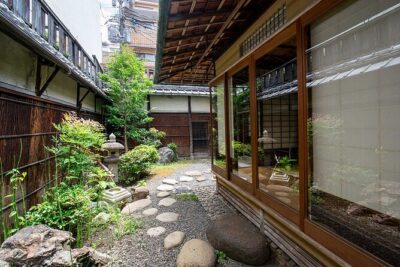
The tea house sits within a garden created by Ogawa Jihei VII, a famous Japanese garden designer. You do not tour the garden as a separate stop. Instead, it forms the view behind the tea room, giving the ceremony a natural setting without adding more walking or sightseeing time.
I like this arrangement because the garden is not just decoration. It gives your eyes somewhere restful to go while the host explains the ceremony. The garden also makes the final group photo more appealing than a plain indoor snapshot.
The setting changes with weather and season, but the activity goes ahead rain or shine. If it rains, the covered tea house still gives you the main experience, though the garden view may feel different. Bring an umbrella for the walk through Sannenzaka, and do not expect weather to cancel the session.
Several parts of the ceremony ask for quiet attention. Avoid walking around once the demonstration begins. This is a small point, but it helps preserve the mood for everyone and lets you see the tea master’s movements without distraction.
The short introduction and the 500-year tradition
The session begins with an explanation of the tea ceremony and its place in Japanese culture. The host covers the tradition’s 500-year history, the meaning behind the steps, and the setting you are about to enter.
The English instruction is one of the activity’s strongest practical features. The hosts explain what is happening as it happens, rather than expecting you to understand a silent ritual. One host named May has been praised for warm, clear English and for making the ceremony easy to follow. The exact host can vary, but you should expect an English-language introduction.
This opening is brief, which suits a 45-minute activity. You get enough context to understand why the movements matter without sitting through a long lecture. If you are hoping for a detailed course in Japanese tea schools, utensils, and philosophy, this session may feel too short. If you want a clear first look during a busy Kyoto itinerary, the pace works well.
The best explanations connect simple actions to larger ideas: how the tea is offered, how guests receive it, and why the room is arranged with care. The host may also answer questions after the demonstration, so keep one or two ready if you want more detail.
Watching the tea master work
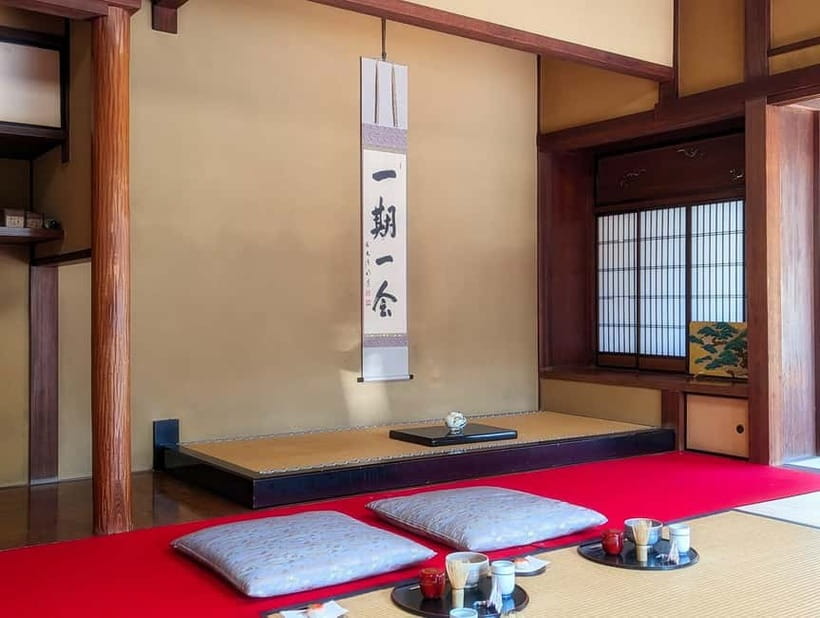
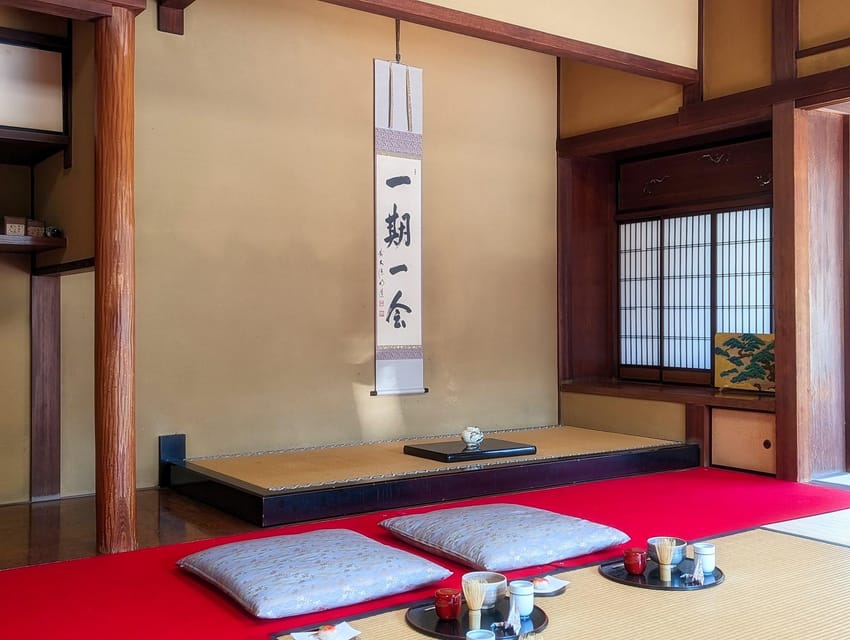
The central demonstration is performed by an experienced tea master. This is the part to watch closely. The appeal is not only the finished bowl of matcha, but the controlled sequence of movements used to prepare and serve it.
The tea master handles the tools with grace and precision. You see the tea measured, mixed, and presented in the traditional manner before you are asked to make your own. The demonstration gives you a model to copy and makes the later hands-on portion less intimidating.
The host and tea master fill different roles. The host provides explanations in English and helps the group follow the ceremony. The tea master presents the ritual and guides the practical tea-making steps. Some sessions feature a particularly theatrical host, while the tea master remains more formal and deliberate. That balance keeps the activity both easy to understand and respectful of the tradition.
The ceremony is not staged as a show with a distant audience. You are close enough to see the tools and movements, then involved in the process yourself. That makes the experience more useful than simply posing in a tea room for a photograph.
More Temple & Shrine Tours in Kyoto
- Kyoto: Fushimi Inari, Kinkakuji, Bamboo Grove 1 Day Bus Tour
★ 4.8 · 4,316 reviews - Fushimi Inari Hidden Hiking Tour (Private Option Available)
★ 5.0 · 1,750 reviews - Osaka/Kyoto:Kinkakuji,Arashiyama,FushimiInariShrine,NaraPark
★ 4.1 · 1,596 reviews - Arashiyama Bamboo, Temple, Monkeys, or Secret Sake Brewery
★ 4.8 · 886 reviews
Making your own bowl of matcha
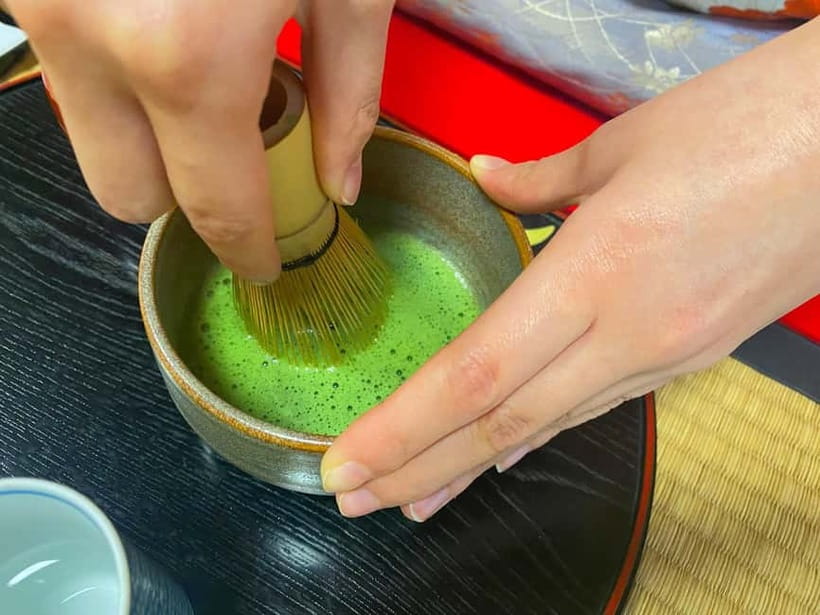
After watching the tea master, you learn how to prepare your own matcha. This is where the activity becomes personal. You handle the process rather than simply receiving a drink.
The instructions cover the basic method for making a smooth bowl. Follow the host’s pace and do not worry about producing a perfect result on your first try. The point is to understand the care and concentration involved, not to match the tea master’s years of practice.
You receive two cups of matcha in total: one prepared by the tea master and one made by you. This comparison is useful. The first cup lets you taste the drink as it should be prepared, while the second gives you a sense of how technique affects the texture and flavor.
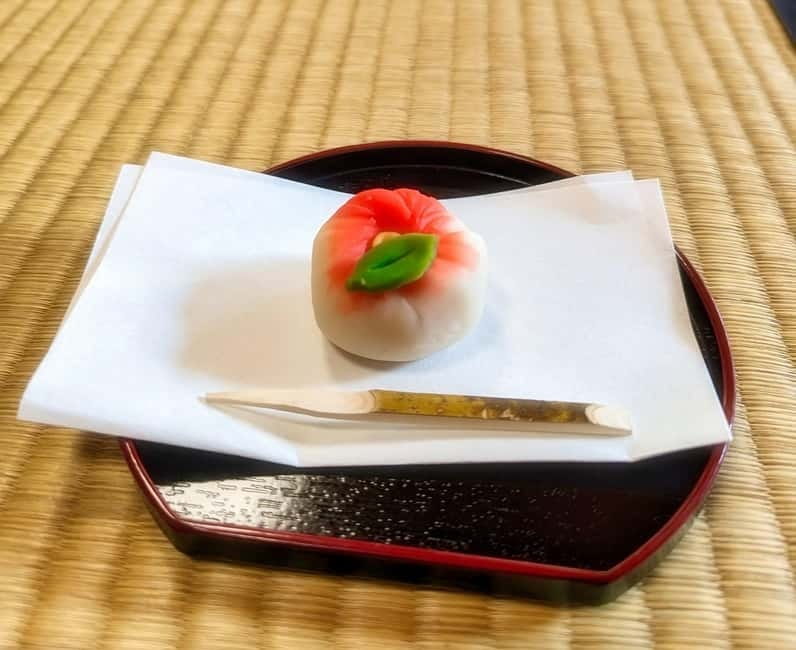
Matcha can be bitter if you are used to sweetened tea drinks. Here, a traditional Japanese sweet accompanies the tea and balances its sharpness. The sweet is small, but it is an important part of the ritual rather than an added snack.
Several people who were unsure about matcha found the experience changed their view of it. That is partly because you learn how the tea is made and partly because you taste it in the setting for which it was intended. Still, the flavor is not sweetened in the way a café matcha drink often is, so those expecting a sugary beverage should adjust their expectations.
A photo with the garden behind you
At the end, you can pose for a photo with the group and the garden as a backdrop. It is a simple finish, but it gives you a record of the visit and avoids the awkward problem of asking a stranger to take a picture during the ceremony.
The photo is included in the price. The tea master or host can also help with pictures after the formal part is over. Keep in mind that this is a group photo, not a private portrait session, unless the staff happens to have time for additional shots.
The activity does not include kimono rental. That is worth noting because many Kyoto tea experiences are marketed with traditional clothing. Here, the focus stays on the tea ceremony itself. You can wear your own clothes, which some people may find more comfortable and less staged.
One benefit of not requiring a kimono is that the experience can feel more direct. You are there to learn the ritual, not to spend part of the appointment changing clothes and posing. If wearing a kimono is central to your plan, you will need to arrange that separately.
Is $49 a fair price?
At $49 per person, this is not the cheapest way to drink matcha in Kyoto. You can buy a bowl of tea for far less. The price pays for more than the drink: an English explanation, a formal demonstration by a tea master, two cups of matcha, a traditional sweet, the garden setting, and a guided chance to prepare the tea yourself.
I see the value in the setting and instruction. A café gives you the flavor of matcha, but not the meaning behind the gestures or the chance to see the ceremony performed properly. A temple visit shows you architecture and religious history, but not this close-up look at a living cultural practice.
The value is strongest if you are curious about Japanese customs and want an activity that fits between major sights. It is also a good choice for couples, families with children old enough to sit quietly, and first-time visitors who want a manageable introduction.
The value is weaker if your only goal is to taste matcha, if you dislike formal demonstrations, or if you want a long, private lesson. The session is short, and groups can include several people. One reported group had eight members, and another was about ten. That is small enough to follow along, but not the same as a one-on-one appointment.
Planning it around Kiyomizu-Dera
The location makes this easy to combine with a morning or afternoon around eastern Kyoto. Visit Kiyomizu-Dera, walk down toward Sannenzaka, and allow time to find the entrance before your scheduled start.
The streets around the temple are popular and can be slow going. You may need more time than the short distance suggests, especially if you stop at shops or move with a family group. I would not schedule this with a tight connection immediately afterward.
The 45-minute duration is useful on a packed Kyoto day. It is long enough to include an explanation, a demonstration, your own tea preparation, the sweet, and the photo, but short enough to fit beside temple visits. Check the available starting time when booking, since the exact schedule can vary.
Children under seven are not suitable for this activity. Older children can enjoy the practical tea-making portion, provided they can sit quietly during the formal demonstration. Families with children aged nine and thirteen have found the experience a good fit.
The activity is offered rain or shine. Wear comfortable clothes for walking through the historic district, and avoid bringing large bags. The tea house is traditional, so treat the room and the ceremony with care.
Who will enjoy this most?
I would choose this for someone who wants a clear first encounter with Japanese tea culture rather than a specialist lesson. The English guidance removes much of the guesswork, and the practical tea-making gives you something to remember beyond a few photographs.
It suits couples looking for a calm activity, families with children over seven, and anyone who wants a break from Kyoto’s temple circuit. It also works well for people who think they do not like matcha. Tasting a properly prepared cup with a traditional sweet can be a more useful introduction than ordering a modern matcha drink.
It may not suit you if you need complete privacy, dislike sitting still, or want to rent a kimono as part of the booking. It is also not the right choice for a detailed historical seminar. The ceremony is explained, but the session keeps moving.
Should you book the Sakaguchian tea ceremony?
I would book it if you want a polished, easy-to-follow tea ceremony in a beautiful traditional setting near Kiyomizu-Dera. The garden, English host, graceful demonstration, and hands-on matcha preparation give the $49 price a fair basis.
Book with realistic expectations. This is a short cultural introduction, not an advanced lesson or a private ritual. Arrive with only a small bag, allow extra time to find the gate, and be ready to sit quietly while the tea master works.
For many Kyoto itineraries, that balance is exactly right: a peaceful 45-minute pause, a taste of matcha, and a better understanding of one of Japan’s most carefully practiced traditions.
FAQ
How long does the tea ceremony last?
The activity lasts 45 minutes.
Where does the tea ceremony take place?
It takes place at Sakaguchian, a traditional tea house in the Sannenzaka area near Kiyomizu-Dera Temple in Kyoto.
Is the instruction available in English?
Yes. The instructor and host provide the activity in English.
How much does the experience cost?
The listed price is $49 per person.
How much matcha is included?
You receive two cups of matcha. One is prepared by the tea master, and you prepare the other yourself.
Is a Japanese sweet included?
Yes. A traditional Japanese sweet is included with the tea ceremony.
Is kimono rental included?
No. Kimono rental is not included.
Can children join the activity?
Children under seven are not suitable for this activity. Children aged seven and older may attend, with the understanding that the ceremony requires quiet attention.
What should I bring to the tea house?
Do not bring luggage or large bags. The activity takes place rain or shine, so bring suitable weather protection for the walk through Sannenzaka.
Can I cancel the booking?
You can cancel up to 24 hours in advance for a full refund. A reserve-now, pay-later option is also available.
Just added around Kyoto
- Sekka Cotton Furoshiki Class★ 5.0 · 19 reviews
- Kyoto Sword Experience – includes Museum Ticket/Ninja Experience★ 4.5 · 149 reviews
- Scenic Green Tea Fields of Hidden Kyoto & Local Tea Exp (Private)★ 5.0 · 32 reviews
- Secret Eastern Kyoto Biking Adventure★ 5.0 · 44 reviews
- Private Sake Tasting in Central Kyoto with Sake Sommelier★ 5.0 · 32 reviews
- Samurai School in Kyoto: Samurai for a Day★ 5.0 · 202 reviews
- SHIRAKAWA Japanese Culture Experiences with private English staff★ 5.0 · 16 reviews
- A Privately Guided Photoshoot in Beautiful Kyoto by a Pro★ 5.0 · 18 reviews
Tea Ceremony Experiences, compared.



World Heritage Kyoto & Nara Uji Authentic Matcha Experience
Our verdict →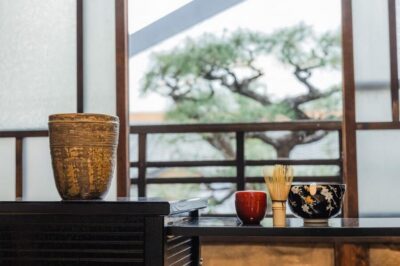
Arashiyama Bamboo Forest, Monkeys, Matcha & Temple Tour
Our verdict →
Browse the lists this tour appears in