
Reviewed · FISH MARKET TOURS
Tsukiji Fish Market Guided Tour and Sushi Making with Pro Chef
Tsukiji is best understood with a guide who can explain what you are seeing, then turn those market lessons into lunch. This four-hour experience links seafood shopping and Japanese food culture with a hands-on sushi class led by a professional chef.
I like the clear two-part design: a guided walk through the outer market, followed by five nigiri types and one rolled sushi that you make yourself. I also like the temple stop and the practical tips from guides such as Ko, Sachi, Mari, Yuki, Tad, and Monami. The main drawback is that the market walk includes no set tastings, so you must buy snacks separately, and the class location can change.
Key points to know before booking
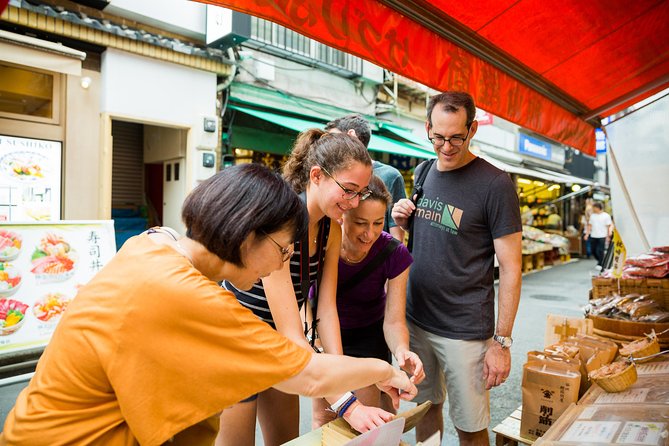
- This is the outer Tsukiji market: The former inner wholesale market moved to Toyosu in 2018, so this tour visits the public shopping streets and a small wholesale area instead.
- The sushi class is the main hands-on feature: You prepare five kinds of nigiri and one roll, then eat your creations with chef-made sushi, dashi soup, and green tea.
- The temple stop adds useful context: Tsukiji Honganji Temple introduces Buddhist customs and local history before the food walk begins.
- Bring comfortable shoes and cash: You walk through crowded market streets, and extra snacks or purchases are not included.
- The class location can change: It may be held in Tsukiji, Asakusa, or Yotsuya, and the end point may vary with the venue.
- Dietary needs require caution: Vegetarian, halal, gluten-free, kosher, and allergy requests are not guaranteed to be accommodated.
From temple gates to sushi plates
The appeal here is the connection between place and food. You do not simply sit down at a sushi counter and copy a chef’s hand movements. You first see the market district where seafood, seasonings, tools, and Japanese food products are sold.
That context matters. Tsukiji’s inner market, where professional wholesale business once centered, moved to Toyosu on October 6, 2018. The Tsukiji you visit now is the outer market, with food stalls, shops, small wholesale businesses, restaurants, utensils, and ingredients open to the public.
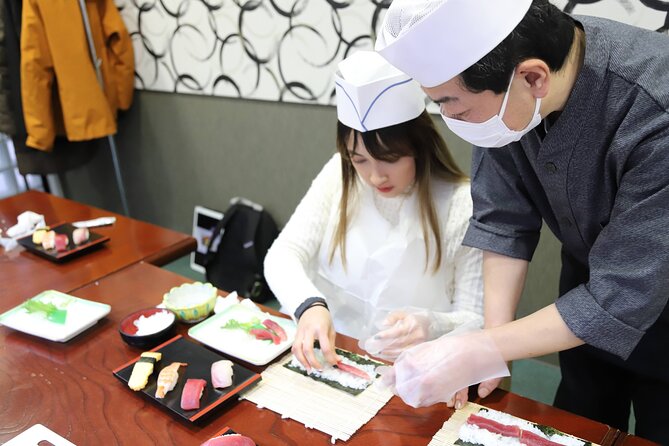
The tour then carries that market knowledge into a Japanese-style classroom. A sushi master demonstrates the work before guiding you through the process. You finish with lunch, including your own sushi and an additional serving prepared by the chef, plus dashi soup and green tea.
At about $104.13 per person, this is not a cheap market stroll. The value comes from combining a guided cultural walk with an actual class. If you would otherwise pay separately for a sushi lesson and spend time figuring out Tsukiji alone, the package can make sense. If you mainly want to eat your way through the market, the lack of included tastings may leave you wanting more.
More Market Tours in Tokyo
- Tokyo Tsukiji Fish Market Food and Culture Walking Tour
★ 5.0 · 3,184 reviews - Tokyo: Tsukiji Fish Market Food and Walking tour
★ 5.0 · 1,724 reviews - Tokyo: Tsukiji Fish Market Guided Walking Tour
★ 4.9 · 1,397 reviews
Starting at Tsukiji Honganji Temple
Meet at the main gate of Tsukiji Honganji Temple, at 3-chome-15-1 Tsukiji. This detail matters because map directions may lead you to the back side of the temple. Look for the guide holding a Japan Wonder Travel sign at the front gate.
The tour begins sharply, and the guide cannot wait for late arrivals. Build in extra time for the Tokyo subway and for finding the correct entrance. There is no refund for arriving late on the day, and the tour cannot be extended if you miss the start.
The temple gives the outing a useful opening. Guides have explained how to approach and pray at a Buddhist temple, along with details about the area’s history and customs. Sachi-san, Ko, Mari, Yuki, Tad, Monami, and other guides have led sessions, so your guide may differ from the names listed here.
This stop is worth taking seriously even if your main interest is food. It helps you read the neighborhood as more than a collection of shops. You get a short introduction to Japanese religious customs before stepping into the market’s noisy food streets.
Walking through Tsukiji’s outer market
The market portion visits Tsukiji Fish Market, Tsukiji Jogai Market, and the Tsukiji Nippon Fish Port Market. Your guide points out different sections and explains how seafood is caught, distributed, sold, and used in Japanese cooking.
Expect a shopping district rather than a closed auction floor. You may see seafood, dried goods, cooking ingredients, Japanese snacks, knives, dishes, and other kitchen tools. For a first visit, the guide is useful because many labels, products, and food customs may be unfamiliar.
Several guides are praised for giving practical advice on what to buy and where to look for good quality at a fair price. Monami, for example, has helped visitors sort through food choices and find worthwhile market stops. Ko has explained food types and local customs, while Yuki has guided people through sections they might have missed alone.
The group setting has one clear advantage: you can move through the market without stopping at every stall to decode what you are seeing. The tradeoff is that the group cannot pause for every snack or purchase. If you want to sample several foods, bring cash and use the free time or guide suggestions wisely.
The tour itself does not include market tastings. You can buy food from stalls, but those purchases are extra. This is an important distinction when comparing it with a dedicated food tour that includes several bites in the price.
What changed after the inner market moved
Some visitors book this experience expecting the old inner market, with its working wholesale floor and auction atmosphere. That is not what this tour offers. The business-focused inner market moved to Toyosu, and this experience stays in the outer Tsukiji area and a mini wholesale section.
That does not make the walk pointless. The outer market remains a useful place to see the public side of Japanese food culture. You can browse ingredients, seafood, utensils, and prepared foods while learning how they fit into everyday cooking.
Still, you should book with the right expectation. This is a guided introduction to Tsukiji’s public market district, not a visit to Toyosu’s inner wholesale market. If your priority is commercial fish trading, check the itinerary of a Toyosu-focused tour instead.
The market can also be crowded, and the tour is mainly on foot. Comfortable walking shoes are a must. The route includes market streets and later a classroom on the third floor of a traditional Japanese building, with stairs only.
More Sushi Experiences in Tokyo
- Sushi Making Tokyo Roll and Authentic Japanese Sushi Class
★ 5.0 · 3,971 reviews - Tokyo: Roll and Authentic Sushi Making Class in Asakusa
★ 4.9 · 1,957 reviews - Make Sushi and Create Unforgettable Memories in Tokyo
★ 5.0 · 1,413 reviews - Tokyo: Sushi Making Class in a Happi Coat near a Famous Spot
★ 4.9 · 1,377 reviews
Learning six sushi forms with a professional chef
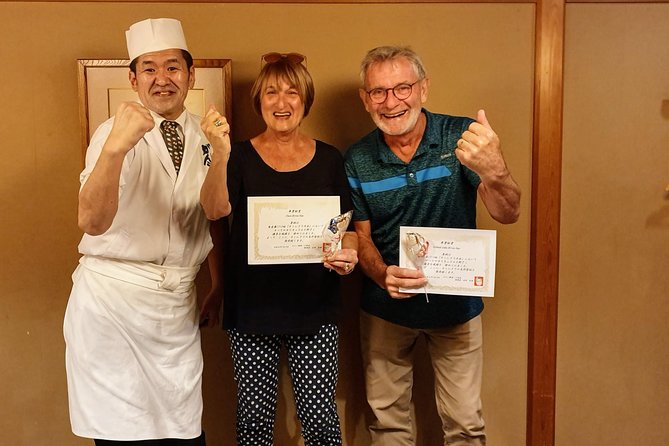
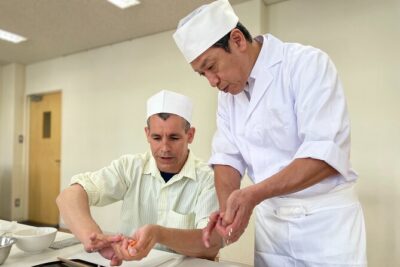
The second part shifts from looking at food to preparing it. You enter a Japanese-style classroom in or near the market area, depending on the day’s venue. The chef demonstrates the work and helps you step by step.
You learn five types of nigiri sushi and one rolled sushi. The class covers the basic handling and shaping needed to turn prepared ingredients into sushi. It is not presented as advanced professional training, but it gives you a better sense of how much care goes into even a simple piece.
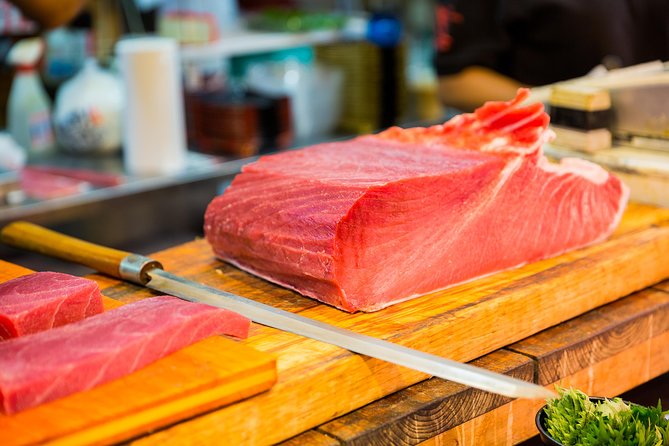
The chef may also demonstrate fish preparation, including deboning. That is a useful part of the class because it shows the technical skill behind the neat slices served at a sushi counter. One practical limitation is that the lesson does not always show how to slice fish specifically for sushi, so do not expect a full knife-skills course.
The teaching style is suited to beginners and families. Demonstrations may include a presentation, and instruction is available in Japanese and English. The class has been used by families with children as young as 12 and 16, and by adults who simply want a practical introduction.
The room is functional rather than luxurious. It is located upstairs in a traditional building, and the stairs may be difficult for anyone with mobility concerns. The group can include up to 22 people, so the atmosphere may feel more like a shared workshop than a private lesson.
Eating what you make for lunch
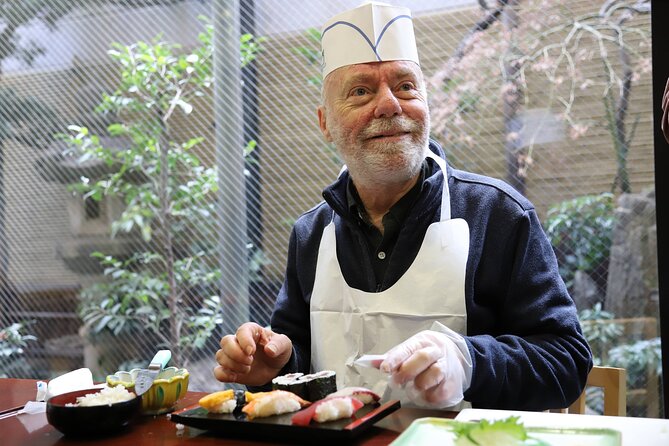
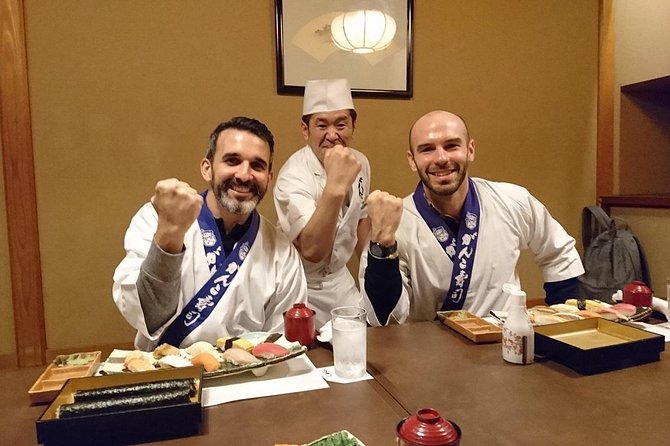
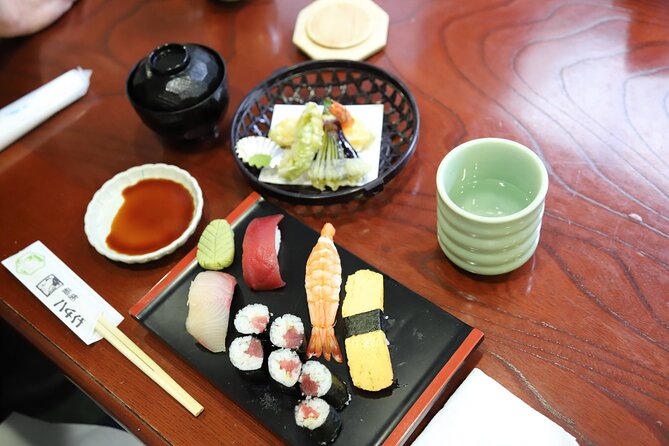
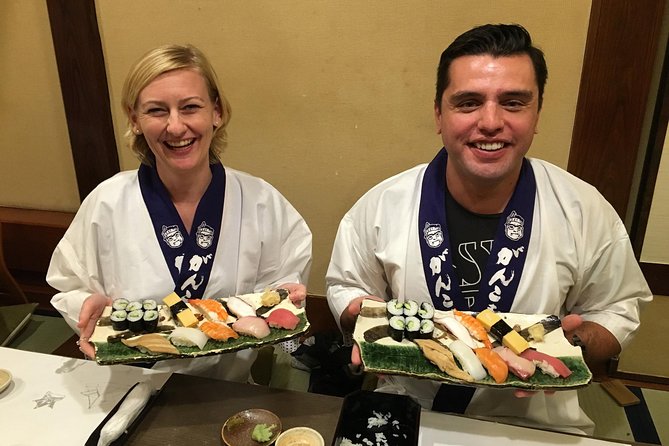
The best part of the class is the payoff. After preparing the sushi, you sit down to eat it. You also receive sushi made by the master, along with fresh wasabi, traditional dashi soup, and fine green tea.
That comparison is useful. Your pieces may not look as polished as the chef’s, but seeing and tasting the difference gives you a better sense of the skill involved. The meal is not just a demonstration where you watch someone else work. You take part, then eat the result.
The drink pairing is limited. Green tea is provided, but water is not listed as part of the service, so bring your own bottle. If you want extra market food, snacks, or drinks, budget for those separately.
The seafood is prepared in a clean teaching setting, which is reassuring if you are careful about food handling. The focus is on basic technique, fresh ingredients, and the pleasure of making lunch yourself.
Timing, venues, and the price
The activity lasts about four hours, though delays are possible. Do not schedule a tight appointment immediately afterward. The sushi classroom may be in Tsukiji, Asakusa, or Yotsuya depending on availability, and the venue is announced on the day.
That flexibility affects the end point. The activity may finish in Tsukiji, Shinjuku, Asakusa, or Yotsuya depending on the date and class location. Check the meeting instructions carefully and keep your afternoon plans flexible.
The $104.13 price is fair if you want both a guided market orientation and a full sushi-making session. You receive the guide, the chef-led instruction, lunch, dashi, tea, and the cultural background tying the two parts together.
The price is less attractive if you mainly want market food. Since tastings are not included and your purchases cost extra, a dedicated food crawl may offer better value for someone who wants to eat several prepared specialties.
The strong booking pace, with more than 10 bookings in the previous week, also means you should not assume last-minute availability. Free cancellation is offered up to 24 hours before the start time. Cancellations or changes inside that window are not refunded or accepted.
Who will enjoy this Tsukiji experience
I would choose this tour for a first visit to Tokyo, especially if you want a guided introduction rather than a self-guided market wander. It suits families, couples, and solo visitors who like food but also want context about temples, customs, ingredients, and seafood distribution.
It is a good fit if you want a reliable way to see the main market areas in a few hours. Guides such as Ko, Mari, Sachi-san, Yuki, Tad, and Monami have been singled out for clear explanations, patience, and friendly help, though the exact guide is not guaranteed.
I would be more cautious if you have strict dietary needs. The information says vegetarian, halal, gluten-free, kosher, and allergy-related requests may not be accommodated, although you are encouraged to submit details when booking and the operator will try where possible.
I would also skip it if stairs are a serious problem, if you need a private tour, or if you want access to the former inner market. The class is on the third floor in one possible traditional building, with no elevator mentioned.
Should you book it?
Book this experience if you want the food story in two chapters: first see Tsukiji’s ingredients and shops, then learn how to shape them into sushi. The temple visit, market guidance, chef demonstrations, and shared lunch give you more than a simple cooking class.
Skip it if you want a tasting-heavy market tour, a visit to the Toyosu inner market, or guaranteed handling of special diets. For most first-time visitors who enjoy hands-on food experiences, the combination offers solid value, as long as you understand that the market walk is observational and the extra snacks are on your own.
FAQ
Where does the tour meet?
The meeting point is the main gate of Tsukiji Honganji Temple, at 3-chome-15-1 Tsukiji, Chuo City, Tokyo. Use the front side of the temple, since map directions may lead to the back.
How long does the experience last?
The experience lasts approximately four hours. The finish can be delayed, so avoid making a tight appointment immediately afterward.
What does the market tour include?
The walk covers Tsukiji Fish Market, Tsukiji Jogai Market, and the Tsukiji Nippon Fish Port Market. The guide explains Japanese food, seafood distribution, market history, and local customs.
Does the tour visit the old inner market?
No. The inner market moved to Toyosu in 2018. This experience visits Tsukiji’s outer market and a mini wholesale area.
Are market tastings included?
No set market tastings are included. You can buy food and drinks from stalls, but those purchases are extra.
How many kinds of sushi will I make?
You will learn to make five types of nigiri sushi and one rolled type.
What food and drinks are included after the class?
You eat the sushi you make, along with sushi prepared by the master. Traditional dashi soup and green tea are also provided.
Can vegetarian or allergy-related diets be accommodated?
Dietary requests are not guaranteed. Vegetarian, halal, gluten-free, kosher, and allergy-related needs may not be accommodated, so provide details when booking and confirm before you go.
Can I cancel for a full refund?
Yes, if you cancel at least 24 hours before the local start time. Cancellations or changes made less than 24 hours before the experience are not refunded or accepted.
More Fish Market Walks in Tokyo
- Tokyo Sushi Making Class in Tsukiji with Professional Chef
★ 5.0 · 1,177 reviews - Tokyo: Tsukiji Fish Market Food and Culture Walking Tour
★ 4.7 · 757 reviews - Tsukiji Fish Market: Street Food & Culture Walking Tour
★ 5.0 · 669 reviews - Tsukiji Fish Market Small-Group Food Walking Tour
★ 5.0 · 621 reviews
Just added around Tokyo
- Kawagoe Japanese Food Tour : Unagi Kaiseki and Sake near Tokyo★ 5.0 · 30 reviews
- Kawagoe 4hr Private Tour with Licensed Guide (Kawagoe Dep)★ 5.0 · 13 reviews
- Little EDO Sushi Making workshop in Kawagoe★ 5.0 · 18 reviews
- 【R34】Tokyo:Private Daikoku tour in Modified R34★ 4.9 · 92 reviews
- :Tokyo,Shibuya/ Pro Photography in Kimono / English-Friendly★ 5.0 · 26 reviews
- Tokyo:Celebrate Unique Japanese New Year Tradition Festivity★ 3.9 · 20 reviews
- Tokyo: Allstar Food Tour★ 4.7 · 29 reviews
- Tokyo: West-Side Cycling and Food Tour with Guide★ 5.0 · 37 reviews
Fish Market Tours, compared.
Tokyo Sushi Making Class in Tsukiji with Professional Chef
Our verdict →

Wakayama Cat Train, Seafood market, Hot Springs Tour
Our verdict →
Awesome Private Tour: Tsukiji, Asakusa, Shinjuku, Shibuya
Our verdict →Browse the lists this tour appears in