
Reviewed · FOOD & DRINK
Tokyo After 5: Authentic Japanese Food & Drink Night Tour
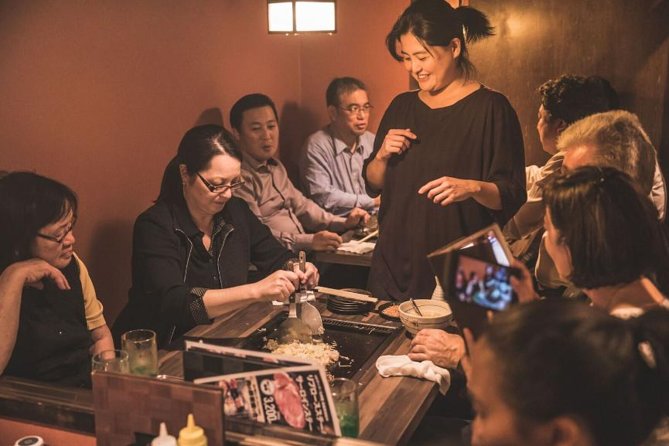
Tokyo After 5 is at its best when you leave the polished department stores and sit at a hot grill with a local dish sputtering in front of you. This small-group evening tour links Ginza, Tsukishima, and Yurakucho, with monjayaki, yakitori, wagashi, and two drinks along the way.
I like the chance to cook monjayaki yourself, and I like that the guide handles the subway, menus, and small local eateries. Guides such as Yuko, Yuki, Mizuki, and Shohei have been singled out for warm company and good explanations. The main caution is that the experience may include only two sit-down food venues, despite the three-eatery wording, and the opening Ginza portion can feel more like sightseeing than dinner.
Key points to know before booking
- Monjayaki is the star food experience: You cook this soft Tokyo pancake on a table grill in Tsukishima.
- Yakitori comes in a genuine local setting: The final stop is Yurakucho’s compact dining alley, where skewers are served with beer or sake.
- The group is capped at eight: That is useful in tight bars and makes subway travel easier.
- Two drinks and subway fares are included: Additional drinks cost extra.
- Food choices are limited: Vegetarian, vegan, and gluten-free diets cannot be accommodated.
- Allow for brisk walking and stairs: Comfortable shoes matter, and some people found the pace demanding.
What this Tokyo night really offers
At $122.33 per person, this is not a bargain dinner. You are paying for more than the food: a guide, two subway rides, two drinks, translation help, and access to small places that can be hard to approach on your own.
The value depends on what you want from a food tour. If you want a generous multi-course meal, this may leave you hungry or disappointed. If you want a first look at Tokyo’s after-work food culture, with someone to explain what you are eating and where to go, the price is easier to justify.
The experience lasts about three and a half hours and begins after 5 pm. That timing is useful because Ginza’s lights come on, office workers begin their evening, and Yurakucho’s narrow food alleys take on a distinctly local rhythm.
The tour is limited to eight people. That small size helps when the group crosses busy streets, rides the subway, and squeezes into compact restaurants. It also gives you a better chance to ask questions. Still, the quality of the evening depends heavily on your guide. Several guides have received especially warm praise, including Yuko, Yuki, Mizuki, Shohei, and Rocky.
More Night Tours in Tokyo
- EVO, WRX, Skyline – JDM Night Run to Daikoku Car Meet
★ 4.9 · 478 reviews - Tokyo: Daikoku Car Meet Tour at Night with JDM Guides
★ 4.6 · 193 reviews - Shibuya Meltdown Night Tour: All-You-Can-Drink Bar Hopping
★ 4.8 · 183 reviews
Meeting the guide under the Mitsukoshi lion
The tour starts in front of Mitsukoshi Ginza at the famous Lion statue on Chuo Street. This is a clear landmark, but do not arrive late. The group is told to start on time, and one poor experience began with a wait for missing participants that lasted about 20 minutes.
The opening stop takes roughly 15 minutes. You may enter the department store and see wagashi, traditional Japanese sweets often made with ingredients such as sweet bean paste and rice flour. The included food is described as a wagashi tasting, though it may be purchased from the department store for you to take along rather than served as a full course.
That difference matters. If you are expecting your first restaurant stop, this beginning can feel thin. One unhappy participant felt that too much time was spent in the department store and on a visit to see small plants growing under artificial lights. That stop is not the main reason to book this experience.
On the other hand, Ginza is a useful introduction to Tokyo’s contrast between luxury shopping and everyday eating. The guide may point out Itoya, the famous stationery shop, as you walk through the district. I would treat this part as orientation, not dinner.
Ginza after dark, with a short look at Itoya
The Ginza walk lasts about 15 minutes. It gives you time to see the district’s bright storefronts and upscale character before the tour shifts toward more modest food quarters.
Itoya can be a pleasant extra stop for anyone who likes Japanese stationery, though it is not a food attraction. If you already plan to visit Ginza on your own, this portion may feel familiar. If this is your first evening in Tokyo, it helps you get your bearings before the food focus begins.
The guide’s role here should be more than pointing out shops. The strongest experiences described in the feedback came from guides who explained local customs, helped people move through the subway system, and introduced unfamiliar foods clearly. Yuko, in particular, was praised for making the underground connections easy to follow. That practical help can be worth a good deal in Tokyo, where stations are large and confusing.
Cooking monjayaki in Tsukishima
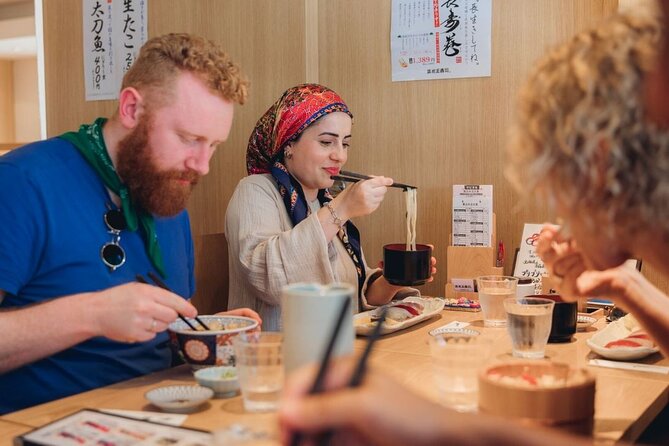
The tour then takes the subway to Tsukishima Monja Street. Two subway tickets are included, so you do not need to work out the fare for these planned rides. The train journey also changes the mood. You leave polished Ginza and reach a downtown area known for monjayaki, a Tokyo specialty.
Monjayaki is related to okonomiyaki, but it is much softer and less cake-like. The mixture spreads across the hot grill in a loose layer, and you cook it at the table with small spatulas. It is a hands-on dish, and that makes this the most distinctive part of the tour.
You may learn about the dish’s local origin while speaking with the chef and listening to it sizzle. The cooking itself is simple, but it gives you something to do and makes the meal more social. You are not just handed an unfamiliar food and told to eat it.
The stop lasts about an hour and a half, making it the longest part of the evening. Food can include cabbage, seafood, and other ingredients. One description noted cabbage with shrimp and mussels, so you should not expect a thick, meat-heavy pancake. If you dislike cabbage or seafood, ask about the ingredients before cooking.
The amount served can also vary. Some people found the monjayaki satisfying as a first taste, while others felt that the portion and small samples did little to relieve their hunger. I would eat a light snack before the tour if you tend to need a full dinner.
This is also where dietary limits become important. Vegetarian, vegan, and gluten-free options are not available, and the restaurants cannot meet all dietary requirements. If you have a serious allergy, this is not the place to hope for last-minute adjustments.
Same trip, a completely different kind of day:
- 1-Day Tokyo Bus Tour
★ 5.0 · 14,250 reviews - Tokyo: TOKYO SKYTREE® Admission ticket
★ 4.5 · 11,192 reviews - Tokyo: teamLab Planets TOKYO Digital Art Museum Entry Ticket
★ 4.6 · 9,779 reviews - Tokyo: Sumo Show Experience with Chicken Hot Pot and a Photo
★ 4.8 · 6,678 reviews
Yurakucho’s yakitori alley and the evening drink
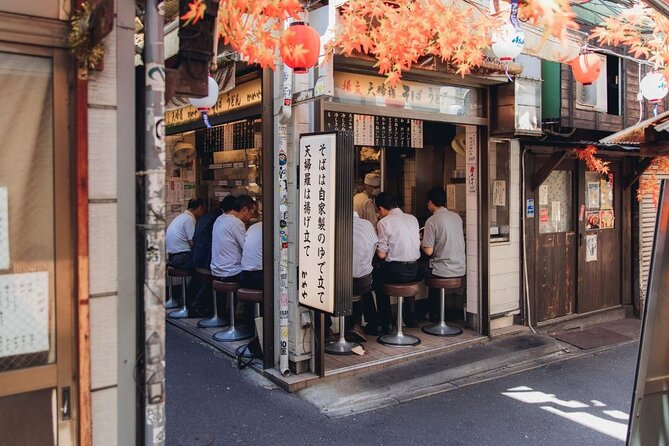
From Tsukishima, the group continues by subway and on foot to Yurakucho Sanchoku Inshokugai, also described as Yurakucho Farm to Table Dining Alley. The name suggests a polished market, but the experience is more about compact local bars and grill-focused eateries.
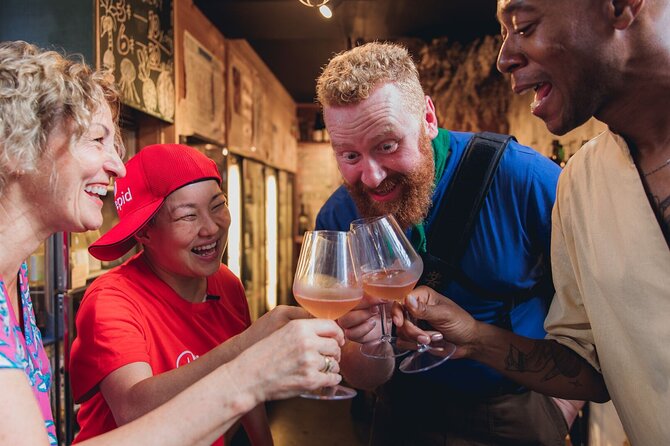
This final food stop lasts about an hour and 15 minutes. You sit down for yakitori, the familiar Japanese grilled skewer dish, and one of the included drinks. Depending on your age and choice, that may be sake, beer, or a soft drink.
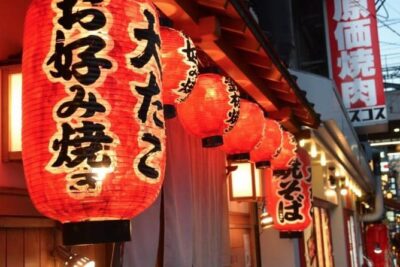
The atmosphere here is one of the tour’s strongest points. Small bars and after-work diners give you a look at Tokyo’s evening eating habits without requiring you to choose a place, read a menu, or work out how to order. Skewers are served with tare, a savory sauce that differs from one shop to another.
Do not assume every skewer will be a standard piece of chicken. One person expected chicken meat but received chicken cartilage instead. That may be an interesting Japanese food experience for an adventurous eater, but it can be an unpleasant surprise if you are selective about texture. It is reasonable to ask the guide what each skewer is before eating it.
The cooking can also be uneven. One account found the grilled meat underdone for personal taste. If that concerns you, tell the guide or restaurant staff promptly. This is a small local setting, not a controlled restaurant meal designed around every preference.
You may remain at the bar after the official tour ends, or continue elsewhere in Tokyo. The official end point is near Ginza Station, so you can make your own evening plans from there.
How much food and drink should you expect?
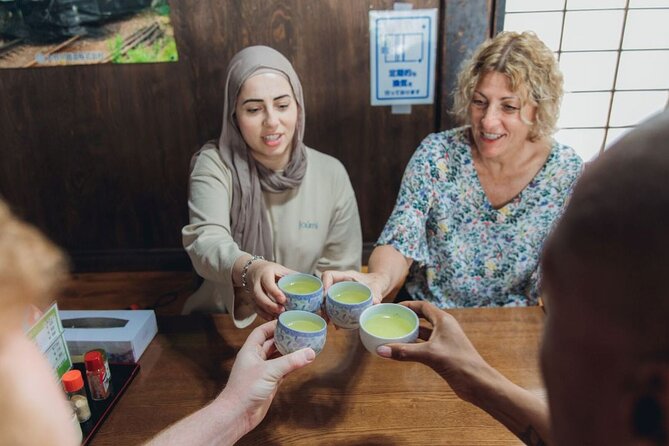
The included food is listed as three local dishes: wagashi, monjayaki, and yakitori. The two drinks may be sake, beer, or a soft drink. Additional drinks are not included.
The wording can create confusion because the experience is also described as visiting three eateries, while several accounts describe only two actual restaurants or bars. The department store sweet stop appears to be counted as one of the food experiences. In practical terms, you should expect:
- Wagashi at or near Mitsukoshi Ginza
- Monjayaki cooked at a Tsukishima restaurant
- Yakitori and a drink at a Yurakucho bar or dining alley
That is enough for a tasting evening, but it is not necessarily enough for a large dinner. The strongest descriptions focus on the variety and the chance to try food that people might not order alone. The less favorable descriptions focus on small portions, limited explanation, and the gap between the promised three eateries and the actual number of sit-down venues.
Come hungry, but not desperately hungry. A modest meal beforehand gives you flexibility without ruining the tasting.
The guide makes or breaks the night
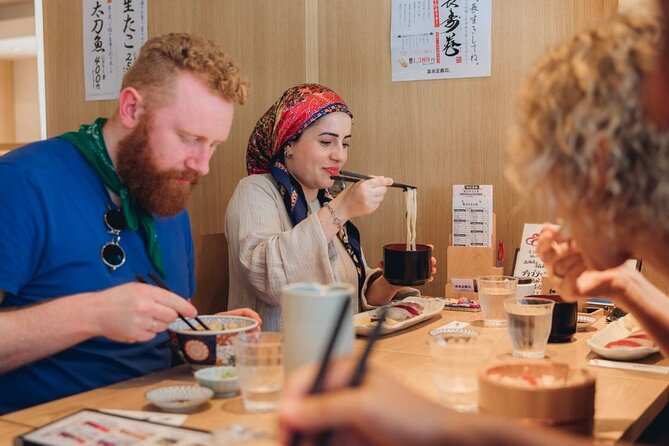
Your guide is expected to speak English, translate menus, explain food customs, and help with public transport. When that works well, the tour becomes much more than a series of snacks.
Yuko was praised for explaining the subway and making transfers easy. Mizuki was described as courteous and good at explaining unfamiliar foods. Shohei was remembered as a friendly guide who helped make the food enjoyable. Yuki was praised for combining good company with local food knowledge. Rocky was in his first official food-guide role but made a strong effort to keep the group happy.
The feedback is not uniformly positive. One experience had a guide whose English was difficult to understand, and another described a guide who offered little explanation of the city or food. Since the group may move quickly between places, a guide who does not keep everyone together can also affect the evening.
This is a useful reason to ask questions early. Tell the guide about allergies, your comfort with unfamiliar textures, and whether you want more explanation about the dishes. The guide cannot provide vegetarian, vegan, or gluten-free alternatives, but clear communication can prevent avoidable surprises.
Walking, stairs, and the subway connection
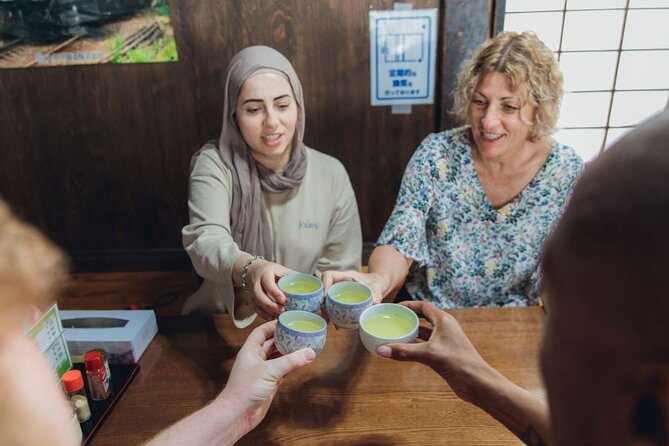
The tour includes a moderate amount of walking, plus two subway rides. Some people found the walk to the first substantial food stop longer than expected, and one description specifically mentioned a high number of stairs.
The pace may feel brisk because the group needs to stay on schedule and move through busy city streets. Wear comfortable shoes. This is not a good choice if you want to sit most of the evening or avoid stairs.
The subway portion is still a plus. Tokyo’s rail system is efficient, but the stations can be confusing, especially on a first visit. With a guide, you can focus on the city rather than fares and directions. The two included subway tickets also remove a small but useful expense.
The maximum group size of eight is another practical benefit. A larger food group would be harder to fit into small bars and more likely to split up at crossings or stations.
Who will enjoy this tour most?
I would recommend it most to first-time visitors who want a guided introduction to Tokyo food customs and evening neighborhoods. It works especially well if you are curious about monjayaki, comfortable with seafood and meat, and happy to try unfamiliar cuts.
It also suits solo visitors or couples who want company for their first night out. The small group gives you a built-in social setting, and several descriptions praised meeting people from different countries along the way.
You may want a different experience if you need dietary flexibility, dislike grilled offal or cartilage, or expect a full dinner. It is also a weaker choice for anyone mainly interested in Ginza shopping, since the food stops are the real purpose.
Families can bring children from age 12, but the drinking rules are strict. The legal drinking age in Tokyo is 20. Anyone under 20 receives nonalcoholic drinks instead.
Is $122.33 a fair price?
The price is fair only if you value guidance and access more than quantity. Two drinks, two subway tickets, three tasting foods, and a local guide account for part of the cost. The small group and translation help add practical value, especially during the restaurant visits.
Still, the food itself may not equal $122.33 if you judge the tour as a meal. The opening wagashi may be a small takeaway portion, monjayaki may be modest, and the yakitori serving may include items you would not choose independently. Extra drinks cost more.
I see this as an orientation tour with food, not a three-course culinary feast. Book it for the route, the explanations, and the confidence of entering local places. Skip it if your main goal is maximum food for your money.
Cancellation is free up to 24 hours before the start time. A cancellation made later is not refunded, and poor weather may lead to a different date or a full refund.
Should you book Tokyo After 5?
Book this tour if you want a guided introduction to monjayaki, yakitori, Japanese drinks, and Tokyo’s evening neighborhoods. The cooking grill in Tsukishima and the small Yurakucho bar setting give the night a local feel that is difficult to reproduce from a guidebook.
Go in with realistic expectations. You may visit two restaurants rather than three, the opening Ginza stop may feel more like a department-store visit, and the food may not fill you up. For the best chance of a smooth evening, wear good shoes, arrive early at the Mitsukoshi lion, and tell the guide at once what foods you cannot eat.
FAQ
Where does the Tokyo After 5 tour start?
It starts at Mitsukoshi Ginza, 4-chōme-6-16 Ginza, Chuo City, Tokyo, in front of the Lion statue facing Chuo Street.
Where does the tour end?
The tour ends near Tokyo Metro Ginza Station at 4-chōme-1-2 Ginza, Chuo City, Tokyo.
How long does the experience last?
The tour lasts approximately 3 hours and 30 minutes.
How many people can join the tour?
The maximum group size is eight travelers.
What food is included?
The included tastings are wagashi, monjayaki, and yakitori. The monjayaki is cooked at the table on a grill.
How many drinks are included?
Two drinks are included. These may be sake, beer, or a soft drink. Additional drinks are available for purchase.
Are subway fares included?
Yes. Two subway tickets for the necessary public transport are included.
Can children join the tour?
The minimum age is 12. The legal drinking age in Tokyo is 20, and participants under 20 receive nonalcoholic drinks.
Can the tour accommodate vegetarian, vegan, or gluten-free diets?
No. Vegetarian, vegan, and gluten-free options are not available, and the restaurants cannot cater to all dietary requirements.
More Food & Drink in Tokyo
- Tokyo: Shinjuku Food Tour (13 Dishes at 4 Local Eateries)
★ 5.0 · 6,603 reviews - Tokyo Tsukiji Fish Market Food and Culture Walking Tour
★ 5.0 · 3,184 reviews - Tokyo: Shinjuku Food Tour (15 Dishes and 4 Eateries)
★ 4.9 · 2,033 reviews - Best of Shinjuku: Izakaya Food Tour (4 Stops, 14+ Tastings)
★ 5.0 · 1,863 reviews
Just added around Tokyo
- Kawagoe Japanese Food Tour : Unagi Kaiseki and Sake near Tokyo★ 5.0 · 30 reviews
- Kawagoe 4hr Private Tour with Licensed Guide (Kawagoe Dep)★ 5.0 · 13 reviews
- Little EDO Sushi Making workshop in Kawagoe★ 5.0 · 18 reviews
- 【R34】Tokyo:Private Daikoku tour in Modified R34★ 4.9 · 92 reviews
- :Tokyo,Shibuya/ Pro Photography in Kimono / English-Friendly★ 5.0 · 26 reviews
- Tokyo:Celebrate Unique Japanese New Year Tradition Festivity★ 3.9 · 20 reviews
- Tokyo: Allstar Food Tour★ 4.7 · 29 reviews
- Tokyo: West-Side Cycling and Food Tour with Guide★ 5.0 · 37 reviews
Food & Drink, compared.
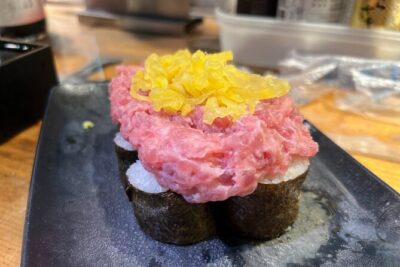
Shinjuku Food Tour (13 Dishes at 4 Local Eateries)
Our verdict →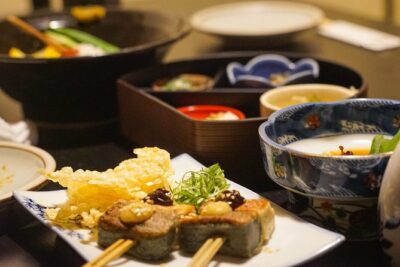
Kyoto Night Foodie Tour in Gion (9+ dishes + 6 Sake tastings)
Our verdict →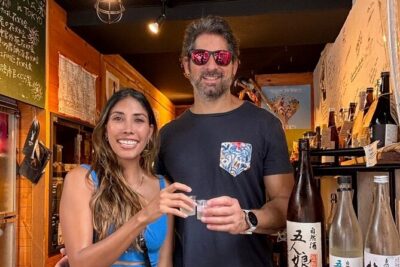
1-Day Snow Monkeys, Zenko-ji Temple & Sake in Nagano
Our verdict →
Insider Sake Brewery Tour with Sake and Food Pairing
Our verdict →
Browse the lists this tour appears in