
Reviewed · JDM & CAR MEETS
Tokyo: Daikoku Car Meet Tour at Night with JDM Guides
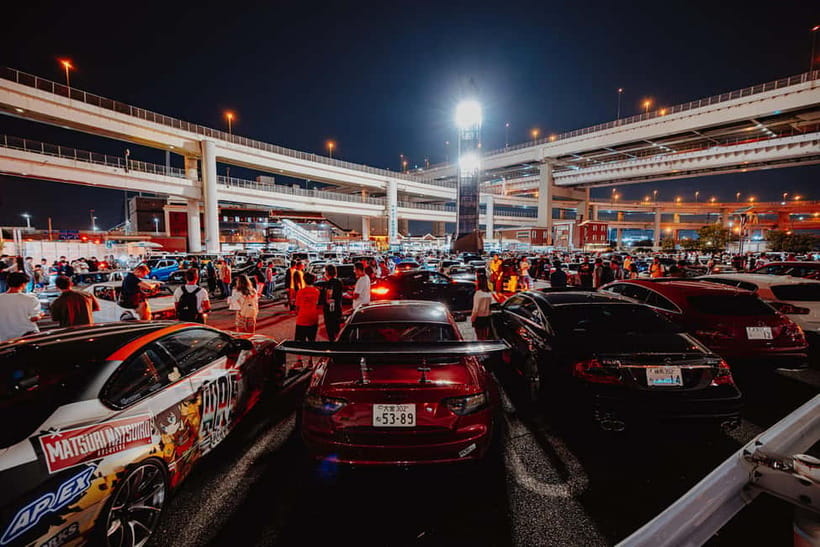
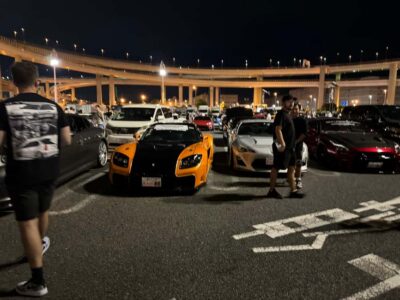
Tokyo’s famous car meet is not a museum or a staged show. At Daikoku PA, the cars and the crowd change from night to night. You ride through Tokyo and Yokohama on the Bayside Line, then see what has gathered in one of Japan’s best-known JDM meeting spots. I especially like the real local setting and the chance to ride in a random sports or JDM car, rather than only looking at parked vehicles.
I also like the views of Tokyo Tower, Rainbow Bridge, and the highway routes along the way. Guides such as JJ, Renon, Daiki, and Marty bring strong car-scene knowledge and friendly conversation. The main drawback is that Daikoku can be quiet, closed, or affected by police activity, weather, and traffic, so you are paying for the outing and local access, not a guaranteed lineup of rare cars.
Key points to know before you go
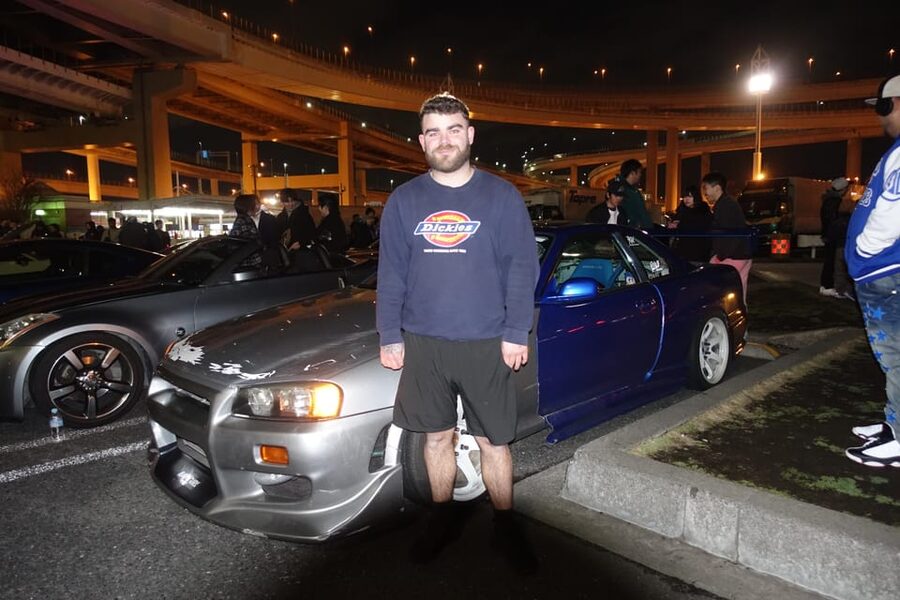
- Daikoku PA changes every night: The number and type of cars depend on the day, weather, and police activity.
- The highway ride is part of the attraction: You travel through Tokyo and Yokohama rather than simply being driven to a parking lot.
- APIT is usually a weekday stop: The large car shop is excluded on Friday, Saturday, and Sunday.
- Your ride is selected at random: Subaru and RX8 rides are included, while R34, Silvia, RX7, GTR, and other special cars require checking the VIP option.
- You get about three hours total: A large share of that time goes to driving, with roughly an hour often available at Daikoku when conditions allow.
- English ability varies by guide: Guides are English-speaking, but fluency differs. You can request a highly fluent English speaker in advance.
Why Daikoku PA is more than a parking stop
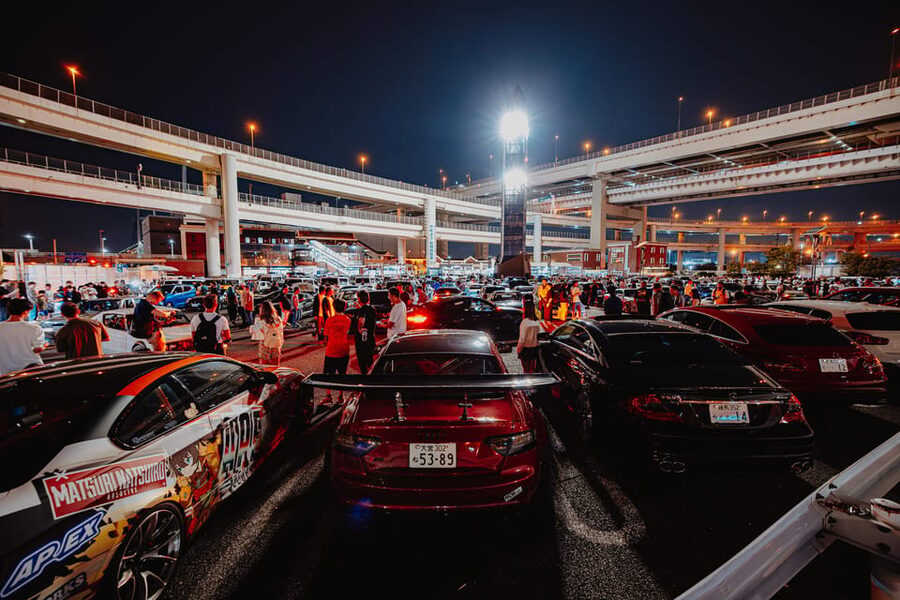
Daikoku Parking Area sits on Tokyo Bay’s industrial side, away from the usual sightseeing circuit. It is part of the highway network, not a simple city-center attraction, and that makes reaching it by ordinary public transport difficult. The tour gives you a practical way to get there while also showing you the car culture that has grown around Tokyo’s expressways.
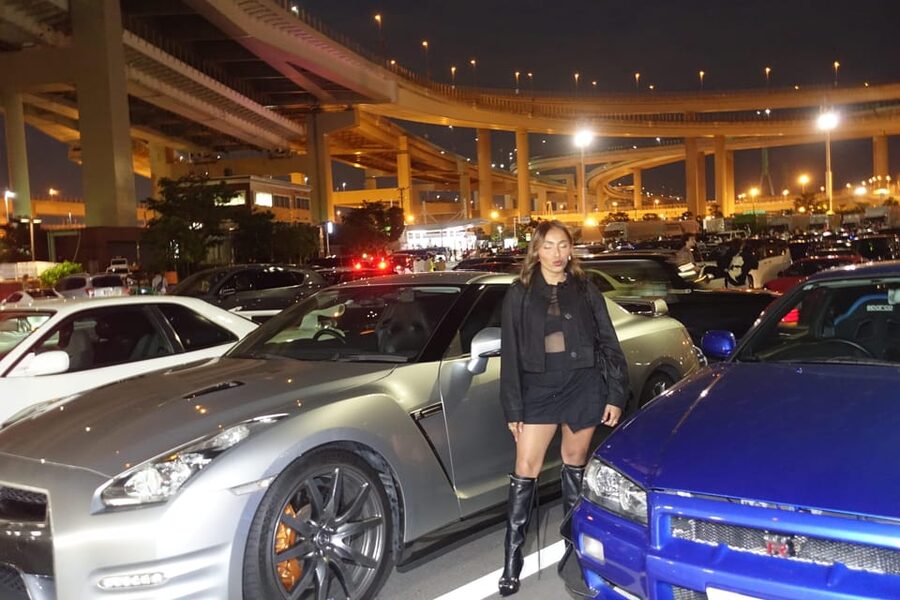
The setting matters. At Daikoku, you might find tuned Japanese cars, sports cars, unusual body kits, and everyday vehicles belonging to local owners. The selection is never fixed. A Friday evening may look very different from a quiet weekday, and a rainy night can reduce the gathering sharply.
That uncertainty is part of the deal. If you need to see a particular model, this tour cannot promise it. The standard experience does not guarantee an R34, Silvia, RX7, or GTR. For rare or special JDM cars, check the VIP package before booking.
You should also treat Daikoku as a working rest area first and a car meet second. You can find restrooms, convenience stores, food, drinks, and car-related toys, but this is not an organized car exhibition with a published schedule. The best approach is to enjoy what appears that night.
More Night Tours in Tokyo
- Tokyo After 5: Authentic Japanese Food & Drink Night Tour
★ 4.5 · 560 reviews - EVO, WRX, Skyline – JDM Night Run to Daikoku Car Meet
★ 4.9 · 478 reviews - Shibuya Meltdown Night Tour: All-You-Can-Drink Bar Hopping
★ 4.8 · 183 reviews
Meeting at Tokyo Station and choosing your pickup
The main meeting point is in front of BAR STAND T at 1F, 1-5-1 Marunouchi, Chiyoda-ku, near Tokyo Station. The tour cars park in front of the shop, so look for the custom cars and guides rather than only the bar sign.
Meeting times change by day:
- Monday through Thursday: 7:30 PM
- Friday through Sunday: 6 PM
You can also choose pickup near Shinbashi Station, and optional hotel pickup is available. If you choose hotel pickup, wait outside five minutes before the planned time. Traffic can shift the pickup time, and delays of up to 30 minutes are possible.
Arrive early. This matters more than it might on a normal sightseeing tour. The group may be split among several cars, and one late arrival can affect everyone’s time at Daikoku. One recent booking lost part of its parking-area visit after waiting for a late passenger. You should be at the meeting point before departure, with your phone ready in case the guide needs to reach you.
APIT, engines, parts, and weekday browsing
From Monday through Thursday, the first stop is usually APIT, one of the larger car shops in the Tokyo area. This is not included on Friday, Saturday, or Sunday, so weekend bookings move on without it.
APIT gives you a different view of Japanese car culture. Instead of only seeing finished cars at a meet, you can browse parts, accessories, souvenirs, and actual engines on display. For a car enthusiast, this stop adds useful context. It shows the commercial side of tuning and customization, where owners find the parts that later appear on cars at Daikoku.
I would not treat APIT as the main reason to book the tour. Its value depends on your interest in parts and Japanese automotive retail. If you are traveling with someone who is less interested in cars, this may be the slowest portion of the evening. On the other hand, it gives you a chance to look around before the highway drive and makes the tour feel less like a simple transfer to Daikoku.
Riding the Bayside Line through Tokyo at night
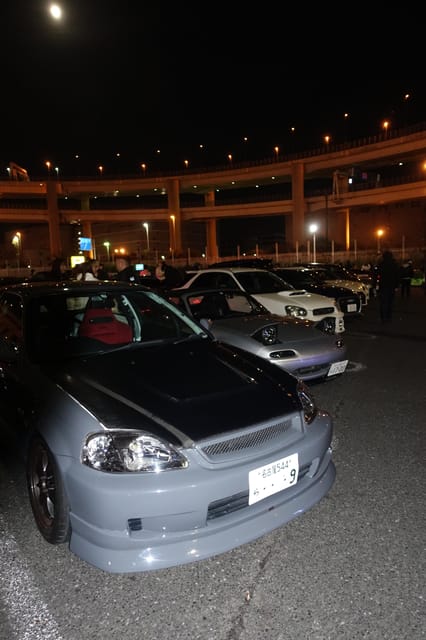
The drive is a major part of the experience. You travel through popular expressway routes toward Daikoku, with views of Tokyo’s lights and the waterfront. The route can include the Rainbow Bridge, and guides point out Tokyo landmarks along the way. Tokyo Tower is also part of the sightseeing loop, though these are drive-by views rather than stops where you get out.
That distinction is important. You will see Tokyo Tower and Rainbow Bridge from the car, but this is not a photo tour with long pauses at each landmark. If you want a proper visit to either landmark, plan that separately.
The highway ride has its own appeal. Several guides, including JJ and Renon, are praised for mixing car talk with stories about the city and the local scene. Other guides such as Daiki, Marty, and Ryosuke have also been singled out for being friendly and easy to talk with. English ability varies, but the guides can use translation tools when needed.
The experience is not a licensed race. You are visiting a car scene, not booking a high-speed driving lesson. Some people may enjoy the atmosphere of Tokyo’s expressways and the sound of a favorite car, while others may expect a more controlled thrill ride. Keep your expectations grounded: the appeal is the route, the car, and the connection to the local scene.
More JDM Car Tours in Tokyo:
- FAST&FURIOUS EXPERIENCE Tokyo Car Club membership
★ 4.7 · 1,145 reviews - GT-R35 800hp Club Membership – secret underground car meet
★ 4.8 · 998 reviews - Tokyo: Fast & Furious Tokyo Drift 3 Experience (Kaila Yu SP)
★ 4.8 · 947 reviews - Tokyo: Daikoku JDM Car Meet & Night Car Culture Tour
★ 4.8 · 626 reviews
Arriving at Daikoku in the middle of the action
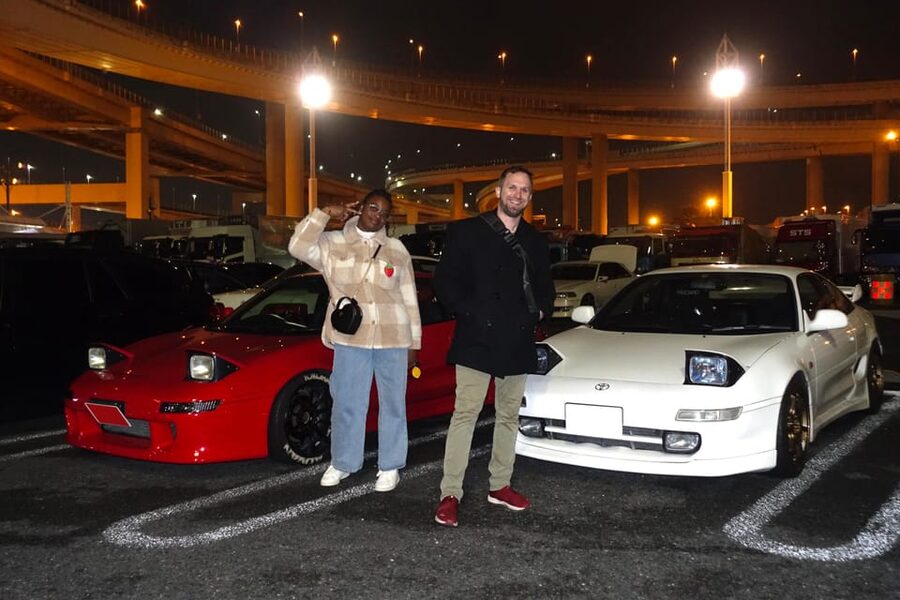
Daikoku is usually the evening’s main event. When the meet is active, you can walk around, take photographs, look at the cars, and speak with local owners when appropriate. The guides help explain what you are seeing and can point out models, modifications, and details that are easy to miss if you do not follow Japanese car culture closely.
Your guide may also help with photographs. Photo service is available on request during the tour, so ask rather than waiting for the guide to offer. Bring a camera or a phone with enough battery. Night lighting can be uneven, and you may want to take both wide shots of the parking area and closer pictures of individual cars.
You need to be respectful here. These are private vehicles, not props. Ask before sitting in a car, touching a vehicle, or taking close-up photos of the owner. One family booking included a child sitting in a car for photographs, but that kind of access depends on the owner’s permission and the situation at the meet.
The usual visit can last around an hour, with the rest of the three-hour tour spent driving to and from the site. That is a reasonable balance, but it means the experience is not a long evening at the parking area. If Daikoku is especially busy, the time can pass quickly.
What happens when Daikoku is closed
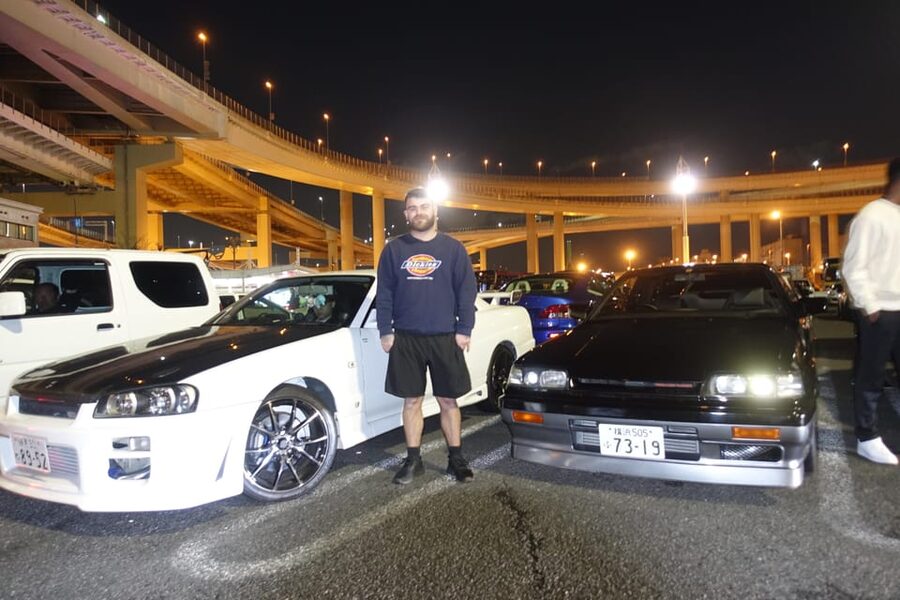
Daikoku is not guaranteed to remain open to a car meet. Police may clear the area, weather may reduce attendance, or the guide may need to change the plan because of road conditions. The tour information is clear about this, and you should take it seriously.
A useful alternative can be Umihotaru PA, another highway rest area where cars may gather when Daikoku is unavailable. One tour group was redirected there after Daikoku was closed and still saw rare and highly modified cars, including R34s, R35s, an NSX, and an RX7 with a Veilside kit.
That does not mean Umihotaru will always have the same cars. It simply shows why a local guide adds value. The guide can react to the night’s conditions instead of sending you toward a closed parking area with no backup plan.
Still, a substitute stop is not identical to Daikoku. If Daikoku itself is the sole reason you are booking, accept that the main site may be unavailable or unusually quiet. The tour offers a strong chance to see the scene, not a promise of a specific location and lineup.
The random sports or JDM car ride
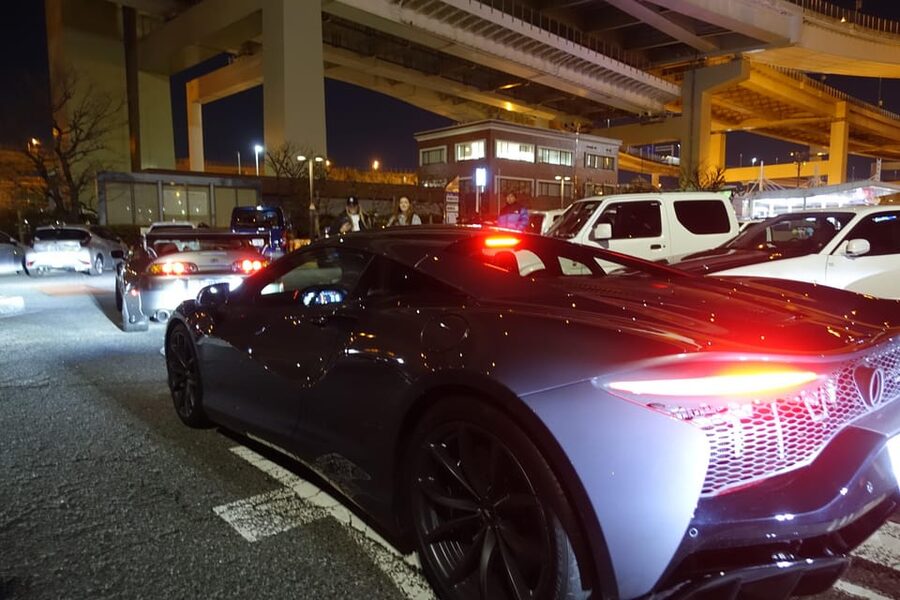
A standard booking includes a ride in a randomly selected sports or JDM car. Subaru and RX8 rides are specifically listed among the possibilities. Cars used on different outings have also included vehicles such as a Toyota Cruiser, Nissan Skyline, and S15, but you should not assume you will get one of those models.
The random assignment keeps the experience varied, but it can frustrate anyone arriving with one exact car in mind. You do not book the standard tour expecting an R34 or RX7. Special cars, including R34s, Silvia models, and some other sought-after JDM vehicles, may require the VIP package.
The car ride is best understood as a personal connection to the scene. You are not simply looking at cars from behind a barrier. You get to ride in one, talk with its driver, and see how it feels to move through Tokyo’s night roads in a Japanese performance car.
You may share a car with other participants. If privacy matters, ask about the private-group option before booking. A private group can also make conversation and photography easier, though the provided information does not promise a particular vehicle even for a private booking.
Is $160 a fair price?
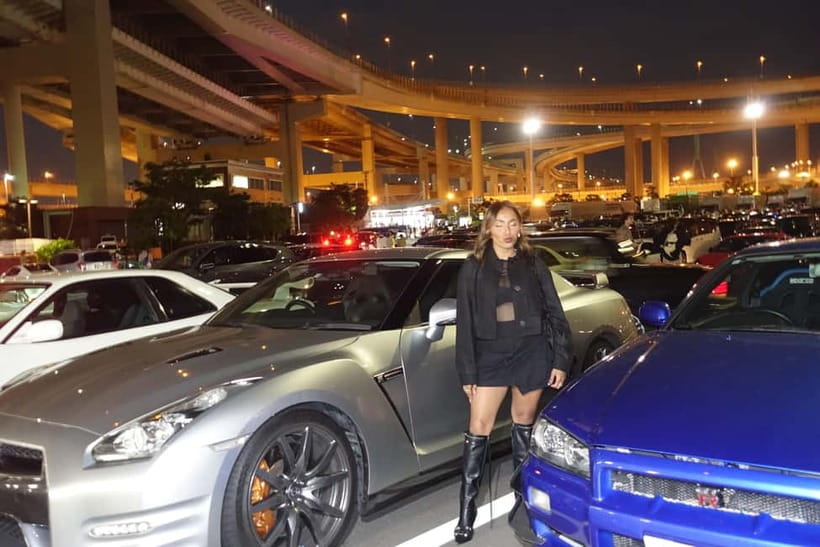
At $160 per person for three hours, this is not a cheap way to see a parking lot. The price covers more than entry to Daikoku, which does not function like a normal ticketed attraction. You are paying for a guide, transport on difficult-to-reach expressway routes, a car ride, local car-scene access, landmark views, and the chance to change plans if conditions require it.
For a committed JDM fan, that can be good value. You avoid the problem of trying to reach Daikoku by taxi or finding your way through Tokyo’s highway system at night. You also get conversation and context from guides who are connected to the local scene.
For a casual visitor, the value is less certain. You may spend much of the three hours in a car, and the parking area may be quiet. If your main goal is Tokyo Tower, Rainbow Bridge, or a general night drive, less expensive sightseeing options may suit you better.
I see the price as reasonable for someone who specifically wants the Daikoku experience and the ride in a JDM or sports car. It is harder to justify if you want a guaranteed rare model, a long walk around a busy meet, or a full tour of Tokyo landmarks with stops.
Timing, clothing, and guide communication
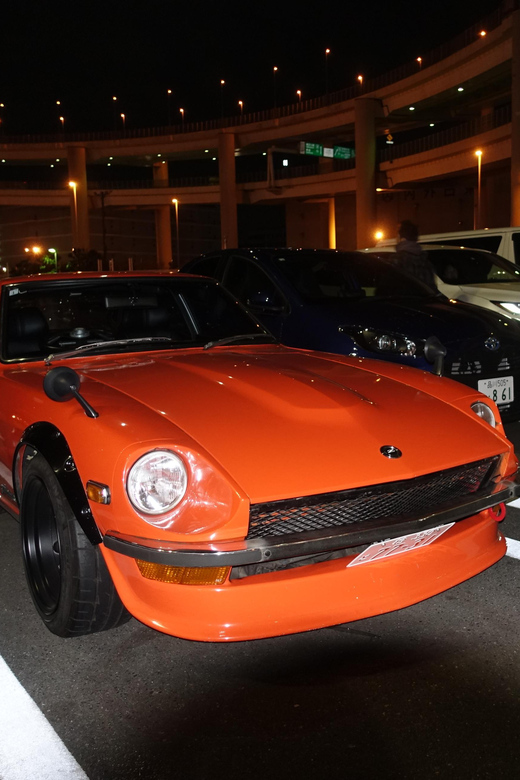
Bring comfortable shoes, warm clothing, and a camera. You will be getting in and out of cars and walking around the parking area, while the waterfront can feel cooler at night.
The tour is offered in English, but conversational ability varies by guide. JJ, Renon, and several other guides have handled detailed car and city conversations in English, while some guides may rely more on translation tools. If fluent English is important to you, request that in advance by direct message.
The tour allows free cancellation up to 24 hours before departure, and you can reserve now and pay later. Alcohol and drugs are not allowed, and baby strollers are not permitted. These points are easy to overlook when you are focused on the cars, so plan accordingly.
Who will enjoy this most?
I would choose this for:
- Someone who follows Japanese cars, tuning, or the Wangan and JDM scene
- A visitor who wants to see Tokyo from the expressways at night
- A couple or small group looking for an unusual evening activity
- A parent and older child who can appreciate the cars and follow the group timing
- Anyone who cannot easily reach Daikoku independently
I would be more cautious if you dislike sitting in a car, need a guaranteed itinerary, or want a quiet, highly structured tour. The evening depends on traffic, weather, police activity, the guide, and what cars happen to gather.
Should you book the Daikoku night tour?
Book it if Daikoku is on your Japan wish list, you enjoy the drive as much as the destination, and you can accept a changing lineup. The strongest parts are the local guides, the Bayside Line ride, the random JDM car experience, and the chance to see Tokyo’s underground car culture in its own setting.
Skip it if you need a guaranteed R34, GTR, RX7, or Silvia, or if the cost feels too high for a three-hour outing with no promise of a busy meet. For the best chance of a lively evening, choose a Friday, Saturday, or Sunday, but remember that those days do not include APIT. Arrive early, dress warmly, ask for the photo service, and treat the cars and owners with respect.
FAQ
How long is the Daikoku car meet tour?
The tour lasts three hours, including the drive from Tokyo to the car meet area and the return journey.
Where is the main meeting point?
The meeting point is in front of BAR STAND T at 1F, 1-5-1 Marunouchi, Chiyoda-ku, Tokyo, near Tokyo Station. The tour cars park in front of the shop.
What time does the tour start?
Monday through Thursday tours meet at 7:30 PM. Friday through Sunday tours meet at 6 PM.
Is hotel pickup available?
Optional pickup is available. You can also use the free pickup and drop-off service near Shinbashi Station. If you select hotel pickup, wait outside five minutes before the scheduled time.
Is APIT included every day?
No. APIT is normally included Monday through Thursday. It is excluded on Friday, Saturday, and Sunday.
What cars can I ride in?
The standard tour includes a random sports or JDM car ride. Subaru and RX8 are listed as possible vehicles, but the exact car is not guaranteed.
Can I ride an R34, Silvia, RX7, or GTR?
Those cars are not guaranteed in the standard package. The tour information directs you to check the VIP package for R34, Silvia, and other special JDM cars.
Will Daikoku always be open and crowded?
No. The meet can vary because of weather, time of day, traffic, and police activity. In some cases, the guide may use another location such as Umihotaru PA.
Is the tour offered in English?
Yes, the tour is offered in English. The conversational level differs between guides, so request a highly fluent English-speaking guide in advance if needed.
Just added around Tokyo
- Kawagoe Japanese Food Tour : Unagi Kaiseki and Sake near Tokyo★ 5.0 · 30 reviews
- Kawagoe 4hr Private Tour with Licensed Guide (Kawagoe Dep)★ 5.0 · 13 reviews
- Little EDO Sushi Making workshop in Kawagoe★ 5.0 · 18 reviews
- 【R34】Tokyo:Private Daikoku tour in Modified R34★ 4.9 · 92 reviews
- :Tokyo,Shibuya/ Pro Photography in Kimono / English-Friendly★ 5.0 · 26 reviews
- Tokyo:Celebrate Unique Japanese New Year Tradition Festivity★ 3.9 · 20 reviews
- Tokyo: Allstar Food Tour★ 4.7 · 29 reviews
- Tokyo: West-Side Cycling and Food Tour with Guide★ 5.0 · 37 reviews
JDM & Car Meets, compared.
FAST&FURIOUS EXPERIENCE Tokyo Car Club membership
Our verdict →
Tokyo Drift: Daikoku PA Supreme Car Experience 大黒PA
Our verdict →
Tokyo JDM Night: 600hp C63s AMG Edition 1 (Private)
Our verdict →Browse the lists this tour appears in