
Reviewed · FISH MARKET TOURS
Tsukiji Fish Market: Street Food & Culture Walking Tour
Tsukiji’s best lesson is deliciously simple: in Tokyo, food is a doorway into daily life. This two-hour walk takes you through market stalls, a fish-cutting demonstration, a seafood bowl, and Tsukiji Hongwanji Temple, with a local guide explaining what you are seeing and eating.
I like the small-group format, which gives guides such as George and Tomo room to answer questions. I also like the mix of eating and watching skilled preparation, especially the traditional filleting show. The drawback is that Tsukiji can become crowded and stop-and-go, and a quiet guide may be hard to hear near the stalls.
Key points to know before you book
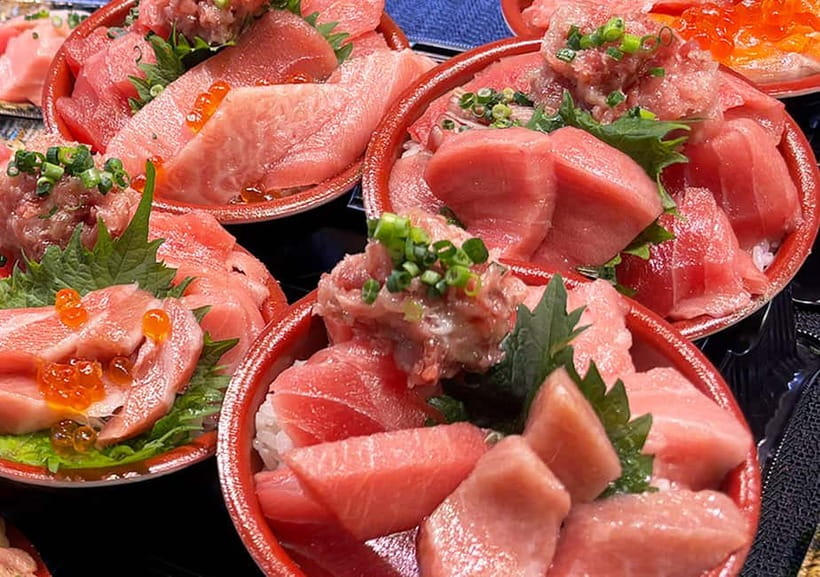
- Watch a whole-fish cutting demonstration: A skilled chef fillets a fish using traditional techniques, then you enjoy a fresh seafood bowl.
- Taste your way through Tsukiji: The guide points out market foods and helps you choose places to eat.
- See more than food stalls: A visit to Tsukiji Hongwanji Temple adds a Buddhist and cultural note.
- Plan for a busy walk: Crowds, waiting, and uneven pacing can affect the experience, especially near New Year.
- Good access for many visitors: The route is wheelchair and stroller accessible, and most people can take part.
- Two hours keeps it manageable: You get a useful introduction without giving up a full morning in Tokyo.
Why Tsukiji still matters after the wholesale market moved
Many people arrive at Tsukiji expecting the old wholesale fish market. That is no longer the full picture. The inner wholesale operation moved to Toyosu, while Tsukiji’s outer market remains a place to find food stalls, seafood sellers, cooking ingredients, and small eateries.
That change matters because this tour is not mainly about watching a giant auction floor. It is about seeing how Japanese food is sold, prepared, and enjoyed in a compact market district. You walk close to counters and stalls, watch the work being done, and learn how ingredients connect to Japanese cooking.
The tour also gives you a local guide to interpret the market. Without help, you can certainly walk around Tsukiji on your own, but menus, ingredients, preparation methods, and market customs may pass by quickly. A good guide turns those details into a readable story.
The experience has a 5 out of 5 rating from 669 reviews and a 99 percent recommendation rate. Those numbers suggest that the food-focused format works very well for many people, especially those who want a quick introduction rather than a long lecture on Tokyo’s past.
More Food Tours in Tokyo
- Tokyo: Shinjuku Food Tour (13 Dishes at 4 Local Eateries)
★ 5.0 · 6,603 reviews - Tokyo Tsukiji Fish Market Food and Culture Walking Tour
★ 5.0 · 3,184 reviews - Tokyo: Shinjuku Food Tour (15 Dishes and 4 Eateries)
★ 4.9 · 2,033 reviews
Starting at Tsukiji Hongwanji Temple
The meeting point is at Tsukiji Hongwanji Temple, at 3-chōme-15-1 Tsukiji. Starting here is practical because you get your bearings before entering the market lanes, and the temple gives the tour a useful cultural opening.
You enter with the guide and learn about the temple’s character, Buddhist culture, and place in the area. The temple stop lasts about 15 minutes, so it is an introduction, not a full religious studies visit. If you are especially interested in temple architecture or Buddhism, you may want to return later for a longer look.
This stop has mixed value depending on your interests. I like it because the market makes more sense when it is not treated as a food-only attraction. Japanese food culture exists alongside religious traditions, neighborhood life, and long-standing local customs. Still, one person found the temple section added little, so you should not book the tour mainly for this part.
The meeting point is near public transportation, and the route ends back where it starts. That return is handy when you are deciding what to do next in central Tokyo.
Eating through Tsukiji Jogai Market
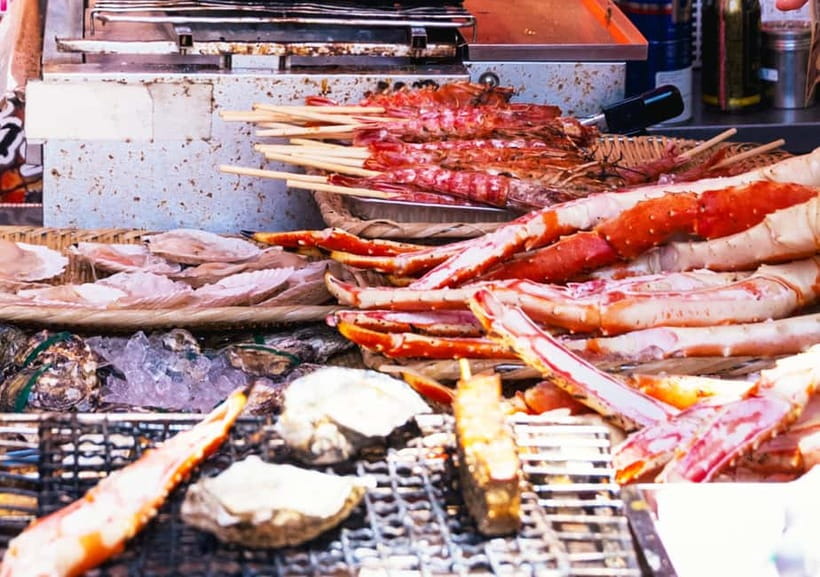
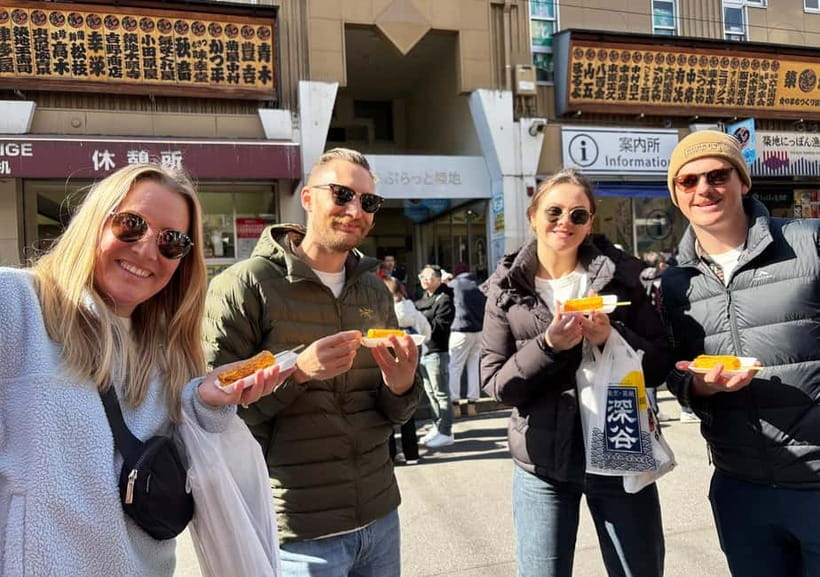
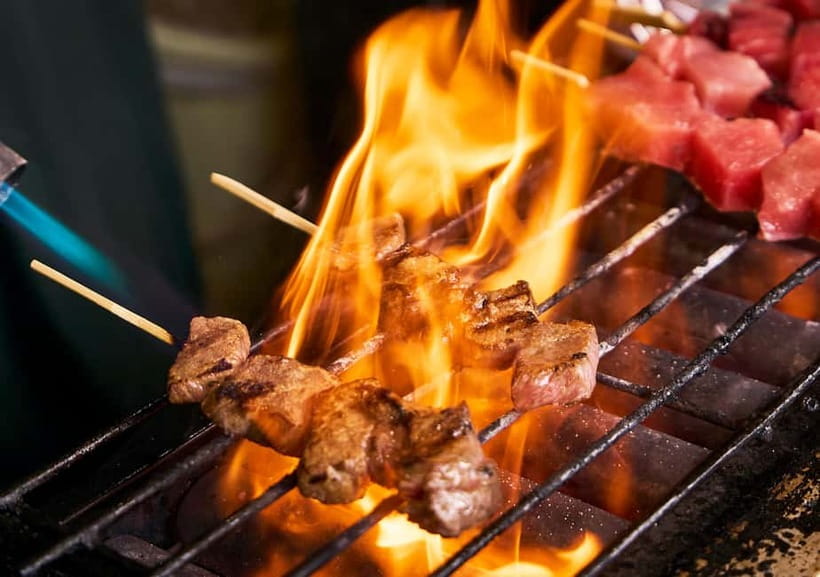
The main section takes place in Tsukiji Jogai Market, the outer market area. You spend about 45 minutes exploring with the guide and trying street food or market snacks. The guide’s role is especially useful here because you can ask what an ingredient is, how it is prepared, and what makes one food different from another.
This is not a sit-down restaurant meal with a fixed menu. The pace is closer to a guided food walk, with stops at market counters and small places to eat. Meals are not formally included, so you should expect to pay for the food you choose unless your booking arrangements say otherwise.
That distinction is important when judging the $33.16 price. You are paying mainly for the guide, access to the planned fish-cutting presentation, local explanations, and the structure of the walk. You should also budget for any food you buy. If you are comfortable choosing stalls on your own, the tour may feel less valuable. If you want help making sense of unfamiliar foods, the price is easier to justify.
George received especially strong praise for knowing the best places to try the food. Tomo was also noted for explaining history and culture clearly and in good English. Guides can change, so you should not assume either person will lead your departure, but their strengths show what makes this tour work: practical food advice paired with clear explanation.
The market is also where the tour can become hectic. You may stop and wait while the group gathers or while food is prepared. A few people found the experience too focused on encouraging food purchases, with less history than expected. That is fair criticism if you want a traditional sightseeing tour. This is first a market walk with cultural context, not a long historical tour.
The fish-cutting show and seafood bowl
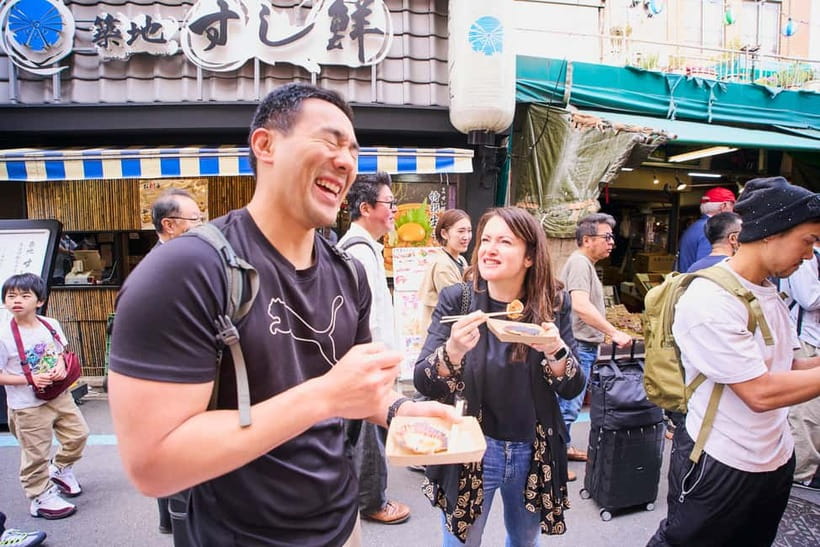
The most distinctive part of the experience is the 30-minute fish-cutting demonstration. A skilled chef fillets a whole fish using traditional techniques, allowing you to see the care and precision behind a dish that may look simple once it reaches the table.
This is useful because it connects the market to Japanese craftsmanship. You are not simply shown a finished seafood bowl. You see part of the process, including the way a chef handles the fish and prepares it for eating. The demonstration gives the food a human scale.
Afterward, you enjoy a fresh seafood bowl. The supplied details describe this bowl as part of the included demonstration experience, while the general tour information says meals are not included. To avoid confusion, check the exact booking terms for your date and package before assuming every food stop is covered. Additional market food is best treated as an extra expense.
This portion can be a highlight for anyone interested in cooking, knives, seafood, or Japanese food traditions. It also gives the walk a clear center instead of leaving you to wander from stall to stall.
You should keep your expectations measured. The show is described as an exclusive fish-cutting demonstration, but it is still only about 30 minutes within a two-hour tour. It will not teach you how to fillet fish yourself, and it is not a full cooking class. Think of it as a close look at a traditional skill.
More Market Tours in Tokyo
- Tokyo: Tsukiji Fish Market Food and Walking tour
★ 5.0 · 1,724 reviews - Tokyo: Tsukiji Fish Market Guided Walking Tour
★ 4.9 · 1,397 reviews - Tsukiji Fish Market Guided Tour and Sushi Making with Pro Chef
★ 5.0 · 775 reviews - Tokyo: Tsukiji Fish Market Food and Culture Walking Tour
★ 4.7 · 757 reviews
Seeing the working side of Tsukiji
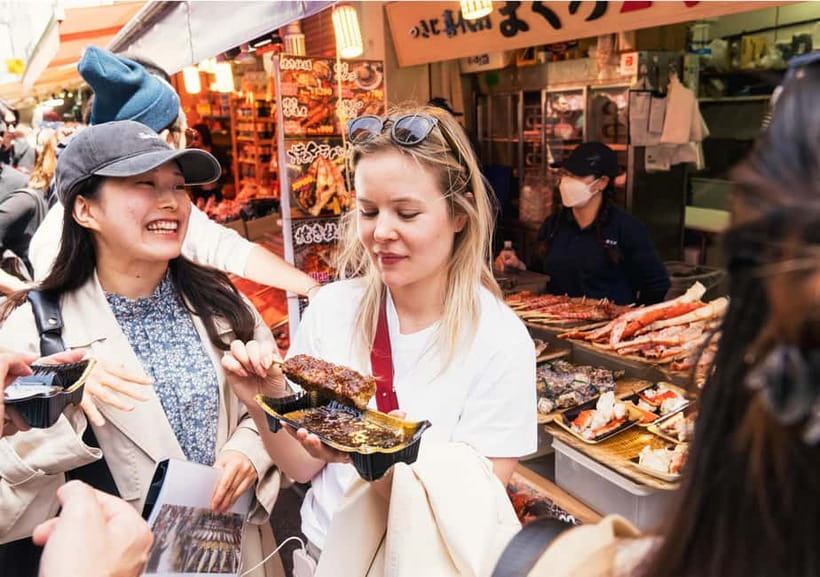
Another 30-minute section takes you through the fish market area where professional traders operate. This helps separate Tsukiji from a simple row of tourist food stands. You get a sense of the market as a working place, not just a snack stop.
The benefit of a guide here is context. A market can look like a blur of signs, counters, products, and movement. The guide helps you notice what is being sold and how the area functions. You may find the atmosphere more interesting than any single food sample.
At the same time, this is a live commercial setting. Crowds can make it difficult to stay beside the guide, and a person who speaks quietly may be hard to hear. One account described the guide as almost impossible to hear in the noise. If you have hearing concerns, stand close to the guide and mention the issue at the start.
The walk is designed for a maximum of 30 people, though the actual small-group feel may depend on the departure. A larger group can make narrow market lanes feel crowded. The best experience comes when the guide keeps the group together and waits at turns.
What the temple and market say together
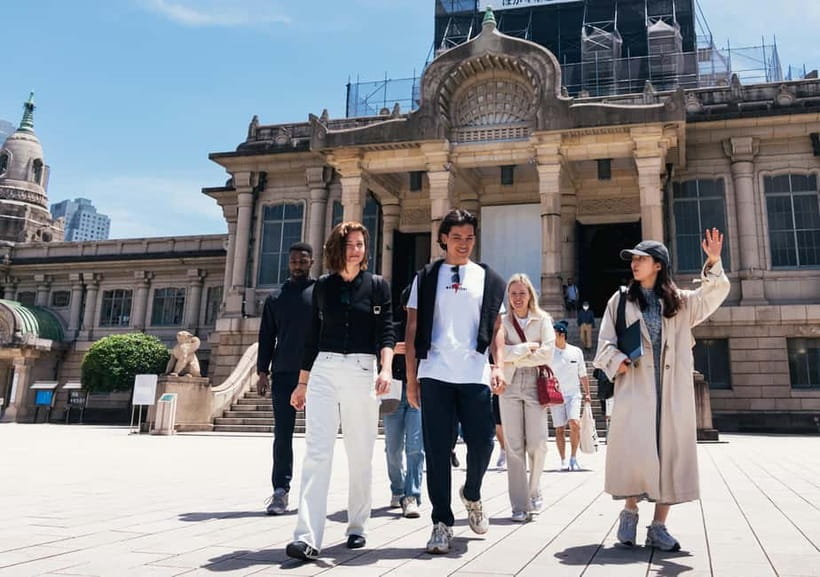
The tour’s route is short, but its contrast is useful. At the temple, the mood is reflective and cultural. In the market, your attention shifts to ingredients, preparation, buying, and eating.
I like this pairing because it avoids presenting Japanese food as an isolated attraction. Food is tied to custom, skill, commerce, and community. Even the brief temple visit helps frame the market as part of a neighborhood rather than a collection of photo stops.
Still, you should decide what kind of tour you want. If you prefer a fast, food-heavy outing, the temple may feel like a detour. If you want a little more cultural balance, the 15-minute stop improves the route.
The tour also gives you a chance to ask questions as you go. That personal contact is one of the better reasons to book instead of simply walking through the market. A guide can explain ingredients in plain terms and help you avoid spending your limited time guessing.
Crowds, timing, and the pace of the walk
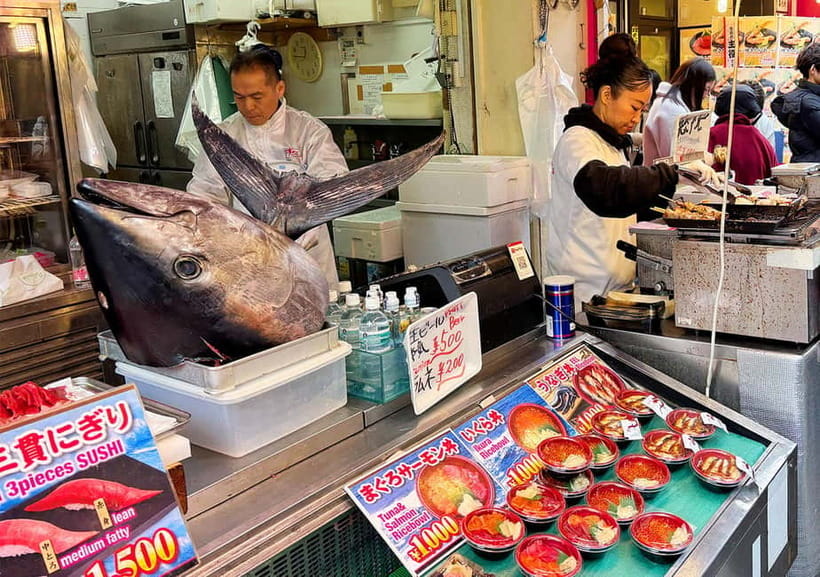
Tsukiji is compact, but compact does not mean calm. During busy periods, including the days around New Year, the lanes can become crowded. A group may need to stop while people catch up, and food counters may require waiting.
That affects the value of a two-hour tour. On a quiet morning, the route should feel focused and easy to follow. At peak times, the same plan may feel unorganized. One person found the guide did not always wait for the group, while another described the walk as hectic and skipped stalls because of the crowds.
You can improve your experience by arriving ready to move at the meeting time and staying near the guide. Keep your attention on the group at turns, and do not expect every stall to be visited. The market changes with demand, space, and crowd flow.
Good weather is required. If poor weather causes cancellation, you are offered another date or a full refund. The walk is wheelchair and stroller accessible, and most people can participate, but the crowd level may still affect how comfortable the route feels.
Is $33.16 a fair price?
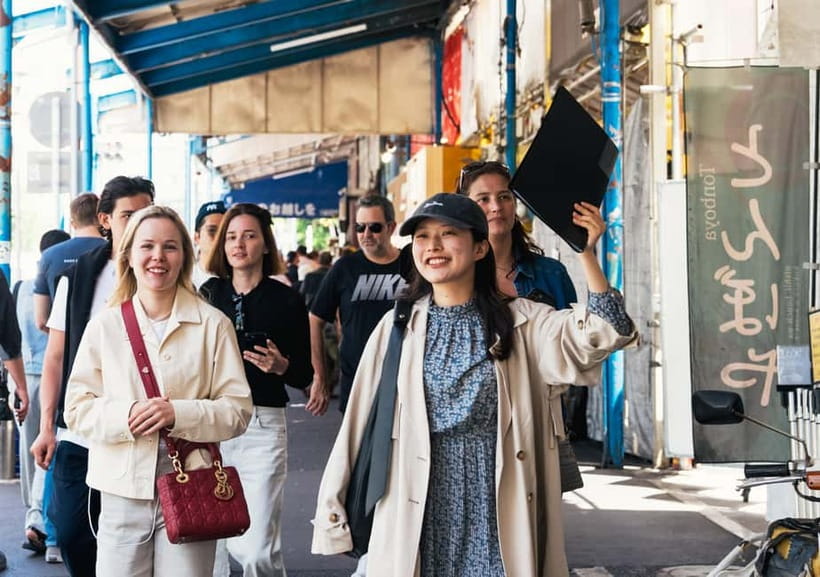
At $33.16 per person, this is a modestly priced guided experience for Tokyo. The value depends on what you want from Tsukiji.
I think the price is fair if you want three things: help choosing food, an organized introduction to the market, and a traditional fish-cutting show. The return to the same meeting point also makes the tour easy to fit into a larger Tokyo day.
The price is less appealing if you mainly want to browse stalls at your own speed. Tsukiji’s outer market can be explored without a guide, and the tour does not include every meal. If you already understand Japanese ingredients and market customs, you may not gain as much from the explanations.
The small-group promise is another part of the value. A guide can spend more time answering your questions than on a large coach-style outing. But the maximum group size is 30, so do not assume every departure will feel private. The actual quality depends heavily on the guide’s voice, pacing, and ability to keep people together.
A strong guide can make the fee worthwhile. George’s food recommendations and Tomo’s clear explanations show the difference a capable leader can make. Just remember that guide assignments can vary.
Who should book this Tsukiji walk?
I would choose this tour for a first visit to Tsukiji, especially if you enjoy trying unfamiliar food but want help deciding what to taste. It also suits people who like seeing preparation techniques rather than only taking pictures of finished dishes.
Families may appreciate the short duration and stroller access. The route is also suitable for many wheelchair users, though crowded market lanes can still affect comfort and movement.
Food-focused visitors will get the most from it. You will probably enjoy the tour less if you want a detailed account of Tokyo’s political history, an extended Buddhist lesson, or a formal cooking class.
Give yourself room in the schedule after the tour. The walk ends back at the temple meeting point, but you may want extra time to explore nearby stalls or continue eating on your own. Since food purchases are not fully covered, carrying a little spending money is sensible.
Should you book it?
Book this tour if you want a compact, guided introduction to Tsukiji with real food, a fish-cutting demonstration, and a small amount of Buddhist culture. The best parts are the practical market guidance and the chance to connect a seafood bowl with the skill behind it.
Skip it if you are happy exploring independently, dislike crowded walks, or expect a serious history tour. The experience can include waiting, uneven pacing, and less historical explanation than some people want.
For most first-time visitors who want to understand what they are seeing and eating, the $33.16 fee is reasonable. Go in expecting a lively food walk, not a quiet museum visit, and this tour has a good chance of making Tsukiji easier and more rewarding to navigate.
FAQ
How long does the Tsukiji Fish Market tour last?
The tour lasts approximately two hours.
Where does the tour begin and end?
It begins at Tsukiji Hongwanji Temple, at 3-chōme-15-1 Tsukiji, Chuo City, Tokyo. The activity ends back at the meeting point.
Is food included in the tour?
Meals are listed as not included. The itinerary also includes a fresh seafood bowl after the fish-cutting demonstration, so check the exact terms of your booking for what is covered and plan for extra food purchases.
Is the tour wheelchair and stroller accessible?
Yes. The tour is described as wheelchair and stroller accessible.
How many people can join the tour?
The activity has a maximum of 30 participants. It is presented as a small-group tour, but the exact group size can vary.
Can I cancel for a full refund?
Yes. You can cancel at least 24 hours before the experience start time for a full refund. Changes or cancellations made less than 24 hours before the start time are not accepted for a refund. If poor weather cancels the tour, you are offered another date or a full refund.
More Fish Market Walks in Tokyo
- Tokyo Sushi Making Class in Tsukiji with Professional Chef
★ 5.0 · 1,177 reviews - Tsukiji Fish Market Small-Group Food Walking Tour
★ 5.0 · 621 reviews - Tokyo: Tsukiji Fish Market Sushi Making Class with Pro Chef
★ 4.9 · 506 reviews - Tokyo Food Tour Taste Fresh Delights at Tsukiji Market
★ 5.0 · 429 reviews
More Walking Tours in Tokyo
- Tokyo: Imperial Palace and Shogun Historical Walking Tour
★ 5.0 · 2,251 reviews - Tokyo: Shinjuku Local Bar and Izakaya Guided Walking Tour
★ 4.9 · 1,794 reviews - Tokyo: Asakusa Walking Tour with Sensoji Temple Visit
★ 4.8 · 1,583 reviews - Tokyo Castle & Imperial PalaceーShogun Walking Tour
★ 4.7 · 1,068 reviews
Just added around Tokyo
- Kawagoe Japanese Food Tour : Unagi Kaiseki and Sake near Tokyo★ 5.0 · 30 reviews
- Kawagoe 4hr Private Tour with Licensed Guide (Kawagoe Dep)★ 5.0 · 13 reviews
- Little EDO Sushi Making workshop in Kawagoe★ 5.0 · 18 reviews
- 【R34】Tokyo:Private Daikoku tour in Modified R34★ 4.9 · 92 reviews
- :Tokyo,Shibuya/ Pro Photography in Kimono / English-Friendly★ 5.0 · 26 reviews
- Tokyo:Celebrate Unique Japanese New Year Tradition Festivity★ 3.9 · 20 reviews
- Tokyo: Allstar Food Tour★ 4.7 · 29 reviews
- Tokyo: West-Side Cycling and Food Tour with Guide★ 5.0 · 37 reviews
Fish Market Tours, compared.
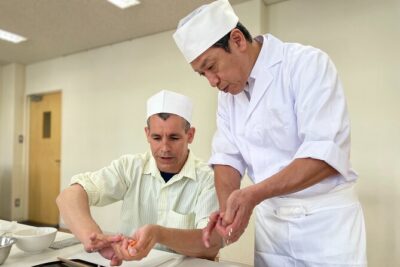
Tokyo Sushi Making Class in Tsukiji with Professional Chef
Our verdict →

Wakayama Cat Train, Seafood market, Hot Springs Tour
Our verdict →
Awesome Private Tour: Tsukiji, Asakusa, Shinjuku, Shibuya
Our verdict →Browse the lists this tour appears in