
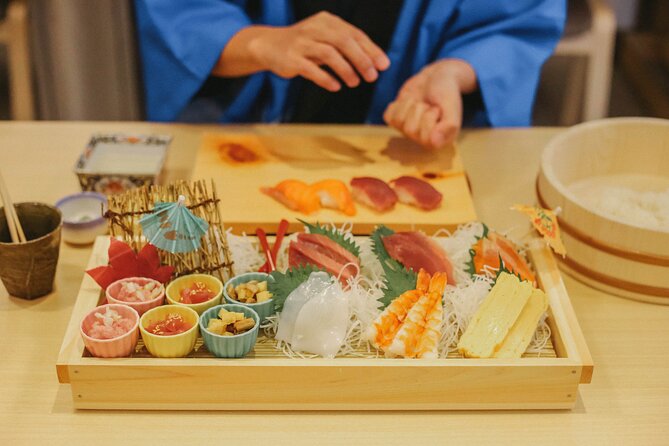
Reviewed · SUSHI EXPERIENCES
Popular Sushi Making Class near Tokyo Tower
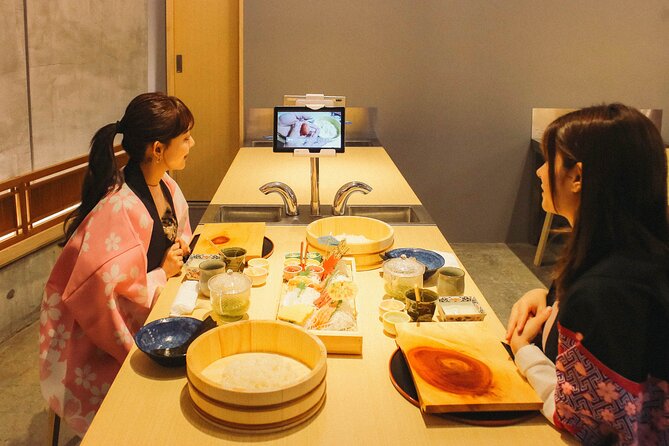
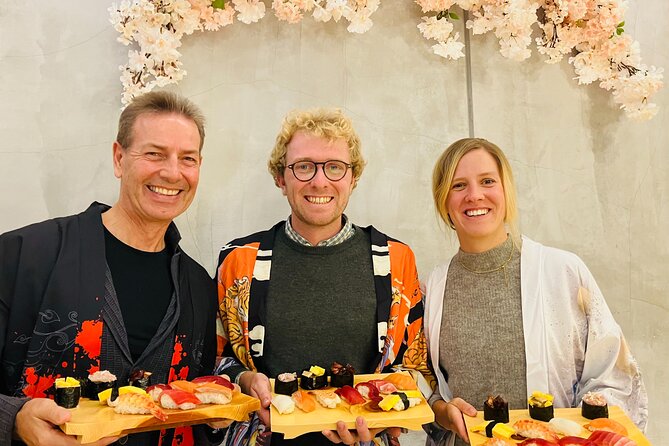
Making sushi is the main event here, but the fun starts with dressing up in kimono-style clothing and learning how each piece is assembled. You work beside an English-speaking chef, prepare sushi with salmon, tuna, and other ingredients, then eat what you make.
I like the hands-on format, since you are not just watching a chef work. I also like the location near Tokyo Tower, which makes it easy to pair the class with sightseeing. The main caution is price: at $87.55 per person, this is more expensive than simply eating sushi, and the experience can feel brief if you finish quickly.
Key points to know before booking
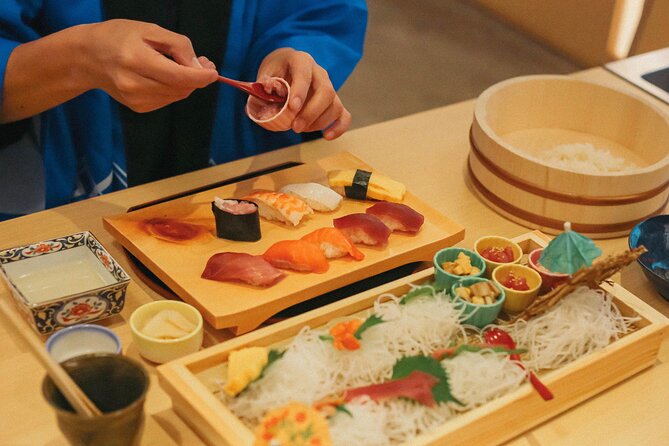
- Make and eat your own sushi: You prepare roughly 8 to 12 pieces, then have them as your meal.
- English instruction: The chef demonstrates each step, with a short video available beside your seat.
- Kimono-style photos: Costumes, props, and photo opportunities add a playful cultural touch.
- Near Tokyo Tower: The class is in Higashiazabu, close to Tokyo Tower, Zojo-ji, and Shiba Park.
- Good for families: Children from age four pay the listed fee, and the class works well for ages seven to fifteen.
- Dietary requests need advance notice: Vegetarian, vegan, and gluten-free options are available if requested ahead of time.
What the sushi class is really like
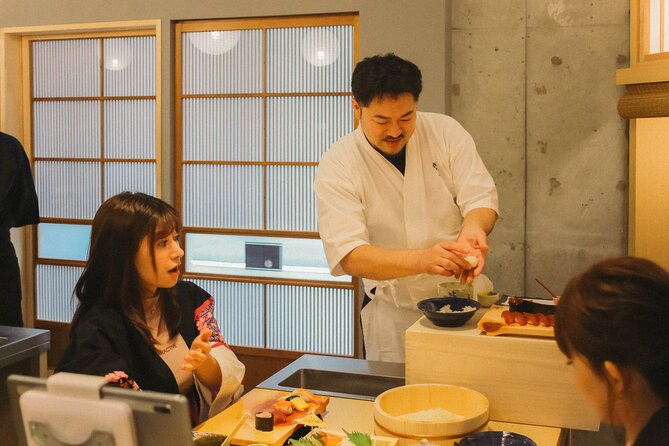
This is a compact food lesson, not a long culinary course. You arrive at Sushi Garyu at 1-chōme-6-8 Higashiazabu, sit at an individual place, and follow a chef’s demonstration. The full experience lasts about 1 hour 30 minutes, although one account describes completing the class and meal in about an hour.
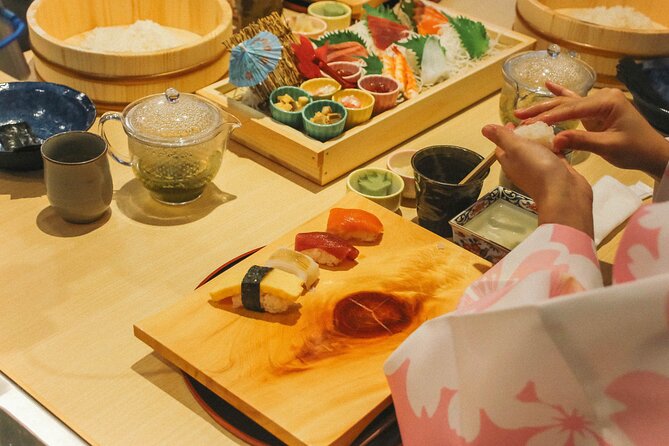
The class focuses on the practical work of sushi assembly. You handle the rice, place the fish, and learn how to shape each piece. The chef demonstrates the process step by step, then you copy it at your own station. If you need more rice, it is available, which matters because first attempts are rarely neat or evenly sized.
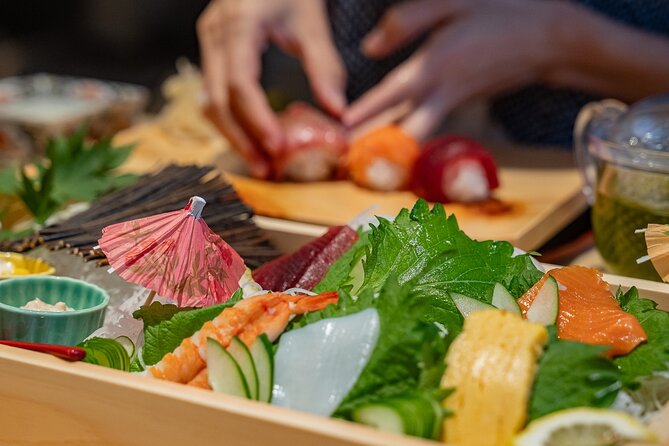
The food generally includes salmon, tuna, and other sushi ingredients. The exact selection is not specified, so you should think of this as a mixed sushi-making session rather than a menu you choose piece by piece. Most people receive enough food for a light meal, with reports ranging from eight to twelve pieces.
I like this setup for first-time sushi makers. You learn enough to understand the basic rhythm of the craft without spending half a day on rice preparation, knife work, or complicated rolls. If your goal is to become a home sushi expert, this class gives you a useful beginning, but it does not promise advanced instruction.
More Sushi Experiences in Tokyo
- Sushi Making Tokyo Roll and Authentic Japanese Sushi Class
★ 5.0 · 3,971 reviews - Tokyo: Roll and Authentic Sushi Making Class in Asakusa
★ 4.9 · 1,957 reviews - Make Sushi and Create Unforgettable Memories in Tokyo
★ 5.0 · 1,413 reviews
Learning from chefs such as Keiko, Yuki, and Mickie
The teaching style is central to the experience. Instructors named in the feedback include Keiko, Yuki, and Mickie, and the class is designed for English-speaking customers. The chef demonstrates while you work, and helpers may assist individual children or participants who need a little more guidance.
Keiko is especially noted for a warm welcome and patient explanations. Yuki is described as encouraging and friendly, while Mickie received praise for showing each piece step by step and helping with photos. Staff members are not just there to hand over ingredients. They also explain the food, answer questions, and chat about Japan and the countries participants come from.
That said, instruction can vary. One person found the language barrier made the class harder to follow, even though the sushi was tasty. A short video plays beside your seat, but it is only a supplement. If you prefer slow, detailed culinary instruction, pay close attention to the live demonstration and ask questions as you go.
The food: a meal you prepare yourself
The strongest practical feature is that you eat your finished sushi. This gives the class a clear purpose. You are not making decorative pieces that disappear into the kitchen. Your lunch or dinner is right in front of you, even if the shapes are a little uneven.
The ingredients are generally described as fresh, and several accounts praise the taste of both the fish and the rice. The class can produce a generous amount of food, so I would schedule it near a normal meal and arrive hungry. One person specifically advised making sure you have an appetite.
The quality is not guaranteed to please every palate. One critical account found the fish disappointing and the rice too hard, while most of the available feedback describes fresh fish and good-tasting sushi. That difference may reflect a busy session, personal expectations, or a variation in preparation. The fair conclusion is that the meal is usually a strong part of the experience, but you are paying for the lesson and the activity, not for the same refinement you might find at a specialist sushi counter.
You also learn small techniques that are easy to repeat at home. The class keeps the method simple, which helps you remember how to shape the rice and place the fish. Do not expect a full lesson on sourcing seafood or safely handling raw fish. The supplied information focuses on making and assembling the sushi.
Kimono costumes, samurai props, and photos
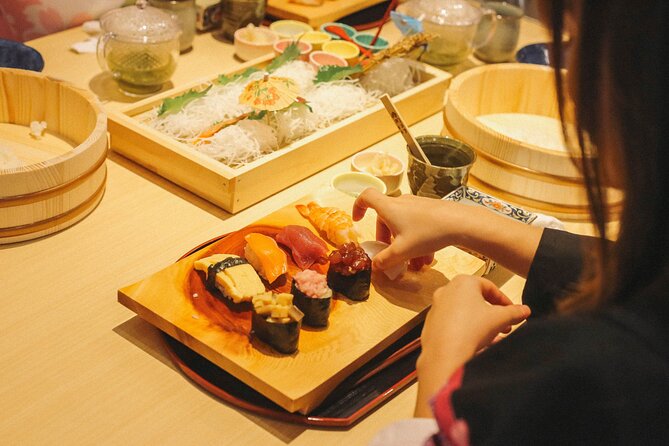
The dress-up element gives the class a light cultural angle. You may wear kimono-style clothing during the activity, then pose with props such as samurai swords. Staff can take photos, and one account also mentions a video and a bright ring light.
I see this as a bonus, not the reason to book. The costumes help children engage with the activity, and couples or friends may enjoy having a few memorable pictures from the day. It also breaks up the instructional portion, especially for anyone who is less interested in the technical details of rice shaping.
The photo session may add to the sense of occasion, but it can also make the experience feel more like a themed activity than a serious cooking class. If you want an intimate, traditional restaurant lesson with no staged elements, this may not be your ideal choice. If you want food, photos, and a little playful Japanese culture in one stop, it fits well.
Same trip, a completely different kind of day:
- 1-Day Tokyo Bus Tour
★ 5.0 · 14,250 reviews - Tokyo: TOKYO SKYTREE® Admission ticket
★ 4.5 · 11,192 reviews - Tokyo: teamLab Planets TOKYO Digital Art Museum Entry Ticket
★ 4.6 · 9,779 reviews - Tokyo: Sumo Show Experience with Chicken Hot Pot and a Photo
★ 4.8 · 6,678 reviews
How the nearby sights fit into your day
The listed sightseeing points are useful for planning, but they are not a sightseeing route included in the 90-minute sushi class. The activity begins and ends at the Higashiazabu meeting point. You should treat the nearby landmarks as add-ons before or after your meal.
Tokyo Tower: This is the obvious pairing. It is close enough to combine with the class, and one account recommends seeing the tower at night after dinner. A daytime class followed by an evening tower visit gives you two different views of the area.
Zojo-ji: This major Buddhist temple near Tokyo Tower adds a calmer, more traditional stop to your schedule. It works well before the class if you want a contrast between temple grounds and a modern food activity.
Azabujuban: This neighborhood is known for its restaurants and local shopping streets. It can make a pleasant extra stop, but the class itself is in Higashiazabu, so check your walking route rather than assuming every listed place is part of the activity.
Shiba Park: The park gives you open space near the tower and temple. It is a sensible place to walk off a filling meal, though the class does not include a guided park visit.
Teamlab Borderless Tokyo Azabudai Hills: This digital art attraction is in the wider Azabudai area. Pairing it with sushi can create a full afternoon, but allow separate time and admission for the attraction. It is not part of the sushi lesson.
Azabudai Hills: This modern development is another nearby area for shops, food, and architecture. It may be convenient to combine with the class, but the experience itself remains centered on the Higashiazabu venue.
Hamarikyu Wharf: This waterfront location is farther from the meeting point than the closest sights. It is useful as part of a wider Tokyo day, not as a quick extension of the class.
Tokyo City View Observation Deck at Roppongi Hills: The observation deck offers a different city outlook and pairs well with a Tokyo Tower visit if you want to compare landmarks. It is not included in the sushi activity, so plan transport and admission separately.
The National Art Center, Tokyo: This museum in Roppongi is another independent stop. It suits an art-focused day, but it is too broad a destination to squeeze into the class time.
Roppongi: Roppongi offers restaurants, nightlife, and museums. It can be your evening follow-up, though the meeting point is in Higashiazabu and the class ends where it begins.
The practical lesson is simple: use Tokyo Tower, Zojo-ji, Shiba Park, and Azabujuban as the easiest companions. Treat the other sights as separate parts of a larger day.
Price, timing, and group size
At $87.55 per person, this is not a budget lunch. You could eat sushi for less, especially at a casual restaurant. The value comes from combining a meal with instruction, costumes, photos, an English-speaking chef, and a location near one of Tokyo’s best-known sights.
I think the price makes the most sense for first-time visitors who want an easy, organized activity. It also works for families, since children can take part rather than simply wait while adults eat. Couples and friends who enjoy food classes may find the photos and shared task worth the added cost.
The class has a maximum of 14 participants. That is small enough to feel manageable, though not necessarily private. Depending on how busy the venue is, you may share a table or sit with other people. This can be a plus if you like meeting people, but it is worth knowing if you expected a private lesson.
Classes operate throughout the day. That flexibility helps you fit the experience around temple visits, museums, or Tokyo Tower. Book it close to lunch or dinner, since the finished sushi can replace a meal.
The activity uses a mobile ticket, and confirmation is provided when you book. It is near public transportation, though the supplied details do not identify a specific station or give step-by-step directions. Leave enough time to locate 1-chōme-6-8 Higashiazabu before the start.
Dietary needs and family planning
Vegetarian, vegan, and gluten-free versions are available, but you must request them in advance by message. Do not wait until the day of the class. The venue may not be able to change the ingredients at short notice.
You should also report food allergies ahead of time. This is especially important for a sushi activity, where fish and other ingredients are prepared as part of a shared lesson. The available information confirms that requests can be considered, but it does not promise that every allergy can be accommodated.
Children from age four are charged according to the child pricing rules. Children under four may share a dish, according to the provided information. The class has worked well for families with children from seven to fifteen, and helpers may give extra support when a child needs it.
I would choose this for children who enjoy doing things with their hands. It is less suitable for a child who dislikes fish, cannot sit through a short demonstration, or would rather have a standard restaurant meal.
Cancellation and the small risks to consider
Free cancellation is available if you cancel at least 24 hours before the local start time. Inside that window, the payment is not refunded, and changes are not accepted. That policy is fairly standard, but keep it in mind if your Tokyo schedule is still shifting.
The bigger practical risks are expectations and pace. This is a short, friendly introduction, not a professional chef course. The teaching may feel rushed if the session moves quickly, and the quality of the rice or fish may not match what you would order at a high-end sushi restaurant.
Still, the format has a clear advantage: you leave having learned a skill, eaten a meal, and taken photos near Tokyo Tower. That is more memorable than simply stopping for lunch, especially on a first visit to Japan.
Should you book Sushi Garyu?
I would book this class if you want an approachable food activity near Tokyo Tower, especially with children, a partner, or friends. It is best for first-time sushi makers who value participation more than advanced technique. The English instruction, friendly teaching style, costumes, and generous serving make it easy to enjoy.
I would skip it if your main goal is the finest sushi in Tokyo, a private lesson, or a detailed study of rice and knife work. At $87.55, the meal alone does not justify the cost. The class earns its value through the full package: making the food, eating it, learning the basics, and having a convenient Tokyo setting.
Plan it around a meal, send dietary requests well in advance, and combine it with Tokyo Tower or Zojo-ji. With those expectations, this is a cheerful and practical introduction to sushi rather than a formal culinary school.
FAQ
Where is the sushi-making class held?
The meeting point is 1-chōme-6-8 Higashiazabu, Minato City, Tokyo 106-0044, Japan.
How long does the experience last?
The stated duration is approximately 1 hour 30 minutes. One available account describes completing the class and meal within about an hour, so the exact pace can vary.
Does the class end at the meeting point?
Yes. The activity ends back at the meeting point in Higashiazabu.
Is instruction provided in English?
Yes. An English-speaking sushi chef teaches the class. A short video instruction is also available beside your seat.
What sushi will I make?
The chef demonstrates sushi using salmon, tuna, and other ingredients. The exact selection may vary.
Can I eat the sushi I make?
Yes. You eat your hand-made sushi after completing the preparation.
How many pieces of sushi will I make?
Available details describe roughly 8 to 12 pieces, depending on the session and serving.
Are vegetarian, vegan, or gluten-free options available?
Yes, but you must request these options in advance by message. Same-day requests may not be possible.
Can children join the class?
Yes. Fees apply from age four, and children under four may share a dish according to the provided information.
What is the cancellation policy?
You receive a full refund if you cancel at least 24 hours before the experience start time. Cancellations or changes made within 24 hours are not refunded or accepted.
Just added around Tokyo
- Kawagoe Japanese Food Tour : Unagi Kaiseki and Sake near Tokyo★ 5.0 · 30 reviews
- Kawagoe 4hr Private Tour with Licensed Guide (Kawagoe Dep)★ 5.0 · 13 reviews
- Little EDO Sushi Making workshop in Kawagoe★ 5.0 · 18 reviews
- 【R34】Tokyo:Private Daikoku tour in Modified R34★ 4.9 · 92 reviews
- :Tokyo,Shibuya/ Pro Photography in Kimono / English-Friendly★ 5.0 · 26 reviews
- Tokyo:Celebrate Unique Japanese New Year Tradition Festivity★ 3.9 · 20 reviews
- Tokyo: Allstar Food Tour★ 4.7 · 29 reviews
- Tokyo: West-Side Cycling and Food Tour with Guide★ 5.0 · 37 reviews
Sushi Experiences, compared.
Sushi Making Tokyo Roll and Authentic Japanese Sushi Class
Our verdict →
Sake Omakase in Tokyo: Guided Tasting by Certified Sommeliers
Our verdict →
Browse the lists this tour appears in