
Reviewed · KAMAKURA TOURS
Kamakura and Enoshima: Private Guided Day Tour with Vehicle
The Great Buddha of Kamakura gives this day its visual punch, but the real appeal is the mix of temples, Shinto shrines, coastal views, island caves, street food, and bamboo. You move between major sights without wrestling with Japan’s train connections or figuring out where to leave your bags.
I especially like the private vehicle, which lets you shape the day around your energy and interests. I also like having a personal English-speaking guide to explain customs and point out details you could easily miss. The main concern is reliability: the experience has a 3.9 rating from 17 bookings, including several serious reports of missed pickups and poor phone contact, so confirm the arrangements carefully.
Key points at a glance
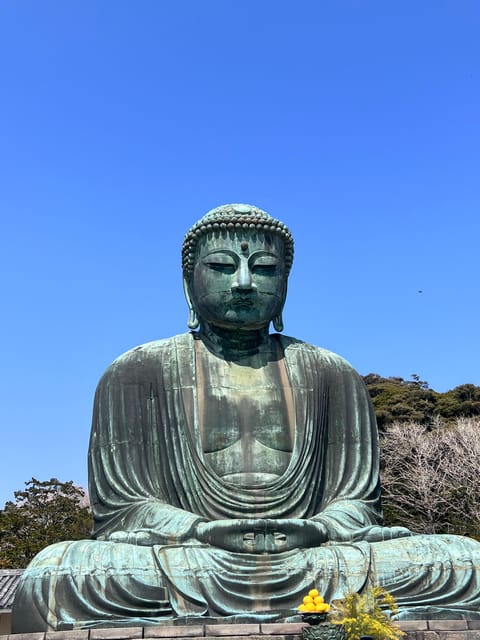
- The Great Buddha is an outdoor bronze landmark: You get about 30 minutes at Kotoku-in to see Kamakura’s best-known statue.
- Hase-dera adds gardens and sea views: Plan on an hour of walking, with a major wooden Kannon statue inside the temple.
- Enoshima takes the largest share of your day: You have time for the shrine, Sea Candle, caves, shopping, and regional food.
- The route mixes city streets and quiet cultural sites: Komachi Dori, Tsurugaoka Hachimangu, and Hokokuji give the day a varied finish.
- A private group of up to six can be good value: At $483 per group, the cost is about $80.50 per person if six people join.
- The guide can make or break the experience: Strong comments praise guides such as Taka, while pickup failures are a serious reason to confirm details before departure.
Why Kamakura and Enoshima work well together
Kamakura and Enoshima feel different enough to make a full day worthwhile. Kamakura gives you temples, shrines, and a former political center. Enoshima brings the sea, island paths, caves, food stalls, and broad views from its lighthouse.
I like this pairing because you are not spending ten hours looking at one type of sight. The morning has major religious landmarks, the middle of the day shifts toward coastal scenery, and the later stops bring you back to local streets and quieter temple grounds.
The private format matters here. The schedule includes several walking sections, and you can ask the guide to adjust the pace or tailor the route to your interests. That is useful if one person wants more time at a shrine while another prefers food and shopping.
The day begins with hotel pickup in Tokyo and returns you to Tokyo. The total duration is 10 hours, so this is not a quick side trip. You should be ready for a long day, but the vehicle gives you somewhere to rest between stops.
A few more Kamakura half-days worth comparing
- Tokyo: Kamakura & Enoshima Day Trip including Temple Tickets
★ 4.5 · 1,375 reviews - From Tokyo: Kamakura & Enoshima 1-Day Bus Tour
★ 4.5 · 189 reviews - Kamakura Historical Walking Tour with the Great Buddha
★ 5.0 · 129 reviews
The Great Buddha at Kotoku-in
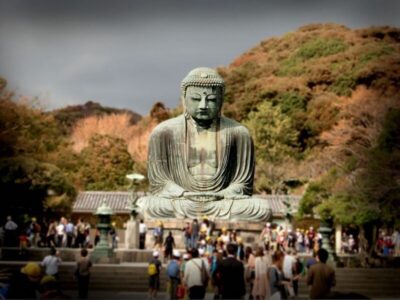
Your first major stop is Kotoku-in, home of the bronze Great Buddha. At 13.35 meters, the statue is large enough to dominate the visit without needing a long explanation to understand its impact.
The planned visit lasts about 30 minutes. That is enough for photos, a look at the statue from different angles, and a short guided explanation of its place in Kamakura. If you want a slow visit, this may feel brief, especially if the grounds are busy.
Admission to Kotoku-in costs 300 yen and is not included. Keep some yen available for this and the other paid sites. The tour includes bottled water, parking fees, private transport, and hotel pickup and drop-off, but the temple entrance costs remain yours.
The Great Buddha is an easy opening stop because it gives you a clear sense of place right away. I would use this time to ask your guide about Kamakura’s religious traditions and the difference between Buddhist temples and Shinto shrines later in the day.
Hase-dera’s gardens and Kannon statue
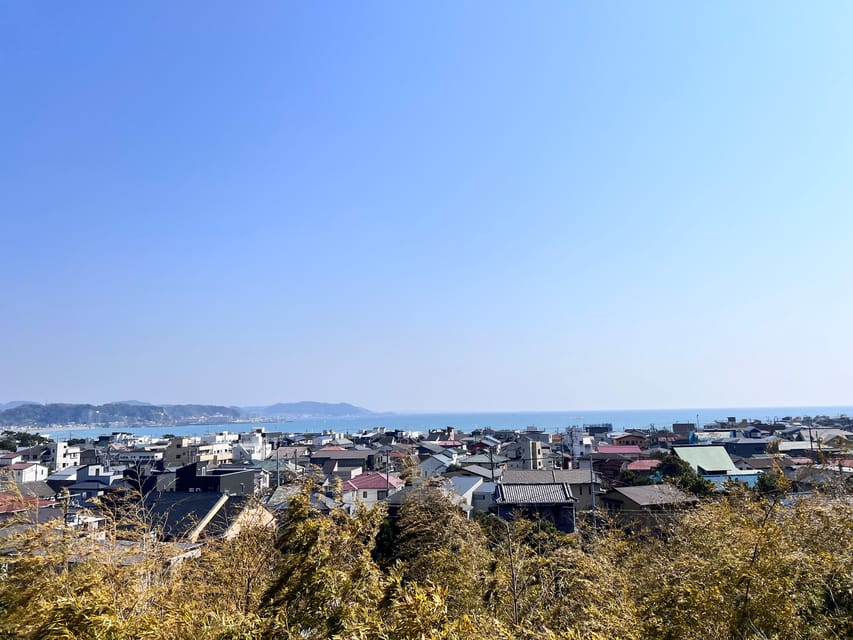
Hase-dera receives about an hour, including guided sightseeing and walking. The temple is known for its gardens, coastal views, and a large wooden statue of Kannon, the goddess of mercy.
This stop gives the morning more texture than a quick photo stop. You can look at the religious art, walk through the grounds, and pause for the views toward the coast. The gardens are also a useful contrast to the massive simplicity of the Great Buddha.
Admission costs 400 yen, again not included. Wear comfortable shoes. The day contains repeated walks at temple grounds, shrine paths, island trails, and shopping streets, so stiff footwear will make the final hours less enjoyable.
Hase-dera is a good place to let your guide set the pace. Ask for context about Kannon and the temple’s customs rather than simply moving from one photo point to the next. The supplied information promises explanations of Japanese culture and traditions, and this is the kind of stop where those details add real value.
Enoshima, from shrine paths to the Sea Candle
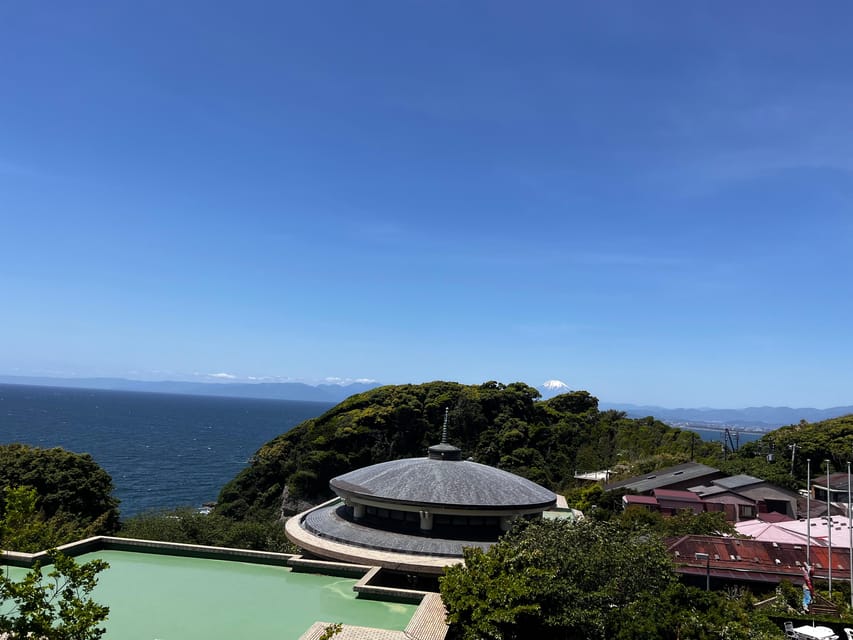
Enoshima receives about two hours of guided sightseeing, followed by another hour for free time, shopping, and regional food. That three-hour block makes it the centerpiece of the day.
You will walk along coastal paths and visit Enoshima Shrine. The island also has caves connected with local mythology and natural features. The plan includes the Enoshima Sea Candle, a lighthouse with an observation area where clear weather may reveal Mount Fuji.
The Mount Fuji view is weather-dependent, so treat it as a bonus rather than a promise. On a clear day, the high viewpoint adds a memorable finish to the island visit. On hazier days, you still have the shrine, sea paths, caves, and food to fill the time.
The caves are worth keeping in the schedule because they change the mood again. After open coastal views and bright shrine grounds, the cave visit gives you a closer look at the island’s rock formations and stories. Ask your guide to explain the mythology rather than rushing through only for photographs.
Enoshima does require walking, and some parts may feel tiring after the morning temples. The vehicle cannot follow you onto every path, so this is the section where comfortable shoes and sunscreen matter most.
More Private-Only Departures in Kamakura:
- Kamakura Private Tour: Temples, Nature, and the Great Buddha
★ 5.0 · 121 reviews - Kamakura 8 hr Private Walking Tour with Licensed Guide from Tokyo
★ 5.0 · 80 reviews - Kamakura: Private Guided Walking Tour with Local Guide
★ 4.8 · 60 reviews - Kamakura 4hr Private Trip with Government-Licensed Guide
★ 5.0 · 58 reviews
Lunch, seafood, and one hour to wander
The tour usually allows a stop for lunch at a local restaurant, with the guide recommending fresh seafood or traditional Japanese food. The exact restaurant is not specified, which is useful if you have preferences but means you should tell the guide early about allergies, dislikes, or a need for a quick meal.
The separate free-time hour on Enoshima is valuable. You can shop, try regional food, or simply slow down after the guided sightseeing. I would not give this hour away automatically. A private tour can tempt you to pack in one more landmark, but a relaxed meal and a little unplanned time often make a long day feel much better.
Because the price covers the group rather than each person, the food itself is not included in the $483. The same applies to attraction tickets. The strongest value comes when you have a full group of up to six people who want private transport and a flexible day.
Komachi Dori and Tsurugaoka Hachimangu
Komachi Dori gives you an hour for street food, shopping, guided exploration, and free time. It is a useful change from temple grounds and island paths, with a chance to browse local products and sample something between formal sightseeing stops.
Keep your expectations practical. One hour is enough to look around and eat a snack, but not enough for a slow shopping trip. If the group has different interests, ask the guide to set a meeting point and make the free time work for everyone.
Tsurugaoka Hachimangu follows with about an hour of guided walking and photography. It is Kamakura’s most important Shinto shrine and is particularly appealing in spring, when cherry blossoms add color to the approach and grounds.
This is the best place to ask your guide to explain Shinto customs. You can learn how the shrine differs from the Buddhist temples visited earlier, and your guide can help you approach the site respectfully. The experience specifically includes learning about Japanese customs and traditions, so use the opportunity rather than treating the shrine as another backdrop.
The order of these stops may feel unusual because many visitors expect Tsurugaoka Hachimangu before Enoshima. Here, the later shrine visit gives the day a calmer cultural stretch after the busier island and shopping portions.
Hokokuji Bamboo Forest and tea
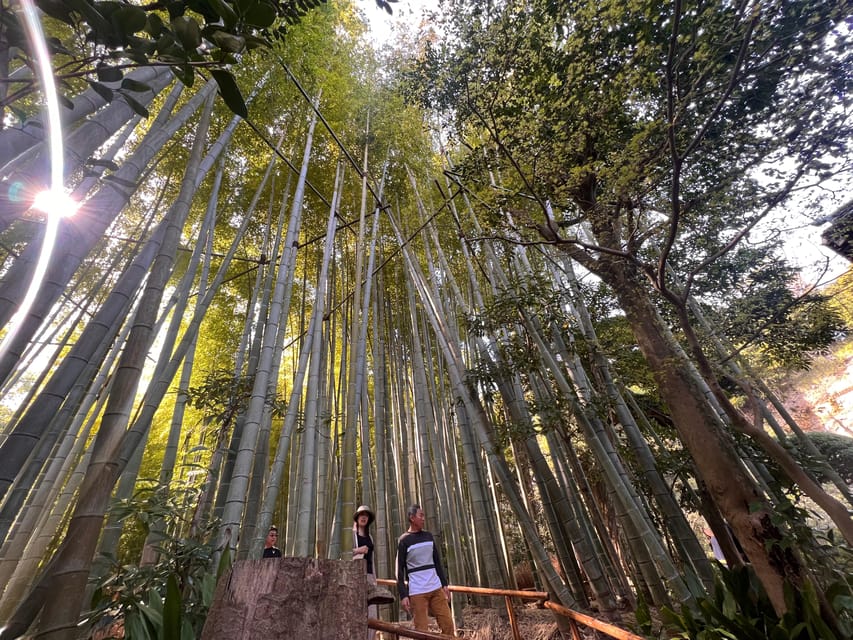
The final sightseeing stop is Hokokuji, with about an hour for the bamboo forest, a guided visit, and a tea ceremony. This is a quieter finish than Enoshima and gives you a chance to slow down before the drive back to Tokyo.
The bamboo grove is scheduled as a photo stop, but the tea ceremony is the more distinctive part. If you care about this stop, confirm the timing with your guide at the beginning of the day. One booking specifically missed the bamboo forest, so the stop can be affected by timing or changes in the route.
Admission to Hokokuji costs 400 yen and is not included. Like the other paid attractions, this is a small added expense, but you should budget for it along with Kotoku-in and Hase-dera.
I like having Hokokuji at the end because it gives the itinerary a softer landing. You finish among bamboo and tea rather than ending with another crowded commercial street. Still, if you want a longer Enoshima visit, discuss that preference early, since the itinerary is meant to be tailored.
What the private vehicle is worth
The cost is $483 for a private group of up to six people. With six participants, that works out to $80.50 per person before entrance fees and food. For two people, the effective price is much higher, so the value depends heavily on group size.
You are paying for the vehicle, English-speaking guide, hotel pickup and drop-off, bottled water, and parking fees. You are also paying for time saved and the ability to move through a full day without arranging each train, bus, and walking connection yourself.
This format suits families, small groups, and anyone who values door-to-door transport. It can also help if one member of your party uses a wheelchair, since the activity is listed as wheelchair accessible. You should still discuss the exact vehicle and site access needs before booking, because several stops involve walking.
The guide quality appears uneven based on the available booking record. Strong praise centers on friendly driver-guides and clear explanations of Japanese culture. Taka is named as a guide who explained the culture well, while another booking praised an excellent explanation and helpful recommendations. At the same time, two serious complaints describe drivers failing to arrive, disconnected phone contact, and a rescheduling problem after a reported car accident.
That does not prove every departure has a problem, but it is too important to ignore. Confirm your pickup time, hotel location, guide contact, and emergency contact method before the day. If communication is unclear, contact the booking platform promptly rather than waiting at the hotel.
Timing, tickets, and practical preparation
Bring comfortable shoes, a camera, and sunscreen. The route includes temple gardens, shrine grounds, island paths, caves, shopping streets, and bamboo, so you will spend much of the day moving between indoor and outdoor spaces.
The three listed admission fees total 1,100 yen per person: 300 yen for Kotoku-in, 400 yen for Hase-dera, and 400 yen for Hokokuji. Enoshima attractions may involve additional costs if you enter paid areas, so ask your guide what is included before you climb the Sea Candle or enter other facilities.
The Sea Candle view of Mount Fuji depends on clear conditions. Spring cherry blossoms at Tsurugaoka Hachimangu also depend on the season, and neither sight should be treated as guaranteed. The temples, shrine, island, caves, and shopping streets still provide a full day when weather or timing does not cooperate.
Free cancellation is available up to 24 hours in advance for a full refund, and you can reserve now and pay later. Those terms help if your Tokyo plans are still shifting, but they do not replace the need to confirm the pickup details.
Who should book this day tour?
I would choose this tour if you want Kamakura and Enoshima in one day without managing transportation yourself. It is especially suited to a group of four to six people, since the fixed group price becomes more reasonable as your party grows.
You should also book it if you value explanation over simply checking off sights. The guide can connect the Great Buddha, Kannon, Shinto customs, Enoshima mythology, and the tea ceremony into one day about Japanese religious and cultural life.
I would hesitate if you prefer a slow visit to one town, dislike long days, or want guaranteed time at every stop. I would also be cautious if your plans cannot tolerate a pickup problem. Confirming the arrangements is essential here, given the serious no-show reports alongside the many positive comments about the guides and planning.
Final verdict
This is an ambitious, useful day for first-time visitors who want Kamakura’s temples and Enoshima’s coast in one sweep. The private vehicle and adaptable schedule are the biggest advantages, while the strongest personal guides add cultural context that makes the stops more than photo opportunities.
Book it if you have a small group, want hotel pickup, and are willing to confirm the logistics carefully. Skip it in favor of a slower independent visit if you have only one or two people, need guaranteed timing, or want to spend a whole day at either Kamakura or Enoshima alone.
FAQ
How long is the Kamakura and Enoshima tour?
The tour lasts 10 hours, including pickup from Tokyo, sightseeing in Kamakura and Enoshima, and return transportation to Tokyo.
How many people can join the private group?
The private vehicle and guide are available for a group of up to six people.
What is included in the price?
The price includes a private vehicle, an English-speaking guide, hotel pickup and drop-off, bottled water, and parking fees.
Are entrance fees included?
No. Kotoku-in costs 300 yen, Hase-dera costs 400 yen, and Hokokuji costs 400 yen. These admission fees are paid separately.
Is lunch included?
Lunch is not listed as included. The guide can recommend local restaurants serving fresh seafood or traditional Japanese food.
Can I see Mount Fuji from Enoshima?
You may see Mount Fuji from the top of the Enoshima Sea Candle on a clear day. The view depends on weather and visibility.
Is the tour wheelchair accessible?
Yes, the activity is listed as wheelchair accessible. Contact the provider in advance to discuss the vehicle and the walking conditions at each site.
Can the itinerary be changed?
Yes. The itinerary can be tailored to your interests, so discuss preferred stops and timing with your guide at the start of the day.
What should I bring?
Bring comfortable shoes, a camera, and sunscreen. You should also have money available for admission fees, food, and shopping.
Just added around Kamakura
- First time in Kamakura? Enjoy a Tour of All Must-sees!★ 5.0 · 15 reviews
- Your Own HANKO Name Seal Activity in Kamakura.★ 5.0 · 24 reviews
- Kamakura Tours Half Day or Full Day Tours with a local guide.★ 5.0 · 12 reviews
- Buddha, Bamboo & Zen – Bespoke Kamakura Private Walking Tours★ 5.0 · 25 reviews
- Exciting Kamakura – One Day Tour from Tokyo★ 5.0 · 40 reviews
- Kamakura Bamboo Forest and Great Buddha Private Tour★ 5.0 · 12 reviews
- Tokyo Yokohama Night View Tour With Kamakura And Enoshima★ 3.5 · 14 reviews
- Tokyo: Day Trip to Kamakura in Spanish – Spanish★ 4.9 · 22 reviews
Kamakura Tours, compared.
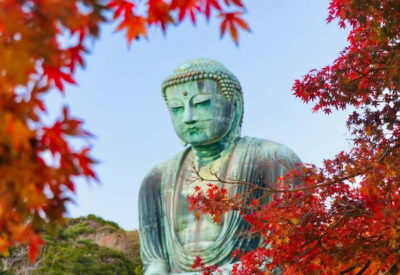
Kamakura & Enoshima Day Trip including Temple Tickets
Our verdict →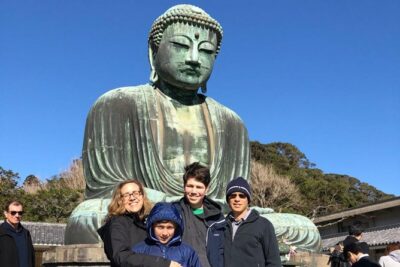
Kamakura Historical Walking Tour with the Great Buddha
Our verdict →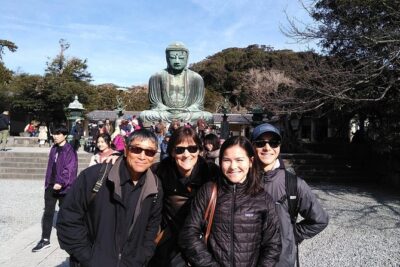
Kamakura 8 hr Private Walking Tour with Licensed Guide from Tokyo
Our verdict →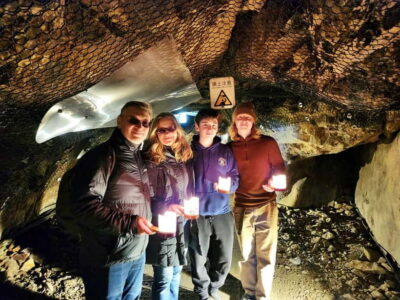
Kamakura Private & Customizable Tour – All-in-One Experience
Our verdict →
Browse the lists this tour appears in