
Reviewed · WALKING TOURS
The Dark Side of Tokyo – Night Walking Tour Shinjuku Kabukicho
Tokyo’s famous neon district has more layers than the bright signs suggest. This two-hour night walk takes you through Kabukicho, Omoide Yokocho, the Godzilla Head area, a narrow bar quarter, a Shinto shrine, and Shinjuku’s LGBTQI+ district, often called Gay Town.
I like the small group size, capped at 12, because guides such as Polina, Gray, Danny, Kumi, Loc, and Daniel can answer questions without shouting across a crowd. I also like the practical sense of orientation: you learn where the nightlife zones sit before setting out on your own. The main drawback is that food and drinks cost extra, and the walk ends in Shinjuku 3 Chome rather than returning to the starting point.
Key points at a glance
- Kabukicho after dark: Learn how Tokyo’s best-known nightlife area works, including local rules, adult entertainment, and the people who operate within them.
- Omoide Yokocho: See the famous drinking alley, a tight, atmospheric contrast to Shinjuku’s wide streets and giant signs.
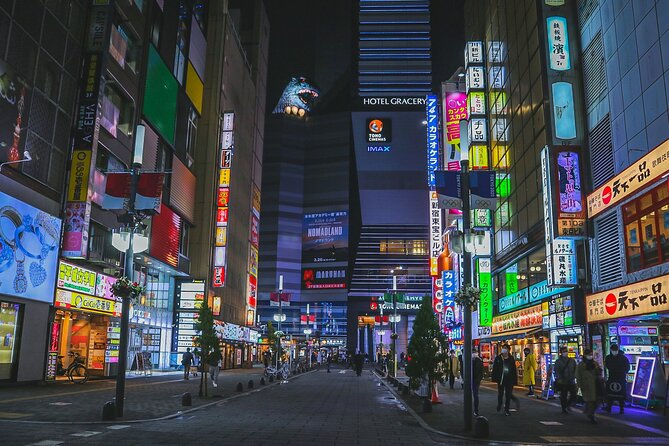
- Godzilla Head: Stop near the giant movie monster for its show and one of the district’s most recognizable sights.
- A guide-led route: Get help reading Japanese signs and avoiding areas that may feel uncomfortable or confusing.
- Small groups: The tour accepts no more than 12 people, with some departures much smaller.
- A useful first-night plan: The walk can work as a stand-alone activity or as an introduction before dinner and drinks.
Why this Shinjuku walk is different
Many Tokyo night outings focus on food, views, or a polished cocktail bar. This one takes a less tidy route. It looks at the parts of Shinjuku shaped by nightlife, adult entertainment, small bars, local customs, and the legal boundaries around the business.
That does not mean you are being taken into private venues or promised access to anything illicit. The experience is a guided walk through public streets, with explanation along the way. The appeal is context. Japanese signs may tell you where a business is, but they will not explain what kind of place it is, who it serves, or how the district developed.
I see this as especially useful for a first visit to Tokyo. Shinjuku can feel like a wall of light, sound, people, and competing invitations. A guide gives you a basic map of the area and helps you decide where you want to return later.
The tour is also a good fit if you want something more revealing than a standard sightseeing route. It discusses the adult industry and the ways workers operate within Japanese laws. That subject may not suit every age group or every idea of a relaxed evening, so read the tone carefully before booking.
More Walking Tours in Tokyo
- Tokyo Tsukiji Fish Market Food and Culture Walking Tour
★ 5.0 · 3,184 reviews - Tokyo: Imperial Palace and Shogun Historical Walking Tour
★ 5.0 · 2,251 reviews - Tokyo: Shinjuku Local Bar and Izakaya Guided Walking Tour
★ 4.9 · 1,794 reviews
Meeting at Shinjuku Station East Exit
The walk begins at the police box by Shinjuku Station’s East Exit, at 3 Chome 38 1 Shinjuku. This detail matters because Shinjuku Station is enormous and has many exits. Give yourself time to reach the East Exit rather than assuming a quick stroll from another part of the station.
One practical point is easy to miss: a police box is a small police station, not a telephone box. One participant had trouble finding the meeting place for exactly this reason. Look for the police box and confirm the location on your mobile ticket before setting off.
The tour uses a mobile ticket and requires confirmation at booking. It is near public transportation, and most people can take part. Service animals are allowed.
The group limit is 12. That is still large enough for the guide to manage comfortably but small enough for questions. Some particularly small departures have included only four people, which gives the walk a more personal feel. Group size can vary, so do not expect a private tour every time.
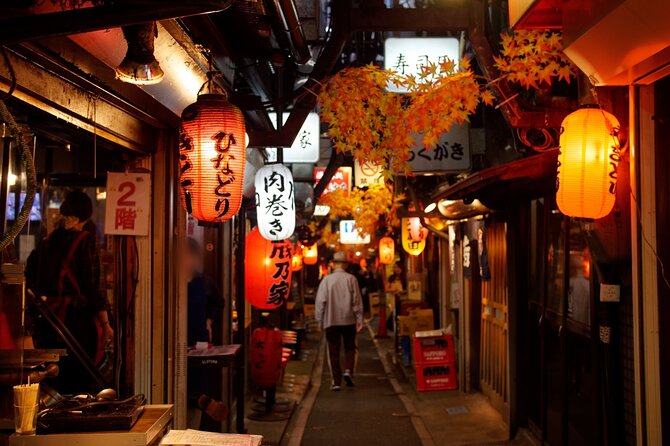
Omoide Yokocho, Tokyo’s famous drinking alley
One of the early stops is Omoide Yokocho, the narrow drinking alley near Shinjuku Station. This is one of the most memorable changes of scale in the area. Shinjuku is known for huge signs and broad pedestrian flows, but here the route tightens into small lanes lined with compact bars and food spots.
You will not get dinner included. Food and drinks are extra, and the tour is not presented as a tasting experience. That is useful to know before you arrive hungry. You can treat the walk as an introduction and choose a place later, or plan a separate meal after the tour.
The guide’s role here is more than pointing at a photogenic lane. You get help understanding how this kind of drinking quarter fits into Tokyo’s night culture. Ask questions if you are interested in local food, bar etiquette, or the difference between a casual public alley and a more exclusive establishment.
The lanes can be tight, and the area may be crowded. Keep the group in sight and expect the pace to slow when the route passes through busy sections. The walk is on foot, so comfortable shoes are sensible.
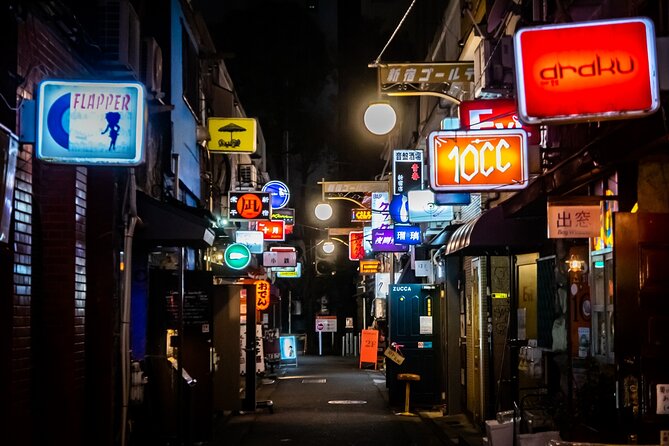
Kabukicho and the adult entertainment district
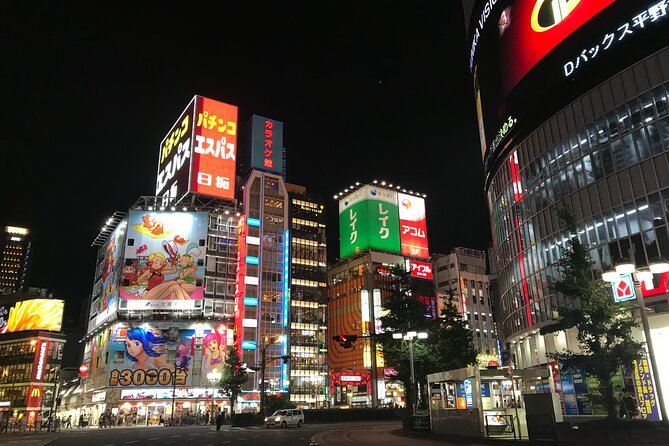
Kabukicho is the central subject of the experience. It is one of Tokyo’s best-known nightlife areas, and the tour explains its culture, subculture, legal boundaries, and business practices.
This is where the title’s dark side becomes clearer. The phrase refers less to danger than to a part of the city that many people notice but do not understand. You may learn about sex work, how businesses work around Japanese regulations, and how different forms of nightlife are arranged in the district.
The information can be eye-opening, but the guide’s approach matters. The strongest accounts describe an experience that is informative, humorous, and respectful rather than sensational. Guides including Gray, Danny, Daniel, and Polina have been praised for making the subject accessible while answering direct questions.
You should still use ordinary city judgment. Stay with the group, listen to the guide’s advice, and do not accept random invitations simply because a sign looks interesting. The point of joining is to understand the district without wandering into places that may be unpleasant, confusing, or expensive.
This part is valuable because English information on the street is limited. A sign may be bright and clear but offer little help about prices, purpose, or local expectations. The guide supplies the missing context.
Same trip, a completely different kind of day:
- 1-Day Tokyo Bus Tour
★ 5.0 · 14,250 reviews - Tokyo: TOKYO SKYTREE® Admission ticket
★ 4.5 · 11,192 reviews - Tokyo: teamLab Planets TOKYO Digital Art Museum Entry Ticket
★ 4.6 · 9,779 reviews - Tokyo: Sumo Show Experience with Chicken Hot Pot and a Photo
★ 4.8 · 6,678 reviews
Godzilla Head and the neon streets
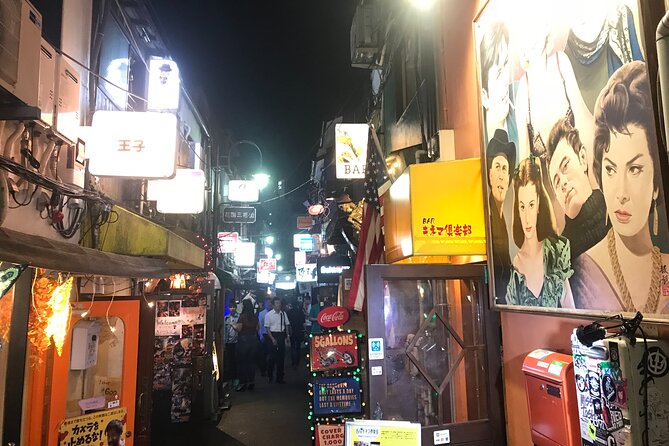
The route includes the famous Godzilla Head, one of Kabukicho’s easiest landmarks to recognize. The stop lets you see the movie monster above the streets and watch its show.
This is the most familiar sightseeing moment on the route, but it works well as a reference point. Shinjuku has so many signs and buildings that a large landmark helps you understand where you are. It also offers a natural pause in a walk that covers serious subjects.
After dark, the surrounding signs create the visual drama most people expect from Shinjuku. You will see rows of illuminated advertisements and the layered glow of the entertainment district. The route is less about one grand view than about seeing how many different kinds of businesses share a small area.
Your guide may also suggest foods and drinks to try later. Daniel, in particular, was praised for offering recommendations as part of the introduction to Tokyo nightlife. Remember that these suggestions are not included in the $25 price.
The narrow bar district
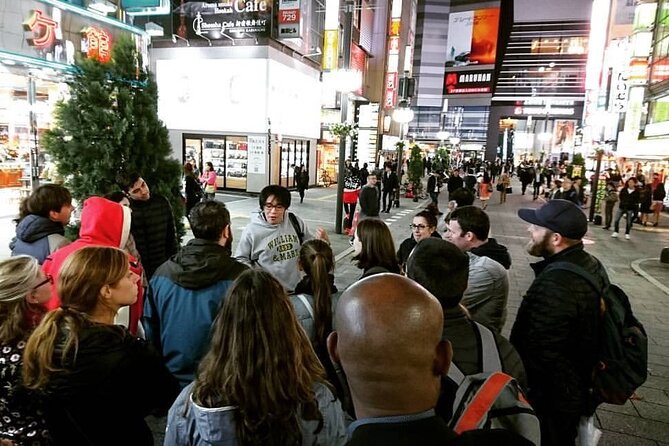
The itinerary also reaches a narrow bar quarter. This section shows a different side of nightlife from Kabukicho’s large signs and major streets. The lanes are more intimate, and the scale of the businesses changes again.
You are mainly walking and listening, not going from bar to bar as part of the ticket. That distinction keeps the price low and gives you freedom afterward. If a place catches your eye, you can decide later if it suits your budget and mood.
A guide can help you understand why these small establishments are different from larger nightlife venues. You can ask about the kinds of customers they serve, how reservations or entry might work, and what behavior is expected. The exact information may vary by guide and group questions, but the stop adds useful texture to the evening.
The narrow streets also create a practical challenge. In rain or heavy foot traffic, it can be easy to lose sight of the guide. One participant suggested a raised, colorful sign or another clear identifier for crowded conditions. I would stay near the front or middle of the group rather than relying on being able to spot the guide from behind.
A quiet Shinto shrine in the middle of nightlife
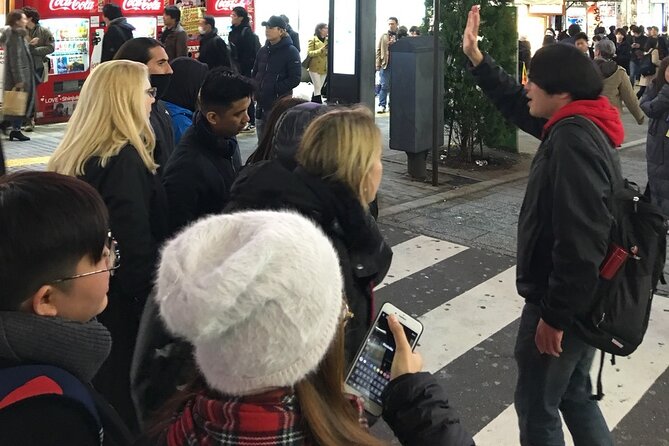
The inclusion of a Shinto shrine gives the walk a welcome change of mood. After neon signs, bars, and adult entertainment, a shrine offers a quieter place to consider another part of Japanese life.
This contrast is one of the route’s best features. Tokyo nightlife is not a separate world sealed away from tradition. A shrine can sit close to commercial streets, office buildings, restaurants, and entertainment venues. Seeing those uses side by side helps you understand how densely layered Tokyo can be.
The stop is not described as a long religious visit or formal ceremony. Expect a short explanation and a chance to see the site as part of the neighborhood. Be respectful, keep voices low, and follow the guide’s instructions about where to stand.
Shinjuku’s LGBTQI+ district
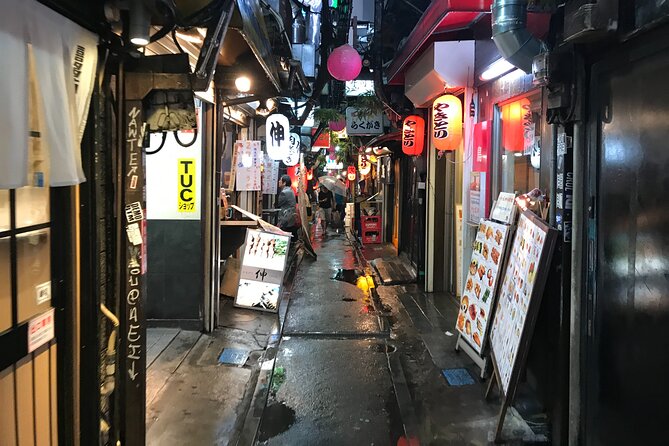
The walk visits Japan’s largest LGBTQI+ town, a district often called Gay Town. This gives the tour another important angle on Shinjuku nightlife and local identity.
The value here is not simply seeing a cluster of bars. A guide can place the area within the wider social and commercial life of Tokyo. You get an introduction to a neighborhood that may be easy to miss if you stick to major tourist routes or only follow general restaurant recommendations.
The route appears designed for observation and explanation rather than entry into venues. Food and drinks remain separate, so you should not expect included access to bars. If you want to return later, you will have a better sense of where the district is and how it connects to the rest of Shinjuku.
What the guides add
Guide quality is the strongest part of this experience. Polina, Gray, Danny, Kumi, Loc, and Daniel are among the guides praised for clear English, humor, warmth, and strong familiarity with the area.
That does not mean every departure will feel identical. A walking tour depends on the individual guide, the group’s questions, crowd levels, and weather. Still, the repeated pattern is useful: the guides explain local history and nightlife practices, answer questions, and keep the walk moving.
Several guide styles come through clearly. Gray is described as entertaining and inclusive. Danny is noted for humor, friendly energy, and a good sense of timing. Loc is praised for answering questions in clear English. Polina is described as professional, softly spoken, and easy to hear even in noisy streets. Kumi is remembered for being informative and funny.
A few points deserve attention. Some participants experienced a walk longer than two hours, while the listed duration is approximately two hours. Weather and group pace may affect the timing. The tour also does not loop back to the station, so you need to plan from the finishing point.
Is $25 a good value?
At $25 per person, this is a modestly priced way to get guided access to a complicated part of Tokyo. You are paying for the guide’s explanations, route planning, and local orientation, not for a meal, drinks, attraction admission, or private venue access.
I think the value is strongest if you are new to Shinjuku or uncomfortable exploring nightlife areas without context. The price can save you from spending your first evening trying to decode signs and streets on your own. It also lets you use the tour as a launch point for your own dinner or night out.
The value is weaker if you want a food tour, a pub crawl, or a fast list of photo stops. You will need to budget separately for dinner and drinks. The route is also more educational than leisurely, with subjects that may feel serious or uncomfortable.
The current rating is 4.7 from 297 ratings, with 95 percent recommending the experience. I would treat that as a strong sign of consistent appeal, especially because the praise centers on guide quality and the useful information provided rather than only on the neon scenery.
Timing, weather, and the walk back
The experience takes place after dark and lasts about two hours. It requires good weather. If poor weather cancels the tour, you are offered another date or a full refund.
Wear shoes you can walk in and bring protection from rain if the forecast looks uncertain. The route passes through crowded streets and narrow lanes, so a compact bag is easier to manage than bulky luggage.
The tour ends around Shinjuku 3 Chome, not at the starting police box. This is not a major problem, but it changes your plans. Shinjuku 3 Chome gives you a useful base for continuing your evening, yet you should not assume the guide will escort you back to the station entrance where you began.
You can cancel for a full refund up to 24 hours before the start time. Cancellations or changes inside that window are not refunded or accepted, and cut-off times use Tokyo local time.
Who should book this experience?
I would choose this walk for a first or second visit to Tokyo if I wanted to understand Shinjuku before making my own night plans. It suits solo visitors, couples, and small groups who prefer explanation over simply walking around and taking photos.
It is also a good match for curious adults interested in how nightlife, law, tradition, food, and LGBTQI+ culture overlap in one dense district. The small group helps if you like asking questions.
I would skip it if you want a quiet shrine tour, a standard city history walk, or an included meal. The adult entertainment subject is central, not incidental. Families should consider the tone and age suitability carefully.
Final verdict: book it for context, not cocktails
Book this tour if you want a clear introduction to Kabukicho and the surrounding night districts, especially before exploring alone. The strongest reasons are the small group, the practical route, the explanation of local nightlife, and guides such as Polina, Gray, Danny, Kumi, Loc, and Daniel.
Do not book it expecting dinner, drinks, a pub crawl, or a return to the starting point. At $25, it offers good value for orientation and local insight, then leaves the rest of the night in your hands.
FAQ
How long does the Dark Side of Tokyo tour last?
The tour lasts approximately two hours.
Where does the tour begin?
It begins at the police box by the East Exit of Shinjuku Station, at 3 Chome 38 1 Shinjuku, Shinjuku City, Tokyo 160-0022, Japan.
Where does the tour finish?
The walk finishes around Shinjuku 3 Chome. It does not necessarily return to the starting point.
What areas does the walking tour visit?
The route includes Shinjuku, Kabukicho, Omoide Yokocho, the Godzilla Head area, a narrow bar district, a Shinto shrine, and the LGBTQI+ district often called Gay Town.
Are food and drinks included?
No. Dinner, food, and drinks are not included in the tour price.
How large is the group?
The tour has a maximum of 12 people. Some departures may be smaller.
Is the tour available with a mobile ticket?
Yes. A mobile ticket is available, and confirmation is provided when you book.
Can service animals take part?
Yes. Service animals are allowed.
Can I cancel for a refund?
You can cancel at least 24 hours before the start time for a full refund. Cancellations or changes made less than 24 hours before the start time are not accepted or refunded. If poor weather causes the operator to cancel, you are offered another date or a full refund.
Just added around Tokyo
- Kawagoe Japanese Food Tour : Unagi Kaiseki and Sake near Tokyo★ 5.0 · 30 reviews
- Kawagoe 4hr Private Tour with Licensed Guide (Kawagoe Dep)★ 5.0 · 13 reviews
- Little EDO Sushi Making workshop in Kawagoe★ 5.0 · 18 reviews
- 【R34】Tokyo:Private Daikoku tour in Modified R34★ 4.9 · 92 reviews
- :Tokyo,Shibuya/ Pro Photography in Kimono / English-Friendly★ 5.0 · 26 reviews
- Tokyo:Celebrate Unique Japanese New Year Tradition Festivity★ 3.9 · 20 reviews
- Tokyo: Allstar Food Tour★ 4.7 · 29 reviews
- Tokyo:Calligraphy &Make your original folding fan in Asakusa★ 5.0 · 62 reviews
Walking Tours, compared.

Kyoto Geisha Walking Tour: Gion District & Hidden Gems
Our verdict →
Imperial Palace and Shogun Historical Walking Tour
Our verdict →
Shinjuku Local Bar and Izakaya Guided Walking Tour
Our verdict →

Nishiki Market Brunch Walking Tour (7 Tastings + Brunch)
Our verdict →
Kyoto Arashiyama Walking Tour: Bamboo, Monkeys, Gardens & Secrets
Our verdict →
Tokyo Castle & Imperial PalaceーShogun Walking Tour
Our verdict →Browse the lists this tour appears in