
Reviewed · WALKING TOURS
Osaka Walking Tour
Osaka reveals itself in contrasting pieces on this three-hour small-group walk: a polished railway complex, old downtown streets, neon-lit Dotonbori, and a snack of kushikatsu along the way. You get a useful first look at how the city works instead of seeing only one famous district.
I like the way the tour uses the subway to connect several neighborhoods, and I like the practical local guidance from guides such as Hide, Minako, Kaori, Keiko, and Ichiro. The group is capped at 10 people, which gives you a fair chance to ask questions and keep a comfortable pace.
The main drawback is that this is an orientation walk, not a major sightseeing tour with long visits inside attractions. You also pay the subway fare separately, and anyone expecting a full food tour or extensive landmark entry may find the experience lighter than expected.
Key points to know before booking
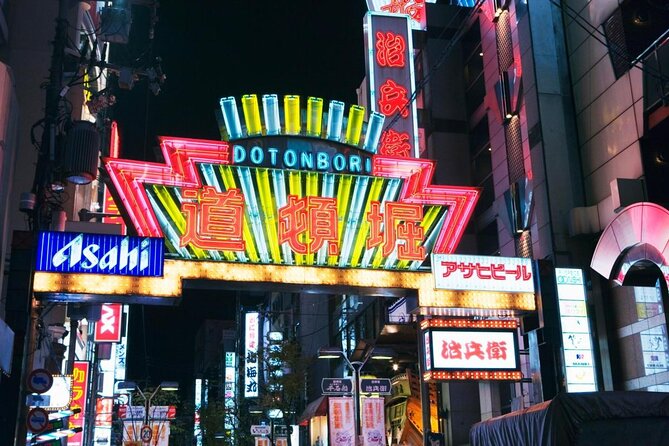
- Three distinct Osaka areas: Start in modern Umeda, continue to traditional-feeling Shinsekai, and finish amid the lights of Dotonbori.
- Kushikatsu tasting included: You receive a local fried snack and one non-alcoholic drink, but additional food and drinks cost extra.
- A subway ride is part of the experience: Bring 430 yen for an adult or youth fare, or 220 yen for a child.
- Small groups make a difference: The maximum is 10 people, with some departures feeling almost private when attendance is low.
- A strong first-day choice: Guides explain Osaka’s development, food culture, neighborhoods, and practical city details.
- Plan for real walking: Wear comfortable shoes, and remember that the route includes escalators and some steps.
A useful first look at Osaka in three hours
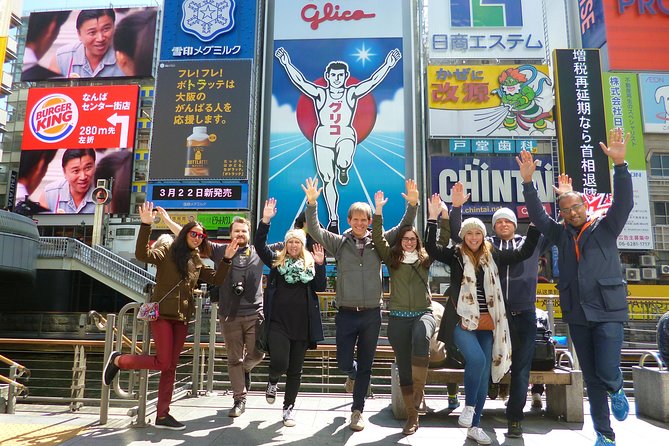
This walk works best as a city introduction. You move through three very different parts of Osaka rather than spending the whole morning in one shopping arcade or temple district. That variety helps you understand the city’s character quickly.
I would schedule it near the start of your Osaka stay. The route gives you a working sense of Umeda, Shinsekai, Namba, and Dotonbori, and the guide can help you place later plans on the map. Several guides, including Hide, Harry, Minako, Kaori, Keiko, Ichi, and Ichiro, have been singled out for clear English, patience, historical context, and useful advice.
The experience is not built around grand monuments. Its value comes from seeing how Osaka’s modern commercial center connects with older entertainment and food districts. If you want a relaxed introduction before exploring on your own, that is the point.
More Walking Tours in Osaka
- Osaka: Hotspots & Hidden Gems Walking Tour Private or Group
★ 4.9 · 1,300 reviews - Osaka Local Foodie Walking Tour in Dotonbori and Shinsekai
★ 5.0 · 985 reviews - Osaka Bar Hopping Night Walking Tour in Namba (3 bars, 6 tastes)
★ 5.0 · 958 reviews
Meeting at Osaka Station City
The morning begins at 9:50 a.m. in front of the Osaka Tourist Information Center on the ground level, near the central gate of JR Osaka Station. The tour starts exactly at 10 a.m., so give yourself extra time. Osaka Station is large and can be confusing, especially if this is your first visit.
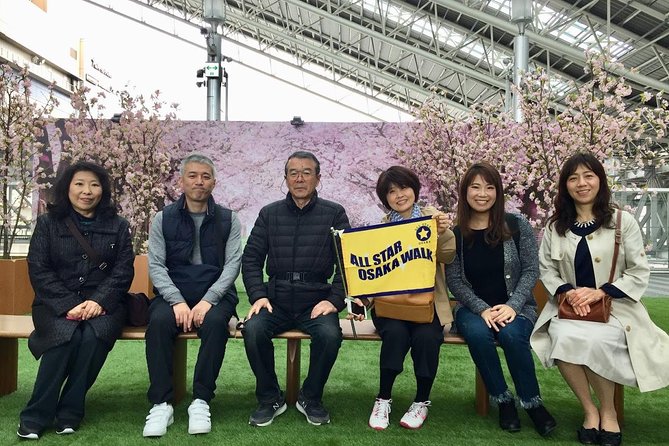
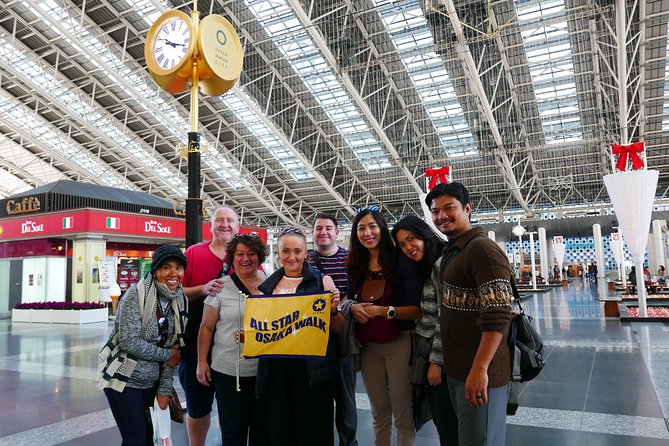
Look for the guide holding an All Star Osaka yellow flag. The official meeting point is in the central concourse area at JR Osaka Station, in Umeda. A mobile ticket is convenient, but it does not remove the need to locate the right station exit and meeting area.
Your first stop is Osaka Station City, the large modern facility in the north-central part of the city. Around 45 minutes here gives the guide room to explain the station, the Umeda area, and the role of rail travel in Osaka. This is more than a simple place to meet. Osaka Station City is a good way to see the city’s polished, high-rise, commercial side.
Still, you should set your expectations correctly. You are walking through a major transport and shopping complex, not entering a historic attraction. If you prefer temples, castles, or museums, this opening section may feel ordinary. I find it useful because it sets up the contrast with the older neighborhoods later.
Riding the subway like a local
The route then uses Osaka’s subway system to reach the southern side of the city. The subway fare is not included. The listed cost is 430 yen for an adult or youth and 220 yen for a child.
This small extra cost is easy to overlook when comparing tours, so include it in your budget. The ride also adds practical value. You are not just being carried between photo stops. You get a brief lesson in moving around Osaka, which can save time when you return to the city’s neighborhoods on your own.
The tour uses escalators and some steps. A stroller may be awkward, and the operator specifically asks families to take care around babies and strollers. Most people can take part, but the walk requires a moderate amount of movement. Comfortable shoes are a must.
The pace appears to be one of the better features of the experience. It is designed for walking and conversation rather than rushing from one landmark to the next. On hot and humid days, that matters. The operator says the tour runs rain or shine, while the cancellation policy also allows a new date or full refund if poor weather causes the tour to be canceled.
Shinsekai and the taste of kushikatsu
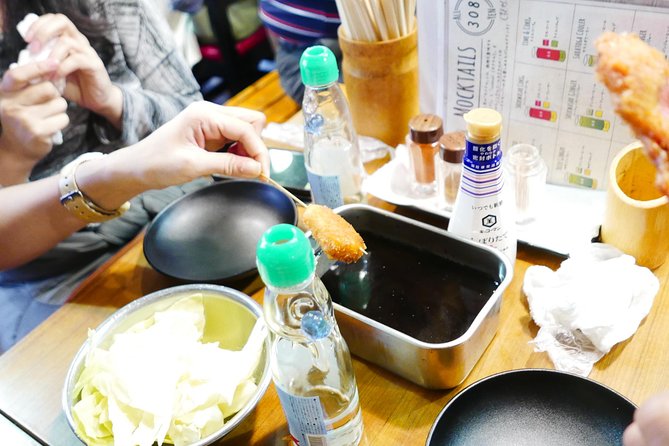
Shinsekai is the food-centered part of the walk. This downtown district is known for Osaka soul food, particularly kushikatsu. The dish consists of ingredients placed on skewers, coated, and deep-fried. The tasting gives you a small but direct introduction to one of Osaka’s best-known casual foods.
The included portion comes with one non-alcoholic drink. Do not think of this as a full lunch or a dedicated food crawl. You may buy more food and drinks, but only the specified tasting and beverage are included in the price.
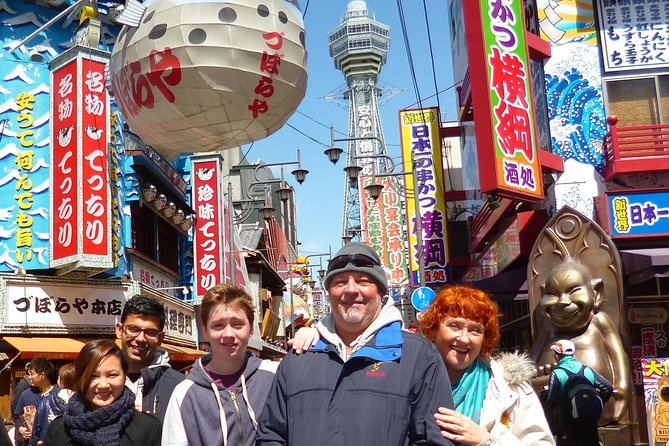
The setting adds much of the interest. Shinsekai has a different feel from the clean, modern scale of Umeda. Restaurants, game arcades, signs, and older commercial streets give the district a more informal personality. The guide can explain how Osaka’s neighborhoods changed over time and why food plays such a large role in the city’s identity.
One unusual detail from the tour is that the food stop may involve eating inside an old Volkswagen van at a restaurant. That will not be the main reason to book, but it gives the break a playful, distinctly local feel.
The stop lasts about 50 minutes. That is enough time for the tasting and conversation, but not enough for a long meal. If you have dietary restrictions, the supplied details do not specify substitutions or allergy arrangements, so ask before booking.
Same trip, a completely different kind of day:
- Osaka Go Karting Tour with Funny Costume
★ 5.0 · 2,658 reviews - Osaka Castle: Museum and Tower Entry Ticket
★ 4.5 · 2,380 reviews - Osaka: Shinsekai Food Tour with 13-15 Dishes at 5 Eateries
★ 4.8 · 2,204 reviews - Osaka Food Tour: 13 Dishes at 5 Local Eateries
★ 5.0 · 2,149 reviews
Restaurant alleys and Osaka’s everyday side
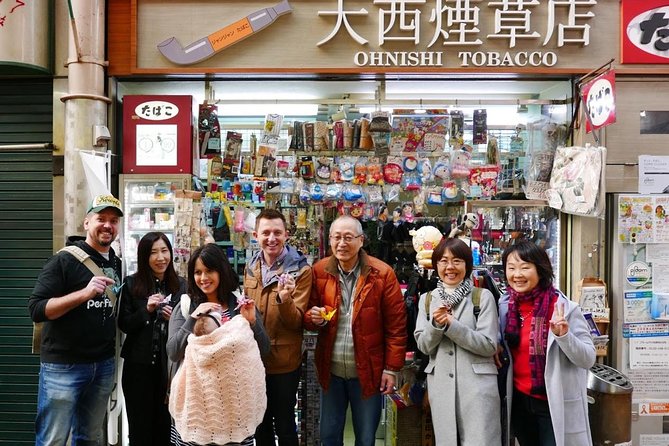
The walk passes through a small alley lined with restaurants. These narrow lanes are easy to miss when you stick to Osaka’s major roads, yet they offer a better sense of how people eat and socialize in the city.
I like this part because it shifts the focus from formal sightseeing to daily life. You are not simply looking at a famous building. You are seeing the kind of compact commercial space that makes Osaka feel lively at street level.
The exact amount of time in the alley is not listed as a separate stop, so do not expect a long, free period to choose your own restaurant. The guide leads the group through the area as part of the wider route. If you want to return later for a longer meal, note the location while you are there.
Hozenji and the route toward Dotonbori
The tour also visits Hozenji, a small temple associated with the lively entertainment district. It offers a quiet pause amid the restaurants, signs, and crowds of central Osaka.
This contrast is one of the walk’s strengths. In a short distance, you move from food stalls and commercial streets to a compact religious site. The experience helps you see that Osaka is not divided neatly into modern and historic zones. Both exist side by side.
The route then passes through a busy commercial district lined with restaurants, shops, theaters, and large illuminated signs. This is the Osaka most people picture, but the guide gives it more context than you would get from taking a few photographs and moving on.
Keep in mind that the walk does not promise extended entry to every attraction along the way. The emphasis is on the streets themselves, the neighborhood changes, and the guide’s explanation.
Finishing at Ebisu Bridge
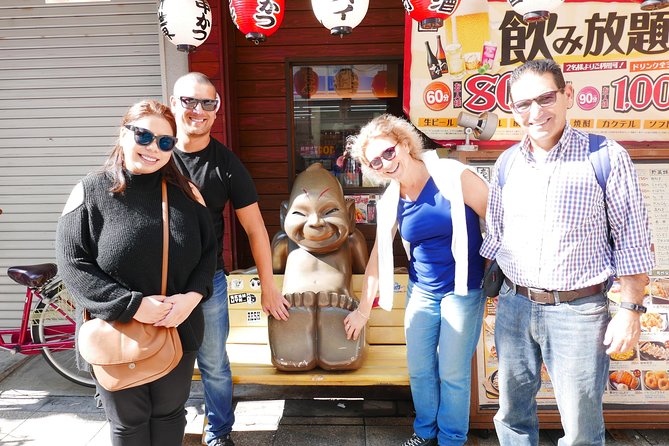
The tour ends at Ebisu Bridge, at 1 Chome-6 Dotonbori, after a short final stop of about 10 minutes. This puts you in one of Osaka’s most active central areas, close to restaurants, shops, theaters, and the famous Dotonbori canal district.
Ending here is practical. You can continue exploring, stop for lunch, or use the area as a base for your own afternoon. It also means the tour does not return you to Osaka Station, so plan your onward route before you leave the group.
Some guides have gone beyond the stated finish by helping with directions, including assistance for people trying to reach a cruise ship. That kind of help can be valuable, but it should be treated as a courtesy rather than a guaranteed transfer service. Hotel pickup and drop-off are not included.
What the guides add to the experience
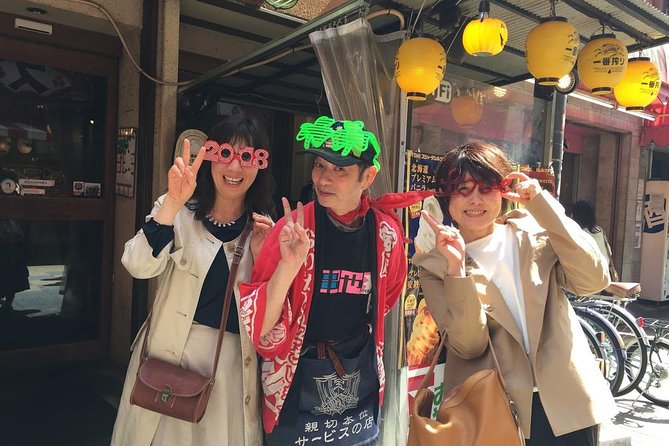
The guide is the most important variable on this tour. The route itself is straightforward, but the quality of the explanations determines whether you get a useful city lesson or simply a long walk between food streets.
The strongest guide reports describe clear English, a friendly manner, local pride, and a willingness to answer questions. Hide, also called Harry in some tour accounts, has been praised for history and a comfortable pace. Minako has provided practical advice about Osaka and Japan, while Kaori has been noted for detailed explanations and careful answers.
Keiko, Ichi, Ichiro, Yahiro, and Rika are also named among the guides who have led this walk. Their individual styles will differ. One may focus more on history, another on food, and another on practical directions. That is normal for a small operator with several local guides.
One point to watch is photography. A past experience included repeated requests for photos for the company’s social media. If you prefer to keep your morning focused on the walk, you can politely say so. It is a minor issue, but worth knowing.
Price, group size, and overall value
At $53.06 per person, the tour is not the cheapest way to walk through Osaka. You also need to add the subway fare, and the included food is a tasting rather than a full meal.
I still think the price can make sense for a first visit. You get a local guide, three hours of structured sightseeing, a subway ride, a kushikatsu sample, a non-alcoholic drink, and a route that links several districts. Hiring a private guide would usually cost far more, while exploring alone requires more planning and gives you less context.
The maximum group size is 10. That is small enough for questions and easier movement through crowded streets. Actual group size may be smaller, and one particularly quiet departure had only one participant. A group of five has also been described as almost private in feel.
The value drops if you already know Osaka well or mainly want major attraction entry. You are paying for orientation, local explanation, and a carefully connected route, not for admission to a castle, museum, or observation deck.
Weather, walking, and who should book
You should book this if you have limited time, want help getting oriented, or enjoy learning about a city through neighborhoods and food. It is especially useful on your first day in Osaka, when the subway, station layout, and district names can otherwise feel like a blur.
The walk also suits people who prefer a calm pace. It is not described as a strenuous hike, but you will walk for much of the three hours and use escalators and steps. Wear comfortable shoes, carry water in warm weather, and leave room for changing conditions.
Families can participate, but children must be accompanied by an adult. Strollers may be inconvenient because of the steps and station movement. The route operates in ordinary rain according to the tour details, but poor weather can lead to cancellation, a different date, or a full refund.
I would skip it if you want a full food tour, a private experience, or long visits inside historic sites. I would also think twice if you dislike urban walking or already have a strong grasp of Osaka’s central districts.
Should you book the Osaka Walking Tour?
I would book this as a first-day orientation, especially if you have only a short stay or want to understand Osaka before exploring alone. The best parts are the neighborhood changes, the subway practice, the kushikatsu tasting, and the chance to ask a local guide about what you are seeing.
Go in knowing that the tour is a city sampler. You will spend time in a train station, walk through commercial streets, pay separately for the subway, and finish at Ebisu Bridge without hotel transport. If that sounds like a fair trade for three hours of context and easy navigation, $53.06 is a reasonable price. If you want headline sights and a full meal, choose a different kind of tour.
FAQ
How long is the Osaka Walking Tour?
The tour lasts approximately three hours.
Where does the tour start?
It starts at the Osaka Tourist Information Center on the ground level in front of the central gate of JR Osaka Station in Osaka Station City.
What time should I arrive?
You should meet the guide at 9:50 a.m. The tour starts exactly at 10 a.m.
How will I identify the guide?
The guide will hold an All Star Osaka yellow flag.
Where does the tour end?
The walk ends at Ebisu Bridge in Dotonbori, at 1 Chome-6 Dotonbori, Chuo Ward, Osaka.
Is the subway fare included?
No. The listed fare is 430 yen for an adult or youth and 220 yen for a child.
What food and drink are included?
The tour includes a kushikatsu tasting and one non-alcoholic drink. Additional food and drinks are not included.
How large is the group?
The tour has a maximum of 10 participants.
Can I cancel for a full refund?
Yes. You can cancel at least 24 hours before the local start time for a full refund. Cancellations or changes made within 24 hours are not refunded or accepted. If poor weather causes the operator to cancel, you will be offered another date or a full refund.
Just added around Osaka
- Exclusive Sushi Making Experience with a Master Chef – Osaka Area★ 5.0 · 25 reviews
- Private Home-Style Cooking Class in Osaka with Local Mom Yoshiko★ 5.0 · 46 reviews
- Hidden Osaka – Yukaku Red Light Tour & Culinary Adventure★ 4.8 · 96 reviews
- Osaka: Walking Tour and Top Highlights★ 4.8 · 104 reviews
- Osaka: Private Ceramic Painting Workshop★ 5.0 · 13 reviews
- Pickleball in Osaka, Kobe & Kyoto with Locals!★ 4.7 · 80 reviews
- Eat Like a Local in Osaka – Private Custom Street Food Tour★ 4.3 · 33 reviews
- Osaka:SUMO BEATS SHOWCASE: Taiko Drum and Wagyu burger!★ 4.2 · 37 reviews
Walking Tours, compared.

Kyoto Geisha Walking Tour: Gion District & Hidden Gems
Our verdict →
Imperial Palace and Shogun Historical Walking Tour
Our verdict →
Shinjuku Local Bar and Izakaya Guided Walking Tour
Our verdict →

Nishiki Market Brunch Walking Tour (7 Tastings + Brunch)
Our verdict →
Kyoto Arashiyama Walking Tour: Bamboo, Monkeys, Gardens & Secrets
Our verdict →
Tokyo Castle & Imperial PalaceーShogun Walking Tour
Our verdict →Browse the lists this tour appears in