
Reviewed · DINNER EXPERIENCES
Hiroshima: Food and Culture Guided Walking Tour with Dinner
Hiroshima’s best food experience may happen in places you would never enter alone. This three-hour evening walk takes you from the bright Hondori Shopping Street into small tachinomi-style restaurants, where you try dish after dish rather than settle in for one long meal. The food can include seafood, tempura, grilled and steamed dishes, slow-cooked items, and Hiroshima-style okonomiyaki.
I like two things right away: three different restaurants keep the night moving, and the guide helps you order food that may otherwise be hard to identify. I also like the generous serving plan, with at least 10 dishes and one drink at each stop. The main consideration is that some restaurants use standing counters, and the exact menu and stops can change with the season or local availability.
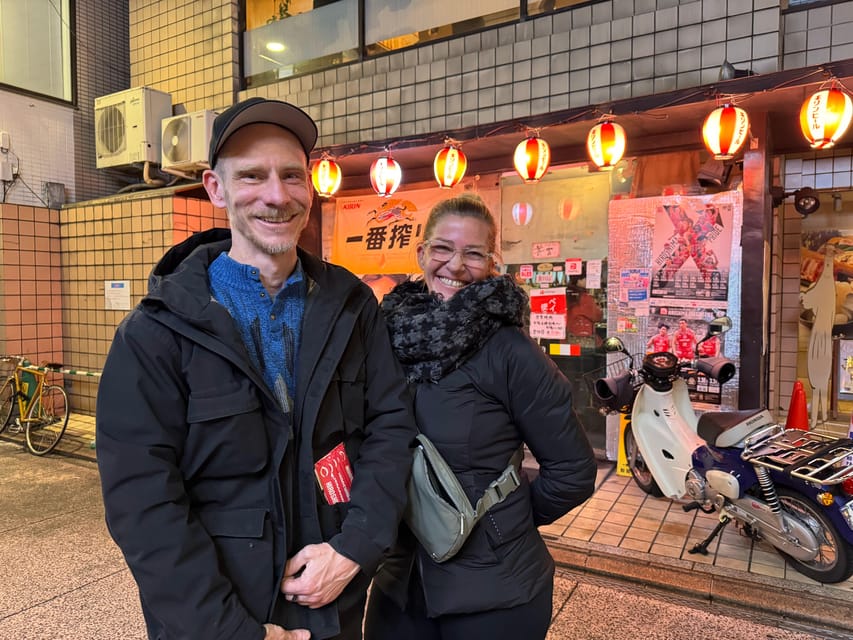
The guides Ken and Kensuke receive especially warm praise for their easy conversation and care with food choices. Alex has also led the walk. You should come hungry, stay open to unfamiliar dishes, and treat the evening as a social night out rather than a formal restaurant tour.
Key points to know before booking
- Three restaurants in three hours: You move between small local places instead of spending the whole evening at one table.
- At least 10 dishes: The menu may include seafood, tempura, grilled food, steamed plates, simmered dishes, and Hiroshima specialties.
- Three included drinks: Choose one alcoholic or non-alcoholic drink at each restaurant.
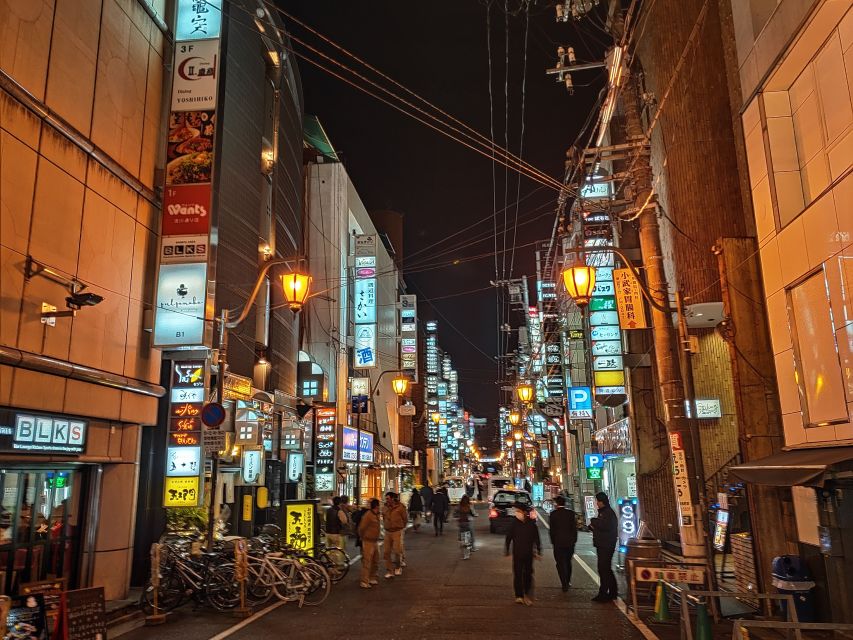
- Hondori and Nagarekawa after dark: The route combines eating with a look at Hiroshima’s shopping and nightlife districts.
- Small groups or private tours: The setting makes it easier to ask questions and chat with the guide.
- A good fit for curious eaters: You may try dishes you would not think to order on your own, but dietary needs should be reported in advance.
Why this Hiroshima food walk works
At $94 per person, this is not the cheapest dinner in Hiroshima. It is a useful way to buy access, translation, local judgment, and a full evening of food in places that can feel intimidating when you do not read Japanese.
You receive dinner spread across three restaurants, three drinks, and a guide for three hours. Add the variety of dishes and the short walking tour through central Hiroshima, and the price is reasonable for visitors who want more than a single restaurant reservation. It is especially good value if you are in Hiroshima for only one or two nights and want one evening to handle the practical details for you.
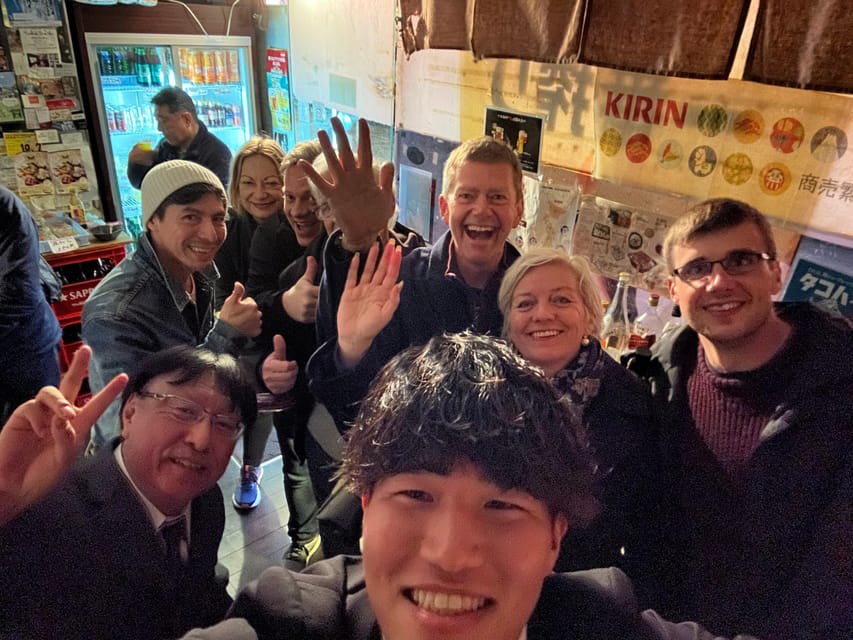
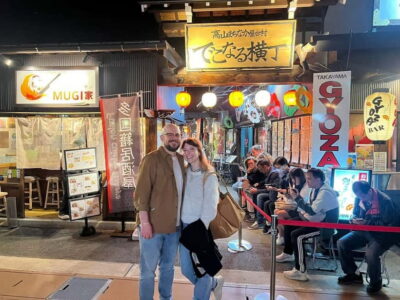
The social side matters, too. These are not polished tasting rooms designed for tourists. Tachinomi restaurants are casual places where people stand at a counter or table, eat small plates, and talk. That can feel lively and informal, though it is not ideal if you need a quiet, fixed seat for the whole meal.
The food is the main event. You can expect at least 10 different dishes, and some evenings include closer to 15 plates. The selection may cover fresh seafood, tempura, chicken or other grilled items, steamed food, slow-simmered dishes, and Hiroshima-style okonomiyaki. Exact dishes vary, so book this for variety rather than for a guaranteed menu.
More Walking Tours in Hiroshima
- Hiroshima Historical Walking Tour – Why A-Bomb was Dropped
★ 4.8 · 893 reviews - Hiroshima Peace (Heiwa) Walking Tour at World Heritage Sites
★ 5.0 · 872 reviews - Hiroshima City 4hr Private Walking Tour with Licensed Guide
★ 5.0 · 437 reviews
Meeting near Don Quijote in central Hiroshima
The meeting point is on the street in front of Don Quijote Hiroshima Hatchobori store, written in Japanese as ドン・キホーテ広島八丁堀店. This is a practical central starting point, but give yourself a few minutes to locate the guide outside rather than wandering into the store.
The tour returns to the same Don Quijote location at the end. That makes the evening easy to plan around, since you do not need to arrange a taxi between restaurants or figure out a distant finish point.
Hotel pick-up and drop-off are not included. You will need to make your own way to the meeting point and back to your accommodation. Since the activity takes place in the city center and includes walking between stops, comfortable shoes are sensible.
Hondori Shopping Street sets the evening in motion
The first part of the experience includes about 30 minutes of guided walking around Hiroshima Hondori Shopping Street. This gives you a quick look at one of the city’s main shopping and social areas before the restaurant stops begin.
Do not expect a major historical walking tour here. The value is more immediate: you get a feel for where people shop, meet, and spend an evening. Your guide can also point out nearby attractions and explain aspects of daily life in Japan, which helps place the food stops in their local setting.
This opening walk is useful if Hiroshima is new to you. You can ask about restaurants, nightlife, and food customs before ordering begins. Guides such as Ken and Kensuke are praised for keeping the conversation relaxed and for offering suggestions for the rest of a Japan trip.
Stop one: your first small plates and drink
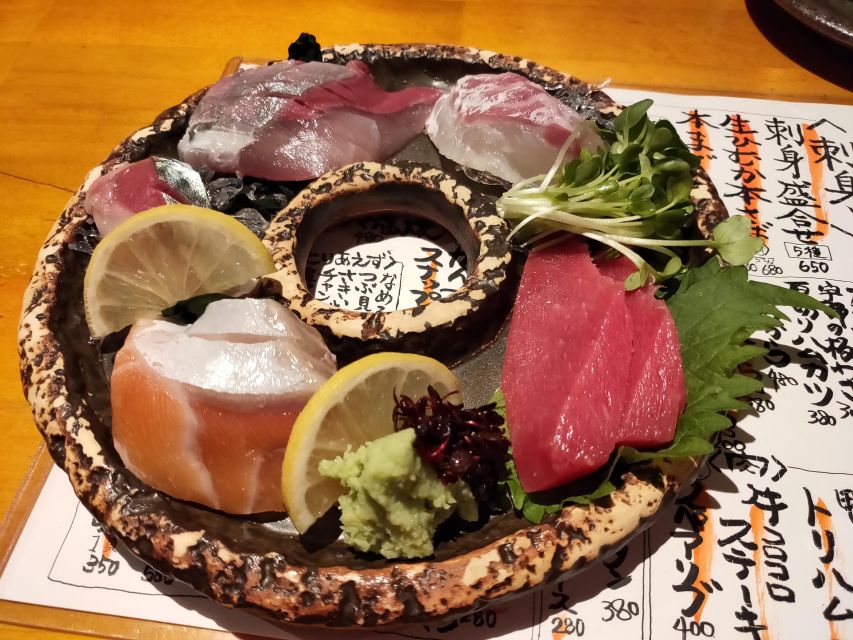
The first restaurant visit lasts about 30 minutes. You receive one included drink, which can be beer, sake, a cocktail, spirits, or a non-alcoholic choice, depending on what is available and what you prefer.
The first stop is likely to ease you into the format. Small dishes arrive for sharing, and the guide explains what you are eating and how it fits into local food culture. You might be served fish, grilled items, tempura, or another seasonal plate. The exact selection is not fixed.
The short visit is part of the appeal. You do not have to commit to one unfamiliar dish as your entire dinner. A small portion lets you try something new, then move on. If one plate is not to your taste, another is coming soon.
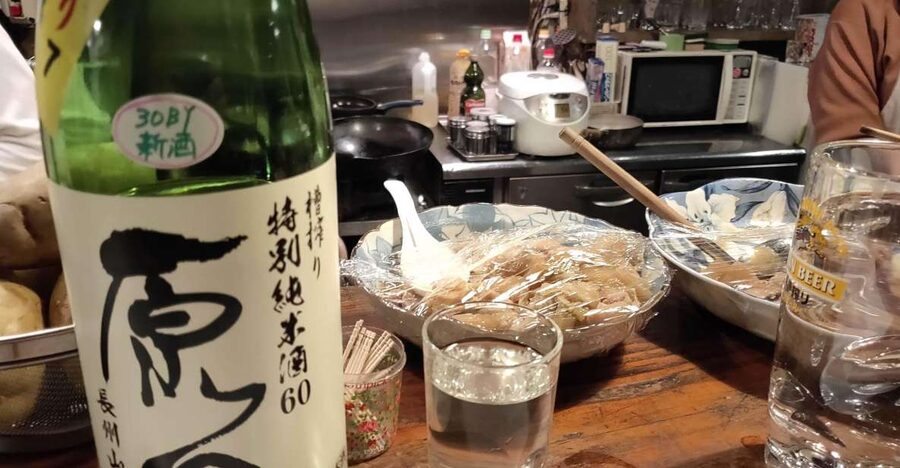
You can also order extra drinks at your own cost. Additional drinks generally run about 500 yen each and are paid directly to the restaurant. The included allowance is one drink at each of the three stops, so keep that in mind if you plan to drink throughout the night.
More Food Tours in Hiroshima:
- Best of Hiroshima Food Tour
★ 5.0 · 32 reviews - Tokyo: Shinjuku Food Tour (13 Dishes at 4 Local Eateries)
★ 5.0 · 6,603 reviews - Tokyo Tsukiji Fish Market Food and Culture Walking Tour
★ 5.0 · 3,184 reviews - Osaka: Shinsekai Food Tour with 13-15 Dishes at 5 Eateries
★ 4.8 · 2,204 reviews
Stop two: more variety, less guesswork
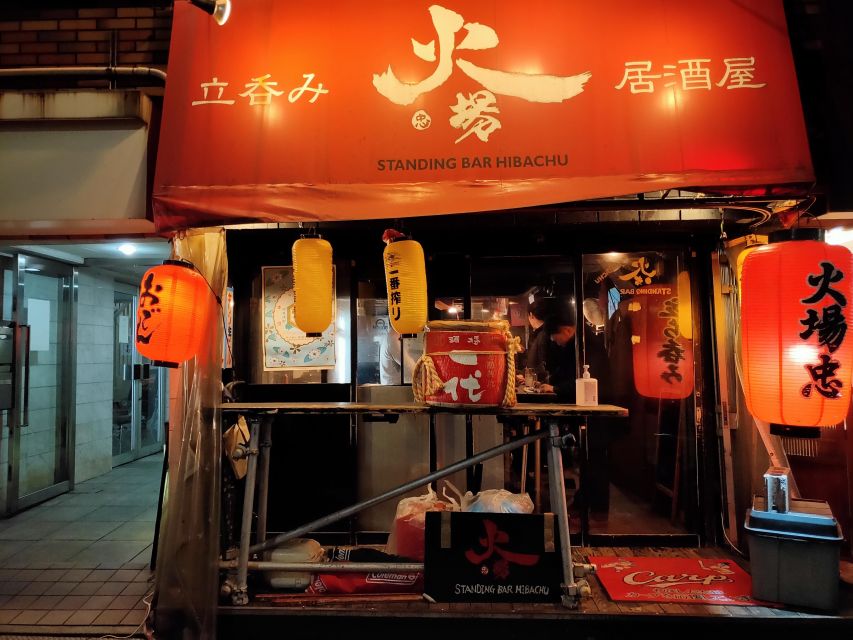
The second restaurant brings another set of plates and another included drink. The pace usually keeps each stop under 30 minutes, so the meal feels like a moving tour rather than a long dinner with several courses.
This is where a guide becomes particularly useful. Small Japanese restaurants may have menus with limited English, unfamiliar ingredients, or dishes that are easy to misunderstand from a translation alone. Your guide can help you decide what to try and explain how locals eat it.
The meal may include seafood, chicken, vegetables, simmered food, or other izakaya-style dishes. Some people will enjoy the more unusual choices. Others may find that not every item suits their taste. That is normal for this kind of food walk, and the range of dishes means you can still leave satisfied even if one plate does not appeal.
One useful tip is to avoid eating a heavy meal beforehand. The food is described as a full dinner, and the number of dishes can reach 10 to 15 across the evening. A light lunch or early snack is a better plan.
Nagarekawa Dori shows Hiroshima’s night side
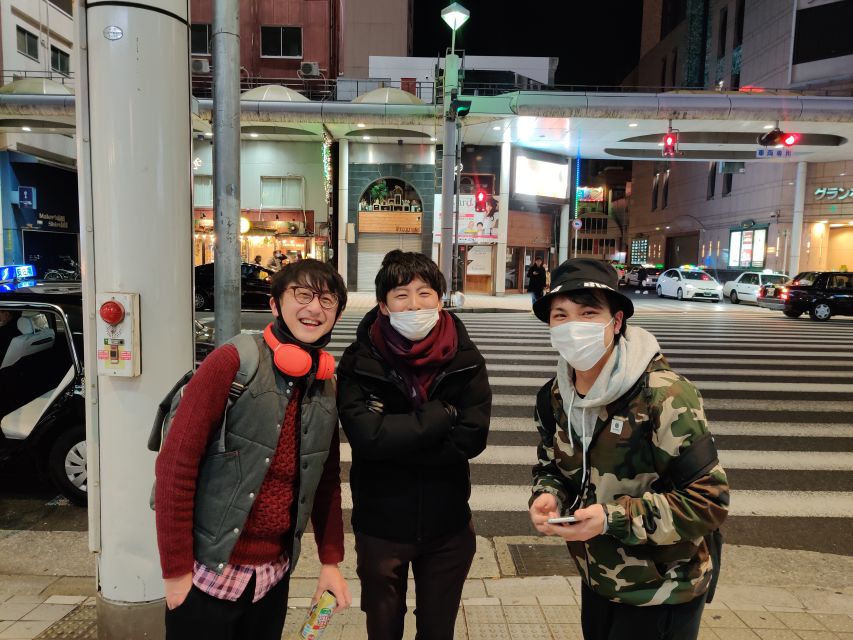
After two restaurant visits, the route includes another 30-minute guided walk along Nagarekawa Dori. This is Hiroshima’s well-known entertainment area, and the walk gives you a look at the city after dark.
Again, this is not a sightseeing tour built around monuments. It is about seeing the streets where Hiroshima residents go out, eat, drink, and socialize. The guide can explain local customs and point out the sort of places you might otherwise pass without noticing.
The walk also creates a welcome pause between food stops. You can digest, ask questions, and reset your appetite before the final restaurant. For visitors who only see Hiroshima during the daytime, this evening section adds a different side of the city.
Stop three: Hiroshima specialties and a local finish
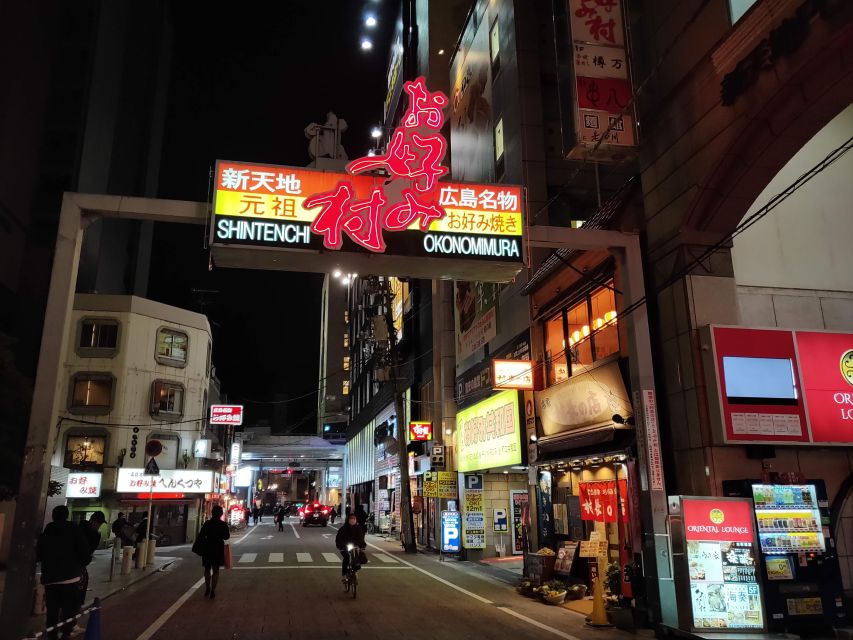
The last restaurant is another roughly 30-minute stop with food and one included drink. This may be the point where Hiroshima-style okonomiyaki appears, a highlight for many people who want to try a local specialty.
The exact menu is not guaranteed, but the food plan is broad. You may finish with more grilled dishes, seafood, steamed food, or seasonal plates alongside the local specialty. One evening included several versions of okonomiyaki, while another included around 15 different dishes across the three stops.
The final stop can also produce the most memorable local contact. One guide brought a group to a restaurant whose owner had been a former sumo wrestler. That sort of meeting cannot be promised, but it shows what this tour is trying to offer: small places, personal connections, and food tied to the people serving it.
You return to the Don Quijote meeting point when the three-hour experience ends. You should be comfortably fed by then, and you will have a short list of places and dishes to revisit during the rest of your stay.
What you may eat and drink
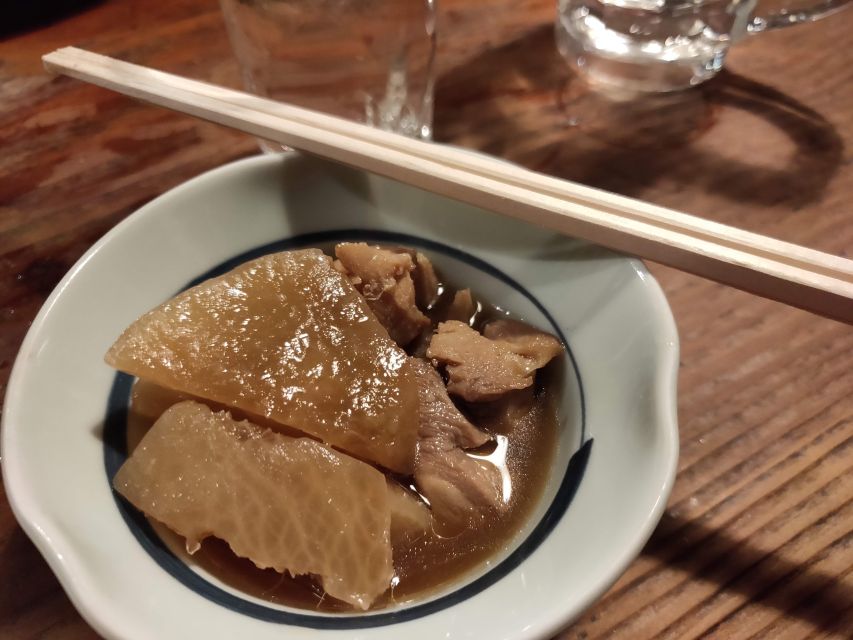
The menu changes with the season and restaurant availability, so think in categories rather than fixed dishes. The experience can include:
- Fresh seafood
- Tempura
- Grilled dishes
- Steamed dishes
- Slow-simmered food
- Chicken and fish dishes
- Hiroshima-style okonomiyaki
- Other small izakaya plates
You receive three drinks in total, one at each restaurant. Alcoholic choices may include beer, sake, cocktails, spirits, or local drinks such as plum wine, depending on the stop. Non-alcoholic options are available, so you do not need to drink alcohol to enjoy the tour.
The minimum drinking age in Japan is 20. All participants must be at least 13 years old, and children under 13 cannot join. Since the evening is built around small restaurants and adult nightlife areas, it is better suited to teenagers and adults than young children.
How the guides shape the experience
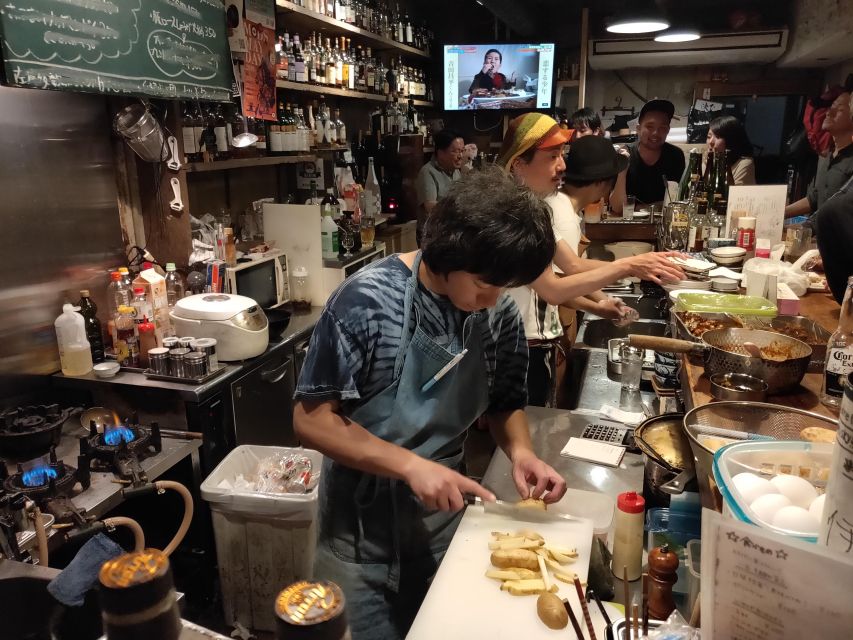
The guide is a major part of the value here. Ken and Kensuke are the names most associated with the experience, while Alex has also led some departures. The guide speaks English, and the activity information also identifies English and Japanese support.
What you need from the guide is not a lecture. You need someone who can explain a dish, help you order, keep a group moving, and make a small restaurant feel welcoming. The strongest guide experience here seems to come from friendly conversation, practical food advice, and a genuine interest in Japanese culture.
Guides have helped people with allergies and adjusted orders where possible. That does not mean every request can be guaranteed, especially when menus change or kitchens are small. Tell the local partner about allergies, restrictions, and preferences before the tour, and remind the guide at the start.
The group format can vary. Private and small-group options are available. A small group gives you a better chance to ask questions, share plates easily, and talk with other people. If the minimum of two participants is not met, the operator may offer a different date, ask for a 3,000 yen solo supplement, or provide a full refund.
The standing restaurant format
Tachinomi means a place where you stand at a counter or table while eating and socializing. All three restaurants may be partly or fully standing venues, although at least one stop is usually seated.
This arrangement keeps the evening flexible and helps you visit compact local places that may not have room for a large tour group. It also matches the casual way many people enjoy a quick drink and several small dishes.
The tradeoff is comfort. You may spend part of the night standing, and you will move between venues. If you have mobility concerns or need guaranteed seating, ask about the current format before booking. Do not assume every restaurant will provide a chair.
The stops are short, often less than 30 minutes, which works well for adventurous eaters and social groups. It may feel rushed if you prefer to linger over one dish or take your time with every drink.
Who should book this food tour
I would choose this experience if you:
- Want to eat local food without decoding every menu
- Have only one evening in Hiroshima
- Enjoy small plates and trying unfamiliar dishes
- Like casual nightlife more than formal dining
- Want to meet a local guide and ask cultural questions
- Prefer a small group or private setting
- Would like Hiroshima-style okonomiyaki included as part of a wider meal
I would think twice if you need a fixed seat, a quiet dinner, or a precise menu. It is also not the right choice for children under 13, and it may not suit anyone who wants to avoid walking or standing.
The tour is not designed as a specialist sake tasting or a focused okonomiyaki class. You get three drinks, but the emphasis is food, neighborhood atmosphere, and conversation.
Practical details that affect your decision
The tour lasts three hours and starts and finishes at Don Quijote Hiroshima Hatchobori store. Check the available start time when booking, since the exact departure schedule can vary.
Free cancellation is available up to 24 hours in advance for a full refund, and you can reserve now while paying later. Restaurant stops, timing, and route may change because of local conditions, so keep a little flexibility in your evening plan.
Bring an appetite, comfortable shoes, and an open mind. If you have allergies or food restrictions, share them ahead of time. The guide and local partner will do their best to accommodate you, but the changing restaurant format means no menu can be promised in advance.
Should you book it?
Book this tour if you want Hiroshima food in a social, low-pressure format and would rather follow a local guide than choose three unfamiliar restaurants yourself. The combination of at least 10 dishes, three drinks, central walking, and small neighborhood restaurants gives you a lot to do in one evening.
I would especially recommend it for first-time visitors, solo travelers who want company, couples, and food-focused travelers with limited time. Ken, Kensuke, and Alex have helped make the experience personal and easy to join.
Skip it if you want a formal seated meal or need complete control over the menu. For everyone else, $94 is a fair price for a full dinner, local guidance, and a look at Hiroshima nightlife that is difficult to arrange on your own.
FAQ
How long does the Hiroshima food tour last?
The experience lasts three hours, including restaurant visits and guided walks through central Hiroshima.
Where does the tour meet?
Meet on the street in front of Don Quijote Hiroshima Hatchobori store, written in Japanese as ドン・キホーテ広島八丁堀店.
Where does the tour finish?
The tour returns to the Don Quijote Hiroshima Hatchobori meeting point.
How many restaurants are included?
You visit three different local restaurants during the evening.
How much food is included?
The tour includes a full dinner spread across the three restaurants, with at least 10 different dishes served during the experience.
Are drinks included?
Yes. You receive three drinks, one at each restaurant. Alcoholic and non-alcoholic options are available.
Can I buy extra drinks?
Yes. Additional drinks generally cost around 500 yen each and are paid directly to the restaurant.
Are the restaurants seated?
The restaurants are all or partly tachinomi-style, which means you may stand at a counter or table. At least one stop is usually seated.
Can food allergies or preferences be accommodated?
The local partner will do their best to accommodate restrictions and preferences. Tell them in advance, but remember that menus and restaurants can change.
What is the minimum age?
All participants must be at least 13 years old. The minimum drinking age in Japan is 20, and children under 13 cannot participate.
More Food & Drink in Hiroshima
- Hiroshima Izakaya Food and Drink Night Tour
★ 5.0 · 297 reviews - Hiroshima Saijo Sake Tasting Tour with visit to 7 Breweries
★ 5.0 · 104 reviews - All-inclusive Hiroshima Nighttime Food and Cultural Immersion
★ 4.5 · 60 reviews - Hiroshima: Saijo Sake Tasting at 7 Breweries Guided Tour
★ 4.8 · 29 reviews
More Dinner Experiences in Hiroshima
- Dinner Cruise on HANAIKADA (Raft-Type Boat) with Scenic View of Miyajima
★ 5.0 · 21 reviews - Tokyo Bar Hopping Tour in Shinjuku (All-You-Can-Drink + Dinner)
★ 5.0 · 3,587 reviews - Tokyo: Sumo Show and Dining Experience
★ 4.8 · 2,742 reviews - Deep Backstreet Osaka Tours (Option to add Dinner)
★ 5.0 · 1,290 reviews
Just added around Hiroshima
- Full Day Hiroshima and Miyajima Tour by Bullet Train from Kyoto★ 4.5 · 120 reviews
- The Peace Memorial to Miyajima : Icons of Peace and Beauty★ 4.5 · 31 reviews
- Hiroshima Saijo Sake Tasting Tour with visit to 7 Breweries★ 5.0 · 104 reviews
- Shore Excursion from Hiroshima Port : Private Tour in Hiroshima★ 5.0 · 17 reviews
- Okunoshima Rabbit Island Cycling Tour with Local Guide★ 4.5 · 17 reviews
- Hiroshima & Miyajima All-Inclusive Tour w/Licensed guide Pancho★ 5.0 · 54 reviews
- Private Full Day Hiroshima Tour★ 4.5 · 29 reviews
- Hiroshima Private Tour with a Local – Highlights & Hidden Gems★ 4.5 · 24 reviews
Dinner Experiences, compared.
Deep Backstreet Osaka Tours (Option to add Dinner)
Our verdict →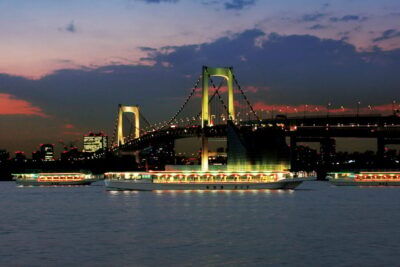
Sumida River: Japanese Traditional Yakatabune Dinner Cruise
Our verdict →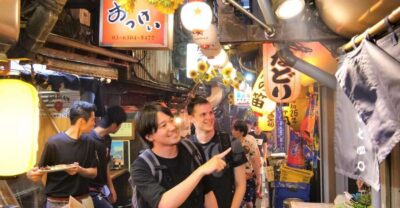
Shinjuku Bar Hopping with All-You-Can-Drink & Dinner
Our verdict →
Browse the lists this tour appears in