
Reviewed · TEMPLES & SHRINES
Full Tokyo: Meiji Shrine, Imperial Palace, Asakusa & Skytree
Tokyo is a huge city, but this seven-hour tour gives you a useful first look without forcing you to solve the train system on your own. You move from the neon energy of Shibuya to the quiet paths of Meiji Shrine, then on to the Imperial Palace, Akihabara, Asakusa, and, if selected, Tokyo Skytree.
I like the wide range of sights and the fact that train tickets between stops are included. I also like the chance to see Tokyo’s very different sides in one day, from Shinto worship at Meiji Shrine to anime culture in Akihabara and old Tokyo around Senso-ji. The main drawback is time: the schedule is tight, and some stops may feel more like photo visits than full guided tours.
Key points to know before booking
- Meet at Hachiko Statue: The tour begins beside the famous dog statue in Hachiko Square, a central and easy-to-find point in Shibuya.
- Meiji Shrine gets the best proper visit: You have about 70 minutes here, enough for a walk through the forest and an introduction to Shinto customs.
- The Imperial Palace is mainly an exterior stop: Expect photos and a short visit rather than entry into the palace buildings.
- Asakusa includes free time: The two-hour stop allows room for Senso-ji, food, shopping, and wandering, though the pace may feel rushed if you choose lunch.
- Skytree requires the right option: You only enter the tower if you purchase the Skytree option in advance.
- Train transfers are part of the day: This helps you cover more ground, but you should wear good walking shoes and be ready to keep moving.
From Hachiko Square to the heart of Tokyo
Your day starts beside the Hachiko Statue, one of Tokyo’s most recognizable meeting points. It is a practical place to begin because Shibuya is easy to reach by train, and the statue sits directly beside Hachiko Square.
From here, the group takes in Shibuya Crossing, the broad intersection where crowds stream across the road from every direction. You may get only a short look rather than a long guided stop, so set your expectations accordingly. The appeal is the contrast: one moment you are in a tightly organized crowd, and the next the crossing clears as if someone pressed a button.
The surrounding Shibuya area adds the city energy, but the tour does not provide a long block of free time here. If you want extensive shopping, cafés, or a visit to a particular viewpoint, plan to return on your own. This opening stop works best as an introduction and photo opportunity.
More Historical Tours in Tokyo
- Tokyo: Imperial Palace and Shogun Historical Walking Tour
★ 5.0 · 2,251 reviews - Tokyo: Imperial Palace Japanese History Walking Tour
★ 4.9 · 987 reviews - Tokyo: Imperial Palace and Shogun Walking Tour
★ 4.9 · 935 reviews
Meiji Shrine offers the day’s calmest hour
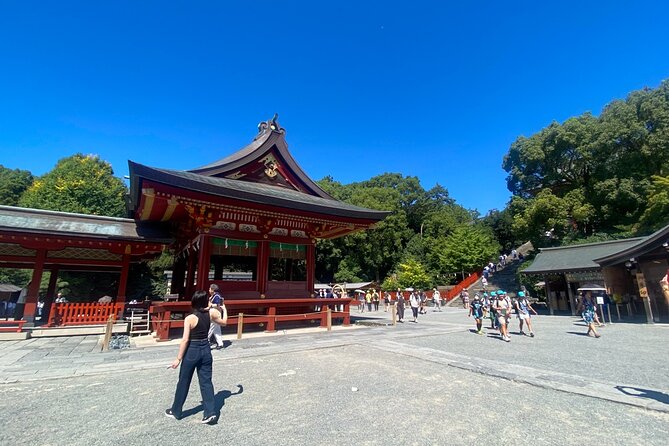
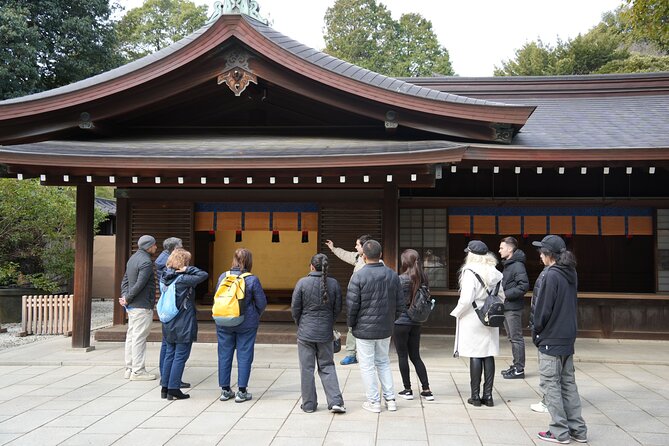
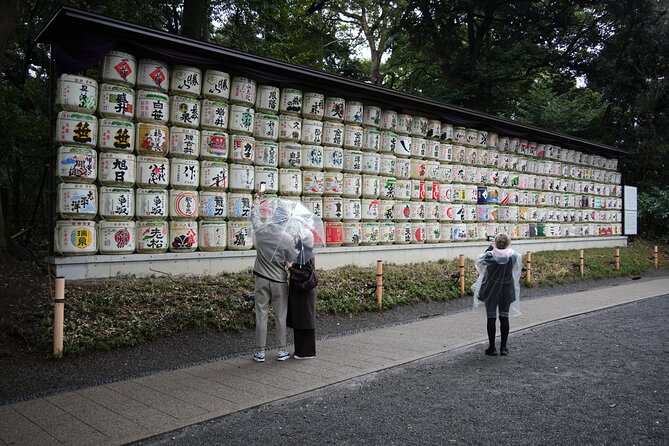
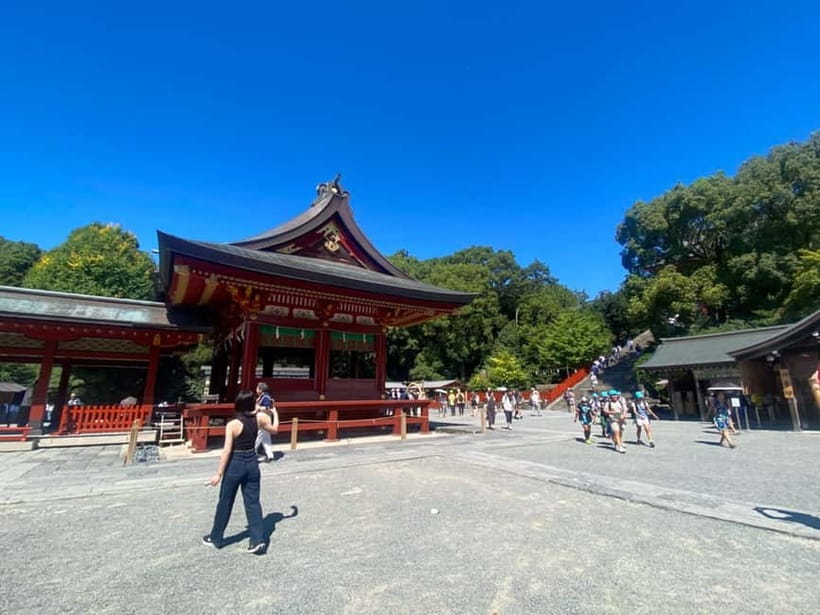
The move to Meiji Shrine changes the mood completely. The shrine sits within a large wooded area, giving you a quiet walking route after the noise of Shibuya. The 70-minute guided visit is one of the strongest parts of the schedule because you have time to walk, listen, and look around rather than simply step off the train for a photograph.
Meiji Shrine is dedicated to Emperor Meiji and Empress Shoken, but the most useful part of a visit here is learning how a Shinto shrine functions. You can expect the guide to point out the approach to the shrine, explain basic customs, and help you understand the setting. This is a good place to ask about bowing, purification, and respectful behavior.
The path can be longer than first-time visitors expect, and the tour involves walking outdoors. Comfortable shoes, water, sunscreen, and a hat are sensible choices. The forest setting also makes this stop feel less like a checklist item and more like a real break from central Tokyo.
Early starts are especially useful here. An 8 a.m. departure can reach Meiji Shrine before the heaviest crowds, giving you a quieter walk. If you value atmosphere over sleeping late, the early start is worth considering.
The Imperial Palace is best for exterior photographs
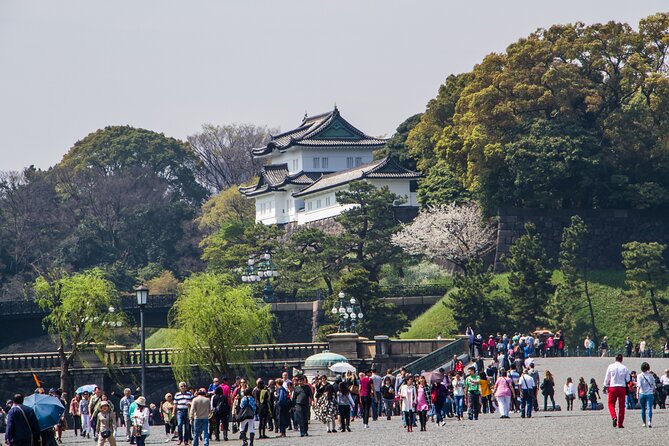
After Meiji Shrine, the tour continues by train toward the Imperial Palace. The planned visit lasts about 30 minutes, although the general description refers to time for photographs and the surrounding gardens rather than entry to the palace itself.
This distinction matters. You are not signing up for a long palace interior tour. Instead, you will see the impressive exterior setting and have a chance to photograph the palace area, including its formal approach and surrounding grounds. It is a useful stop for understanding Tokyo’s political and royal center, but it is also one of the shorter sections of the day.
Keep your camera ready and listen closely while the guide explains what you are seeing. The Imperial Palace can be difficult to appreciate if you only look at it as a distant wall, bridge, or gate. A guide can add context that turns a quick photograph into a more meaningful stop.
Still, if the palace is your main reason for booking, this tour may not give you enough time. The visit is built into a larger city circuit, so the focus is breadth rather than a detailed examination of the grounds.
Akihabara adds modern Tokyo to the mix
The next part of the day brings you to Akihabara, Tokyo’s famous technology and pop culture district. The schedule treats this as a scenic drive or brief area visit, not as a long shopping session.
Akihabara is useful in this tour because it adds a side of Tokyo that Meiji Shrine and the Imperial Palace cannot provide. The district is associated with electronics, games, anime, manga, and colorful storefronts. You get a quick look at the city’s modern entertainment culture before moving to historic Asakusa.
Do not expect time to browse every shop or hunt for a particular collectible. If you want to return, make a separate visit later. The tour’s value here is the contrast between districts. Tokyo is not one single experience, and Akihabara helps make that clear.
More Temple & Shrine Tours in Tokyo
- Tokyo: Meiji Shrine, Asakusa, Skytree Bus Tour and Cruise
★ 4.7 · 1,986 reviews - Tokyo: Asakusa Walking Tour with Sensoji Temple Visit
★ 4.8 · 1,583 reviews - Tokyo Panoramic 1 Day: Meiji Shrine, Asakusa, Odaiba and SKYTREE®
★ 4.5 · 1,222 reviews - Tokyo: Zen Meditation at a Private Temple with a Monk
★ 5.0 · 510 reviews
Asakusa and Senso-ji bring you into old Tokyo
Asakusa is the longest stop, with about two hours for lunch and free time. This is where the day becomes more flexible, but your exact experience depends on the option you choose and how quickly you move.
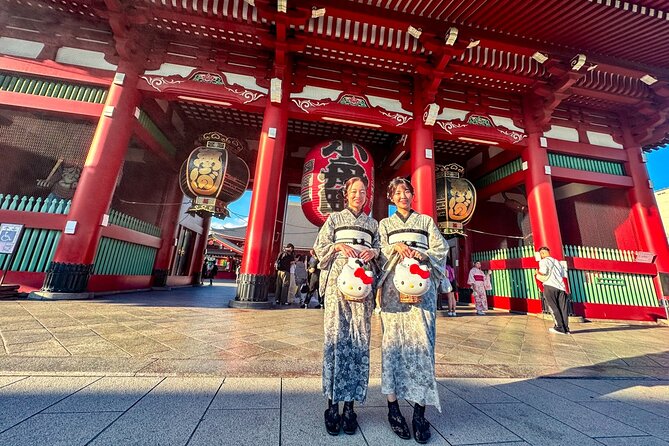
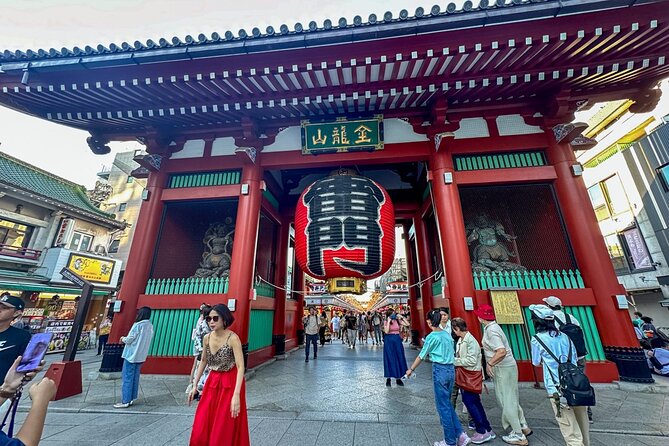
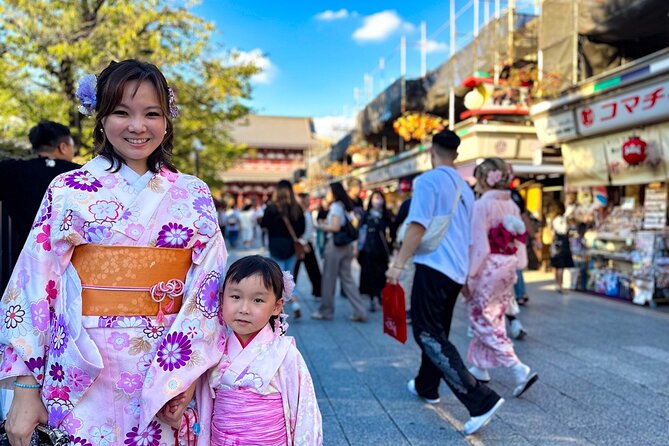
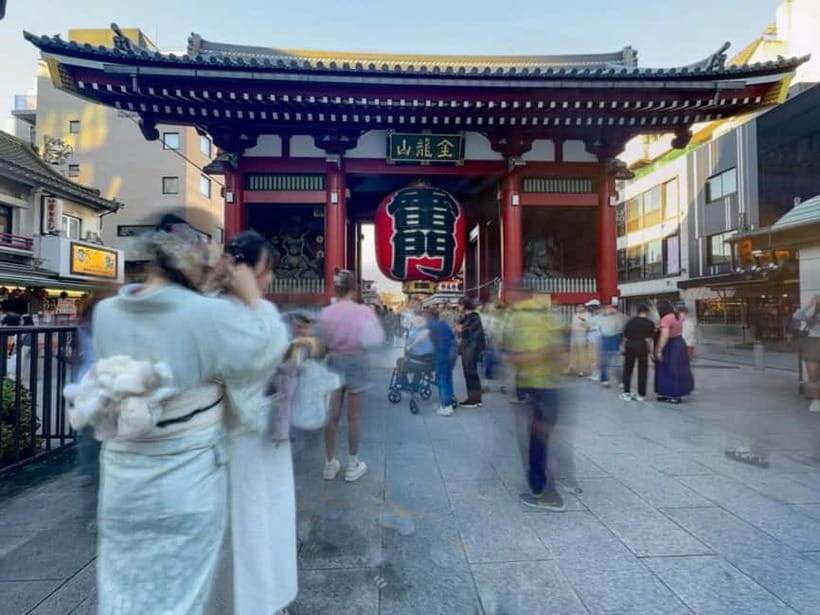
The focus is Senso-ji, Tokyo’s oldest and best-known Buddhist temple. The Kaminarimon Gate, the approach toward the temple, and the surrounding streets provide some of the most recognizable views in the city. The area is also a good place to browse traditional snacks, souvenirs, and small shops.
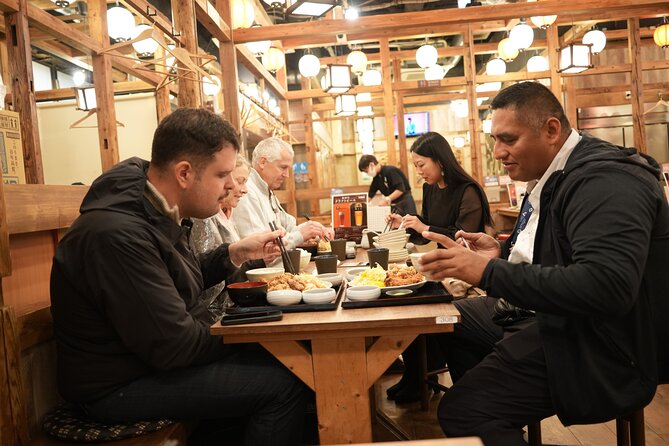
You can choose a lunch option when booking. The meal is described as a traditional Japanese lunch at a local restaurant, and one particularly positive account praised the food as delicious and well served. Drinks are not included, so budget for those separately.
The timing deserves attention. If you choose lunch, you may have less free time around Senso-ji. One account found the meal rushed because the group needed to regroup, and also wanted more explanation of the temple area. That is a fair warning. Two hours sounds generous, but it disappears quickly when you combine a restaurant meal, temple viewing, shopping, and meeting instructions.
If Senso-ji matters most to you, consider eating quickly or choosing the free-time option if available. You can then spend longer looking at the temple buildings and the shopping street. The tour guide can introduce the area, but this is not a long specialist temple tour.
Tokyo Skytree gives the day a strong finish
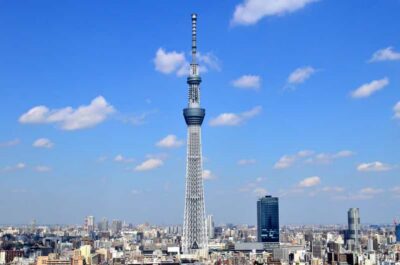
If you select the Skytree option, the tour ends with a visit to Tokyo Skytree and its observation deck. The tower provides broad views across Tokyo, and it is a fitting final stop after seeing the city at street level all day.
You must purchase the Skytree option in advance. The tour ends at Tokyo Skytree, but entry is only possible if you have already selected and paid for the tower ticket. This is the single most important booking detail, since you cannot assume the basic tour price includes admission.
The view is weather dependent, of course, but the observation deck gives you a useful sense of Tokyo’s scale. After moving through separate neighborhoods, you can look down on the city as one enormous urban area. For many people, this will be the visual highlight of the day.
The tour also allows a drop-off at Asakusa instead of Skytree. That option is useful if you do not buy the tower ticket or prefer to continue exploring Asakusa on your own.
What the train transfers add to the experience
Train travel is not just a practical way to get around Tokyo. It also lets you see how quickly the city changes from one district to another. Train tickets for the transfers between itinerary points are included, and the guide handles the route during the tour.
The listed transfer times include roughly 40 minutes near the opening section, 45 minutes after Meiji Shrine, 35 minutes toward Akihabara, and 30 minutes before the final drop-off. These are not wasted hours, but they do reduce the amount of time available at each sight.
You should be comfortable walking through stations, boarding trains, and staying with the group. The exact group size is not provided, so you should not assume the pace will be tailored to one person. One guide, Lucia’s guide in particular, was praised for helping people who walked more slowly, but that level of personal attention can vary with the guide and group.
The train system can feel confusing on a first Tokyo visit. Having an English or Spanish-speaking guide and included tickets removes a layer of stress. It also lets you focus on the city rather than on ticket machines and route changes.
Guides and language support
The advertised tour languages are English and Spanish. Guides named in recent bookings include Oliver, Jorg, Melody, Erik, George, and Burt. The quality of the commentary can depend on who leads your departure, but the strongest accounts describe guides who were warm, organized, and easy to talk with.
Burt was praised for making the places feel important and interesting. George was credited with explaining Japanese culture as the group moved through each district. Oliver helped make a New Year’s Eve visit special by pointing out local shrine and temple customs. These details show how much the guide can affect the day.
At the same time, you should ask questions if you want more cultural detail. One less positive account found the explanations too limited, especially at Senso-ji and the Imperial Palace. This is not a specialist history tour. It is a fast city overview, and the guide’s style matters.
Is $69 a fair price?
At $69 per person, the basic price is reasonable if you want a guided introduction to several central Tokyo districts and value having train transfers arranged. You are paying for a seven-hour day, a bilingual guide, and a route that would take planning to reproduce independently.
The value changes when you add lunch and Skytree admission. Compare the final price with what you would pay for the tower ticket, a Japanese meal, and your own transport. If you already understand Tokyo’s trains and prefer to linger, independent visits may give you more time at each place.
If you have only one free day in Tokyo, the tour makes more financial and practical sense. You will see a lot, and you will not spend the day figuring out how to connect Shibuya, Meiji Shrine, the palace area, Akihabara, Asakusa, and Skytree.
If you dislike fixed schedules, the price may feel less attractive. Shibuya, the Imperial Palace, and Akihabara receive short treatment, while lunch can reduce your Asakusa time. This is a broad survey, not a slow cultural walk.
Who should book this Tokyo tour?
I would recommend it to a first-time visitor who wants a structured day and a clear introduction to Tokyo’s major districts. It also suits anyone who feels uncertain about using Tokyo’s train system or wants a guide to explain basic cultural customs along the way.
It is a good match for people who enjoy variety. In one day, you see a Shinto shrine, a royal landmark, a technology district, a Buddhist temple, and a tall observation tower. Few Tokyo day tours offer such a wide mix at this price.
I would be more cautious if you have mobility limits, since the tour is not suitable for wheelchair users and includes walking and train transfers. I would also hesitate if your priority is a detailed visit to the Imperial Palace or Senso-ji. You will get an overview, but not a slow, in-depth examination.
The free cancellation policy allows cancellation up to 24 hours ahead for a full refund, and reserve-now-pay-later booking is available. Those terms are useful if your Tokyo plans are still shifting.
The final verdict
Book this tour if you want to cover Tokyo’s major highlights in one organized day, especially with the Skytree option included. Meiji Shrine, the train travel, and the contrast between districts are the strongest reasons to go.
Skip it if you prefer to set your own pace, spend hours at Senso-ji, or explore Akihabara in detail. The schedule is ambitious, and the shorter stops may frustrate anyone seeking depth. For a first look at Tokyo, though, $69 is a fair starting point, provided you choose the lunch and Skytree options with care.
FAQ
Where does the tour begin?
The tour begins next to the Hachiko Statue in Hachiko Square.
How long does the experience last?
The tour lasts seven hours. You need to check availability for the exact starting time.
Which languages are available?
The live guide service is available in English and Spanish.
Are train tickets included?
Yes. Train tickets for transfers between the itinerary points are included.
Is lunch included?
Lunch is included only if you choose the lunch option when booking. Drinks are not included.
Is Tokyo Skytree admission included?
Tokyo Skytree admission is included only if you select the Skytree option. You cannot enter the tower through the tour unless you purchased that option in advance.
Is the tour suitable for wheelchair users?
No. The experience is not suitable for wheelchair users.
Just added around Tokyo
- Kawagoe Japanese Food Tour : Unagi Kaiseki and Sake near Tokyo★ 5.0 · 30 reviews
- Kawagoe 4hr Private Tour with Licensed Guide (Kawagoe Dep)★ 5.0 · 13 reviews
- Little EDO Sushi Making workshop in Kawagoe★ 5.0 · 18 reviews
- 【R34】Tokyo:Private Daikoku tour in Modified R34★ 4.9 · 92 reviews
- :Tokyo,Shibuya/ Pro Photography in Kimono / English-Friendly★ 5.0 · 26 reviews
- Tokyo:Celebrate Unique Japanese New Year Tradition Festivity★ 3.9 · 20 reviews
- Tokyo: Allstar Food Tour★ 4.7 · 29 reviews
- Tokyo: West-Side Cycling and Food Tour with Guide★ 5.0 · 37 reviews
Temples & Shrines, compared.

Tea Ceremony in a Traditional Tea House in Kiyomizu
Our verdict →
Meiji Shrine, Asakusa, Skytree Bus Tour and Cruise
Our verdict →
Fushimi Inari Hidden Hiking Tour (Private Option Available)
Our verdict →
Osaka/Kyoto:Kinkakuji,Arashiyama,FushimiInariShrine,NaraPark
Our verdict →
Nikko: Kegon Falls, Lake Chuzenji & Toshogu Temple
Our verdict →
Kamakura & Enoshima Day Trip including Temple Tickets
Our verdict →Browse the lists this tour appears in