
Reviewed · TEA CEREMONY EXPERIENCES
Kyoto Tea Ceremony and Samurai Photo Session
The best part of this Kyoto experience is that you do not simply sit and watch. In a 100-year-old machiya, Maya explains the meaning behind tea ceremony, shows you the proper way to prepare matcha, then lets you make your own cup. You also prepare a Kyoto-style matcha latte and finish with photos in samurai armor.
I like two things right away: the hands-on format makes the ceremony easy for first-timers, and the combination of matcha, seasonal wagashi, and samurai photos gives you more than a standard tea demonstration. Maya is repeatedly praised for her clear English, humor, patience, and warm teaching style.
The main consideration is time. The actual tea and matcha session is described as about 50 minutes, while the total activity lasts roughly 1 hour 20 minutes. That is enough for a pleasant introduction, but not a long, formal tea-school lesson. A group of up to 10 also means the atmosphere is intimate, though not private.
Key Points to Know Before Booking
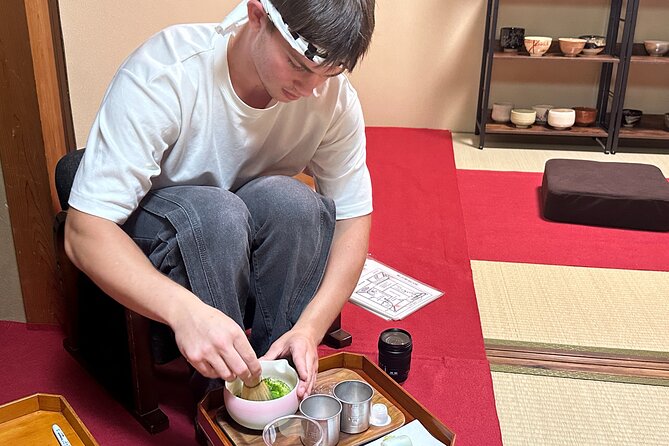
- Make matcha yourself: You learn the basic traditional method rather than only watching a host perform it.
- Try two styles of matcha: The session includes traditional matcha and a creamy Kyoto-style matcha latte.
- Taste seasonal wagashi: These Japanese sweets add a small but important part of the tea ritual.
- Meet Maya: Her friendly English explanations, patience, and light humor are a major part of the class.
- Pose in samurai armor: The photo session gives the experience a playful finish and a memorable souvenir.
- Small group, central meeting point: The class accepts no more than 10 people and begins at Samurai Gyoza Factory Kyoto.
A Tea Lesson Inside a Kyoto Machiya
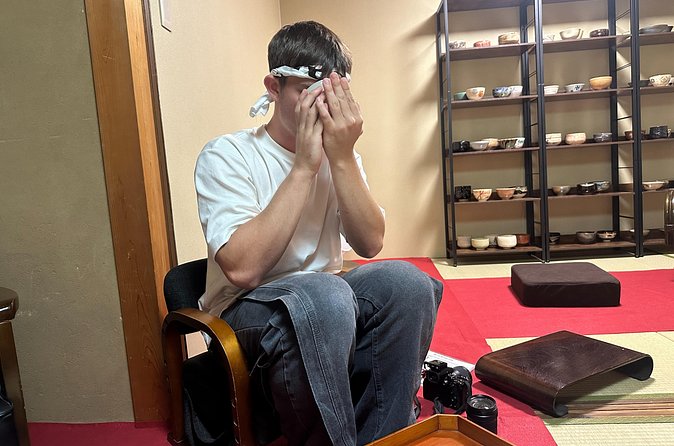
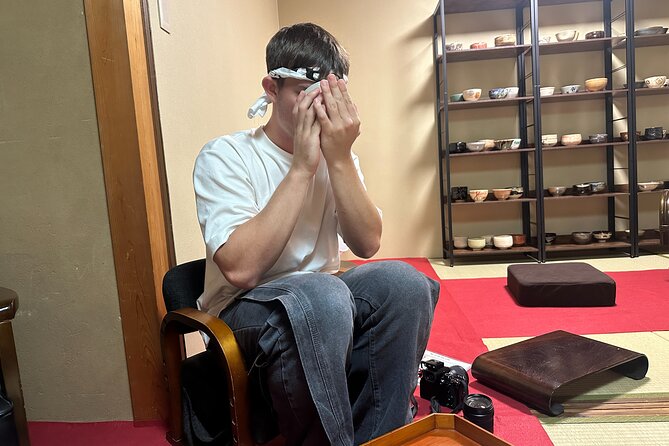
Kyoto’s tea culture can feel formal from the outside. There are rules for handling the bowl, sitting, serving, and drinking. That beauty is also what can make a traditional ceremony seem hard to approach.
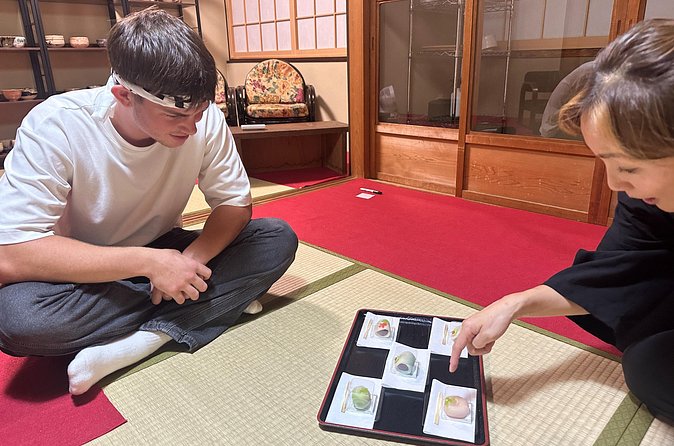
This class lowers the barrier. You enter a century-old machiya, a traditional Kyoto townhouse, and receive a short introduction to the tea ceremony before trying the process yourself. The setting matters. A machiya gives the lesson a sense of place that a modern hotel classroom would not provide.
You should expect a cultural introduction rather than a full professional tea-school ceremony. Maya explains the background and meaning of the practice, then demonstrates how matcha is prepared. After watching, you get your own turn.
That order works well. You first see the movements at a comfortable pace, then copy them with guidance nearby. If you have never used a bamboo whisk, you will not be left guessing. The class is designed for beginners, and the teaching style is described as patient and easy to understand.
The lesson also includes mindfulness. Tea ceremony is not only about powdered green tea. It is about attention, calm, and treating the moment as worthwhile. You may not leave as a tea master, but you will understand why the quiet actions matter.
More Photo Shoots in Kyoto
- Kyoto: Maiko Makeover and Photoshoot Experience
★ 4.7 · 239 reviews - Kyoto: Private Photoshoot Service
★ 5.0 · 158 reviews - Your Private Vacation Photography Session In Kyoto
★ 5.0 · 110 reviews
Making Traditional Matcha Yourself
The central activity is preparing your own matcha. You work with good-quality tea and learn the proper method rather than simply receiving a prepared drink.
For a first-time visitor, this is more useful than a short explanation of tea history alone. You can feel the texture of the powder, handle the whisk, and see how the drink changes as you prepare it. That small act turns an abstract custom into something you can remember.
Maya’s role is important here. Her English is described as very good, and she explains both the steps and the cultural background clearly. Her cheerful style keeps the lesson from feeling stiff. The class has a traditional subject, but it is not presented as a solemn performance that you must be afraid to interrupt.
You should still expect matcha to taste like matcha. It can be grassy, bitter, and stronger than the sweet green-tea drinks served in many cafes. The wagashi helps balance that flavor. If you already enjoy green tea, you will probably appreciate the quality and direct taste. If you are new to matcha, this is a useful chance to try it in the setting where it has meaning.
Seasonal Wagashi and the Taste of Kyoto
The tea comes with seasonal wagashi, traditional Japanese sweets served with matcha. These are not just an extra snack. In a tea setting, the sweet prepares your palate for the tea and adds another seasonal detail to the occasion.
The sweets are reported as delicious, but the more important point is how they complete the rhythm of the session. You learn, prepare, taste, and then move on to the modern drink. The food portion is modest, so do not book this expecting a meal. Think of it as a carefully chosen accompaniment.
Seasonal wagashi can also make the class feel more connected to Japanese customs. The tea itself is the focus, but the sweet gives you another way to notice presentation, texture, and balance. For someone who wants a short cultural activity between sightseeing stops, this is a pleasant amount of food without taking over the schedule.
The Modern Matcha Latte Workshop
After the traditional preparation, the class shifts to a matcha latte. This is a smart addition for visitors who like cafe drinks as much as old customs.
You get to make the latte yourself, and the session includes a recipe so you can try it at home. That practical follow-up adds value. Many short cultural activities end when you leave the room. Here, you take away a method you can repeat, at least in broad terms, along with your memories and photos.
The latte also provides a useful contrast. Traditional matcha asks you to appreciate the tea in a direct form. The latte is softer and more familiar, with a creamy texture that may suit people who find straight matcha too intense.
I like this two-part structure because it avoids treating tradition as something frozen in the past. You learn an established method, then see how matcha fits into modern Kyoto food culture. Still, the latte section means less time for the formal ceremony itself. If your only goal is to study tea etiquette in depth, you may want a longer specialist class.
More Samurai Experiences in Kyoto
- Kyoto Samurai Experience
★ 5.0 · 1,294 reviews - Kyoto: Kendo and Samurai Experience with Uniform and Gear
★ 4.9 · 815 reviews - Kyoto: Samurai Sword Class by Experts in Traditional Arts
★ 4.9 · 657 reviews - Skip the lines Basic Ticket at SAMURAI NINJA MUSEUM KYOTO
★ 4.5 · 632 reviews
Samurai Armor Photos to Finish
The final photo session changes the mood. After the calm concentration of the tea lesson, you have a chance to wear samurai armor and take photographs.
This is not presented as a historical lecture or a museum visit. It is a playful photo opportunity built into the class. That makes it particularly useful for families, friends, and anyone who wants a keepsake with a strong Japanese theme.
The armor photos also give the experience a clear ending. You leave with more than a cup of tea in your memory. You have the visual contrast of a quiet machiya, a matcha bowl, and samurai clothing.
Do keep your expectations in proportion. The photo session is an added feature, not a full samurai training activity. The available information does not specify how long you wear the armor, how many photos are taken, or whether professional photography is included. You should think of it as a chance to pose and take memorable pictures, not a separate costume tour.
One person also described receiving an official certificate. Since this detail is not listed as a standard feature, I would not book solely on the expectation of a certificate. The reliable takeaways are the tea instruction, latte preparation, wagashi, and armor photos.
Maya’s Teaching Style Matters
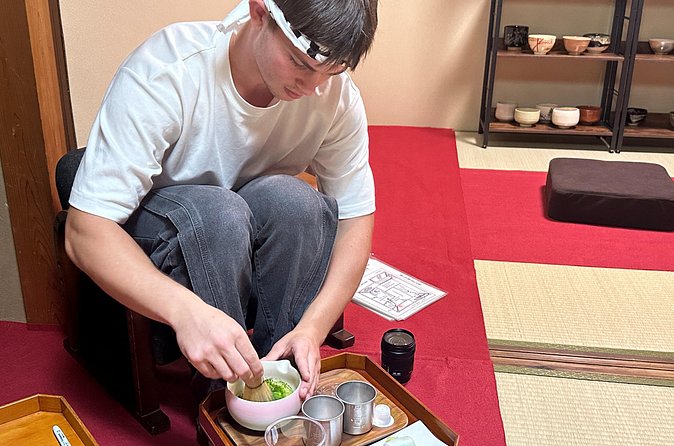
A short cultural class depends heavily on its instructor. Maya receives especially strong praise for being funny, kind, encouraging, and easy to understand in English.
That combination is useful. A teacher can know the subject but still make beginners feel awkward. Maya’s approach appears to be more relaxed. She explains the history and mindfulness behind the ceremony, demonstrates the process, and encourages you to try different things.
Her humor also seems to keep the atmosphere light. That is helpful if you are worried about making a mistake with the whisk or handling the bowl incorrectly. Tea ceremony has rules, but this introduction is built for participation rather than silent observation.
For English-speaking visitors, the language support is a real advantage. The experience is not just a visual demonstration. You need to understand the sequence and the reason behind it, and clear explanations make the cultural side much more worthwhile.
The class may suit you especially well if you enjoy asking questions, trying a new food or drink, and taking part in a demonstration. If you prefer a very quiet, highly formal ceremony with little talking, the cheerful teaching style may feel more casual than you expect.
Price, Timing, and Group Size
The price is $71.74 per person. That is not the cheapest way to drink matcha in Kyoto, but you are paying for several connected activities: access to a machiya setting, instruction, matcha preparation, wagashi, a latte-making lesson, and samurai armor photos.
I consider that fair value for a visitor who wants a compact cultural activity rather than a simple tea purchase. The recipe adds a little practical value, and the small group size keeps the class from becoming a large demonstration. With a maximum of 10 people, you should have a reasonable chance to participate directly.
The activity is listed at roughly 1 hour 20 minutes, while the core tea experience is described as 50 minutes. Allow the full time when planning your day. The difference may cover arrival, transitions, photos, or other parts of the session, but the precise breakdown is not provided.
This is a good fit for a busy Kyoto schedule. You do not need to sacrifice half a day, yet you still get a setting, a teacher, food, hands-on preparation, and photographs. The tradeoff is depth. You will receive an introduction, not a complete education in tea ceremony.
The experience is booked on average 72 days ahead, which suggests that planning early is sensible, especially if you have fixed Kyoto dates. It accepts mobile tickets, and confirmation is provided when you book.
Finding the Meeting Point
The meeting point is Samurai Gyoza Factory Kyoto, at 230-1 Kamimyōkakujichō, Nakagyo Ward, Kyoto, 604-0025, Japan. The activity ends at the same place.
It is near public transportation, but no specific station or walking time is provided. I would check the map carefully before setting out and allow extra time to find the entrance. In Kyoto, a traditional townhouse address can be less obvious than a large hotel or museum entrance.
Because the class begins at a named food venue, do not assume the tea ceremony takes place at a separate temple or formal tea garden. The machiya setting is part of the appeal, but this is a small indoor cultural class in the city.
There is no mention of hotel pickup or transportation between sites. You should plan to reach the meeting point on your own.
Who Will Enjoy This Most
I would recommend this to first-time matcha drinkers, curious food lovers, couples, families, and friends who want a short activity with plenty of participation. It is also a good choice if you want a cultural experience that works even when your Kyoto itinerary is already full.
The class is especially friendly to people who are nervous about formal Japanese customs. Maya’s explanations and relaxed manner make the steps easier to follow, while the latte and photos prevent the experience from feeling too strict.
It also suits tea lovers who want to take the recipe home. You can compare the direct flavor of traditional matcha with the smoother latte and decide which version you prefer.
I would be more cautious if you are searching for a long, formal tea ceremony led in complete silence. The class includes history, instruction, modern preparation, and costume photos, so it covers several moods in a short time. That variety is its strength, but it also means no single part receives expert-level depth.
The small group size is a plus, though it does not guarantee a private class. With up to 10 people, the atmosphere should remain manageable, but you will still be sharing the instructor and photo time.
Booking Flexibility and Practical Details
Free cancellation is available if you cancel at least 24 hours before the scheduled start time. Cancellations made less than 24 hours ahead are not refunded, and changes inside that period are not accepted.
The cut-off is based on Kyoto local time. That matters if you are booking from another country or changing plans while crossing time zones.
The activity is provided by Japan food entertainment Ltd. Its strong recommendation rate and 5 rating from 70 recorded reviews point to a well-liked class, with Maya’s teaching style receiving the clearest praise.
Should You Book the Kyoto Tea Ceremony and Samurai Photo Session?
Book it if you want an easy, friendly introduction to matcha with real participation. The combination of a 100-year-old machiya, seasonal wagashi, traditional matcha, a Kyoto-style latte, and samurai armor photos gives you a lot in about an hour and 20 minutes.
I especially like it for first-time visitors who want cultural context without committing to a long formal ceremony. Maya’s English, patience, and humor should help you feel comfortable, and the take-home latte recipe gives the class a use beyond your Kyoto trip.
Skip it if your priority is an advanced study of tea etiquette or a long temple-style ceremony. For everyone else, $71.74 is reasonable for a small-group session with food, instruction, two matcha preparations, and a distinctive photo finish. Plan ahead, arrive at the machiya meeting point with time to spare, and treat it as a lively introduction rather than a masterclass.
FAQ
How long does the Kyoto tea ceremony and samurai photo session last?
The total activity lasts approximately 1 hour 20 minutes. The main tea and matcha portion is described as taking about 50 minutes.
Where does the experience begin and end?
It begins and ends at Samurai Gyoza Factory Kyoto, 230-1 Kamimyōkakujichō, Nakagyo Ward, Kyoto, 604-0025, Japan.
How many people can join the activity?
The group can include a maximum of 10 people.
Is the experience available in English?
Yes. Maya provides explanations in English, and the experience includes instruction about tea ceremony history, matcha preparation, and mindfulness.
What will I eat and drink?
You will prepare and taste traditional matcha, enjoy seasonal wagashi, and make a Kyoto-style matcha latte.
Are the samurai armor photos included in the activity?
Yes. The experience includes an opportunity to wear samurai armor and take photos.
What is the cancellation policy?
You can cancel for a full refund up to 24 hours before the start time. Cancellations or changes made less than 24 hours before the scheduled start are not accepted for a refund.
More Tea Ceremony Experiences in Kyoto
- Kyoto: Tea Ceremony in a Traditional Tea House in Kiyomizu
★ 4.9 · 3,519 reviews - Kyoto: Tea Ceremony Ju-An at Jotokuji Temple
★ 4.9 · 3,207 reviews - Kyoto: 45-Minute Tea Ceremony Lesson Experience
★ 4.3 · 2,378 reviews - Kyoto: Table-Style Tea Ceremony at a Kyo-Machiya
★ 4.9 · 1,211 reviews
Just added around Kyoto
- Sekka Cotton Furoshiki Class★ 5.0 · 19 reviews
- Kyoto Sword Experience – includes Museum Ticket/Ninja Experience★ 4.5 · 149 reviews
- Scenic Green Tea Fields of Hidden Kyoto & Local Tea Exp (Private)★ 5.0 · 32 reviews
- Secret Eastern Kyoto Biking Adventure★ 5.0 · 44 reviews
- Private Sake Tasting in Central Kyoto with Sake Sommelier★ 5.0 · 32 reviews
- Samurai School in Kyoto: Samurai for a Day★ 5.0 · 202 reviews
- SHIRAKAWA Japanese Culture Experiences with private English staff★ 5.0 · 16 reviews
- A Privately Guided Photoshoot in Beautiful Kyoto by a Pro★ 5.0 · 18 reviews
Tea Ceremony Experiences, compared.

Tea Ceremony in a Traditional Tea House in Kiyomizu
Our verdict →


World Heritage Kyoto & Nara Uji Authentic Matcha Experience
Our verdict →
Arashiyama Bamboo Forest, Monkeys, Matcha & Temple Tour
Our verdict →
Browse the lists this tour appears in