
Reviewed · TEA CEREMONY EXPERIENCES
Kyoto Tea Ceremony & Kiyomizu-dera Temple Walking Tour
Kyoto’s most useful cultural lesson may come between the famous sights: this three-hour walk links Kiyomizu-dera Temple with the lanes, customs, snacks, and tea rituals that make the area feel more than a quick photo stop. You will see the temple’s wooden stage, drink matcha, and learn how to approach Otowa Waterfall with a guide beside you.
I like the small six-person limit, which gives you room to ask about Shinto, Buddhism, temple etiquette, and local traditions. I also like the personal touch from guides such as Hide, who has been praised for taking photos, explaining the area clearly, and keeping the mood relaxed with the occasional baseball chat or dad joke.
The main drawback is the walking route. Kiyomizu-zaka, Sannenzaka, and Ninenzaka are sloped, often crowded shopping streets, so this is not a quiet temple visit. The meeting point at Yasaka Shrine can also take a little care to find, so arrive early for the 9:00 am start.
Key points to know before booking
- A six-person group: This is small enough for questions and a more personal pace.
- Kiyomizu-dera included: Your admission fee is covered, including access to the temple grounds and famous wooden stage.
- Tea ceremony with matcha: The experience includes a traditional ceremony, not just a quick cup of green tea.
- Historic lanes before the temple: You walk through Kiyomizu-zaka, Sannenzaka, and Ninenzaka rather than heading straight to the gate.
- Snacks and photos included: You receive several food samples, a drink of matcha, and photos taken during the walk.
- A morning plan: The tour begins at 9:00 am, lasts about three hours, and returns to Yasaka Shrine.
Why this Kyoto walk works well for a first morning
This tour gives you a clear introduction to eastern Kyoto without asking you to study a map first. Yasaka Shrine, Kiyomizu-dera, and the old streets around them form one of the city’s best-known sightseeing areas, but the lanes can twist and climb. A local guide helps connect the sights instead of leaving you to work out the route on your own.
The morning begins at the Western Tower Gate of Yasaka Shrine in Gion. That is a practical starting point because the tour then moves toward the Kiyomizu-dera area on foot. The activity ends back at the same meeting point, so you do not need to arrange a separate pickup or figure out where to finish.
I would use this as an early Kyoto activity, especially on your first full day. The walk gives you basic orientation, introduces religious customs, and leaves the afternoon open for another part of the city. It also lets you ask simple questions as they arise, from the difference between Shinto and Buddhist practices to the proper way to behave at a temple.
The 9:00 am start matters. Kyoto’s major sights can become crowded as the day moves on, and an early departure gives you a better chance of seeing the lanes before they reach their busiest point. Still, do not expect an empty route. Kiyomizu-dera is one of Japan’s most famous temples, and the approach streets are a major shopping and sightseeing zone.
More Tea Ceremony Experiences in Kyoto
- Kyoto: Tea Ceremony in a Traditional Tea House in Kiyomizu
★ 4.9 · 3,519 reviews - Kyoto: Tea Ceremony Ju-An at Jotokuji Temple
★ 4.9 · 3,207 reviews - Kyoto: 45-Minute Tea Ceremony Lesson Experience
★ 4.3 · 2,378 reviews
Kiyomizu-zaka, old shops, and Yasaka Koshindo
The route takes you through Kiyomizu-zaka, an area made up of several traditional streets leading toward Kiyomizu-dera. Old tea shops, Japanese sweets stores, pickles, yatsuhashi, and other Kyoto foods line the way. You might also see people dressed in kimono, and the streets provide some of the most photogenic scenes of the morning.
This section is more than a transfer to the temple. It shows how Kyoto packages daily life, local food, religious visits, and souvenirs into one compact district. Your guide can point out the difference between a shop selling a snack for immediate eating and one selling a packaged food meant to take home.
One of the stops is Yasaka Koshindo, known for its bright colors. It offers a sharp visual change from the more restrained wooden buildings and temple grounds nearby. The stop also gives your guide a chance to explain the local religious setting before you reach Kiyomizu-dera.
Bring comfortable shoes. The route includes slopes and stone-paved sections, and the approach to the temple is not a flat stroll. The streets are pleasant to photograph, but shopfronts and crowds can make the pace uneven. If you want time to browse every store, this tour may feel too structured. If you prefer to see the highlights without getting lost, the guided route is useful.
Entering Kiyomizu-dera above Otowa Waterfall
Kiyomizu-dera was built at the site of Otowa Waterfall about 1,200 years ago. Its name refers to the waterfall’s pure water, and the connection between the temple and the spring remains central to the visit.
The temple’s wooden stage sits about 13 meters above the ground. From here, you can look across trees and toward Kyoto in the distance. Cherry trees and maple trees make the view particularly appealing in the seasons when their colors change, though the exact view depends on the time of year.
Your admission fee is included, which makes the price easier to assess. You are not paying only for a walk outside the temple. The package covers access to one of Kyoto’s headline sights, along with the guide, tea ceremony, snacks, photos, and matcha.
The guide adds the most value here. Kiyomizu-dera is easy to photograph without help, but the details of temple practice are less obvious. You can learn what you are seeing, ask questions about Japanese religious traditions, and understand why people approach particular areas in certain ways.
At Otowa Waterfall, the water is divided into three streams, each associated with a different benefit. You choose one stream and use a cup attached to a long pole to drink the water. Your guide can explain the custom and help you take part respectfully.
There is a practical point here: the waterfall area can be busy, and you will need to follow the flow of people. The activity is about taking part in a traditional practice, not lingering alone beside a quiet spring. The cup and long pole also require a little coordination, so watch the person ahead of you and follow the local example.
Sannenzaka and Ninenzaka: beautiful, sloped, and busy
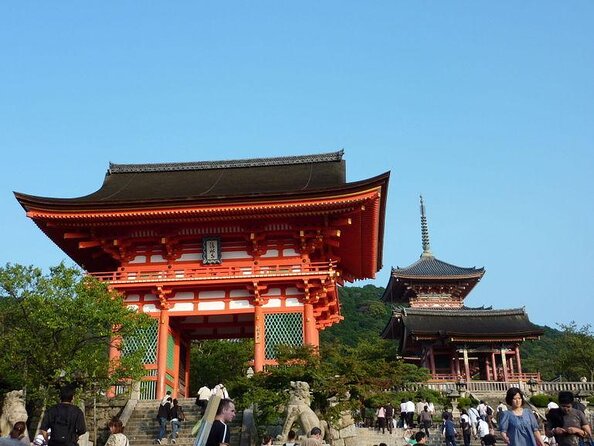
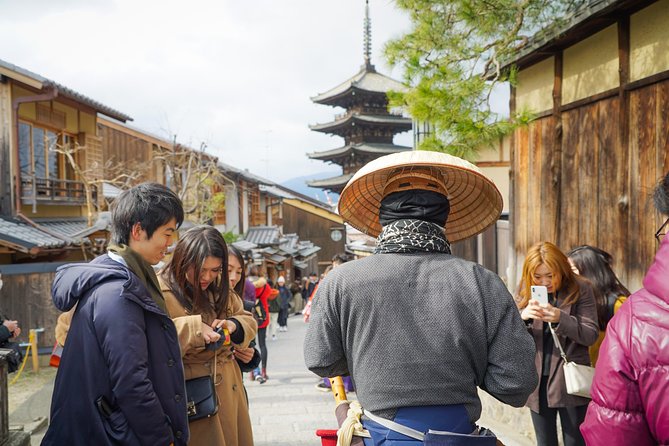
The route passes through Sannenzaka and Ninenzaka near Kiyomizu-dera. These lanes are among the most recognizable old streets in Kyoto, with traditional buildings, small shops, food sellers, and views toward the temple gates.
Sannenzaka has a famous warning attached to it. A local legend says that falling on the slope can shorten your life by three years. The practical message is simpler: watch your footing. The road is steep in places, and the crowd can make stopping suddenly awkward.
The approach also includes Kiyomizu-zaka, a roughly one-kilometer pilgrimage route toward the temple. The lower sections can feel quieter, while the upper slope has more souvenir stores and food shops. Near the top, you may see the Kiyomizu doll store and the temple’s Niomon Gate and three-story pagoda.
This is a good part of the tour for photographs. Your guide may take pictures during the walk, which is helpful if you are traveling alone or want a photo of the whole group. One strong point from the guide Hide’s tours is this practical help with photos, along with a relaxed style that makes the walking feel less formal.
Do not mistake the old appearance for a quiet historic district. The area attracts large numbers of people, especially around the main temple entrance. The tour’s small group helps your guide keep everyone together, but it cannot remove the crowds from the public streets.
More Temple & Shrine Tours in Kyoto
- Kyoto: Fushimi Inari, Kinkakuji, Bamboo Grove 1 Day Bus Tour
★ 4.8 · 4,316 reviews - Fushimi Inari Hidden Hiking Tour (Private Option Available)
★ 5.0 · 1,750 reviews - Osaka/Kyoto:Kinkakuji,Arashiyama,FushimiInariShrine,NaraPark
★ 4.1 · 1,596 reviews - Arashiyama Bamboo, Temple, Monkeys, or Secret Sake Brewery
★ 4.8 · 886 reviews
The tea ceremony and a slower change of pace
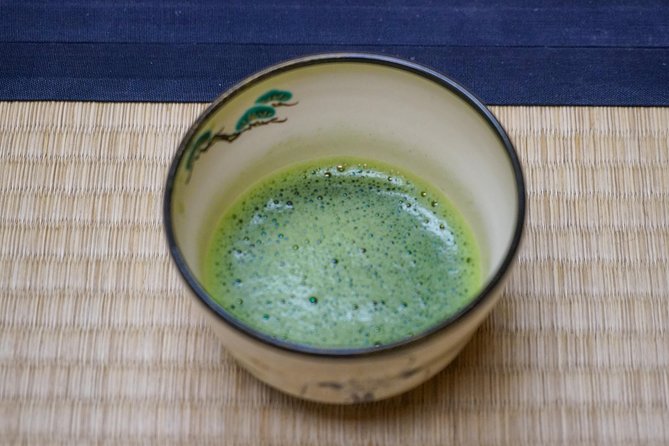
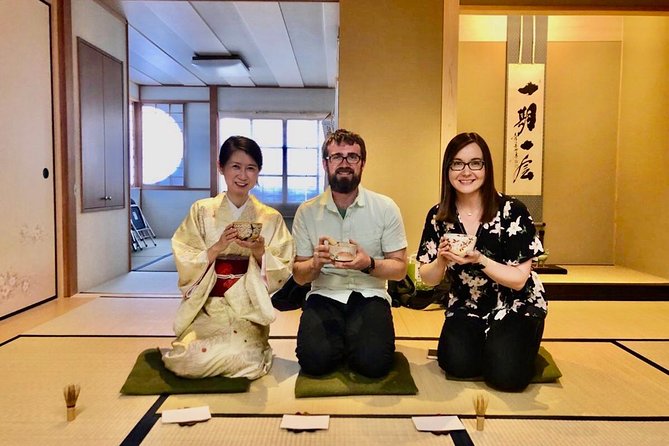
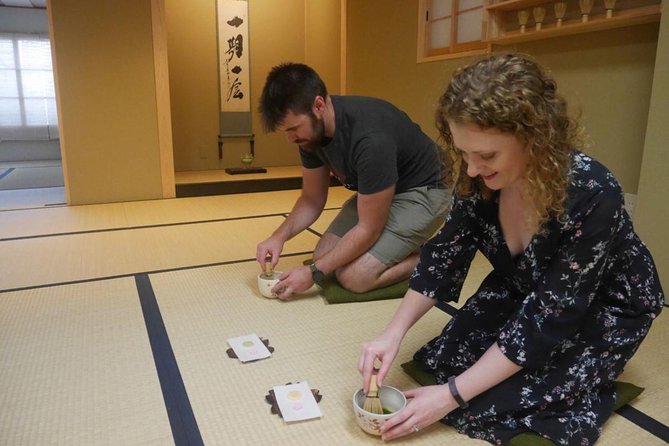
The tea ceremony gives the tour its most focused cultural moment. After the movement through streets, shops, slopes, and temple grounds, you sit down and watch the careful preparation and presentation of matcha.
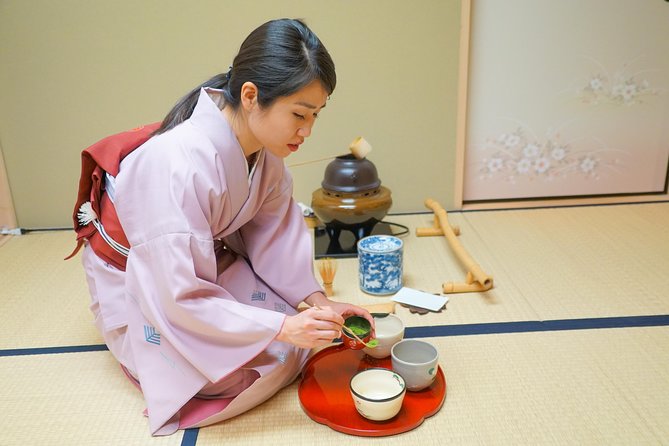
You receive a drink of matcha as part of the experience. The ceremony is not simply a tasting. It introduces the formal gestures, attention, and manners connected with Japanese tea. Your host explains what is happening, so you are not left guessing why each movement matters.
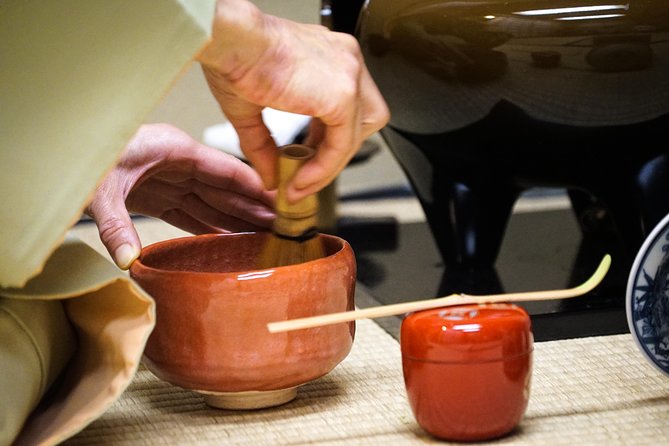
The tea host may be Haruki, who has been praised for a warm and entertaining presentation. The tour has also featured a woman performing the ceremony, allowing you to see the skill and precision involved from close range. The exact host may vary, so treat the names as examples rather than a guarantee.
I like the contrast between the ceremony and the temple walk. Kiyomizu-dera and the surrounding lanes can feel visually busy, while the tea setting asks you to slow down and pay attention. That change helps the activity feel like a cultural introduction rather than a checklist of sightseeing stops.
You should keep your expectations realistic. This is a short tea ceremony within a three-hour walking tour, not an all-day study of tea culture. If your main interest is matcha, tea utensils, and formal procedure, a dedicated tea experience may offer more time. If you want tea combined with Kyoto’s best-known temple district, this format is more balanced.
Snacks, photos, and the value of the $109.39 price
At $109.39 per person, this is not the cheapest way to visit Kiyomizu-dera. You can reach the temple independently for less, and you can browse the surrounding streets without paying for a guide.
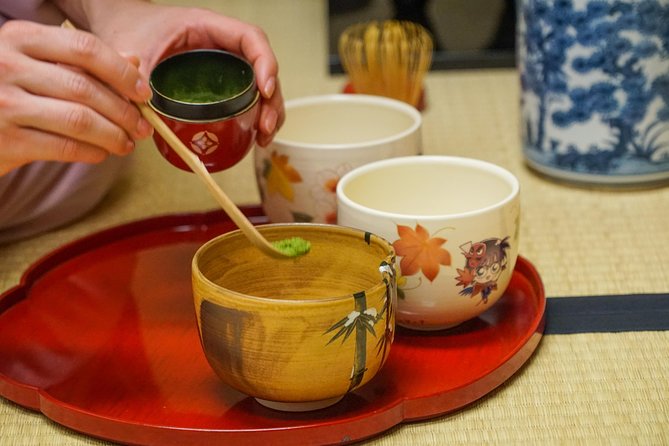
The value comes from combining several small services into one morning. The price includes Kiyomizu-dera admission, a local guide for about three hours, the tea ceremony, matcha, food samples, and photos. You also avoid spending time planning the route between Yasaka Shrine, the old streets, the waterfall, and the temple.
The snacks are described as a few food samplings, not a full meal. That distinction matters. You should eat breakfast before meeting the group, then treat the samples as a taste of Kyoto rather than lunch. Additional food and drinks cost extra.
The food arrangement also requires care if you have allergies or dietary restrictions. The kitchens are not controlled by the tour company, substitutions may not be possible at every stop, and allergy-free preparation is not guaranteed. Ask about your needs before booking, but do not assume the snack portion can be modified.
For someone who wants a guide, cultural explanation, and a tea ceremony in one compact morning, the price can be fair. For a confident independent visitor who mainly wants temple photographs, it will feel expensive. The small group is important to the value calculation: with a maximum of six people, you get a more direct chance to ask questions than on a large coach tour.
The activity has a 4.9 rating from 115 reviews and a 97 percent recommendation rate. Those numbers point to a consistently well-received experience, but they do not remove the practical concerns about slopes, crowds, food restrictions, or the price.
Who should book this three-hour experience
I would recommend this tour to a first-time Kyoto visitor who wants structure without spending a full day on a bus. It suits people who enjoy asking questions, trying a local custom, and seeing a major sight with context.
It is also a good fit for solo visitors who want someone to take photos and for couples or families who prefer a small group. Children under six are not allowed, and the walking route is best for people comfortable with sloped streets.
You will get the most from it if you are curious about both the famous sights and the small details between them. The guide’s explanations of temple customs, Shinto, Buddhism, and local traditions are a major reason to book.
You may want a different plan if you dislike group timing, have limited walking ability, need strict dietary control, or want a long, quiet tea ceremony. The tour keeps moving, and the most popular streets can be crowded.
Summer needs extra preparation. Kyoto can be very hot and humid, so carry water and wear a hat. Good walking shoes are sensible in every season.
Should you book the Kyoto tea and temple walk?
Book it if you want Kiyomizu-dera plus a real cultural activity, not just a temple entrance and a few photographs. The combination of the old lanes, Otowa Waterfall, matcha, snacks, and a small group gives you a useful first look at Kyoto’s eastern temple district.
Think twice if you are mainly seeking solitude or the lowest possible cost. The route is popular, the streets are sloped, and the tea ceremony is brief. For most first visits, though, the chance to walk with a local guide such as Hide, ask questions, receive photos, and return to Yasaka Shrine after three hours makes this a well-organized introduction.
Free cancellation is available up to 24 hours before the 9:00 am start. Changes or cancellations made less than 24 hours ahead are not accepted, so keep that cutoff in mind when you book.
FAQ
Where does the tour begin and end?
The tour begins at the Yasaka Shrine Western Tower Gate, at 625 Gionmachi Kitagawa in Kyoto’s Higashiyama Ward. It ends back at the same meeting point.
What time does the experience start?
The tour starts at 9:00 am and lasts approximately three hours.
Is Kiyomizu-dera admission included?
Yes. The entrance fee for Kiyomizu-dera Temple is included in the tour price.
Is the tea ceremony included?
Yes. The activity includes a traditional tea ceremony and a serving of matcha green tea.
How large is the group?
The activity has a maximum of six people.
Are food allergies and dietary restrictions accommodated?
Allergy-free food and specific dietary substitutions cannot be guaranteed. The snacks are prepared in kitchens outside the tour company’s control, and additional food or drinks are not included.
More Walking Tours in Kyoto
- Kyoto Geisha Walking Tour: Gion District & Hidden Gems
★ 4.7 · 3,273 reviews - Kyoto: Gion Magical Night Walking Tour with Geisha Trivia
★ 4.9 · 2,393 reviews - Kyoto: Gion Geisha District Walking Tour – Stories of Geisha
★ 4.7 · 2,187 reviews - Night Walk in Gion: Kyoto’s Geisha District
★ 4.5 · 2,003 reviews
Just added around Kyoto
- Sekka Cotton Furoshiki Class★ 5.0 · 19 reviews
- Kyoto Sword Experience – includes Museum Ticket/Ninja Experience★ 4.5 · 149 reviews
- Scenic Green Tea Fields of Hidden Kyoto & Local Tea Exp (Private)★ 5.0 · 32 reviews
- Secret Eastern Kyoto Biking Adventure★ 5.0 · 44 reviews
- Private Sake Tasting in Central Kyoto with Sake Sommelier★ 5.0 · 32 reviews
- Samurai School in Kyoto: Samurai for a Day★ 5.0 · 202 reviews
- SHIRAKAWA Japanese Culture Experiences with private English staff★ 5.0 · 16 reviews
- A Privately Guided Photoshoot in Beautiful Kyoto by a Pro★ 5.0 · 18 reviews
Tea Ceremony Experiences, compared.

Tea Ceremony in a Traditional Tea House in Kiyomizu
Our verdict →


World Heritage Kyoto & Nara Uji Authentic Matcha Experience
Our verdict →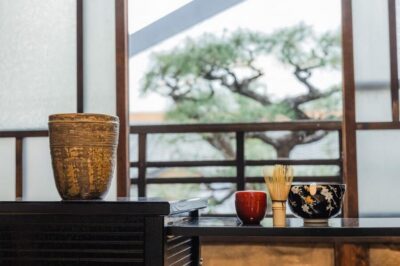
Arashiyama Bamboo Forest, Monkeys, Matcha & Temple Tour
Our verdict →
Browse the lists this tour appears in