
Reviewed · TEA CEREMONY EXPERIENCES
Kyoto Kiyomizu Tea Ceremony with Scenic Garden Views
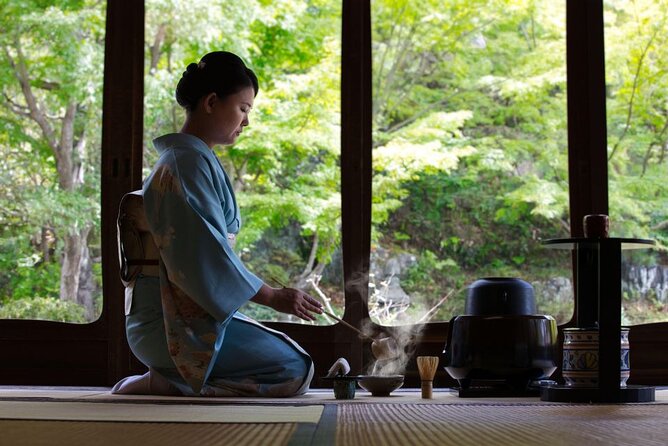
A tea ceremony can sound formal until you see how much happens in a few quiet movements. At Tea Ceremony Sakaguchian, you watch a tea master purify the utensils, measure the powder, whisk the matcha, and serve it in a room with broad garden views. It is a small cultural lesson with a very pretty setting.
I especially like the two cups of matcha, since the second gives you a chance to prepare the tea yourself. I also like the calm garden outlook and the helpful English explanations, which make the ceremony easier to follow instead of leaving you to guess what each gesture means.
The main drawback is time. At about 45 minutes, this is a compact introduction, not a full study of tea culture. One person found the session brief for the price, and sitting on the floor may be uncomfortable if your feet or knees are troublesome.
Key details before you book
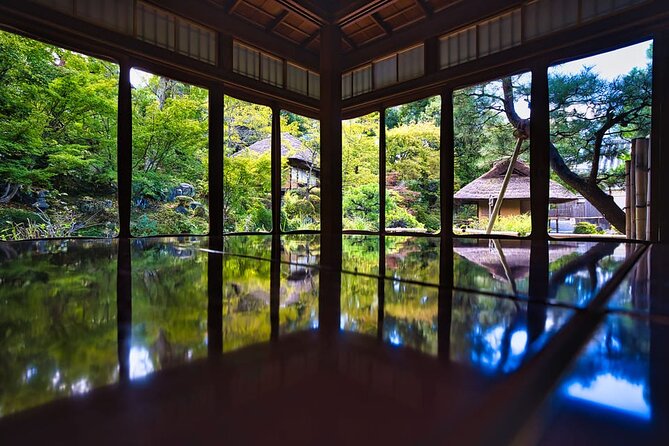
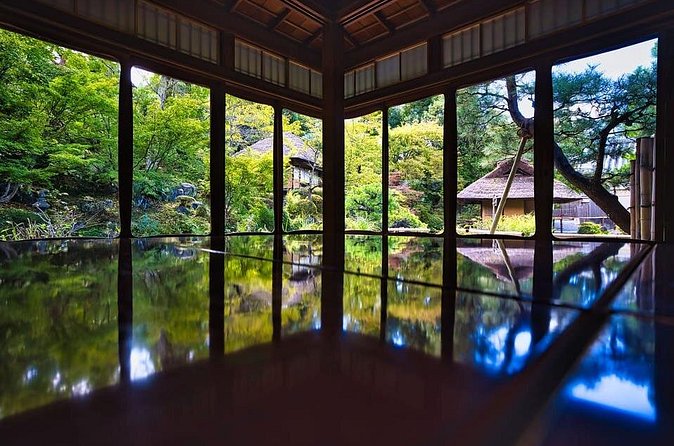
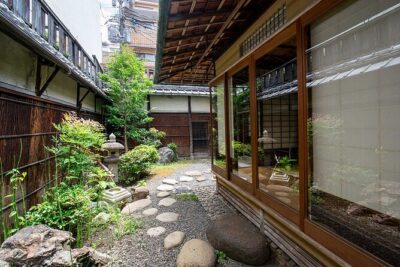
- A tea room with garden views: Large windows look onto a carefully tended Japanese garden, giving the ceremony a peaceful setting.
- Two cups of matcha: The tea master prepares the first cup, then you learn how to make the second.
- Small group format: The experience accepts no more than 12 people, so you can ask questions without shouting across a crowded room.
- A short cultural lesson: An English-speaking host explains the ceremony, its history, symbolism, and proper tea etiquette.
- Wagashi is included: Traditional Japanese sweets are served with the matcha and help balance its earthy bitterness.
- Come prepared for floor seating: Socks are a good idea, and this activity is not recommended for people with foot or knee problems.
A quiet break near Kiyomizu
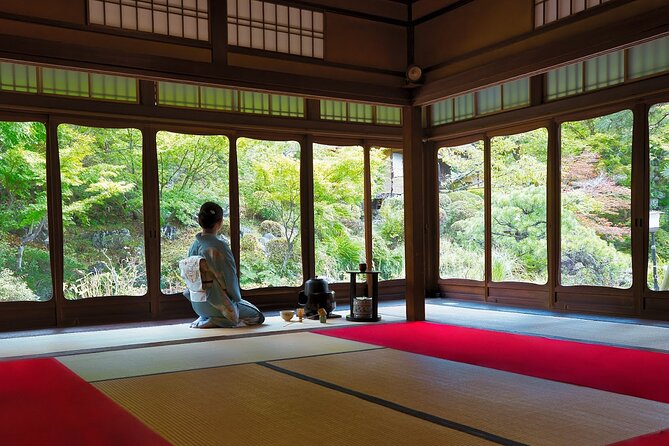
Kyoto can wear you out. The Kiyomizu area is full of temples, shops, stone lanes, and photo stops, so a seated tea ceremony gives you a useful change of pace. You leave the noisy street behind and enter a traditional tea room where the garden becomes part of the experience.
The meeting point is Tea Ceremony Sakaguchian, written in Japanese as 茶道体験 阪口庵, at 3-chōme-334 Kiyomizu in Higashiyama Ward. The activity begins and ends there. Since no transport is included, you will need to make your own way to the tea house and allow enough time to find the address.
The first impression comes from the room itself. Garden views fill the background, and the changing season adds much of the charm. In summer, the air conditioning is useful, while the garden supplies a softer view than a plain indoor classroom. You are not simply tasting matcha in a restaurant. You are watching the preparation in a place designed for the tea tradition.
More Garden Tours in Kyoto
- Kyoto Arashiyama Walking Tour: Bamboo, Monkeys, Gardens & Secrets
★ 5.0 · 1,216 reviews - Kyoto Zen Meditation & Garden Tour at a Zen Temple with Lunch
★ 5.0 · 441 reviews - Kyoto Arashiyama Bamboo forest & Garden Half-Day Walking Tour
★ 5.0 · 413 reviews
Watching the tea master work
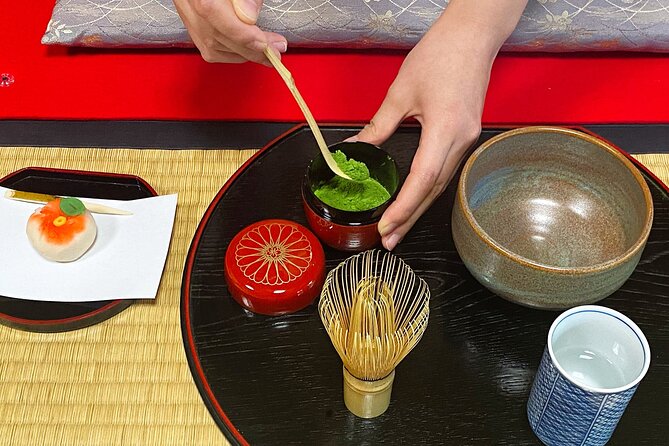
The ceremony begins with demonstration rather than hands-on activity. The tea master performs each step with care, from purifying the utensils to whisking the bright green tea into a fine foam. The movements are deliberate, and that pace is part of the lesson.
You may already know that matcha is powdered green tea, but the ceremony shows how much attention goes into serving it. The bowl, whisk, scoop, and cloth each have a role. The host explains what is happening and gives you the cultural context needed to read the sequence.
The tea master’s precision is one of the strongest parts of the session. The gestures are graceful without feeling like a stage show. You can watch the hands, the tools, and the order of events, then ask questions through the English-speaking host.
This matters because a formal tea ceremony can be hard to understand from photographs or a quick demonstration. Here, you see the process at close range and learn why the movements are measured. The ceremony presents ideals of harmony, respect, purity, and tranquility without turning them into an abstract lecture.
Your first cup of matcha and wagashi
The first cup is prepared for you. Before drinking, you receive wagashi, a traditional Japanese sweet. Its delicate flavor is a useful partner for matcha, which can taste grassy, bitter, and more intense than the sweetened green tea served in many cafés outside Japan.
Do not expect a large drink. Matcha is served in a small bowl, and the point is attention rather than volume. You watch the tea, hold the bowl properly, and follow the host’s instructions for drinking it respectfully.
The sweet also gives the tasting a clear rhythm. Take the wagashi first, then drink the matcha, and you will notice how the sweetness changes the tea’s character. This is a simple detail, but it helps you understand why the two are served together.
The setting does much of the work here. A garden view, the quiet room, the scent of tea, and the formal clothing of the tea master create a complete sensory experience. You are not just checking matcha off a food list.
Making the second bowl yourself
The second cup is the practical part of the activity. After seeing the tea master demonstrate the method, you learn how to prepare matcha yourself. The host guides you through the technique, including how to handle the bowl and create the proper froth with the bamboo whisk.
This hands-on section is especially useful for first-time visitors. You do not need prior knowledge, and the point is not to produce a perfect bowl. You get a better sense of the effort and control involved, as well as a clearer memory of the ceremony’s tools.
It also breaks up the formal demonstration. The first cup asks you to observe. The second asks you to participate. That balance makes the short session feel more substantial than a simple tea tasting.
You should expect instruction rather than a long workshop. At roughly 45 minutes, the activity only introduces the process. If you want extended practice, detailed instruction in tea-school methods, or a longer discussion of regional tea styles, this will feel limited.
More Tea Ceremony Experiences in Kyoto
- Kyoto: Tea Ceremony in a Traditional Tea House in Kiyomizu
★ 4.9 · 3,519 reviews - Kyoto: Tea Ceremony Ju-An at Jotokuji Temple
★ 4.9 · 3,207 reviews - Kyoto: 45-Minute Tea Ceremony Lesson Experience
★ 4.3 · 2,378 reviews - Kyoto: Table-Style Tea Ceremony at a Kyo-Machiya
★ 4.9 · 1,211 reviews
Why the garden view changes the experience
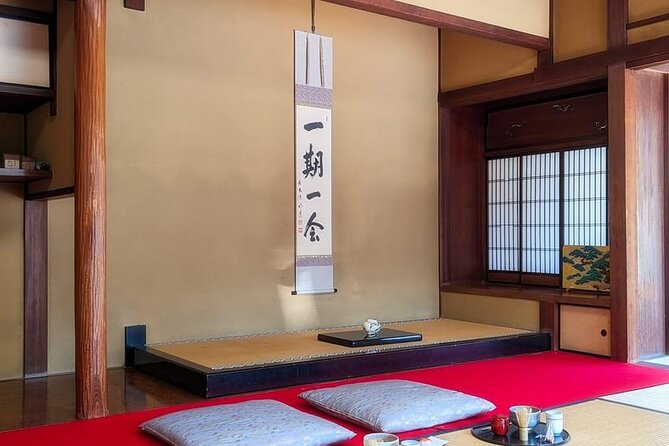
The garden is not just decoration behind the tea room. It gives your eyes somewhere to rest while you listen, and it connects the ceremony to the seasons. The views are repeatedly praised for making the room feel peaceful, with large windows opening the setting to the carefully maintained grounds.
That visual calm is useful after time spent walking through Kiyomizu. You can enjoy the garden without having to cover another long route or wait in a temple queue. The activity works well as a mid-morning or afternoon pause.
The garden also helps explain an important part of Japanese tea culture. The room, utensils, sweets, movements, and surrounding plants are meant to work together. The ceremony is not a quick act of pouring hot water into a cup. It is a designed moment that pays attention to place and season.
Still, keep your expectations sensible. You are not receiving a private garden tour, and the activity centers on the tea room. The garden views are a major part of the appeal, but the tea ceremony remains the main event.
Small-group comfort and English explanations
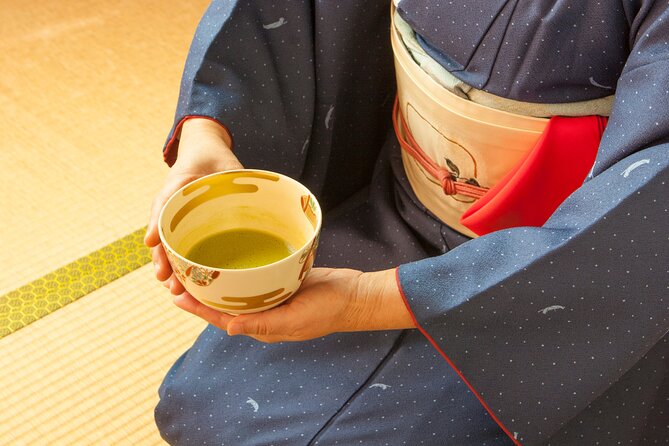
The maximum group size is 12 people. That is not a private lesson, but it is small enough to keep the experience personal. You can watch the demonstration clearly, follow the preparation of your own tea, and ask questions without the room feeling like a large performance.
The English-speaking host helps explain the ceremony and its background. This is important because many rules can seem mysterious if you do not understand the reason behind them. The explanations cover the tea process, the customs around drinking, and the meaning attached to the ceremony and garden.
The hosts are described as warm, polite, and attentive. The tea master also takes questions, with the host helping communicate the answers. The tone is formal during the ceremony but friendly around it, so you can ask about the utensils, preparation, history, or proper etiquette.
If you prefer fast-moving activities, the slow pace may test your patience. This is a quiet, detail-focused experience. It suits people who enjoy craft, food culture, architecture, and small rituals more than people looking for constant entertainment.
Is $50.87 a fair price?
At $50.87 per person, this is not the cheapest way to taste matcha in Kyoto. You can find tea in cafés for much less. The price here pays for the setting, instruction, tea master’s demonstration, English interpretation, garden views, two cups of matcha, wagashi, and the chance to prepare tea yourself.
I think the value depends on what you want. If you only want a drink, the cost is high. If you want a guided introduction to one of Japan’s best-known cultural traditions in a traditional room, the price is more reasonable.
The short duration is the main point to weigh. The listed time is approximately 45 minutes, while some descriptions of the experience place it closer to an hour. Either way, this is a compact activity. One person felt it only scratched the surface of both the formal ceremony and matcha preparation, and that is a fair assessment.
I would book it for the quality of the setting and the clear introduction, not because it offers a long lesson. The combination of demonstration and hands-on practice gives you more than a simple photo opportunity, but less than a serious tea-school class.
Who should book this tea ceremony?
This activity suits first-time visitors to Japan who want a structured introduction to matcha. You receive enough explanation to understand what you are seeing, and you do not need to arrive with any knowledge of tea etiquette.
It also suits families, couples, and small groups. The session is calm enough for a break in a busy Kyoto day, and the second cup gives children or teenagers something active to do. Anyone interested in Japanese crafts, ritual, gardens, or food traditions should find plenty to hold their attention.
The experience is less suitable if you dislike sitting still or want a longer class. It is also not recommended for people with bad feet or knees. Wear or bring socks, since the setting may require you to remove your shoes and sit in a traditional room.
Kimono rental is not included, so do not book this expecting a costume experience. Video recording is also not included. Photos are included, but the supplied information does not specify how or when they are taken.
How to fit it into a Kiyomizu day
The activity is easy to pair with sightseeing in Higashiyama because it begins and ends at the same tea house. You can schedule it as a rest stop during a visit to the Kiyomizu area, but leave enough time to reach the meeting point without rushing.
A tea ceremony works best when you are not watching the clock. Arriving early gives you time to settle down before the movements begin. Since the activity requires good weather and may be canceled if conditions are poor, keep a little flexibility in your Kyoto plans.
The mobile ticket is practical for a day of sightseeing. Confirmation arrives when you book, so you can keep the booking on your phone rather than carrying a printed voucher. The cancellation terms are also straightforward: cancel at least 24 hours before the start time for a full refund. Changes or cancellations inside that window are not accepted for a refund, and weather-related cancellations offer a new date or full refund.
My recommendation for the final decision
Book this experience if you want a calm, well-explained first tea ceremony with a garden view and a small group. The two-cup format is a real advantage: you observe the master first, then try the technique yourself. The wagashi, photos, English explanations, and traditional setting make the session feel complete despite its short length.
Skip it if you want an extended tea lesson, a kimono rental, or a private ceremony. The price may feel steep for 45 minutes, particularly if your main goal is simply to drink matcha. For most visitors who want a focused cultural stop near Kiyomizu, though, this is a thoughtful use of part of an afternoon.
FAQ
Where does the tea ceremony begin?
It begins at Tea Ceremony Sakaguchian, also written as 茶道体験 阪口庵, at 3-chōme-334 Kiyomizu, Higashiyama Ward, Kyoto, 605-0043, Japan.
Where does the activity end?
The activity ends back at the meeting point, Tea Ceremony Sakaguchian.
How long does the tea ceremony last?
The listed duration is approximately 45 minutes. Some descriptions of the session refer to it as about an hour.
How much does the experience cost?
The stated price is $50.87 per person.
How many people can join?
The experience accepts a maximum of 12 people.
How many cups of matcha are included?
Two cups of matcha are included. The tea master prepares the first, and you learn how to prepare the second.
Are traditional sweets included?
Yes. Wagashi, traditional Japanese sweets, are included with the tea ceremony.
Is kimono rental included?
No. Kimono rental is not included.
Is video recording included?
No. Video recording is not included. Photos are included.
Is the experience suitable for people with foot or knee problems?
No. The activity is not recommended for people with foot or knee problems. Wearing or bringing socks is also advised.
More Temple & Shrine Tours in Kyoto
- Kyoto: Fushimi Inari, Kinkakuji, Bamboo Grove 1 Day Bus Tour
★ 4.8 · 4,316 reviews - Fushimi Inari Hidden Hiking Tour (Private Option Available)
★ 5.0 · 1,750 reviews - Osaka/Kyoto:Kinkakuji,Arashiyama,FushimiInariShrine,NaraPark
★ 4.1 · 1,596 reviews - Arashiyama Bamboo, Temple, Monkeys, or Secret Sake Brewery
★ 4.8 · 886 reviews
Just added around Kyoto
- Sekka Cotton Furoshiki Class★ 5.0 · 19 reviews
- Kyoto Sword Experience – includes Museum Ticket/Ninja Experience★ 4.5 · 149 reviews
- Scenic Green Tea Fields of Hidden Kyoto & Local Tea Exp (Private)★ 5.0 · 32 reviews
- Secret Eastern Kyoto Biking Adventure★ 5.0 · 44 reviews
- Private Sake Tasting in Central Kyoto with Sake Sommelier★ 5.0 · 32 reviews
- Samurai School in Kyoto: Samurai for a Day★ 5.0 · 202 reviews
- SHIRAKAWA Japanese Culture Experiences with private English staff★ 5.0 · 16 reviews
- A Privately Guided Photoshoot in Beautiful Kyoto by a Pro★ 5.0 · 18 reviews
Tea Ceremony Experiences, compared.

Tea Ceremony in a Traditional Tea House in Kiyomizu
Our verdict →


World Heritage Kyoto & Nara Uji Authentic Matcha Experience
Our verdict →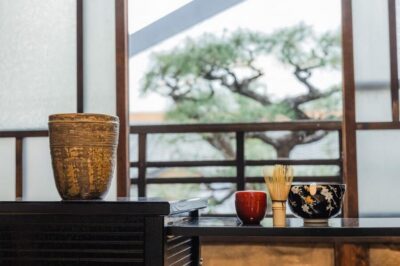
Arashiyama Bamboo Forest, Monkeys, Matcha & Temple Tour
Our verdict →
Browse the lists this tour appears in