
Reviewed · TEA CEREMONY EXPERIENCES
Kyoto: Arashiyama Bamboo Forest, Monkeys, Matcha & Temple Tour
Arashiyama packs a lot into one compact corner of Kyoto: a Zen temple, towering bamboo, a mossy shrine, a graceful bridge, a cup of matcha, and wild macaques above the city. This tour gives you a clear route through the district, with an English-speaking guide to explain what you are seeing.
I especially like the mix of culture and nature, and the fact that temple admission, Monkey Park entry, and a matcha drink are included. The guides, including Tim, Sofia, Nay, and Gabriele on different departures, are praised for history, good pacing, and keeping groups together.
The main caution is the uphill walk to Monkey Park. It can be difficult in poor weather or for anyone with limited fitness, and the four-hour route involves plenty of time on your feet.
Key points to know before booking
- Monkey Park requires a climb: The macaques are reached by a short but fairly steep uphill hike, with Kyoto views at the top.
- Tenryu-ji admission is included: You get time in one of Kyoto’s best-known Zen temple gardens without paying an extra entry fee.
- The route covers Arashiyama’s main sights: Expect the bamboo grove, Nonomiya Shrine, Togetsukyo Bridge, the temple, and Monkey Park.
- A Uji matcha drink is included: It adds a small local food and tea experience between the sights.
- Groups are capped at 15 people: That is small enough for questions and easier movement through busy Arashiyama.
- Plan for about four to four and a half hours: Comfortable shoes matter more than fancy clothes on this walking-heavy outing.
Why this Arashiyama route works well
Arashiyama can feel confusing on a first visit. The district has several famous sights, but they are connected by busy streets, narrow paths, temple grounds, riverbanks, and a mountain trail. A guide helps you understand how the pieces fit together instead of simply sending you from one photo stop to the next.
This experience has a sensible range. Tenryu-ji offers designed gardens and Zen architecture. The bamboo grove gives you one of Kyoto’s most recognizable natural scenes. Nonomiya Shrine adds a quieter Shinto stop. Togetsukyo Bridge brings you to the river. Monkey Park changes the mood again, with living animals and a broad view over Kyoto.
That variety is the tour’s strongest feature. You are not spending four hours in one temple or walking through a forest without context. The route keeps changing, which helps the half-day pass at a good pace.
The advertised price is $53.06 per person. For that amount, you receive a professional English-speaking guide, Tenryu-ji entry, Monkey Park entry, and one Uji matcha drink. The value is strongest if you want explanations and organized movement through the area. If you prefer wandering alone and already know Arashiyama well, you may find the price less appealing.
The group limit of 15 is also useful. It is not a private tour, but it is small enough that a guide can usually answer questions and monitor the group. One large departure included around 12 people, and the guide was still able to give explanations, allow photo time, and arrange breaks.
More Tea Ceremony Experiences in Kyoto
- Kyoto: Tea Ceremony in a Traditional Tea House in Kiyomizu
★ 4.9 · 3,519 reviews - Kyoto: Tea Ceremony Ju-An at Jotokuji Temple
★ 4.9 · 3,207 reviews - Kyoto: 45-Minute Tea Ceremony Lesson Experience
★ 4.3 · 2,378 reviews
Tenryu-ji begins the cultural side
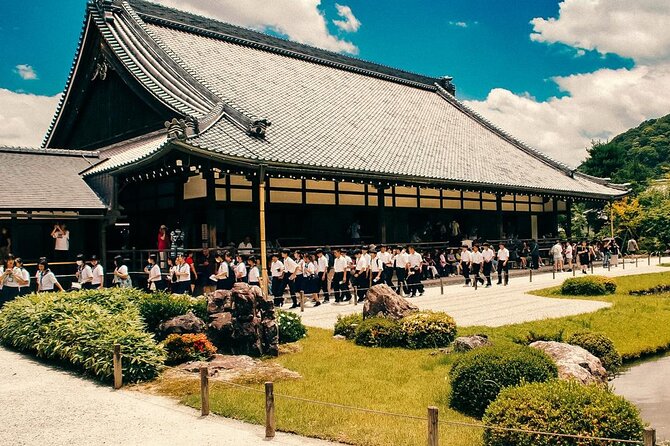
Tenryu-ji is one of Kyoto’s most important Zen temples and a UNESCO World Heritage Site. Its gardens are the reason to come early in the day, before the bamboo paths and nearby streets become especially crowded.
The garden uses water, rocks, trees, and borrowed mountain views to create a calm composition. A pond reflects the changing seasons, and the setting gives you a useful introduction to Japanese garden design before you reach the natural scenery of the bamboo grove.
Your guide can add meaning that is easy to miss on your own. The appeal is not only the temple buildings. It is also the careful arrangement of the grounds and the way the garden creates a quiet transition from the busy district outside.
The allotted time is about 30 minutes. That is enough for a focused visit, but not enough for a slow, extended temple exploration. If you want to study every building or sit for a long period in the garden, you may wish for more time. For a half-day tour, the shorter visit keeps the route moving.
Several departures have been led by guides such as Sofia, Nay, Tim, and Gabriele. The strongest guide feedback centers on clear explanations of history and culture, along with enough time for photographs. That makes a difference at Tenryu-ji, where a quick look can otherwise become just another stop on a busy sightseeing day.
The bamboo grove is beautiful, but timing matters
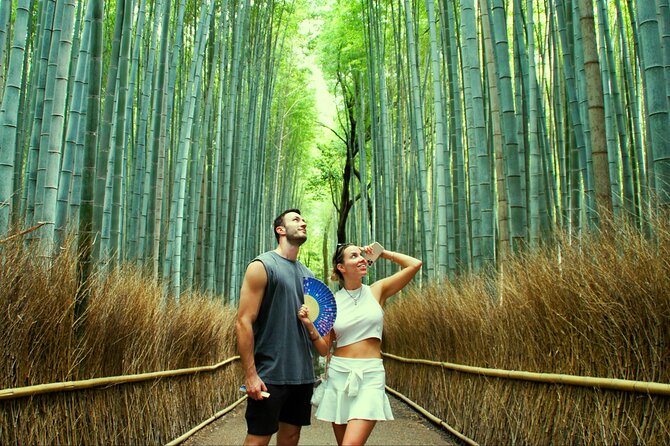
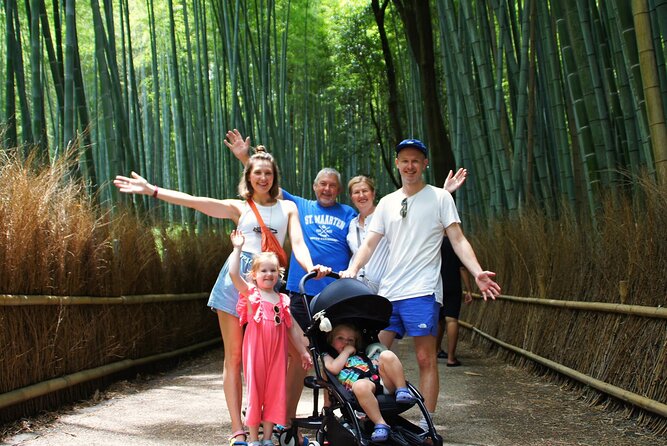
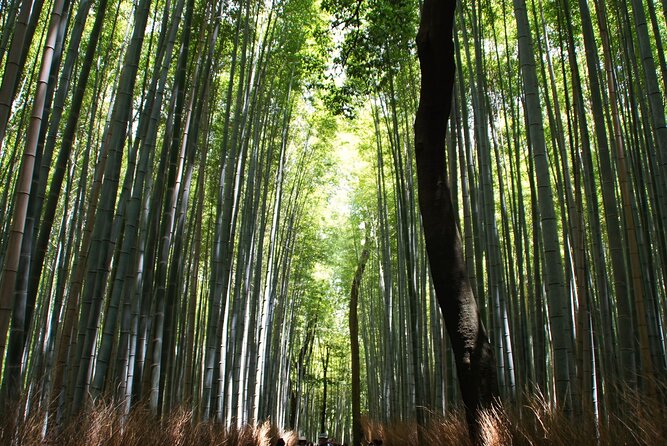
The Arashiyama Bamboo Forest is the tour’s most instantly recognizable stop. Tall bamboo rises on both sides of the path, forming a narrow corridor of green stalks and filtered light. When the wind moves through the leaves, the path can feel remarkably still despite its fame.
The walk through the grove takes about 30 minutes. That is enough to enjoy the atmosphere and take photographs, but do not expect a long private stroll. Arashiyama is one of Kyoto’s most popular areas, and the bamboo path is a public place rather than a secluded woodland.
Your guide helps by keeping the group on the correct route and pointing out details about bamboo cultivation and local traditions. You also benefit from not having to work out the order of the nearby sights yourself.
I would keep your expectations realistic. The bamboo is striking, but the experience depends on crowds and timing. The tour makes the grove one part of a wider morning rather than asking you to build your entire day around it. That is a sensible choice.
Nonomiya Shrine adds a quieter pause
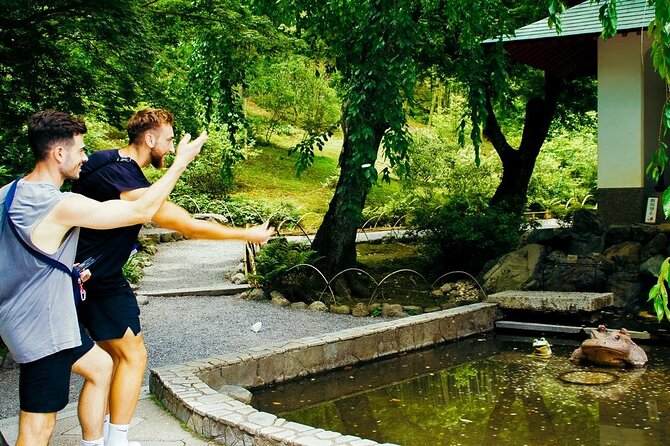
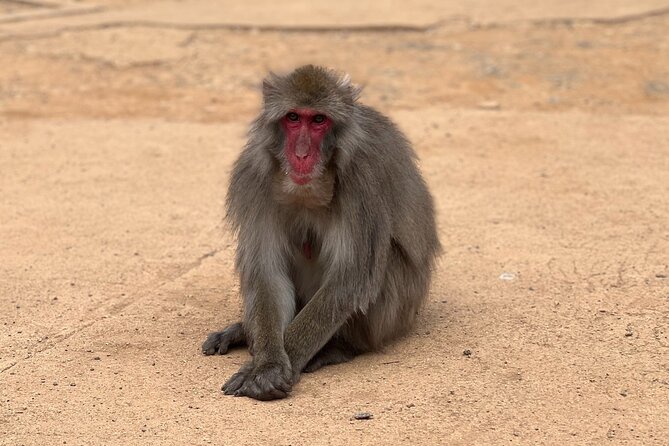
Nonomiya Shrine is a small Shinto shrine surrounded by mossy woodland near the bamboo grove. It is connected with old purification practices and offers a more intimate setting than Tenryu-ji.
The stop lasts about 15 minutes. That is brief, but it suits the shrine. You have time to see the grounds, learn why the site mattered in earlier religious traditions, and notice the contrast between the formal Zen garden and the darker, moss-covered shrine setting.
This is one of the places where a guide adds real value. Without context, Nonomiya can look like a small neighborhood shrine on a busy sightseeing route. With an explanation of its spiritual role and purification traditions, the stop becomes a useful link between past customs and present-day Japanese practice.
Do not expect a large complex or a long visit. Nonomiya works as a peaceful pause between the more famous bamboo grove and the busier parts of Arashiyama.
More Temple & Shrine Tours in Kyoto
- Kyoto: Fushimi Inari, Kinkakuji, Bamboo Grove 1 Day Bus Tour
★ 4.8 · 4,316 reviews - Fushimi Inari Hidden Hiking Tour (Private Option Available)
★ 5.0 · 1,750 reviews - Osaka/Kyoto:Kinkakuji,Arashiyama,FushimiInariShrine,NaraPark
★ 4.1 · 1,596 reviews - Arashiyama Bamboo, Temple, Monkeys, or Secret Sake Brewery
★ 4.8 · 886 reviews
Matcha provides a welcome local break
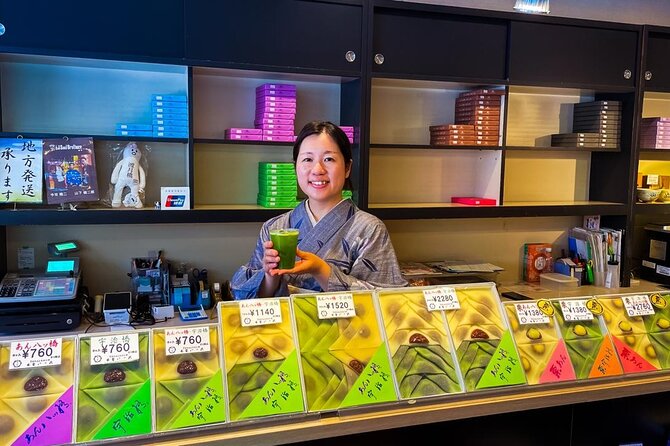
The tour includes one Uji matcha drink. Uji, near Kyoto, is closely associated with high-quality tea, so this is more than a generic refreshment. It gives you a small taste of the tea culture that is woven into the region.
The break is well placed. By this point, you have walked through temple grounds and the bamboo area, and you still have the Monkey Park climb ahead. A short stop with something cool or refreshing gives you a chance to regroup.
Some tour descriptions and feedback refer to matcha ice cream rather than a drink. The official inclusion is a Uji matcha drink, so I would confirm the exact serving if that detail matters to you. Either way, treat it as a brief included tea stop, not a full tea ceremony.
That distinction matters. This is not advertised as a formal ceremony with a long demonstration of tea preparation. It is a simple local matcha experience folded into a walking tour. For most people, that is enough to add flavor without taking too much time from the main sights.
Togetsukyo Bridge gives you the classic river view
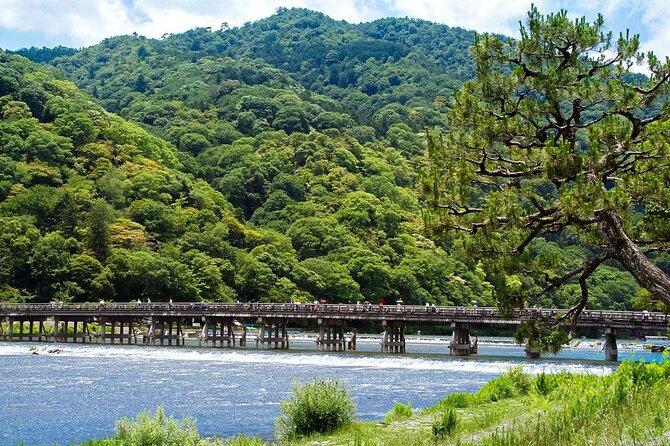
Togetsukyo Bridge, or Moon Crossing Bridge, is one of Arashiyama’s defining views. The bridge crosses the river with mountains rising behind it, and the riverbank gives you a welcome change after the narrower bamboo paths.
The scheduled stop is about 10 minutes, so this is mainly a photo and orientation stop. You can see why the bridge became a symbol of the district, but you will not have time for an extended riverside walk.
The short visit makes sense within the route. The bridge is close to the Monkey Park area, and the guide can help you see the connection between the river, the mountain, and the older settlement around Arashiyama.
If you want relaxed time by the water, return later on your own. The tour gives you an introduction rather than a long riverside stay.
Monkey Park Iwatayama is the demanding highlight
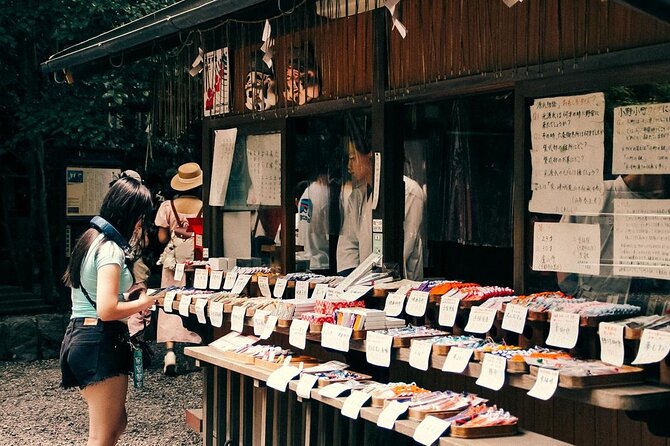
Monkey Park Iwatayama is where this tour becomes more active. You walk uphill to reach a troop of Japanese macaques living on the mountain above Arashiyama. The park also offers wide views across Kyoto, which many people find just as memorable as the animals.
The scheduled visit lasts about an hour, including the climb and time at the top. The path is not a flat stroll. Feedback repeatedly points to the uphill section as the hardest part of the tour, and wet weather can make the walk more difficult.
This is the section to think about honestly before booking. People in good walking condition should find it manageable, but anyone recovering from illness, with limited mobility, or uncomfortable on slopes may struggle. One couple chose not to make the climb and waited while friends continued, so the tour may not work equally well for every member of a mixed-ability group.
At the top, you can watch the macaques’ social behavior and take in the city view. The monkeys are wild animals, not trained performers. The viewing area lets you observe them at close range, but you should follow the guide’s instructions and avoid treating them like pets.
The views give the hike a clear reward. From above, Kyoto spreads out below with mountains beyond the city. The combination of macaques, open air, and a high view makes this the tour’s most unusual stop.
The guides shape the experience
The tour uses different guides, so the style can vary. Names associated with strong departures include Tim, Sofia, Nay, Gabriele Cammisuli, Amy, Daniel, Shin, Maggie, Gabri, Meg, and Pedro.
The best guide qualities are consistent: clear explanations, friendliness, attention to the group, and enough flexibility for photographs and questions. Gabriele is noted for detailed explanations and making sure people were comfortable with the pace. Tim is praised for combining local information with an easy conversation style. Nay is described as enthusiastic about Japanese culture and history.
A guide can also help when plans become untidy. One departure had a late start because people arrived after the scheduled time, while another guide helped a group that had become lost. These details point to a practical reality of group tours: the experience depends partly on everyone arriving promptly and staying with the group.
The maximum group size is 15. That is a useful compromise between price and personal attention. You should not expect a private guide, but you should have more opportunity to ask questions than on a large coach tour.
Timing, meeting point, and what to wear
The tour lasts approximately four to four and a half hours and begins at Tully’s Coffee, Randen Arashiyama Station Shop, at 20-2 Sagatenryuji Tsukurimichicho, Ukyo Ward, Kyoto. The location is near public transportation, and the tour finishes back at the same meeting point.
Arrive on time. A late start can affect everyone, especially on a route with several fixed stops. The mobile ticket makes entry and check-in simple, but you still need to locate the coffee shop and guide before departure.
Wear comfortable walking shoes. You will cover temple paths, public streets, forest paths, and an uphill trail. Carrying water is sensible, though the included matcha stop gives you a chance to pause.
The tour is open to most people, but the Monkey Park climb is the key limitation. If you have health concerns, think about whether you can manage a sustained uphill walk. The route also includes regular standing and walking, so it is not a good match for someone seeking a mostly seated sightseeing experience.
Free cancellation is available when you cancel at least 24 hours before the start time. Changes or cancellations inside that window are not accepted for a refund.
Who should book this Arashiyama half-day tour?
I would choose this tour if you are visiting Arashiyama for the first time and want the major sights organized into one morning or afternoon. It is especially useful if you want cultural explanations rather than only photographs, or if you are unsure how to combine Tenryu-ji, the bamboo grove, the bridge, and Monkey Park efficiently.
It also suits people who like variety. You get temple gardens, a shrine, tea, a river view, a bamboo path, and animals in one outing.
I would hesitate if you want a slow, private visit at each location. The temple and bridge stops are fairly short, and the bamboo grove can be crowded. I would also think twice if anyone in your group cannot manage the climb to Monkey Park.
At $53.06, the tour offers solid value when you use the included admissions and want a guide. The price is less compelling for independent visitors who are comfortable navigating Kyoto and would rather spend a full morning at Tenryu-ji or the river.
Final verdict: a strong choice with one clear physical test
Book this tour if you want an efficient introduction to Arashiyama and can handle the Monkey Park climb. The combination of Tenryu-ji, bamboo, Nonomiya Shrine, matcha, Togetsukyo Bridge, and macaques gives you a fuller picture of the district than a simple bamboo-forest visit.
The biggest strength is the range of experiences, supported by guides who generally bring useful history and good energy to the walk. The main weakness is that four hours can feel long if you dislike hills or prefer unhurried sightseeing.
For first-time visitors, active couples, families with older children, and anyone who wants Kyoto culture mixed with outdoor scenery, this is a well-priced half-day option. Just arrive on time, wear proper shoes, and treat the monkey climb as a real part of the tour rather than a minor add-on.
FAQ
How long does the Arashiyama tour last?
The experience lasts approximately four to four and a half hours.
Where does the tour begin?
It begins at Tully’s Coffee Randen Arashiyama Station Shop, 20-2 Sagatenryuji Tsukurimichicho, Ukyo Ward, Kyoto, 616-8384, Japan.
Where does the tour finish?
The activity ends back at the meeting point.
Is Tenryu-ji Temple admission included?
Yes. The entry fee to Tenryu-ji Temple is included in the tour price.
Is Monkey Park admission included?
Yes. Entrance to Monkey Park Iwatayama is included.
Is a matcha drink included?
Yes. The inclusions specify one Uji matcha drink.
How difficult is the Monkey Park walk?
The route includes a short uphill hike to reach the macaques. The climb can be difficult for people who are not in good health, and wet conditions may make it harder.
What size is the tour group?
The tour has a maximum of 15 participants.
Can I cancel for a full refund?
Yes, if you cancel at least 24 hours before the experience start time. Cancellations or changes made less than 24 hours before the start time are not refunded.
More Bamboo Forest Tours in Kyoto
- Kyoto Ghost Tour: Dark Tales, Urban Legends, Bamboo Forest Night
★ 5.0 · 625 reviews - Arashiyama Bamboo Forest & Hidden Gems Bike Tour (Early Bird)
★ 5.0 · 613 reviews - Kyoto: Arashiyama Customized Rickshaw Tour & Bamboo Forest
★ 5.0 · 432 reviews - Kyoto Arashiyama Bamboo forest & Garden Half-Day Walking Tour
★ 5.0 · 413 reviews
Just added around Kyoto
- Sekka Cotton Furoshiki Class★ 5.0 · 19 reviews
- Kyoto Sword Experience – includes Museum Ticket/Ninja Experience★ 4.5 · 149 reviews
- Scenic Green Tea Fields of Hidden Kyoto & Local Tea Exp (Private)★ 5.0 · 32 reviews
- Secret Eastern Kyoto Biking Adventure★ 5.0 · 44 reviews
- Private Sake Tasting in Central Kyoto with Sake Sommelier★ 5.0 · 32 reviews
- Samurai School in Kyoto: Samurai for a Day★ 5.0 · 202 reviews
- SHIRAKAWA Japanese Culture Experiences with private English staff★ 5.0 · 16 reviews
- A Privately Guided Photoshoot in Beautiful Kyoto by a Pro★ 5.0 · 18 reviews
Tea Ceremony Experiences, compared.

Tea Ceremony in a Traditional Tea House in Kiyomizu
Our verdict →


World Heritage Kyoto & Nara Uji Authentic Matcha Experience
Our verdict →

Tea Ceremony Meditation – Make Matcha with Tea Master
Our verdict →Browse the lists this tour appears in