
Reviewed · TRADITIONAL CRAFTS
From Kanazawa: Shirakawa-go, Gokayama and Wood Carving Village
The thatched farmhouses of Shirakawa-go and Gokayama are the stars here, but the day is better because it also takes you to Inami, a town where wood carving is part of the streetscape rather than a staged souvenir stop. You get old villages, a temple, traditional craft, and mountain roads in one well-packed outing from Kanazawa.
I like the small-group limit of 17 and the range of activities. You are not simply driven to a viewpoint, then driven home. You can study elaborate carvings in Inami, make three small washi postcards, and enter a historic house in Shirakawa-go. Guides including Daniel, Garrett, and Mike have been praised for clear explanations and warm, helpful service.
The tradeoff is the pace. Nine hours sounds generous, but the route covers several distant places, so each stop has a firm time limit. Shirakawa-go can also be busy, and a small van may feel tight when the group is full. Lunch is not included, so you need to plan around the day’s stops.
Key points to know before booking
- Inami begins the day with wood carving and Zuisenji Temple, offering a quieter cultural stop before Shirakawa-go.
- Ainokura in Gokayama gives you a short, scenic village visit with time for photographs and a walk to a recommended viewpoint.
- The washi workshop produces three postcard-sized souvenirs, with paper inserts chosen before you make your own sheet.
- Shirakawa-go includes an observation point, village walk, and historic house visit, not just a quick roadside photo.
- The price of $202.17 includes transport, guide service, temple entry, guided visits, and the paper workshop, but not lunch.
- Guide quality matters, and Daniel, Garrett, Mike, and Ellie have all been praised for making the day more engaging and personal.
Why this day trip works from Kanazawa
Kanazawa is a fine base for traditional Japan, but its polished gardens, markets, and restored districts do not show you much of rural Toyama. This outing changes the scenery quickly. You leave the city behind and spend the day among steep mountains, old farmhouses, craft towns, and small settlements.
The appeal is variety. A trip focused only on Shirakawa-go can feel like a single attraction with a long ride attached. Here, the stops build on one another. Inami shows a living craft tradition. Gokayama gives you a quieter village setting. The washi workshop lets you make something yourself. Shirakawa-go then provides the largest and most famous collection of traditional houses.
The tour lasts about nine hours and starts at Kanazawa Station. From June 1, the listed departure time is 8:30 a.m. The tour returns to the same meeting point, which makes it easy to fit into a Kanazawa stay without arranging a separate ride back.
The group limit is 17 people, though some departures may be much smaller. One booking became a private-feeling outing with only the guide and driver, while another group had 14 people and found the size comfortable. You should expect a shared vehicle, not a private car by default.
More Craft Workshops in Takayama:
- From Kanazawa: Shirakawa-go, Gokayama and Wood Carving Art
★ 4.9 · 180 reviews - Tokyo Sumo Experience: Chanko & Mochi with a Former Pro
★ 4.8 · 567 reviews - Kintsugi Experience: Art of Golden Joinery in Tokyo
★ 5.0 · 467 reviews
Inami’s carved streets and Zuisenji Temple
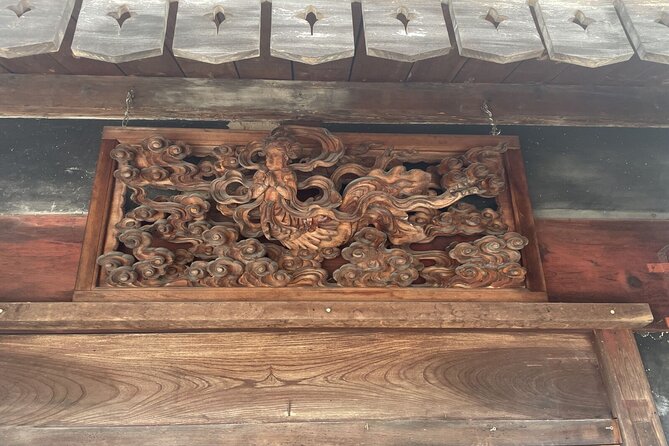
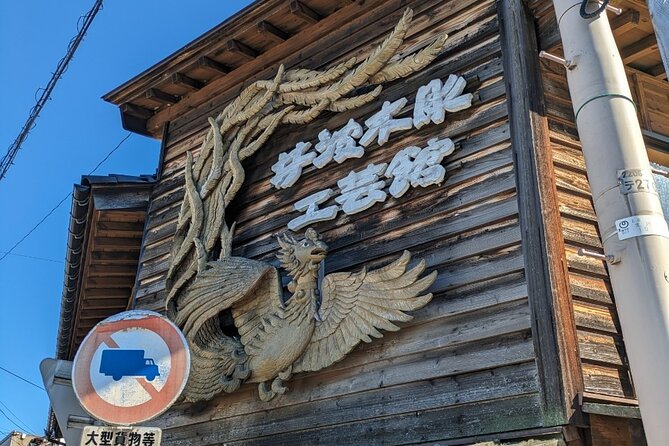
Inami is a strong opening stop because it feels different from the better-known villages later in the day. The main street is lined with woodcarving shops and displays, and carved details appear throughout the town. You are seeing a craft town in its own setting, not merely looking at finished objects behind a museum case.
The visit lasts about two hours and includes entry to Zuisenji Temple. The temple has been a favorite part of the outing for some people because it is calm and easy to appreciate without the crowds found at Shirakawa-go. Your guide can point out the relationship between the town’s carving tradition and the decoration of the temple.
I especially like this stop for anyone who wants more than scenic photographs. The carvings give you something to examine closely: doors, panels, religious details, and shop pieces can make a simple walk feel like an outdoor art visit. You might also find traditional objects for sale that feel less generic than the usual mass-produced souvenirs.
Do not expect a long hands-on carving class here. The scheduled experience is a guided walk around the woodcraft town and temple. If your main goal is to carve something yourself, this stop may feel observational rather than active. Its value is in seeing how a local skill shapes an entire town.
The two-hour allocation sounds generous, but it includes walking, the temple, explanations, and time to look at shops. Wear shoes suitable for ordinary town streets and temple approaches. If you want to buy something, keep in mind that the day continues through several stops, so a large or fragile purchase may be inconvenient to carry.
Gokayama’s Ainokura village and the washi workshop
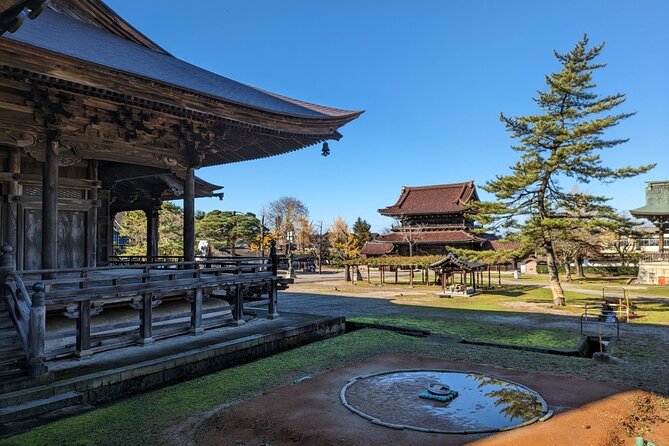
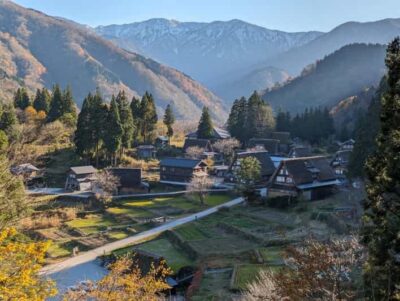
Gokayama offers the quieter village portion of the day. At Ainokura, you get roughly an hour to walk around and take photographs, with the guide showing you the way to a good viewpoint. The village’s traditional thatched houses are the main attraction, but the setting matters just as much. Mountain scenery and a smaller scale give Ainokura a more peaceful feel than Shirakawa-go.
The time here is short, so you need to use it well. Follow the guide’s route first, then take photographs and look closely at the houses. If the weather is wet or snowy, paths and slopes may take longer to manage. One person specifically found the climb to the viewpoint worthwhile, but you should allow for a little effort rather than treating this as a flat roadside stop.
Gokayama’s houses use the distinctive gassho-zukuri form, with steep thatched roofs designed for heavy winter snow. The tour gives you a useful chance to see the buildings at close range and understand why their shape is so striking. You are not just collecting a famous view. You are seeing how homes were adapted to a demanding mountain climate.
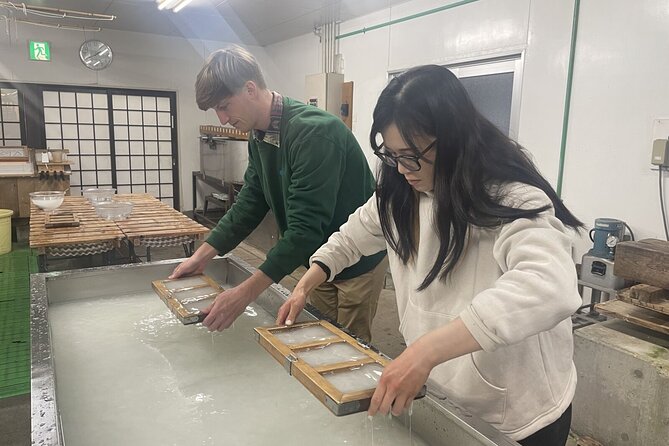
After Ainokura comes the Japanese paper-making session, which lasts about 30 minutes. Before making your paper, you choose inserts to place in it. After about 10 to 15 minutes of drying, you receive three postcard-sized pieces to take with you.
This is a simple activity, but it earns its place in the itinerary. It gives you a physical souvenir and a short break from walking and sightseeing. I also like the contrast with Inami. There, you watch skilled makers and finished work. Here, you take part in a small craft process yourself.
The workshop should not be confused with a long artisan course. You will not leave as a paper master, but you will understand more about the material and have something personal to pack. It is also a good choice for families, since the activity is brief and produces an immediate result.
The paper-making stop may not operate from December 28 through January 5. During the New Year period, many Inami and Gokayama shops also close, while Shirakawa-go is mostly open. If you are visiting over those dates, check the exact arrangements before paying, since part of the planned day may need to change.
Shirakawa-go from the viewpoint to the historic house
Shirakawa-go is the headline stop and receives about two hours. The visit begins at an observation point, giving you the broad view of the village before you walk down into it. This is the right order. You first understand the scale and roof shapes from above, then see the buildings at street level.
The guide leads you into the village and explains its past and the design of the houses. You also enter one historic home, where the building itself becomes part of the lesson. Look up at the roof structure and notice how different the interior feels from a modern Japanese house.
Shirakawa-go is visually impressive, but it is not an undiscovered hamlet. Large tour buses can arrive, and the village may feel busy even on a cold, rainy day. That does not ruin the visit, but it changes your expectations. You will share the famous paths and viewpoints with plenty of other people.
I would save your best photographs for the observation point and the quieter corners your guide identifies. Then use the village walk to look at construction details, shops, and the historic house rather than trying to find complete solitude. Gokayama is the better stop for a quieter mood. Shirakawa-go is the better stop for scale and recognition.
Two hours is enough for an overview, a house visit, photographs, and a little browsing. It is not enough for a slow, unplanned exploration of every lane. If you want a full day at Shirakawa-go alone, this tour will feel too brief. If you want to combine it with other cultural stops without arranging several buses or trains, the timing makes sense.
Weather can change the character of this part of the day. Rain, cold, or snow may make the houses look dramatic, but they also make walking less comfortable. Bring suitable outerwear and shoes with a good grip. The tour still operates as a full outdoor day, so comfort matters more than dressing for Kanazawa’s city streets.
A few more Takayama half-days worth comparing
- World Heritage Shirakawa-go and Experience Tours from Kanazawa
★ 5.0 · 4,049 reviews - Kanazawa: World Heritage Shirakawa-go Morning Guided Tour
★ 4.9 · 988 reviews - From Nagoya: Gujo, Hida Takayama, and Shirakawa-go Day Tour
★ 4.4 · 398 reviews - Kanazawa: World Heritage Shirakawa-go & Two Local Experience
★ 4.9 · 274 reviews
What the guide adds to a long day
The guide can make a real difference because the schedule moves quickly and the stops are spread out. Daniel has been praised for giving clear instructions, allowing sensible comfort breaks, and answering questions without overloading the day with talk. Garrett has also been singled out for explaining both the sites and the small details people noticed along the way.
Mike has been praised for his enthusiasm, cultural explanations, and practical help, including assistance with train tickets after the tour. Ellie has also been described as a strong guide. These examples suggest a team capable of making the ride and transitions feel useful rather than empty.
That said, guide experiences can vary. One unhappy account described a guide who spoke negatively about Japan and its rules, while another person felt the tour functioned mainly as transport with few explanations. I would not ignore that contrast. Most available feedback is strongly positive, with a 4.9 rating from 90 reviews and 98 percent recommending the experience, but no shared tour guarantees the same guide on every date.
The best way to get value from the guide is to ask questions early. Ask about the houses, temple carving, paper-making process, or what to see at each viewpoint. A good guide can help you use short stop times well, especially at Ainokura and Shirakawa-go.
Transport, group size, lunch, and overall value
The tour includes transport from Kanazawa to all listed stops and back again. That is the main practical advantage. These rural sites are not arranged as an easy public-transport loop, so putting them together independently would require careful timing and several connections.
The transport may be a minibus or small vehicle. One group of eight found its van adequate but somewhat cramped, while another group was comfortable with 14 people. If you need extra personal space, ask about the expected vehicle or group size before booking. The maximum is 17, which is still more manageable than a large coach but not intimate in every departure.
Lunch is not included. You need to buy it on the day, and Gokayama is a natural point for a meal. A traditional floor-seated restaurant was one highlight for a previous participant, with udon mentioned as a good option. Seating and food choices can depend on what is open and how the schedule runs, so carry some flexibility rather than expecting a formal lunch reservation.
At $202.17 per person, this is not a cheap transfer. The price becomes easier to justify when you add up the transport, English-speaking guide, entry to Zuisenji Temple, guided visits in Inami and Shirakawa-go, and the washi activity. You are paying for access to a difficult route and for someone else to manage the day’s timing.
The value is strongest if you want many different experiences in one day. It is weaker if you only want a long, quiet visit to Shirakawa-go or prefer exploring every village at your own speed. The tour saves planning time, but it gives up some independence.
Who should book this experience
I would recommend this tour to first-time visitors based in Kanazawa who want to see rural Toyama without renting a car or working out a complicated route. It also suits families and mixed-interest groups because the day includes temples, scenery, architecture, craft, shopping, and a hands-on activity.
It is a particularly good fit if you enjoy traditional buildings but do not want a museum-only day. The woodcarving town and paper workshop add texture to the better-known village visits. The small postcard souvenir is useful for children and adults who like to take home something made during the trip.
You should think twice if you dislike fixed schedules, shared vehicles, or outdoor walking in uncertain weather. The stops are well chosen, but none can be stretched much if you become absorbed in a shop or want a long meal. People with mobility concerns should also consider the walking and viewpoint route, since the activity includes village paths and a climb to a scenic spot.
Cancellation is free up to 24 hours before the start time. Within 24 hours, the payment is not refunded, and late changes are not accepted. Confirmation is provided at booking, and the meeting point is Kanazawa Station.
Should you book the Kanazawa to Shirakawa-go tour?
Book it if you want a full rural culture day rather than a single famous village. Inami’s carving tradition, Zuisenji Temple, Ainokura, washi making, and Shirakawa-go make a satisfying set, and the included transport removes much of the route planning.
I would choose it over a simple Shirakawa-go transfer because the extra stops give you a broader sense of the region. Just accept the busy moments, the limited time at each place, the separate lunch cost, and the possibility of a cramped vehicle or an uneven guide experience.
If Daniel, Garrett, Mike, or Ellie is leading your departure, you can expect the kind of clear, personal guidance that makes a packed day easier. If your priority is solitude or complete freedom, go independently instead. For most visitors with one open day from Kanazawa, this is a strong and practical way to reach the mountain villages.
FAQ
Where does the tour start and finish?
The tour starts at Kanazawa Station in Kanazawa and ends back at the same meeting point.
How long does the experience last?
The tour lasts approximately nine hours. From June 1, the listed start time is 8:30 a.m.
What is included in the price?
The price includes transport to and from Kanazawa, an English-speaking guide, entry to Zuisenji Temple, guided visits in Inami and Shirakawa-go, and the Japanese paper-making experience.
Is lunch included?
No. Lunch and accommodation are not included, so you need to purchase lunch during the day.
How many people can join the tour?
The tour has a maximum of 17 travelers.
Is the paper-making activity available during New Year?
The paper-making experience is not available from December 28 through January 5. Many shops in Inami and Gokayama are also closed during this period, while Shirakawa-go is mostly open.
What is the cancellation policy?
You can cancel at least 24 hours before the start time for a full refund. Cancellations or changes made within 24 hours are not accepted for a refund.
Just added around Takayama
- Takayama and Shirakawago/Photoshoot by professional photographer★ 5.0 · 67 reviews
- Shirakawago & Kanazawa from Kanazawa★ 5.0 · 51 reviews
- Private Tour of Shirakawago and Gokayama from Kanazawa★ 5.0 · 50 reviews
- Private Tour of Shirakawago from Kanazawa (Half Day)★ 5.0 · 24 reviews
- Private Tour Kanazawa, Shirakawago, Hida Furukawa,Takayama★ 5.0 · 108 reviews
- Private transfer Kanazawa to Takayama Including Shirakawago★ 5.0 · 15 reviews
- Gokayama and Shirakawago/Photoshoot by professional photographer★ 5.0 · 51 reviews
- [Day trip bus tour from Kanazawa Station] Weekend only! World Heritage Shirakawago Day Bus Tour★ 5.0 · 46 reviews
Traditional Crafts, compared.
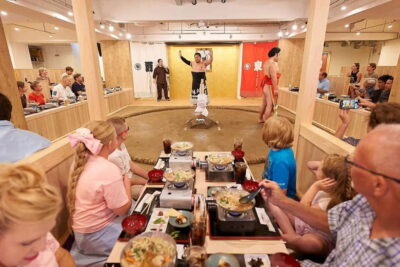
Tokyo Sumo Experience: Chanko & Mochi with a Former Pro
Our verdict →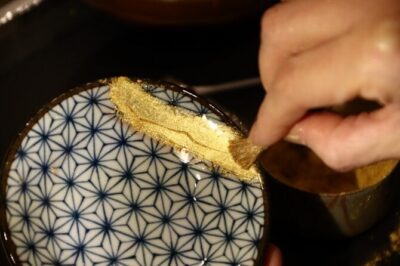
Kintsugi Experience: Art of Golden Joinery in Tokyo
Our verdict →

Matcha Making Experience with Mochi Sweets in Asakusa
Our verdict →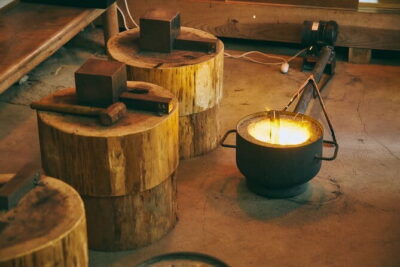
Authentic knife making experience at a blacksmith in Kyoto
Our verdict →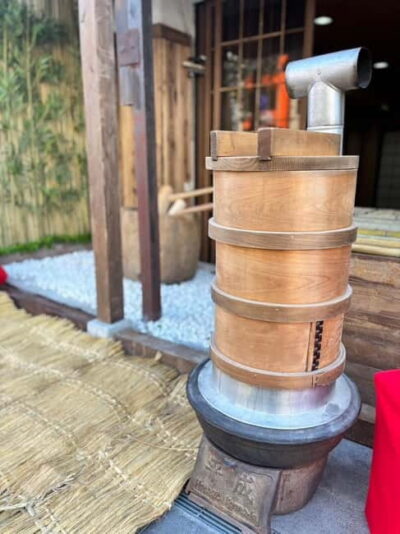
Roketsu dyeing experience: M course Roketsu Dyeing Experience
Our verdict →Browse the lists this tour appears in