
Reviewed · HISTORICAL TOURS
Kanazawa: World Heritage Shirakawa-go & Two Local Experience
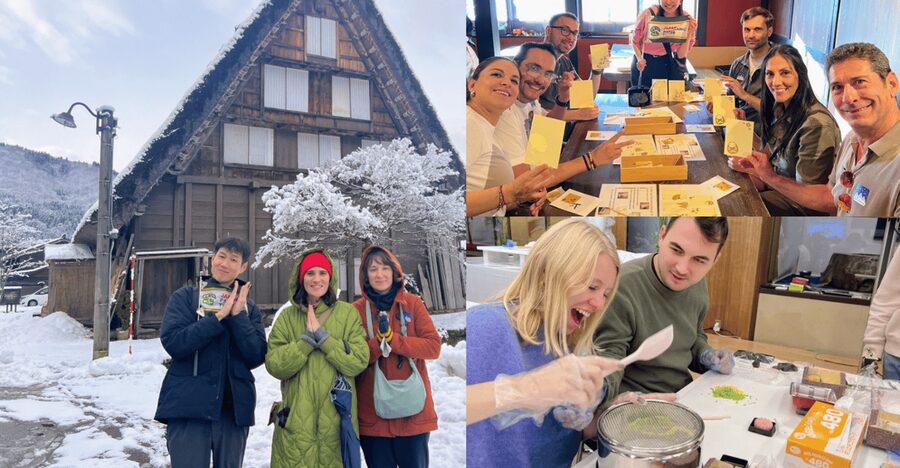
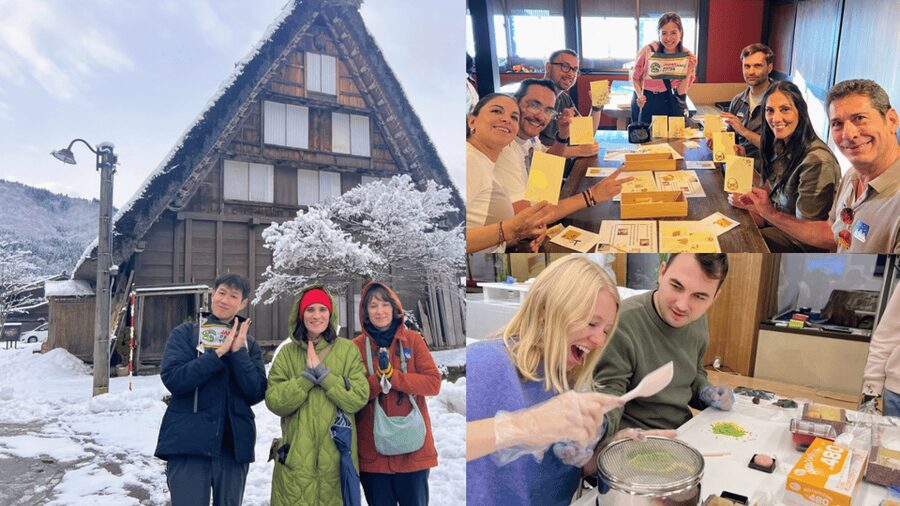
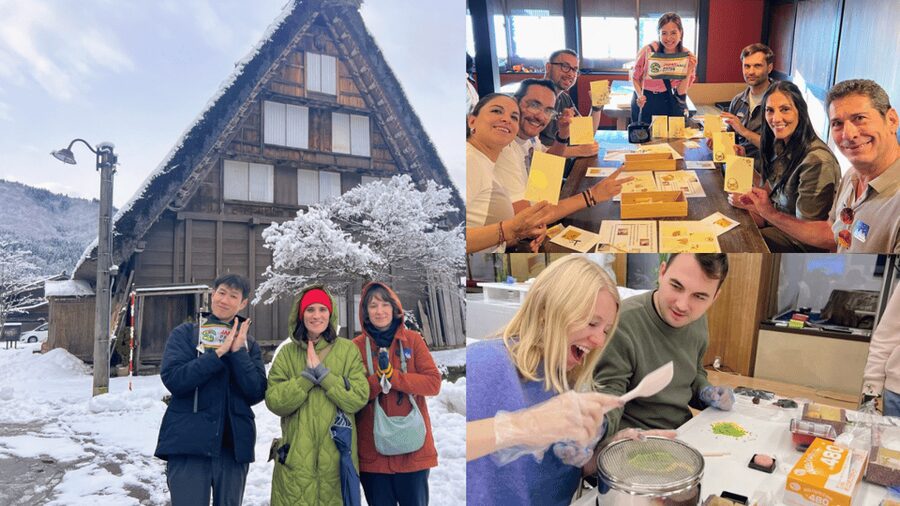
Shirakawa-go is the star here: a mountain village of steep, thatched gassho-zukuri houses that feels especially magical under snow. The smart part is arriving in the morning, before the village fills up, then returning to Kanazawa for a garden, a geisha district, and hands-on crafts.
I like two things in particular. First, the comfortable coach removes the headache of reaching Shirakawa-go by public transport. Second, the afternoon gives you more than a quick photo stop: you make wagashi or paint a Daruma, then work with gold leaf in Kanazawa. The main drawback is pace. You cover a lot in nine hours, and some visitors will wish for another hour in Shirakawa-go.
Key points to know before you book
- Early Shirakawa-go visit: You get roughly two and a half hours to explore the UNESCO village, with a guide-led walk and time to find food on your own.
- Strong local guiding: Guides including Yasushi and Aiko are known for clear English, lively explanations, quizzes, photos, and practical help.
- Two Kanazawa crafts: Your afternoon activity is usually wagashi making, but it may change to Daruma painting depending on the artisan’s schedule. Gold leaf craft is included.
- Comfortable transport: The air-conditioned coach has free Wi-Fi, regular ventilation, and an antibacterial coating.
- Good value at $116: Transport, the English and Japanese guide, Kenrokuen entry, both craft fees, and multilingual audio guidance are included.
- A full but active day: Wear comfortable shoes and expect walking, standing, village streets, garden paths, and workshop time.
Why this day trip works so well from Kanazawa
Kanazawa is a rewarding city, but Shirakawa-go is not next door. Going independently means arranging transport, watching departure times, and making sure you can return in time. This tour handles the long transfer by coach and links the village with Kanazawa’s best-known sights.
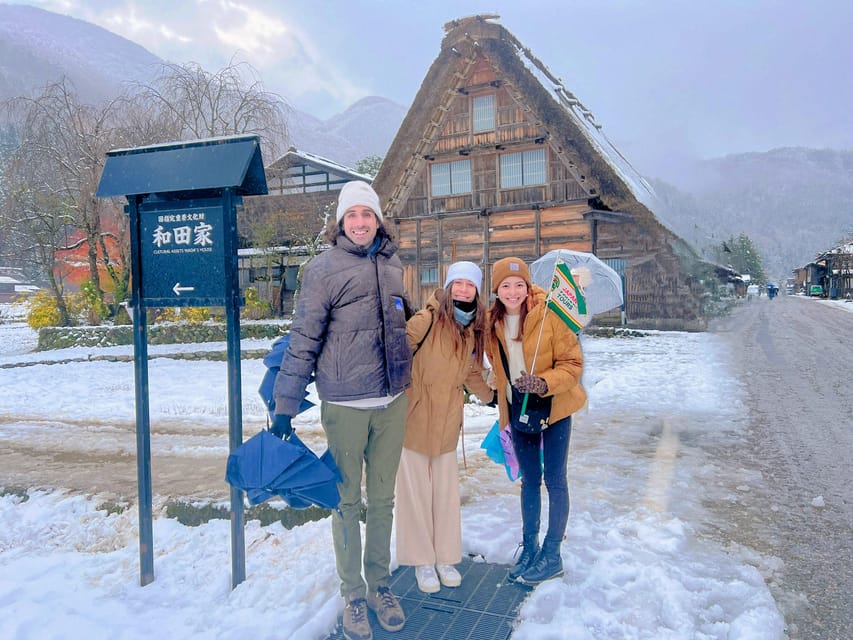
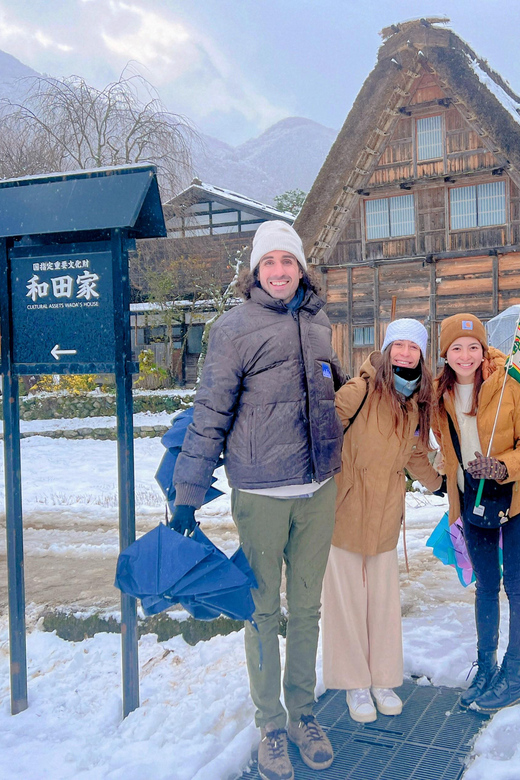
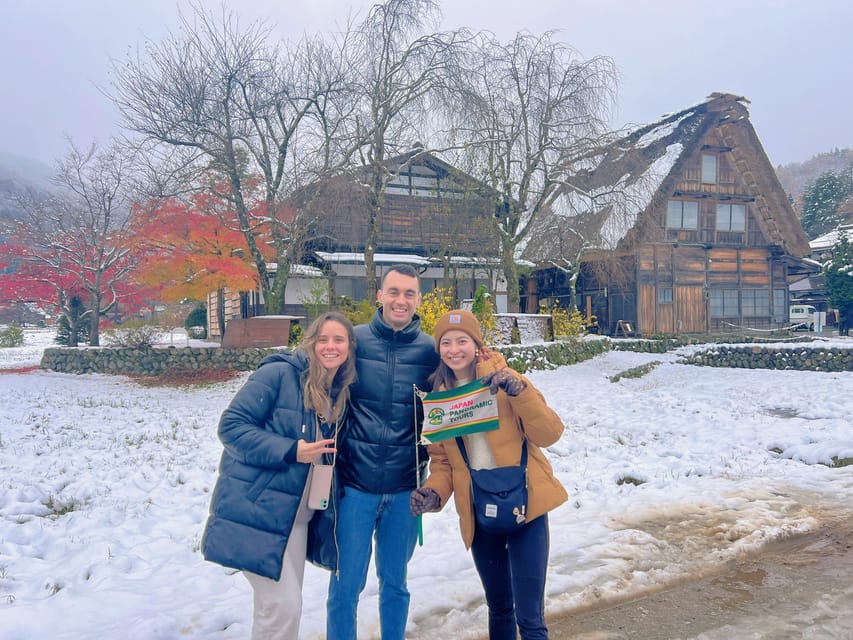
You meet at the Kanazawa Station West Plaza short-term car park. Check-in is at 7:50 a.m., with departure at 8:00. Look for the green and white Japan Panoramic Tours flag. There is no hotel pickup, so leave time to reach the station.
The coach ride takes about 80 minutes. The vehicle is air-conditioned and has free Wi-Fi, which matters on a long day. Your guide uses the ride to explain local customs, Japanese history, language, and the places ahead. Yasushi has been especially good at keeping the bus ride lively without drowning the group in facts. Aiko is also praised for her warm style, clear explanations, and small quiz questions that help you notice more once you arrive.
The group format gives you structure, but it is not a minute-by-minute march. At several stops, the guide explains the setting, then gives you room to look around at your own pace. That balance suits you if you want local context but do not want someone talking continuously beside you.
More Historical Tours in Takayama
- World Heritage Shirakawa-go and Experience Tours from Kanazawa
★ 5.0 · 4,049 reviews - Kanazawa: World Heritage Shirakawa-go Morning Guided Tour
★ 4.9 · 988 reviews - [One-day bus tour departing from Kanazawa Station] Shirakawa-go and Gokayama – Two World Heritage Villages Enjoyable Bus Tour
★ 5.0 · 253 reviews
Shirakawa-go before the crowds arrive
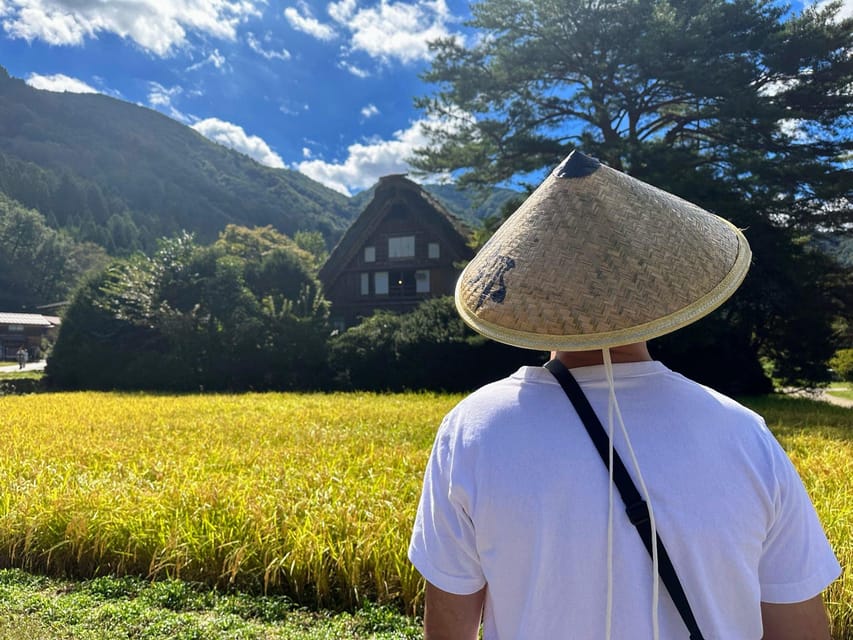
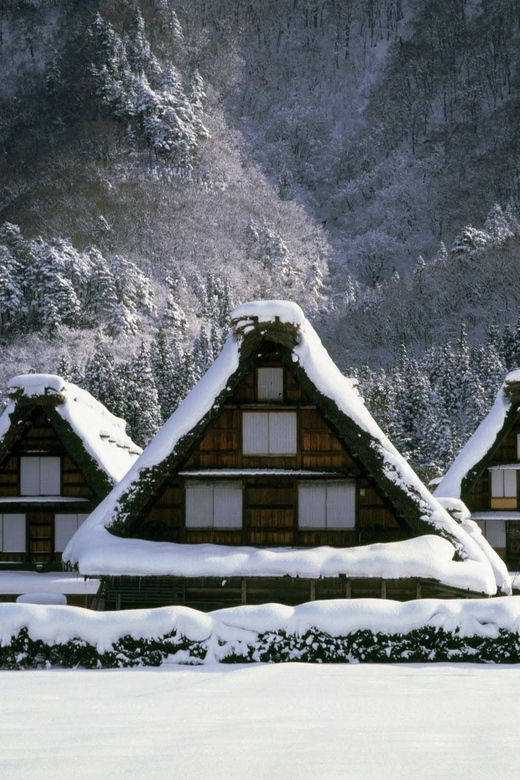
Shirakawa-go is known for its gassho-zukuri houses, whose sharply sloping roofs were designed for heavy snowfall. The village was added to the UNESCO World Heritage list in 1995. Its appeal is visual, but the buildings also show how people adapted home design and community life to a remote mountain setting.
You spend about 2 hours and 20 minutes to 2 hours and 30 minutes here. The guide leads a walk and points out cultural details, good views, and things worth noticing in the village. You then have free time to explore, take photographs, and buy lunch or snacks.
The timing is one of the tour’s strongest features. Morning light can make the houses and surrounding mountains especially attractive, and arriving early may mean fewer groups around the most photogenic streets. Snow can transform the village into a postcard scene, as several winter departures have shown, but clear autumn days and summer greenery also give the setting a different character.
Do not treat Shirakawa-go as only a viewpoint. You can try local foods such as Hida beef and Doburoku ice cream, and browse small shops. Lunch is not included, so use this stop to choose what appeals to you. The supplied information does not promise a specific restaurant or meal, so you should plan on buying food independently.
The limitation is time. Two and a half hours lets you see the main village and sample a few local foods, but it does not allow a slow, all-day visit. If you want extensive photography, a long meal, or a visit to every house open to the public, you may feel hurried. One practical tip is to listen carefully to the return meeting instructions before wandering off. The coach cannot wait for late arrivals.
Kenrokuen Garden and Kanazawa Castle
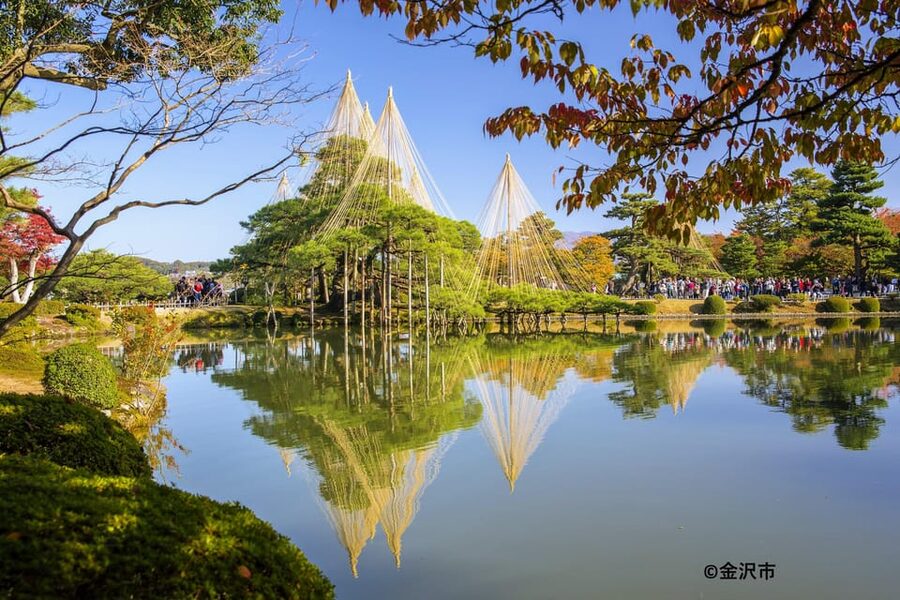
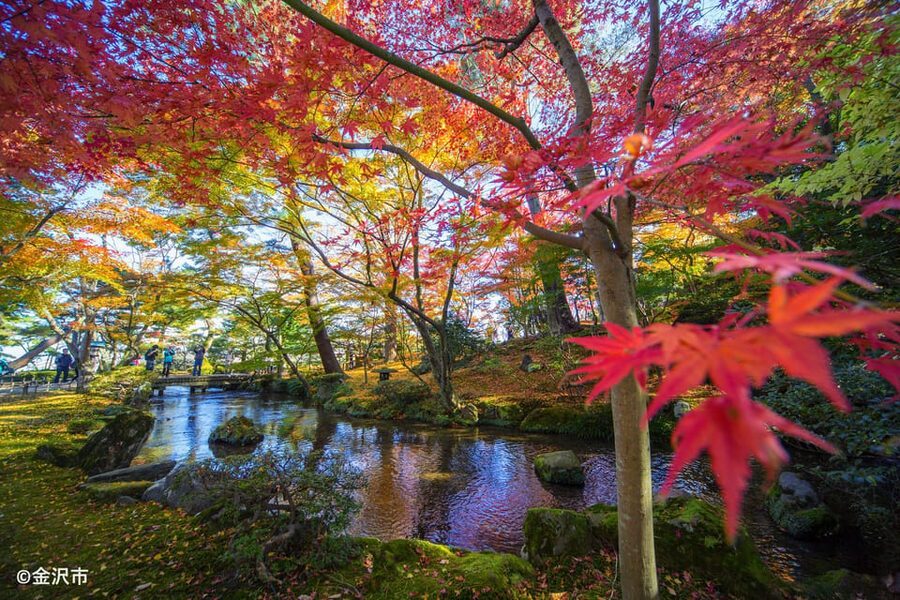
After Shirakawa-go, the coach returns to Kanazawa for Kenrokuen Garden. The garden is often described as one of Japan’s three most beautiful, and the tour gives you about an hour to see it with a guide.
Kenrokuen is not just a collection of attractive trees and ponds. Its design offers changing viewpoints through water, stones, bridges, flowers, teahouses, and tucked-away corners. Your guide explains how Japanese garden design encourages you to move through a scene rather than take in one grand view all at once.
This is where a local guide adds real value. On your own, you can appreciate the garden’s calm paths and seasonal color. With someone explaining why certain elements are placed where they are, you gain a better sense of the garden’s design principles. In winter, snow-covered trees can make the visit striking. In autumn, the colors change the mood. Spring and summer bring their own flowers and foliage.
The itinerary also includes a walk around Kanazawa Castle. The supplied schedule gives the castle as a walking stop rather than a separate long admission visit, so you should not expect a full castle tour with extensive interior time. It works more as part of your introduction to Kanazawa’s historic center.
The garden visit is not physically extreme, but you will be walking on paths and standing during explanations. Comfortable shoes are essential, particularly in wet or snowy weather. The schedule leaves little room for a long pause, so this is a focused introduction rather than a leisurely garden afternoon.
Making wagashi or painting a Daruma
The next part gives the day a welcome change of pace. After scenery and guided walks, you sit down for a hands-on activity connected to Japanese craft.
Depending on the artisan’s schedule, you either make wagashi, traditional Japanese sweets, or paint a Daruma doll. Wagashi making is a particularly appealing choice because it links food with seasonal design and local technique. You create sweets that are attractive as well as edible, and you can take them home as a souvenir.
If the schedule changes to Daruma painting, you get a more playful activity. The Daruma is a familiar Japanese good-luck figure, and painting your own means the result will be personal rather than factory-perfect. You do not need to be artistic. The point is to try the process, not produce a museum piece.
This activity suits families, solo visitors, and anyone who wants to do something rather than only look at monuments. It also helps break up the day. One honest caution: if you would rather spend every spare minute inside museums or historic buildings, the craft may feel less important. One person specifically found Daruma painting less appealing than watching an artisan demonstrate the work. That is a fair point, but many people enjoy the chance to make something themselves.
The timing for this Kanazawa shopping and workshop portion is about 50 minutes. That is enough for a short activity, but not a long formal class. Expect a friendly introduction and a compact experience rather than detailed professional training.
Same trip, a completely different kind of day:
- From Nagoya: Gujo, Hida Takayama, and Shirakawa-go Day Tour
★ 4.4 · 398 reviews - From Nagoya: Hida Takayama & Shirakawa-go Tour w/Opt. Lunch
★ 4.5 · 256 reviews - 1 Day Private Charter Tour to Shirakawa-go & Takayama
★ 4.5 · 253 reviews - World Heritage Shirakawa-go Perfect Guided Tour from Kanazawa
★ 5.0 · 220 reviews
Gold leaf in Kanazawa’s Higashi Chaya District
Kanazawa is Japan’s main gold leaf center, producing about 99 percent of the country’s gold leaf. The tour uses that local specialty in two ways.
First, you make a small gold leaf craft, such as a postcard. This is a simple souvenir with a direct connection to Kanazawa. You are not just buying a finished object in a shop. You get to handle the material and leave with something you made.
The tour may also include a look at how Kanazawa gold leaf is produced. That short demonstration helps explain why gold leaf is used so widely in local decoration, food presentation, and souvenirs. It is a useful bit of context before you try the craft yourself.
Second, you can buy gold leaf ice cream in Higashi Chaya District. The ice cream is not included, and you should budget separately for snacks and drinks. The gold leaf adds almost no flavor, but it makes a memorable photograph and gives you a small taste of Kanazawa’s signature craft culture.
Higashi Chaya is one of Kanazawa’s historic entertainment districts, where geisha performed music, dance, and other traditional arts. The area still has teahouses and traditional facades. The schedule allows about 30 minutes to visit the district, followed by about 30 minutes for the gold leaf workshop.
That half-hour walking visit is enough to see the main atmosphere and browse, but it is not a long evening in the district. The most evocative sounds, including shamisen and drums, are associated with teahouse activity in the evening, while this tour reaches the area during the day. You will see the streets and architecture, but you should not book this tour expecting a full geisha performance.
What the guides add to the experience
The guides are a major reason this tour feels more useful than simply buying a bus ticket. English-speaking leaders such as Yasushi and Aiko explain what you are seeing, answer questions, suggest regional foods, and help the group stay on schedule.
Yasushi is often described as energetic, funny, and easy to understand. He has used photographs and a scrapbook to show what to expect, and he is happy to take photos for visitors. Aiko brings a similarly friendly approach, with quizzes and small prompts that keep the group involved. Other guides, including Ciel, Keita, Nagomi, and Yosushi, may lead your departure.
Guide assignments can change, so you should not book on the assumption that one particular person will lead your tour. Still, the company’s approach is clear: practical information, local stories, and enough free time to look around without constant supervision.
If English is not your first language, audio guidance is available in Spanish, French, Italian, German, Portuguese, and Ukrainian. The live guide languages are Japanese and English. Headsets are included for the audio options.
Is $116 a fair price?
At $116 per person, this is not the cheapest way to see Shirakawa-go, but it is a strong package for a nine-hour day. The price includes the return coach, guide, free Wi-Fi, Kenrokuen admission, the wagashi or Daruma activity, and the gold leaf craft.
You pay separately for lunch, drinks, gold leaf ice cream, and other food. That is normal for a day trip with free time, and it lets you choose how much to spend in Shirakawa-go and Higashi Chaya.
The value depends on how much you want handled for you. If you are comfortable arranging transport and researching the village yourself, an independent visit may offer more flexibility. You would also need to organize your own Kanazawa sightseeing and craft bookings.
For a first visit, the tour saves planning time and connects places that would otherwise require separate arrangements. You get a UNESCO village, one of Japan’s best-known gardens, Kanazawa Castle surroundings, a historic geisha district, and two craft experiences in one day. That is a lot for the price, provided you are happy with a brisk schedule.
Who should book this day?
I would choose this tour if you have limited time in Kanazawa and want both the famous village and the city’s traditional arts. It is also a good fit for solo visitors who prefer the ease of a group and a reserved coach. Families may like the sweets or Daruma activity, since the day is not made up entirely of historical explanations.
It suits first-time visitors especially well. The guide gives you enough background to understand why Shirakawa-go looks the way it does and why Kanazawa is associated with gardens, geisha districts, and gold leaf.
You may want a different plan if you dislike early starts, long coach rides, structured timing, or hands-on crafts. Anyone hoping to spend a full day photographing Shirakawa-go should stay overnight or arrange a slower visit. The same applies if your priority is a long, unhurried afternoon in Kenrokuen or Higashi Chaya.
Book this tour if you want the broadest introduction to the area in one day. The best reason to choose it is not only the scenery. It is the combination of easy transport, strong local guiding, and small activities that let you do more than take photographs. If you can accept the full schedule and bring comfortable shoes, $116 buys a well-rounded day from Kanazawa.
FAQ
Where does the tour start?
It starts at the Kanazawa Station West Plaza short-term car park at 1-chōme-6-802 Hirooka, Kanazawa. Check-in is at 7:50 a.m., and departure is at 8:00 a.m. Look for the green and white Japan Panoramic Tours flag.
Is hotel pickup included?
No. You need to reach the meeting point at Kanazawa Station yourself.
How long does the tour last?
The tour lasts about nine hours and returns to the Kanazawa Station West Plaza short-term car park.
How long is the coach ride to Shirakawa-go?
The coach journey takes about 80 minutes. The air-conditioned bus has free Wi-Fi.
How much time do I get in Shirakawa-go?
You get about 2 hours and 20 minutes to 2 hours and 30 minutes for a guided visit, photographs, independent exploring, and lunch on your own.
Is lunch included?
No. Lunch and additional food and drinks are not included, so you should plan to buy your own meal and snacks.
Which languages are available?
The live tour is guided in Japanese and English. Audio guidance is available in English, French, Italian, Spanish, German, Portuguese, and Ukrainian.
What craft activities are included?
You will make Japanese sweets or paint a Daruma doll, depending on the artisan’s schedule. You also receive a gold leaf craft experience in Kanazawa.
What happens if I arrive late?
The tour does not offer refunds or changes for late arrivals or no-shows. You should arrive before the 7:50 a.m. check-in time.
Just added around Takayama
- Shirakawago & Kanazawa from Kanazawa★ 5.0 · 51 reviews
- Takayama and Shirakawago/Photoshoot by professional photographer★ 5.0 · 67 reviews
- Private Tour of Shirakawago and Gokayama from Kanazawa★ 5.0 · 50 reviews
- Private Tour of Shirakawago from Kanazawa (Half Day)★ 5.0 · 24 reviews
- Private Tour Kanazawa, Shirakawago, Hida Furukawa,Takayama★ 5.0 · 108 reviews
- Private transfer Kanazawa to Takayama Including Shirakawago★ 5.0 · 15 reviews
- Gokayama and Shirakawago/Photoshoot by professional photographer★ 5.0 · 51 reviews
- From Kanazawa: Shirakawa-go, Gokayama and Wood Carving Village★ 5.0 · 90 reviews
Historical Tours, compared.

Imperial Palace and Shogun Historical Walking Tour
Our verdict →
World Heritage Kyoto & Nara Uji Authentic Matcha Experience
Our verdict →
Kyoto Gion: 2-Hour Geisha Culture & History Walking Tour
Our verdict →
Hiroshima Historical Walking Tour – Why A-Bomb was Dropped
Our verdict →
Yanaka Walking Tour: Historic and Traditional District of Tokyo
Our verdict →
Shinjuku Historical Walking Tour & Secret Backstreets
Our verdict →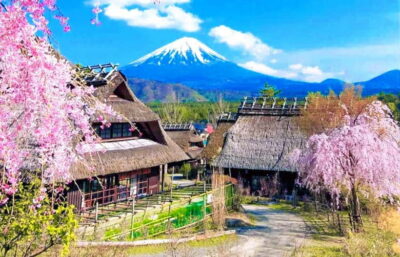
Mt. Fuji Heritage Tour: Traditional Villages, Lakes & Shrine
Our verdict →Browse the lists this tour appears in