
Reviewed · GEISHA & MAIKO EXPERIENCES
Full-Day Tour from Kanazawa: Samurai, Matcha, Gardens and Geisha
Kanazawa’s best sights make a satisfying chain: modest samurai homes, a curious shrine gate, a castle, one of Japan’s finest gardens, and old geisha quarters. This full-day walking tour links them without making you puzzle over buses or maps. Guides such as Mike, Garrett, Lee, and Akari bring the history to life with humor and clear explanations.
I like the matcha and wagashi stop at Gyokusen-an, where you sit beside a centuries-old garden, and I like the small group limit of 15. You get real time to ask questions and, when the group is small, the guide can adjust the pace. The tradeoff is serious: expect roughly 10 to 12 kilometers of walking, with little use of public transport.
Key points to know before you book
- Nine hours on foot: The route covers Kanazawa Station, Nagamachi, the castle area, Kenrokuen, and three tea districts.
- A proper tea-house break: Matcha and wagashi are included at Gyokusen-an, with garden views.
- Historic interiors, not just street views: You enter former ashigaru homes and the preserved Shima Chaya geisha house.
- Small group, maximum 15 people: This gives the guide room to answer questions and adapt the pace.
- Lunch is independent: One hour is set aside, but your meal is not included. The guide can suggest restaurants.
- Good value for a first day: At $151.30 per person, the price includes the English-speaking guide, Kenrokuen, Shima Chaya, and matcha with sweets.
Why this route works for a first day in Kanazawa
Kanazawa is easy to enjoy on foot, but its major sights are spread across several districts. This route gives you a useful city map in your head: samurai homes to the west, the castle and Kenrokuen at the center, and the tea districts to the east.
I especially like the order. You begin with the quieter former samurai area, move through a shrine and castle grounds, pause for tea, then finish among old tea houses and riverside streets. The day has a natural rhythm instead of feeling like a checklist of unrelated stops.
The English-speaking guides are a major part of the value. Mike is praised for his humor and ability to make a wet day enjoyable. Garrett is often noted for his command of Japanese history and culture, while Lee is praised for pacing the day around the group. Akari has a clear way of explaining how Kanazawa developed as an alternative to Kyoto.
Guide assignments can change, so you should not book expecting one particular person. Still, the consistent strength of the experience is the guide’s role in connecting the buildings, customs, and people you see.
More Geisha Experiences in Kanazawa:
- Kanazawa: Samurai, Matcha, Gardens and Geisha Full-Day Tour
★ 4.9 · 75 reviews - Kanazawa Half-day Tour: Curated: Gardens, Craft & Geisha District
★ 4.5 · 12 reviews - Kyoto Geisha Walking Tour: Gion District & Hidden Gems
★ 4.7 · 3,273 reviews
Ashigaru Museum and the humble side of samurai life
The first stop is the Ashigaru Museum, where you enter two homes once occupied by ashigaru families. Ashigaru were low-ranking samurai, so this is a useful counterpoint to grand castles and warrior legends.
The houses help you picture daily life at a much more ordinary level. You are not looking only at armor or ceremonial rooms. You are seeing the kind of domestic setting used by families who served the samurai system without belonging to its elite.
The visit takes about an hour and costs nothing beyond the tour price. It is a gentle start to the day, with indoor space before the longer outdoor stretches. Listen closely here, because the guide’s explanation supplies much of the context that a quick self-guided visit would miss.
Nagamachi reveals Kanazawa’s samurai quarter
From the museum, you walk through Nagamachi, the former samurai district. Its streets retain a handsome, old-fashioned appearance, with walls and narrow lanes that make the area feel distinct from modern Kanazawa.
This is one of the route’s strongest sections for atmosphere. You can understand the layout of a historic neighborhood simply by walking it. The guide also helps explain who lived here and how the district fitted into the city’s social order.
The drawback is that much of this stop is outdoors. Rain, heat, or cold will affect your enjoyment, and the tour provider says the experience requires good weather. Wear shoes that can handle long pavement walks, and bring water even if the day looks mild.
Oyama Shrine has one of Kanazawa’s oddest gateways
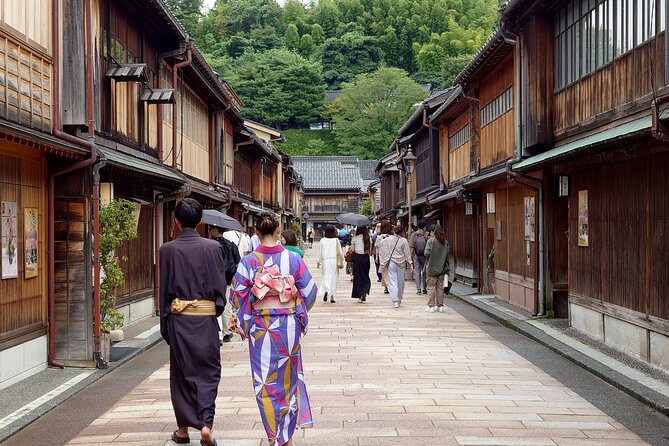
Oyama Shrine is a short but worthwhile change of mood after Nagamachi. Its entrance gate is made of brick, an unusual choice among Japanese shrines, and it gives the site a look unlike the more familiar wooden shrine entrances you may have seen elsewhere.
The stop lasts about 40 minutes and is free to enter. It also serves as a transition toward Kanazawa Castle. Rather than spending a long time here, the tour uses the shrine as a compact lesson in how Japanese religious spaces can mix local tradition with unexpected outside influence.
This is a good moment to ask questions. The route is moving steadily, and a guide can explain details that are easy to miss when you are simply passing through.
More Samurai Experiences in Kanazawa:
- Kanazawa: Samurai Residence Remains Nomura Family admission
★ 4.4 · 111 reviews - Kanazawa Private Tour: Highlights of an Old Samurai Town
★ 5.0 · 46 reviews - Kanazawa: Samurai Swordsmanship Lesson at a rented temple
★ 5.0 · 21 reviews - Tokyo: Samurai Restaurant Show Ticket with 2 Drinks
★ 4.5 · 1,307 reviews
Matcha at Gyokusen-an is the day’s calm center
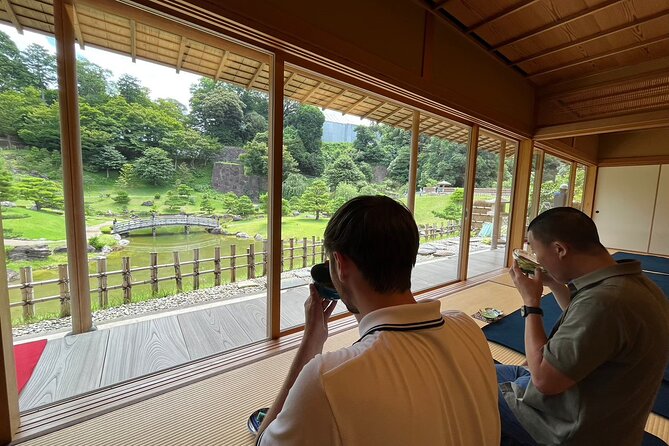
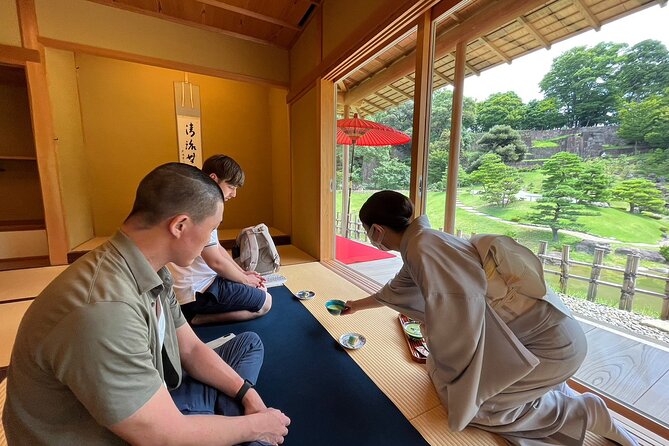
Gyokusen-an is where the schedule slows down. You sit for a matcha experience with wagashi sweets and views toward an old garden near the castle grounds.
This is more than a quick drink. The setting gives you time to absorb the day so far, and the tea ritual adds a cultural experience that a standard sightseeing walk may leave out. Matcha can taste strong and slightly bitter if you are not used to it, while wagashi provides the sweet balance.
The garden view is an important part of the stop. You are not rushing through a crowded café. You are sitting in a traditional tea-house setting and looking out over carefully arranged scenery.
Admission, matcha, and sweets are included. For me, this helps justify part of the $151.30 price, especially since comparable sightseeing walks often charge separately for entry or refreshments. The visit takes about an hour, making it a real pause rather than a photo stop.
Kanazawa Castle gives the route scale
The tour continues through Kanazawa Castle grounds on the way to Kenrokuen. The listed castle visit is brief, around 20 minutes, so you should not expect a full museum-style exploration of every building.
What you do get is a sense of scale. Restored structures rise over broad lawns, and the open grounds make it easier to understand the castle’s place in the city. The guide can point out what you are seeing and explain the restoration without requiring you to spend another long block of time indoors.
This short visit works because Kenrokuen is next. If the castle is your main reason for visiting Kanazawa, you may want extra time there on another occasion. If your goal is to understand the city’s main historic areas in one day, the brief crossing is efficient.
Kenrokuen rewards a slow, careful walk
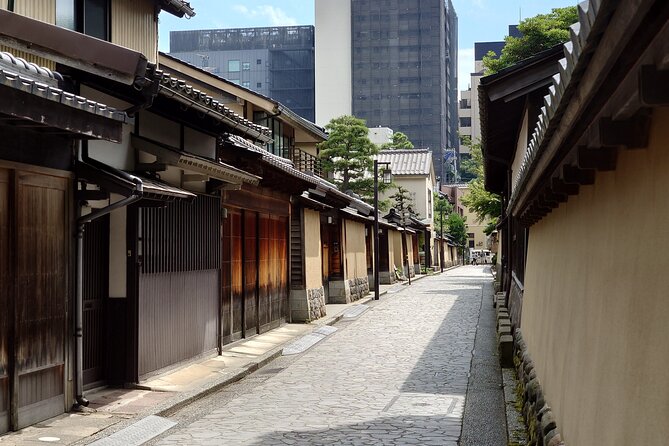
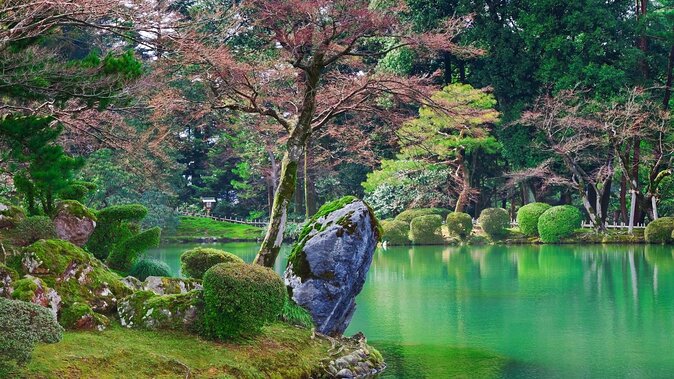
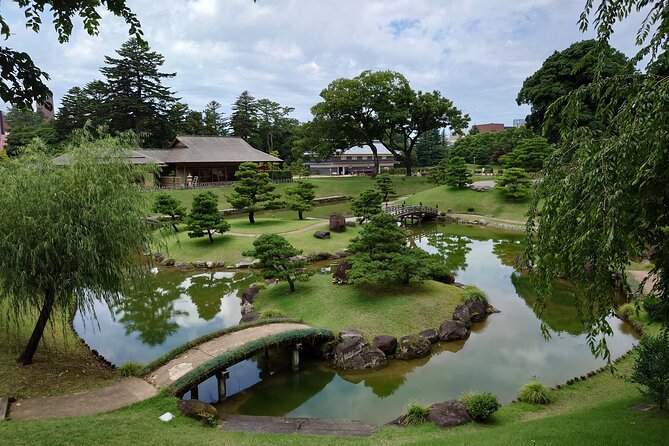
Kenrokuen takes about 90 minutes, making it the longest sightseeing stop of the day. The garden is a carefully planned display of ponds, trees, teahouses, paths, and changing views across the grounds.
I like that the tour allows more time here than at the castle. Kenrokuen is not a place to rush from one landmark to the next. You need time to notice how the paths open and close, how water and plants shape the views, and how traditional garden ideas work together.
You may also have the chance to enter a historic home or tea-related building within the garden, depending on the day’s plan and availability. Cherry blossoms can add seasonal color in early spring, but the garden’s appeal does not depend on one flowering period.
The walking continues here, though benches and places to pause may help. If you have knee problems or tire easily, tell the guide early. The route can be adjusted to some degree, but this is not a short garden stroll.
Higashi Chaya introduces old geisha culture
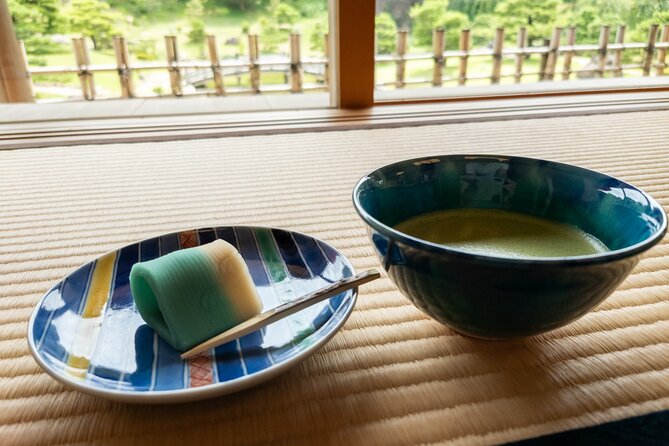
After Kenrokuen, the route heads to Higashi Chaya District. Traditional tea houses line the streets, along with places selling crafts, food, and sweets.
The word chaya refers to an entertainment house where geisha performed for wealthy patrons. The district is attractive, but the value of the stop lies in understanding what happened behind the elegant façades. Your guide can explain the social role of the tea houses and the difference between seeing a preserved district and entering a working entertainment venue.
You have about an hour here, including free time. That matters because you can browse instead of staying shoulder to shoulder with the guide. Use the time for a small shop, a snack, or photographs, while remembering that these streets are also part of a real neighborhood.
The district can feel busier than Kazuemachi later in the day. If you prefer quieter streets, save some energy for the final tea district.
Shima Chaya brings the interiors to life
The visit to Ochaya Shima is one of the tour’s most useful inclusions. You enter a preserved tea house once used by geisha and wealthy customers.
Inside, colorful walls and musical instruments show the care that went into these rooms. Street façades can tell you that a building is old, but an interior gives you a better sense of how entertainment and hospitality worked in the district.
The visit lasts around 30 minutes and admission is included. It is also a good reason to take this tour instead of simply walking through Higashi Chaya alone. You gain access to a historic interior and an explanation of what you are looking at.
The stop is not a modern performance. You should think of it as a preserved cultural site, with the guide helping you read the rooms and objects.
Kazuemachi offers a quieter finish
The final sightseeing stretch takes you through Kazuemachi Chayagai on the return toward Kanazawa Station. This tea district is smaller and less crowded than Higashi Chaya, with streets beside the river and old tea houses that still serve as entertainment venues.
It is a fitting ending because the pace can ease after the busier major sights. You may even be lucky enough to glimpse geisha activity, though the tour does not promise a performance or encounter.
The stop takes about 30 minutes and is free. You then return to the original meeting point at Kanazawa Station. Since the entire day is built around walking, the final stretch may feel long, particularly after Kenrokuen and the tea districts.
The walking demands are real
The tour is advertised as about nine hours, but one hour is reserved for lunch. That makes the actual sightseeing time closer to eight hours, with a full day still spent out in the city.
The distance is the main issue. The route involves roughly 10 to 12 kilometers of walking, and one account measured it at about 10 miles. That is a demanding day for anyone, especially in summer, rain, or strong winter weather.
A few practical choices will help:
- Wear broken-in walking shoes with good grip.
- Carry water and rain protection.
- Eat a solid breakfast, since lunch comes during the tour and is not included.
- Tell the guide if the pace is too quick.
- If you are a senior or have limited stamina, consider that public transport is not built into the route.
Some guides adjust the pace well. Groups that move quickly may reach stops early, while slower groups can need more time. Still, you should book this as a walking tour, not as a bus tour with occasional walks.
Is $151.30 a fair price?
At $151.30 per person, this is not the cheapest way to see Kanazawa. You could visit several districts independently for less, especially if you skip paid entries and arrange your own route.
The price becomes easier to defend if you value interpretation and structure. It includes the English-speaking guide, Kenrokuen admission, Shima Chaya admission, and matcha with wagashi at Gyokusen-an. You also avoid losing time figuring out how to connect distant districts.
The group limit of 15 matters. A large group can make a narrow historic street feel awkward, while a small group gives you more chances to ask about customs, buildings, and local history. When only a few people book, the guide may be able to tailor the pace and discussion more closely.
Lunch is extra, and you choose your own restaurant during the one-hour break. The guide can offer recommendations, which is useful, but budget separately for the meal.
Free cancellation is available up to 24 hours before the start time. Changes made within 24 hours are not accepted, and poor weather can lead to a rescheduled date or full refund.
Who should book this Kanazawa walking tour?
You should book it if you have one full day in Kanazawa and want a clear introduction to the city’s major historic areas. It suits first-time visitors who prefer stories and explanation rather than simply collecting photographs.
It is also a good fit if you want several different experiences in one day: modest samurai homes, a shrine, castle grounds, a formal garden, matcha, and geisha culture. The route gives you a broad picture of Kanazawa without requiring several separate bookings.
I would hesitate if long walks are difficult for you. A couple in their seventies completed the route, but even fit visitors may feel tired after 10 to 12 kilometers. You can ask for pacing help, yet the itinerary cannot become a short walking tour.
Should you book it?
Book this tour if you want the efficient, guided version of Kanazawa and can comfortably walk most of the day. The matcha setting, Shima Chaya interior, Kenrokuen, and old districts make it more substantial than a basic city orientation.
Skip it if your priority is an easy day, extended time inside Kanazawa Castle, or complete control over every stop. For most first visits, though, the route is well planned and the mix of samurai, gardens, tea, and geisha culture gives you a useful understanding of what makes Kanazawa different from Kyoto.
FAQ
Where does the tour start?
It starts at Kanazawa Station at 9:00 am.
Where does the tour end?
The activity ends back at the original meeting point at Kanazawa Station.
How long does the tour last?
The tour is scheduled for about nine hours, including a one-hour lunch break.
Is lunch included?
No. Lunch is not included, but you can choose your own restaurant and receive recommendations from the guide.
How much walking is involved?
The route is entirely on foot and involves roughly 10 to 12 kilometers of walking. One account described the distance as about 10 miles.
What does the price include?
The price includes an English-speaking guide, matcha and wagashi at Gyokusen-an, entry to Kenrokuen Garden, and entry to the preserved Shima Chaya geisha house.
What happens if the weather is poor?
The experience requires good weather. If the tour is canceled because of poor weather, you will be offered another date or a full refund. You can also cancel up to 24 hours before the start time for a full refund.
More Garden Tours in Kanazawa
- Osaka: teamLab Botanical Garden Entry Ticket
★ 4.5 · 1,710 reviews - Kyoto Arashiyama Walking Tour: Bamboo, Monkeys, Gardens & Secrets
★ 5.0 · 1,216 reviews - Imperial Palace East Garden and Edo Castle Walking Tour in Tokyo
★ 5.0 · 510 reviews - Kyoto Zen Meditation & Garden Tour at a Zen Temple with Lunch
★ 5.0 · 441 reviews
More Tea Ceremony Experiences in Kanazawa
- Kanazawa: Kenrokuen Tea Ceremony Experience
★ 4.8 · 1,139 reviews - Kyoto: Tea Ceremony in a Traditional Tea House in Kiyomizu
★ 4.9 · 3,519 reviews - Kyoto: Tea Ceremony Ju-An at Jotokuji Temple
★ 4.9 · 3,207 reviews - Kyoto: 45-Minute Tea Ceremony Lesson Experience
★ 4.3 · 2,378 reviews
Just added around Kanazawa
- Kanazawa: Sushi & Japanese Cooking Class at a Historic School★ 5.0 · 66 reviews
- Taste of Kanazawa (Food tasting in Omicho Market & Higashi Chaya)★ 5.0 · 58 reviews
- Kanazawa private half day/Photoshoot by professional photographer★ 5.0 · 38 reviews
- Kanazawa private 1 day/Photoshoot by professional photographer★ 5.0 · 33 reviews
- Photoshoot session by professional photographer in Kanazawa★ 5.0 · 42 reviews
- Private Ring Craft Experience in Kanazawa★ 5.0 · 22 reviews
- Omicho Market & Kanazawa Ramen Tasting Tour★ 5.0 · 15 reviews
- True Kanazawa: Private Walking tour with a Local guide★ 5.0 · 66 reviews
Geisha & Maiko Experiences, compared.

Kyoto Geisha Walking Tour: Gion District & Hidden Gems
Our verdict →

Dinner with Maiko in a Traditional Kyoto Style Restaurant Tour
Our verdict →

Browse the lists this tour appears in