
Reviewed · SUSHI EXPERIENCES
Kanazawa: Sushi & Japanese Cooking Class at a Historic School
The best part of this Kanazawa class is that you actually cook the meal, rather than watch a chef perform while you stand safely at the edge of the room. At Nakata Cooking School, just three minutes from Kanazawa Station, you shape sushi, make bonito and kelp dashi, roll tamago, and prepare Jibuni, a local chicken stew with samurai-era roots.
I especially like the small group size, capped at eight, and the useful mix of dishes. You leave with more than a full Japanese meal: you learn techniques you can try at home, receive an English recipe by email, and take home photos and a named certificate. Chef Seiji Nakata brings plenty of humor, while real-time AI translation helps keep the class moving.
The main catch is dietary. This class uses fish-based dashi and cannot accommodate vegan diets or people avoiding fish stock. You must report other dietary needs when booking, since changes cannot be made on the day.
Key Points Before You Book
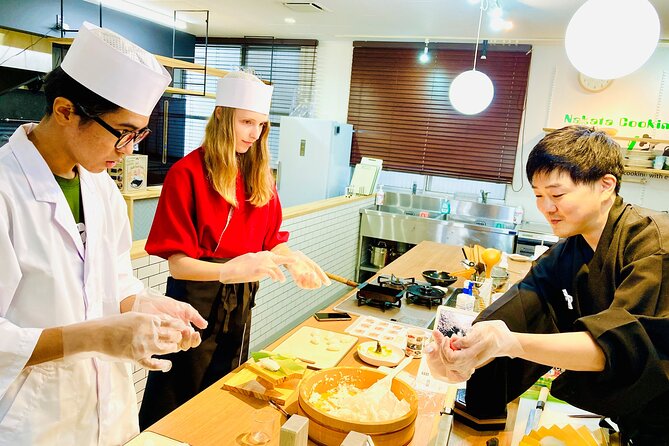
- Cook five Japanese dishes yourself: Make nigiri sushi, Jibuni, dashi-maki tamago, dashi broth, a seasonal side dish, and miso soup.
- Three minutes from Kanazawa Station: The location is handy when your sightseeing schedule is tight.
- A 56-year-old culinary school: You cook in an established school rather than a casual pop-up kitchen.
- English help without a conventional interpreter: A large screen provides live voice and text translation throughout the class.
- Professional tools and take-home extras: Use premium Japanese knives, receive recipes by email, and get class photos plus a Japanese certificate.
- Plan carefully for dietary restrictions: Vegan cooking and fish-free dashi are not available.
A Hands-On Start Near Kanazawa Station
The class takes place at Nakata Cooking School and Knife Shop on the second floor at Konohanamachi 4-13, only about three minutes from Kanazawa Station. That easy location matters. You can fit the class into a short Kanazawa stay without spending much of your day crossing town, and the activity ends where it begins.
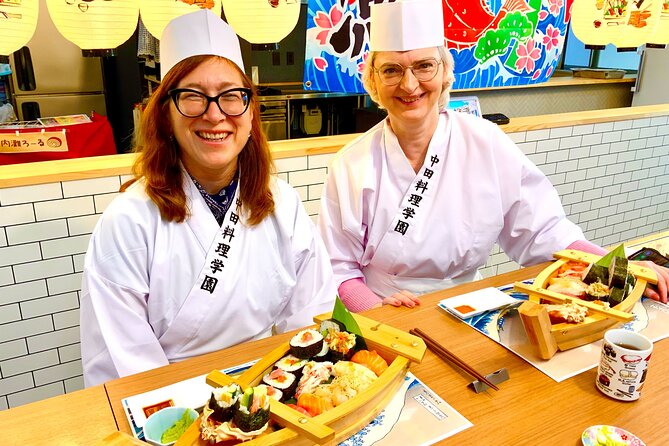
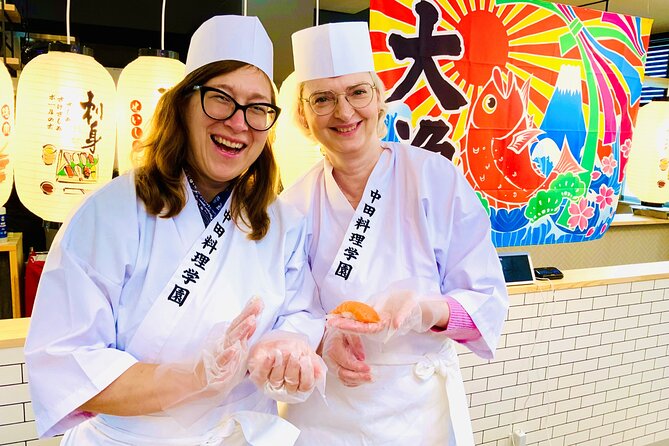
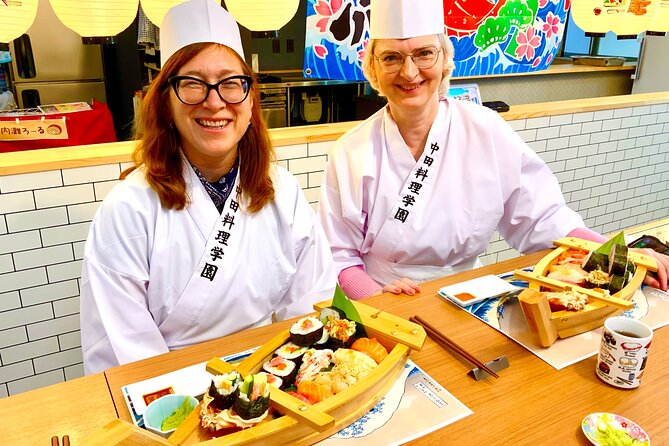
After arriving by appointment, you change into a sushi chef-style apron and settle into the cooking space. The school has been operating for 56 years, which gives the experience a more grounded feel than a temporary workshop arranged only for visitors. The focus is practical: listen, handle the ingredients, cook, and eat what you make.
The group limit is eight people. That is small enough for personal guidance, but the exact feel will depend on how many people book your session. Some sessions may be very intimate, while a full class will have more shared energy and less one-to-one time.
Chef Seiji Nakata leads the experience, with help from his wife and assistant on some sessions. His teaching style is lively and playful. You should expect jokes, an energetic pace, and plenty of conversation rather than a silent technical lesson.
More Sushi Experiences in Kanazawa:
- Sushi Making Tokyo Roll and Authentic Japanese Sushi Class
★ 5.0 · 3,971 reviews - Tokyo: Roll and Authentic Sushi Making Class in Asakusa
★ 4.9 · 1,957 reviews - Make Sushi and Create Unforgettable Memories in Tokyo
★ 5.0 · 1,413 reviews
Why the Translation Screen Matters
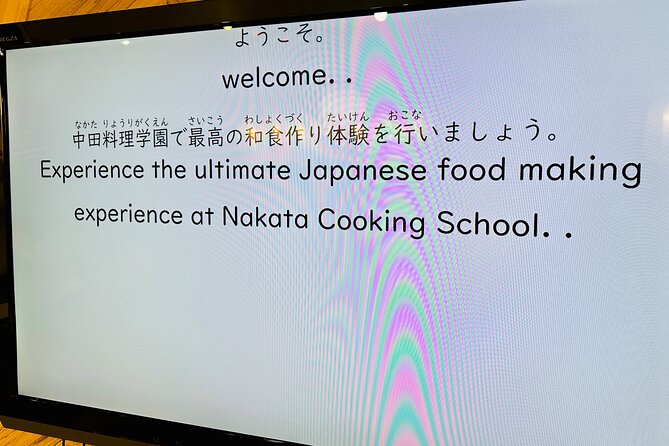
English communication is handled through real-time AI translation, using voice and text on a large screen. This is not quite the same as having a professional human interpreter beside you, but it gives you a way to follow explanations and ask questions while you work.
The technology also becomes part of the entertainment. Translated jokes can be a little mechanical, and that can create some funny moments. At the same time, the screen helps explain cooking terms, ingredient names, and cultural points that would otherwise be difficult to follow.
You should still pay attention to demonstrations and watch what the instructor does with his hands. Cooking is not only about translated words. The weight of sushi rice, the movement of a knife, and the texture of an omelet are easier to understand when you observe closely and then try them yourself.
An English recipe is sent by email the day before the class. That is useful because you can review the dishes in advance and later repeat the recipes at home. Keep an eye on your inbox, especially if you book close to the class date.
Five Dishes That Show How Japanese Cooking Fits Together
The menu is a good introduction to several basic parts of Japanese cooking. You are not making five versions of the same dish. Instead, the class moves from stock and seasoning to knife work, sushi, soup, and a regional main course.
Nigiri Sushi With Fish From Omicho Market
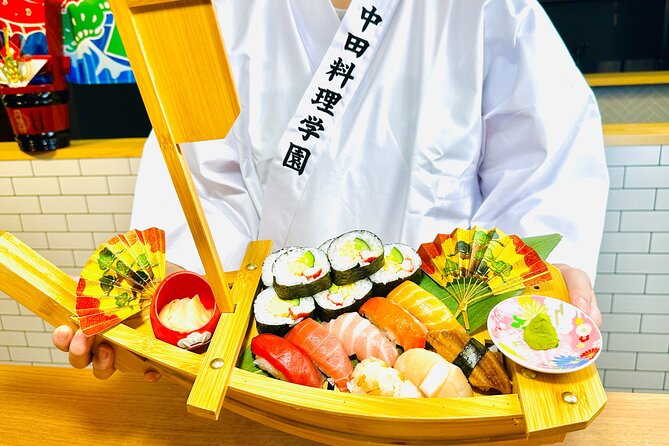
You make nigiri sushi using wild fish sourced from Omicho Market, Kanazawa’s well-known food market. The emphasis is not simply on placing fish over rice. You learn how sushi rice should be handled and how the proportions of rice and fish affect the bite.
One useful detail from the class is the attention to weight and balance. The school teaches that the rice portion for a sushi piece should be carefully controlled, with around 15 grams used as a guide for some preparations. That may sound fussy, but it explains why good sushi feels neat rather than bulky.
The seafood is a strong reason to choose this class in Kanazawa. The city is known for high-quality seafood, and using ingredients from Omicho Market gives the meal a local connection. The selection is seasonal, so the fish you use may vary.
You should not expect to become a sushi chef in one afternoon. You will, however, leave with a clearer sense of rice texture, portioning, shaping, and presentation. Those small skills are far more useful than simply watching someone make perfect sushi.
More Cooking Classes in Kanazawa:
- Ramen Cooking Class at Ramen Factory in Kyoto
★ 5.0 · 1,937 reviews - Ramen & Gyoza Cooking Class in Tokyo with Local Supermarket Visit
★ 5.0 · 823 reviews - Kyoto: Ramen Cooking Class at a Ramen Factory with Souvenir
★ 4.9 · 532 reviews - Kyoto: Ramen, Gyoza, and Onigiri Cooking Class
★ 5.0 · 445 reviews
Dashi, the Base of the Meal
Dashi is made from traditional bonito and kelp stock. This is one of the most important lessons in the class because dashi appears in many Japanese dishes, even when it is not obvious on the plate.
You learn how the broth supports the other flavors instead of overpowering them. It forms part of the seasoning for the rolled omelet and helps create the savory foundation of the miso soup and other dishes.
This is also the point where the dietary limitation matters most. The stock is fish-based, so the class is not suitable for vegans or anyone avoiding fish dashi. Do not assume the school can swap in a vegetable broth on the day. Dietary requests must be made during booking, and vegan diets cannot be accommodated.
Dashi-Maki Tamago, the Soft Rolled Omelet
Dashi-maki tamago looks simple, but it takes control and patience. You combine egg with dashi, then cook and roll it into layers. The result should be soft, moist, and gently savory rather than dry or dense.
The recipe used in the class is described as Michelin-style, but the real value is the hands-on practice. You get a chance to see how the egg sets, when to fold it, and how repeated rolling creates the final shape.
This may be one of the more challenging parts for a first-timer. A finished omelet can look smooth and effortless, while the actual process requires timing. The instructor’s close guidance helps, and the class is designed for participation rather than professional-level cooking experience.
Jibuni, Kanazawa’s Regional Specialty
Jibuni is a Kanazawa dish made here as a chicken stew. It has roots connected to the city’s samurai-era food culture, giving you a taste of Kanazawa that is more specific than a general sushi lesson.
The dish adds welcome regional character to the menu. Sushi is familiar to many people before they arrive in Japan, but Jibuni is closely tied to Kanazawa. Learning to prepare it lets you carry home something that represents the city itself.
You should expect a traditional Japanese flavor profile rather than a heavily spiced stew. The class explains the cultural background as well as the cooking steps, so you understand why the dish belongs in Kanazawa’s food story.
Seasonal Side Dish and Miso Soup
The final elements are a seasonal side dish and miso soup. These may seem less dramatic than sushi, but they help you understand how a Japanese meal is assembled.
The side dish changes with the season, so the exact preparation is not fixed. That is a good feature for repeat visitors, though it means you cannot count on making precisely the same dish at every session.
Miso soup brings the dashi lesson back to the table. By the end, you have prepared a meal with a range of textures and roles: raw seafood, broth, eggs, chicken, soup, and a small seasonal accompaniment.
A Meal You Prepare, Then Actually Enjoy
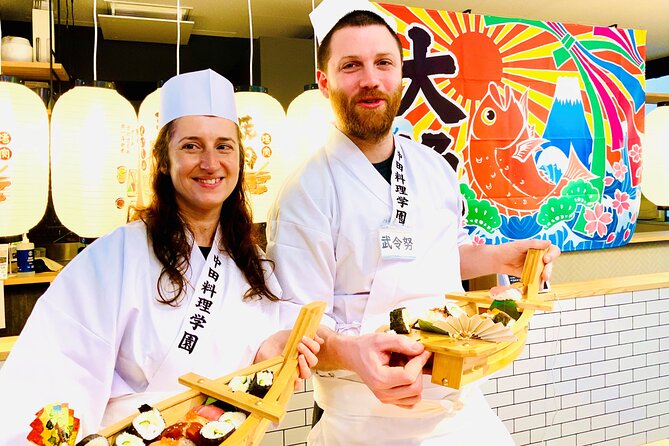
Once the cooking is complete, you eat the dishes you made. This sounds obvious, but it changes the pace of the class. You are not rushing through a recipe demonstration and then leaving. The final meal gives you time to see how the separate preparations work together.
One aperitif is included, either Kanazawa plum wine or local sake. Additional sake, beer, and soft drinks are available for purchase. The included drink is modest, but it adds a pleasant finish to the meal and gives you a chance to try a local style of beverage without committing to a full tasting.
The food is intended to be a full tasting of all the dishes you prepare. If you are hoping for a formal restaurant meal with many courses and lengthy service, this is not that. You are eating a working meal in the same place where you cooked it. The reward is participation and freshness, not restaurant ceremony.
Knives, Photos, and the Certificate
The school supplies premium Japanese kitchen knives for use during the class. You receive instruction in knife skills, and the tools add a professional touch to the session. You do not need to bring your own equipment.
If you become interested in Japanese knives, participants have the option to purchase selected knives through the school. This is entirely optional. A knife purchase can be useful if you already cook often, but you should not feel that buying something is part of the class.
The school also takes photos while you cook. This is a practical perk because you can concentrate on the food instead of asking a companion to document every step. Photos are shared at the end, including by AirDrop when possible.
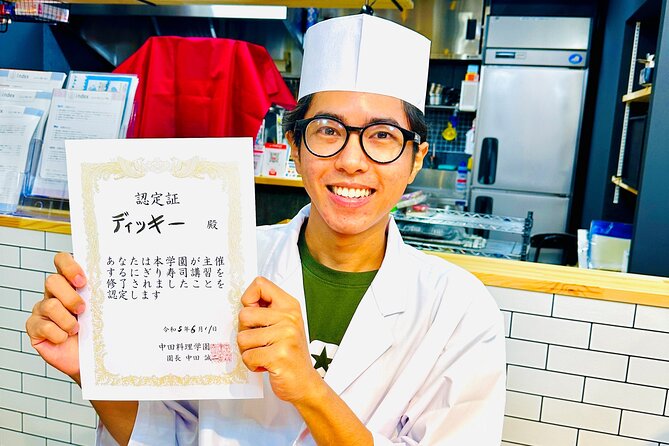
You receive a Japanese certificate of completion with your name. It is a souvenir rather than a formal culinary qualification, but it makes a nice reminder of the experience, especially for families and couples.
The in-house Knife Museum is scheduled to open in July 2025, with a 10 percent discount for class participants. Check the current opening status when booking, since the museum timing is separate from the cooking class.
Is the $99.10 Price Good Value?
At $99.10 per person, the class is not the cheapest way to eat in Kanazawa. You can find an affordable Japanese meal for much less. The comparison changes when you count the instruction, five dishes, ingredients, apron rental, aperitif, recipe email, photos, certificate, and roughly two and a half hours of activity.
I see the price as reasonable for someone who values an active experience rather than a meal alone. Premium seafood from Omicho Market also helps justify the cost, though the exact seafood will depend on the season.
The value is strongest for couples, families, and small groups who will use the recipes after returning home. It is also a good choice if you have limited time in Kanazawa and want a local food activity close to the station.
The value is weaker if you already cook Japanese food confidently, dislike group instruction, or mainly want a quiet sushi meal. The menu is practical and approachable, not an advanced professional course. You are paying for guidance, cultural explanation, and the chance to make the food yourself.
Who Will Enjoy This Class Most?
I would recommend it to first-time visitors who want more context around Japanese food. It works particularly well for people who enjoy cooking, since every stage involves handling ingredients rather than watching from a distance.
Families can also do well here. The small group format, humorous teaching, certificate, and photo service give the experience a shared shape. Teenagers can take part rather than simply sit through a lecture, though younger children may find the knife work and careful food preparation demanding.
It suits couples too, especially if you want a memorable Kanazawa activity that is not another sightseeing stop. Several people can cook together, compare results, and share the final meal.
The class is less suitable for strict vegans, people avoiding fish stock, and anyone with dietary restrictions that were not reported at booking. It is also not the best fit if you want a fully English-speaking lesson without translation technology. The AI system is helpful, but it remains part of the experience.
Book early enough to provide any dietary details and to receive the recipe email before class. The activity requires a minimum number of participants, so a cancellation for that reason may lead to another date or a full refund.
Practical Details for a Smooth Visit
The class lasts approximately two hours and 30 minutes. Plan your day around that full block, not just the time spent eating. You will need time to arrive, change into the apron, cook, eat, take photos, and receive the certificate.
The meeting point is Nakata Cooking School and Knife Shop, on the second floor at 4-13 Konohanamachi, Kanazawa, Ishikawa 920-0852. It is near public transportation and close to Kanazawa Station. The activity ends back at the school, and private transportation is not included.
Mobile tickets are accepted. Confirmation is provided at booking, and the class is by appointment only, so do not simply turn up without a reserved time.
Cancellation is free up to 24 hours before the local start time. Inside that window, refunds are not available and changes are not accepted. That policy makes early planning important, especially during a short Japan trip.
Should You Book the Nakata Cooking Class?
Book this class if you want to cook a complete Japanese meal, learn a Kanazawa specialty, and meet a lively local instructor near the station. The combination of sushi, dashi, tamago, miso soup, and Jibuni gives you a useful range of techniques in one session.
I would skip it only if fish-based dashi rules out the menu, or if you want an advanced chef-training course rather than a friendly, guided introduction. For most food-minded visitors, the class offers solid value: fresh local ingredients, plenty of hands-on time, personal instruction, photos, recipes, and a meal you helped create.
FAQ
How long does the cooking class last?
The class lasts approximately two hours and 30 minutes, including the cooking, meal, aperitif, photos, and certificate presentation.
Where does the class meet?
It meets at Nakata Cooking School and Knife Shop, 4-13 Konohanamachi, on the second floor, in Kanazawa. The school is about three minutes from Kanazawa Station.
How many people can join the class?
The maximum group size is eight people.
Is the class suitable for vegans?
No. Vegan diets cannot be accommodated, and the class uses fish-based bonito and kelp dashi.
What dishes will I make?
You will prepare nigiri sushi, Jibuni chicken stew, dashi-maki tamago, dashi broth, a seasonal side dish, and miso soup.
What happens if I need to cancel?
You can receive a full refund if you cancel at least 24 hours before the experience start time. Cancellations or changes made within 24 hours are not accepted for a refund.
More Historical Tours in Kanazawa
- Kanazawa Historic Brewery: Fermentation Tour, Tasting, Lunch
★ 4.9 · 15 reviews - World Heritage Shirakawa-go and Experience Tours from Kanazawa
★ 5.0 · 4,049 reviews - Tokyo: Imperial Palace and Shogun Historical Walking Tour
★ 5.0 · 2,251 reviews - World Heritage Kyoto & Nara Uji Authentic Matcha Experience
★ 5.0 · 1,573 reviews
Just added around Kanazawa
- Taste of Kanazawa (Food tasting in Omicho Market & Higashi Chaya)★ 5.0 · 58 reviews
- Kanazawa private half day/Photoshoot by professional photographer★ 5.0 · 38 reviews
- Kanazawa private 1 day/Photoshoot by professional photographer★ 5.0 · 33 reviews
- Photoshoot session by professional photographer in Kanazawa★ 5.0 · 42 reviews
- Private Ring Craft Experience in Kanazawa★ 5.0 · 22 reviews
- Omicho Market & Kanazawa Ramen Tasting Tour★ 5.0 · 15 reviews
- Kanazawa Private Walking Tour with a Local★ 5.0 · 13 reviews
- True Kanazawa: Private Walking tour with a Local guide★ 5.0 · 66 reviews
Sushi Experiences, compared.
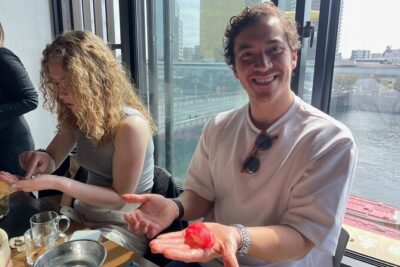
Sushi Making Tokyo Roll and Authentic Japanese Sushi Class
Our verdict →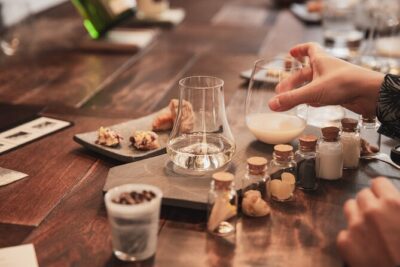
Sake Omakase in Tokyo: Guided Tasting by Certified Sommeliers
Our verdict →
Browse the lists this tour appears in