
Reviewed · FISH MARKET TOURS
Tokyo: Tsukiji Fish Market Sushi Making Class with Pro Chef
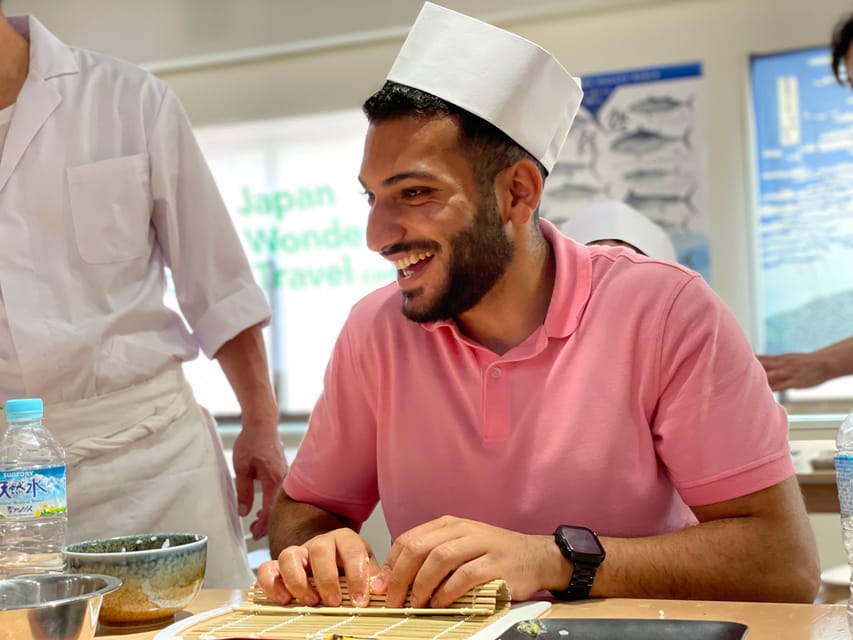
Tsukiji is the right place to learn sushi. This class takes you into a traditional Japanese building near the Outer Market, where a professional chef demonstrates fish preparation, knife skills, nigiri, and maki before you make your own lunch. The market setting gives the lesson a useful sense of place, while the English-speaking host keeps the steps clear.
I like the small, hands-on format and the chance to eat both your own sushi and extra pieces prepared by the chef. I also like the practical mix of four nigiri and one maki, plus dashi soup and green tea. The main drawback is simple: the classroom is on the third floor with no elevator, and the class does not suit vegans, vegetarians, or people who need halal, kosher, or gluten-free meals.
Key points before you book
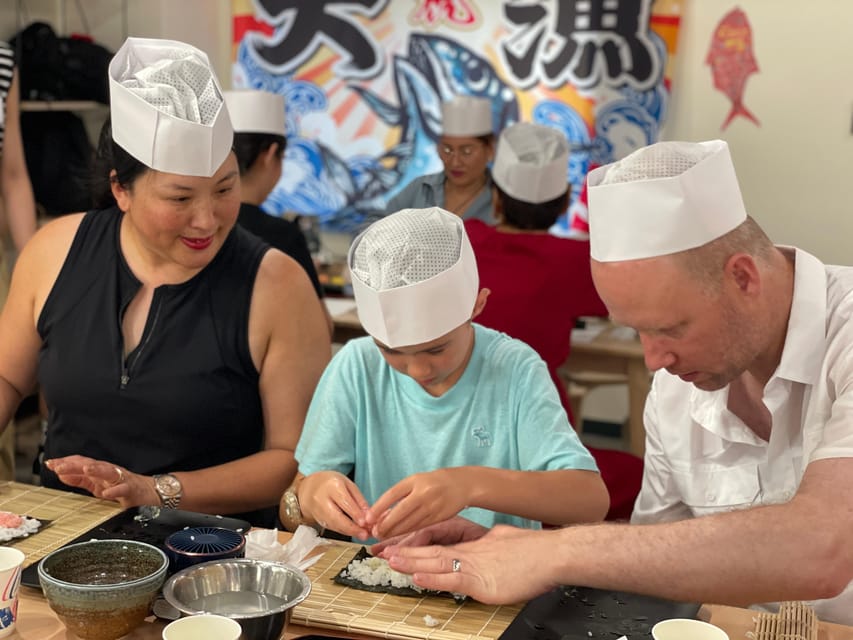
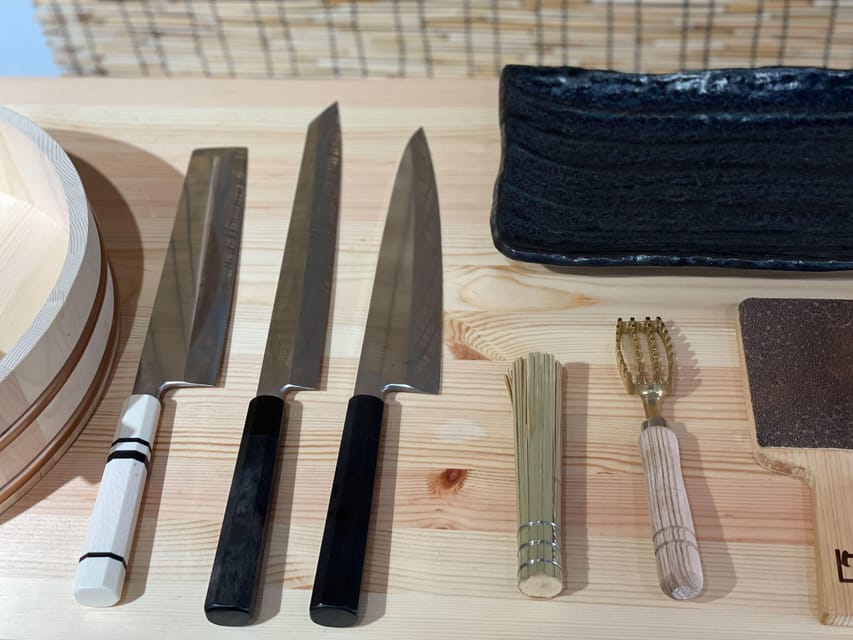
- Watch a sushi master prepare fish: The class includes a fish disassembly demonstration and an explanation of Japanese knives.
- Make five pieces of sushi: You prepare four different nigiri sushi and one maki roll, then eat what you make.
- Learn in central Tsukiji: The classroom is inside a traditional building near the Outer Market, making it easy to visit the market before or after.
- Get help in English: An English-speaking host interprets and guides the class alongside the professional chef.
- Taste the chef’s work: The sushi master prepares additional sushi, including pieces with freshly prepared wasabi.
- Plan for stairs and food limits: The room is on the third floor, and special vegetarian, vegan, halal, kosher, and gluten-free menus are not available.
Why Tsukiji makes a good classroom
Sushi can look simple on the plate. A small piece of fish, a little rice, perhaps a dab of wasabi. The class shows you why the simple result takes practice.
The setting matters. You are not learning in a generic cooking studio far from the food trade. The classroom is in the center of Tsukiji Outer Market, in a traditional Japanese building reached by stairs. The market connection helps explain why freshness, knife work, rice texture, and presentation matter so much.
You can book a sushi class on its own, or choose an option that includes a walk through the market. The meeting point varies by option, so check your booking details closely. If your selected version includes a guide, names such as Satoko, Yuko, Tack, AJ, Shoko, and Sean have led market walks and helped explain local foods, shrines, and the area around Tsukiji.
I would schedule this near the start of a market visit, not at the end of a long day. The Outer Market is easy to explore before or after class, but the food stalls and small shops can make you lose track of time. Leave some breathing room.
More Market Tours in Tokyo
- Tokyo Tsukiji Fish Market Food and Culture Walking Tour
★ 5.0 · 3,184 reviews - Tokyo: Tsukiji Fish Market Food and Walking tour
★ 5.0 · 1,724 reviews - Tokyo: Tsukiji Fish Market Guided Walking Tour
★ 4.9 · 1,397 reviews
The fish preparation demonstration
The class begins with a demonstration by the sushi chef. You watch the fish being taken apart and learn how each stage affects the final sushi. This is also where the Japanese knives come into focus.
That short demonstration adds value beyond the basic act of shaping rice. You see the careful cuts, the handling of the fish, and the reasons sushi chefs use particular knives. It gives you a better eye for the work when the chef later prepares sushi at speed.
The lesson is not designed to turn you into a professional sushi chef in one morning. It gives you a clear introduction to the craft. You learn what sushi is, how the fish and rice come together, and how the shape and pressure of each piece affect the bite.
Some classes also cover sashimi preparation as a bonus, according to the activity format and the chef leading the session. That part is especially useful if you want to understand the difference between slicing fish for sashimi and shaping it for nigiri. Ask questions as you go. The small group format makes that possible, and the host can translate when needed.
Making nigiri and maki by hand
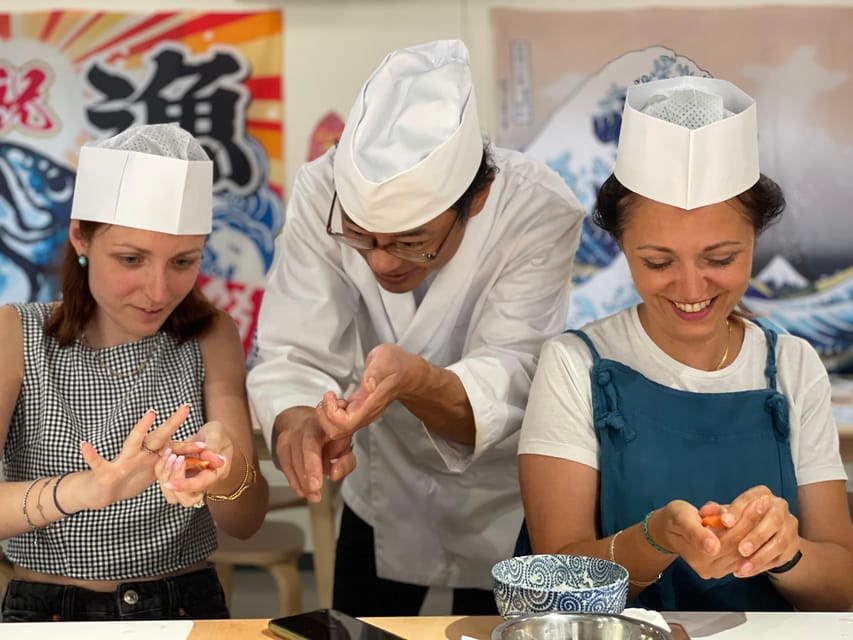
The main lesson is practical. You make four different nigiri sushi and one maki sushi, using fresh ingredients and proper utensils sourced from Tsukiji shops.
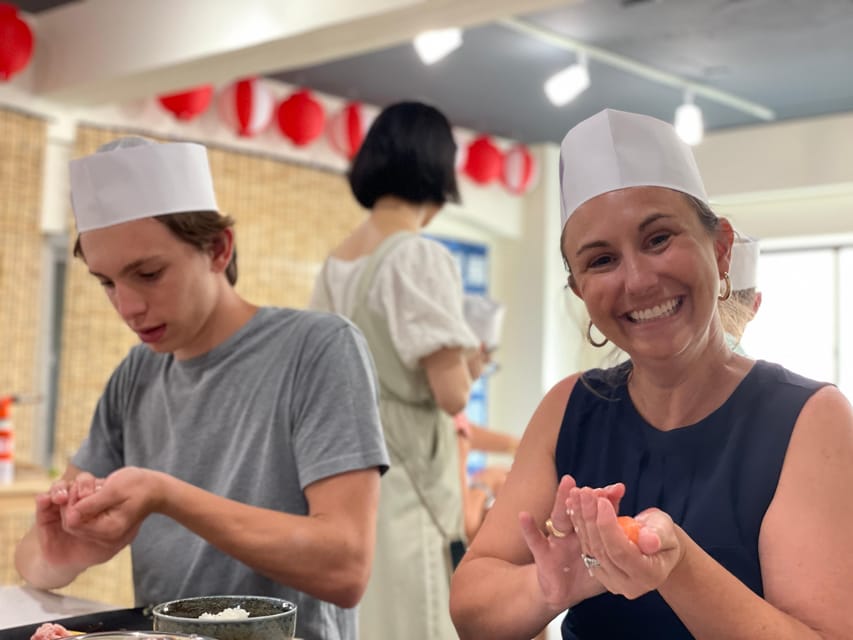
Nigiri is the best test of your new skills. You shape the rice, add the fish, and try to create a neat piece without crushing the rice. The chef demonstrates the correct steps, then helps you one piece at a time. You may find that your first attempt looks less tidy than the chef’s. That is part of the fun, and the point is to learn the movement rather than chase perfect restaurant presentation.
Maki gives you a different task. The ingredients are rolled together, so you learn about arrangement, pressure, and cutting. Making both types keeps the lesson from feeling repetitive.
The utensils and tableware are not just decoration. Using the proper tools makes the class more efficient and gives you a better sense of how sushi is prepared in Japan. The setup is also photo-friendly, but I would keep your phone out of the way while handling food and watching the chef.
The instructors use simple explanations suited to beginners. Several instructors have been praised for patience and clear demonstrations, including Chef Tanaka, Chef Kate, Chef Koro, Chef Ike, and Chef Kana. The exact chef depends on the date and option, but the format remains focused on guided practice.
Eating what you made, then watching the expert
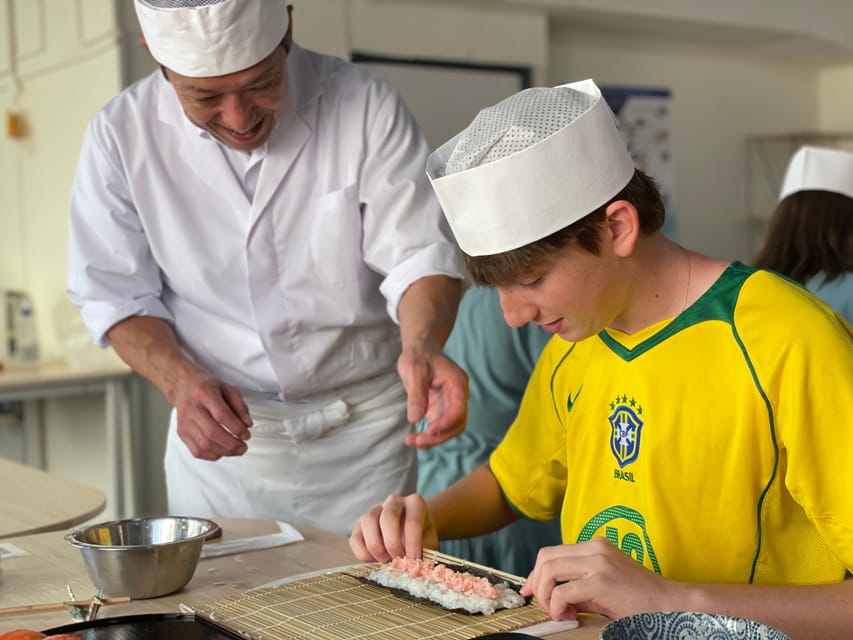
After the lesson, you eat your own sushi. This is a small but important part of the class. You can taste the result while the steps are still fresh in your mind.
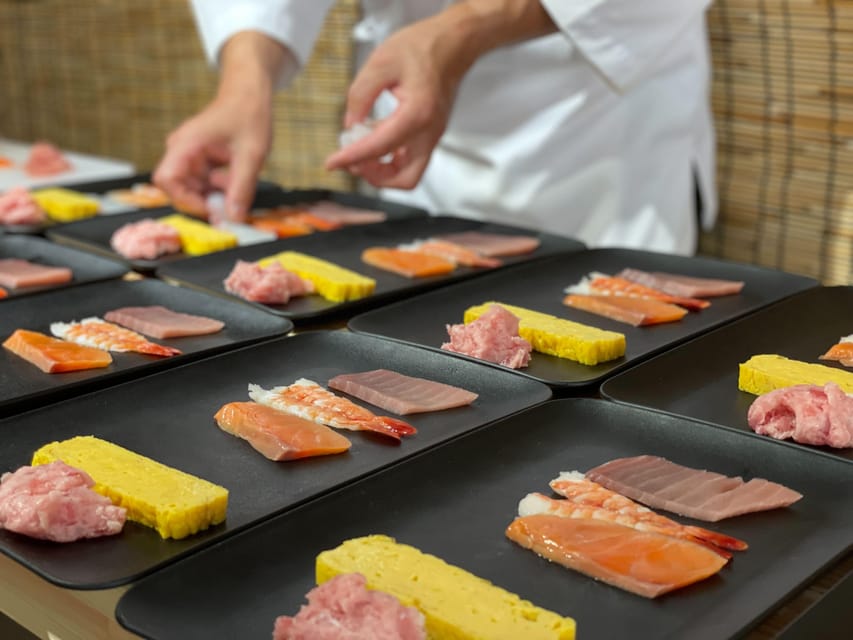
The meal includes your four nigiri and one maki, plus additional sushi prepared by the master. That extra serving lets you compare your work with the chef’s. You can watch the speed, precision, and compact movements that are difficult to copy as a beginner.
Freshly prepared wasabi is also served. The chef’s version gives you a chance to notice how wasabi changes the taste of the fish and rice. Traditional dashi soup and fine green tea complete the meal.
I like this structure because the food is both lunch and a lesson. You are not simply given sushi after a demonstration. You make it, taste it, then see what an experienced chef can do with the same basic ingredients.
The portion is a proper part of the experience, but you should not book this expecting an unlimited food tour. Extra food and drinks are not included. If you want to keep eating around Tsukiji, plan time for the market afterward.
More Sushi Experiences in Tokyo
- Sushi Making Tokyo Roll and Authentic Japanese Sushi Class
★ 5.0 · 3,971 reviews - Tokyo: Roll and Authentic Sushi Making Class in Asakusa
★ 4.9 · 1,957 reviews - Make Sushi and Create Unforgettable Memories in Tokyo
★ 5.0 · 1,413 reviews - Tokyo: Sushi Making Class in a Happi Coat near a Famous Spot
★ 4.9 · 1,377 reviews
What the market option adds
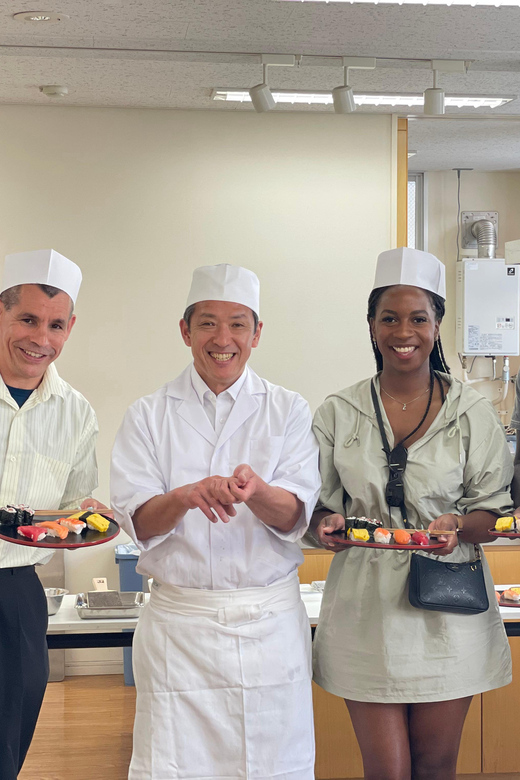
Some versions include a guided walk through Tsukiji. This is separate from the core class, and the duration can range from 90 minutes to four hours depending on the option you select.
A market walk can help you make sense of the area. Guides such as Tack, Sean, Shoko, and AJ have explained fish, other foods, nearby shrines, and local religious customs. That context is useful if you are visiting Tsukiji for the first time and want more than a quick look at food stalls.
The market portion is not included with every version, and the activity description makes clear that guidance through the market is not included in the basic class. Check the option details rather than assuming you will receive a full tour.
I would choose the market option if you want an organized introduction to Tsukiji. If you already know the market well, the 90-minute class may be enough. Either way, the location lets you explore on your own before or after.
Group size, teaching style, and family appeal
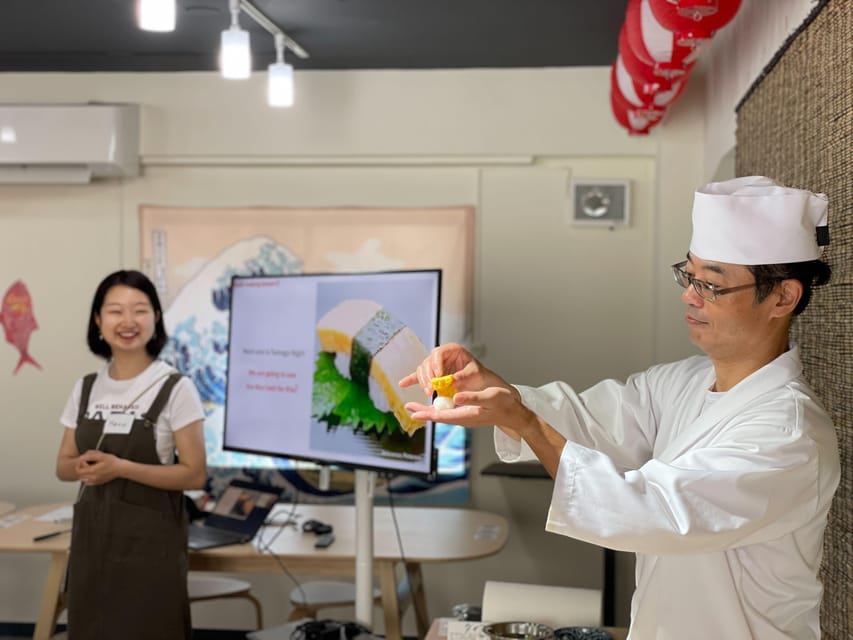
The class works best when the group is small enough for the chef to see each person’s technique. Groups of around six have been reported, and the format is intended for groups from one to four people in some bookings. The exact size can vary.
The English-speaking host is an important part of the experience. The sushi chef may demonstrate the technique, but the host helps explain instructions, answer questions, and keep the lesson moving. Hosts such as Yuko, Micky, Eri, Hina, Hiro, and Ike have helped make the class friendly and easy to follow.
This is a good choice for families with older children who can listen and take part carefully. Children under four are not accepted, and the supplied information lists the activity as unsuitable for people with mobility impairments and wheelchair users because the classroom is on the third floor with stairs only.
Parents should also think about the food. The class uses fish and other sushi ingredients, and the operator asks you to report allergies when booking. Allergy requests may be accommodated, but this is not guaranteed. Vegetarian, vegan, halal, kosher, and gluten-free requests are not accommodated as standard.
Is $63 a fair price?
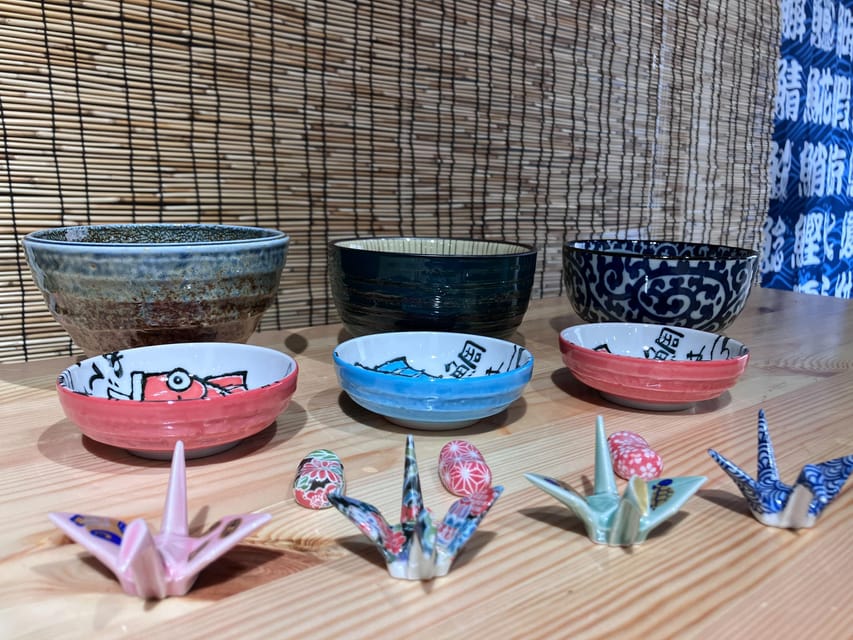
At $63 per person, the value depends on what you want from a food activity. You are paying for a professional chef, an English-speaking host, fresh ingredients, proper utensils, your own sushi, additional sushi from the chef, tea, soup, and a hands-on lesson in a central Tokyo location.
That is a fair package for someone who wants more than a meal. You leave with a basic method you can try at home, and several people have found the class practical enough to repeat the recipes later.
The price is less attractive if you mainly want to eat a large amount of sushi. This is a workshop, not an all-you-can-eat lunch, and extra food and drinks cost more. It also may not be the best use of money if you have no interest in preparing food and would rather spend the time at a sushi counter.
The market location adds convenience, especially if this is your first visit to Tsukiji. You can combine the class with market browsing without crossing Tokyo again. For a food-focused morning, the price makes sense.
Timing, stairs, and other practical details
The listed duration ranges from 90 minutes to four hours. That wide range reflects different booking options, especially those that include a market walk. Check the starting time and expected length before booking.
Do not schedule a tight appointment afterward. The activity may run beyond the scheduled end, and the operator asks you to give advance notice if you have another plan immediately afterward. Tokyo trains are reliable, but delays and a busy market area can still affect your arrival.
The classroom is on the third floor of a traditional Japanese building. There is no elevator, so you need to manage stairs comfortably. This is the most important physical detail to consider.
Wear something practical for a food workshop. The supplied information does not require a special dress code, but comfortable clothing and clean hands are sensible for a class that involves handling rice and fish.
Cancellation is free up to 24 hours before the activity for a full refund. You can also reserve and pay later, which helps if your Tokyo schedule is still changing.
Who should book this sushi class?
I would book this for a first-time visitor who wants a clear, hands-on introduction to Japanese food. It suits couples, families with older children, solo visitors, and small groups who enjoy learning by doing.
It is also a good pick if you are unsure about raw fish. One participant who did not usually eat raw fish still found the fresh sushi approachable, though you should check the ingredients carefully if you have allergies or strong dislikes.
Sushi fans will appreciate the knife demonstration and the chance to compare their pieces with the chef’s. Food photographers will like the traditional tableware and neat presentation, but the class is more useful if you take part rather than simply watch.
I would skip it if you need step-free access, a plant-based meal, or strict halal, kosher, or gluten-free preparation. I would also skip it if your schedule is so tight that a class running slightly late would cause trouble.
Final verdict: a useful and tasty Tsukiji lesson
This is one of those Tokyo activities that works because it combines place, food, and instruction. You make five pieces of sushi, learn how fish is prepared, see the chef’s technique, and eat the results with soup and tea.
The 4.9 rating from 506 reviews matches the strongest parts of the experience: friendly English guidance, patient teaching, fresh ingredients, small groups, and a chef who makes the process easy to follow. The stairs, food restrictions, variable duration, and limited inclusion of the market walk are real considerations.
Book it if you want to understand sushi from the inside and have enough time for a relaxed class near Tsukiji. If you only want a quick meal, spend the $63 at a sushi restaurant instead.
FAQ
How long does the sushi class last?
The activity can last from 90 minutes to four hours, depending on the option you book. Check the available starting times and duration for your selected option.
What sushi will I make?
You will make four different nigiri sushi and one maki sushi. The exact ingredients may vary, so report any allergies when you reserve.
Is the class taught in English?
Yes. An English-speaking host interprets and guides the class, working with the professional sushi chef.
Is a market tour included?
Market guidance is not included with the basic activity. Some booking options include a guided walk through Tsukiji, so check the details of the option you choose.
What food and drink are included?
Your sushi, additional sushi made by the chef, tea, and soup are included. Extra food and drinks are not included.
Can vegetarians or vegans join?
The activity does not accommodate vegetarian or vegan requests. It also does not accommodate halal, kosher, or gluten-free requests as standard.
Is the classroom wheelchair accessible?
No. The classroom is on the third floor of a traditional building with stairs only, and the activity is not suitable for wheelchair users or people with mobility impairments.
More Fish Market Walks in Tokyo
- Tokyo Sushi Making Class in Tsukiji with Professional Chef
★ 5.0 · 1,177 reviews - Tsukiji Fish Market Guided Tour and Sushi Making with Pro Chef
★ 5.0 · 775 reviews - Tokyo: Tsukiji Fish Market Food and Culture Walking Tour
★ 4.7 · 757 reviews - Tsukiji Fish Market: Street Food & Culture Walking Tour
★ 5.0 · 669 reviews
Just added around Tokyo
- Kawagoe Japanese Food Tour : Unagi Kaiseki and Sake near Tokyo★ 5.0 · 30 reviews
- Kawagoe 4hr Private Tour with Licensed Guide (Kawagoe Dep)★ 5.0 · 13 reviews
- Little EDO Sushi Making workshop in Kawagoe★ 5.0 · 18 reviews
- 【R34】Tokyo:Private Daikoku tour in Modified R34★ 4.9 · 92 reviews
- :Tokyo,Shibuya/ Pro Photography in Kimono / English-Friendly★ 5.0 · 26 reviews
- Tokyo:Celebrate Unique Japanese New Year Tradition Festivity★ 3.9 · 20 reviews
- Tokyo: Allstar Food Tour★ 4.7 · 29 reviews
- Tokyo: West-Side Cycling and Food Tour with Guide★ 5.0 · 37 reviews
Fish Market Tours, compared.
Tokyo Sushi Making Class in Tsukiji with Professional Chef
Our verdict →

Wakayama Cat Train, Seafood market, Hot Springs Tour
Our verdict →
Awesome Private Tour: Tsukiji, Asakusa, Shinjuku, Shibuya
Our verdict →Browse the lists this tour appears in