
Reviewed · WALKING TOURS
Osaka: Dark Side of Osaka Night Walking Tour
Osaka’s neon side is easy to find. Its harder stories take more work. This two-hour walk leads you through Shinsekai, Nishinari, and Tobita Shinchi, where old entertainment streets, working-class neighborhoods, and Japan’s largest red-light district sit close together. The result is a frank look at parts of urban life that most visitors never see.
I like the social history and the small local details, such as the meaning of a torii painted on a wall. I also like the guide-led pace, which leaves room for questions and for explaining sensitive subjects with care. The drawback is clear: some sights and topics may feel confronting, and this is not a suitable outing for children, wheelchair users, or anyone seeking a gentle evening walk.
Key points to know before you book
- Shinsekai begins the story: See a district planned in 1912 with Paris and Coney Island as models.
- Nishinari adds modern context: Learn how a working-class area has changed as budget visitors and urban explorers arrived.
- Tobita Shinchi is handled discreetly: Walk through Osaka’s largest red-light district without treating it like a sideshow.
- Jyanjyan Yokocho keeps the evening grounded: Its narrow food and shopping lane offers a nostalgic look at everyday Osaka.
- The guides make the difference: Jay, Rico, and Matt have been praised for clear explanations, warmth, and tact.
- The price is modest: At $25, the tour is good value if you want context and conversation rather than a long list of monuments.
Why this Osaka walk is different
This is not a standard route through Osaka’s temples, shopping arcades, and glowing signs. It is a guided walk through places shaped by poverty, labor, entertainment, stigma, and change.
That matters because Japan can seem almost too orderly from the outside. A tour like this shows that the country has its own class divisions, difficult social questions, and less polished corners. You are not simply looking at old buildings. You are trying to understand why these districts developed as they did and why they still feel different from Osaka’s more commercial areas.
The tour has a 4.9 rating from 89 ratings, with especially strong praise for the guides. Jay is described as warm, engaging, and friendly. Rico is valued for his clear explanations and travel tips. Matt is noted for his careful treatment of people and circumstances at the center of the tour. That pattern tells you what you are paying for: not entry tickets or transport, but interpretation.
More Walking Tours in Osaka
- Osaka: Hotspots & Hidden Gems Walking Tour Private or Group
★ 4.9 · 1,300 reviews - Osaka Local Foodie Walking Tour in Dotonbori and Shinsekai
★ 5.0 · 985 reviews - Osaka Bar Hopping Night Walking Tour in Namba (3 bars, 6 tastes)
★ 5.0 · 958 reviews
Starting beneath the giant penguin
The meeting point is beneath the Giant Penguin at MEGA Don Quijote Shinsekai. This is a practical place to meet because the store is a major landmark in the area, but Osaka’s evening streets can be busy and visually noisy. Give yourself enough time to locate the exact spot.
Your English-speaking guide will hold a GetYourGuide sign. The walk lasts two hours, and the route finishes at Tsutenkaku. There is no hotel pickup, so you need to reach the starting point yourself and arrange your own way onward.
Wear shoes you can walk in comfortably. The tour is outdoors and runs in different weather, so a light rain layer or other weather protection makes sense. The pace has been described as manageable, with enough time for questions, but this remains a walking tour through urban streets rather than a seated talk.
Shinsekai and the old New World
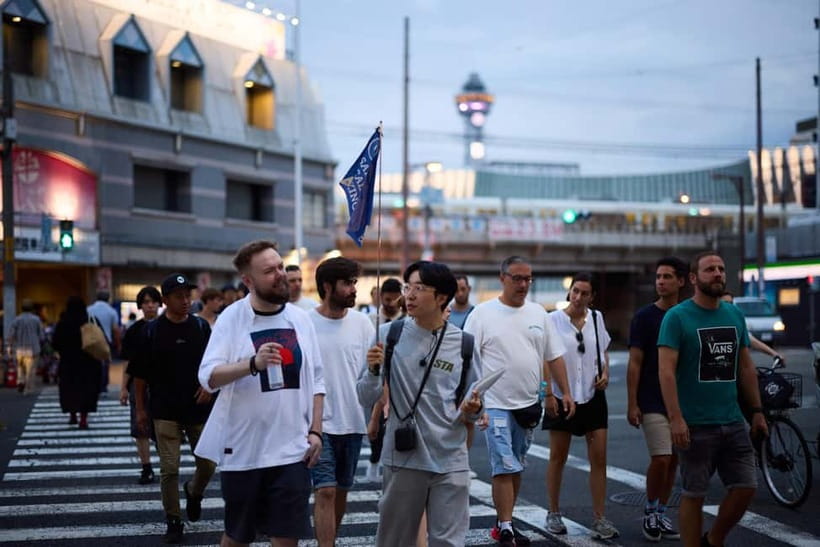
The first major stop is Shinsekai, whose name means New World. The district was created in 1912 as a modern entertainment zone, with its southern section influenced by Paris and its northern section modeled after New York’s Coney Island.
That origin gives Shinsekai an unusual character. It was once designed as a vision of modern leisure, yet much of its present appeal comes from its older, slightly worn atmosphere. The grand idea has faded, but the district still has a strong personality.
This is where Tsutenkaku Tower comes into the picture. The tower is one of Osaka’s familiar landmarks and a useful reference point during the walk. You will see it during the route, and the tour ends there, so it helps tie the different neighborhoods together.
I like this opening because it avoids presenting Shinsekai as simply old or poor. The district began as a forward-looking project. Its later story is about changing fortunes, changing tastes, and the way a place can keep its identity after its original purpose loses force.
Your guide may also point out how local streets function today. The information provided does not promise entry into attractions or a meal, so think of Shinsekai here as a place to read through the streets, signs, buildings, and public life rather than a ticketed sightseeing stop.
Nishinari, work, and the city’s rougher edge
The walk continues into Nishinari, in southern Osaka. This district is associated with day laborers and working-class residents, and its past gives the area a different feel from the department stores and major tourist avenues elsewhere in the city.
The useful part of this stop is the chance to hear how economic conditions shape a neighborhood. Nishinari is not presented as a frozen relic. In recent years, budget visitors and urban explorers have become more interested in its past and present, adding another layer to an already complicated place.
A guide can give you context that a map cannot. You may learn how Osaka’s social divisions developed, how people viewed the district, and how current interest changes the way outsiders see it. The strongest guides also connect local observations to wider questions about Japanese society.
This is the point where respectful behavior matters most. You are walking through a living neighborhood, not an open-air exhibit. Listen carefully, keep your voice down, and avoid treating residents or workers as part of the entertainment. The tour’s value depends on paying attention without turning hardship into a photo opportunity.
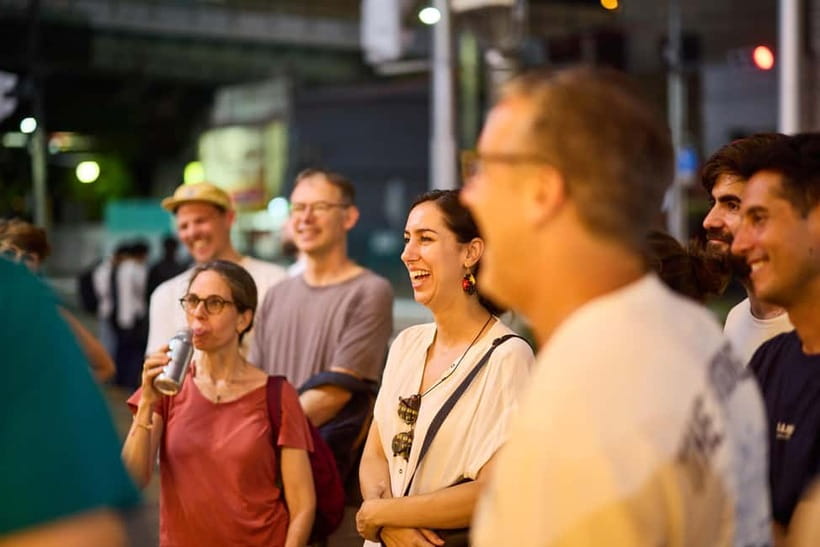
The subject matter can be uncomfortable. One visitor specifically cautioned that the tour is not for people with thin skin or young children. That is fair advice. The walk aims to explain social realities, not soften them for easy consumption.
Same trip, a completely different kind of day:
- Osaka Go Karting Tour with Funny Costume
★ 5.0 · 2,658 reviews - Osaka Castle: Museum and Tower Entry Ticket
★ 4.5 · 2,380 reviews - Osaka: Shinsekai Food Tour with 13-15 Dishes at 5 Eateries
★ 4.8 · 2,204 reviews - Osaka Food Tour: 13 Dishes at 5 Local Eateries
★ 5.0 · 2,149 reviews
Jyanjyan Yokocho and the taste of old Osaka
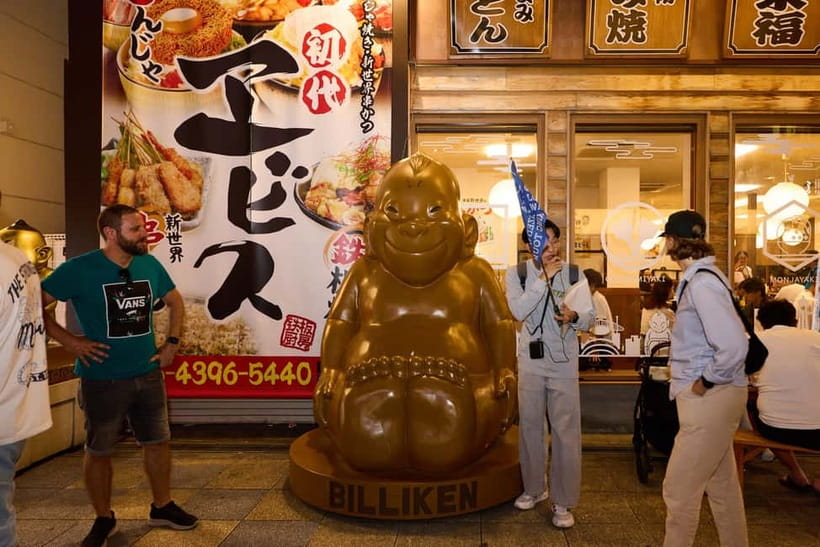
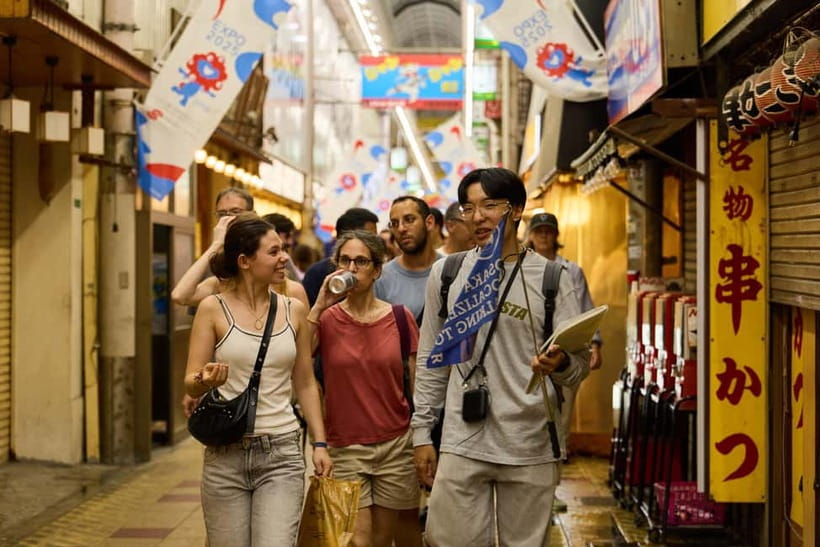
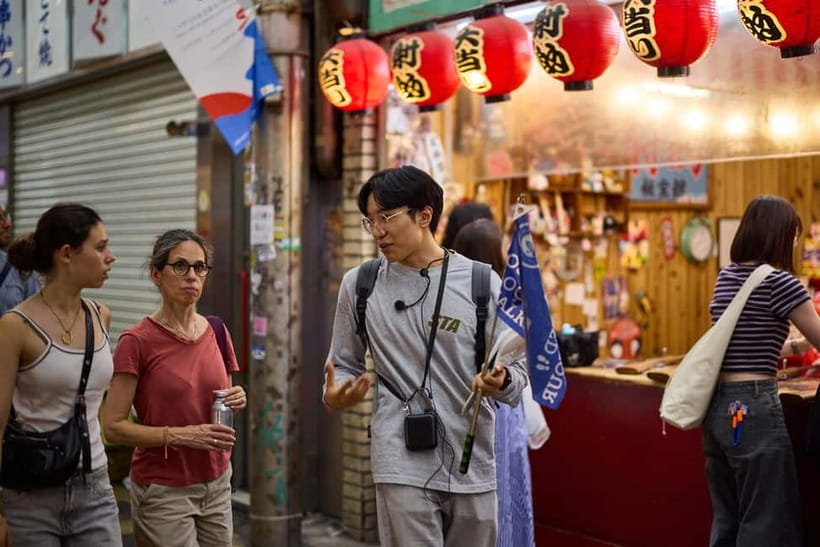
Jyanjyan Yokocho is a narrow shopping and dining street near Tsutenkaku. Its old-style eateries, bars, and small shops give the route a more approachable pause after the heavier discussion of labor and poverty.
The lane is known for its mid-20th-century atmosphere. Even if you do not stop to eat, it helps show how Shinsekai works as a neighborhood, not just as a place on a sightseeing map. Food, drink, small businesses, and local habits are part of the story.
Food and drinks are not included in the $25 price. That is worth noting, since you may want to budget for something after the walk. The route finishes at Tsutenkaku, and one guide also shared restaurant suggestions in Osaka, so you can ask for ideas if you plan to eat afterward.
I like the contrast here. The tour does not leave you with only grim facts. It shows the ordinary pleasures and everyday street life that keep a district functioning. Still, do not expect a food tour. You pay separately, and the focus remains on the guide’s explanations.
Tobita Shinchi and the limits of sightseeing
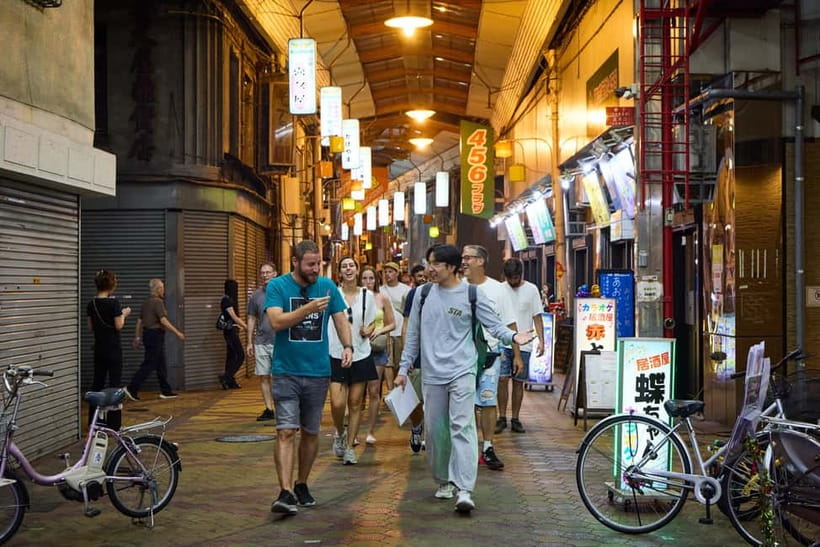
The final major subject is Tobita Shinchi, Osaka’s largest and best-known red-light district. Its history reaches back more than a century, and its buildings and operations have developed within a tightly controlled, discreet setting.
This is the most sensitive part of the walk. The point is not to encourage participation or to turn the area into a spectacle. Instead, the guide provides background on an aspect of Japanese urban culture that is usually kept out of ordinary sightseeing routes.
You should expect some scenes and subjects to feel confronting. The tour is restricted to people aged 18 and over, which reflects the nature of the material. It is also important to follow your guide’s instructions and local customs. The supplied information does not promise photography stops or access inside businesses, so do not treat this as a chance to photograph private activity.
The best reason to include Tobita Shinchi is context. Without explanation, you may notice only unusual architecture, signs, or the presence of people working behind carefully arranged storefronts. With a responsible guide, you can better understand how tradition, regulation, discretion, and social attitudes intersect.
The guides are the real value
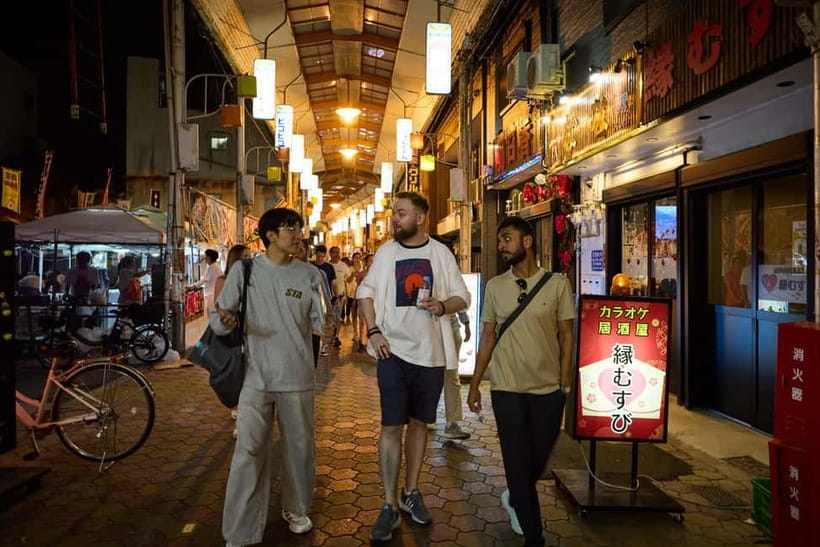
At $25 per person, the tour is priced below many longer Osaka activities. You are not paying for transport, food, admission, or a special venue. You are paying for two hours of guided interpretation in places that can be difficult to understand on your own.
That is good value if you want to ask questions. It is less compelling if you only want photographs or a quick list of sights. The walk covers several areas, but its main product is explanation.
The guide names that appear most often in the activity feedback are Jay, Rico, and Matt. Jay is praised for being attentive, friendly, and willing to expand on subjects that interest the group. Rico is noted for history, recent anecdotes, and restaurant advice. Matt is valued for a respectful approach and a strong grasp of Osaka’s modern history.
One useful detail is that Matt may speak quickly. That should not be a problem for confident English speakers, but it could make the tour harder if you are still building your listening skills. The activity is offered in English, and no other language is listed.
Small group sizes are not guaranteed in the booking details, but one outing had six people. A group of that size gives you a better chance to ask questions and hear the guide clearly. Larger groups may feel less personal, so check the available date and time if group size matters to you.
Small details that make the walk memorable
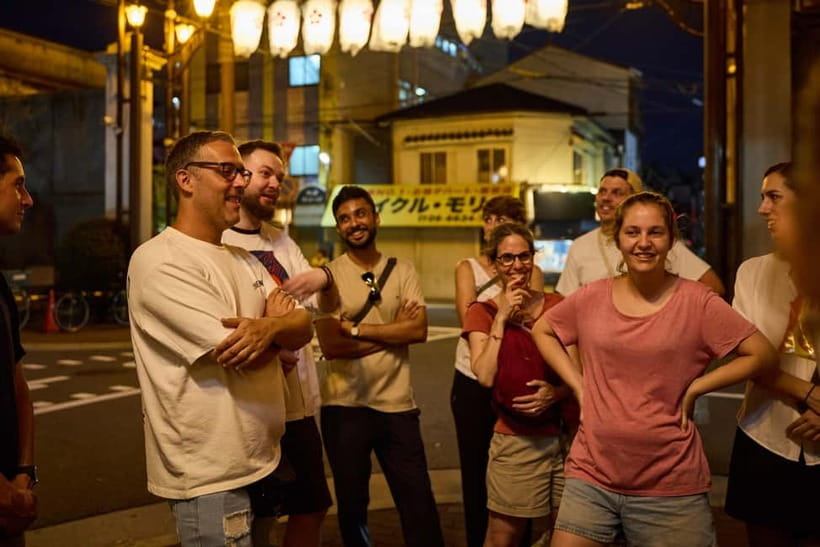
Some of the best information may be easy to miss if you only focus on famous sights. A guide has pointed out that a torii painted on a wall can mean please do not pee here. It is an odd, funny detail, but it also shows how local signs and customs communicate in ways a visitor may not understand.
That kind of observation is one reason I prefer this tour to walking alone through the same streets. You can see Tsutenkaku and Jyanjyan Yokocho without help. You are less likely to understand the social clues, local jokes, and historical references without someone explaining them.
The guides also share broader Osaka recommendations. These tips are not guaranteed as a formal part of the itinerary, but the route leaves room for conversation, and several guides have been singled out for useful suggestions beyond the walk itself.
Who should book this tour

I would choose this experience if you have already seen Osaka’s famous sights and want a more complicated picture of the city. It suits adults interested in modern history, social issues, urban change, and places that do not appear in a polished tourist brochure.
It is also a good match for curious solo visitors and couples who enjoy asking questions. The English format and guide-led structure make it easier to follow than attempting to research the districts while walking alone.
I would skip it if you want a relaxed food stroll, a family activity, or a route built around attractive views. The subject matter can be serious, the red-light district may make you uncomfortable, and the tour is not suitable for children under 18 or wheelchair users.
Smoking is not allowed, and the activity information also lists alcohol in the vehicle as prohibited, although this is a walking tour. The practical rules are simple: dress for the weather, wear good shoes, and respect the people and places you pass.
Should you book the Dark Side of Osaka walk?
Book it if you want the story behind Osaka’s streets, not just the bright signs. At $25, two hours with a thoughtful English-speaking guide is a fair price, especially when guides such as Jay, Rico, and Matt bring history, personal observations, and local advice to the route.
Go with an open mind and a respectful attitude. This is not a tour for shock value, and it should not be treated that way. Its strength is the chance to see Shinsekai, Nishinari, and Tobita Shinchi as real parts of Osaka, shaped by work, entertainment, hardship, tradition, and change.
You can cancel up to 24 hours before the start for a full refund, and reserve now while paying later. That flexibility helps if your Osaka schedule is still moving. If the themes sound interesting rather than merely sensational, this is one of the more useful evening walks you can add to your trip.
FAQ
How long is the Dark Side of Osaka Night Walking Tour?
The tour lasts two hours.
Where does the tour meet?
Meet beneath the Giant Penguin at MEGA Don Quijote Shinsekai. The guide will hold a GetYourGuide sign.
Where does the tour finish?
The walk finishes at Tsutenkaku.
What language is the tour offered in?
The tour is conducted in English with a live guide.
Is the tour suitable for children?
No. The activity is not suitable for children under 18.
What should I bring or wear?
Wear comfortable walking shoes and be prepared for different weather conditions. Food and drinks are not included.
Just added around Osaka
- Exclusive Sushi Making Experience with a Master Chef – Osaka Area★ 5.0 · 25 reviews
- Private Home-Style Cooking Class in Osaka with Local Mom Yoshiko★ 5.0 · 46 reviews
- Hidden Osaka – Yukaku Red Light Tour & Culinary Adventure★ 4.8 · 96 reviews
- Osaka: Walking Tour and Top Highlights★ 4.8 · 104 reviews
- Osaka: Private Ceramic Painting Workshop★ 5.0 · 13 reviews
- Pickleball in Osaka, Kobe & Kyoto with Locals!★ 4.7 · 80 reviews
- Eat Like a Local in Osaka – Private Custom Street Food Tour★ 4.3 · 33 reviews
- Osaka:SUMO BEATS SHOWCASE: Taiko Drum and Wagyu burger!★ 4.2 · 37 reviews
Walking Tours, compared.

Kyoto Geisha Walking Tour: Gion District & Hidden Gems
Our verdict →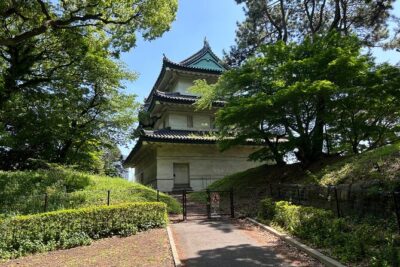
Imperial Palace and Shogun Historical Walking Tour
Our verdict →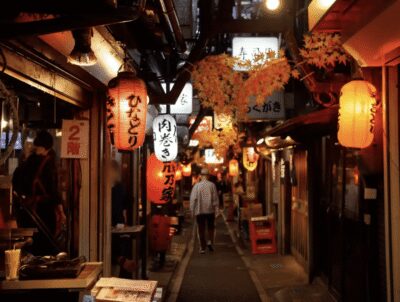
Shinjuku Local Bar and Izakaya Guided Walking Tour
Our verdict →

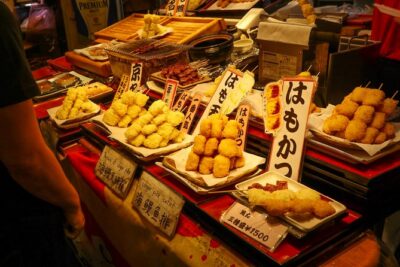
Nishiki Market Brunch Walking Tour (7 Tastings + Brunch)
Our verdict →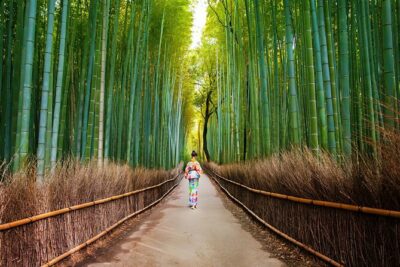
Kyoto Arashiyama Walking Tour: Bamboo, Monkeys, Gardens & Secrets
Our verdict →
Tokyo Castle & Imperial PalaceーShogun Walking Tour
Our verdict →Browse the lists this tour appears in