
Reviewed · WALKING TOURS
Hiroshima: Private City Highlights Walking Tour
Hiroshima’s past comes into focus one monument at a time on this private walking tour. You’ll move from the Peace Memorial Museum and the Atomic Bomb Dome to the city’s memorials, then continue toward 16th-century Hiroshima Castle with a guide who can explain the places that are easy to miss on your own.
I like the one-to-one format, which lets you stop for questions and adjust the pace. I also like the guides’ personal touch: Maria, Ali, Ihsan, and Wajid are praised for explaining difficult history with care, adding lesser-known landmarks, and even helping with local food or directions afterward.
The main drawback is simple: four hours on foot is a lot. The route covers plenty of ground, and heat, rain, or the emotional weight of the museum can make the morning feel long. Still, the private format gives you room to pause, shorten a section, or focus on what matters most to you.
Key points to know before booking
- Peace Memorial Museum takes about an hour, giving you time to see exhibits from August 6, 1945, rather than rushing through.
- The private guide makes a real difference, especially when you want context for monuments that can otherwise blur together.
- The route includes more than the famous sights, with guides sometimes adding schools, banks, gardens, and other places tied to Hiroshima’s past.
- Hiroshima Castle provides a useful change of mood, shifting the tour from wartime memory to the city’s earlier history.
- The pace is flexible, with stops for questions, drinks, ice cream, or local food depending on your guide and interests.
- English, Malay, Urdu, Hindi, and Punjabi guides are available, and the tour is wheelchair accessible.
Starting in Peace Memorial Park
Meet your guide at 1-2 Nakajimachō in Naka Ward. The tour begins in or near Hiroshima Peace Memorial Park, a fitting place to start because the park is not just a green open space. It is a carefully arranged memorial area, and each monument carries a particular meaning.
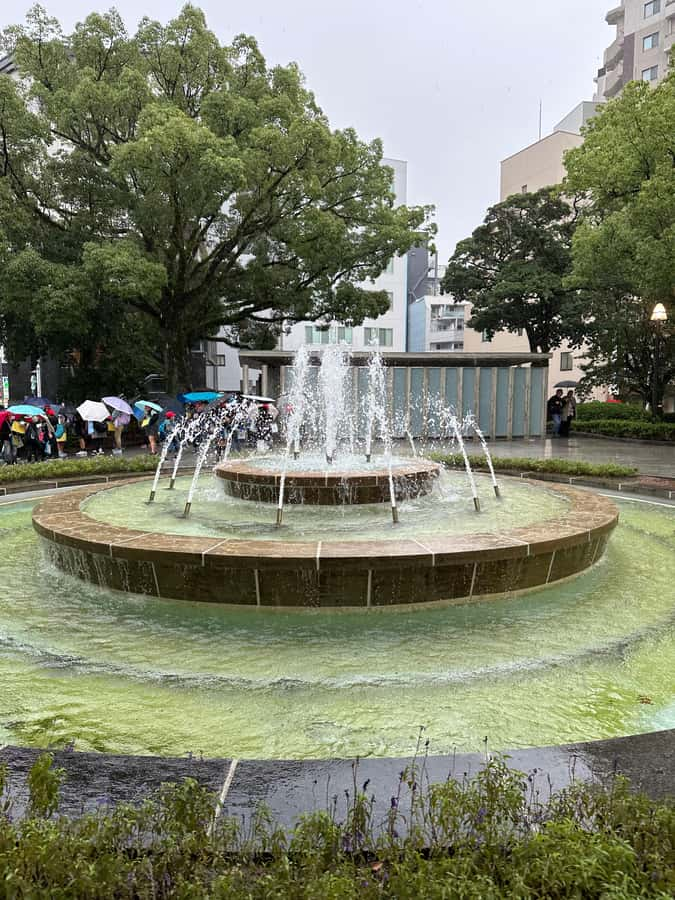
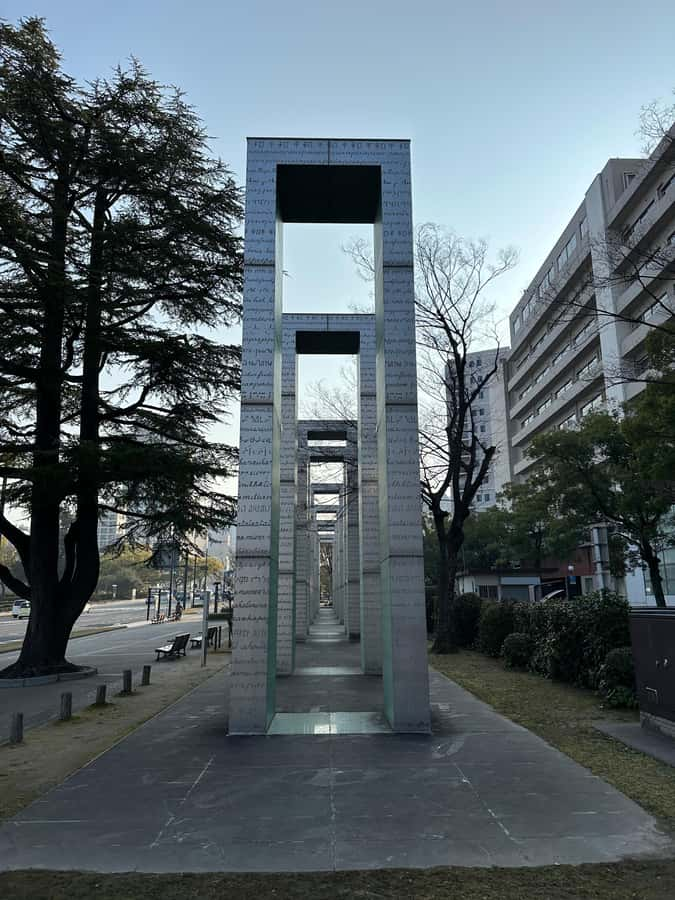
Your first stops are the Gates of Peace and the Prayer Fountain. These are short visits, but they help set the tone before the museum. A good guide will explain how the park’s memorials relate to one another, rather than treating each one as an isolated photo stop.
This early part is also useful for orientation. Hiroshima’s central sights are spread across walkable streets and park paths, and your guide helps you understand where you are before the more serious museum visit begins. If you have questions about the city before 1945, this is a good time to ask them.
More Walking Tours in Hiroshima
- Hiroshima Historical Walking Tour – Why A-Bomb was Dropped
★ 4.8 · 893 reviews - Hiroshima Peace (Heiwa) Walking Tour at World Heritage Sites
★ 5.0 · 872 reviews - Hiroshima City 4hr Private Walking Tour with Licensed Guide
★ 5.0 · 437 reviews
Spending an hour inside the Peace Memorial Museum
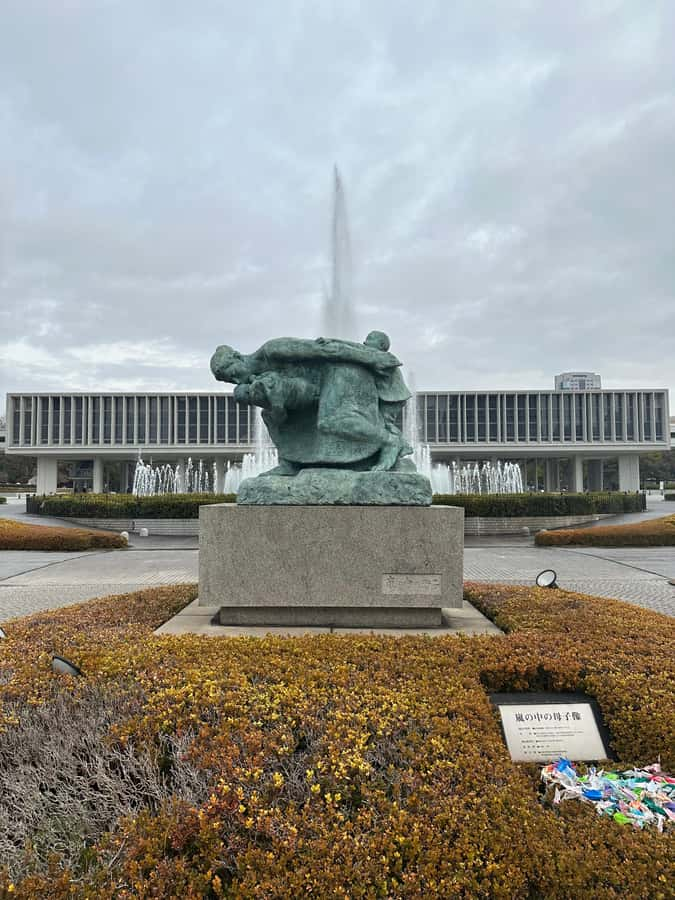
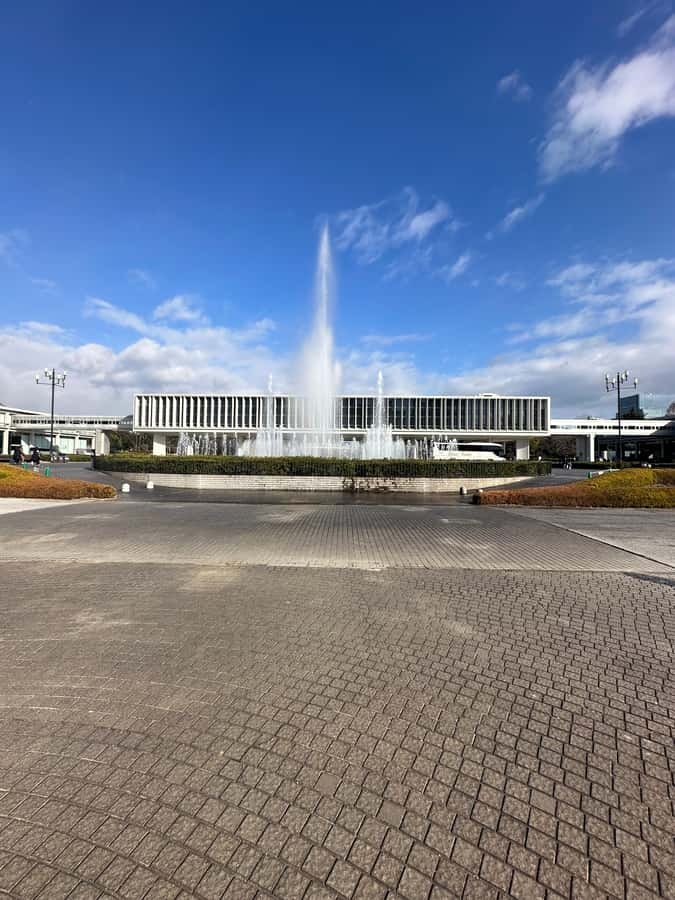
The Hiroshima Peace Memorial Museum is the emotional center of the tour. You have about one hour here, and admission is included in the price. The museum presents objects and records connected with the atomic bombing and its effect on Hiroshima.
Expect a quiet, serious experience. The museum itself is not a place for constant commentary, and one useful point raised by the experience is that much of the visit is silent and self-guided. Your guide can provide background before and after, point out important displays, and answer questions, but you should allow yourself time to take in the exhibits at your own pace.
An hour gives you a solid introduction, though it is not an unlimited museum visit. If you want to read every panel carefully, you may prefer to spend longer inside and trim another part of the walk. If you want a broad understanding of Hiroshima’s wartime story, the planned hour works well.
The strongest guides handle this section with restraint. Maria is praised for combining clear explanations with empathy, while Ihsan is noted for answering questions patiently and adding context to key exhibits. That matters here. The subject calls for facts, but it also calls for judgment about when to speak and when to let the museum speak for itself.
Understanding the memorials, not just photographing them
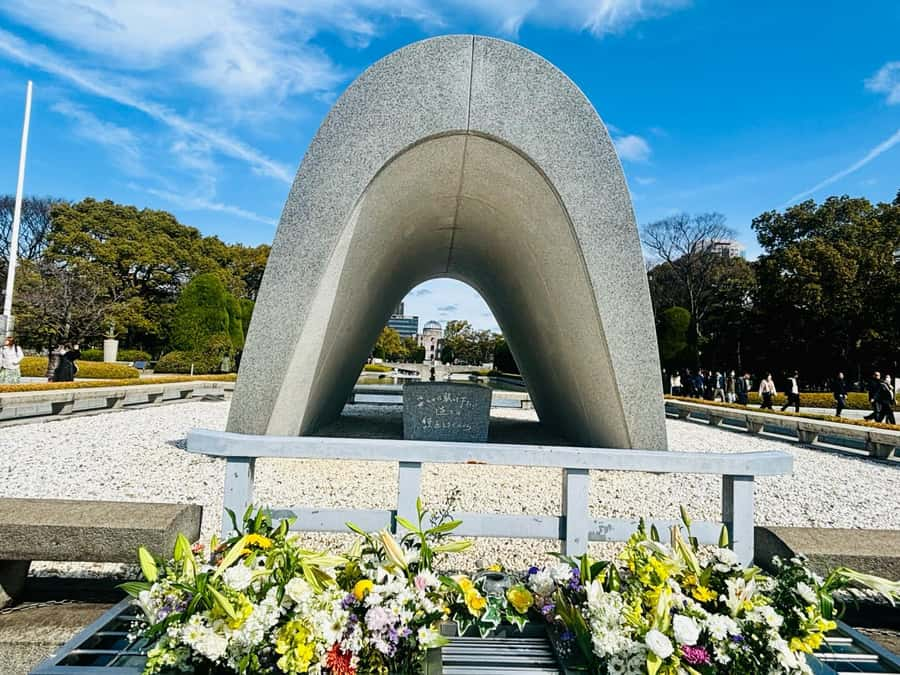
After the museum, the route returns to the park’s major memorials. At the Hiroshima Victims Memorial Cenotaph, the Flame of Peace, and the Korean Atomic Bomb Victims Cenotaph, your guide explains how each site remembers a different part of the bombing’s human cost.
The Korean memorial is especially valuable because it broadens the story beyond Hiroshima’s Japanese victims. A guide can help you understand why the monument is located in the park and why it belongs in any serious visit to Hiroshima.
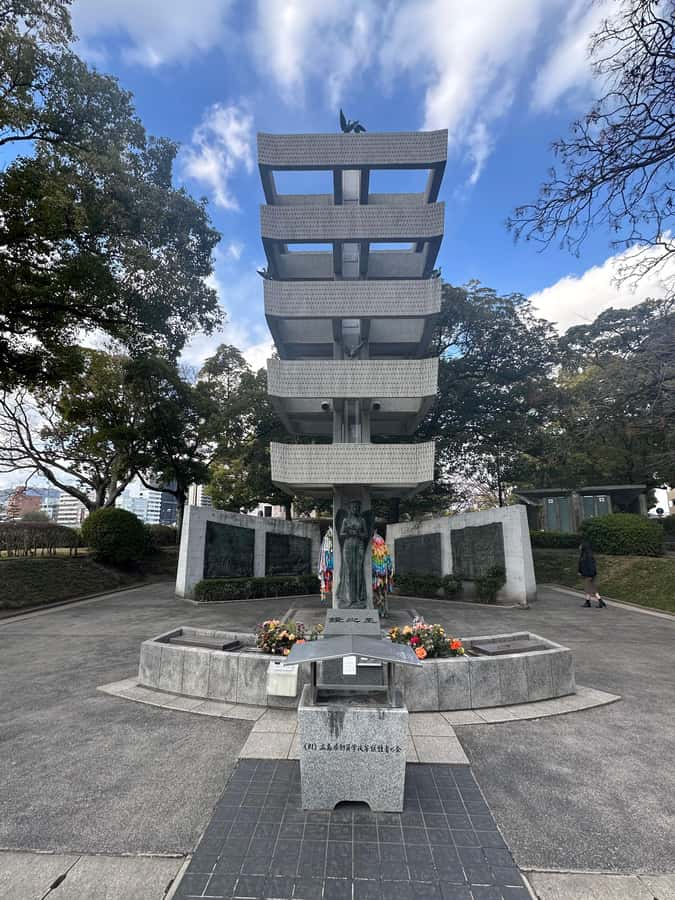
You’ll also see the Bell of Peace and the Children’s Peace Monument. The Children’s Peace Monument is linked to the memory of children affected by the bombing, and it often becomes one of the most moving stops for families. The Bell of Peace offers a quieter moment and a chance to consider the park’s continuing message of peace.
These stops are listed as short visits, generally between five and fifteen minutes. That sounds brief, but the walking route gives you time to ask questions and connect the monuments. Without that link, the park can feel like a series of separate markers. With a guide, the layout becomes a story.
Seeing the Atomic Bomb Dome up close
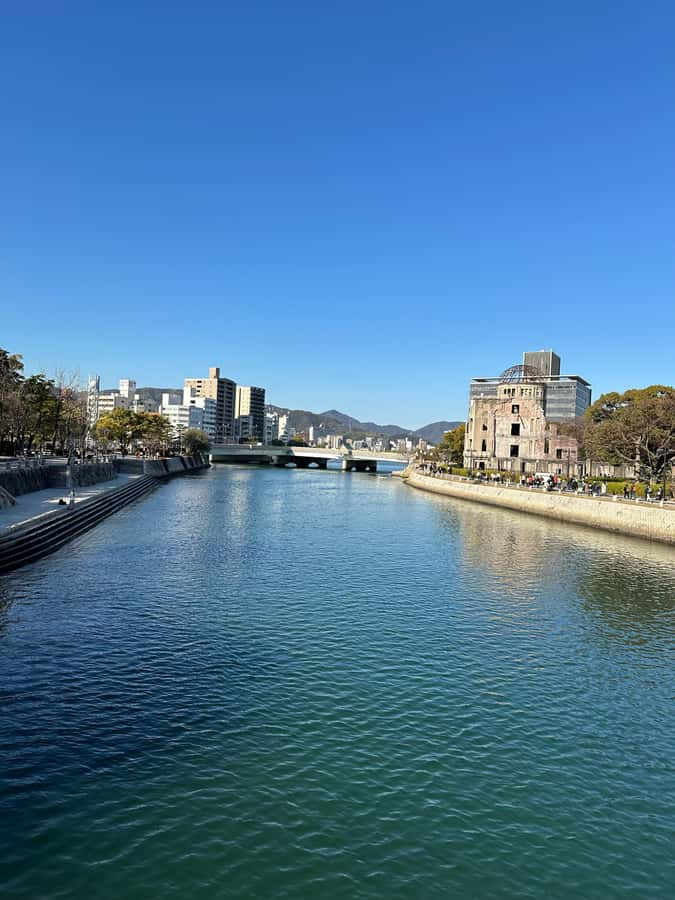
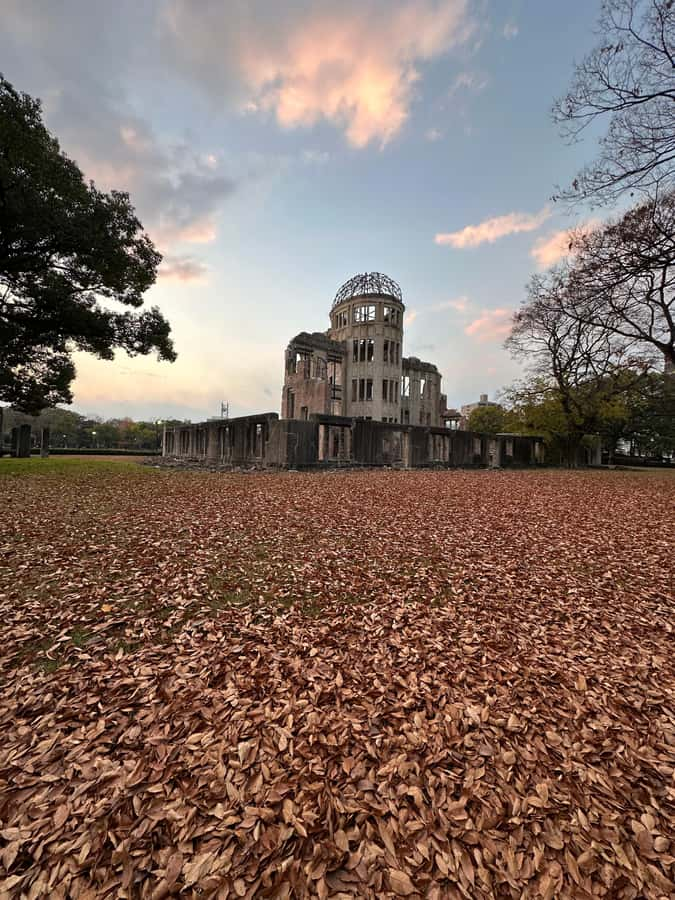
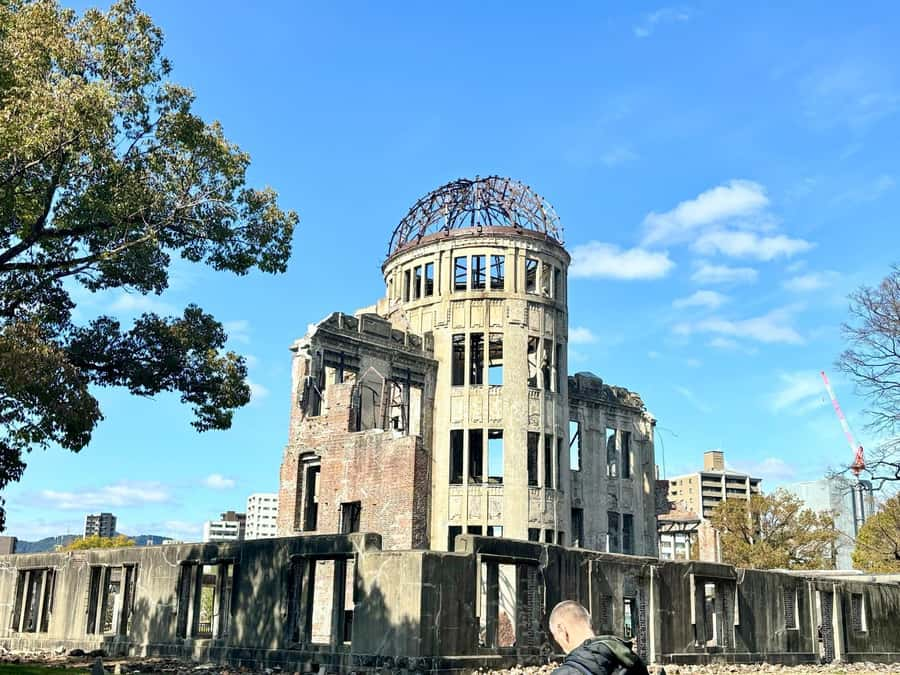
The Atomic Bomb Dome is one of Hiroshima’s most recognizable sights. Its damaged structure remains beside the river, a stark reminder of the destruction caused on August 6, 1945. The tour includes an entry ticket, although your guide’s role here is mainly explanation and orientation rather than a long interior visit.
Plan for about twenty minutes at the Dome. That gives you time to look from different angles, hear the story of the building, and take photographs. You should also expect this to be a reflective stop, not simply a landmark for a quick snapshot.
Several guides add nearby sites beyond the formal park route. Ali, for example, has taken visitors to places such as a school and a bank with direct links to the events of that day. These additions are important because they show how the bombing affected ordinary city buildings and daily life, not only major memorials.
The extra stops vary with the guide and the group. That is one of the advantages of booking privately, but it also means your exact route may not be identical to another group’s. Tell your guide early if you want more time at the Dome or if you are especially interested in the city’s reconstruction.
Same trip, a completely different kind of day:
- Peaceful Hiroshima & Miyajima UNESCO 1 Day Bus Tour
★ 5.0 · 5,309 reviews - Hiroshima: Hiroshima and Miyajima UNESCO Sites 1-Day Tour
★ 4.9 · 2,330 reviews - Hiroshima / Miyajima Full-day Private Tour with Government Licensed Guide
★ 5.0 · 1,298 reviews - Osaka/Kyoto: Hiroshima Miyajima Bus Tour & Shinkansen Ticket
★ 4.7 · 919 reviews
Walking on to Hiroshima Castle
After the Peace Park, the tour heads toward Hiroshima Castle. This part changes the subject from the atomic bombing to the city’s earlier political and cultural story. The castle dates to the 16th century, and the walk helps place modern Hiroshima within a much longer timeline.
You have about forty minutes for the castle area, including walking and a guided visit. The supplied details specifically describe a visit to Hiroshima Castle, but they do not promise a full interior tour every time. One group missed the inside because of a delayed train, while the guide still explained the castle’s history and adapted the ending.
That is worth keeping in mind if entering the castle is important to you. Ask about timing at the start, especially if your train arrives late or you have a fixed departure. Even without the interior, the castle adds balance to the day and prevents Hiroshima from being defined only by 1945.
The castle section is also a welcome change after the museum. You are still learning, but the subject is less emotionally heavy. The walk gives your mind a chance to reset while your guide continues to explain how Hiroshima developed.
What private guiding adds
The biggest strength here is the private format. You do not have to follow a large group’s pace or wait while strangers take photographs. You can ask direct questions, linger at a monument, or move on when you have had enough.
The guides also bring different personalities and areas of emphasis. Maria is repeatedly described as warm, flexible, and clear in English. Ali is praised for expanding the route beyond the main park. Ihsan is known for enthusiasm, humor, and detailed answers about Japanese culture and history. Wajid has taken extra time to recommend food and show places that might otherwise be missed.
The tour can also be practical in small ways. A guide has stopped for fresh orange juice or ice cream, helped with a pharmacy visit, and assisted with directions back to a hotel. Those touches are not guaranteed, but they show how a private outing can respond to your needs instead of running on a fixed script.
You should tell the guide what you want at the beginning. Families may need a gentler pace. History-minded visitors may want more time at the museum and Dome. Food-focused visitors can ask about Hiroshima-style okonomiyaki at the end, though food and drinks are not included.
Is four hours the right length?
Four hours is enough to cover the major stops, but the route is full. The listed timing adds up to several hours before counting the walking between sites, questions, photographs, and bathroom breaks. Some visitors have enjoyed longer versions of the tour, while another felt that four hours was a little too long.
I would treat the duration as a framework rather than a race. The private setup lets you ask to shorten a stop, and guides have shown flexibility when trains were delayed or weather turned unpleasant. Rain and humidity can make the walk more tiring, so comfortable shoes, water, and weather protection are sensible.
The tour is wheelchair accessible, which is a useful feature for anyone who needs step-free planning. Still, because this is a walking experience through a park and city streets, discuss your preferred pace and route with the guide when you meet.
Price, value, and who should book
At $90 per person, this is not the cheapest way to see Hiroshima. But the price includes a private guide, entry to the Peace Memorial Museum, entry to the Atomic Bomb Dome, and access to Peace Memorial Park. You are paying mainly for interpretation and flexibility, not transportation or meals.
For a solo visitor, couple, or small family, the value is strongest if you want to ask many questions and understand the connections between the sites. A large public tour may cost less, but it cannot usually give you the same control over timing or personal interests.
The tour also suits first-time visitors who have only one day in Hiroshima. It covers the essential memorial sites and adds Hiroshima Castle, giving you both the city’s wartime story and its older identity. If you already know the Peace Park well, you may prefer a narrower specialist visit instead.
Food is not included, and transportation is not included. The tour starts and ends at the same meeting point, so plan your onward route around 1-2 Nakajimachō rather than expecting a hotel drop-off.
Should you book this Hiroshima walking tour?
Book it if you want Hiroshima explained by a person who can connect the museum, memorials, city streets, and castle into one readable story. The strongest part is not simply seeing the Atomic Bomb Dome. It is understanding why the park contains so many different monuments and how Hiroshima rebuilt itself.
I would especially choose it for families, first-time visitors, and anyone who prefers conversation over an audio guide. Ask for your priorities at the start, carry water, and allow emotional space after the museum.
Skip it if you dislike four-hour walking routes or want to explore every museum display at a slow pace. In that case, visit the Peace Memorial Museum separately and spend the rest of the day at your own speed. For most people who want a thoughtful overview with room for personal questions, the private format makes the $90 worthwhile.
FAQ
How long does the Hiroshima walking tour last?
The tour lasts four hours. Starting times depend on availability.
Where does the tour start and finish?
You meet your guide at 1-2 Nakajimachō in Naka Ward, Hiroshima. The activity ends back at the same meeting point.
What is included in the price?
The price includes the private walking tour, guide, entry to Hiroshima Peace Memorial Museum, entry to the Atomic Bomb Dome, and entry to Hiroshima Peace Memorial Park.
Are food, drinks, and transportation included?
No. Food, drinks, and transportation are not included.
Which languages are available?
Guides are available in English, Malay, Urdu, Hindi, and Punjabi.
Is the tour wheelchair accessible?
Yes, the activity is listed as wheelchair accessible. Since the route lasts four hours and includes city walking, discuss your preferred pace with the guide.
More City Tours in Hiroshima
- Amazing Hiroshima: Private City Tour with a Local Guide
★ 4.3 · 32 reviews - 4 Hour Private Hiroshima City Walking Tour
★ 4.5 · 27 reviews - Tokyo: Private City Highlights Tour with Local Guide
★ 4.8 · 1,433 reviews - Tokyo: 3-Hour Bike or E-Bike City Highlights Tour
★ 4.8 · 435 reviews
Just added around Hiroshima
- Full Day Hiroshima and Miyajima Tour by Bullet Train from Kyoto★ 4.5 · 120 reviews
- Hiroshima Saijo Sake Tasting Tour with visit to 7 Breweries★ 5.0 · 104 reviews
- The Peace Memorial to Miyajima : Icons of Peace and Beauty★ 4.5 · 31 reviews
- Shore Excursion from Hiroshima Port : Private Tour in Hiroshima★ 5.0 · 17 reviews
- Okunoshima Rabbit Island Cycling Tour with Local Guide★ 4.5 · 17 reviews
- Hiroshima & Miyajima All-Inclusive Tour w/Licensed guide Pancho★ 5.0 · 54 reviews
- Private Full Day Hiroshima Tour★ 4.5 · 29 reviews
- Hiroshima Country Cycling: Explore Rural Life 1 HR from City★ 5.0 · 22 reviews
Walking Tours, compared.

Kyoto Geisha Walking Tour: Gion District & Hidden Gems
Our verdict →
Imperial Palace and Shogun Historical Walking Tour
Our verdict →
Shinjuku Local Bar and Izakaya Guided Walking Tour
Our verdict →

Nishiki Market Brunch Walking Tour (7 Tastings + Brunch)
Our verdict →
Kyoto Arashiyama Walking Tour: Bamboo, Monkeys, Gardens & Secrets
Our verdict →
Tokyo Castle & Imperial PalaceーShogun Walking Tour
Our verdict →Browse the lists this tour appears in