
Reviewed · SUMO EXPERIENCES
Nagoya: Grand Sumo Tournament Tour
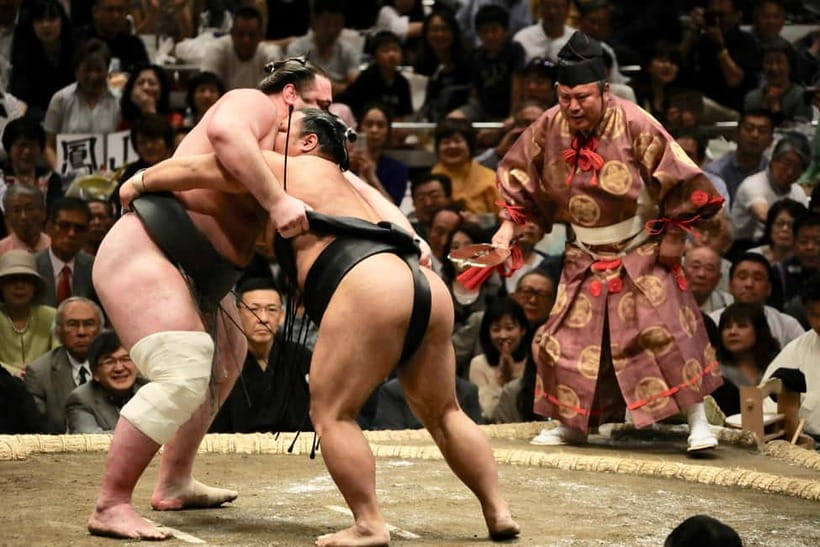
Nagoya’s grand sumo tournament is best enjoyed with a guide who can explain what your eyes are missing. This small-group tour puts you in the arena for about three hours of top-division bouts, with live commentary in your ear, wrestler profiles in English, and a cheering towel that gives you someone to support. The wrestling is the star, but the context makes the whole event easier to follow.
I especially like the 15:00 start, which saves you from sitting through hours of lower-division matches before the main action begins. I also like the optional Nagoya Castle walk, where guides such as Yuki, Keiko, Mari, and Yummi have helped visitors connect the tournament with the city’s past. The drawback is price: at $225 per person, this costs far more than simply buying a seat, and the value depends on how much you want expert help.
Key points to know before booking
- Top-division sumo from 15:00: Watch the bouts that carry the most energy and attention, rather than arriving too early and tiring out before the best matches.
- Live commentary through an earphone system: Your guide explains rules, rituals, wrestlers, and tactics as the action unfolds.
- English wrestler profiles: A photo pamphlet helps you identify the men entering the ring and follow their records and backgrounds.
- A personal cheering towel: You are given a towel for a particular wrestler and shown when to raise it during the bout.
- Nagoya Castle before the arena: The optional walking tour covers Tokugawa history, castle design, defense, and the ornate Honmaru Palace.
- Chair S or Chair A seating: You receive a proper arena seat, but hotel transfers and other transport are not included.
Why the 15:00 start makes sense
A full sumo tournament day begins well before the top division. Lower-ranked wrestlers compete earlier, but this tour starts viewing at 15:00, when the top division takes over. You then watch roughly three hours of the bouts that most visitors hope to see.
That timing is practical. Sitting in an arena for a very long stretch can wear you down, especially if you are still learning the sport. The main matches bring more ceremony, stronger wrestlers, louder support, and a clearer sense of occasion. Starting at 15:00 lets you save your attention for the part of the tournament with the greatest impact.
You will watch from a Chair S or Chair A seat. The exact seat position matters to your view, but either category gives you a standard chair rather than requiring you to sit on the floor. The supplied information does not promise a specific row or section, so you should think of the seating category as a useful guide to comfort and position, not a guarantee of a particular sightline.
The tournament itself is not just a series of quick shoves. Each bout includes formal gestures, preparation, and a sudden burst of movement. A match can be over in seconds, yet the ceremony around it helps explain why sumo feels so different from a normal sporting event.
More Sumo Experiences in Nagoya:
- Tokyo: Sumo Show Experience with Chicken Hot Pot and a Photo
★ 4.8 · 6,678 reviews - Tokyo: Sumo Show and Dining Experience
★ 4.8 · 2,742 reviews - the SUMO show
★ 5.0 · 1,960 reviews
The live commentary is the main reason to pay more
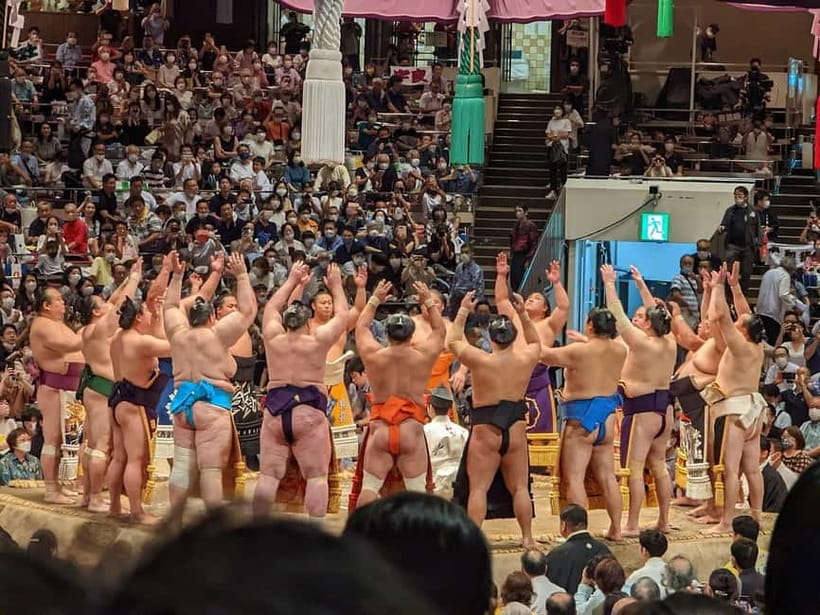
Sumo is easy to watch and surprisingly hard to understand at first. The wrestlers enter, salt may be thrown, feet are stamped, and the bout may end before you work out who had the advantage. A guide bridges that gap.
This tour uses an earphone guide system, so you can hear the English commentary even when the guide is not standing right beside you. That matters in an arena. A group gathered around one guide would block views and make it difficult for everyone to catch each explanation. With the headset, you can keep watching the ring while listening.
The commentary is delivered in real time. Your guide can point out the wrestler, explain what a movement means, and help you understand why a particular bout matters. That is more useful than receiving a lecture before the tournament and trying to remember everything later.
The guides bring different personalities to the afternoon. Keiko has been praised for her energy and love of sumo. Yuki has been described as friendly, enthusiastic, and especially good at explaining both the castle and the wrestlers. Mari has encouraged groups to support particular favorites, while Yummi and Sunny Yoko have also guided visitors through the rules and traditions.
Your guide will not simply recite facts. The cheering element adds some noise and spirit to the experience. You are given a towel linked to a particular wrestler, then shown when to use it. Having a person to support gives the bouts a clear personal angle. Instead of watching two unfamiliar athletes, you have a reason to care about the next result.
The wrestler pamphlet turns names into people
The English pamphlet is one of the tour’s most useful extras. It includes photographs and profiles of the wrestlers, allowing you to identify who is entering the ring and follow along as the bouts continue.
That sounds simple, but it solves a real problem. Sumo wrestlers can be difficult to distinguish when you are seeing them for the first time, and their ring names may not be familiar. The guide walks you through the pamphlet during the fights, adding context at the moment you need it.
You also receive a sumo booklet that covers the sport more broadly. Together, the pamphlet and booklet give you something to read during pauses and a reference to keep after the tournament. These materials are especially helpful if this is your first live sumo event or if you know the sport mainly from short clips.
The guide can also explain the small details that are easy to miss: the rituals before a bout, the importance of rank, the rules behind a winning position, and the traditions surrounding the ring. You do not need prior knowledge. The experience is designed to make the action readable as it happens.
Nagoya Castle gives the afternoon a strong opening
The optional Nagoya Castle walking tour adds a second experience before the arena. Nagoya grew around the castle built by the Tokugawa clan in the early 17th century, after that family secured control of Japan for nearly three centuries.
Your guide explains the political setting behind the construction. You will hear how the Tokugawa clan dealt with feudal lords who had once opposed it, and how the castle helped control the region. That background makes the building more than a photogenic stop.
The castle tour also covers construction methods and military purpose. You learn how the design worked as a fortress, including the ways its structure could slow or confuse an attacker. This is a useful contrast with the polished beauty of the site. Japanese castles were impressive buildings, but they were also instruments of power and defense.
The Honmaru Palace is a major visual reward. Its design uses valuable hinoki cypress wood, decorated metal fittings, and detailed artwork on walls, ceilings, and sliding doors. Take time to look closely at these surfaces. The palace is not just a quick backdrop for photographs; its craftsmanship gives you a better sense of the status and taste associated with the Tokugawa rulers.
The castle portion is optional, so you should confirm how it fits with the day’s schedule when booking. If you mainly want sumo, you can focus on the arena. If you want a fuller introduction to Nagoya, the castle provides a worthwhile historical frame.
A few more Nagoya half-days worth comparing
- Ghibli Park 1-Day Bus Tour from Nagoya
★ 4.5 · 277 reviews - Hiking the Historic Nakasendo Trail [1 Day Tour from Nagoya]
★ 5.0 · 104 reviews - Nagoya Highlight Tour guided by a friendly local
★ 5.0 · 86 reviews - Nagoya: Japanese Traditional Sweets making and Tea Ceremony
★ 4.9 · 76 reviews
Getting there from Osaka or Kyoto
Nagoya is a convenient add-on from the Kansai region. The stated travel time is about 50 minutes by train from Osaka and 34 minutes from Kyoto, making the tour possible as a long day out from either city.
The activity begins at Meijo Line Nagoyajo Station, stop M07. Meet at Exit 7 on the ground level, where the guide will hold a recognizable signboard. The tour ends back at the meeting point.
You need to arrange your own travel to Nagoya, and hotel pickup and drop-off are not included. Build in enough time to reach the station without rushing. Japan’s rail system is efficient, but a connection delay or wrong platform can create needless stress before a fixed-time event.
Comfortable shoes are important. The castle portion involves walking, and you will also spend time moving through the station and arena areas. This is not a hotel-to-seat excursion, so plan for a day on your feet.
Is $225 a fair price?
At $225 per person, this is a premium experience. The ticket alone is not the entire product. You are paying for a Chair S or Chair A seat, an English-speaking sumo guide, the earphone system, wrestler profiles, a sumo booklet, a cheering towel, and the optional castle walk.
The value is strongest for a first-time visitor who wants to understand the sport rather than simply watch it. Without help, you can still enjoy the spectacle, but you may miss why the rituals matter or fail to recognize the wrestlers. The live explanations turn a fast and unfamiliar event into something you can follow.
The price is harder to justify if you already know sumo well, speak Japanese, or only want to spend a short time in the arena. One review specifically raised concern that the guide service greatly increased the cost. That is a fair criticism. The extra money buys interpretation and organization, not a longer tournament session or hotel transport.
For many visitors, the strongest value comes from combining two difficult-to-plan pieces in one afternoon: the castle visit and the top-division tournament. If you would otherwise book a castle guide and struggle to understand the arena on your own, the package makes more sense.
Who will enjoy this most?
I would recommend this tour to anyone attending live sumo for the first time, especially if you want to understand what is happening rather than wait for the biggest wrestlers to collide. Families and mixed-interest groups may also appreciate the guide, since the profiles and explanations give non-specialists a way into the sport.
It suits visitors staying in Osaka or Kyoto who want a focused day trip to Nagoya. It also works well for people who enjoy Japanese history, since the castle section explains politics, architecture, and military design before the sporting event.
You may want to skip it if your budget is tight or if you prefer to plan every part of a day independently. Sumo tickets and local transport can be arranged separately, though you would lose the live commentary, printed profiles, towel, and guided castle experience.
The small-group format is another advantage. It should feel more personal than a large sightseeing departure, and the earphones help everyone follow along. Still, the exact group size is not stated, so do not book expecting a private tour.
Small details that improve the day
Meet at the station early enough to identify Exit 7 and the signboard without confusion. The meeting point is specific, but Nagoya’s transport network can still feel unfamiliar if you are arriving from another city.
Keep the wrestler pamphlet nearby once the bouts begin. The guide will refer to it as the afternoon progresses, and using it actively is better than treating it as a souvenir.
Take the cheering towel seriously. It is a small prop, but it gives the group a shared task and adds energy to the arena. You do not need to know every rule to join in.
Wear comfortable shoes and avoid planning another demanding activity immediately afterward. The castle walk, station connections, and several hours at the tournament make this a full afternoon.
The tour allows cancellation up to 24 hours before departure for a full refund, and you can reserve now and pay later. Those terms offer some planning flexibility, though you still need to arrange your own transport to the meeting point.
Should you book the Nagoya sumo tour?
Book it if you want your first grand sumo tournament to feel understandable, personal, and well organized. The best features are the real-time English commentary, the wrestler profiles, and the cheering towel. The optional Nagoya Castle visit adds genuine value for anyone interested in the city’s origins and Tokugawa history.
Skip it if you are mainly shopping for the cheapest available seat or already know enough Japanese and sumo to follow the action alone. At $225, this is a guided interpretation package, not a basic ticket.
For most first-time visitors, I think the guide makes the difference. You will see the same ring either way, but here you have names, stories, rituals, and a favorite wrestler to support when the next bout begins.
FAQ
Where does the Nagoya sumo tour meet?
The meeting point is Meijo Line Nagoyajo Station, stop M07, Exit 7 on the ground level. The guide will be holding a recognizable signboard.
Where does the tour end?
The activity ends back at the meeting point at Nagoyajo Station.
How long do I watch the sumo tournament?
You watch the top-division bouts for about three hours, beginning at 15:00.
What type of sumo seats are included?
The tour includes either Chair S or Chair A seats at the tournament.
Is the Nagoya Castle visit required?
No. The Nagoya Castle walking tour is optional.
Does the tour include an English-speaking guide?
Yes. The tour is conducted in English, with real-time commentary from the guide.
What items do I receive during the tour?
You receive a pamphlet with wrestler photos and profiles in English, a sumo booklet, and a cheering towel for a particular wrestler.
Is hotel pickup included?
No. Hotel pickup and drop-off are not included, so you need to reach the meeting point independently.
Just added around Nagoya
- Kimono Rental and Tea Ceremony Experience in Inuyama★ 5.0 · 15 reviews
- Gifu Samurai Sword Town;Japanese Damascus Knife Making Experience★ 5.0 · 27 reviews
- Magome & Tsumago Nakasendo Full-Day Private Trip with Government-Licensed Guide★ 5.0 · 20 reviews
- Knife Making Experience in Samurai Sword Town★ 5.0 · 29 reviews
- Nagoya: Toyota Commemorative Museum Guided Tour★ 4.7 · 22 reviews
- Nagoya Private Custom Tour with Local Guide★ 5.0 · 15 reviews
- Nagoya: Traditional Japanese Sweets-Making Workshop★ 4.6 · 14 reviews
- Nagoya: Customized Private Tour★ 4.6 · 15 reviews
Sumo Experiences, compared.
Sumo Show Experience with Chicken Hot Pot and a Photo
Our verdict →
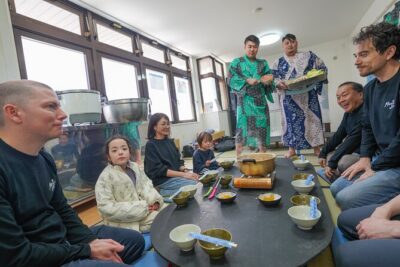
Authentic Sumo Experience in Tokyo: Enter the Sanctuary
Our verdict →

Browse the lists this tour appears in