Reviewed · PRIVATE
Treasures of Kyoto: Geishas & Traditions Private Tour
Gion’s narrow lanes tell a better story than a checklist of famous sights. On this private walk, you move from the statue of kabuki founder Izumo no Okuni to old banquet streets, Shinto shrines, Buddhist temples, and the lanes around Yasaka Shrine. The focus is geisha culture and Kyoto tradition, not just taking photos outside pretty buildings.
I like the private format, which lets you ask about customs, religion, and daily life without waiting for a large group. I also like the compact route: in 2.5 hours, you cover a surprising amount of eastern Kyoto on foot, with guides such as Ted, Guia, Maha, Kako, and Shohei bringing different local knowledge and personalities.
The main consideration is the pace. This is a walking tour with steps, uneven streets, and several short stops, not a leisurely cafe outing. You also pay separately for food and drinks, and no hotel pickup is included.
Key points to know before booking
- Gion is the main attraction: You walk through traditional streets tied to geiko and maiko culture, rather than visiting a staged performance.
- A private guide changes the experience: Your party can ask questions, slow down for photos, or focus more on religion, theater, or local customs.
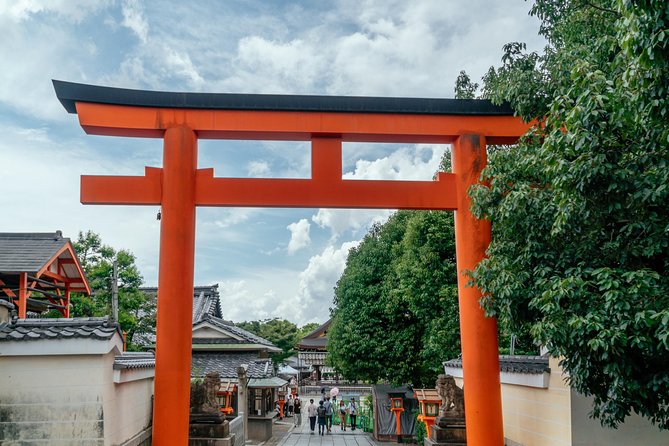
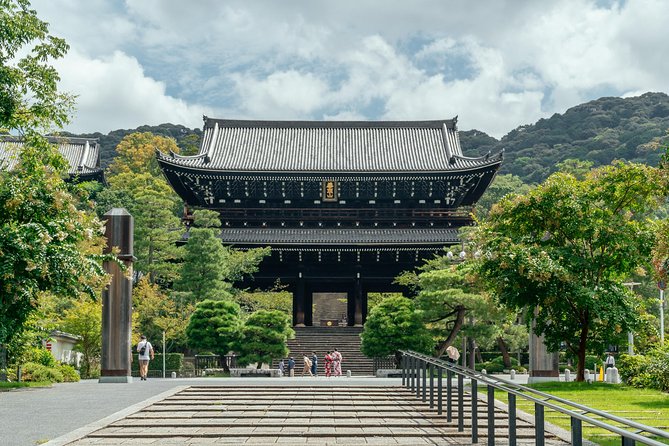
- The route packs in eleven stops: Minamiza Theatre, Tatsumi Daimyojin Shrine, Chion-in, Maruyama Park, Yasaka Shrine, and Nene-no-Michi all fit into one short walk.
- Expect a moderate physical effort: The route includes walking between neighborhoods and steps near Chion-in, so comfortable shoes matter.
- The price works best for a small group: At $135.45 per person, the value improves when you use the private format to ask detailed questions and share the cost within your party.
- The ending is near Yasaka-no-To: The tour finishes in the Yasaka Kamimachi area, with a local cafe nearby for anyone who wants to continue the conversation over a drink.
Why this short Gion walk works well
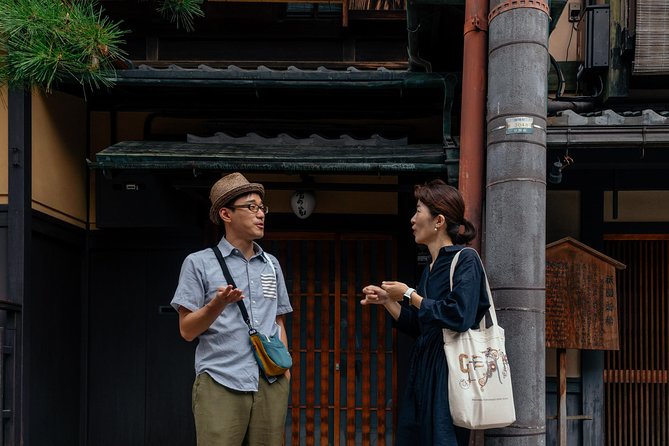
Kyoto can be hard to read at street level. A quiet lane may lead to a working religious site, a theater with centuries of tradition, or a private entertainment district where respectful behavior matters. This tour gives you a person who can explain those changes as you walk.
The route is especially useful if you have only a short time in Kyoto. It does not try to cover the whole city. Instead, it concentrates on Gion and the eastern side of the old capital, where theater, religion, gardens, and geisha culture sit close together.
That concentration is the tour’s strength. You are not spending half the afternoon on a bus. You are walking from one point to the next, seeing how the neighborhoods connect. The private setting also gives you room to ask the questions that often get skipped on a standard group outing.
Guides vary by date. Names attached to past tours include Ted, Guia, Maha, Kako, Shohei, and Ahmed. The strongest feedback centers on guides who explain Kyoto in a warm, conversational way, answer children’s questions clearly, and adjust the discussion to the interests of the group. That flexibility matters more here than a memorized speech.
A few more Kyoto half-days worth comparing
- PERFECT KYOTO 1-Day Bus Tour
★ 5.0 · 13,518 reviews - Kyoto: Fushimi Inari, Kinkakuji, Bamboo Grove 1 Day Bus Tour
★ 4.8 · 4,316 reviews - Kyoto: Tea Ceremony in a Traditional Tea House in Kiyomizu
★ 4.9 · 3,519 reviews
Starting with kabuki at Izumo no Okuni
The walk begins near the statue of Izumo no Okuni, the woman credited with creating kabuki theater. This is a smart opening because it places Kyoto’s performing arts in the street rather than inside a museum.
You spend about 20 minutes here. Your guide can use the statue to explain why theater became such an important part of the district and how entertainment shaped the area around the Kamo River and Gion.
This stop is free and easy to photograph. It also gives you a useful reference point before entering the more traditional lanes. If you know little about kabuki, ask your guide to connect Okuni’s work with the Minamiza Theatre nearby.
Minamiza Theatre and Kyoto’s old stage tradition
Minamiza Theatre has roots reaching back to the early Edo period. The visit is an outside stop, with about 20 minutes to look at the building and discuss its place in Kyoto’s theater culture.
Do not expect a theater performance to be included. The value here is context. Your guide can explain why this particular theater matters and how the performing arts helped shape the identity of the surrounding district.
This is also one of the better stops for visitors who want more than geisha photographs. Kyoto’s traditional culture includes theater, dance, music, religious practice, and formal hospitality. Minamiza gives you a wider frame for understanding the neighborhood.
Gion Shinbashi and the world of geiko and maiko
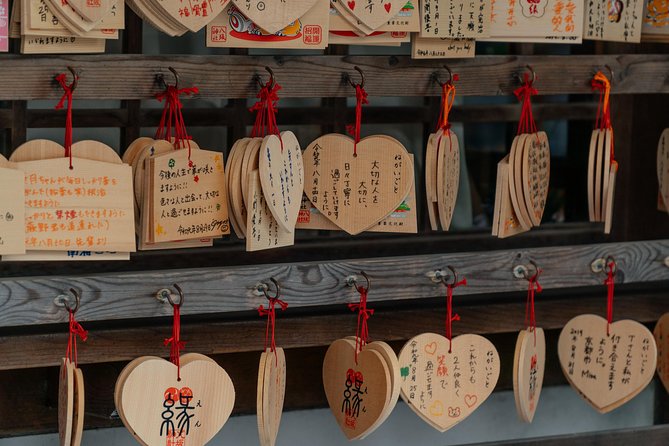
The route then enters Gion, including the Shinbashi area and streets south of Shijo. Gion Shinbashi has protected traditional business buildings, while the area south of Shijo has protected historic scenery. The old wooden facades are not simply decorative. They reflect a district where traditional businesses still shape the streetscape.
You spend only about 10 minutes in the general Gion area, followed by time on Shinbashi Dori. There, you stand outside traditional banquet buildings and learn how geisha entertainment worked. In Kyoto, geisha are often called geiko, while younger apprentices are called maiko. Your guide can help explain the difference and discuss the training, work, and customs connected with these roles.
This is an important place for respectful sightseeing. The tour does not promise a meeting with a geiko or maiko, and you should not treat the neighborhood like a stage set. You might see women dressed in geisha or maiko clothing, but clothing alone does not tell you whether someone is a working performer or a visitor in costume.
The best part of this section is the explanation of what you cannot see from the street. A closed door, a simple entrance, or a traditional building may have a long working history. A private guide can help you understand the setting without asking you to intrude.
More Private-Only Departures in Kyoto:
- Fushimi Inari Hidden Hiking Tour (Private Option Available)
★ 5.0 · 1,750 reviews - Private Kyoto Tour with a Local, Highlights & Hidden Gems, Personalised
★ 5.0 · 1,543 reviews - Kyoto 6hr Private Tour with Government-Licensed Guide
★ 5.0 · 1,369 reviews - 10 Must-see Spots in Kyoto One Day Private Tour (up to 7 people)
★ 5.0 · 1,108 reviews
Tatsumi Daimyojin Shrine and Kyoto’s blended faiths
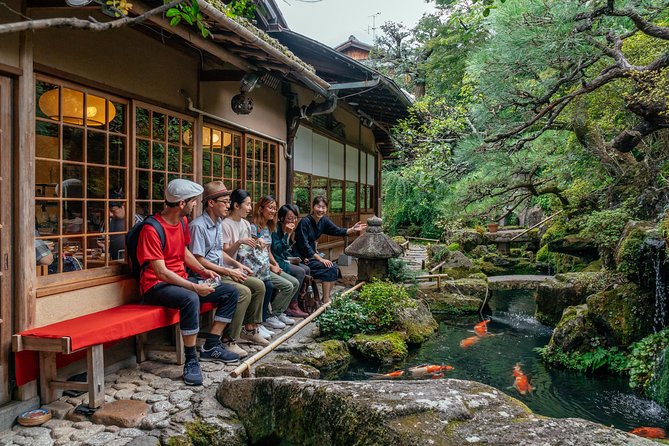
Tatsumi Daimyojin Shrine receives about 20 minutes, making it one of the longer stops. Here, the discussion turns to Japanese religion, especially the relationship between Shinto and Buddhism.
That topic can be confusing if you approach it with a strict Western division between religions. Your guide can explain how Shinto customs and Buddhist practices have existed side by side in Japan, and how that mixture appears in shrines, temples, festivals, and everyday habits.
This stop adds balance to the geisha theme. You are not only hearing about entertainment districts. You are also learning how people understood place, ritual, protection, and community. Guides such as Ted and Guia were especially praised for explaining these customs in a clear and approachable way.
Chion-in, steps, and a wider view
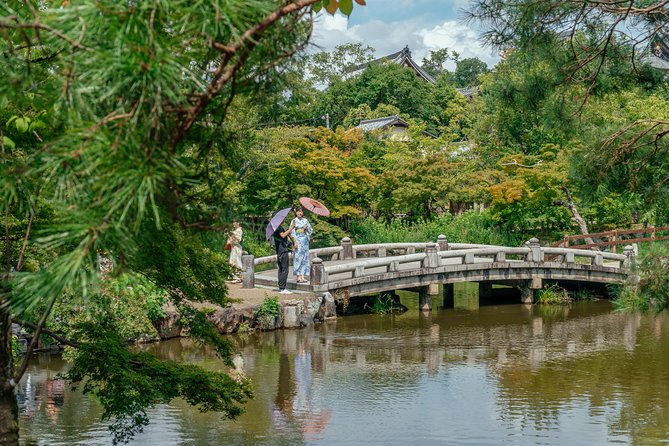
At Chion-in Temple, the walk includes steps and a look toward the temple grounds. The planned stop is about 10 minutes, but the physical effort may feel greater than the time suggests.
This is where the moderate fitness requirement matters. The route is not described as strenuous, but you should be comfortable walking through urban streets and going up steps. Wear shoes with a firm sole, particularly if the weather is wet.
The reward is a change of scale. The narrow Gion streets give way to temple architecture, open grounds, and a higher viewpoint. You may not have time for a full temple visit, so think of Chion-in as a focused exterior stop rather than a complete exploration of the complex.
Maruyama Park and Yasaka Shrine
From Chion-in, you walk toward Maruyama Park for about 20 minutes. This section gives you a chance to slow down after the temple steps and see how Kyoto’s religious sites connect with public green space.
The route continues to Yasaka Shrine, also known as Gion Shrine. Its history is linked by legend to the seventh century, long before Kyoto became the imperial capital in the Heian period. The shrine remains one of the key religious landmarks in this part of the city.
You spend about 10 minutes here. That is enough for an introduction, basic photographs, and questions, but not a detailed study of every building or ritual. If you want time for prayers or a longer look around, tell your guide early and use the private format to discuss the pace.
Shijo Dori and Nene-no-Michi
Shijo Dori means Fourth Avenue of Heian-kyo, the ancient capital. Walking along it helps connect modern Kyoto with the planned city that came before it.
This part of the tour is short, about 10 minutes, and functions as a transition between the major sights. It is useful because you see a working city rather than only preserved lanes. Kyoto’s tradition is not confined to museum pieces. It continues alongside shops, traffic, restaurants, and daily errands.
Nene-no-Michi provides a more intimate finish. The street takes its name from Nene, the wife of Toyotomi Hideyoshi, and Kodaiji Temple was built in 1605 at her request. The route does not promise an interior tour of Kodaiji, so your guide’s historical explanation is the main reason to pause here.
The final stop is described as Yasaka Shrine, with a picturesque five-story Buddhist pagoda and broad views from the top. The end point is in Yasaka Kamimachi near Yasaka-no-To. Because the stop names and descriptions use both Yasaka Shrine and the pagoda area, check the exact meeting and finishing point in your booking details so you know where to meet your guide and where the walk ends.
What the private format is worth at $135.45
The listed price is $135.45 per person. That is not a bargain if you simply want to walk through Gion and take pictures. You can see many of these streets without paying for a guide.
The calculation changes if you value interpretation. You are paying for a private local host, route planning, cultural explanation, and the ability to shape the conversation around your group. For a family, couple, or small group that wants to understand geisha customs and the relationship between Shinto and Buddhism, the cost can make sense.
Group discounts may improve the value. Since only your party participates, you are not paying for a generic lecture aimed at strangers. You can ask why a shrine uses a certain design, how geiko training works, or how a theater fits into Kyoto’s cultural life.
Admission to the listed stops is free, but food and drinks are not included. The tour ends near a local cafe, so budget extra if you want to sit down afterward. Hotel pickup and drop-off are also not included.
Timing, meeting point, and physical comfort
The tour lasts about 2 hours and 30 minutes. It starts on Kawabatacho in Higashiyama Ward and ends in Yasaka Kamimachi, near Yasaka-no-To. Both points are near public transportation, but you should allow time to find the exact starting place.
This is a walking route, not a vehicle tour. You will cover backstreets, main avenues, shrine grounds, park paths, and temple steps. Comfortable shoes are more important than smart clothes.
Service animals are allowed. The activity calls for a moderate level of physical fitness, and that description is worth taking seriously if you have trouble with stairs or long walks. The route is compact, but short stops add up.
The experience is carbon neutral, which may matter to you when comparing sightseeing options. It also has a generous cancellation policy: you can receive a full refund if you cancel at least 24 hours before the start time. Changes or cancellations inside that window are not accepted.
Who will enjoy this Kyoto experience most
I would choose this tour for a first visit to Kyoto when you want a quick introduction to Gion without spending a full day at temples. It also suits families, since guides have adapted explanations for children as young as 10 and 12 and handled many questions with care.
It is a good match if you want culture explained in plain language. The strongest guide experiences involve history, religion, geisha life, and local customs discussed as you walk, rather than delivered as a formal lecture.
It may be less suitable if you want to enter every temple, attend a kabuki performance, or meet geiko and maiko. None of those are promised. The route is primarily an outdoor neighborhood walk with free admission and interpretation.
The tour is booked an average of 47 days ahead, so planning early is sensible if your Kyoto dates are fixed. A 4.9 rating and 97 percent recommendation rate suggest strong satisfaction, though the actual quality will depend partly on the guide assigned to your date.
Should you book Treasures of Kyoto?
Book it if you want a private, compact introduction to Gion that explains what you are seeing. The combination of geisha culture, Minamiza Theatre, religious traditions, Chion-in, Maruyama Park, and Yasaka Shrine gives you a useful first look at eastern Kyoto.
I would especially recommend it to families, first-time visitors, and anyone who prefers conversation to a large group schedule. The private format is the real value.
Skip it if you want a performance, extensive temple interiors, or a long food stop. For everyone else, $135.45 per person is reasonable when shared with a small group and used for questions, cultural context, and a well-planned walk through one of Kyoto’s most meaningful districts.
FAQ
How long does the tour last?
The tour lasts approximately 2 hours and 30 minutes.
Is this a private tour?
Yes. Only your party participates, so you do not join a larger public group.
What is the price?
The listed price is $135.45 per person. Group discounts are available.
Where does the tour start?
The meeting point is on Kawabatacho in Kyoto’s Higashiyama Ward, postal code 605-0076.
Where does the tour end?
The tour ends in Yasaka Kamimachi, Higashiyama Ward, postal code 605-0827, near Yasaka-no-To.
Is hotel pickup included?
No. Hotel pickup and drop-off are not included.
Are food and drinks included?
No. Food and beverages are not included unless specifically listed as inclusions. The tour finishes near a local cafe.
Do the stops require paid admission?
The listed itinerary gives free admission for the stops.
Is the tour physically demanding?
You should have a moderate level of physical fitness. The route includes walking through Kyoto neighborhoods and steps near Chion-in.
Can I cancel for a full refund?
Yes, if you cancel at least 24 hours before the experience starts. Cancellations or changes made less than 24 hours before the start time are not accepted for a refund.
Are service animals allowed?
Yes. Service animals are allowed.
Is the tour available by mobile ticket?
Yes. A mobile ticket is available, and confirmation is received at the time of booking.
Just added around Kyoto
- Sekka Cotton Furoshiki Class★ 5.0 · 19 reviews
- Kyoto Sword Experience – includes Museum Ticket/Ninja Experience★ 4.5 · 149 reviews
- Scenic Green Tea Fields of Hidden Kyoto & Local Tea Exp (Private)★ 5.0 · 32 reviews
- Secret Eastern Kyoto Biking Adventure★ 5.0 · 44 reviews
- Private Sake Tasting in Central Kyoto with Sake Sommelier★ 5.0 · 32 reviews
- Samurai School in Kyoto: Samurai for a Day★ 5.0 · 202 reviews
- SHIRAKAWA Japanese Culture Experiences with private English staff★ 5.0 · 16 reviews
- A Privately Guided Photoshoot in Beautiful Kyoto by a Pro★ 5.0 · 18 reviews
Private, compared.
Private Tour to Mt. Fuji and Hakone (Fully Licenced Operator)
Our verdict →
Fushimi Inari Hidden Hiking Tour (Private Option Available)
Our verdict →
Private Kyoto Tour with a Local, Highlights & Hidden Gems, Personalised
Our verdict →
Tokyo Customized Private Tour (Must See Places in 1 Day)
Our verdict →
Tokyo 4hr Private Tour with Government-Licensed Guide
Our verdict →
Tokyo, Shaped Around You: A Private Experience with a Local
Our verdict →