Reviewed · TOKYO TOURS
Tokyo:Stroll in Old traditional culture towns~Yanaka & Nezu
Tokyo’s glass towers and neon crowds get plenty of attention. This walk takes you somewhere quieter: Yanaka and Nezu, two old neighborhoods where narrow lanes, wooden homes, small temples, cemeteries, and family-run shops give you a better sense of everyday Tokyo before the city’s modern rush. Guide Sui leads at an easy pace and explains the customs behind the places you visit.
I like the mix of ordinary local life and important religious sites, especially the chance to see nursery children, older residents, old houses, and small shops between visits to shrines and temples. I also like that Sui is known for answering questions, taking photos, and adjusting the walk to the group. The main consideration is physical: you will walk for about three and a half hours, use staircases, and may have limited food or drink stops outside the seasonal arrangements.
Key points to know before booking
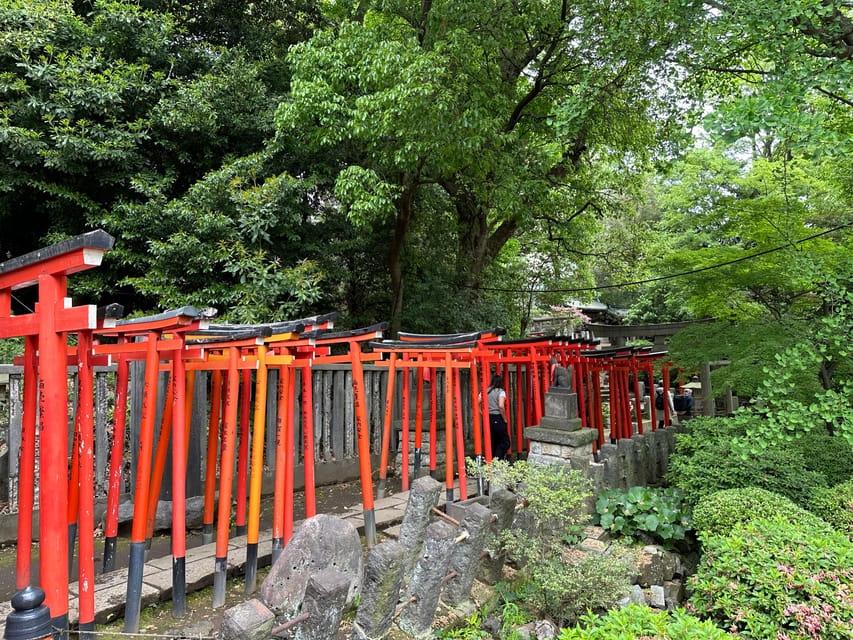
- Nezu Shrine’s red torii path: A picturesque place of worship and one of Tokyo’s oldest shrines.
- A slower view of Tokyo: Quiet residential streets replace the crowds of Shibuya and Shinjuku.
- Sui’s personal guiding style: Expect clear English, local explanations, photo help, and useful food and shopping advice.
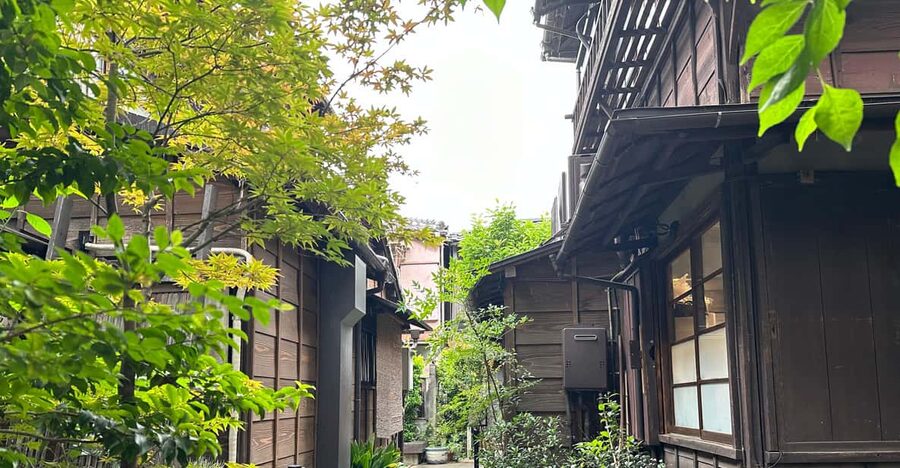
- Old Tokyo details: Look for buildings from the Meiji and Showa periods, old shops, wooden homes, temples, and cemetery paths.
- Yanaka Ginza finish: Sample local street food and browse small shops, except during the summer version of the tour.
- Plan for walking: Comfortable shoes, cash, punctual arrival, and some tolerance for stairs are important.
Why Yanaka and Nezu feel different from central Tokyo
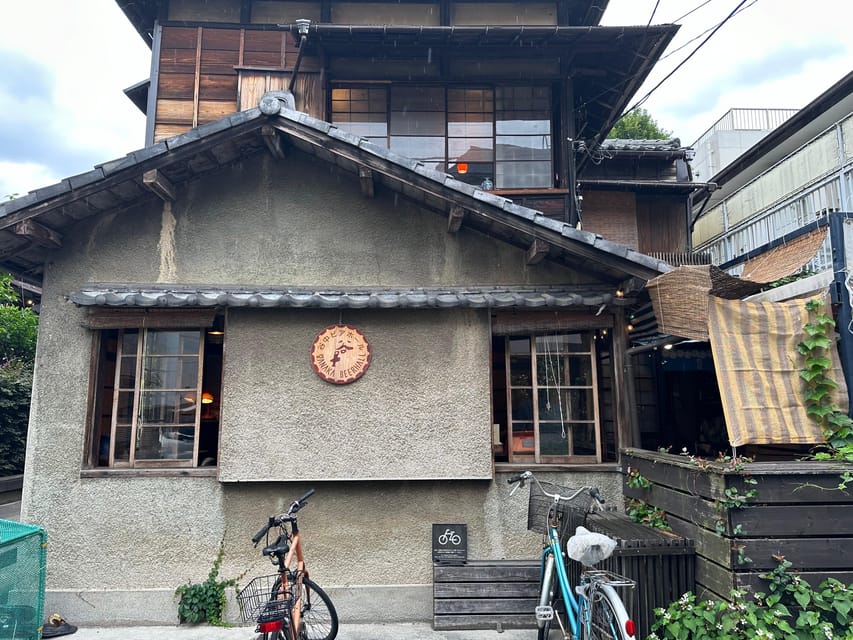
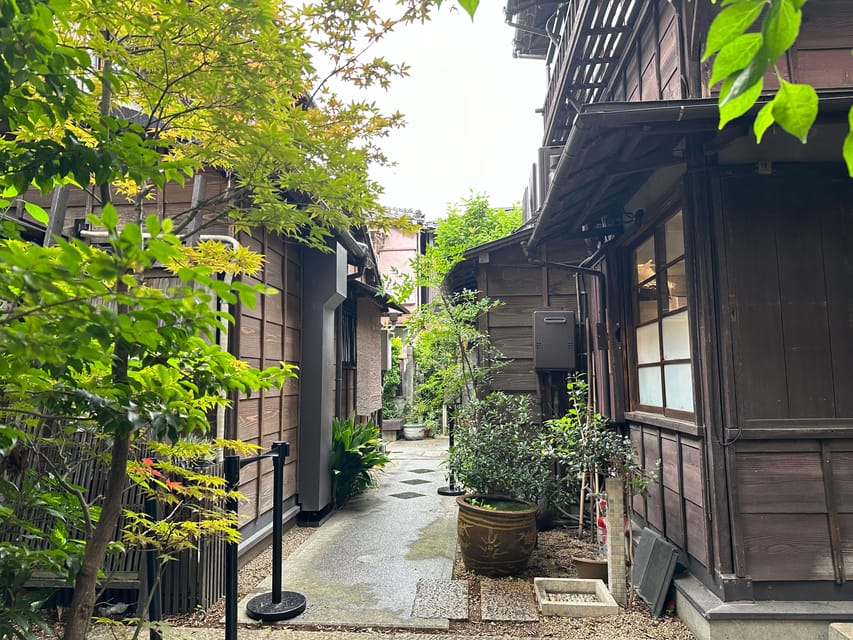
The appeal here is not one blockbuster sight. It is the steady sequence of small discoveries. You turn from a residential lane into a temple courtyard, pass a tiny shop that has served the neighborhood for generations, then walk beside cemetery trees or a row of traditional homes.
Yanaka and Nezu were not rebuilt in the same way as much of Tokyo after the Second World War. That does not mean every building is old, and the area is not a museum. New homes sit beside older structures. People still shop, commute, go to school, and carry on with daily routines. That mixture is exactly what gives the walk its value.
I would choose this tour after spending time in Tokyo’s most intense districts. It offers a useful contrast rather than another grand attraction. You get to see how a local neighborhood works, and you can ask questions about Japanese customs as they come up.
The tour begins at Nippori Station’s West Exit for Yanaka. The guide waits in the area after you come out. Arrive early, since the walk starts on time and the meeting point is at a busy station.
A few more Tokyo half-days worth comparing
- 1-Day Tokyo Bus Tour
★ 5.0 · 14,250 reviews - Tokyo: TOKYO SKYTREE® Admission ticket
★ 4.5 · 11,192 reviews - Tokyo: teamLab Planets TOKYO Digital Art Museum Entry Ticket
★ 4.6 · 9,779 reviews
A relaxed walk through Yanaka’s residential lanes
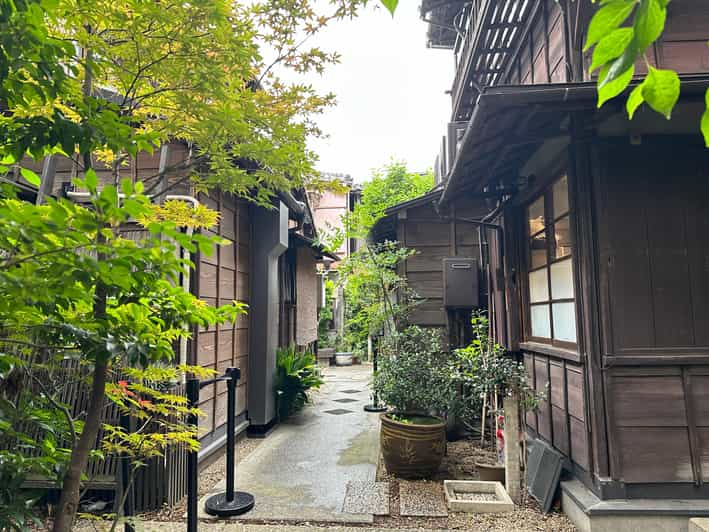
The early part of the route takes you through quiet streets lined with a mix of old and new houses, small businesses, and local facilities. This is where the tour moves beyond sightseeing. You may see young children from a nursery, older residents going about their day, and shopkeepers opening or working in their stores.
Sui’s role matters here. A street can look like a simple route from one attraction to another, but a local guide can explain how homes, shops, schools, temples, and neighborhood customs fit together. She also answers questions about Japanese daily life, rather than limiting the walk to dates and architecture.
The pace is deliberately unhurried. That is good for photography and conversation, but it means this is not a tour for checking off as many sights as possible. You will spend time looking at details, stopping for explanations, and sometimes talking with people at older shops.
Families can do well on this walk if children are comfortable with several hours on foot. Sui has been especially attentive to families, offering toys and treats during one family’s outing and helping another group find a suitable restaurant afterward. Still, young children may need breaks, and there is no promise that every part of the route will hold their attention.
Nezu Shrine and the meaning of a place of worship
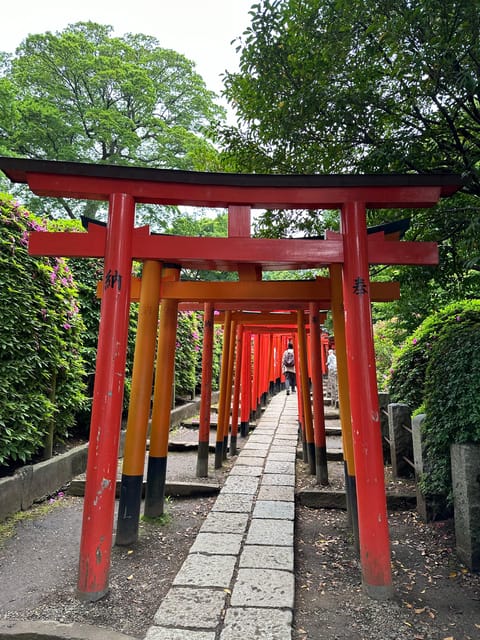
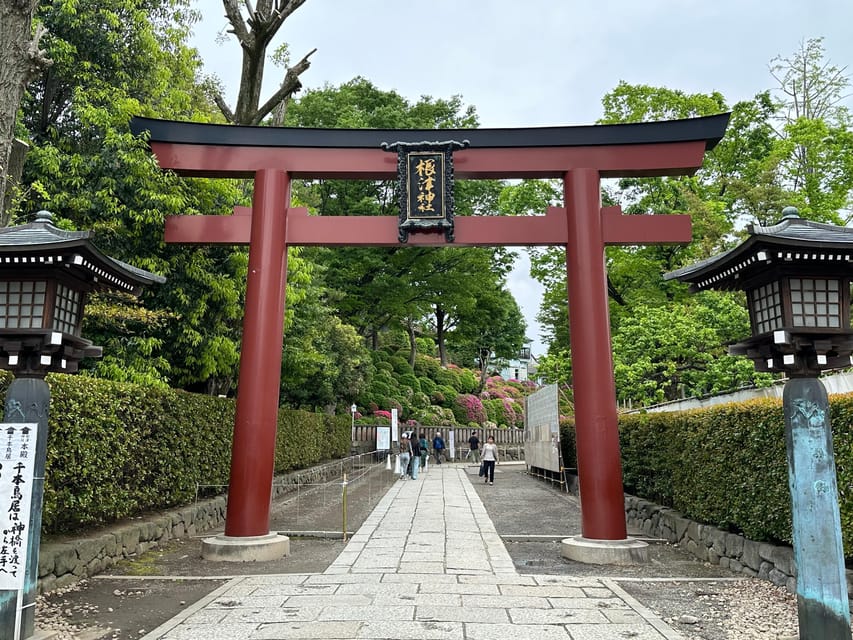
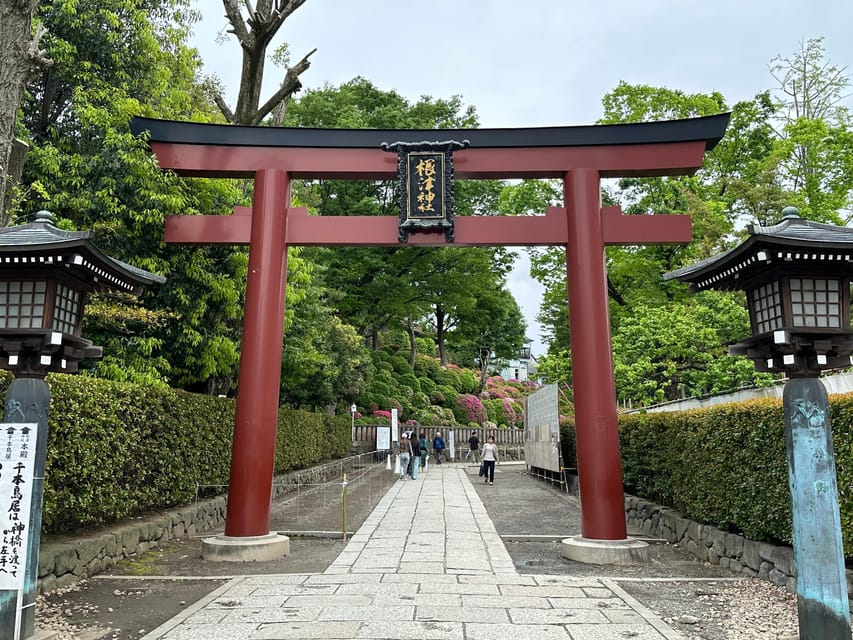
Nezu Shrine is one of the main stops and one of the prettiest. Its torii-lined pathway gives you the classic visual of repeated red shrine gates, but the greater value is the explanation of what you are seeing.
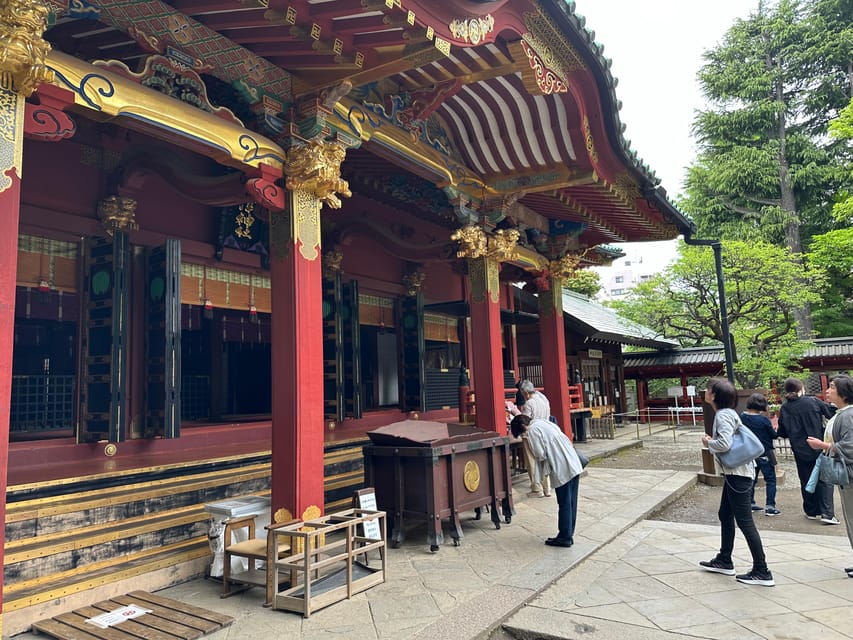
The walk includes visits to Japanese places of worship and discussion of the country’s main religious traditions. You can learn how shrines and temples differ, how people behave in each setting, and how religion fits into ordinary life. One visitor even had the chance to write an ema, a wooden prayer plaque, for the first time.
This kind of guidance is useful because Japanese religious sites can be easy to admire without understanding. Sui explains how to approach and pray, so you are not simply taking photos and moving on. The tone is practical and respectful, not a formal lecture.
Nezu Shrine can be busy at popular times, but the broader walk also includes smaller temples that are often much quieter. I like that balance. You see a well-known religious site, then have calmer moments in places where the focus is on atmosphere, design, and local use.
Tennoji Temple and Yanaka Cemetery
Tennoji Temple brings another side of Japanese religious architecture. Its large bronze seated Buddha provides a clear focal point, while the Japanese garden offers a quieter place to pause. The stop is not just about photographing the statue. It helps show how temples use gardens, courtyards, and religious images to create a feeling apart from the surrounding streets.
Yanaka Cemetery is one of Tokyo’s largest and most scenic cemeteries. The route passes through an area known for its trees and broad paths, giving you a different view of the neighborhood. Cemeteries may not be high on every sightseeing list, but this one helps explain why Yanaka feels less compressed than much of central Tokyo.
You should be comfortable with the subject matter. The cemetery is a place of respect, not an entertainment stop. Sui can give context about the area and its connection to old Tokyo, while the tree-lined setting offers one of the walk’s calmest stretches.
These stops also make the route more varied. You are not walking through shops for three hours. You move between homes, sacred sites, trees, old buildings, and shopping streets, with explanations tying the pieces together.
Same trip, a completely different kind of day:
- Tokyo: Sumo Show Experience with Chicken Hot Pot and a Photo
★ 4.8 · 6,678 reviews - Tokyo: Shinjuku Food Tour (13 Dishes at 4 Local Eateries)
★ 5.0 · 6,603 reviews - Flagship 2-Hours Official Street Go-Kart Tour – Tokyo Bay Shop
★ 5.0 · 4,974 reviews - Tokyo: Hop-On Hop-Off Sightseeing Bus Ticket
★ 3.9 · 4,207 reviews
Finding Meiji and Showa period buildings
One of the pleasures of this experience is learning to notice age and change. The walk points out buildings and structures from the Meiji period, 1868 to 1912, through the Showa period, 1926 to 1989. Some are grand. Others are modest homes or shops whose value comes from their survival and continued use.
You might walk past a building that would be easy to ignore without a guide. Sui helps place it in the story of the neighborhood and explains what older Tokyo looked like before the city took on its present scale.
The architecture is not presented as a frozen display. You see old and new buildings together, which makes the area feel like a living neighborhood. If you want polished modern design, this is not the right tour. If you like signs of daily life, weathered materials, small storefronts, and streets that do not feel planned for sightseeing, it is a strong choice.
Old shops, sake, and Yanaka Ginza
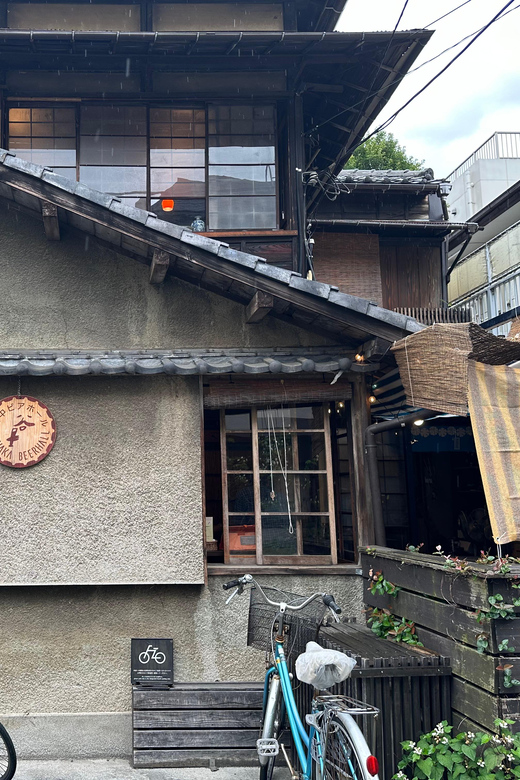
The Yoshida Liquor Store is one of the more specific stops. It is a traditional Japanese sake shop, and it gives you a look at the type of small business that can carry local habits and family connections across generations.
The tour also includes older small shops where you may speak with local people. Cash is important, since the experience encourages you to consider snacks, sweets, souvenirs, or other small purchases along the way. Shopping is not the main purpose, but these stores help you understand the neighborhood better than a large department store can.
Yanaka Ginza is the liveliest commercial section of the walk. Your guide introduces local street foods, Japanese food shops, and souvenir stores. Sui has also given useful advice about handmade snacks, daifuku, and local products, as well as suggestions for cafes and restaurants after the tour.
The final stop is the Sunset Staircase, a popular local photo spot. It is a simple place, but it gives the walk a clear ending and a view into how ordinary streets can become meaningful to residents.
There is one seasonal change to note. From June 1 to September 11, 2026, the tour skips Yanaka Ginza because of the heat and ends at Nezu Station instead. You still visit the other main locations, and the summer route includes one drink at a cafe in an old traditional building.
The guide, group size, and pace
Sui is the main guide for this walk. The experience is offered in English, with private or small-group options. A smaller group makes a real difference here because the route depends on narrow lanes, quick questions, and the ability to pause without holding up a large crowd.
Sui’s strongest qualities are her local familiarity, clear English, patience, and attention to individual interests. She has adjusted explanations for families, taken photos, helped with station directions, and spent extra time answering questions when schedules allowed.
That personal approach is a major reason to book this rather than wander alone with a map. You can certainly visit Yanaka and Nezu independently, but you may pass the religious details, local customs, and older businesses without knowing what makes them important.
The pace is relaxed, not slow in the sense of standing still. You will walk a lot, and one person found three and a half hours without a break difficult in 36-degree heat. The summer cafe stop addresses some of that concern, but you should still bring water, plan your clothing carefully, and take the heat warning seriously.
Price, timing, and practical value
At $29 per person, this is an inexpensive guided experience for three and a half hours. The value is strongest if you want cultural explanation and neighborhood context. You are paying less for a major attraction and more for access to a local route, a guide’s time, and answers you cannot easily get from a standard guidebook.
The tour may finish a little earlier or later than 210 minutes. That flexibility suits the relaxed style, but leave extra space afterward if you have a fixed reservation. The usual possible drop-off points are Nippori Station, Yanaka Ginza, and Nezu Station.
Food is worth planning. The route includes introductions to local food and shops, but it is not described as a full food tour. Some food may be available for purchase, and one person found the timing pushed toward lunchtime. Eat before you start or carry a small snack if you tend to get hungry.
Wear comfortable shoes. There are staircases, and the tour is not suitable for wheelchair users. Some shops may close on the day you visit, especially on Mondays, though the walk itself can still continue.
Spring bookings from March 25 to April 25, 2026 include sakura mochi for everyone. If it is not available, it is replaced by another traditional Japanese sweet or food item. The actual cherry blossom timing depends on the weather, so the dates do not guarantee full bloom.
Free cancellation is available up to 24 hours before the start, and you can reserve now and pay later. Those terms are useful if your Tokyo schedule is still moving around.
Who should book this Yanaka walk
I would recommend it to first-time visitors who want a calmer counterpoint to Tokyo’s famous districts. It also suits repeat visitors who have already seen the major sights and want a more ordinary side of the city.
History and religion are central, but the tour is not aimed only at specialists. Sui explains customs in an approachable way, and the route includes food, shopping, photography, architecture, and local conversation.
Families can book it, especially if they appreciate a guide who engages children. Couples and solo visitors may enjoy the small-group setting, where it is easier to ask questions and adapt the conversation.
I would think twice if you dislike walking, need a fully accessible route, or want a tightly timed schedule. I would also avoid booking it solely for shopping, since the stores are part of a broader neighborhood walk rather than the main event.
Should you book it?
Book this tour if you want to understand Tokyo through small streets, religious sites, old businesses, and everyday routines. Sui’s guidance adds real value, especially when you want to ask about prayer customs, local life, food, or the history of a building.
Skip it if your priority is speed, major landmarks, or a guaranteed shopping list. For $29, though, the combination of a small group, a three-and-a-half-hour route, and a guide who takes time with questions makes this one of the better low-cost ways to see an older side of Tokyo.
FAQ
Where does the tour begin?
The meeting point is Nippori Station at the West Exit for Yanaka. The guide waits in the waiting area after you leave through that exit.
How long does the tour last?
The scheduled duration is 210 minutes, or three and a half hours. It may finish a little earlier or later.
What language is the tour offered in?
The tour is conducted in English.
Who is the main guide?
Sui is the main guide for this Yanaka walking tour.
Which areas does the tour visit?
The walk covers Yanaka and Nezu, including residential lanes, religious sites, Yanaka Cemetery, older shops, Yanaka Ginza, and the Sunset Staircase.
Does the tour visit Nezu Shrine?
Yes. Nezu Shrine is included, with its picturesque path lined with torii gates.
Is Yanaka Ginza included all year?
Yanaka Ginza is included on the regular route. The summer version from June 1 to September 11, 2026 skips Yanaka Ginza and ends at Nezu Station.
Is food included?
Food is not generally included. During the spring period from March 25 to April 25, 2026, each participant receives sakura mochi, or a replacement traditional sweet or food item if it is unavailable. The summer tour includes one drink at an old traditional cafe.
What should I bring?
Bring comfortable shoes and cash. You should also plan for stairs and consider carrying water or a snack, particularly in hot weather.
Is the tour suitable for wheelchair users?
No. The tour is not suitable for wheelchair users because the route includes staircases and walking through narrow neighborhood streets.
Just added around Tokyo
- Kawagoe Japanese Food Tour : Unagi Kaiseki and Sake near Tokyo★ 5.0 · 30 reviews
- Kawagoe 4hr Private Tour with Licensed Guide (Kawagoe Dep)★ 5.0 · 13 reviews
- Little EDO Sushi Making workshop in Kawagoe★ 5.0 · 18 reviews
- 【R34】Tokyo:Private Daikoku tour in Modified R34★ 4.9 · 92 reviews
- :Tokyo,Shibuya/ Pro Photography in Kimono / English-Friendly★ 5.0 · 26 reviews
- Tokyo:Celebrate Unique Japanese New Year Tradition Festivity★ 3.9 · 20 reviews
- Tokyo: Allstar Food Tour★ 4.7 · 29 reviews
- Tokyo: West-Side Cycling and Food Tour with Guide★ 5.0 · 37 reviews
Tokyo Tours, compared.

teamLab Planets TOKYO Digital Art Museum Entry Ticket
Our verdict →
Sumo Show Experience with Chicken Hot Pot and a Photo
Our verdict →
Shinjuku Food Tour (13 Dishes at 4 Local Eateries)
Our verdict →
Flagship 2-Hours Official Street Go-Kart Tour – Tokyo Bay Shop
Our verdict →
Sushi Making Tokyo Roll and Authentic Japanese Sushi Class
Our verdict →