
Reviewed · FISH MARKET TOURS
Tokyo: Tsukiji Fish Market Culture Tour with Sashimi Tasting
Tsukiji is best enjoyed with a little direction. Its 400-plus shops fill a maze of narrow lanes, and an English-speaking assistant can help you spot seasonal foods, find useful stalls, and understand why this market still matters after the wholesale fish market moved to Toyosu. I especially like the small group size and the chance to meet shopkeepers through local introductions.
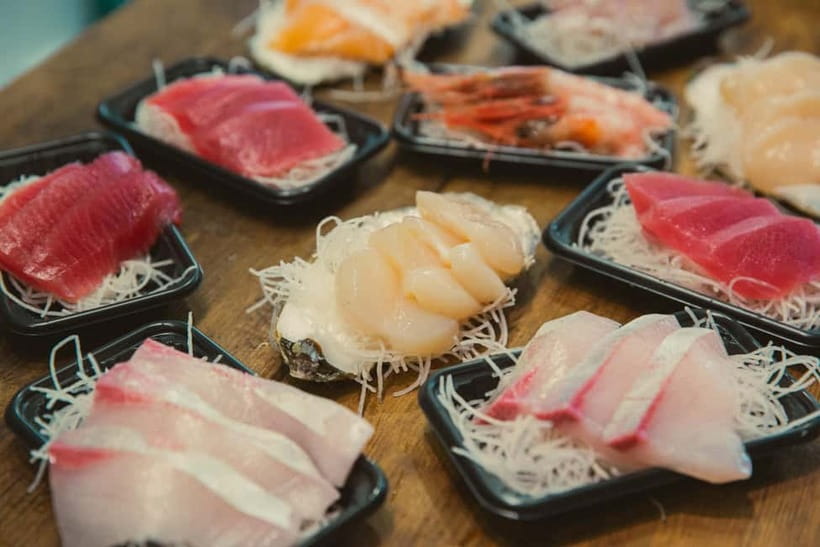
The sashimi tasting is another strong point. It can be more generous than the word tasting suggests, and some departures include sake as well as free samples. The main thing to understand is that this is a guided orientation, not a full grazing tour. If you want to eat your way through many stalls, you’ll need to stay focused during the tour and continue on your own afterward.
Key points to know before you book
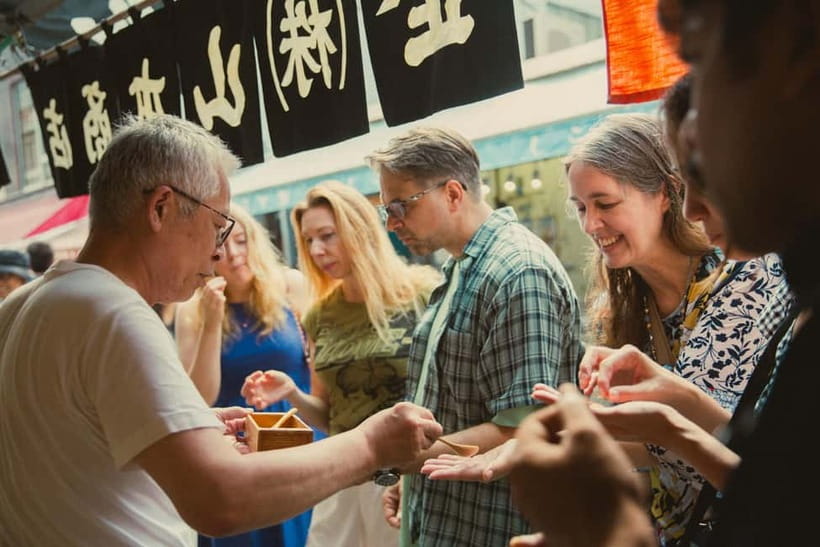
- The 90-minute route focuses on Tsukiji Outer Market, including back lanes, food shops, market culture, and seasonal recommendations.
- Sashimi is included, while additional meals and purchases are not. Free samples vary from day to day.
- Groups are limited to 10 people, making it easier to ask questions and keep up in narrow lanes.
- Guides such as Shoko, Shun, and Taka have been praised for their friendly manner, clear English, and useful market advice.
- Cash and comfortable shoes matter, since many small shops accept cash only and the tour involves a moderate amount of walking.
- You can continue exploring afterward, using the guide’s suggestions to shop and eat at your own pace.
Why Tsukiji works best with a local guide
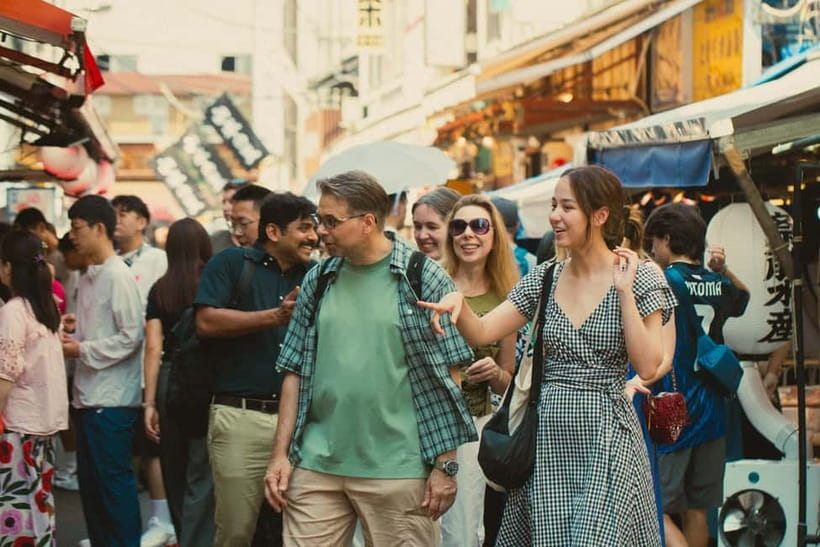
The Tsukiji Fish Market most visitors picture is not quite the market you’ll see today. The wholesale operation moved to Toyosu, but Tsukiji’s Outer Market remains a dense food district packed with seafood shops, knife sellers, produce stalls, small restaurants, and specialty stores.
I like this tour because it treats Tsukiji as more than a place to grab sushi. Your assistant explains the market’s history and culture while leading you through the lanes. That context helps you understand the difference between a shop meant for local cooks, a place aimed at quick tastings, and a restaurant where you may want to sit down later.
The market can be confusing on your own. Four hundred or more shops is a lot to sort through, especially when signs may not explain exactly what is being sold. A guide can point out seasonal offerings and help you get your bearings before you spend your time and money.
The group limit of 10 is useful here. Narrow lanes and crowded shopfronts are not ideal for a large coach group. A small party should also give you more room to ask about ingredients, eating customs, and the shops you pass.
More Market Tours in Tokyo
- Tokyo Tsukiji Fish Market Food and Culture Walking Tour
★ 5.0 · 3,184 reviews - Tokyo: Tsukiji Fish Market Food and Walking tour
★ 5.0 · 1,724 reviews - Tokyo: Tsukiji Fish Market Guided Walking Tour
★ 4.9 · 1,397 reviews
Starting at Hongwan-ji Temple or Bon Marche
You’ll meet at one of two possible starting points: Tsukiji Hongwan-ji Temple or the Tsukiji Bon Marche souvenir corner. Your exact meeting point depends on the option you book, so check it carefully before setting out.
Hongwan-ji Temple gives the tour a clear landmark and a calm place to meet before entering the market lanes. It also helps place Tsukiji in its wider setting. You are not simply arriving at a food court. You are beginning in an important neighborhood with religious, commercial, and culinary connections.
The Bon Marche souvenir corner offers a more direct market meeting point. From there, the group can get into the shopping area without much delay. I would arrive early at either location, since a market meeting point can be harder to spot than a large station entrance.
Your guide will be an English-speaking assistant. The names of guides who have led recent departures include Shoko, Shun, and Taka. You cannot choose a particular guide from the information available, but the tour is designed around a live English-speaking host rather than a recorded explanation.
Through the Outer Market’s backstreets
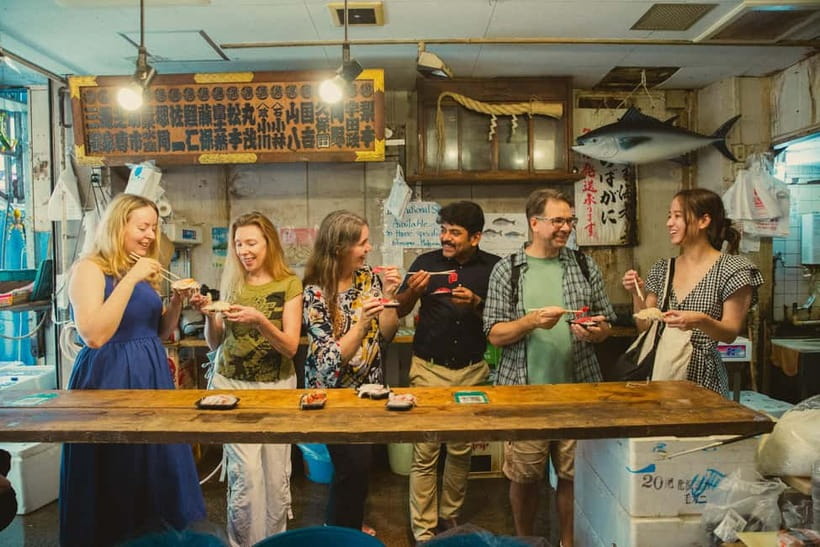
The heart of the tour is a guided walk through Tsukiji Outer Market. You’ll move through the backstreets, where shop counters and food displays sit close together. The point is not to rush from one famous storefront to another. It is to learn how to read the market and decide what deserves your attention.
I like the practical side of this walk. Your assistant can recommend shops, identify seasonal foods, and introduce you to local contacts at places you visit. That can make a short visit far more useful than wandering at random, especially if you have only one morning in Tsukiji.
The route also gives you a chance to ask questions as you go. You may want to know what a particular fish is, how a food is prepared, or which products make sensible souvenirs. The supplied details do not promise a fixed list of shops, and that is important. The route can change with the day’s offerings, shop conditions, and the guide’s judgment.
Do not expect a long stop at every stall. One piece of feedback specifically wished for more time in the fish market area. That makes sense: 90 minutes passes quickly when the group is walking, listening, sampling, and stopping for introductions.
Sashimi, samples, and the food question
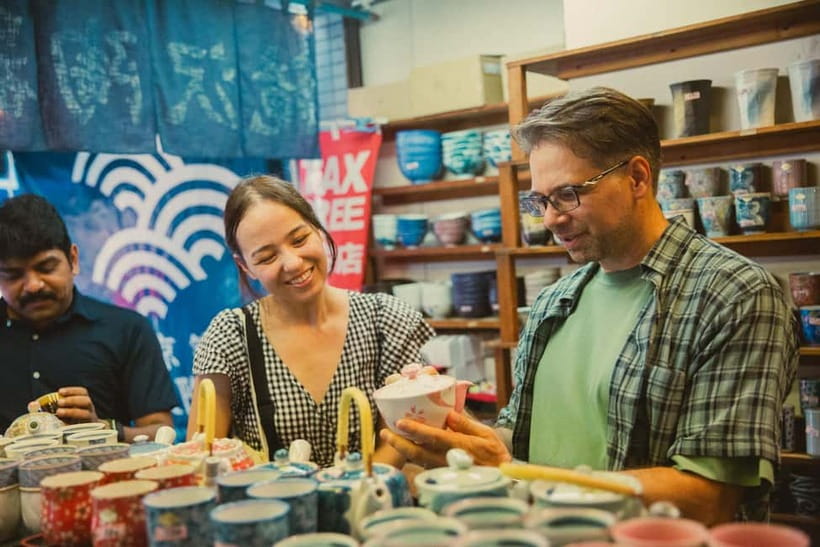
The sashimi tasting is the tour’s main food feature. You receive a sample during the experience, and it may be more substantial than you expect from the word tasting. The seafood selection can vary, so you should think of it as a chance to try something tied to the market rather than a fixed menu.
Free samples may also be offered, but these vary by day. That might include small tastes from shops along the route, though the exact offerings are not promised. Any food beyond the included tasting and samples is your responsibility.
This distinction matters. The tour description can sound like a meal-by-meal food crawl if you read it quickly. It is better understood as a guided market walk with sashimi and possible samples. You will not be taken around to eat every tempting item in sight.
One group found the pace too focused on continuing the tour and wanted more time to eat at individual stands. I would take that criticism seriously if your main goal is to sample many dishes. You may find this tour less satisfying if you want a breakfast-sized food tour with long stops at several counters.
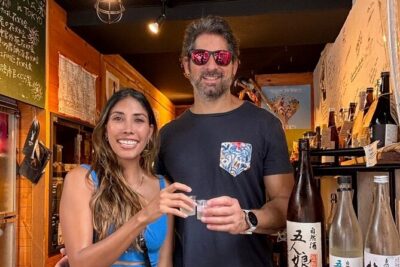
On the other hand, the tasting can be excellent value for someone who wants a clear introduction without arranging a full meal. One highly praised departure included a sashimi selection and sake, though sake should not be assumed for every tour. If you plan to purchase extra sushi, grilled seafood, fruit, tea, or other items, bring cash and allow time after the guided portion.
More Fish Market Walks in Tokyo:
- Tokyo Sushi Making Class in Tsukiji with Professional Chef
★ 5.0 · 1,177 reviews - Tsukiji Fish Market Guided Tour and Sushi Making with Pro Chef
★ 5.0 · 775 reviews - Tokyo: Tsukiji Fish Market Food and Culture Walking Tour
★ 4.7 · 757 reviews - Tsukiji Fish Market: Street Food & Culture Walking Tour
★ 5.0 · 669 reviews
Meeting local shopkeepers
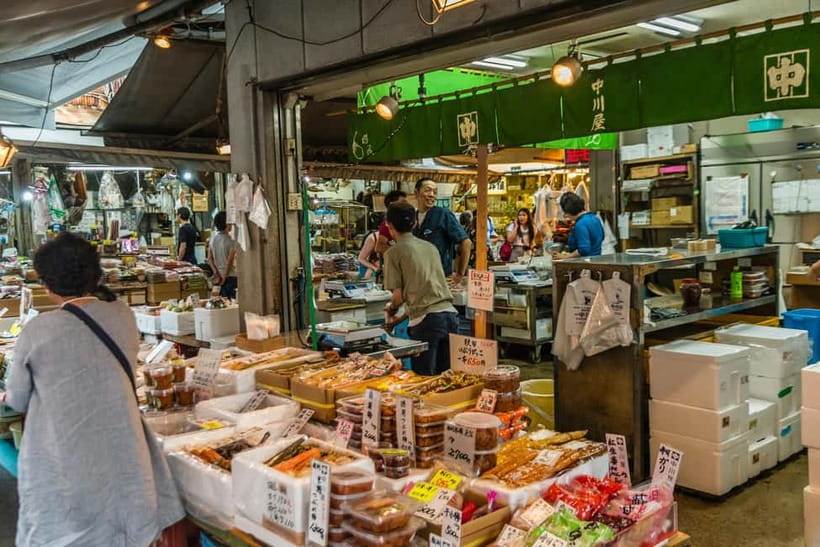
The local introductions are one of the more useful parts of the experience. You are not only receiving a list of places to try. Your assistant can connect you with people working in the shops, which gives the market a more personal feel.
I value this because recommendations mean more when they are tied to the actual market visit. Your guide can explain what a shop is known for and help you decide if it matches your interests. That may be especially helpful if you are shopping for edible souvenirs or trying to understand unfamiliar Japanese delicacies.
The quality of this part depends on the guide and the day. Taka was praised for making a small group feel comfortable while explaining the market’s history and different foods. Shun was described as friendly and informative, while Shoko received praise for being a warm guide. Those details suggest that the human side of the tour is a real strength, though any particular guide is not guaranteed.
You should still remain polite and aware of the working market around you. This is not a place to block a narrow passage for a long photo session. Your assistant will likely keep the group moving so the shops can serve their customers.
What the 90-minute schedule feels like
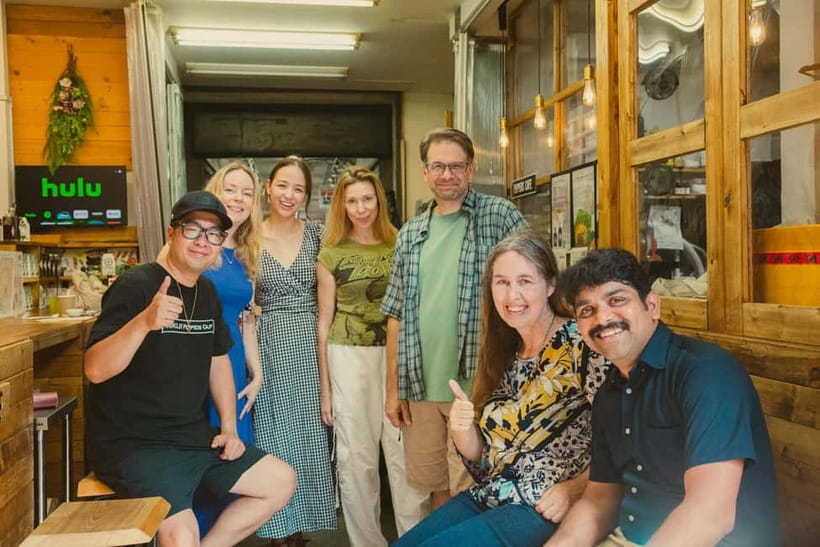
The advertised guided portion lasts about 90 minutes. The wider booking information may show time windows from 90 minutes to four hours depending on availability, but the structured market tour itself is described as 1.5 hours.
That is enough time for an introduction, a route through the Outer Market, explanations about its culture, a few stops, and the sashimi tasting. It is not enough time to inspect every aisle or eat a full meal at several places.
I would plan the tour as the first part of a longer Tsukiji visit. After the group finishes at either the Bon Marche souvenir corner or Hongwan-ji Temple, you can continue exploring independently. This is where the tour becomes more valuable. You leave with a better idea of which shops to revisit and how to spend the rest of your time.
The two drop-off points match the two starting options: Bon Marche or Hongwan-ji Temple. They are useful reference points for continuing your visit, but do not treat the end of the tour as the end of your Tsukiji experience.
Is $38 a fair price?
At $38 per person, I see this as a fair price for a first visit, especially if you want an English explanation and a sashimi tasting. You are paying for a small-group guide, market introductions, cultural background, recommendations, and the convenience of not having to work out the market alone.
The value is strongest if you would otherwise wander without knowing which lanes or shops deserve attention. A short guided route can save time and help you avoid spending your whole visit staring at menus you cannot read.
The value is weaker if you mainly want to eat. The tour does not cover all additional food purchases, and 90 minutes limits the number of stands you can visit. If you want several full portions, you will need to budget extra money and schedule independent time afterward.
I would also avoid comparing the $38 directly with the price of a simple market breakfast. This is not just a meal. It is a guided introduction, with food as part of the experience rather than the entire purpose.
Practical advice for the market walk
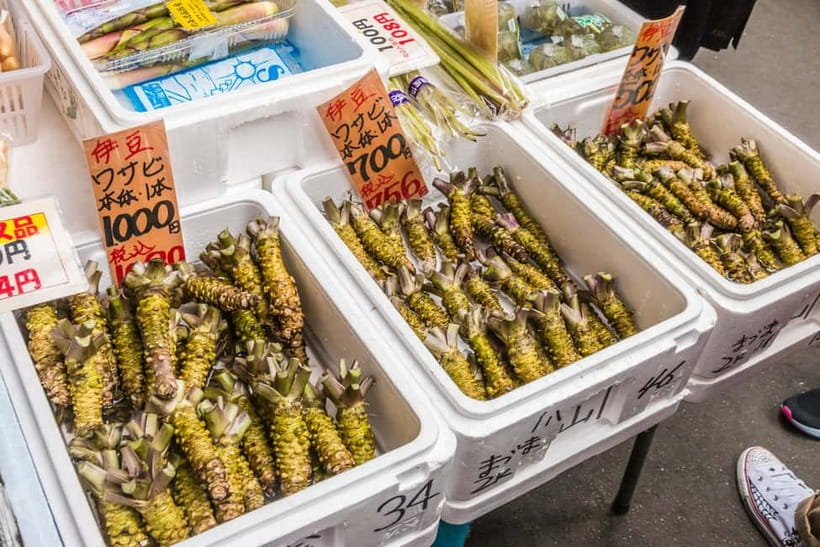
Wear comfortable shoes and clothes you can walk in. The tour includes a moderate amount of walking, and market lanes are not suited to formal footwear or a slow, casual stroll.
Bring cash. Many local spots accept cash only, and the tour’s recommendations may lead you to small businesses that do not take cards. A camera is also listed as useful, though keep it ready without stopping in the middle of a narrow lane.
The tour runs rain or shine. A wet morning could make walking less pleasant, so bring suitable rain protection and keep your expectations realistic. The market experience will not be cancelled simply because the weather is poor.
This activity is not wheelchair accessible. It is also not suitable for children under three. The small group format may work well for older children, but the provided information does not give a specific minimum age beyond the stated restriction.
Free cancellation is available up to 24 hours before the tour for a full refund, and you can reserve now and pay later. Those terms are useful if your Tokyo schedule is still shifting, but always confirm the exact option and meeting point when booking.
Who should book this Tsukiji experience?
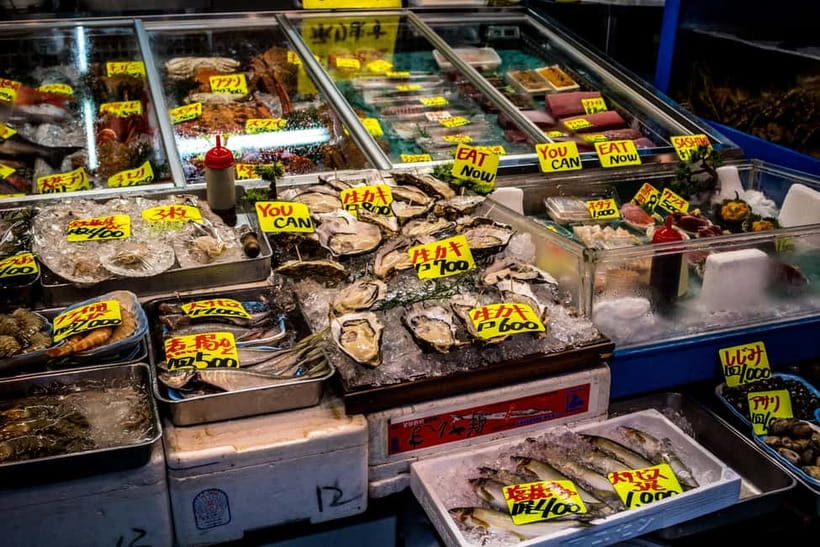
I would recommend it to first-time visitors who want a clear introduction to Tsukiji without spending hours researching individual shops. It also suits solo visitors and couples who like asking questions, trying a small amount of food, and then making their own choices.
It is a particularly good fit if you want to understand the market’s background rather than simply take photos. The English assistance, small group, local introductions, and seasonal advice all make the visit easier to navigate.
I would be more cautious if you are looking for a dedicated food crawl. You may prefer to book only if you are happy with one main tasting, changing free samples, and independent eating after the tour. Keep extra time and cash available so you can continue at your own pace.
Final verdict: book it for guidance, not unlimited eating
I would book this tour if I wanted help making sense of Tsukiji on a first visit. The strongest features are the small group, friendly English-speaking guides such as Shoko, Shun, and Taka, practical shop recommendations, and a sashimi tasting that can be pleasantly generous.
I would not book it expecting a full breakfast tour through every food stall. The 90-minute route moves quickly, and the food beyond the included tasting is extra. Book it as a well-guided introduction, then stay in the market afterward to eat, shop, and explore on your own.
FAQ
How long does the Tsukiji Fish Market tour last?
The guided tour lasts 90 minutes. Booking availability may show time options ranging from 90 minutes to four hours, so check the available option for your date.
Is sashimi included in the tour?
Yes. A sashimi tasting is included, along with sampling of local foods. The exact free samples can vary by day.
Is other food included?
No. Food beyond the included sashimi tasting and variable free samples is not included. You should bring extra money if you want to buy more food at the market.
Where does the tour start?
The meeting point may be either Tsukiji Hongwan-ji Temple or the Tsukiji Bon Marche souvenir corner, depending on the option booked.
Is the tour suitable for wheelchair users or children under three?
The tour is not wheelchair accessible and is not suitable for children under three.
What should I bring?
Bring comfortable shoes, comfortable clothes, a camera if you want photos, and cash. Many local shops accept cash only.
More Food & Drink in Tokyo
- Tokyo: Shinjuku Food Tour (13 Dishes at 4 Local Eateries)
★ 5.0 · 6,603 reviews - Tokyo: Shinjuku Food Tour (15 Dishes and 4 Eateries)
★ 4.9 · 2,033 reviews - Best of Shinjuku: Izakaya Food Tour (4 Stops, 14+ Tastings)
★ 5.0 · 1,863 reviews - Eat and Drink Like a Local: Tokyo Ueno Food Tour-Taverns&Ramen
★ 5.0 · 957 reviews
Just added around Tokyo
- Kawagoe Japanese Food Tour : Unagi Kaiseki and Sake near Tokyo★ 5.0 · 30 reviews
- Kawagoe 4hr Private Tour with Licensed Guide (Kawagoe Dep)★ 5.0 · 13 reviews
- Little EDO Sushi Making workshop in Kawagoe★ 5.0 · 18 reviews
- 【R34】Tokyo:Private Daikoku tour in Modified R34★ 4.9 · 92 reviews
- :Tokyo,Shibuya/ Pro Photography in Kimono / English-Friendly★ 5.0 · 26 reviews
- Tokyo:Celebrate Unique Japanese New Year Tradition Festivity★ 3.9 · 20 reviews
- Tokyo: Allstar Food Tour★ 4.7 · 29 reviews
- Tokyo: West-Side Cycling and Food Tour with Guide★ 5.0 · 37 reviews
Fish Market Tours, compared.
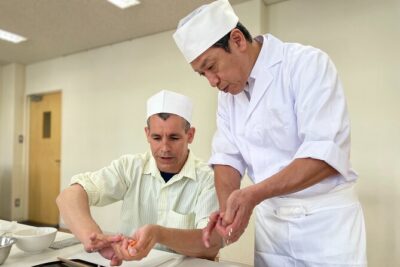
Tokyo Sushi Making Class in Tsukiji with Professional Chef
Our verdict →

Wakayama Cat Train, Seafood market, Hot Springs Tour
Our verdict →
Awesome Private Tour: Tsukiji, Asakusa, Shinjuku, Shibuya
Our verdict →Browse the lists this tour appears in