
Reviewed · TEMPLES & SHRINES
Tokyo: Meiji Shrine and Shinto Culture Walking Tour
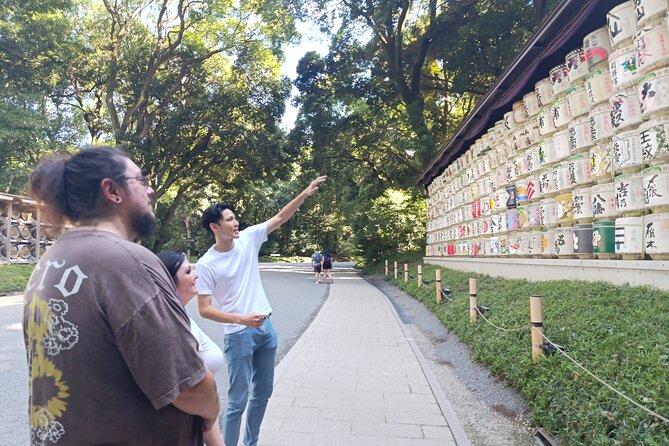
Meiji Jingu is one of Tokyo’s best places to see Shinto customs in practice, but its meaning can be easy to miss when you walk through alone. This two-hour tour adds the missing explanations, from bowing at the gate to cleansing your hands before prayer. I like the calm forest path and the chance to ask questions as you go. I also like the modest $18 price, which makes a guide practical even on a tight Tokyo budget.
The main consideration is that this is a walking tour, not a long sightseeing program with many Tokyo stops. You’ll focus on Meiji Shrine and its surrounding grounds, and the visit may feel brief if you want a detailed look at every building or a broad tour of Harajuku.
Key points to know before booking
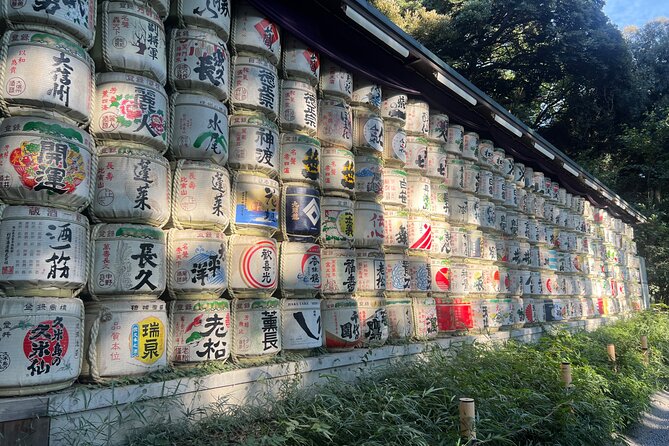
- A forested shrine in central Tokyo: Meiji Jingu sits in a 70-hectare artificial forest near Harajuku.
- A guide explains the rituals: Learn the proper approach to the shrine, purification customs, and prayer etiquette.
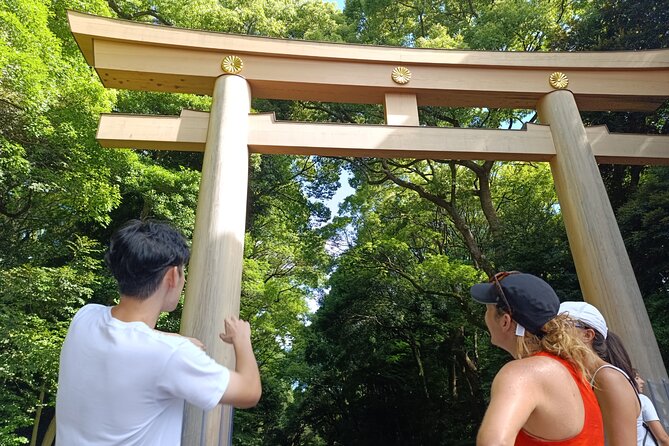
- The huge torii is a highlight: The main wooden myojin-style gate is 12 meters tall and 17.1 meters wide.
- Small groups keep the walk personal: The maximum group size is 15 people.
- Several guides lead the experience: Yumi, Sara, Haydn, Matt-san, and Benjamin are among the guides named in guest feedback.
- Good value at $18: You pay mainly for cultural context, not admission, since entry to the shrine is included.
Why Meiji Jingu is worth your time
Tokyo can feel like a city built for speed: trains, crossings, shopping streets, and bright signs. Then you pass through a torii gate at Meiji Jingu and enter a broad wooded path where the city noise drops away.
That contrast is the heart of this experience. Meiji Jingu is dedicated to the deified spirits of Emperor Meiji and Empress Shoken. The shrine was established in 1920, after the emperor’s death, and honors the couple associated with Japan’s transformation into a modern state.
You do not need a strong interest in religion or Japanese history to enjoy the setting. The forested grounds are peaceful and spacious, and the shrine buildings give you a clear place to see Shinto customs rather than just read about them. Still, the tour is most useful when you want to understand what you are seeing.
Without a guide, you might notice people bowing at the entrance or washing their hands at a water basin, but not know the order or purpose of those actions. Your guide explains these details as part of the walk, helping you behave respectfully and making the visit feel less like a quick photo stop.
More Temple & Shrine Tours in Tokyo
- Tokyo: Meiji Shrine, Asakusa, Skytree Bus Tour and Cruise
★ 4.7 · 1,986 reviews - Tokyo: Asakusa Walking Tour with Sensoji Temple Visit
★ 4.8 · 1,583 reviews - Tokyo Panoramic 1 Day: Meiji Shrine, Asakusa, Odaiba and SKYTREE®
★ 4.5 · 1,222 reviews
Meeting near Harajuku and entering through the torii
The tour begins at Starbucks Coffee near the With Harajuku building at 1-chome 14-30 Jingumae, Shibuya. The meeting point is close to public transportation, but give yourself enough time to find the exact Starbucks and identify your guide before the scheduled start.
From there, the walk heads toward Meiji Jingu. The approach matters. You do not simply arrive at a building, take a picture, and leave. The torii marks a change from ordinary city space to sacred ground, and your guide explains the expected behavior as you pass through.
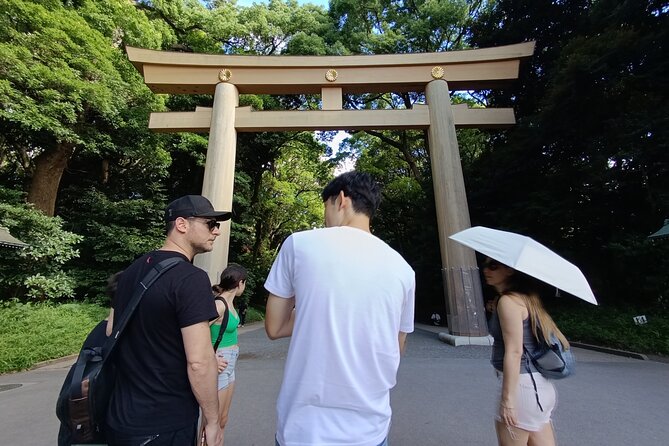
The largest torii is an impressive early sight. It is a wooden myojin-style gate, 12 meters high and 17.1 meters wide. Those measurements are useful because they explain why the gate feels so imposing in person. It is not a small decorative entrance. Its size sets the tone for the shrine ahead.
Your guide may also remind you about the customary bow before entering and after leaving. These gestures are simple, but they are exactly the sort of detail many first-time visitors miss. The tour gives you a way to participate without guessing.
Walking through Meiji Jingu’s 70-hectare forest
The route continues along a forested path through the shrine grounds. Meiji Jingu’s forest is artificial, covering about 70 hectares, yet it now feels like a large natural retreat in one of Tokyo’s busiest areas.
I like this part of the tour because it gives the shrine room to breathe. The path creates a gradual shift in mood, and the guide can explain the shrine’s setting while you walk rather than stopping for a long lecture in one place.
The forest is also one reason this tour suits a first visit to Tokyo. You get a quiet break from the city without having to travel far. The grounds are not presented as a separate nature excursion, so you should not book this expecting a long wilderness walk. The point is the relationship between the forest, the approach, and the shrine itself.
Expect to walk for much of the two-hour experience. Wear comfortable shoes, and consider the weather when choosing clothing. One guide, Matt-san, received praise for keeping the visit engaging even in rain, but wet weather can still make the paths less comfortable.
Understanding Shinto rituals instead of guessing
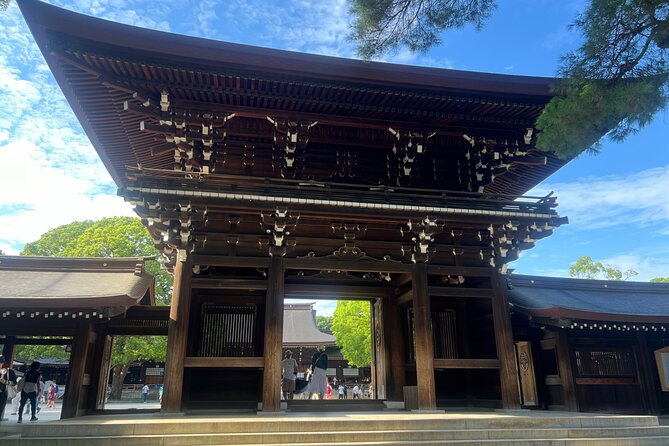
The strongest reason to book is the cultural explanation. A guide covers rituals that can look mysterious if you only watch from a distance.
You learn about cleansing before approaching the shrine, including the use of water to purify your hands. You also learn about bowing, the proper conduct at the gates, and the way people pray. These actions are not difficult, but their meaning is easier to remember when someone explains them beside the actual shrine.
That practical focus makes the tour more useful than a general history talk. You can apply the information immediately. Instead of wondering if you are standing in the right place or copying another person’s movements, you know what the customs mean and why they matter.
The guides also explain Shinto beliefs and traditions in a way suited to people who may know little about Japanese religion. Sara has been described as friendly and interactive, while Benjamin’s calm explanations of Japanese customs were especially helpful. Yumi has also been praised for adding useful tips about getting around Tokyo, which gives her tour value beyond the shrine grounds.
The experience does not promise a specialist religious course. It is a short introduction, and the amount of detail will depend partly on the guide and the questions your group asks. For most people, that is the right balance. You get enough context to understand the shrine without turning a pleasant walk into a classroom session.
More Walking Tours in Tokyo
- Tokyo Tsukiji Fish Market Food and Culture Walking Tour
★ 5.0 · 3,184 reviews - Tokyo: Imperial Palace and Shogun Historical Walking Tour
★ 5.0 · 2,251 reviews - Tokyo: Shinjuku Local Bar and Izakaya Guided Walking Tour
★ 4.9 · 1,794 reviews - Tokyo: Tsukiji Fish Market Food and Walking tour
★ 5.0 · 1,724 reviews
The shrine dedicated to Emperor Meiji and Empress Shoken
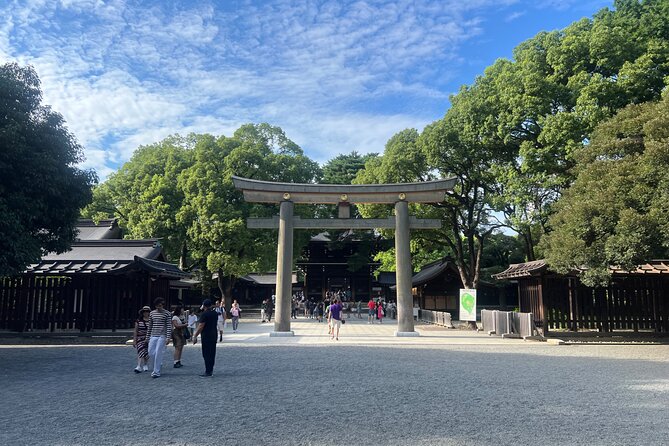
Meiji Jingu’s central importance comes from the people it honors. The shrine is dedicated to Emperor Meiji and Empress Shoken, whose era is linked with Japan’s modernization.
Your guide explains the connection between the shrine and the Meiji period, helping you place the buildings and rituals within Japan’s modern history. Matt-san, in particular, has been praised for explaining Emperor Meiji’s achievements and the Meiji Restoration in a memorable way.
This historical context gives the visit more weight. You are not only looking at a shrine in a forest. You are learning why this particular shrine was created and why it remains important in Tokyo.
The shrine’s design and grounds are impressive, but the experience is not simply about architecture. The guide helps connect the physical setting with worship, national history, and everyday Japanese customs. That connection is where the $18 fee earns its keep.
How the small-group format affects the experience
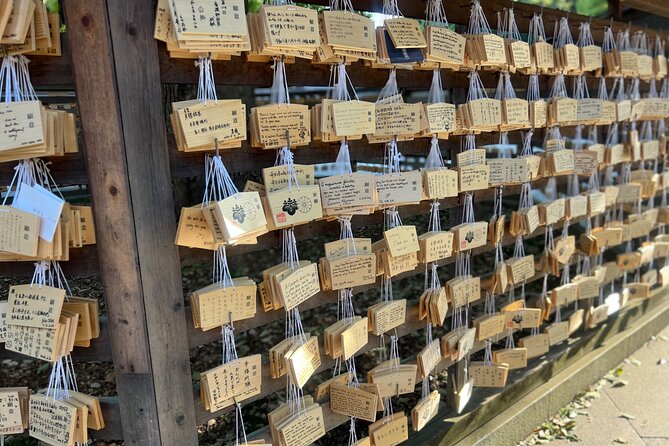
The maximum group size is 15 people. That is not a private tour, but it is small enough for the guide to manage questions and keep the group together.
A small group works especially well here because the walk includes explanations rather than just photo stops. You can ask about a ritual, a historical point, or something you notice on the grounds. A very large group would make those exchanges harder.
The guide names associated with this experience include Yumi, Haydn, Sara, Matt-san, and Benjamin. Their reported styles vary slightly. Yumi is described as accommodating and helpful with Tokyo advice. Sara is friendly and interactive. Haydn has been praised for detailed explanations during the two-hour walk, while Benjamin is noted for his calm manner.
You cannot choose your guide from the information provided, so it is best to book for the structure and subject rather than for one particular person. The individual guide will shape the tone, but all are expected to lead the shrine walk and explain Shinto culture.
Is $18 a good value?
At $18 per person, this is an inexpensive guided activity for central Tokyo. Admission to the shrine is included, and the main thing you are paying for is interpretation.
That distinction matters. If you only want to enter Meiji Jingu, you may prefer to visit on your own and spend nothing on a guide. The grounds are accessible to independent visitors, and you can walk through the major spaces at your own pace.
I think the tour is a good buy if you want to understand what you are doing. The fee covers about two hours with a guide, historical context, ritual explanations, and the chance to ask questions in a group limited to 15 people. It is especially useful early in a Tokyo trip, when you can use the cultural and practical advice for the rest of your stay.
It is less valuable for someone who already knows Shinto customs or wants a fast, self-directed visit. It also may not satisfy you if you expect a broad Harajuku walking tour. The activity centers on Meiji Jingu, with the meeting and ending point in the same area.
Timing, weather, and practical comfort
The advertised duration is about two hours, though one listed shrine portion is marked as one hour. Plan your schedule around the full two-hour activity rather than trying to squeeze in a train departure immediately afterward.
The tour ends back at the meeting point. That makes it easy to continue exploring the Harajuku area, but the provided details do not specify additional stops after Meiji Jingu.
Bring a mobile ticket and arrive at the Starbucks meeting point with time to spare. The tour is near public transportation, and most people can participate, but it is still a walking experience across shrine grounds. Comfortable footwear is sensible.
Weather can change the feel of the visit. Rain does not automatically ruin it, and Matt-san has been praised for thoughtful guidance in wet conditions, but dry weather will make the forest path and outdoor explanations easier. Check the forecast and dress accordingly.
Free cancellation is available if you cancel at least 24 hours before the start time. Changes or cancellations made inside that window are not accepted for a refund, and the cut-off follows Tokyo local time.
Who should book this Meiji Shrine walk?
I would choose this tour for a first-time Tokyo visitor who wants a calm cultural experience with clear explanations. It also suits families, couples, and solo visitors who prefer having a guide for the etiquette rather than trying to work it out on their own.
It is a good fit if you enjoy asking questions, want to understand Shinto customs, or plan to visit several religious sites during a Japan trip. The two-hour length is manageable, and the $18 price keeps the commitment low.
You might skip it if you prefer total independence, have already studied Meiji Jingu, or want a tour built around Harajuku shopping and pop culture. This is a focused shrine visit, not a general Tokyo highlights tour.
Should you book it?
Book this tour if you want Meiji Jingu to mean more than a large gate and a few photographs. The forest, shrine buildings, and setting are worth seeing on their own, but the guide explains the gestures and traditions that give the visit its purpose.
At $18, the risk is small. You get a two-hour walk, included admission, a group capped at 15, and practical explanations from guides such as Yumi, Sara, Haydn, Matt-san, or Benjamin. Just allow for walking, meet on time near Harajuku, and expect a focused introduction to Meiji Shrine rather than a full tour of Tokyo.
FAQ
How long is the Meiji Shrine and Shinto Culture Walking Tour?
The experience lasts about two hours. The Meiji Jingu portion is listed as one hour, so you should plan on the full two-hour activity.
How much does the tour cost?
The price is $18 per person.
Is admission to Meiji Jingu included?
Yes. Admission to Meiji Jingu Shrine is included in the tour.
Where does the tour start?
The meeting point is Starbucks Coffee at With Harajuku, 1-chome 14-30 Jingumae, Shibuya, Tokyo 150-0001.
Where does the tour end?
The activity ends back at the meeting point.
How large is the tour group?
The maximum group size is 15 people.
Can I cancel for a full refund?
Yes. You can cancel at least 24 hours before the experience start time for a full refund. Cancellations or changes made less than 24 hours before the start time are not refunded or accepted.
Just added around Tokyo
- Kawagoe Japanese Food Tour : Unagi Kaiseki and Sake near Tokyo★ 5.0 · 30 reviews
- Kawagoe 4hr Private Tour with Licensed Guide (Kawagoe Dep)★ 5.0 · 13 reviews
- Little EDO Sushi Making workshop in Kawagoe★ 5.0 · 18 reviews
- 【R34】Tokyo:Private Daikoku tour in Modified R34★ 4.9 · 92 reviews
- :Tokyo,Shibuya/ Pro Photography in Kimono / English-Friendly★ 5.0 · 26 reviews
- Tokyo:Celebrate Unique Japanese New Year Tradition Festivity★ 3.9 · 20 reviews
- Tokyo: Allstar Food Tour★ 4.7 · 29 reviews
- Tokyo: West-Side Cycling and Food Tour with Guide★ 5.0 · 37 reviews
Temples & Shrines, compared.

Tea Ceremony in a Traditional Tea House in Kiyomizu
Our verdict →

Meiji Shrine, Asakusa, Skytree Bus Tour and Cruise
Our verdict →
Fushimi Inari Hidden Hiking Tour (Private Option Available)
Our verdict →
Osaka/Kyoto:Kinkakuji,Arashiyama,FushimiInariShrine,NaraPark
Our verdict →
Nikko: Kegon Falls, Lake Chuzenji & Toshogu Temple
Our verdict →
Kamakura & Enoshima Day Trip including Temple Tickets
Our verdict →Browse the lists this tour appears in